Astronomy
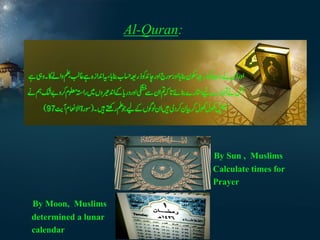
Al-Quran:

By Sun , Muslims
Calculate times for
Prayer
By Moon, Muslims
determined a lunar
calendar
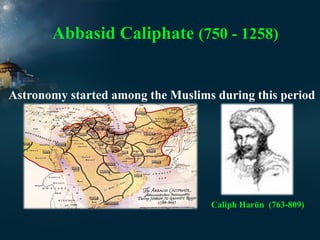
Abbasid Caliphate (750 - 1258)

Astronomy started among the Muslims during this period

Caliph Harūn (763-809)
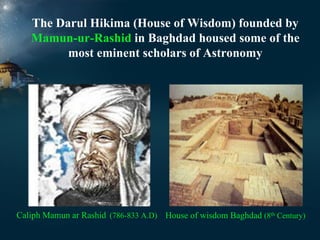
The Darul Hikima (House of Wisdom) founded by
Mamun-ur-Rashid in Baghdad housed some of the
most eminent scholars of Astronomy

Caliph Mamun ar Rashid (786-833 A.D) House of wisdom Baghdad (8th Century)
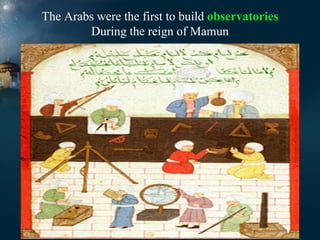
The Arabs were the first to build observatories
During the reign of Mamun
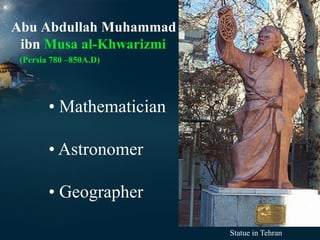
Abu Abdullah Muhammad
ibn Musa al-Khwarizmi
(Persia 780 –850A.D)

• Mathematician
• Astronomer
• Geographer
Statue in Tehran
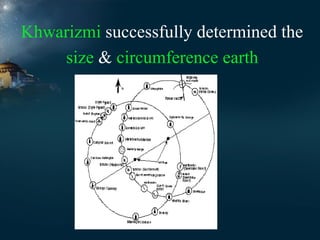
Khwarizmi successfully determined the
size & circumference earth
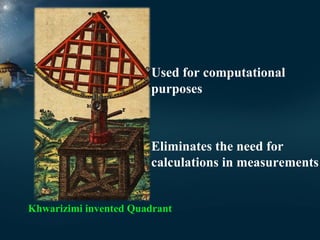
Used for computational
purposes

Eliminates the need for
calculations in measurements
Khwarizimi invented Quadrant
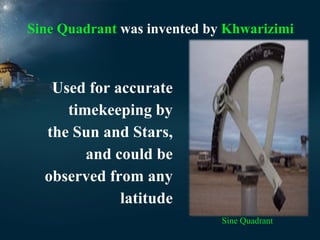
Sine Quadrant was invented by Khwarizimi

Used for accurate
timekeeping by
the Sun and Stars,
and could be
observed from any
latitude
Sine Quadrant
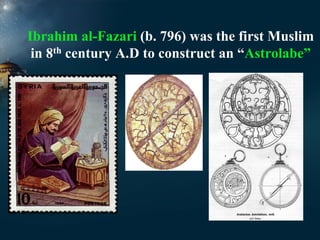
Ibrahim al-Fazari (b. 796) was the first Muslim
in 8th century A.D to construct an “Astrolabe”
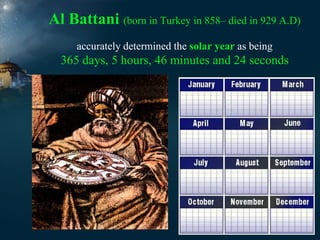
Al Battani (born in Turkey in 858– died in 929 A.D)
accurately determined the solar year as being

365 days, 5 hours, 46 minutes and 24 seconds
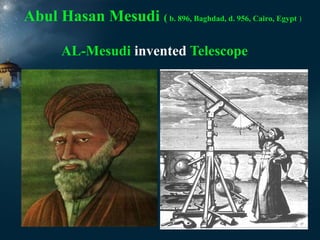
Abul Hasan Mesudi ( b. 896, Baghdad, d. 956, Cairo, Egypt )
AL-Mesudi invented Telescope
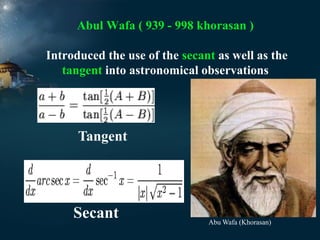
Abul Wafa ( 939 - 998 khorasan )
Introduced the use of the secant as well as the
tangent into astronomical observations

Tangent

Secant

Abu Wafa (Khorasan)
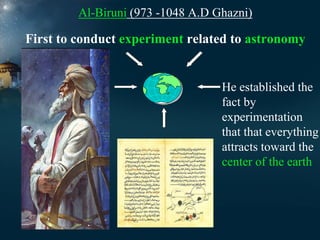
Al-Biruni (973 -1048 A.D Ghazni)

First to conduct experiment related to astronomy

He established the
fact by
experimentation
that that everything
attracts toward the
center of the earth
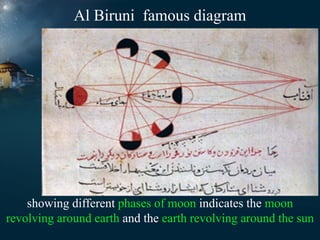
Al Biruni famous diagram

showing different phases of moon indicates the moon
revolving around earth and the earth revolving around the sun
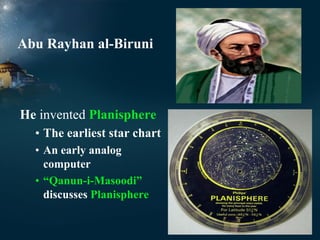
Abu Rayhan al-Biruni

He invented Planisphere
• The earliest star chart
• An early analog
computer
• “Qanun-i-Masoodi”
discusses Planisphere
.

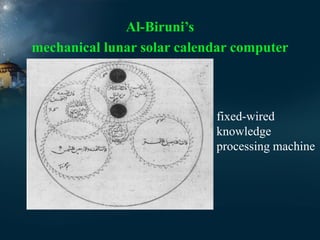
Al-Biruni’s
mechanical lunar solar calendar computer

fixed-wired
knowledge
processing machine
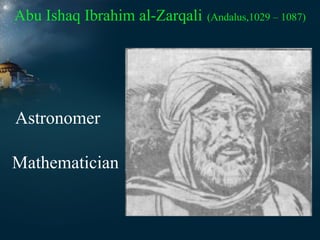
Abu Ishaq Ibrahim al-Zarqali

Astronomer
Mathematician

(Andalus,1029 – 1087)
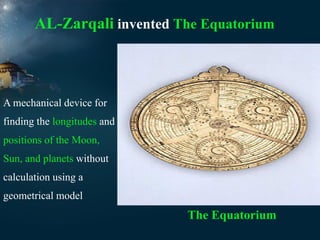
AL-Zarqali invented The Equatorium

A mechanical device for
finding the longitudes and
positions of the Moon,
Sun, and planets without
calculation using a
geometrical model

The Equatorium
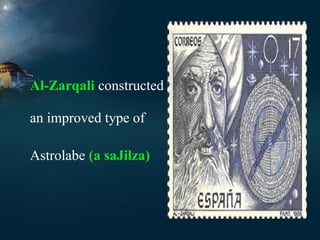
Al-Zarqali constructed
an improved type of
Astrolabe (a saJilza)
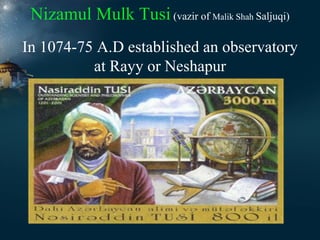
Nizamul Mulk Tusi (vazir of Malik Shah Saljuqi)
In 1074-75 A.D established an observatory
at Rayy or Neshapur
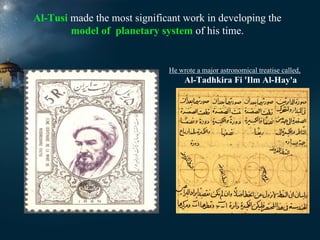
Al-Tusi made the most significant work in developing the
model of planetary system of his time.

He wrote a major astronomical treatise called,

Al-Tadhkira Fi 'Ilm Al-Hay'a
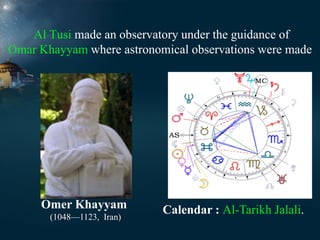
Al Tusi made an observatory under the guidance of
Omar Khayyam where astronomical observations were made

Omer Khayyam
(1048—1123, Iran)

Calendar : Al-Tarikh Jalali.
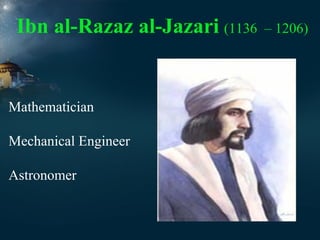
Ibn al-Razaz al-Jazari (1136

Mathematician
Mechanical Engineer
Astronomer

– 1206)
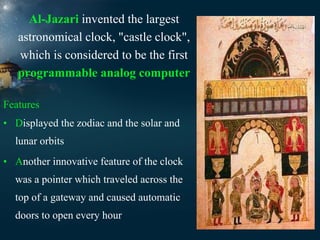
Al-Jazari invented the largest
astronomical clock, "castle clock",
which is considered to be the first
programmable analog computer
Features
• Displayed the zodiac and the solar and
lunar orbits
• Another innovative feature of the clock
was a pointer which traveled across the
top of a gateway and caused automatic
doors to open every hour
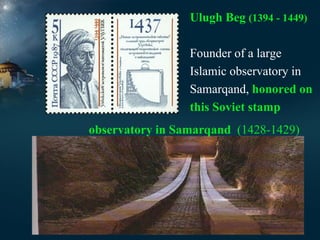
Ulugh Beg (1394 - 1449)
Founder of a large
Islamic observatory in
Samarqand, honored on
this Soviet stamp
observatory in Samarqand (1428-1429)
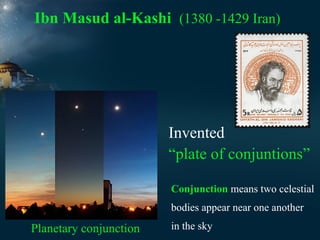
Ibn Masud al-Kashi (1380 -1429 Iran)

Invented
“plate of conjuntions”
Conjunction means two celestial
bodies appear near one another

Planetary conjunction

in the sky
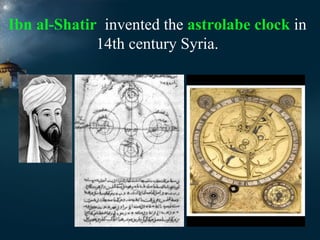
Ibn al-Shatir invented the astrolabe clock in
14th century Syria.

Muslim Contributions in Astronomy

  • 1.
  • 2.
    Al-Quran: By Sun ,Muslims Calculate times for Prayer By Moon, Muslims determined a lunar calendar
  • 3.
    Abbasid Caliphate (750- 1258) Astronomy started among the Muslims during this period Caliph Harūn (763-809)
  • 4.
    The Darul Hikima(House of Wisdom) founded by Mamun-ur-Rashid in Baghdad housed some of the most eminent scholars of Astronomy Caliph Mamun ar Rashid (786-833 A.D) House of wisdom Baghdad (8th Century)
  • 5.
    The Arabs werethe first to build observatories During the reign of Mamun
  • 6.
    Abu Abdullah Muhammad ibnMusa al-Khwarizmi (Persia 780 –850A.D) • Mathematician • Astronomer • Geographer Statue in Tehran
  • 7.
    Khwarizmi successfully determinedthe size & circumference earth
  • 8.
    Used for computational purposes Eliminatesthe need for calculations in measurements Khwarizimi invented Quadrant
  • 9.
    Sine Quadrant wasinvented by Khwarizimi Used for accurate timekeeping by the Sun and Stars, and could be observed from any latitude Sine Quadrant
  • 10.
    Ibrahim al-Fazari (b.796) was the first Muslim in 8th century A.D to construct an “Astrolabe”
  • 11.
    Al Battani (bornin Turkey in 858– died in 929 A.D) accurately determined the solar year as being 365 days, 5 hours, 46 minutes and 24 seconds
  • 12.
    Abul Hasan Mesudi( b. 896, Baghdad, d. 956, Cairo, Egypt ) AL-Mesudi invented Telescope
  • 13.
    Abul Wafa (939 - 998 khorasan ) Introduced the use of the secant as well as the tangent into astronomical observations Tangent Secant Abu Wafa (Khorasan)
  • 14.
    Al-Biruni (973 -1048A.D Ghazni) First to conduct experiment related to astronomy He established the fact by experimentation that that everything attracts toward the center of the earth
  • 15.
    Al Biruni famousdiagram showing different phases of moon indicates the moon revolving around earth and the earth revolving around the sun
  • 16.
    Abu Rayhan al-Biruni Heinvented Planisphere • The earliest star chart • An early analog computer • “Qanun-i-Masoodi” discusses Planisphere
  • 17.
    . Al-Biruni’s mechanical lunar solarcalendar computer fixed-wired knowledge processing machine
  • 18.
    Abu Ishaq Ibrahimal-Zarqali Astronomer Mathematician (Andalus,1029 – 1087)
  • 19.
    AL-Zarqali invented TheEquatorium A mechanical device for finding the longitudes and positions of the Moon, Sun, and planets without calculation using a geometrical model The Equatorium
  • 20.
    Al-Zarqali constructed an improvedtype of Astrolabe (a saJilza)
  • 21.
    Nizamul Mulk Tusi(vazir of Malik Shah Saljuqi) In 1074-75 A.D established an observatory at Rayy or Neshapur
  • 22.
    Al-Tusi made themost significant work in developing the model of planetary system of his time. He wrote a major astronomical treatise called, Al-Tadhkira Fi 'Ilm Al-Hay'a
  • 23.
    Al Tusi madean observatory under the guidance of Omar Khayyam where astronomical observations were made Omer Khayyam (1048—1123, Iran) Calendar : Al-Tarikh Jalali.
  • 24.
    Ibn al-Razaz al-Jazari(1136 Mathematician Mechanical Engineer Astronomer – 1206)
  • 25.
    Al-Jazari invented thelargest astronomical clock, "castle clock", which is considered to be the first programmable analog computer Features • Displayed the zodiac and the solar and lunar orbits • Another innovative feature of the clock was a pointer which traveled across the top of a gateway and caused automatic doors to open every hour
  • 26.
    Ulugh Beg (1394- 1449) Founder of a large Islamic observatory in Samarqand, honored on this Soviet stamp observatory in Samarqand (1428-1429)
  • 27.
    Ibn Masud al-Kashi(1380 -1429 Iran) Invented “plate of conjuntions” Conjunction means two celestial bodies appear near one another Planetary conjunction in the sky
  • 28.
    Ibn al-Shatir inventedthe astrolabe clock in 14th century Syria.