Environments Project
By
MurielTchemdji
e
Definition of Music
• An artistic form of auditory communication incorporating
instrumental or vocal tones in a structured and continuous manner
Music
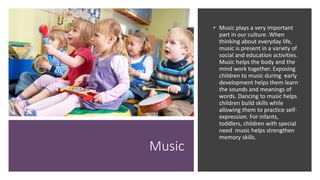
• Music plays a very important
part in our culture. When
thinking about everyday life,
music is present in a variety of
social and education activities.
Music helps the body and the
mind work together. Exposing
children to music during early
development helps them learn
the sounds and meanings of
words. Dancing to music helps
children build skills while
allowing them to practice self-
expression. For infants,
toddlers, children with special
need music helps strengthen
memory skills.
3-5 years
How music should be accommodated for infants
and toddlers
Very early in their life, children will start to identify
rhythm and even move to the beats of music. After
all, music is mean to touch our souls, besides that
music provides cognitive benefits that support
children’s early development.
Music increases toddler’s sensory development
exposing child to different types of music can
help create more pathways between the cells in
their brains.
Toddlers
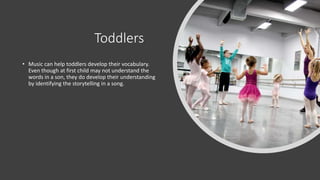
• Music can help toddlers develop their vocabulary.
Even though at first child may not understand the
words in a son, they do develop their understanding
by identifying the storytelling in a song.
Infants
• A 2016 study at the university of Southern California’s Brain and
Creativity Institute found that musical experience in childhood can
accelerate brain development, particularly in the areas of language
acquisition and reading skills.
• Children of all ages express themselves through music. Even young
infants sway, or move their hands in response to music.
• Infants recognize the melody of a song long before they understand
the words. Quiet, background music can be soothing for infants,
especially at sleep time.
• Music helps infants to grow. Recent studies shown that music affects
the physical, emotional, and intellectual development of babies and
children and strengthens cognitive and sensory development
Children with special needs and cultural
differences
• A nonprofit group is using music to break through barriers in the lives
of children with special needs. Kids are forging new friendships and
learning a thing or two about life along the way.
• Music has the capacity to provide a positive outlet for creative
expression for children with special needs. In fact, research from the
American. Music Therapy Association suggests a positive connection
between music and cognitive functioning. There is even evidence
supporting the encouraging changes that music can have on behavior,
verbal skills, and self-expression.
Special needs and
cultural differences
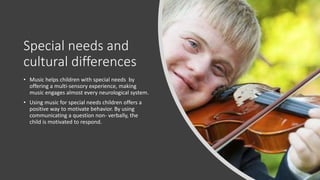
• Music helps children with special needs by
offering a multi-sensory experience, making
music engages almost every neurological system.
• Using music for special needs children offers a
positive way to motivate behavior. By using
communicating a question non- verbally, the
child is motivated to respond.
Materials
in music
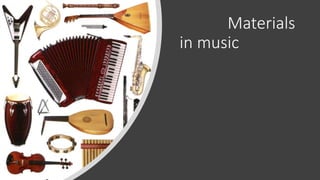
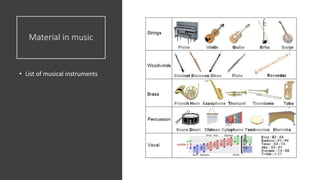
Material in music
• List of musical instruments
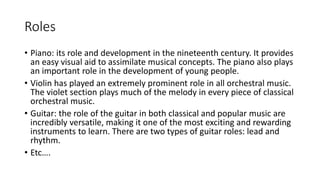
Roles
• Piano: its role and development in the nineteenth century. It provides
an easy visual aid to assimilate musical concepts. The piano also plays
an important role in the development of young people.
• Violin has played an extremely prominent role in all orchestral music.
The violet section plays much of the melody in every piece of classical
orchestral music.
• Guitar: the role of the guitar in both classical and popular music are
incredibly versatile, making it one of the most exciting and rewarding
instruments to learn. There are two types of guitar roles: lead and
rhythm.
• Etc….
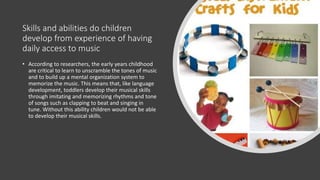
Skills and abilities do children
develop from experience of having
daily access to music
• According to researchers, the early years childhood
are critical to learn to unscramble the tones of music
and to build up a mental organization system to
memorize the music. This means that, like language
development, toddlers develop their musical skills
through imitating and memorizing rhythms and tone
of songs such as clapping to beat and singing in
tune. Without this ability children would not be able
to develop their musical skills.
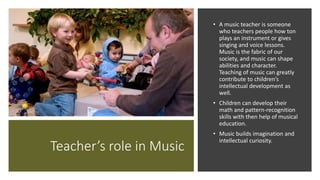
Teacher’s role in Music
• A music teacher is someone
who teachers people how ton
plays an instrument or gives
singing and voice lessons.
Music is the fabric of our
society, and music can shape
abilities and character.
Teaching of music can greatly
contribute to children’s
intellectual development as
well.
• Children can develop their
math and pattern-recognition
skills with then help of musical
education.
• Music builds imagination and
intellectual curiosity.
4 Milestones in two different
developmental domains
• Milestone In Music, LLC, is an award-winning provider of early childhood
music education for corporate and private childcare programs.
• Music has the ability to develop areas of a child’s interaction, physical co-
ordination, concentration, memory, psychological and intellectual
perception.
• In music, we have four basic areas of musical development: Rhythm, pulse,
pitch and listening.
• Gross motor skills: uses an alternating pattern with feet on stairs
• Fine motor skills: child should have improved hand-eye coordination which
results in an ability to string beads, complete puzzles, and color insides
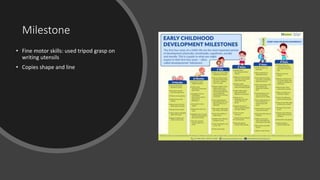
Milestone
• Fine motor skills: used tripod grasp on
writing utensils
• Copies shape and line
• According to the study, Kids and Media @ The New Millennium music
is a dominant force in kid’s lives. “After TV, music is the medium of
choice for most kids, especially older teen,” said Donald F. Roberts Jr.,
Ph D., professor of communicating at Stanford University and an
author of the study.
• Amount of kids spend each day, on average: listening to music 1:27
• Amount of time kids spend each week, on average: listening to music
10:04
• https://www.playgroupnsw.org.au/ParentResources/EarlyChildhoodD
evelopment/importance-of-music-toddler-development
• https://novakdjokovicfoundation.org/importance-music-early-
childhood-development/
• https://www.crisisprevention.com/Blog/January-2014/Benefits-of-
Music-for-Children-With-Special-Needs
• https://novakdjokovicfoundation.org/wp-
content/uploads/2016/05/children-with-music-instruments-musical-
education-for-kids-colorful-wooden-art-toys-little-girl.jpg
• https://www.verywellfamily.com/3-year-old-developmental-
milestones-2764713

Music

  • 1.
  • 2.
    Definition of Music •An artistic form of auditory communication incorporating instrumental or vocal tones in a structured and continuous manner
  • 3.
    Music • Music playsa very important part in our culture. When thinking about everyday life, music is present in a variety of social and education activities. Music helps the body and the mind work together. Exposing children to music during early development helps them learn the sounds and meanings of words. Dancing to music helps children build skills while allowing them to practice self- expression. For infants, toddlers, children with special need music helps strengthen memory skills.
  • 4.
    3-5 years How musicshould be accommodated for infants and toddlers Very early in their life, children will start to identify rhythm and even move to the beats of music. After all, music is mean to touch our souls, besides that music provides cognitive benefits that support children’s early development. Music increases toddler’s sensory development exposing child to different types of music can help create more pathways between the cells in their brains.
  • 5.
    Toddlers • Music canhelp toddlers develop their vocabulary. Even though at first child may not understand the words in a son, they do develop their understanding by identifying the storytelling in a song.
  • 6.
    Infants • A 2016study at the university of Southern California’s Brain and Creativity Institute found that musical experience in childhood can accelerate brain development, particularly in the areas of language acquisition and reading skills. • Children of all ages express themselves through music. Even young infants sway, or move their hands in response to music. • Infants recognize the melody of a song long before they understand the words. Quiet, background music can be soothing for infants, especially at sleep time. • Music helps infants to grow. Recent studies shown that music affects the physical, emotional, and intellectual development of babies and children and strengthens cognitive and sensory development
  • 7.
    Children with specialneeds and cultural differences • A nonprofit group is using music to break through barriers in the lives of children with special needs. Kids are forging new friendships and learning a thing or two about life along the way. • Music has the capacity to provide a positive outlet for creative expression for children with special needs. In fact, research from the American. Music Therapy Association suggests a positive connection between music and cognitive functioning. There is even evidence supporting the encouraging changes that music can have on behavior, verbal skills, and self-expression.
  • 8.
    Special needs and culturaldifferences • Music helps children with special needs by offering a multi-sensory experience, making music engages almost every neurological system. • Using music for special needs children offers a positive way to motivate behavior. By using communicating a question non- verbally, the child is motivated to respond.
  • 9.
  • 10.
    Material in music •List of musical instruments
  • 11.
    Roles • Piano: itsrole and development in the nineteenth century. It provides an easy visual aid to assimilate musical concepts. The piano also plays an important role in the development of young people. • Violin has played an extremely prominent role in all orchestral music. The violet section plays much of the melody in every piece of classical orchestral music. • Guitar: the role of the guitar in both classical and popular music are incredibly versatile, making it one of the most exciting and rewarding instruments to learn. There are two types of guitar roles: lead and rhythm. • Etc….
  • 12.
    Skills and abilitiesdo children develop from experience of having daily access to music • According to researchers, the early years childhood are critical to learn to unscramble the tones of music and to build up a mental organization system to memorize the music. This means that, like language development, toddlers develop their musical skills through imitating and memorizing rhythms and tone of songs such as clapping to beat and singing in tune. Without this ability children would not be able to develop their musical skills.
  • 13.
    Teacher’s role inMusic • A music teacher is someone who teachers people how ton plays an instrument or gives singing and voice lessons. Music is the fabric of our society, and music can shape abilities and character. Teaching of music can greatly contribute to children’s intellectual development as well. • Children can develop their math and pattern-recognition skills with then help of musical education. • Music builds imagination and intellectual curiosity.
  • 14.
    4 Milestones intwo different developmental domains • Milestone In Music, LLC, is an award-winning provider of early childhood music education for corporate and private childcare programs. • Music has the ability to develop areas of a child’s interaction, physical co- ordination, concentration, memory, psychological and intellectual perception. • In music, we have four basic areas of musical development: Rhythm, pulse, pitch and listening. • Gross motor skills: uses an alternating pattern with feet on stairs • Fine motor skills: child should have improved hand-eye coordination which results in an ability to string beads, complete puzzles, and color insides
  • 15.
    Milestone • Fine motorskills: used tripod grasp on writing utensils • Copies shape and line
  • 16.
    • According tothe study, Kids and Media @ The New Millennium music is a dominant force in kid’s lives. “After TV, music is the medium of choice for most kids, especially older teen,” said Donald F. Roberts Jr., Ph D., professor of communicating at Stanford University and an author of the study. • Amount of kids spend each day, on average: listening to music 1:27 • Amount of time kids spend each week, on average: listening to music 10:04
  • 17.
    • https://www.playgroupnsw.org.au/ParentResources/EarlyChildhoodD evelopment/importance-of-music-toddler-development • https://novakdjokovicfoundation.org/importance-music-early- childhood-development/ •https://www.crisisprevention.com/Blog/January-2014/Benefits-of- Music-for-Children-With-Special-Needs • https://novakdjokovicfoundation.org/wp- content/uploads/2016/05/children-with-music-instruments-musical- education-for-kids-colorful-wooden-art-toys-little-girl.jpg • https://www.verywellfamily.com/3-year-old-developmental- milestones-2764713