Presented by-
Ekta Sharma
Hemant Gaur
Himani Panwar
Rajan Chhangani
Shubham Jain
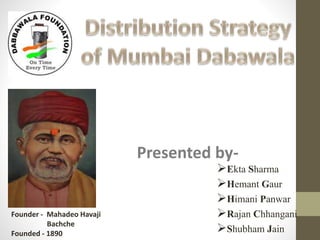
Founder - Mahadeo Havaji
Bachche
Founded - 1890
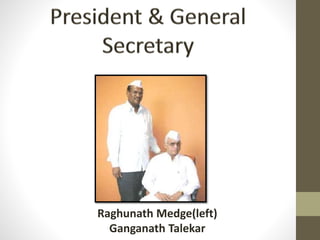
Raghunath Medge(left)
Ganganath Talekar
 History of Mumbai Dabbawalas.
 What is NMTBSA?
 SWOT Analysis
• Strength
• Weakness
• Opportunities
• Threat
 Organizational Structure.
 Coding system of Dabbawalas.
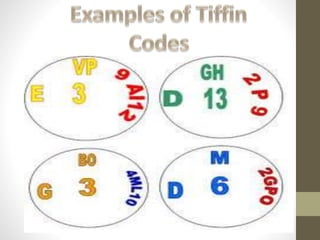
 Examples of Tiffin codes.
 Achievements.
 Conclusion.
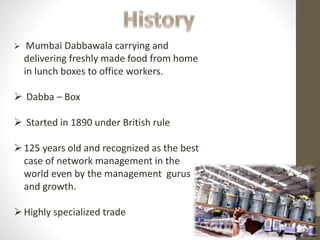
 Mumbai Dabbawala carrying and
delivering freshly made food from home
in lunch boxes to office workers.
 Dabba – Box
 Started in 1890 under British rule
125 years old and recognized as the best
case of network management in the
world even by the management gurus
and growth.
Highly specialized trade
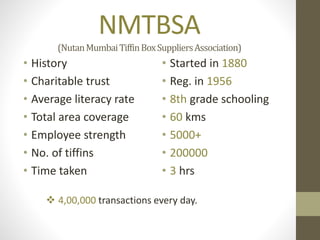
NMTBSA
(NutanMumbaiTiffinBoxSuppliersAssociation)
• History
• Charitable trust
• Average literacy rate
• Total area coverage
• Employee strength
• No. of tiffins
• Time taken
• Started in 1880
• Reg. in 1956
• 8th grade schooling
• 60 kms
• 5000+
• 200000
• 3 hrs
 4,00,000 transactions every day.
Team work, discipline, honesty.
Time management, ownership and pride in
the work.
Customer satisfaction, low operational
cost.
Process consistency, service commitment.
Satisfaction of team members
Financial independence for the small group
of Dabbawalas.
1. STRENGTH
2. WEAKNESS
Highly dependent upon Mumbai local
trains.
Limited access to education limits
diversification of members to other
business/jobs.
Limited fund for the association limits the
governing body to implement welfare
schemes.
3. OPPORTUNITY
Tie up with caterers to serve variety of meals i.e.,
diet food, Chinese, continental food, food for
fasting.
Expanding network in other cities.
 Generating revenue by promoting other brands.
 Diversification by offering miscellaneous services
like Courier, Rail/bus ticketing etc.
Booking of service through internet and SMS.
Opportunity of expansion of service on the
routes of Mumbai Metro.
4. THREAT
Flexi timing/ work from home culture.
During high alerts in the city they have to
face a lot of problems in getting their self
and all the lunch boxes checked so this
creates problem and also the time is being
wasted.
Catering services offering Tiffin services.
Paper food vouchers and smart cards.
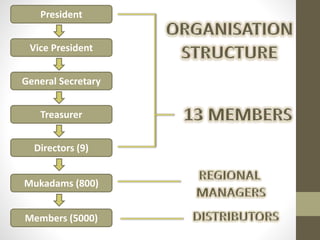
President
Vice President
General Secretary
Treasurer
Directors (9)
Mukadams (800)
Members (5000)
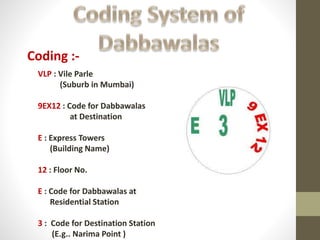
VLP : Vile Parle
(Suburb in Mumbai)
9EX12 : Code for Dabbawalas
at Destination
E : Express Towers
(Building Name)
12 : Floor No.
E : Code for Dabbawalas at
Residential Station
3 : Code for Destination Station
(E.g.. Narima Point )
Coding :-
 ISO 2000 Certificates to Dabbawalas
 Six Sigma Certification by Forbs group
 Outstanding service organization awarded
by NIQR
 Marketing through Dabbawala many T.V.
Channels and newspaper
 It keeps operational cost as low as possible.
 It keeps capital investment bare minimum &
give first priority to customers because they
think that customer is not the Raja but
Maharaja.
 Deviation from your core competency can
reduce focus and affect current sales and
profits negatively.
 Technology is to support business and
business is not there to support technology.
 There is flat organization.
Mumbai dabbawala
Mumbai dabbawala

Mumbai dabbawala

  • 2.
    Presented by- Ekta Sharma HemantGaur Himani Panwar Rajan Chhangani Shubham Jain Founder - Mahadeo Havaji Bachche Founded - 1890
  • 3.
  • 4.
     History ofMumbai Dabbawalas.  What is NMTBSA?  SWOT Analysis • Strength • Weakness • Opportunities • Threat  Organizational Structure.  Coding system of Dabbawalas.  Examples of Tiffin codes.  Achievements.  Conclusion.
  • 5.
     Mumbai Dabbawalacarrying and delivering freshly made food from home in lunch boxes to office workers.  Dabba – Box  Started in 1890 under British rule 125 years old and recognized as the best case of network management in the world even by the management gurus and growth. Highly specialized trade
  • 6.
    NMTBSA (NutanMumbaiTiffinBoxSuppliersAssociation) • History • Charitabletrust • Average literacy rate • Total area coverage • Employee strength • No. of tiffins • Time taken • Started in 1880 • Reg. in 1956 • 8th grade schooling • 60 kms • 5000+ • 200000 • 3 hrs  4,00,000 transactions every day.
  • 7.
    Team work, discipline,honesty. Time management, ownership and pride in the work. Customer satisfaction, low operational cost. Process consistency, service commitment. Satisfaction of team members Financial independence for the small group of Dabbawalas. 1. STRENGTH
  • 8.
    2. WEAKNESS Highly dependentupon Mumbai local trains. Limited access to education limits diversification of members to other business/jobs. Limited fund for the association limits the governing body to implement welfare schemes.
  • 9.
    3. OPPORTUNITY Tie upwith caterers to serve variety of meals i.e., diet food, Chinese, continental food, food for fasting. Expanding network in other cities.  Generating revenue by promoting other brands.  Diversification by offering miscellaneous services like Courier, Rail/bus ticketing etc. Booking of service through internet and SMS. Opportunity of expansion of service on the routes of Mumbai Metro.
  • 10.
    4. THREAT Flexi timing/work from home culture. During high alerts in the city they have to face a lot of problems in getting their self and all the lunch boxes checked so this creates problem and also the time is being wasted. Catering services offering Tiffin services. Paper food vouchers and smart cards.
  • 11.
  • 12.
    VLP : VileParle (Suburb in Mumbai) 9EX12 : Code for Dabbawalas at Destination E : Express Towers (Building Name) 12 : Floor No. E : Code for Dabbawalas at Residential Station 3 : Code for Destination Station (E.g.. Narima Point ) Coding :-
  • 14.
     ISO 2000Certificates to Dabbawalas  Six Sigma Certification by Forbs group  Outstanding service organization awarded by NIQR  Marketing through Dabbawala many T.V. Channels and newspaper
  • 15.
     It keepsoperational cost as low as possible.  It keeps capital investment bare minimum & give first priority to customers because they think that customer is not the Raja but Maharaja.  Deviation from your core competency can reduce focus and affect current sales and profits negatively.  Technology is to support business and business is not there to support technology.  There is flat organization.