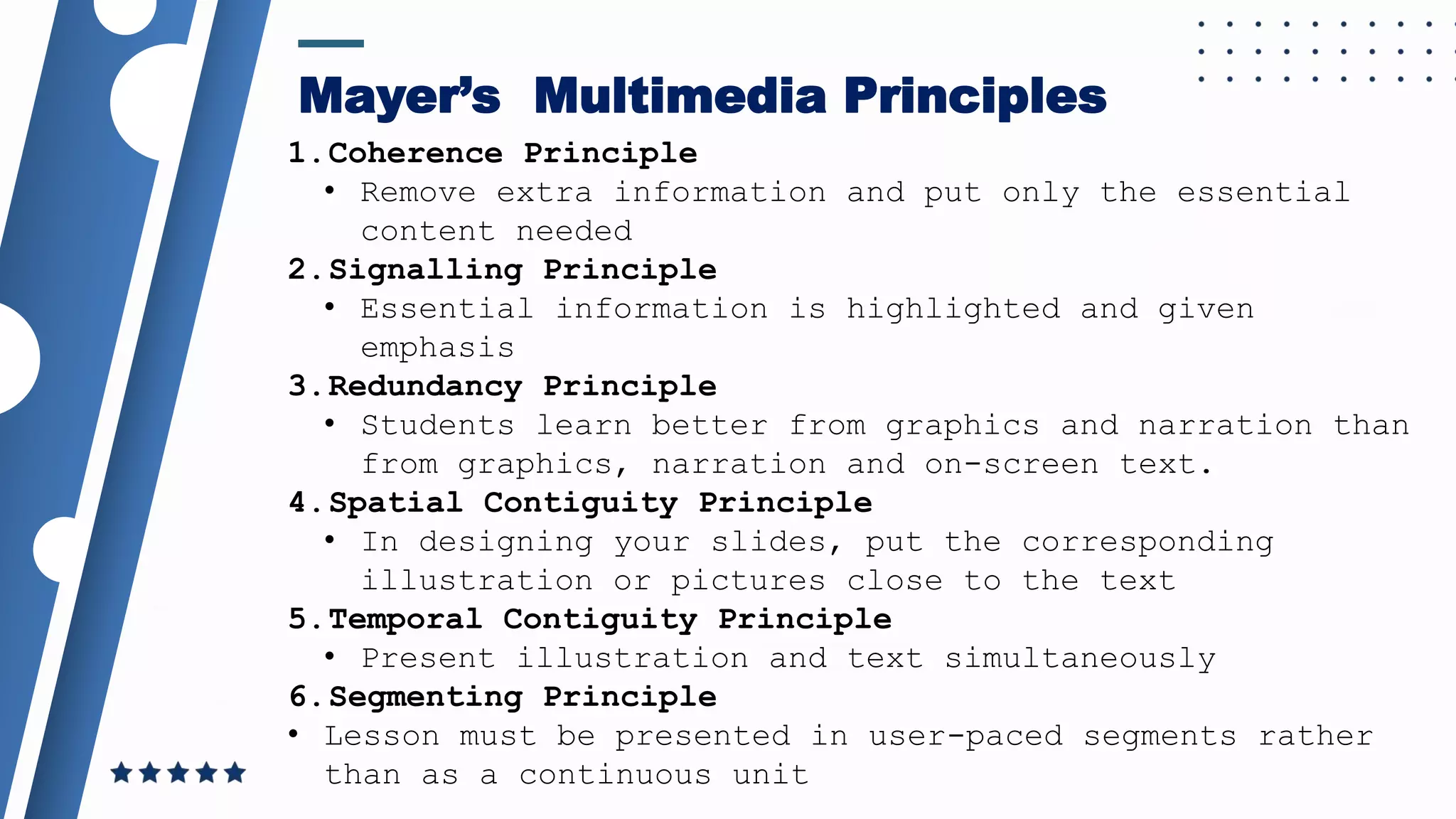
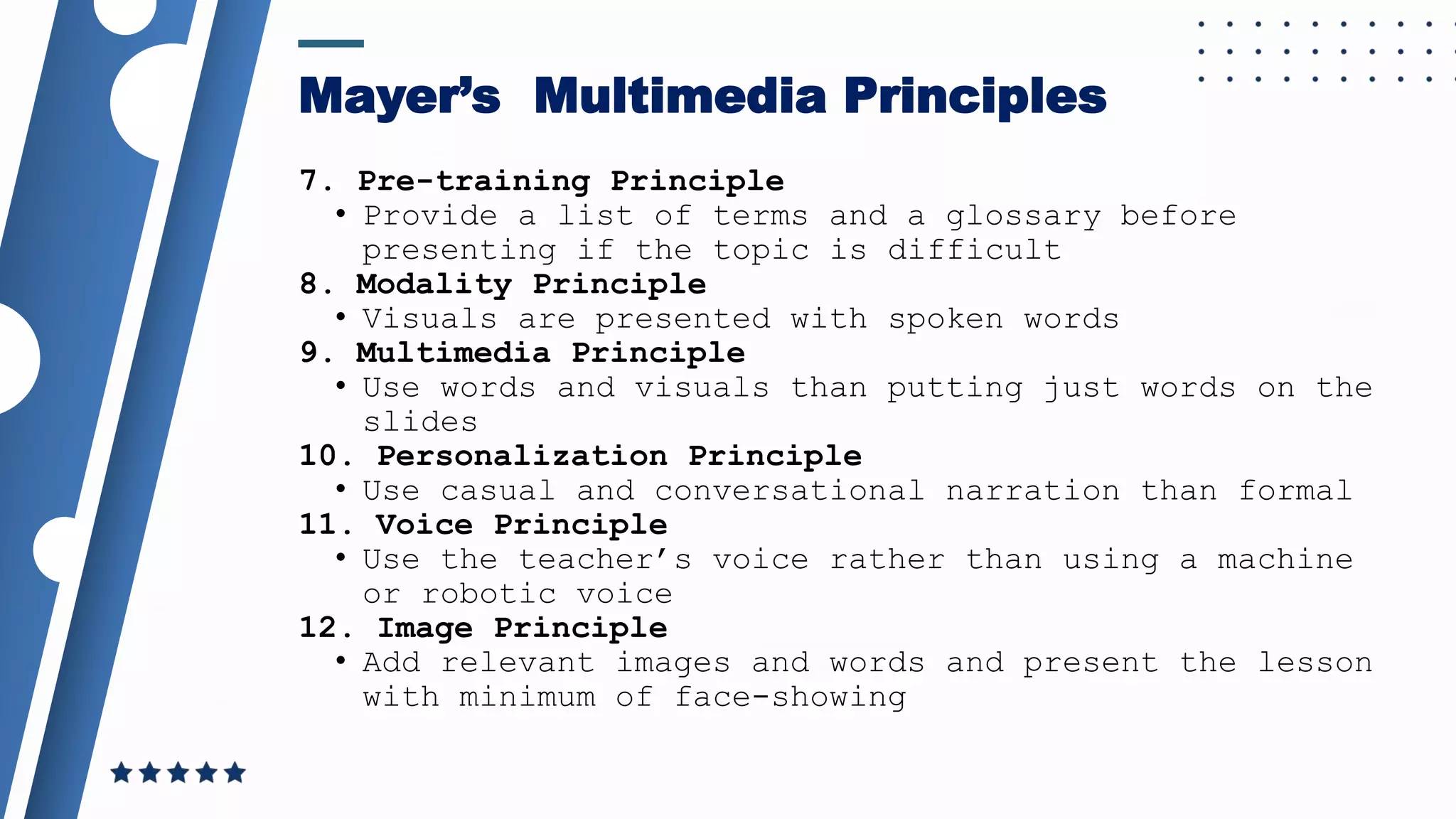
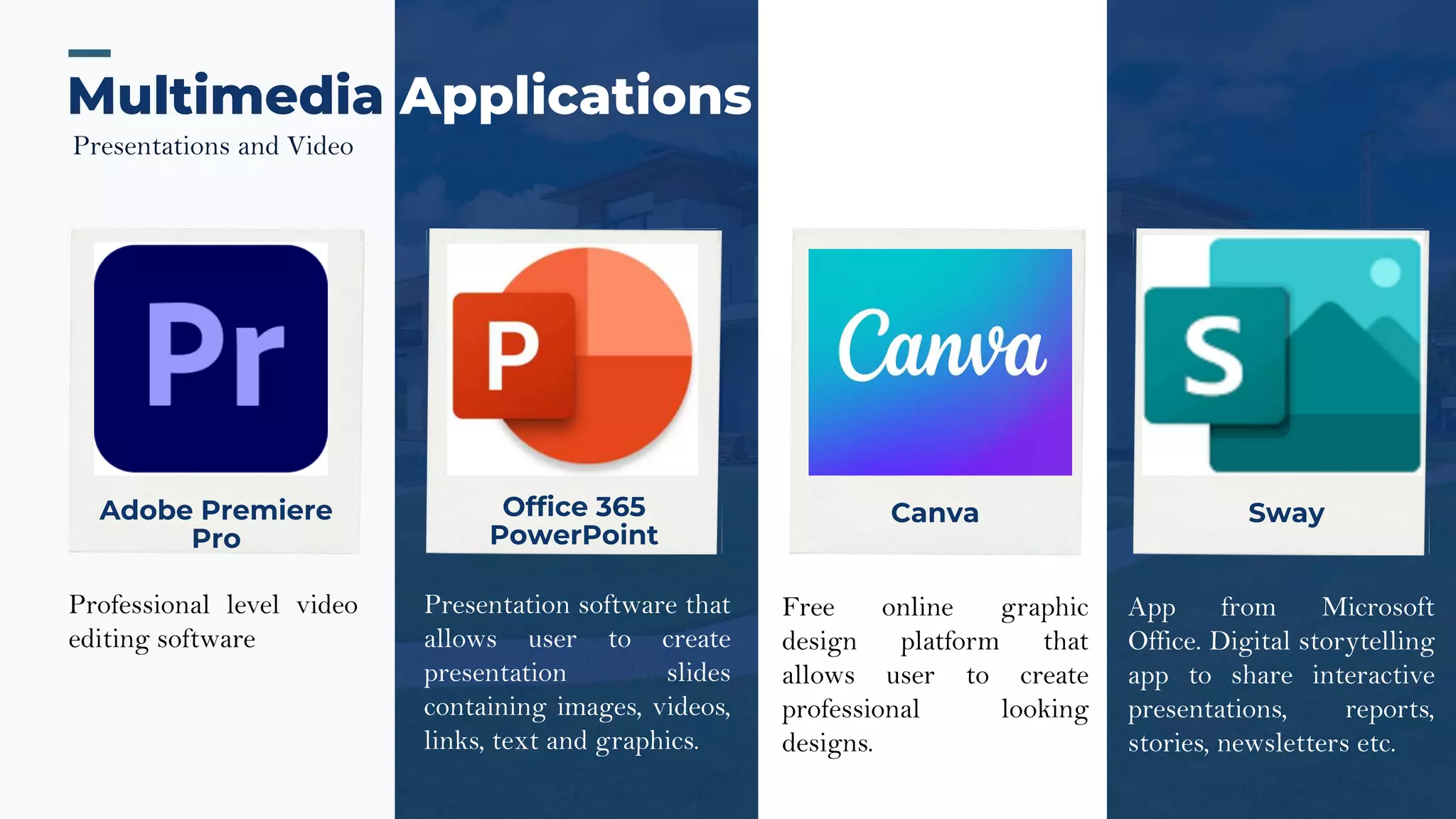
Richard Mayer's cognitive theory of multimedia learning posits that students learn better when information is presented through both auditory and visual channels simultaneously. This allows them to absorb more sensory information, leading to increased attentiveness and retention. Some key principles of Mayer's multimedia learning include coherence, signalling, redundancy, spatial and temporal contiguity, segmenting, pre-training, modality, multimedia, personalization, voice, and image principles. Benefits of multimedia in education include extensive understanding, increased positive emotions, greater access to diverse knowledge, and enabling immersive exploration without leaving the classroom. Popular multimedia tools for teaching and learning include Canva, Sway, TED-Ed, Projeqt, Edmodo, and S