By Rachel Bartlett
What is Multicultural Education?
 Multicultural education is a form of education
designed to integrate the cultures of different races
into an educational system. It provides students with
knowledge of different cultural backgrounds,
including beliefs, perspectives, history, and values. It
promotes critical thinking, while moving towards
cultural pluralism, and encouraging positive racial
characteristics in the classroom.
Pros of Multicultural Education?
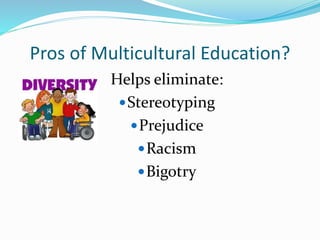
Helps eliminate:
Stereotyping
Prejudice
Racism
Bigotry
Pros of Multicultural Education
(Continued)
Reduction of:
 Fear
 Ignorance
 Personal detachment
Increase in:
 Minority retention and classroom performance
Cons of Multicultural Education
 Causes students to feel atypical
 Resentment in changes of traditions and
curriculum
 Rejects and defies the American goals of
assimilation and integration (The Great American
Melting Pot)
Creating the ELL (English Language
Learners) classroom
When it comes to teaching ELL’s (English Language
Learners) and creating a positive learning environment
for them, knowing your students background and being
aware of social and emotional needs are vital. Doing
everything you can to make them comfortable in the
classroom to help ease the nerves of being submerged in
a whole new culture is the key. This can be accomplished
in a number of ways.
Teaching Multicultural Learners
 Keep your body language open and SMILE!
 Increase your knowledge of the English language and language acquisition to
help in pinpointing strategies that match the student’s language proficiency
 Structure and clear goal expectations to help the student as they acclimate to
their surroundings
 Immerse students in the English language by keeping it accessible (books of
various topics/grade levels in room, labels on items in rooms, vocabulary
posters, word walls)
 Allow peer assisted learning, which encourages language use, supports
vocabulary development, comprehension, and social interaction
 Welcome the students’ cultures and allow them to share their experiences with
the class and connect classroom content to culture.
 Establish communication with parents and family to foster a home-school
collaboration and share information with other teachers to foster the school-
school collaboration to ensure the students needs (emotional and social) are
being met
Goals of Multicultural Learning
 Creating a safe, accepting and successful learning
environment for all
 Increasing awareness of global issues
 Strengthening cultural consciousness
 Strengthening intercultural awareness
 Teaching students that there are multiple historical
perspectives
 Encouraging critical thinking
 Preventing prejudice and discrimination
Three Teaching and/or Learning Strategies to
Accommodate Multicultural Learners
#1
Peer tutoring
This is a strategy that pairs two students of different
abilities and backgrounds. It is extremely effective in
a Multicultural classroom. It promotes
communication, motivates students, and helps
learners attain higher levels of achievement while
developing inter-ethnic friendships.
Teaching strategies (continued)
#2
Role Playing
Allows students to express their opinions. Students can
trade places with another student or a character from
literature. This will allow students to express and
examine beliefs, attitudes, and feelings about prejudice
and discrimination. Poetry, biographies, and powerful
fiction are excellent sources for this.
Teaching strategies (continued)
#3
Who I am Poems
Students write short poems, starting each line with
“I am,” encouraging them to describe in their own
words who they are. This increases self-awareness
and development. It is a safe way for participants to
think about and share the influences that have
shaped their identities. It will help form connections
as students find similarities and differences between
themselves and other classmates.
Multicultural education

Multicultural education

  • 1.
  • 2.
    What is MulticulturalEducation?  Multicultural education is a form of education designed to integrate the cultures of different races into an educational system. It provides students with knowledge of different cultural backgrounds, including beliefs, perspectives, history, and values. It promotes critical thinking, while moving towards cultural pluralism, and encouraging positive racial characteristics in the classroom.
  • 3.
    Pros of MulticulturalEducation? Helps eliminate: Stereotyping Prejudice Racism Bigotry
  • 4.
    Pros of MulticulturalEducation (Continued) Reduction of:  Fear  Ignorance  Personal detachment Increase in:  Minority retention and classroom performance
  • 5.
    Cons of MulticulturalEducation  Causes students to feel atypical  Resentment in changes of traditions and curriculum  Rejects and defies the American goals of assimilation and integration (The Great American Melting Pot)
  • 6.
    Creating the ELL(English Language Learners) classroom When it comes to teaching ELL’s (English Language Learners) and creating a positive learning environment for them, knowing your students background and being aware of social and emotional needs are vital. Doing everything you can to make them comfortable in the classroom to help ease the nerves of being submerged in a whole new culture is the key. This can be accomplished in a number of ways.
  • 7.
    Teaching Multicultural Learners Keep your body language open and SMILE!  Increase your knowledge of the English language and language acquisition to help in pinpointing strategies that match the student’s language proficiency  Structure and clear goal expectations to help the student as they acclimate to their surroundings  Immerse students in the English language by keeping it accessible (books of various topics/grade levels in room, labels on items in rooms, vocabulary posters, word walls)  Allow peer assisted learning, which encourages language use, supports vocabulary development, comprehension, and social interaction  Welcome the students’ cultures and allow them to share their experiences with the class and connect classroom content to culture.  Establish communication with parents and family to foster a home-school collaboration and share information with other teachers to foster the school- school collaboration to ensure the students needs (emotional and social) are being met
  • 8.
    Goals of MulticulturalLearning  Creating a safe, accepting and successful learning environment for all  Increasing awareness of global issues  Strengthening cultural consciousness  Strengthening intercultural awareness  Teaching students that there are multiple historical perspectives  Encouraging critical thinking  Preventing prejudice and discrimination
  • 9.
    Three Teaching and/orLearning Strategies to Accommodate Multicultural Learners #1 Peer tutoring This is a strategy that pairs two students of different abilities and backgrounds. It is extremely effective in a Multicultural classroom. It promotes communication, motivates students, and helps learners attain higher levels of achievement while developing inter-ethnic friendships.
  • 10.
    Teaching strategies (continued) #2 RolePlaying Allows students to express their opinions. Students can trade places with another student or a character from literature. This will allow students to express and examine beliefs, attitudes, and feelings about prejudice and discrimination. Poetry, biographies, and powerful fiction are excellent sources for this.
  • 11.
    Teaching strategies (continued) #3 WhoI am Poems Students write short poems, starting each line with “I am,” encouraging them to describe in their own words who they are. This increases self-awareness and development. It is a safe way for participants to think about and share the influences that have shaped their identities. It will help form connections as students find similarities and differences between themselves and other classmates.