Mule-Architecture
2
Introduction
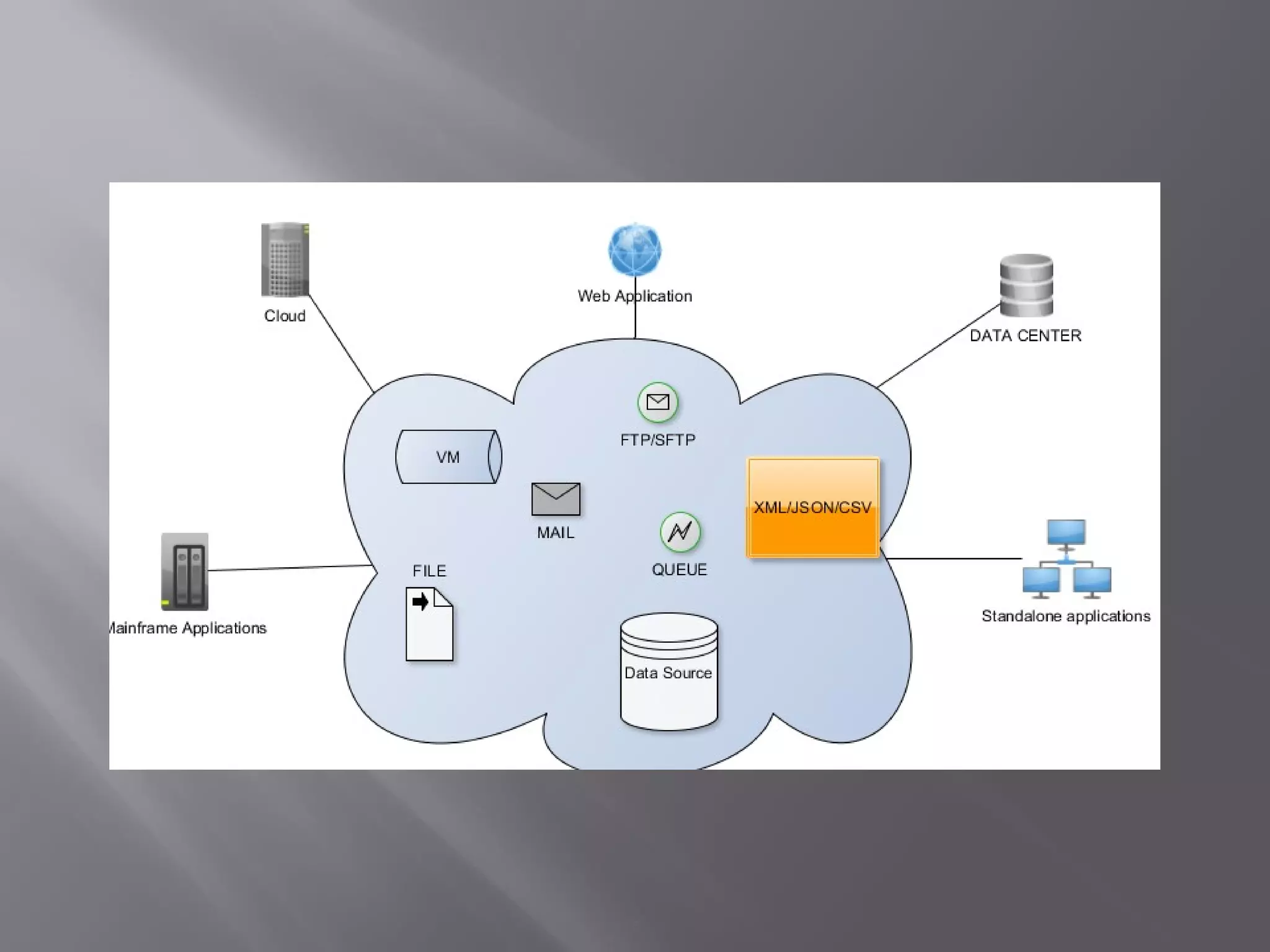
Mule is a lightweight integration platform that most widely used integration 
platform in the industry. Mule enables you to connect anything, 
anywhere. Rather than creating multiple point-to-point integrations between 
systems, services, APIs, and devices, you can use Mule to intelligently 
manage message routing, data mapping, orchestration, reliability, security, 
and scalability between nodes. 
Mule Soft Gurus/Experts says Mule is so named because it “carries the 
heavy development load” of connecting systems.
3
MULE-ESB Integration advantages
• Helps to connect to any third party application easily using Mule
• We can integrate the applications or systems on premise or in the cloud 
(Web/Standalone/ Enterprise applications).
• Easily integrate anything from a “plain old Java object” (POJO) to a 
component from another framework.
• Move your environment to cloud and communicate easily with cloud 
providers 
• Provides most of the standard/advanced security features for the 
applications
• B2B e-commerce activities
4
Providing an External HTTP or HTTPS Port
Mule ESB is based on ideas from Enterprise Service Bus (ESB)
architectures. The key advantage of an ESB is that it allows different
applications to communicate with each other by acting as a transit system
for carrying data between applications within your intranet or across the
Internet. There are currently several commercial ESB implementations on
the market. However, many of these provide limited functionality or are built
on top of an existing application server or messaging server, locking you
into that specific vendor. Mule ESB is vendor-neutral, so different vendor
implementations can plug in to it. You are never locked in to a specific
vendor when you use Mule ESB.
5
6
Elements in Mule
Flow is sequence of processing events
A Message enters a flow may pass a wide variety of processors.
Message Source is component consist of Request-Response Inbound
End-point
Message Processors is processing your data using transformer or
component
The advantage of networking your applications is that one application
can send data to another application. However, many applications
don't have the ability to read or process data coming from another
application. Mule ESB solves this problem by providing a messaging
framework that reads, transforms, and sends data as messages
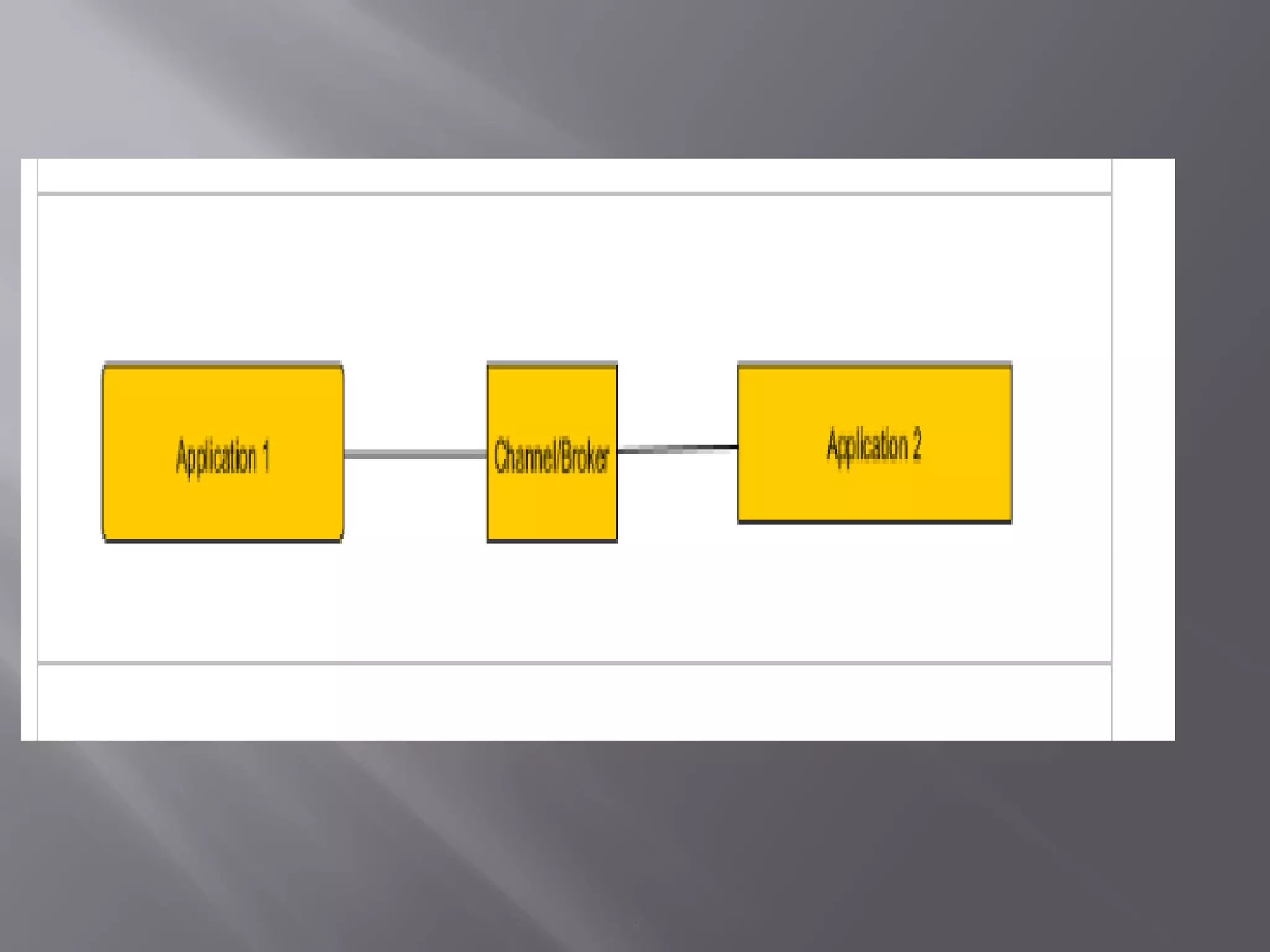
between applications. A message is simply a packet of data that can
be handled and sent between applications on a specific channel (also
called a queue).
7
Logging
All log messages from your application are captured by the CloudHub
logging service and available through the log search tool in the CloudHub
console. If you wish to expose additional information in your logs for
diagnostic or audit purposes, Mule provides a logger element for fine
grained logging of message content.
8
9
Mule Message Structure
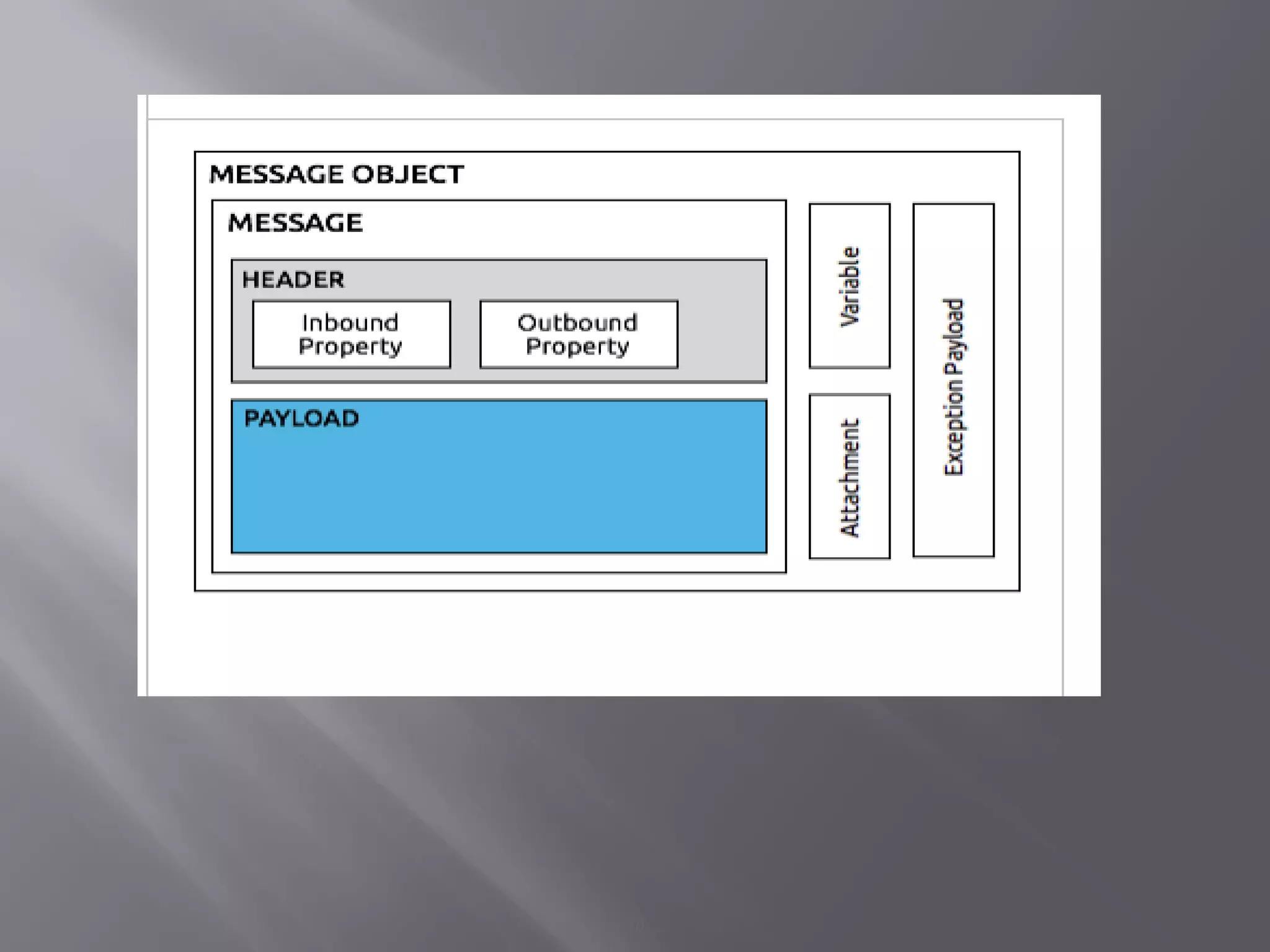
Message Object consist Message
Message contains the mail message with header information and the
header information is consist of inbound property and outbound
property . Inbound property will be immutable. Below diagram
illustrates the message structure.
10
Mule architecture

Mule architecture