The Most Effective Study Techniques

         to Increase Student Learning


Source: “Improving Students’ Learning With Effective Learning Techniques: Promising Directions
From Cognitive and Educational Psychology,” by John Dunlosky, Daniel Willingham et al.,
Psychological Science in the Public Interest, 2013, Volume 14, number 1, pps. 4-58.
Simple study techniques can
significantly improve learning and
achievement, but:


1)Teachers aren’t being told about them

2) Many students don’t know about them or are not
  using them enough or well enough

Researchers did an exhaustive review of studies on learning
  techniques to identify the most effective ones
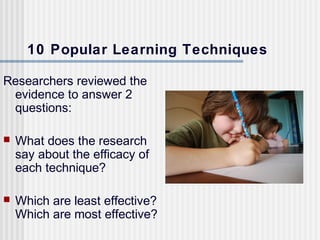
10 Popular Learning Techniques

Researchers reviewed the
 evidence to answer 2
 questions:

   What does the research
    say about the efficacy of
    each technique?

   Which are least effective?
    Which are most effective?
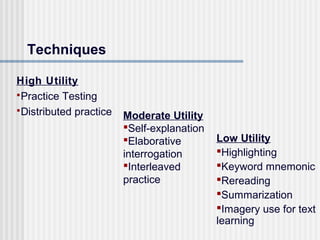
Techniques

High Utility
 Practice Testing
 Distributed practice
                         Moderate Utility
                         Self-explanation
                         Elaborative        Low Utility
                         interrogation       Highlighting
                         Interleaved        Keyword mnemonic
                         practice            Rereading
                                             Summarization
                                             Imagery use for text
                                             learning
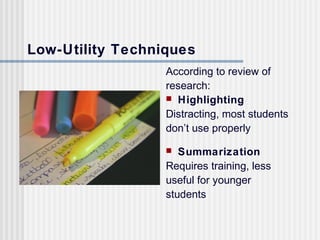
Low-Utility Techniques
                  According to review of
                  research:
                   Highlighting

                  Distracting, most students
                  don’t use properly

                    Summarization
                  Requires training, less
                  useful for younger
                  students
Low-Utility Techniques Cont’d.

   Keyword mnemonic
Students often forget the word that is supposed to trigger memory


   Imagery use for text learning
Limited to image-friendly texts, only shown to be effective on memory
tests


   Rereading
Only studies are on college-age students, effects vary with student
characteristics
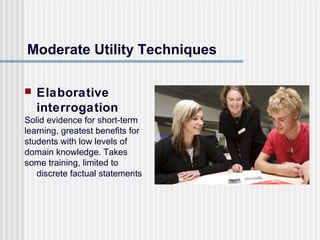
Moderate Utility Techniques

   Elaborative
    interrogation
Solid evidence for short-term
learning, greatest benefits for
students with low levels of
domain knowledge. Takes
some training, limited to
   discrete factual statements
Moderate Utility Techniques Cont’d.

   Interleaved practice
More effective than practice focused on one topic at a time;
encourages organizational processing. Fewer studies on this technique
than others


   Self-explanation
Facilitates problem solving and helps overcome misconceptions.
Time-consuming and students need instruction to be successful with it
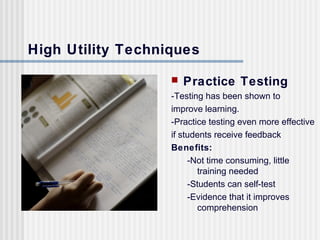
High Utility Techniques

                      Practice Testing
                   -Testing has been shown to
                   improve learning.
                   -Practice testing even more effective
                   if students receive feedback
                   Benefits:
                        -Not time consuming, little
                          training needed
                        -Students can self-test
                        -Evidence that it improves
                          comprehension
Distributed Practice

Studying of material over several sessions
improves retention

The   longer the lags, the greater the retention

Students   need to be educated about benefits

Frequent   testing encourages distributed
practice rather than cramming
Implications of study
   Train students to use high-
    impact study techniques
    instead of ineffective ones

   Teach study techniques
    beginning in the upper
    elementary grades

   Integrate techniques in
    lesson plans, e.g. begin unit
    with a practice test

   Include techniques in
    homework assignments
Any questions? Contact 207.632.1954 or visit www.ernweb.com
Find us on Facebook—Educational Research Newsletter & Webinars

Most effective study techniques

  • 1.
    The Most EffectiveStudy Techniques to Increase Student Learning Source: “Improving Students’ Learning With Effective Learning Techniques: Promising Directions From Cognitive and Educational Psychology,” by John Dunlosky, Daniel Willingham et al., Psychological Science in the Public Interest, 2013, Volume 14, number 1, pps. 4-58.
  • 2.
    Simple study techniquescan significantly improve learning and achievement, but: 1)Teachers aren’t being told about them 2) Many students don’t know about them or are not using them enough or well enough Researchers did an exhaustive review of studies on learning techniques to identify the most effective ones
  • 3.
    10 Popular LearningTechniques Researchers reviewed the evidence to answer 2 questions:  What does the research say about the efficacy of each technique?  Which are least effective? Which are most effective?
  • 4.
    Techniques High Utility  PracticeTesting  Distributed practice Moderate Utility Self-explanation Elaborative Low Utility interrogation Highlighting Interleaved Keyword mnemonic practice Rereading Summarization Imagery use for text learning
  • 5.
    Low-Utility Techniques According to review of research:  Highlighting Distracting, most students don’t use properly  Summarization Requires training, less useful for younger students
  • 6.
    Low-Utility Techniques Cont’d.  Keyword mnemonic Students often forget the word that is supposed to trigger memory  Imagery use for text learning Limited to image-friendly texts, only shown to be effective on memory tests  Rereading Only studies are on college-age students, effects vary with student characteristics
  • 7.
    Moderate Utility Techniques  Elaborative interrogation Solid evidence for short-term learning, greatest benefits for students with low levels of domain knowledge. Takes some training, limited to discrete factual statements
  • 8.
    Moderate Utility TechniquesCont’d.  Interleaved practice More effective than practice focused on one topic at a time; encourages organizational processing. Fewer studies on this technique than others  Self-explanation Facilitates problem solving and helps overcome misconceptions. Time-consuming and students need instruction to be successful with it
  • 9.
    High Utility Techniques  Practice Testing -Testing has been shown to improve learning. -Practice testing even more effective if students receive feedback Benefits: -Not time consuming, little training needed -Students can self-test -Evidence that it improves comprehension
  • 10.
    Distributed Practice Studying ofmaterial over several sessions improves retention The longer the lags, the greater the retention Students need to be educated about benefits Frequent testing encourages distributed practice rather than cramming
  • 11.
    Implications of study  Train students to use high- impact study techniques instead of ineffective ones  Teach study techniques beginning in the upper elementary grades  Integrate techniques in lesson plans, e.g. begin unit with a practice test  Include techniques in homework assignments
  • 12.
    Any questions? Contact207.632.1954 or visit www.ernweb.com Find us on Facebook—Educational Research Newsletter & Webinars

Editor's Notes

  • #4 Change word top to popular
  • #10 Benefits in bold Dashes in front of 2 first statements Add “s” to effect get rid of word recent Sorry Feedback should be lower case
  • #13 Nice touch Phone number is 207-632-1954 or send them to our website www.ernweb.com