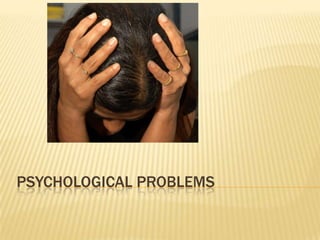
PSYCHOLOGICAL PROBLEMS
WHAT ARE THE MOST COMMON
PSYCHOLOGICAL PROBLEMS?
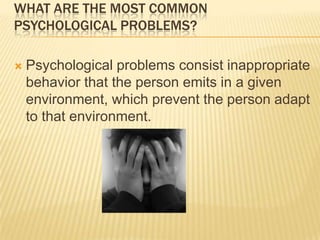
 Psychological problems consist inappropriate
behavior that the person emits in a given
environment, which prevent the person adapt
to that environment.
 In psychology a diagnosis does not mean
that the person should receive a particular
treatment will be the same for all persons
having the disorder. That a person has, for
example, depression does not tell us
anything about why you are suffering or what
to do to solve your problem. The important
thing is to identify the way in which that
particular person is relating to the
environment in which the problem arises, ie
their behavior.
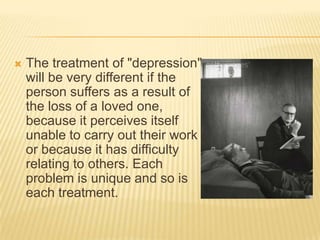
 The treatment of "depression"
will be very different if the
person suffers as a result of
the loss of a loved one,
because it perceives itself
unable to carry out their work
or because it has difficulty
relating to others. Each
problem is unique and so is
each treatment.
DEPRESSIVE DISORDER
 It is the most common psychological disorder.
 Usually do much harm to the person who suffers and their
families.
 Involves major changes in thinking, feeling and behaving.
 Characterized by:
 depressed mood
 loss of enjoyment and interest
 a form of negative thinking about oneself, of others, past
and future
 recurrent thoughts of death or suicidal ideation
 are left for leisure activities and / or mandatory
BIPOLAR DISORDER:
 It is characterized by mood swings between
two poles, alternating periods of mania
(excessive euphoria) and depression.
 Is a biomedical disorder.
 Requires psychopharmacological treatment.
HYPOCHONDRIA:
 It is an irrational fear and
conviction of having a serious
disease that could not be
diagnosed by doctors.
 They tend to self-observation
and complain often.
 They visit often go to doctors
and emergency services.
 They are very concerned
about their health.
SLEEP DISORDERS:
 When sleep problems occur frequently and
persistently, can have negative effects on our lives,
both at rest and in daily operation.
 With the psychological treatment of these problems is
to improve both the quality and quantity of sleep.
 Can appear with another more serious problem such
as depression or some anxiety disorders, in which
case, the intervention typically begins by solving the
sleep problem, as this is achieved rapid improvement
and facilitates intervention on other problems related.
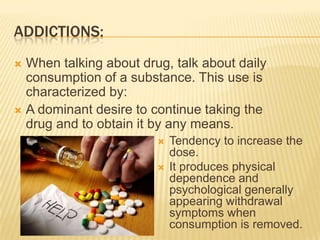
ADDICTIONS:
 When talking about drug, talk about daily
consumption of a substance. This use is
characterized by:
 A dominant desire to continue taking the
drug and to obtain it by any means.
 Tendency to increase the
dose.
 It produces physical
dependence and
psychological generally
appearing withdrawal
symptoms when
consumption is removed.
 Have negative effects on the person consuming
the drug and to their environment.
 However, we can also address so-called "drug-
addiction", in which there are no chemical
substances that are directly related to abuse
and dependence. An addiction without
prototypical substances in our culture is
pathological gambling, characterized by an
inability to resist the impulse recognized to play,
besides increasing preload the game when
followed by relief and pleasure associated once
a person begins to play.
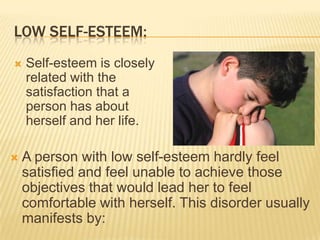
LOW SELF-ESTEEM:
 Self-esteem is closely
related with the
satisfaction that a
person has about
herself and her life.
 A person with low self-esteem hardly feel
satisfied and feel unable to achieve those
objectives that would lead her to feel
comfortable with herself. This disorder usually
manifests by:
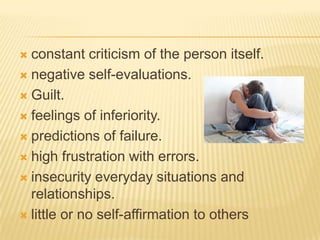
 constant criticism of the person itself.
 negative self-evaluations.
 Guilt.
 feelings of inferiority.
 predictions of failure.
 high frustration with errors.
 insecurity everyday situations and
relationships.
 little or no self-affirmation to others

Most common psychological problems

  • 1.
  • 2.
    WHAT ARE THEMOST COMMON PSYCHOLOGICAL PROBLEMS?  Psychological problems consist inappropriate behavior that the person emits in a given environment, which prevent the person adapt to that environment.
  • 3.
     In psychologya diagnosis does not mean that the person should receive a particular treatment will be the same for all persons having the disorder. That a person has, for example, depression does not tell us anything about why you are suffering or what to do to solve your problem. The important thing is to identify the way in which that particular person is relating to the environment in which the problem arises, ie their behavior.
  • 4.
     The treatmentof "depression" will be very different if the person suffers as a result of the loss of a loved one, because it perceives itself unable to carry out their work or because it has difficulty relating to others. Each problem is unique and so is each treatment.
  • 5.
    DEPRESSIVE DISORDER  Itis the most common psychological disorder.  Usually do much harm to the person who suffers and their families.  Involves major changes in thinking, feeling and behaving.  Characterized by:  depressed mood  loss of enjoyment and interest  a form of negative thinking about oneself, of others, past and future  recurrent thoughts of death or suicidal ideation  are left for leisure activities and / or mandatory
  • 6.
    BIPOLAR DISORDER:  Itis characterized by mood swings between two poles, alternating periods of mania (excessive euphoria) and depression.  Is a biomedical disorder.  Requires psychopharmacological treatment.
  • 7.
    HYPOCHONDRIA:  It isan irrational fear and conviction of having a serious disease that could not be diagnosed by doctors.  They tend to self-observation and complain often.  They visit often go to doctors and emergency services.  They are very concerned about their health.
  • 8.
    SLEEP DISORDERS:  Whensleep problems occur frequently and persistently, can have negative effects on our lives, both at rest and in daily operation.  With the psychological treatment of these problems is to improve both the quality and quantity of sleep.  Can appear with another more serious problem such as depression or some anxiety disorders, in which case, the intervention typically begins by solving the sleep problem, as this is achieved rapid improvement and facilitates intervention on other problems related.
  • 9.
    ADDICTIONS:  When talkingabout drug, talk about daily consumption of a substance. This use is characterized by:  A dominant desire to continue taking the drug and to obtain it by any means.  Tendency to increase the dose.  It produces physical dependence and psychological generally appearing withdrawal symptoms when consumption is removed.
  • 10.
     Have negativeeffects on the person consuming the drug and to their environment.  However, we can also address so-called "drug- addiction", in which there are no chemical substances that are directly related to abuse and dependence. An addiction without prototypical substances in our culture is pathological gambling, characterized by an inability to resist the impulse recognized to play, besides increasing preload the game when followed by relief and pleasure associated once a person begins to play.
  • 11.
    LOW SELF-ESTEEM:  Self-esteemis closely related with the satisfaction that a person has about herself and her life.  A person with low self-esteem hardly feel satisfied and feel unable to achieve those objectives that would lead her to feel comfortable with herself. This disorder usually manifests by:
  • 12.
     constant criticismof the person itself.  negative self-evaluations.  Guilt.  feelings of inferiority.  predictions of failure.  high frustration with errors.  insecurity everyday situations and relationships.  little or no self-affirmation to others