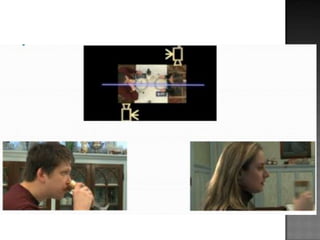
 The rule states that the camera(s) should remain
  the same side of an imaginary line
 The line is drawn perpendicular the camera’s
  viewpoint in the establishing shot of the scene
 The rule enforces continuity of the film
 An example is that in a car chase scene, if the
  car is travelling from right to left, the next shot
  must also be shot from the same side, meaning
  the car has to enter the frame right to left again
 The same applies for football matches and other
  sport
 The  rule should never be broken
 Only defence for breaking the rule is ‘for effect’
 Breaking the rule will confuse the
  audience, especially in scenes of
  chase, conversation or sport
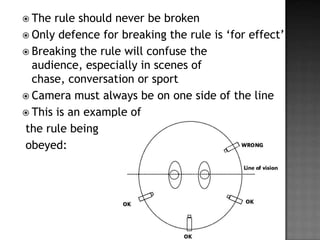
 Camera must always be on one side of the line
 This is an example of
the rule being
obeyed:
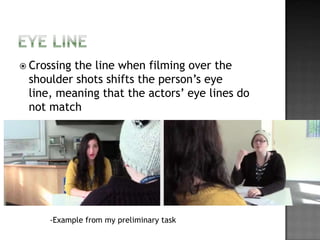
 Crossing
         the line when filming over the
 shoulder shots shifts the person’s eye
 line, meaning that the actors’ eye lines do
 not match


     -Example from my preliminary task
 Confusion    of audience

 Audience    lose focus

 Become     disorientated

 Miss   vital parts of the film
 The  only way to cross the line without
  disorientating the audience is to show the
  camera movement
 You cannot cut across the line or the viewer
  will not be orientated
 Once the line has been crossed, and
  movement shown, you have to stay on that
  side of the line, unless you show the
  movement back over it.
 The  clip below shows a violation of the rule
  used for effect
 The effect created is that of a
  shot/reverse/shot, but really, the subject is
  just one character

Moreshottypes

  • 2.
     The rulestates that the camera(s) should remain the same side of an imaginary line  The line is drawn perpendicular the camera’s viewpoint in the establishing shot of the scene  The rule enforces continuity of the film  An example is that in a car chase scene, if the car is travelling from right to left, the next shot must also be shot from the same side, meaning the car has to enter the frame right to left again  The same applies for football matches and other sport
  • 3.
     The rule should never be broken  Only defence for breaking the rule is ‘for effect’  Breaking the rule will confuse the audience, especially in scenes of chase, conversation or sport  Camera must always be on one side of the line  This is an example of the rule being obeyed:
  • 4.
     Crossing the line when filming over the shoulder shots shifts the person’s eye line, meaning that the actors’ eye lines do not match -Example from my preliminary task
  • 6.
     Confusion of audience  Audience lose focus  Become disorientated  Miss vital parts of the film
  • 7.
     The only way to cross the line without disorientating the audience is to show the camera movement  You cannot cut across the line or the viewer will not be orientated  Once the line has been crossed, and movement shown, you have to stay on that side of the line, unless you show the movement back over it.
  • 8.
     The clip below shows a violation of the rule used for effect  The effect created is that of a shot/reverse/shot, but really, the subject is just one character