

A system of cutting used to maintain continuous
and clear narrative action by following a set of
rules.



This allows the narrative to have a logical
structure, the shot sequences flow seamlessly into
each other and also it makes it easier for your
audience to enjoy!



The Rules: Establishing shot, shot/reverse shot, 180
degree rule, 30 degree rule, crosscutting, match on
action, eyeliner match, re-establishing shot.


Two shots edited together that alternate between
characters, most typically in a conversation
situation. Usually one character looks left, and the
other looks right. For this to be successful, usually a
‘master shot’ is filmed and edited in first, this shows
the two characters. The camera then films a close
up of one character, and then the other. Here is an
example of a shot/reverse shot in a conversation
situation


A cut between two shots that places two
different framings of the same action next
to each other, making it seem to continue
interrupted. This is an example of match on
action in a conversation situation:


Editing that alternates between shots
occurring simultaneously in two or more
different locations. This can help us keep
track of two different characters
movements and two different sets of events
from different locations. This is a common
technique in action movies.


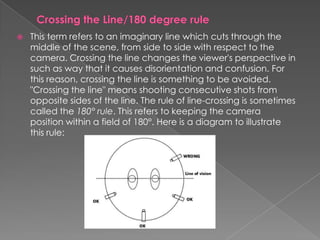
This term refers to an imaginary line which cuts through the
middle of the scene, from side to side with respect to the
camera. Crossing the line changes the viewer's perspective in
such as way that it causes disorientation and confusion. For
this reason, crossing the line is something to be avoided.
"Crossing the line" means shooting consecutive shots from
opposite sides of the line. The rule of line-crossing is sometimes
called the 180° rule. This refers to keeping the camera
position within a field of 180°. Here is a diagram to illustrate
this rule:


A cute between two shots, in which the first shot
shows a person looking in one direction and the
second shot shows either a space containing what
he or she sees, or a person looking back in exactly
the opposite direction, this is generally in a
conversation situation. Here is two example of
eyeliner matches being used in movies, one in
conversation and one in a different context:

Continuity Editing Research

  • 2.
     A system ofcutting used to maintain continuous and clear narrative action by following a set of rules.  This allows the narrative to have a logical structure, the shot sequences flow seamlessly into each other and also it makes it easier for your audience to enjoy!  The Rules: Establishing shot, shot/reverse shot, 180 degree rule, 30 degree rule, crosscutting, match on action, eyeliner match, re-establishing shot.
  • 3.
     Two shots editedtogether that alternate between characters, most typically in a conversation situation. Usually one character looks left, and the other looks right. For this to be successful, usually a ‘master shot’ is filmed and edited in first, this shows the two characters. The camera then films a close up of one character, and then the other. Here is an example of a shot/reverse shot in a conversation situation
  • 4.
     A cut betweentwo shots that places two different framings of the same action next to each other, making it seem to continue interrupted. This is an example of match on action in a conversation situation:
  • 5.
     Editing that alternatesbetween shots occurring simultaneously in two or more different locations. This can help us keep track of two different characters movements and two different sets of events from different locations. This is a common technique in action movies.
  • 6.
     This term refersto an imaginary line which cuts through the middle of the scene, from side to side with respect to the camera. Crossing the line changes the viewer's perspective in such as way that it causes disorientation and confusion. For this reason, crossing the line is something to be avoided. "Crossing the line" means shooting consecutive shots from opposite sides of the line. The rule of line-crossing is sometimes called the 180° rule. This refers to keeping the camera position within a field of 180°. Here is a diagram to illustrate this rule:
  • 7.
     A cute betweentwo shots, in which the first shot shows a person looking in one direction and the second shot shows either a space containing what he or she sees, or a person looking back in exactly the opposite direction, this is generally in a conversation situation. Here is two example of eyeliner matches being used in movies, one in conversation and one in a different context: