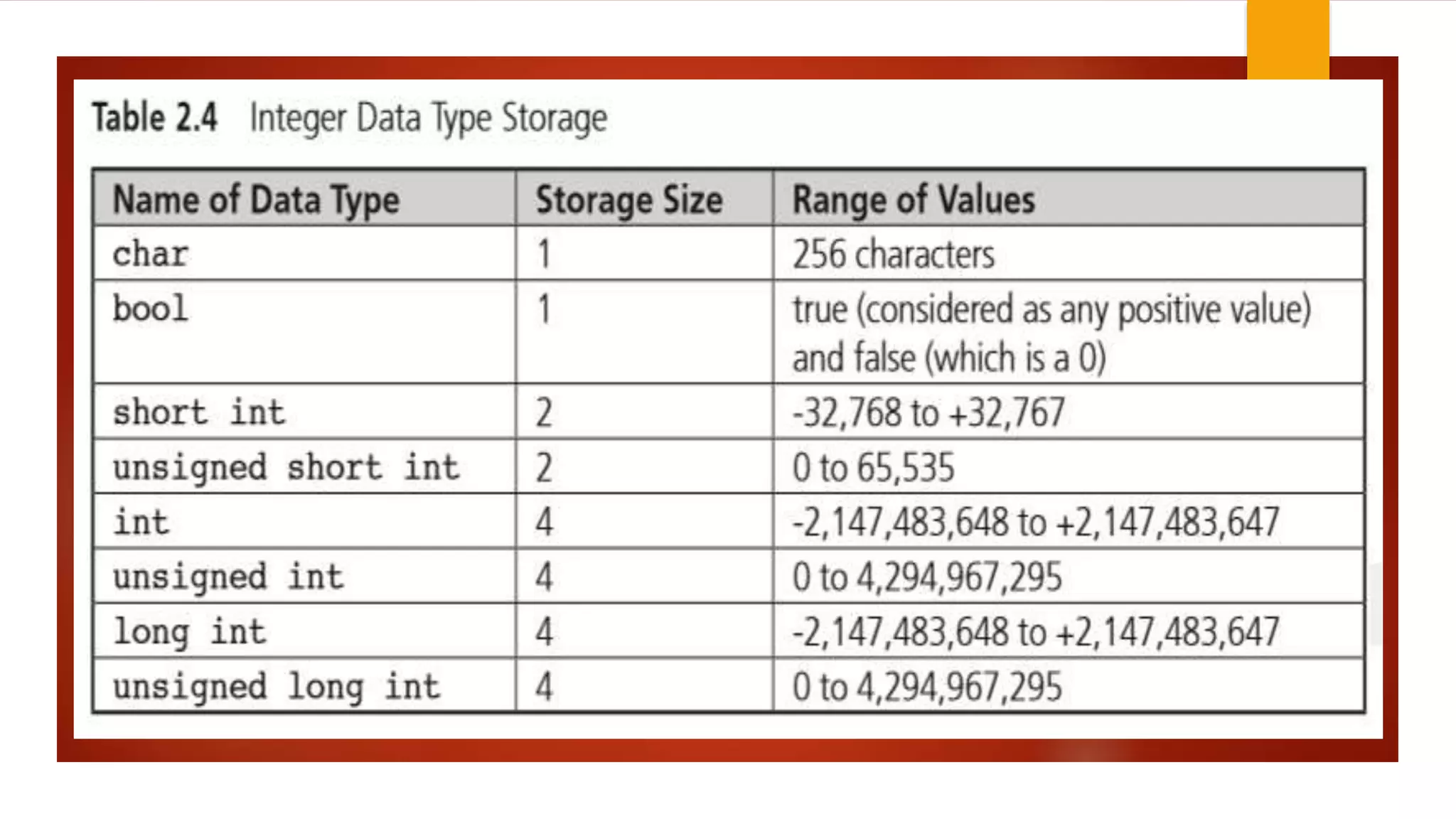
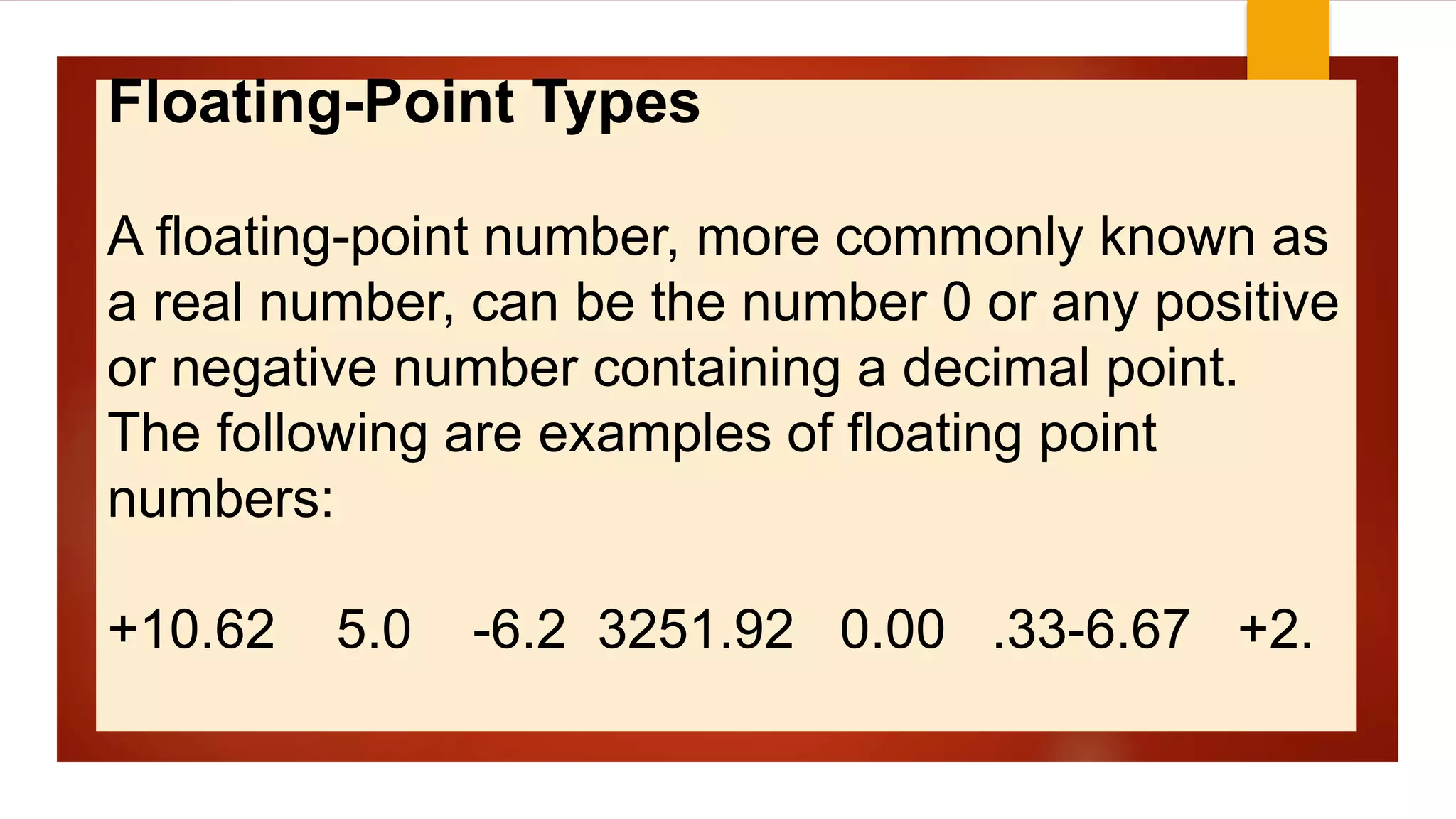
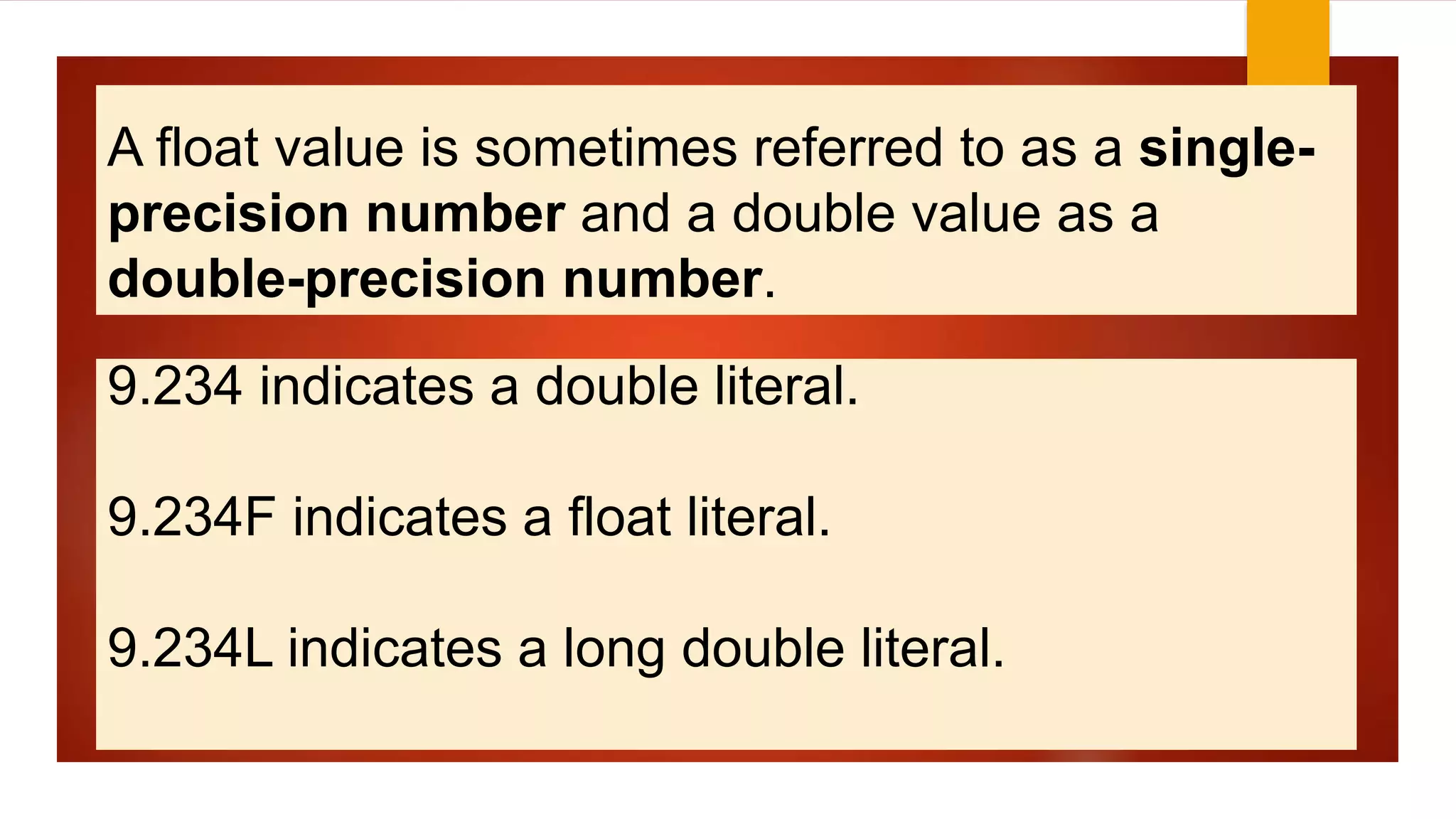
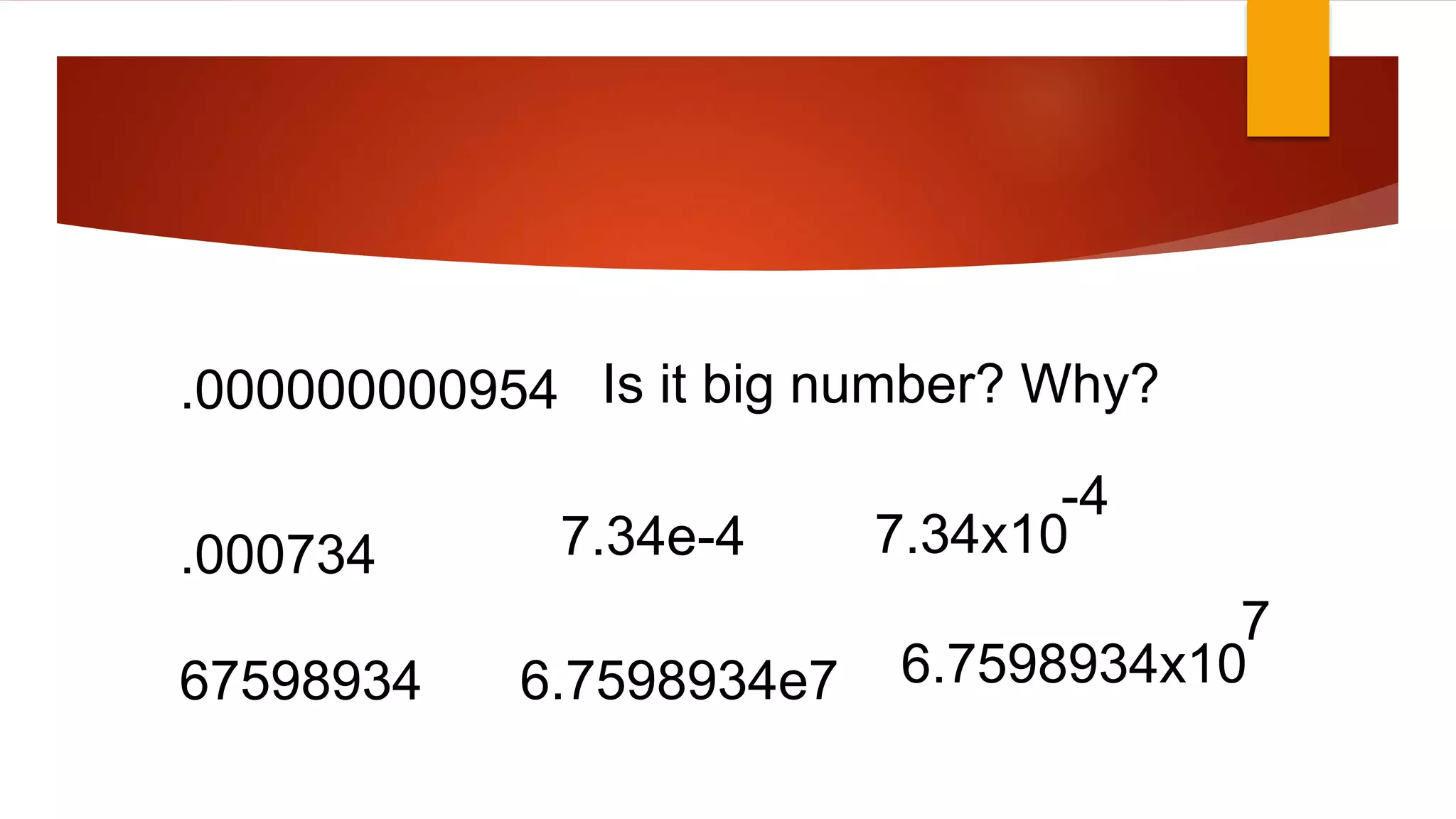
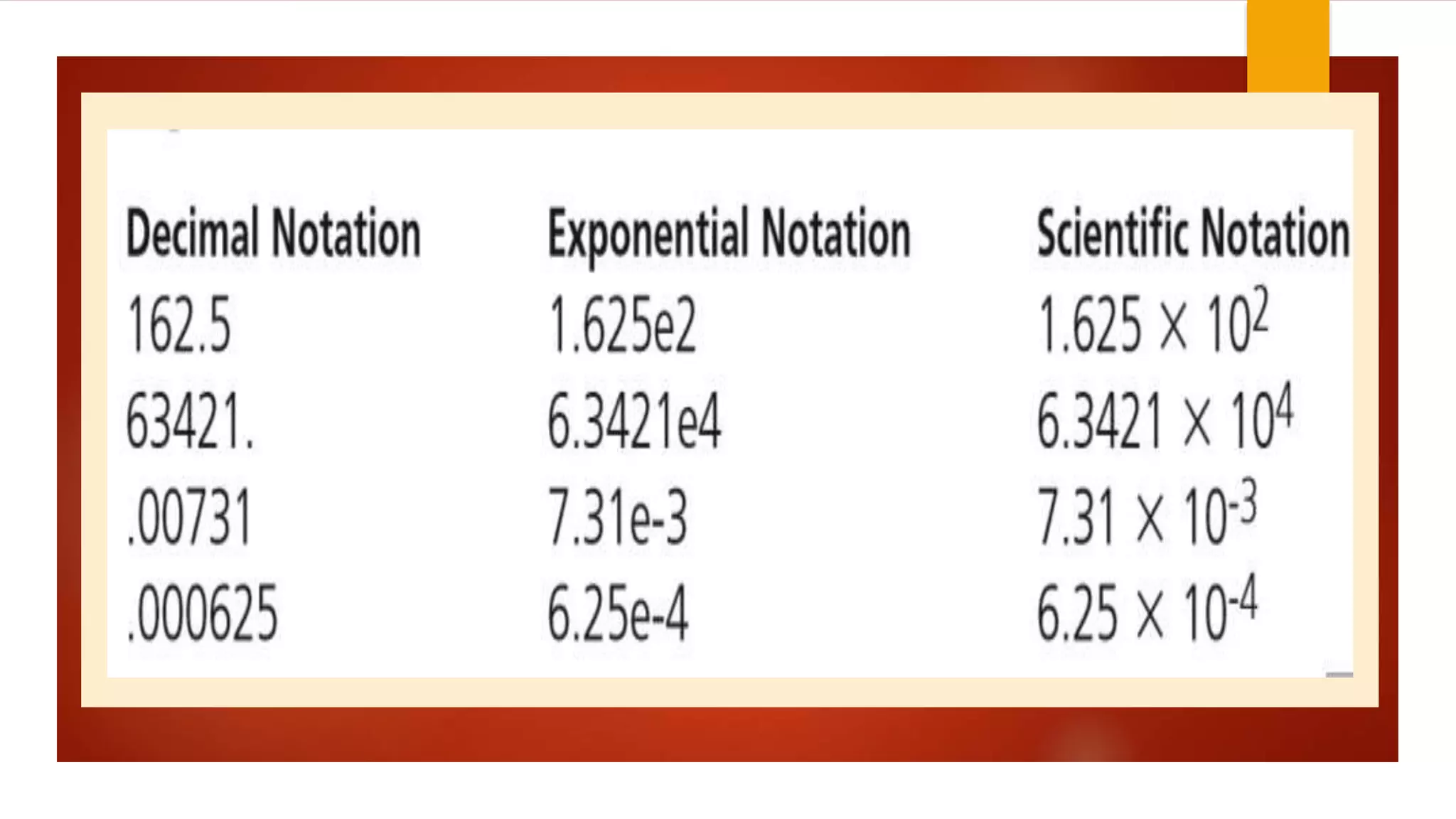
The document discusses different data types used in programming including character literals, string literals, signed and unsigned data types, floating point numbers, and exponential notation. It provides examples of how '\n' and "n" both represent a newline character but with different data types. Unsigned data types are used for applications that only require non-negative values like dates. Floating point numbers can be positive, negative, or zero and examples of float, double, and long double literals are provided. Exponential notation is similar to scientific notation and used to compactly express very large and small values.