Building Morphology Factors
Building Construction process comprises with many stages.

They basically consist of two parts
    Pre Construction
    Post Construction


The Designing process of a building project belongs to the Pre
construction stage.

Considering about the Design Morphology Factors comes
under this Designing stage.
Cost of Construction changes in a rapid manner due to many
reasons.

Therefore a proper analysis of Building Morphology Factors are
essential to reduce cost of Construction.

This presentation is aimed at understanding what the Design
Morphology Factors are.

This discusses about;
        What the Morphology Factors are.
        A practical example on implementing Morphology Factors.
        Analysis and Recommendations of alternatives Designs
        using Morphology Factors.
        Impact of Morphology Factors on Cost of Construction.
Main design Morphology Factors that are considered are;

   Shape of the building
            – Orientation, Proximity and Similarity factors
   Size of the building
   Storey height
   Total height of the building
   Number of storey
   Grouping Buildings
            – Orientation, Proximity and Similarity factors
Shape and Size are interrelated factors.

Both relates with the floor space required by the client.

Research has showed that SQUARE shape is the most cost
effective shape.

When designing the shape the ORIENTATION, PROXMITY
and SIMILARITY factors must be concerned.

If the new building is in a similar shape as the existing
buildings, placing the building in the correct orientation and
proximity becomes easy.
Service integration must be concerned.

For example;
      Air conditioning
      Fire fighting system
      Electrical lighting
      Telecommunication systems


If storey height is not decided according to service integration
requirement;
      Problems occur during installation
      Service lines will be installed in an irregular manner.


Proper height must be selected during designing.
Directly connects with the number of storey and storey height.

Higher the building goes;
   Stronger the structure
   should be.
   Workers, equipment,                             More
   material etc must be           RESULT         Financial
   transported continuously to                  Requirement
   upper floors.
   More scaffolding
   requirement.
Must design to the required number only.

Over designing could result in a stronger structure.

If designed correctly, can avoid expensive foundation types.
Two methods can be used;
      Vertical Grouping
          - Common Walls and Foundations
      Horizontal Grouping
          - Common Roofs


Can be used in Building complexes like Apartment buildings.

Another advantage is reduction of circulation spaces and
service cores.

When grouped buildings can share circulation spaces and
service cores.
SHAPE and SIZE

Designed by UDA designers.

Shape Designed due to
Architectural Influence.

Office areas are located on
either side of the vertical
circulation area.
Recommendation on SHAPE and SIZE

If built in square shape, spaces on either side of the vertical
circulation space could be used.

It increases the efficiency of land usage.

Land value is very high.

Design Efficiency Calculation

Floor area of H-shaped building        = 2744.28 m2
Floor area if designed as a square shape = 3528.36 m2

Wastage of Floor Area                   = 784.08 m2
Recommendation on SHAPE and SIZE

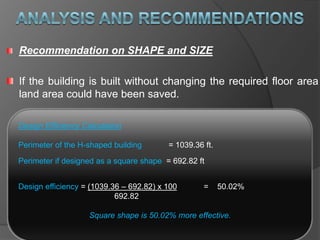
If the building is built without changing the required floor area
land area could have been saved.

Design Efficiency Calculation

Perimeter of the H-shaped building       = 1039.36 ft.

Perimeter if designed as a square shape = 692.82 ft


Design efficiency = (1039.36 – 692.82) x 100       =     50.02%
                           692.82

                   Square shape is 50.02% more effective.
Recommendation on SHAPE and SIZE

The existing main building has a L shape.

If the new building is designed to have the same shape
(similarity factor) orientation of the building could have been
easy.

Since the shape is different the main parts of the building faces
east and west.

Therefore the heat gain through direct sun light is more and
uncomfortable.
HEIGHT of the Building

Storey height is 3600 mm.

Ceiling to be a Lowered 600 mm from the soffit of the slab.

Each floor is designed to be constructed with a proper ducting
for A/C, and other services.

Comprising with 14 storeys.
Recommendation on HEIGHT

The location has natural ventilation.

Natural ventilation method can be easily applied for upper floors.

Therefore A/C ducting is not required for upper floors.

So storey height can be reduced.

It is cost effective because;
     Reduces Construction cost.
     Reduces service installation cost.
     Reduces services maintenance cost.
GROUPING BUILDINGS

New building is constructed few feet away from the existing
main building.

At the designing stage it was decided to group the buildings.

But later it was decided not to due to heavy demolition work of
the existing building.

Recommendation on GROUPING BUILDINGS

Grouping buildings could have reduced the circulation space
needed for the new building.
Design economics helps us to understand the best cost
effective way proceed with the construction.

Discussion between construction professionals prior the
construction helps them to understand these cost effective way.

Each construction has its own cost effective ways.

To understand these ways Building Morphology Factors can be
used.

Concerning about Morphology factors during designing stage is
very important.
The designing stage of a building project is the best stage to
reduce unnecessary costs of the project.

Building Morphology Factors are the key to understand the
ways of reducing unnecessary costs.

Shape, Size, Storey height, Total height, Grouping factors can
be analyzed carefully to make a project cost effective.

Therefore a proper knowledge on Building Morphology is
necessary for construction professionals.
Morphology factors

Morphology factors

  • 2.
  • 3.
    Building Construction processcomprises with many stages. They basically consist of two parts  Pre Construction  Post Construction The Designing process of a building project belongs to the Pre construction stage. Considering about the Design Morphology Factors comes under this Designing stage.
  • 4.
    Cost of Constructionchanges in a rapid manner due to many reasons. Therefore a proper analysis of Building Morphology Factors are essential to reduce cost of Construction. This presentation is aimed at understanding what the Design Morphology Factors are. This discusses about; What the Morphology Factors are. A practical example on implementing Morphology Factors. Analysis and Recommendations of alternatives Designs using Morphology Factors. Impact of Morphology Factors on Cost of Construction.
  • 5.
    Main design MorphologyFactors that are considered are; Shape of the building – Orientation, Proximity and Similarity factors Size of the building Storey height Total height of the building Number of storey Grouping Buildings – Orientation, Proximity and Similarity factors
  • 6.
    Shape and Sizeare interrelated factors. Both relates with the floor space required by the client. Research has showed that SQUARE shape is the most cost effective shape. When designing the shape the ORIENTATION, PROXMITY and SIMILARITY factors must be concerned. If the new building is in a similar shape as the existing buildings, placing the building in the correct orientation and proximity becomes easy.
  • 7.
    Service integration mustbe concerned. For example; Air conditioning Fire fighting system Electrical lighting Telecommunication systems If storey height is not decided according to service integration requirement; Problems occur during installation Service lines will be installed in an irregular manner. Proper height must be selected during designing.
  • 8.
    Directly connects withthe number of storey and storey height. Higher the building goes; Stronger the structure should be. Workers, equipment, More material etc must be RESULT Financial transported continuously to Requirement upper floors. More scaffolding requirement.
  • 9.
    Must design tothe required number only. Over designing could result in a stronger structure. If designed correctly, can avoid expensive foundation types.
  • 10.
    Two methods canbe used; Vertical Grouping - Common Walls and Foundations Horizontal Grouping - Common Roofs Can be used in Building complexes like Apartment buildings. Another advantage is reduction of circulation spaces and service cores. When grouped buildings can share circulation spaces and service cores.
  • 11.
    SHAPE and SIZE Designedby UDA designers. Shape Designed due to Architectural Influence. Office areas are located on either side of the vertical circulation area.
  • 12.
    Recommendation on SHAPEand SIZE If built in square shape, spaces on either side of the vertical circulation space could be used. It increases the efficiency of land usage. Land value is very high. Design Efficiency Calculation Floor area of H-shaped building = 2744.28 m2 Floor area if designed as a square shape = 3528.36 m2 Wastage of Floor Area = 784.08 m2
  • 13.
    Recommendation on SHAPEand SIZE If the building is built without changing the required floor area land area could have been saved. Design Efficiency Calculation Perimeter of the H-shaped building = 1039.36 ft. Perimeter if designed as a square shape = 692.82 ft Design efficiency = (1039.36 – 692.82) x 100 = 50.02% 692.82 Square shape is 50.02% more effective.
  • 14.
    Recommendation on SHAPEand SIZE The existing main building has a L shape. If the new building is designed to have the same shape (similarity factor) orientation of the building could have been easy. Since the shape is different the main parts of the building faces east and west. Therefore the heat gain through direct sun light is more and uncomfortable.
  • 15.
    HEIGHT of theBuilding Storey height is 3600 mm. Ceiling to be a Lowered 600 mm from the soffit of the slab. Each floor is designed to be constructed with a proper ducting for A/C, and other services. Comprising with 14 storeys.
  • 16.
    Recommendation on HEIGHT Thelocation has natural ventilation. Natural ventilation method can be easily applied for upper floors. Therefore A/C ducting is not required for upper floors. So storey height can be reduced. It is cost effective because; Reduces Construction cost. Reduces service installation cost. Reduces services maintenance cost.
  • 17.
    GROUPING BUILDINGS New buildingis constructed few feet away from the existing main building. At the designing stage it was decided to group the buildings. But later it was decided not to due to heavy demolition work of the existing building. Recommendation on GROUPING BUILDINGS Grouping buildings could have reduced the circulation space needed for the new building.
  • 18.
    Design economics helpsus to understand the best cost effective way proceed with the construction. Discussion between construction professionals prior the construction helps them to understand these cost effective way. Each construction has its own cost effective ways. To understand these ways Building Morphology Factors can be used. Concerning about Morphology factors during designing stage is very important.
  • 19.
    The designing stageof a building project is the best stage to reduce unnecessary costs of the project. Building Morphology Factors are the key to understand the ways of reducing unnecessary costs. Shape, Size, Storey height, Total height, Grouping factors can be analyzed carefully to make a project cost effective. Therefore a proper knowledge on Building Morphology is necessary for construction professionals.