
Monitoring Antarctic ice loss 
from space 
Fernando S. Paolo* Helen A. Fricker Laurie Padman 
Scripps Student Symposium 2014 | NASA | *fpaolo@ucsd.edu
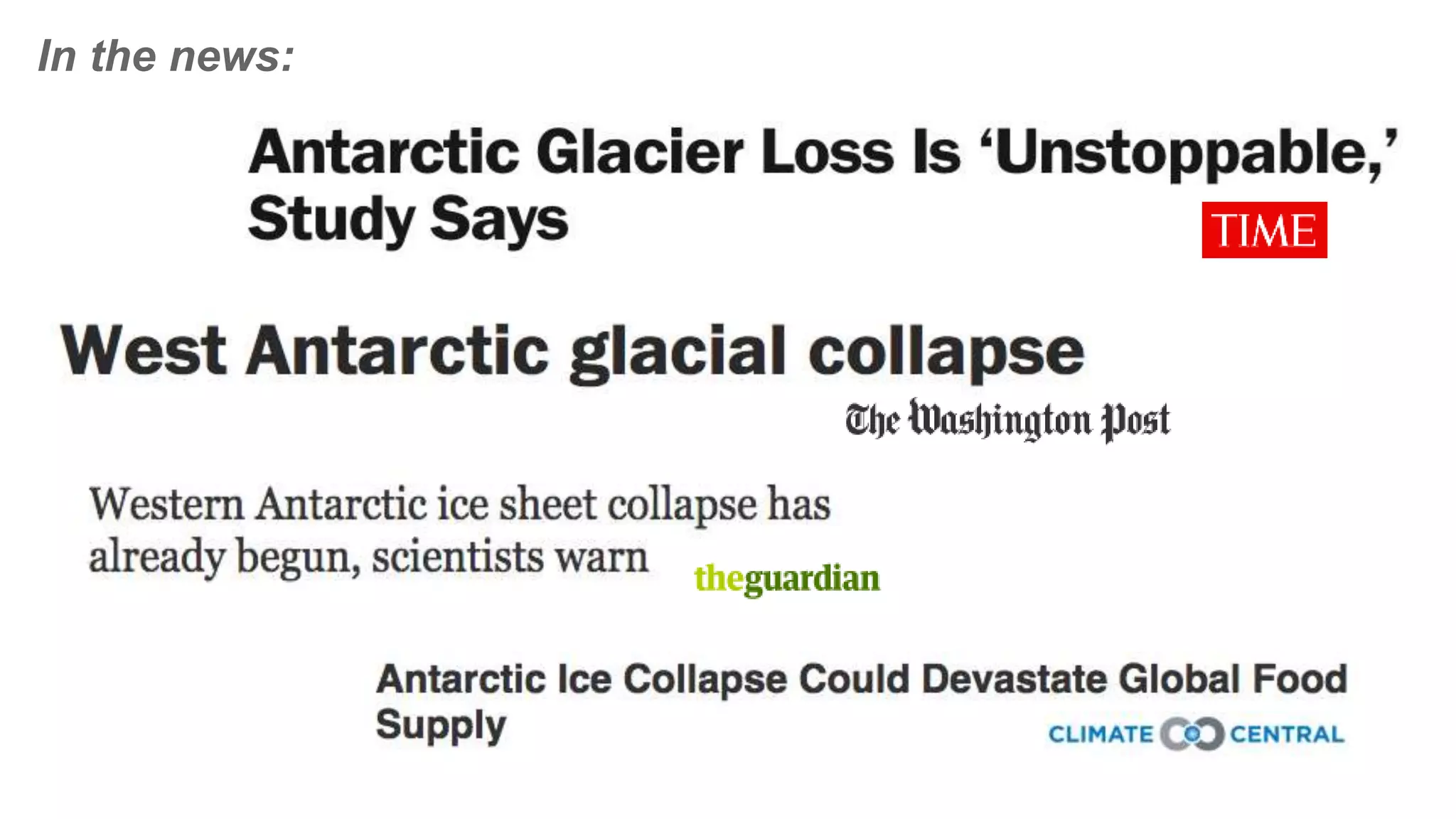
In the news:
.com
In this talk 
● How all works (the science) 
● The floating ice-shelves (the why) 
● The challenge in observing (the how) 
● Ok, show me some results!
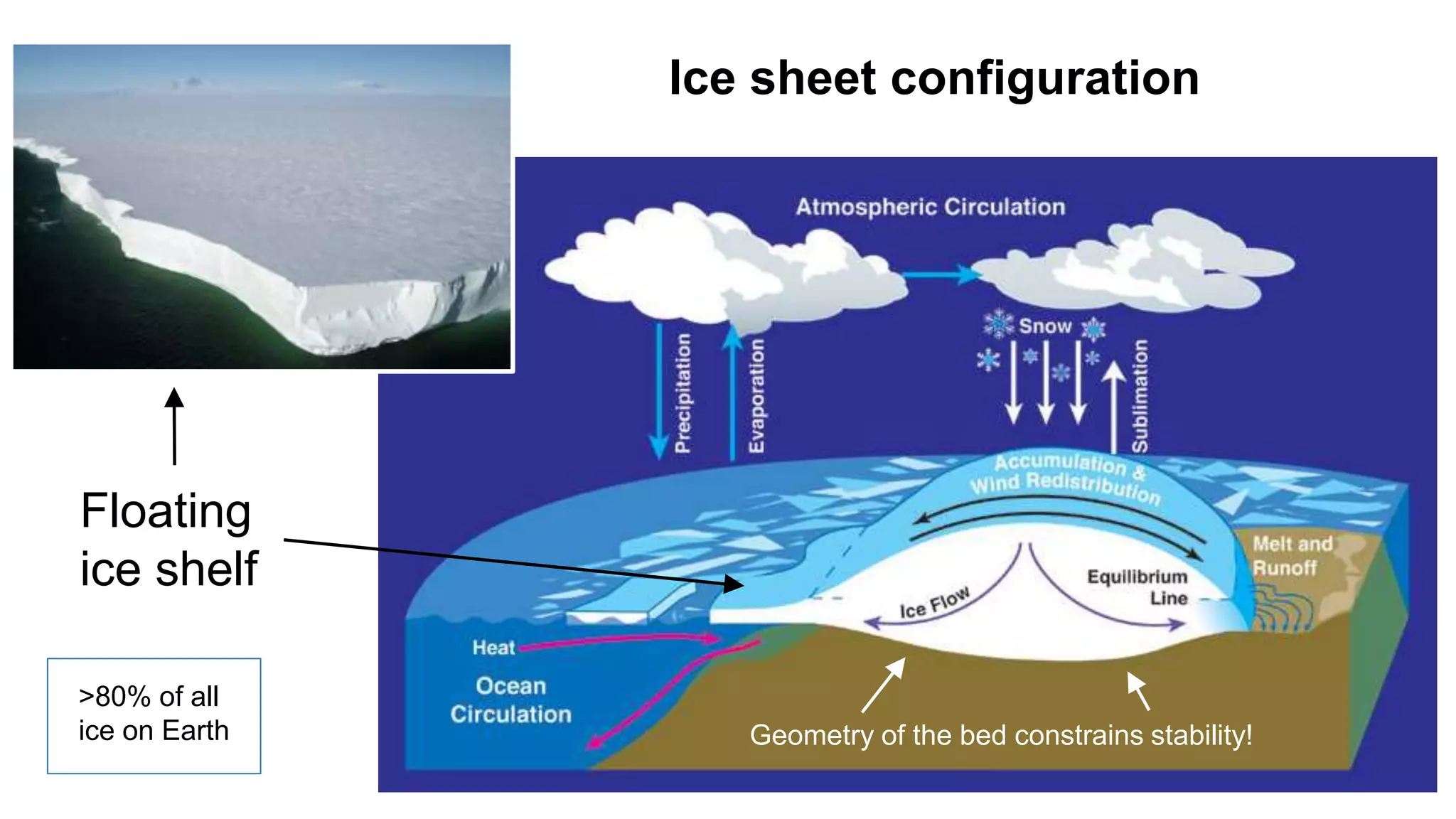
Ice sheet configuration 
Geometry of the bed constrains stability! 
Floating 
ice shelf 
>80% of all 
ice on Earth
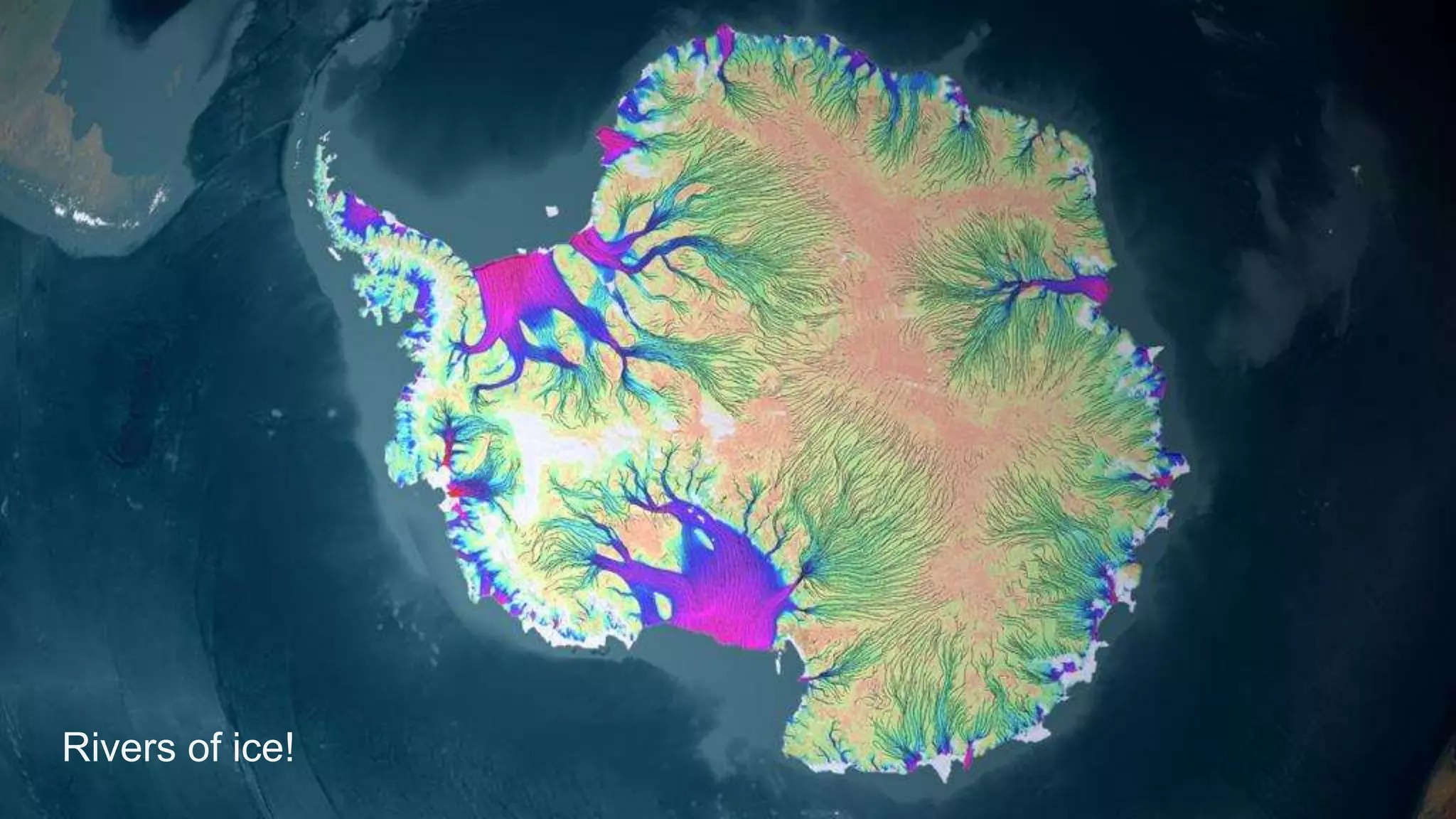
Rivers of ice!
The marine-ice-sheet instability 
(or What’s going on in West Antarctica)
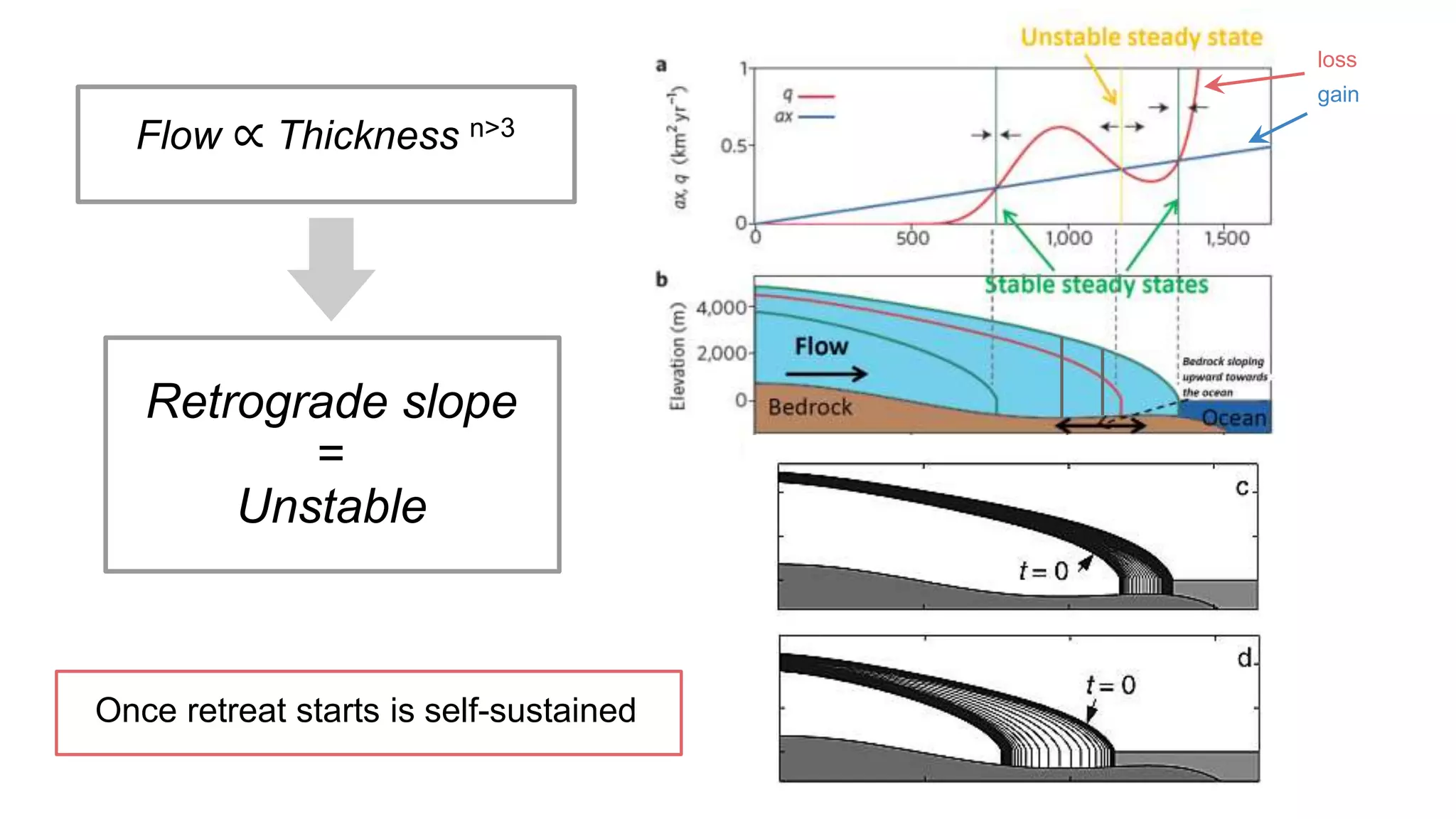
Flow ∝ Thickness n>3 
Retrograde slope 
= 
Unstable 
loss 
gain 
Once retreat starts is self-sustained
The missing piece: 
The role of the ice shelves
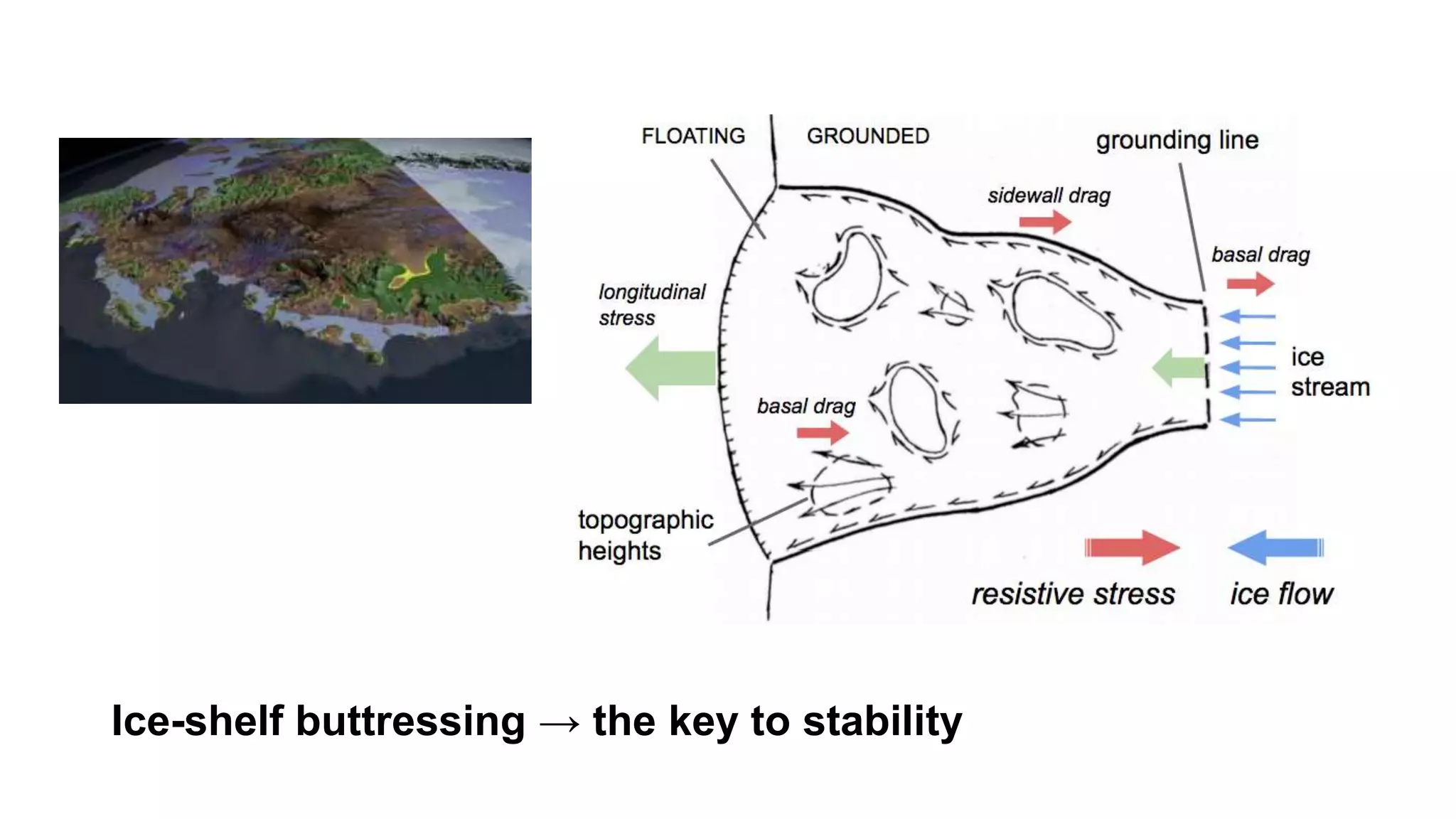
Ice-shelf buttressing → the key to stability
How do we observe changes in ice 
shelves at a continental scale?
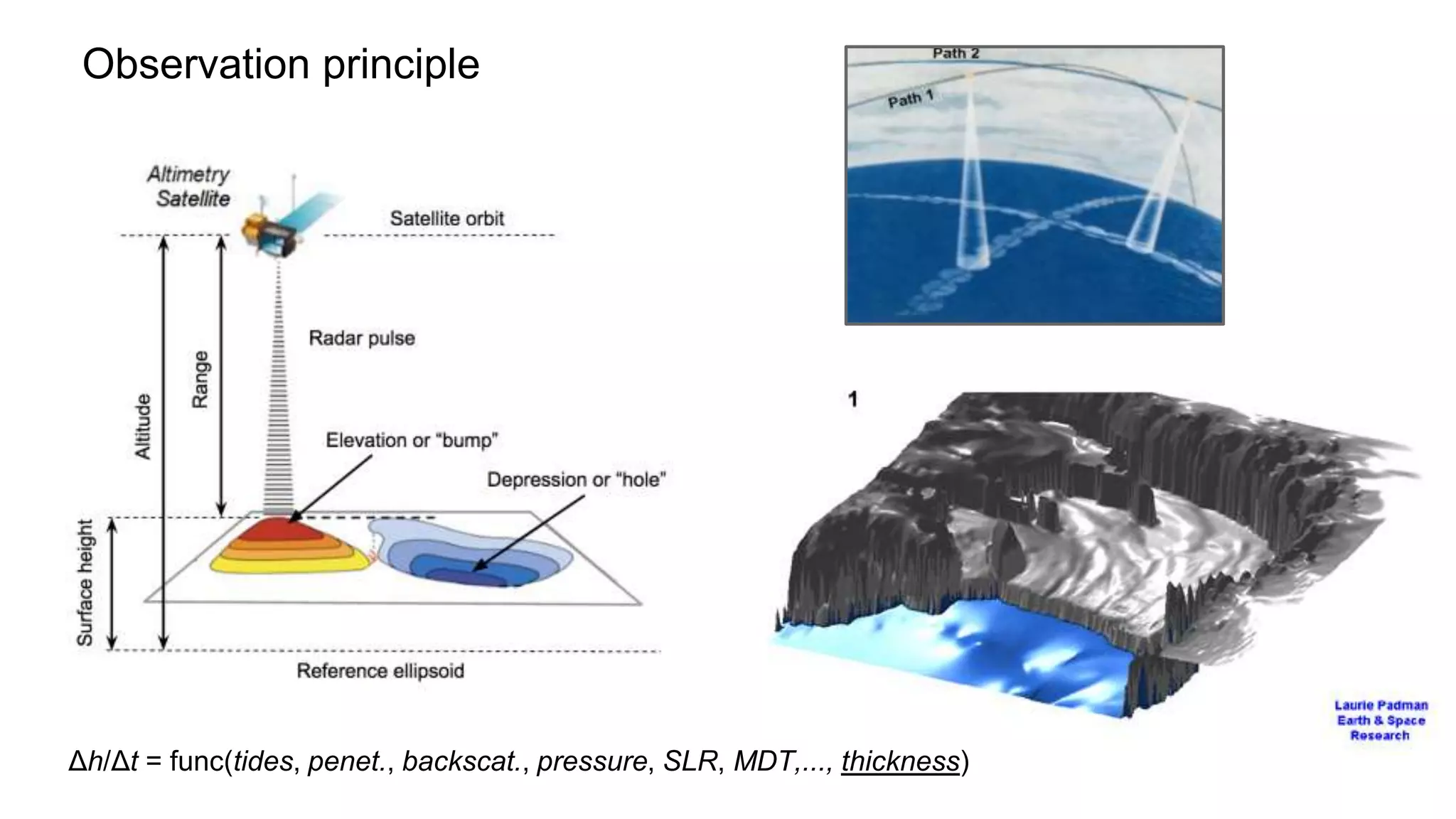
Observation principle 
Δh/Δt = func(tides, penet., backscat., pressure, SLR, MDT,..., thickness)
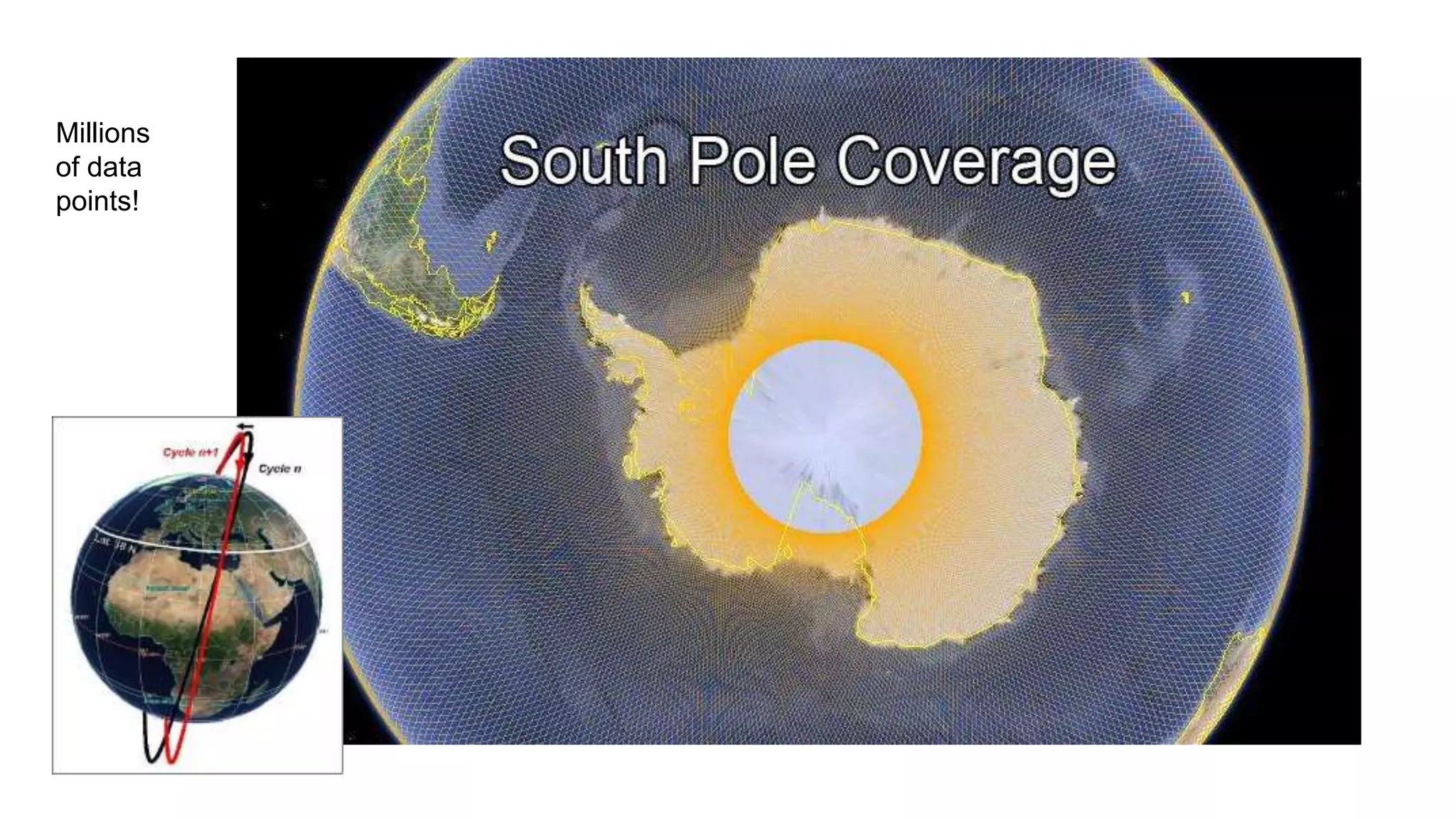
Millions 
of data 
points!
What do these observations tell us? 
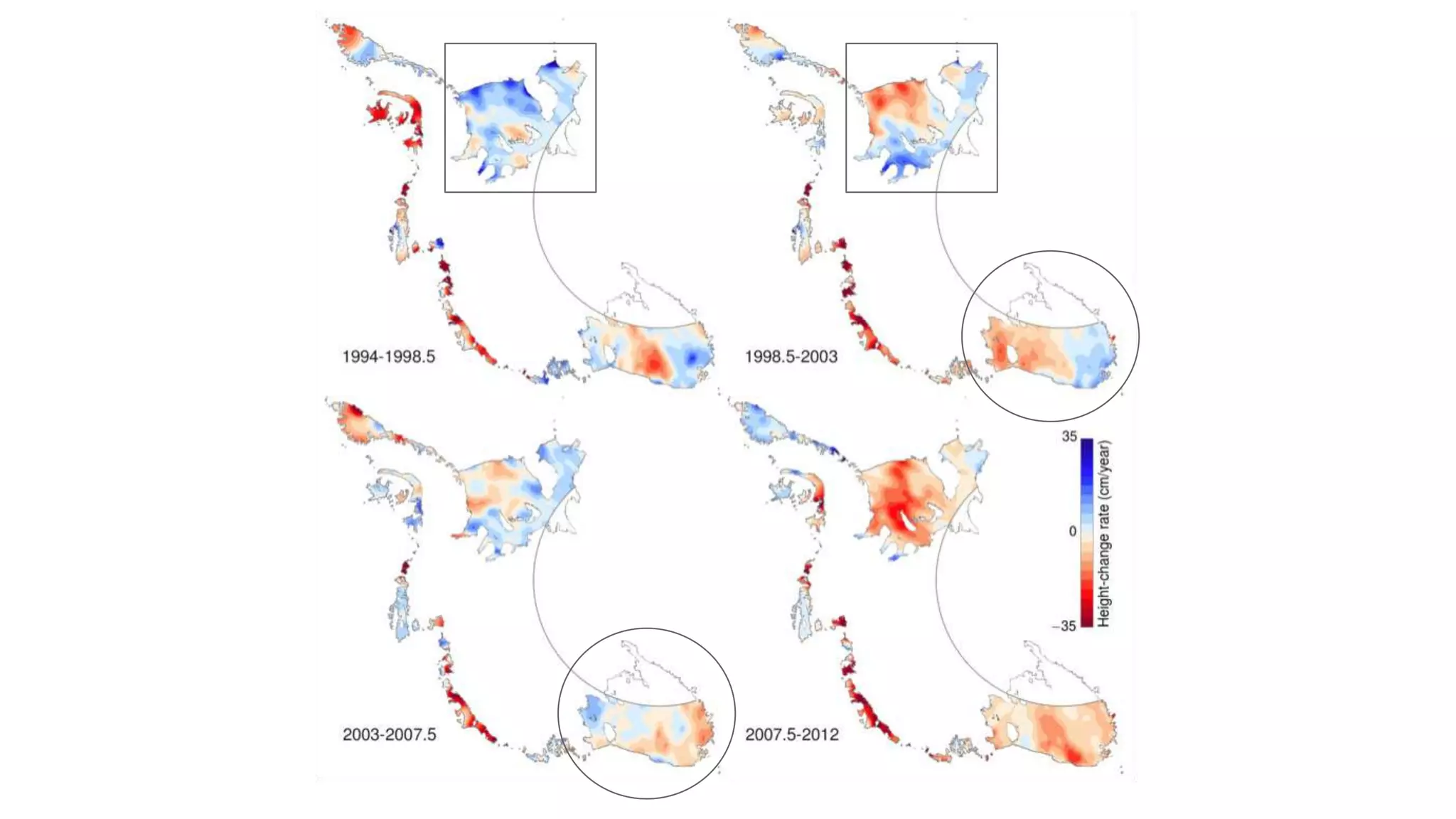
(18 years of change)
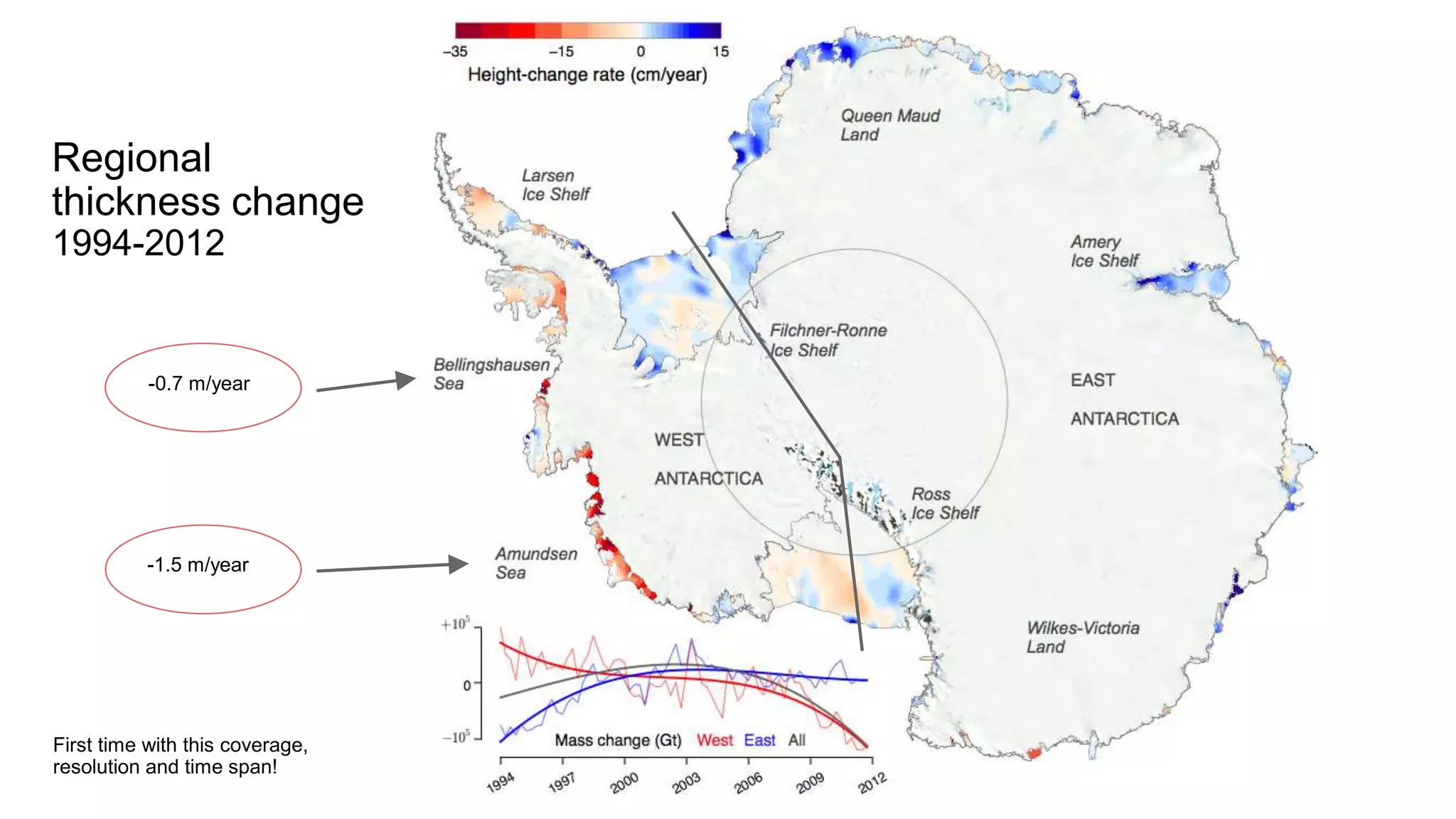
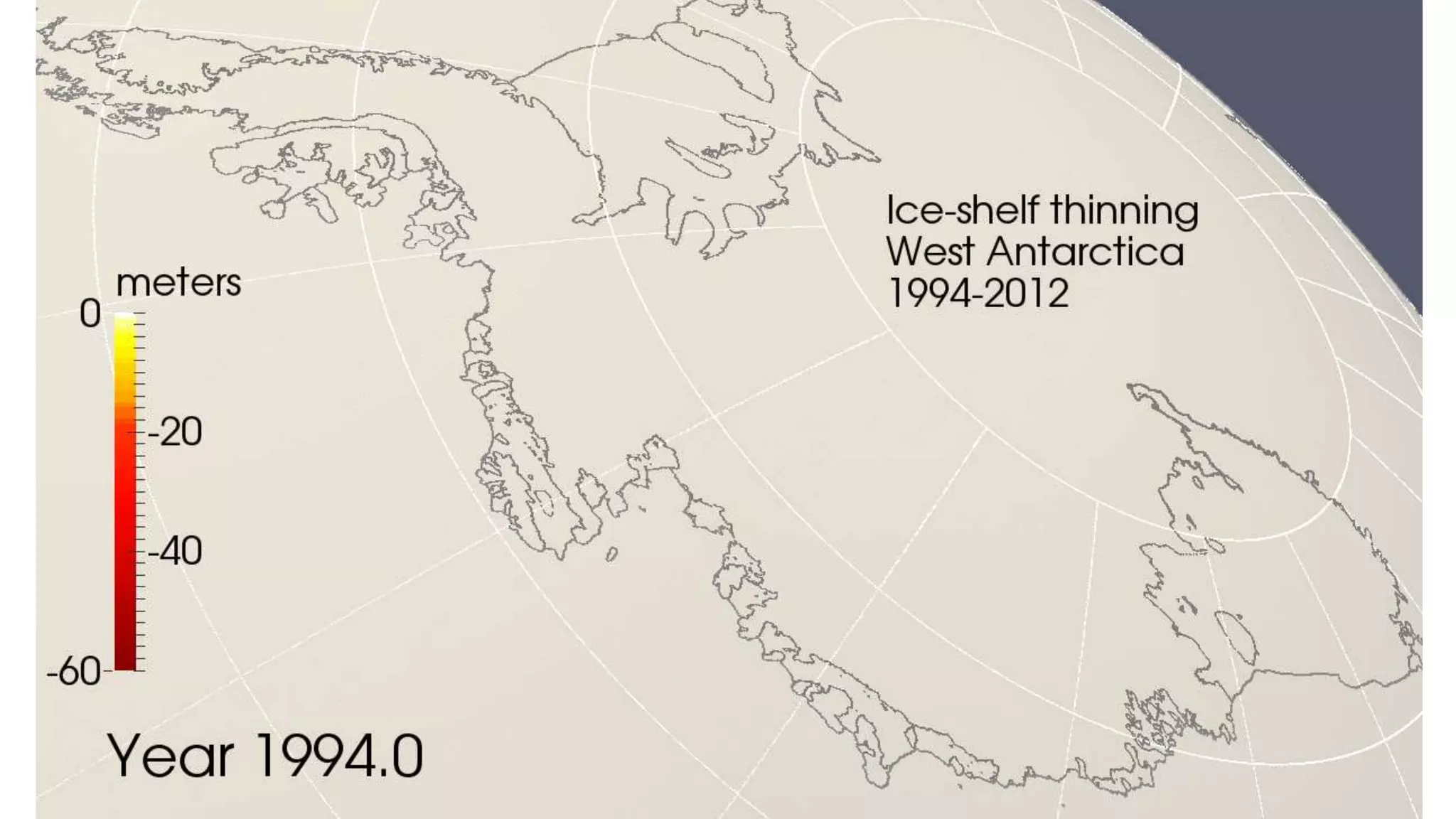
Regional 
thickness change 
1994-2012 
-0.7 m/year 
-1.5 m/year 
First time with this coverage, 
resolution and time span!
What do we know after all? 
● West Antarctica is already losing ice at an accelerated 
rate. 
● Collapse of the entire WAIS is not guaranteed, but quite 
plausible. 
● There is a direct link between ocean warming and ice-loss 
acceleration. 
● The ice-sheet behaviour is the largest uncertainty in 
predicting sea-level rise.
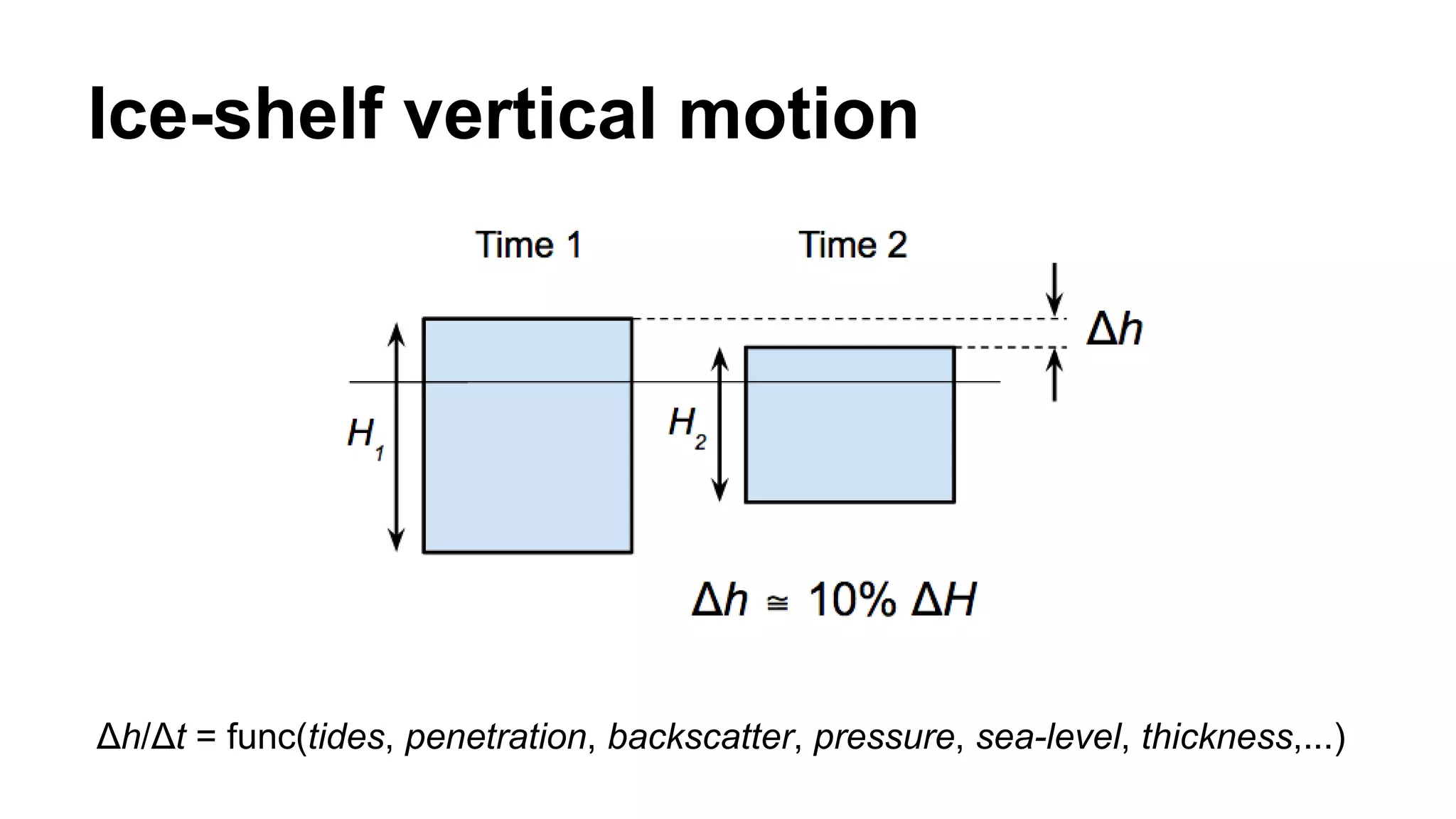
Ice-shelf vertical motion 
Δh/Δt = func(tides, penetration, backscatter, pressure, sea-level, thickness,...)
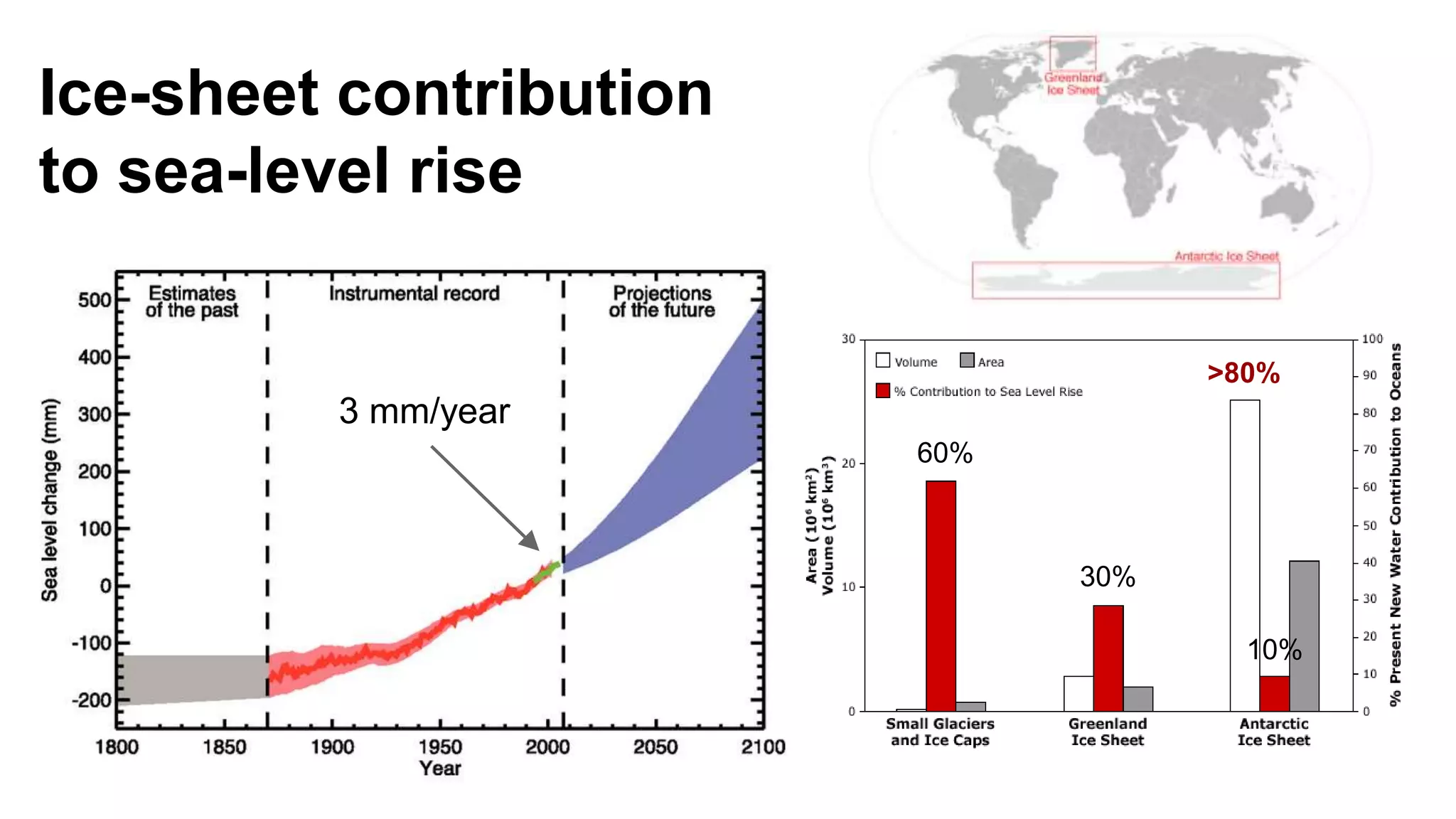
Ice-sheet contribution 
to sea-level rise 
10% 
30% 
60% 
>80% 
3 mm/year

Monitoring Antarctic ice loss from space

Editor's Notes

  • #6 An ice sheet consists of thick, slow-moving inland ice feeding faster-moving (>100 m yr−1), channelized ice streams (see map), which flow across grounding lines into floating extensions called ice shelves, from which icebergs calve. In addition to calving, most ice shelves lose much of their mass through basal melt where they are in contact with warm ocean water. Once ice crosses the grounding line and begins to float, its direct contribution to sea level is negligible. Nonetheless, the rate of discharge across the grounding line is strongly determined by the degree to which melting and iceberg calving influence the buttressing restraint provided by ice shelves.
  • #9 Like any pile, an ice sheet tends to spread under its own weight. This spreading tendency is restrained mainly by friction beneath inland ice, and by along-flow stresses in ice shelves, both of which are important restraints for ice streams. The difference between local basal restraint of inland ice and longitudinal stretching of ice shelves gives rise to the marine-ice-sheet instability, in which a freely spreading ice shelf cannot have a stable grounding line on a 'reversed' bed that deepens towards the ice-sheet centre. The rate at which a grounding line discharges ice to an unconfined ice shelf increases nonlinearly with thickness (see figure), but the local frictional control of inland ice prevents immediate response to remote events at the grounding line. The basic principles of an ice sheet that feeds an unbuttressed ice shelf are illustrated with a simple model and figure by Schoof77. a, In steady state, the grounding-line discharge, q (red curve), which is dependent on the thickness of the grounding line, must match the balance flux, ax (blue line), which in this 2D example is the product of a spatially invariant accumulation rate, a, and the upstream catchment length, x. Steady state is achieved where q = ax, which occurs at three points in this example (indicated by green and red vertical lines), which also correspond to the ice-sheet steady-state profiles shown in b. The arrows at the steady-state points indicate the direction of migration in response to an initial grounding-line perturbation. For a steady-state grounding line positioned on a forward slope (green profiles), a retreat reduces the discharge below the balance flux, causing the grounding line to thicken and re-advance. Similarly, advance down a forward slope causes q > ax, so that the ice sheet thins and retreats back to its steady-state position. The situation differs for a bed with a reverse slope (red profiles). In this case, an initial retreat increases discharge while reducing the balance flux, leading to grounding line thinning and further retreat. In this case, the retreat would continue until the upstream steady-state point is reached. Conversely, an advance slows discharge so that it exceeds the balance flux, promoting further advance. The bed of a marine ice sheet steadily deepens towards the interior in many locations, with no stabilizing forward slope to stop a retreat once it is initiated. The analysis just described applies to a marine ice sheet with an unconfined ice shelf (that is, one that provides no buttressing). A marine ice sheet can be stabilized, however, where a confined ice shelf provides sufficient 'buttressing', arising from friction between its floating ice and its embayed walls55. Alternatively, highs or 'bumps' in the bed that locally offset the regional bed slope may stabilize the ice sheet51, 56. Where both an ice shelf and a 'bump' act in concert to promote stability, a reduction in buttressing from warming-induced ice-shelf melting may cause threshold behaviour, with grounding-line migration initially restricted to the local bump and then jumping rapidly upstream to the next bump or farther. once it started is self-sustain!!!
  • #11 - Schematic illustration of buttressing. Part of the stress applied by the ocean at the shelf front (σfront) is taken up by sidewall stress (τsidewall), and so longitudinal stresses within the shelf (σshelf) are small at the grounding line. Increased basal melt can directly increase flow speed of inland ice by reducing the thickness, and thus, the buttressing restraint of an ice shelf55, 56, 76. Often CDW is limited to the deeper waters in the cavity67, 68, so the net effect may be to thin rather than eliminate an ice shelf, because a thinner shelf has less exposure to the deeper, warmer waters. Several decades of enhanced melting may be required to produce a substantial loss of buttressing. For example, on PIG, the large (nearly 4 m yr−1) observed thinning rate reduced buttressing by at most a few per cent per year69, making it hard to account for the observed speedup through recent loss of buttressing alone77. Reduced buttressing from increased melting may trigger other destabilizing feedbacks. For example, thinning at the grounding line may cause it to retreat, leading to a loss of basal friction beneath the newly ungrounded ice. This loss of resistive stress is similar to a loss of buttressing in that flow speed must increase to produce compensating resistive stresses elsewhere, yielding more thinning and retreat. For example, although it is probably a consequence of basal melting, much of the speedup of PIG can be accounted for by grounding-line retreat78 rather than loss of resistive stress from the ice shelf66, 76, 79. This rapid response on PIG may have been preconditioned by the formation of a low-slope ice plain80 over several decades or more66, 81. A further feedback is that new ungrounding exposes more area to ocean-induced basal melting67, 81. Such changes on an ice shelf and near its grounding line can produce strong thinning extending hundreds of kilometres inland in just a few years66, 79, 82, 83. If the grounding line is perched at a stable point near a bed high where it is able to retreat into ever-deeper water, the processes and feedbacks just described may allow a small initial retreat to trigger much greater retreat through the marine-ice-sheet instability (Box 2). For example, several Amundsen Coast glaciers have deep troughs extending inland all the way to near the divide84, 85, so that once started, retreat may be self-sustaining. As an example, numerical simulations suggest that recent speedups on PIG may continue unabated at least through this century if high melt rates continue, but could slow if melt rates decline so that the shelf thickens and the grounding line readvances66. Although the recently accelerated ice losses, marine geometry and increased melt rates suggest that ice–ocean interactions pose a threat to this sector of the ice sheet, considerable uncertainty remains about whether the recent changes in CDW transport represent decadal scale variability or a longer-term trend. The increasing rate of ice loss4 from the WAIS seems to be largely due to changes in ice thickness near the grounding line that propagate inland. These changes are initially due to longitudinal stresses that produce strong thinning, and subsequently migrate inland by diffusion as slopes steepen. increased longitudinal strain, longitudinal stresses, resistive stress, diffuses upstream…
  • #18 - First, the West Antarctic Ice Sheet is already losing ice at an accelerated rate, and is likely to continue to do so for hundreds of years. - Second, the complete collapse of the entire West Antarctic Ice Sheet is not guaranteed, but it is quite plausible. - And third and most importantly, continued global warming due to manmade emissions of greenhouse gases will help determine how much sea level rise we will see from Antarctica and Greenland.