

MONITORING OF LEAD IN SOIL
SAMPLES SELECTED FROM
AGRICULTURAL FIELD AROUND
LAHORE
ZUHHA TAQDEES
2512
THINGS TO BE DISCUSSED
 Soil monitoring and its importance.
 How to do sampling in agricultural land.
 Sources concentration and health effects of
lead.
 Sample preparation from field.
 Methods for detection of lead in soil.
SOIL MONITORING?
IMPORTANCE OF SOIL
MONITORING
 Key for sustainable crop production.
 Tells soil nutrient level.
 Helps maintaining nutrient levels.
 Every 3 years.
 Harm: results older than 3 years.
WHAT IS A GOOD SAMPLE?
Same time of year
When fields are dry enough to
plough
Throughout the field
Right depth
Mixed in plastic container
No leaves rocks or other things
Properly labeled
SAMPLING IN AGRICULTURE
Unique environments; managed soil.
Plowing, fertilizers, irrigation water.
1 sample/4 hectares
Top 30 cm of soil profile
Random sampling
Grid sampling
SOURCES OF LEAD
Flaking lead paint on exterior
structures
Factory pollution, incinerators,
mining
Tetraethyl lead in gasoline
Lead arsenate insecticide
Naturally occurring lead in soil
Lead in plumbing
LEAD CONCENTRATIONS IN SOIL
Natural levels: 15-40 ppm
Contaminated soils: 100 ppm
Adjacent to lead-based paints:
<10,000 ppm
1000 ppm lead is hazardous
HEALTH EFFECTS ON CHILDREN
 Damage to brain & nervous system
 Behavior & learning problems, hyperactivity
 Slowed growth
 Hearing problems
 Headaches
HEALTH EFFECTS ON ADULTS
 Reproductive problems
 High blood pressure & hypertension
 Nerve disorders
 Memory & concentration problems
 Muscle & joint pain
 Violent Actions
SAMPLING TOOLS
Bulk samplers
Augers
Tubes
SAMPLE PREPARATION FROM FIELD
DRYING
 Saturated soil: Oven drying
 Air drying preferable (4 to 8 days)
STORING
 Zip lock type plastic bag
 Cool dry place
SAMPLE PREPARATION FROM FIELD
LABELLING
 Unique ID number
 Identify ID
PROBLEMS
 Contamination by tools
 crushing of stones, chalk etc.
TRANSPORTATION
 For chemical analysis
PROBLEMS IN SAMPLING
Limited no. of samples
Limited amount to samples
Limited accessibility of location
METHODS FOR LEAD DETECTION
Lead Soil Test Kit
Portable XRF Technology
Spike Recovery Test Method
LEAD SOIL TEST KIT
Convenient, easy onsite procedure
Ten minute test for lead soil
Uses reagents
Affordable
Small sample is required (0.14
gram)
LEAD SOIL TEST KIT
3 steps
Soil in test tube
Add reagent (30s)
Dip test strip
Color change
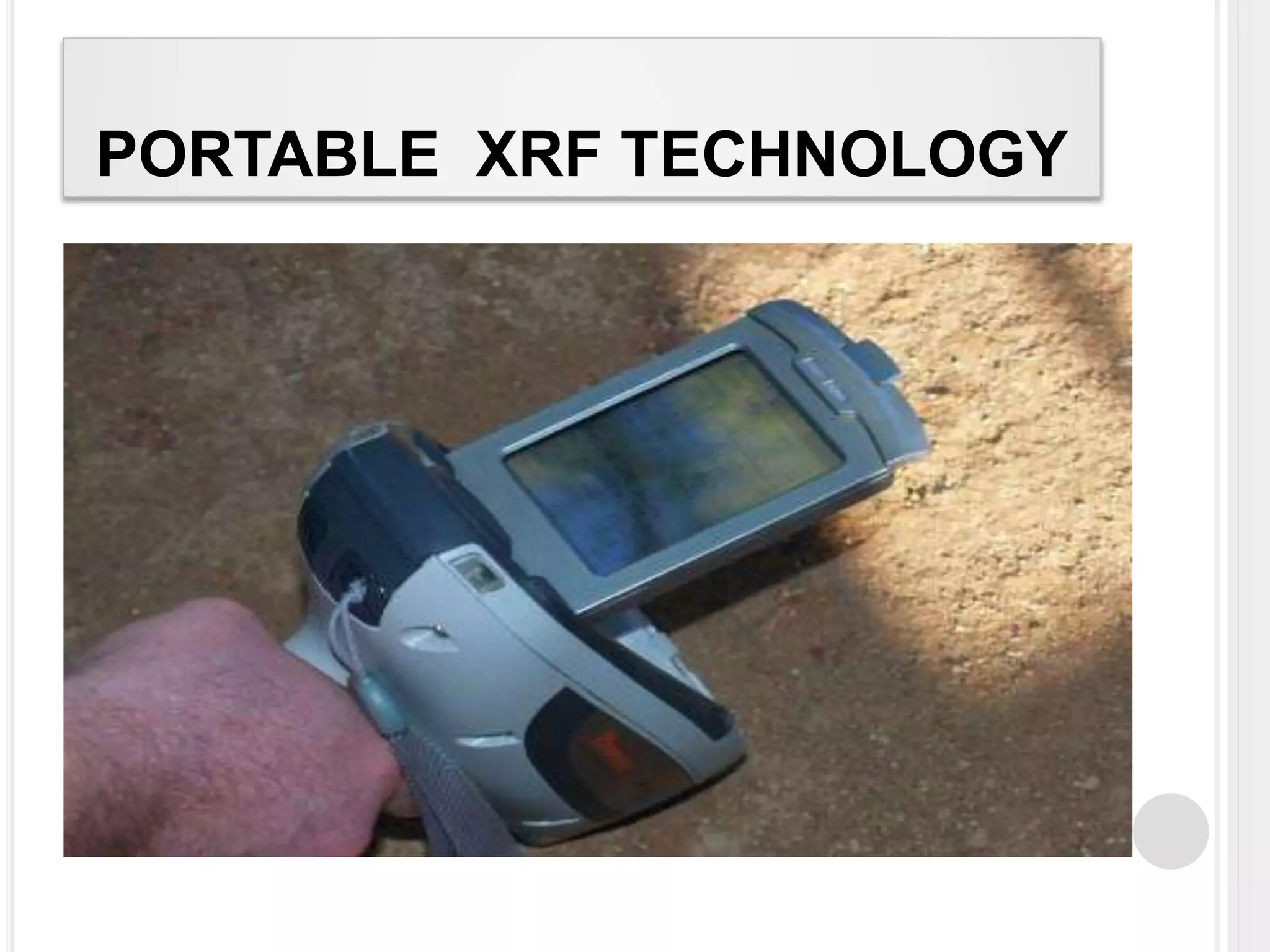
PORTABLE XRF TECHNOLOGY
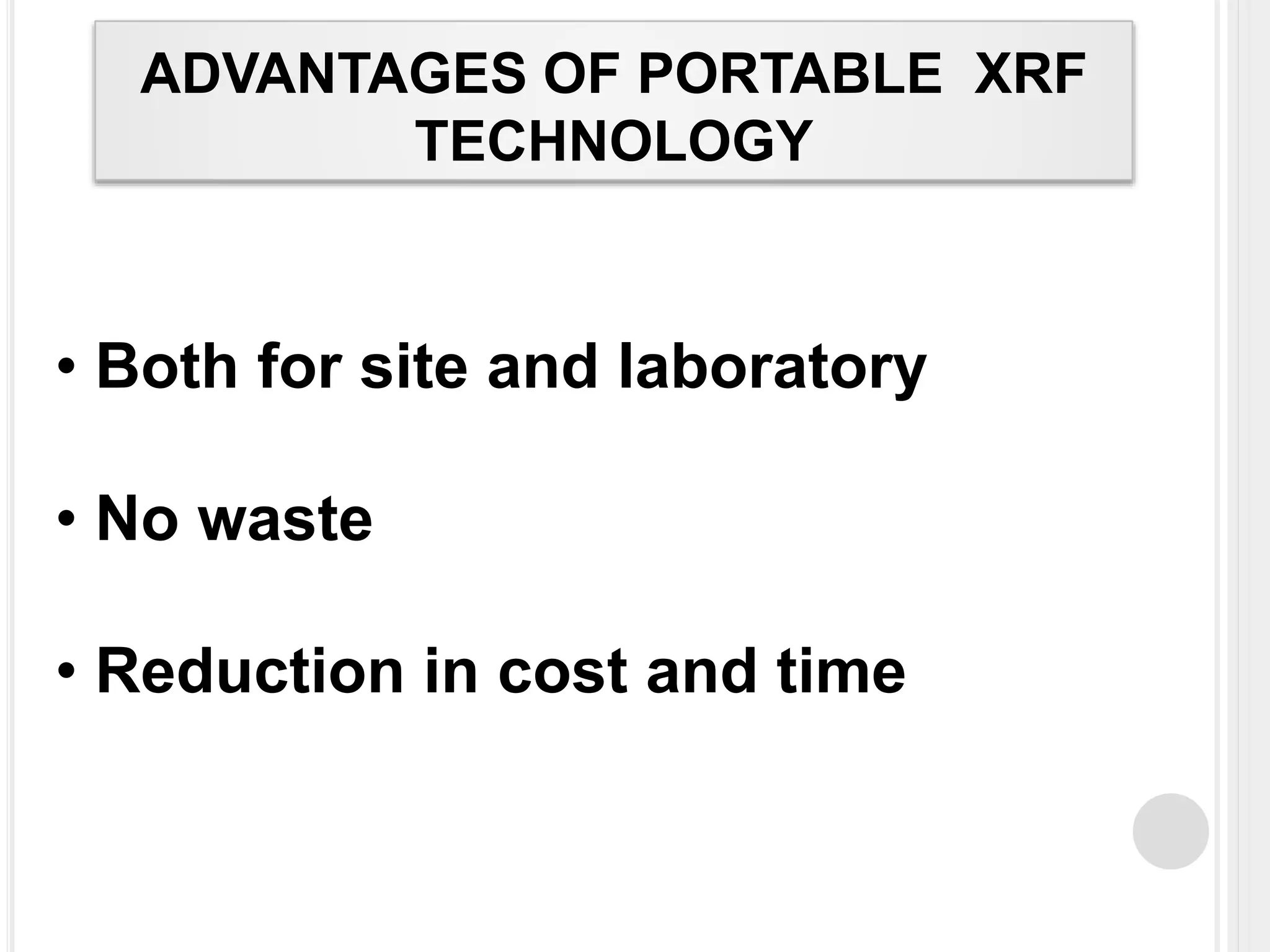
ADVANTAGES OF PORTABLE XRF
TECHNOLOGY
• Both for site and laboratory
• No waste
• Reduction in cost and time
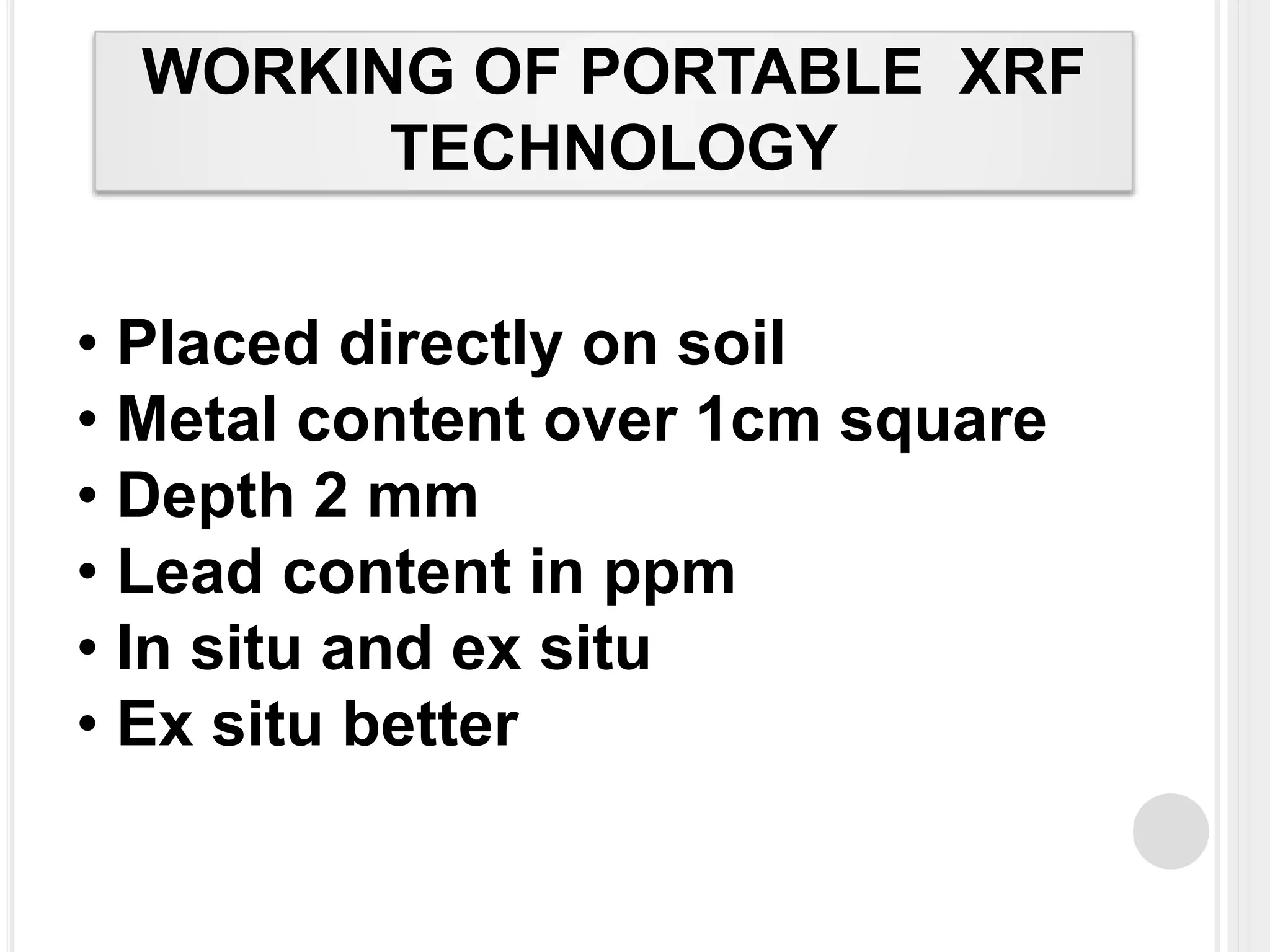
WORKING OF PORTABLE XRF
TECHNOLOGY
• Placed directly on soil
• Metal content over 1cm square
• Depth 2 mm
• Lead content in ppm
• In situ and ex situ
• Ex situ better
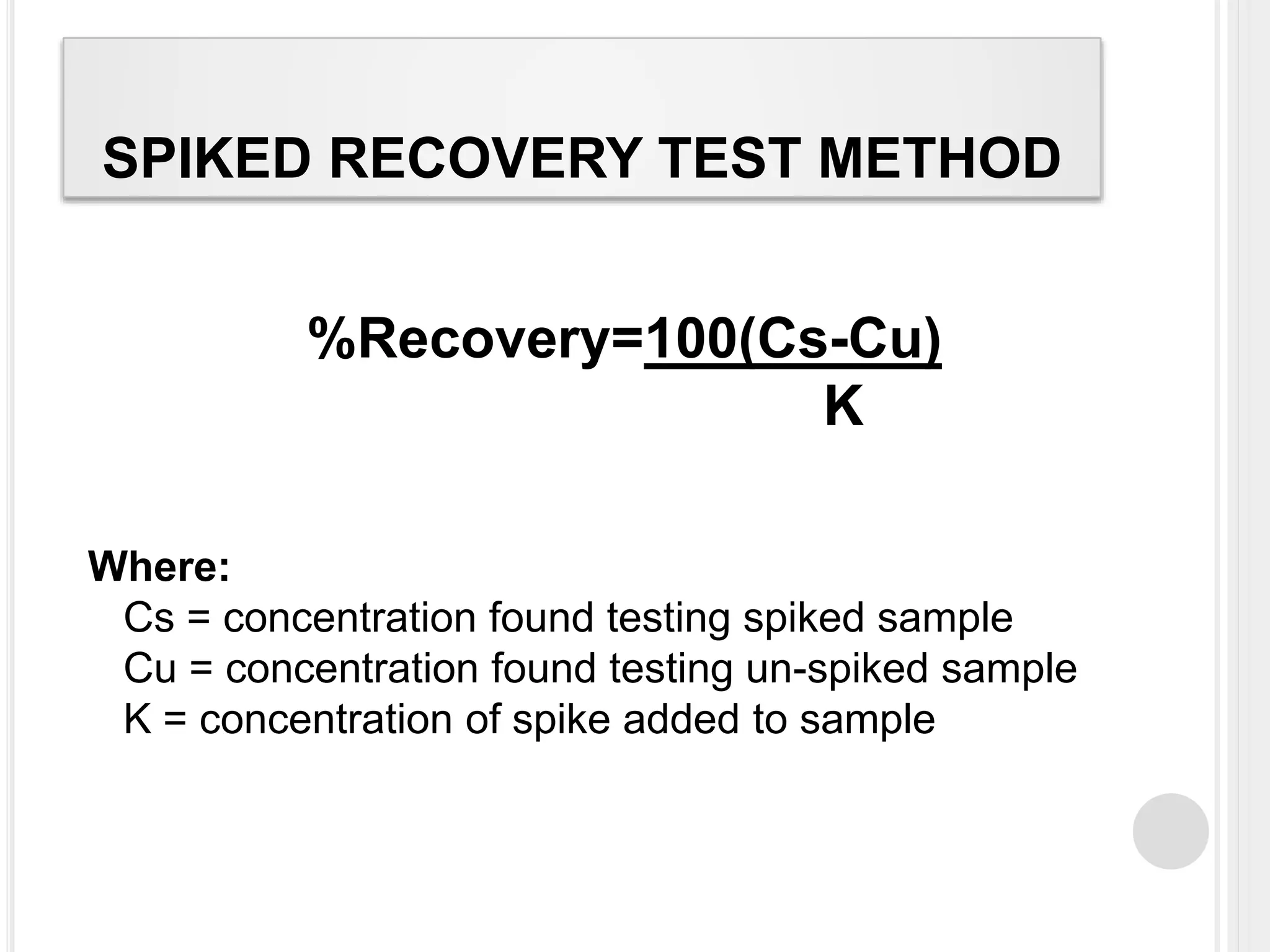
SPIKED RECOVERY TEST METHOD
%Recovery=100(Cs-Cu)
K
Where:
Cs = concentration found testing spiked sample
Cu = concentration found testing un-spiked sample
K = concentration of spike added to sample

Monitoring of lead in soil samples from agricultural land in lahore

  • 1.
    MONITORING OF LEADIN SOIL SAMPLES SELECTED FROM AGRICULTURAL FIELD AROUND LAHORE ZUHHA TAQDEES 2512
  • 2.
    THINGS TO BEDISCUSSED  Soil monitoring and its importance.  How to do sampling in agricultural land.  Sources concentration and health effects of lead.  Sample preparation from field.  Methods for detection of lead in soil.
  • 3.
  • 4.
    IMPORTANCE OF SOIL MONITORING Key for sustainable crop production.  Tells soil nutrient level.  Helps maintaining nutrient levels.  Every 3 years.  Harm: results older than 3 years.
  • 5.
    WHAT IS AGOOD SAMPLE? Same time of year When fields are dry enough to plough Throughout the field Right depth Mixed in plastic container No leaves rocks or other things Properly labeled
  • 6.
    SAMPLING IN AGRICULTURE Uniqueenvironments; managed soil. Plowing, fertilizers, irrigation water. 1 sample/4 hectares Top 30 cm of soil profile Random sampling Grid sampling
  • 7.
    SOURCES OF LEAD Flakinglead paint on exterior structures Factory pollution, incinerators, mining Tetraethyl lead in gasoline Lead arsenate insecticide Naturally occurring lead in soil Lead in plumbing
  • 8.
    LEAD CONCENTRATIONS INSOIL Natural levels: 15-40 ppm Contaminated soils: 100 ppm Adjacent to lead-based paints: <10,000 ppm 1000 ppm lead is hazardous
  • 9.
    HEALTH EFFECTS ONCHILDREN  Damage to brain & nervous system  Behavior & learning problems, hyperactivity  Slowed growth  Hearing problems  Headaches
  • 10.
    HEALTH EFFECTS ONADULTS  Reproductive problems  High blood pressure & hypertension  Nerve disorders  Memory & concentration problems  Muscle & joint pain  Violent Actions
  • 11.
  • 12.
    SAMPLE PREPARATION FROMFIELD DRYING  Saturated soil: Oven drying  Air drying preferable (4 to 8 days) STORING  Zip lock type plastic bag  Cool dry place
  • 13.
    SAMPLE PREPARATION FROMFIELD LABELLING  Unique ID number  Identify ID PROBLEMS  Contamination by tools  crushing of stones, chalk etc. TRANSPORTATION  For chemical analysis
  • 14.
    PROBLEMS IN SAMPLING Limitedno. of samples Limited amount to samples Limited accessibility of location
  • 15.
    METHODS FOR LEADDETECTION Lead Soil Test Kit Portable XRF Technology Spike Recovery Test Method
  • 16.
    LEAD SOIL TESTKIT Convenient, easy onsite procedure Ten minute test for lead soil Uses reagents Affordable Small sample is required (0.14 gram)
  • 17.
    LEAD SOIL TESTKIT 3 steps Soil in test tube Add reagent (30s) Dip test strip Color change
  • 18.
  • 19.
    ADVANTAGES OF PORTABLEXRF TECHNOLOGY • Both for site and laboratory • No waste • Reduction in cost and time
  • 20.
    WORKING OF PORTABLEXRF TECHNOLOGY • Placed directly on soil • Metal content over 1cm square • Depth 2 mm • Lead content in ppm • In situ and ex situ • Ex situ better
  • 21.
    SPIKED RECOVERY TESTMETHOD %Recovery=100(Cs-Cu) K Where: Cs = concentration found testing spiked sample Cu = concentration found testing un-spiked sample K = concentration of spike added to sample