BRANDING
AMONG JOURNALISTS
RETWEETS
Journalists at the political conventions retweeted what
others said about them.
Example: Logan Molyneux, @loganex
• “This morning @loganex will present his branding
research at #ISOJ http://does.nt/exist/”
• “Fantastic analysis coming from @loganex this
convention. Must read.”
• “Hey @loganex take your pointy-headed nonsense and
get off the stage.”
INTERVIEWS WITH
JOURNALISTS
Branding is an integral part of their work
“It’s much more grass roots now, meaning our company isn’t just
going through traditional advertising channels and that we’re not
just writing a story and sending a tweet out there to promote it…
We don’t get paid more to do that, but we know that it’s our best
shot to remain relevant.”
INTERVIEWS WITH
JOURNALISTS
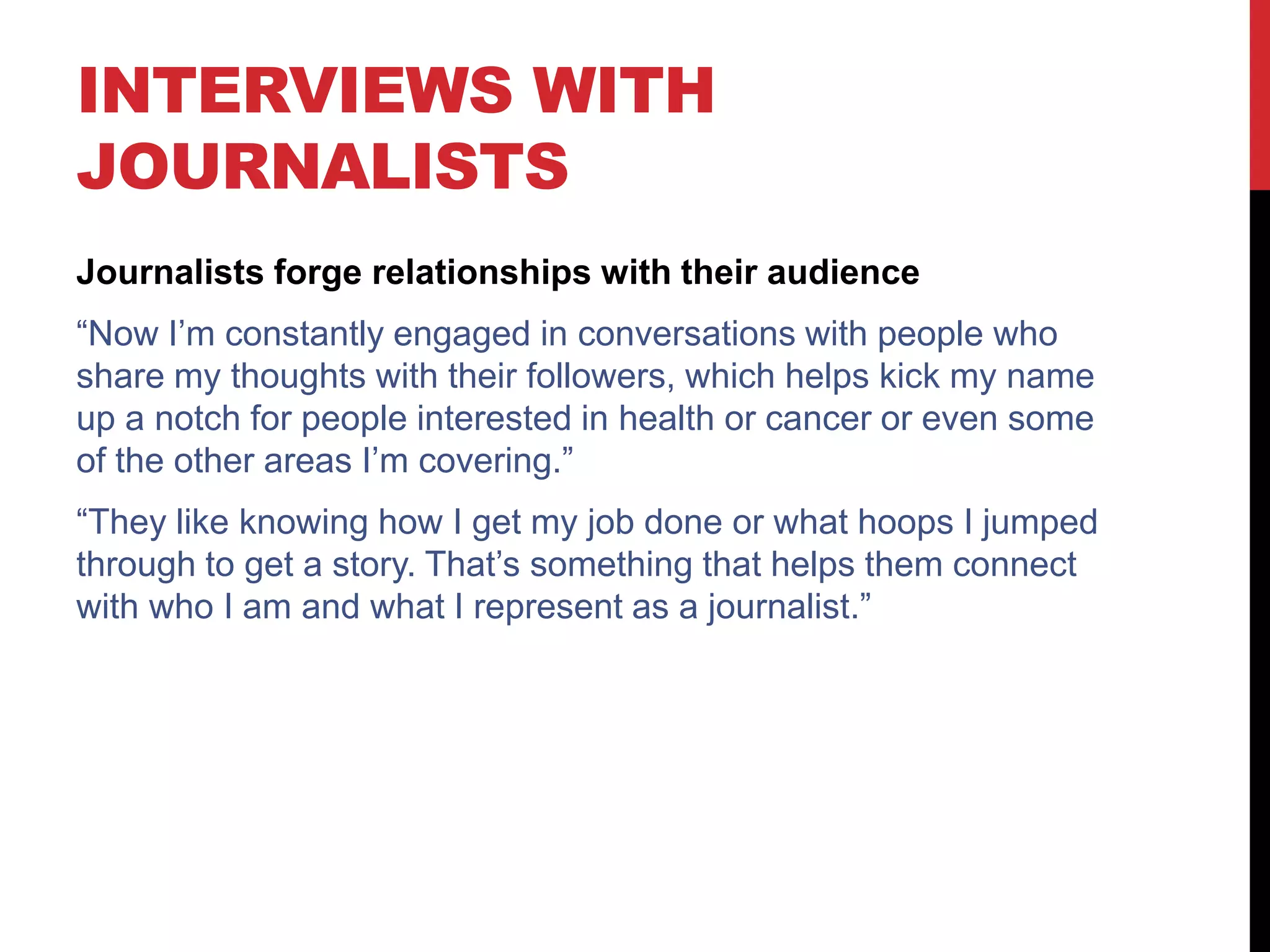
Journalists forge relationships with their audience
“Now I’m constantly engaged in conversations with people who
share my thoughts with their followers, which helps kick my name
up a notch for people interested in health or cancer or even some
of the other areas I’m covering.”
“They like knowing how I get my job done or what hoops I jumped
through to get a story. That’s something that helps them connect
with who I am and what I represent as a journalist.”
INTERVIEWS WITH
JOURNALISTS
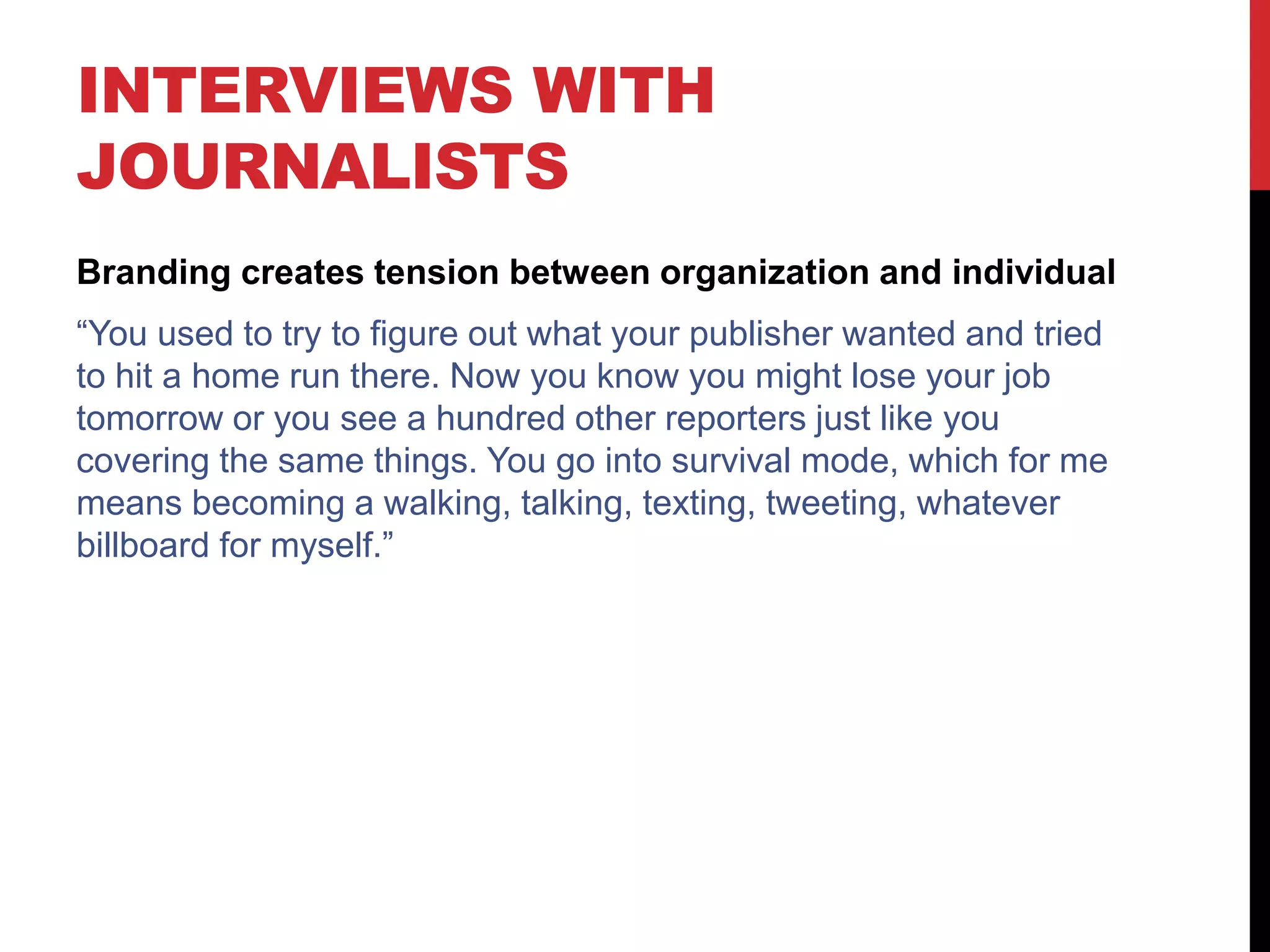
Branding creates tension between organization and individual
“You used to try to figure out what your publisher wanted and tried
to hit a home run there. Now you know you might lose your job
tomorrow or you see a hundred other reporters just like you
covering the same things. You go into survival mode, which for me
means becoming a walking, talking, texting, tweeting, whatever
billboard for myself.”
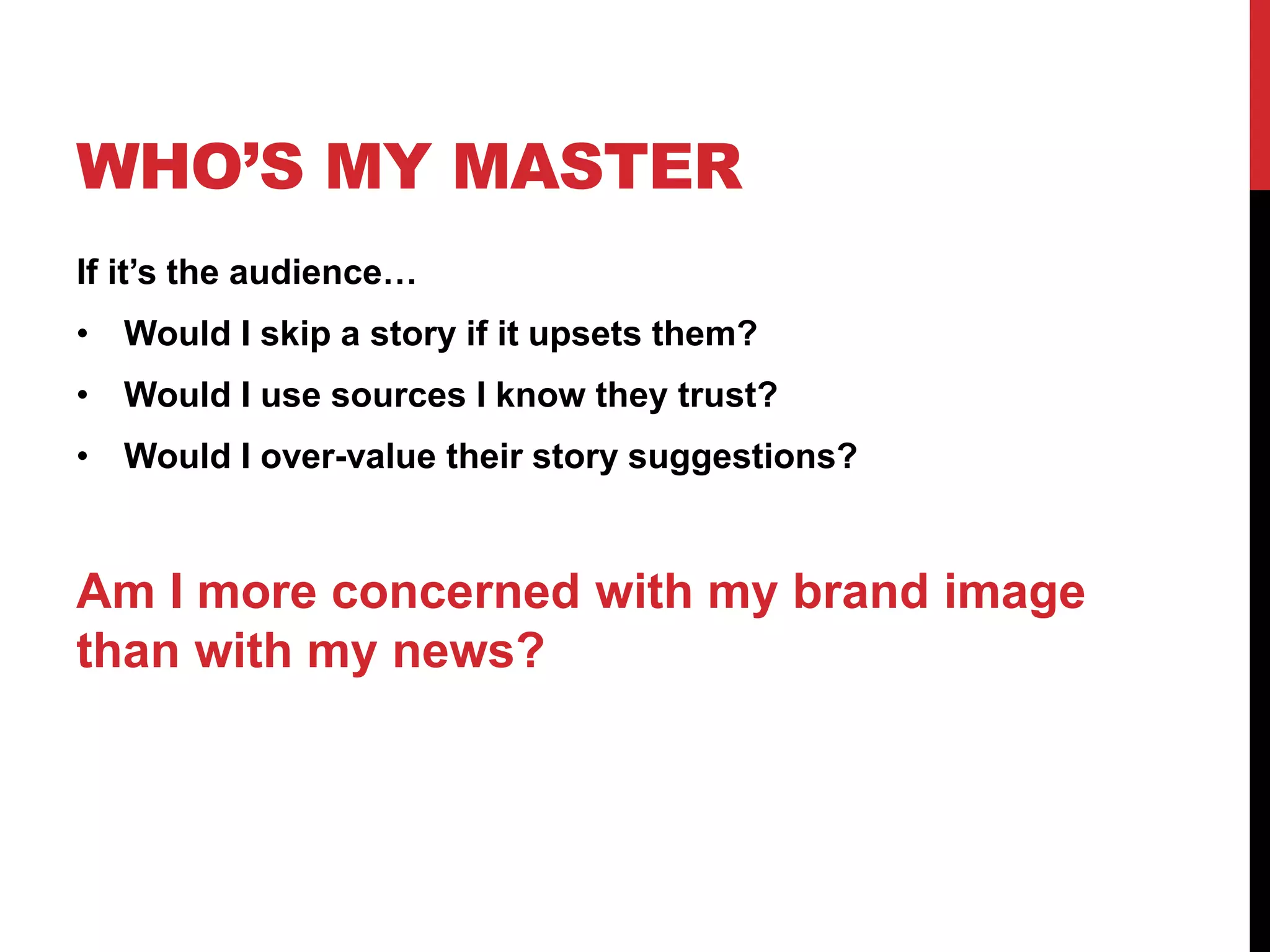
WHO’S MY MASTER
If it’s the audience…
• Would I skip a story if it upsets them?
• Would I use sources I know they trust?
• Would I over-value their story suggestions?
Am I more concerned with my brand image
than with my news?
A POWER SHIFT
ORGANIZATION INDIVIDUAL
News
Product
News
Product
Social
media

Molyneux holton

  • 1.
  • 2.
    RETWEETS Journalists at thepolitical conventions retweeted what others said about them. Example: Logan Molyneux, @loganex • “This morning @loganex will present his branding research at #ISOJ http://does.nt/exist/” • “Fantastic analysis coming from @loganex this convention. Must read.” • “Hey @loganex take your pointy-headed nonsense and get off the stage.”
  • 3.
    INTERVIEWS WITH JOURNALISTS Branding isan integral part of their work “It’s much more grass roots now, meaning our company isn’t just going through traditional advertising channels and that we’re not just writing a story and sending a tweet out there to promote it… We don’t get paid more to do that, but we know that it’s our best shot to remain relevant.”
  • 4.
    INTERVIEWS WITH JOURNALISTS Journalists forgerelationships with their audience “Now I’m constantly engaged in conversations with people who share my thoughts with their followers, which helps kick my name up a notch for people interested in health or cancer or even some of the other areas I’m covering.” “They like knowing how I get my job done or what hoops I jumped through to get a story. That’s something that helps them connect with who I am and what I represent as a journalist.”
  • 5.
    INTERVIEWS WITH JOURNALISTS Branding createstension between organization and individual “You used to try to figure out what your publisher wanted and tried to hit a home run there. Now you know you might lose your job tomorrow or you see a hundred other reporters just like you covering the same things. You go into survival mode, which for me means becoming a walking, talking, texting, tweeting, whatever billboard for myself.”
  • 6.
    WHO’S MY MASTER Ifit’s the audience… • Would I skip a story if it upsets them? • Would I use sources I know they trust? • Would I over-value their story suggestions? Am I more concerned with my brand image than with my news?
  • 7.
    A POWER SHIFT ORGANIZATIONINDIVIDUAL News Product News Product Social media