Chapter 3
Identifying Target Audiences
Defining Target (Market) Audience
-Customers in a target audience are more likely to purchase the company’s
product. They are also people who show interest in similar ideas or values.
-Target audiences can reveal better strategies which can then be tailored to
where/how the audience interacts online.
-One way to better grasp a target audience is through personas. They simplify the
audience into groups, making it easier for companies to understand them.
-A typical persona includes demographics, constraints, and needs/wants.
-Understanding personas is essential in developing relevant content. Each persona
has a different set of interests, needs, and communication styles.
Persona Development Cycle
-Identify persona roles, listing all relevant personas by their role (focus on buyer
roles)
-List needs/situational triggers from personas’ perspectives (concerns, symptoms,
problems)
-Create messaging objectives suited to each persona’s needs
THE PERSONA DEVELOPMENT CYCLE SHOULD BE A FLUID PROCESS AND
CONSTANTLY EVOLVING.
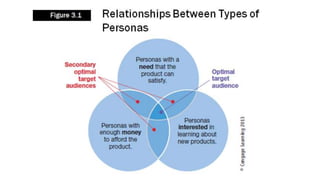
The 3 Types of Personas
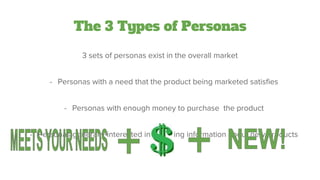
3 sets of personas exist in the overall market
- Personas with a need that the product being marketed satisfies
- Personas with enough money to purchase the product
- Personas generally interested in receiving information about new products
Specifying Within Personas
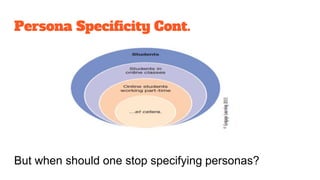
•Envision a general persona as a target, filled with
concentric rings (Figure 3.3)
•Increase the specificity of the persona by adding traits
that would influence the response to the product
•Consider the different needs of these subsets to
develop a much more specific and persuasive message
for those groups
Specificity Within Personas
Imagine a bulls-eye
Outer Ring represents the envisioned persona
(Broadest)
The next ring; increased specificity towards persona
(traits added) to create a better response
This “bull's-eye approach” allows a social media
marketer to develop a much more specific persuasive
Persona Specificity Cont.
But when should one stop specifying personas?
Personal Specificity Cont.
Answer: When the cost of finding information about a new
subset within a persona is greater than the benefit to be
gained by marketing that subset
Simply put, greater specification of personas has two costs:
1. The price of gathering information to specify the most
appropriate audience
2. Making the message more persuasive
Technographics Profile
Consists of the following personas:
Creators-web content publishers (Youtubers, bloggers, etc.)
Conversationalists (Avid Facebookers/Tweeters)
Critics (Raters/Commenters)
Collectors (RSS feeds, “taggers”)
Joiners (complacent social network users)
Spectators (read/listen/watch, but not participate)
Where’s the Audience?
Once an organization knows WHO the
audience is through creating buyer
personas, it is possible to determine
where that audience’s time is spent
online
Social media marketing depends on building
relationships and connections with the target
group online
Therefore, understanding where its members
are online is vital to success
The following questions can help a firm
zero in on the social media platforms
where its target audience participates:
What news sites do members of the target audience go to?
What discussion forums do they participate in?
What social networks are they active on?
What sharing sites are they active on?
Are there significant social groups on these sites?
Are there niche online groups that the target audience is part of?
What blogs do they read?
Who are the influential bloggers?
What Does the Target Audience Talk
About?
It is critical to understand what personas, such as creators,
conversationalists, and critics, frequently talk about online
Identifying what the target audience wants to talk about is
crucial in order to devise content that its members will
respond to
Once you understand who the target audience, where they go
online and what they are interested in talking about, the next
important need is to understand HOW they talk to each other
In order to develop relationships with the customer
community, it is necessary to fit in with the conversations
and to sound “natural”
Must be able to relate to target audience: using language
that is familiar and comfortable to its members
Building common ground with the audience members by
sounding like one of them is a solid strategy when crafting
marketing messages

Chapter presentation

  • 1.
  • 2.
    Defining Target (Market)Audience -Customers in a target audience are more likely to purchase the company’s product. They are also people who show interest in similar ideas or values. -Target audiences can reveal better strategies which can then be tailored to where/how the audience interacts online. -One way to better grasp a target audience is through personas. They simplify the audience into groups, making it easier for companies to understand them. -A typical persona includes demographics, constraints, and needs/wants. -Understanding personas is essential in developing relevant content. Each persona has a different set of interests, needs, and communication styles.
  • 3.
    Persona Development Cycle -Identifypersona roles, listing all relevant personas by their role (focus on buyer roles) -List needs/situational triggers from personas’ perspectives (concerns, symptoms, problems) -Create messaging objectives suited to each persona’s needs THE PERSONA DEVELOPMENT CYCLE SHOULD BE A FLUID PROCESS AND CONSTANTLY EVOLVING.
  • 4.
    The 3 Typesof Personas 3 sets of personas exist in the overall market - Personas with a need that the product being marketed satisfies - Personas with enough money to purchase the product - Personas generally interested in receiving information about new products
  • 6.
    Specifying Within Personas •Envisiona general persona as a target, filled with concentric rings (Figure 3.3) •Increase the specificity of the persona by adding traits that would influence the response to the product •Consider the different needs of these subsets to develop a much more specific and persuasive message for those groups
  • 7.
    Specificity Within Personas Imaginea bulls-eye Outer Ring represents the envisioned persona (Broadest) The next ring; increased specificity towards persona (traits added) to create a better response This “bull's-eye approach” allows a social media marketer to develop a much more specific persuasive
  • 8.
    Persona Specificity Cont. Butwhen should one stop specifying personas?
  • 9.
    Personal Specificity Cont. Answer:When the cost of finding information about a new subset within a persona is greater than the benefit to be gained by marketing that subset Simply put, greater specification of personas has two costs: 1. The price of gathering information to specify the most appropriate audience 2. Making the message more persuasive
  • 10.
    Technographics Profile Consists ofthe following personas: Creators-web content publishers (Youtubers, bloggers, etc.) Conversationalists (Avid Facebookers/Tweeters) Critics (Raters/Commenters) Collectors (RSS feeds, “taggers”) Joiners (complacent social network users) Spectators (read/listen/watch, but not participate)
  • 11.
    Where’s the Audience? Oncean organization knows WHO the audience is through creating buyer personas, it is possible to determine where that audience’s time is spent online
  • 12.
    Social media marketingdepends on building relationships and connections with the target group online Therefore, understanding where its members are online is vital to success
  • 13.
    The following questionscan help a firm zero in on the social media platforms where its target audience participates: What news sites do members of the target audience go to? What discussion forums do they participate in? What social networks are they active on? What sharing sites are they active on? Are there significant social groups on these sites? Are there niche online groups that the target audience is part of? What blogs do they read? Who are the influential bloggers?
  • 14.
    What Does theTarget Audience Talk About? It is critical to understand what personas, such as creators, conversationalists, and critics, frequently talk about online Identifying what the target audience wants to talk about is crucial in order to devise content that its members will respond to Once you understand who the target audience, where they go online and what they are interested in talking about, the next important need is to understand HOW they talk to each other
  • 15.
    In order todevelop relationships with the customer community, it is necessary to fit in with the conversations and to sound “natural” Must be able to relate to target audience: using language that is familiar and comfortable to its members Building common ground with the audience members by sounding like one of them is a solid strategy when crafting marketing messages