Shiumei Lin
UPS Public Affairs, Asia Pacific Region
Module 3: Establishing a
Trade Compliance Program
11 July 2018
Importance of Trade Compliance
 Compliance: unwanted expense or strategic advantage?
 Better to use compliance as the catalyst for process improvement
 Non-compliance can mean:
 Shipment delays
 Monetary fines and penalties
 Increased inspections
 Adverse publicity
Compliance as a Competitive Advantage
 A robust compliance program
promotes efficiency.
 You can also address potential
risks before they become
issues.
 Compliance can also have
tangible business results:
 Revenue enhancement
 Brand protection
 Higher profitability
Elements: Policy & Procedure Manual
 Provides a “map of compliance” for employees to follow
 Include compliance policies and procedures
 Keep current and up-to-date
 Training program
Elements: Receipts & Record-keeping
 Responsibilities and standards for information
management, whether in hardcopy, electronic
media, email correspondence etc.
 Records should be easily retrievable
 System should allow for easy collection of all
records for one transaction
 Maintain a back-up system for all electronic files
 Ensure records retention is clearly defined in
contractual agreements eg with freight
forwarders, brokers etc.
Elements: Self-Audits
 Timing and frequency
 What to include:
 Criteria: what should it be (see manual)
 Condition: what is it actually (based on review)
 Effect: consequences
 Cause: how did it get that way?
 Recommendations: what should be done
 Corrective Action: action, follow-up
 Voluntary Disclosure Program (VDP) – individuals or companies
voluntarily disclose errors or omissions
Elements: Supply Chain Security
• Manage the process from the first point of regulatory risk, even
before the sale, through the entire supply chain process
• Monitor post-shipment activities, such as re-exports and transfers,
servicing and returns
• Actions you can take:
• Document who is responsible
• Train stakeholders to recognize questionable transactions
• Develop criteria for holding/stopping/releasing an order
• Audit, audit, audit!
Elements: Supply Chain Security
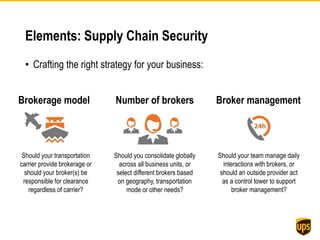
• Crafting the right strategy for your business:
Brokerage model Number of brokers Broker management
Should your transportation
carrier provide brokerage or
should your broker(s) be
responsible for clearance
regardless of carrier?
Should you consolidate globally
across all business units, or
select different brokers based
on geography, transportation
mode or other needs?
Should your team manage daily
interactions with brokers, or
should an outside provider act
as a control tower to support
broker management?
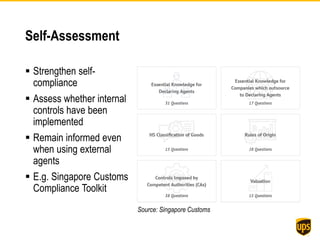
Self-Assessment
 Strengthen self-
compliance
 Assess whether internal
controls have been
implemented
 Remain informed even
when using external
agents
 E.g. Singapore Customs
Compliance Toolkit
Source: Singapore Customs
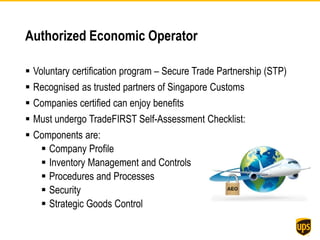
Authorized Economic Operator
 Voluntary certification program – Secure Trade Partnership (STP)
 Recognised as trusted partners of Singapore Customs
 Companies certified can enjoy benefits
 Must undergo TradeFIRST Self-Assessment Checklist:
 Components are:
 Company Profile
 Inventory Management and Controls
 Procedures and Processes
 Security
 Strategic Goods Control
Additional Resources
 Sample manual table of contents
http://www.itcstrategies.com/Manual.pdf
 Sample compliance manual
https://www.k-state.edu/comply/ecp/resources/compliance-
guidelinesup.pdf
 Singapore Customs Self-Assessment Toolkit
https://www.customs.gov.sg/businesses/compliance/compliance-
toolkit
 Singapore Customs TradeFIRST Self-Assessment Checklist
https://www.customs.gov.sg/businesses/customs-schemes-licences-
framework/tradefirst

Module 3 establishing a trade compliance program

  • 1.
    Shiumei Lin UPS PublicAffairs, Asia Pacific Region Module 3: Establishing a Trade Compliance Program 11 July 2018
  • 2.
    Importance of TradeCompliance  Compliance: unwanted expense or strategic advantage?  Better to use compliance as the catalyst for process improvement  Non-compliance can mean:  Shipment delays  Monetary fines and penalties  Increased inspections  Adverse publicity
  • 3.
    Compliance as aCompetitive Advantage  A robust compliance program promotes efficiency.  You can also address potential risks before they become issues.  Compliance can also have tangible business results:  Revenue enhancement  Brand protection  Higher profitability
  • 4.
    Elements: Policy &Procedure Manual  Provides a “map of compliance” for employees to follow  Include compliance policies and procedures  Keep current and up-to-date  Training program
  • 5.
    Elements: Receipts &Record-keeping  Responsibilities and standards for information management, whether in hardcopy, electronic media, email correspondence etc.  Records should be easily retrievable  System should allow for easy collection of all records for one transaction  Maintain a back-up system for all electronic files  Ensure records retention is clearly defined in contractual agreements eg with freight forwarders, brokers etc.
  • 6.
    Elements: Self-Audits  Timingand frequency  What to include:  Criteria: what should it be (see manual)  Condition: what is it actually (based on review)  Effect: consequences  Cause: how did it get that way?  Recommendations: what should be done  Corrective Action: action, follow-up  Voluntary Disclosure Program (VDP) – individuals or companies voluntarily disclose errors or omissions
  • 7.
    Elements: Supply ChainSecurity • Manage the process from the first point of regulatory risk, even before the sale, through the entire supply chain process • Monitor post-shipment activities, such as re-exports and transfers, servicing and returns • Actions you can take: • Document who is responsible • Train stakeholders to recognize questionable transactions • Develop criteria for holding/stopping/releasing an order • Audit, audit, audit!
  • 8.
    Elements: Supply ChainSecurity • Crafting the right strategy for your business: Brokerage model Number of brokers Broker management Should your transportation carrier provide brokerage or should your broker(s) be responsible for clearance regardless of carrier? Should you consolidate globally across all business units, or select different brokers based on geography, transportation mode or other needs? Should your team manage daily interactions with brokers, or should an outside provider act as a control tower to support broker management?
  • 9.
    Self-Assessment  Strengthen self- compliance Assess whether internal controls have been implemented  Remain informed even when using external agents  E.g. Singapore Customs Compliance Toolkit Source: Singapore Customs
  • 10.
    Authorized Economic Operator Voluntary certification program – Secure Trade Partnership (STP)  Recognised as trusted partners of Singapore Customs  Companies certified can enjoy benefits  Must undergo TradeFIRST Self-Assessment Checklist:  Components are:  Company Profile  Inventory Management and Controls  Procedures and Processes  Security  Strategic Goods Control
  • 11.
    Additional Resources  Samplemanual table of contents http://www.itcstrategies.com/Manual.pdf  Sample compliance manual https://www.k-state.edu/comply/ecp/resources/compliance- guidelinesup.pdf  Singapore Customs Self-Assessment Toolkit https://www.customs.gov.sg/businesses/compliance/compliance- toolkit  Singapore Customs TradeFIRST Self-Assessment Checklist https://www.customs.gov.sg/businesses/customs-schemes-licences- framework/tradefirst