Modernity & Modernism
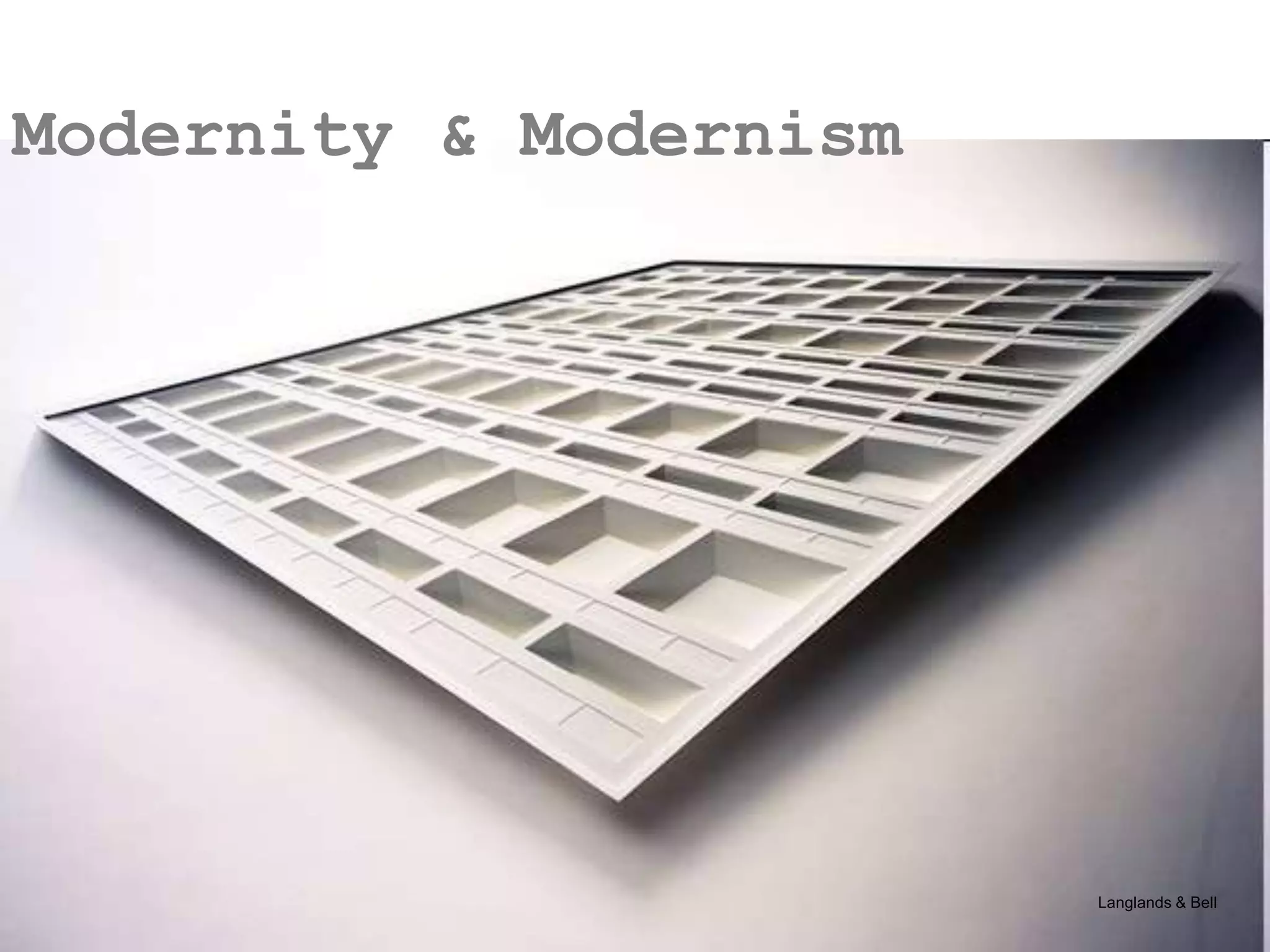
Langlands & Bell
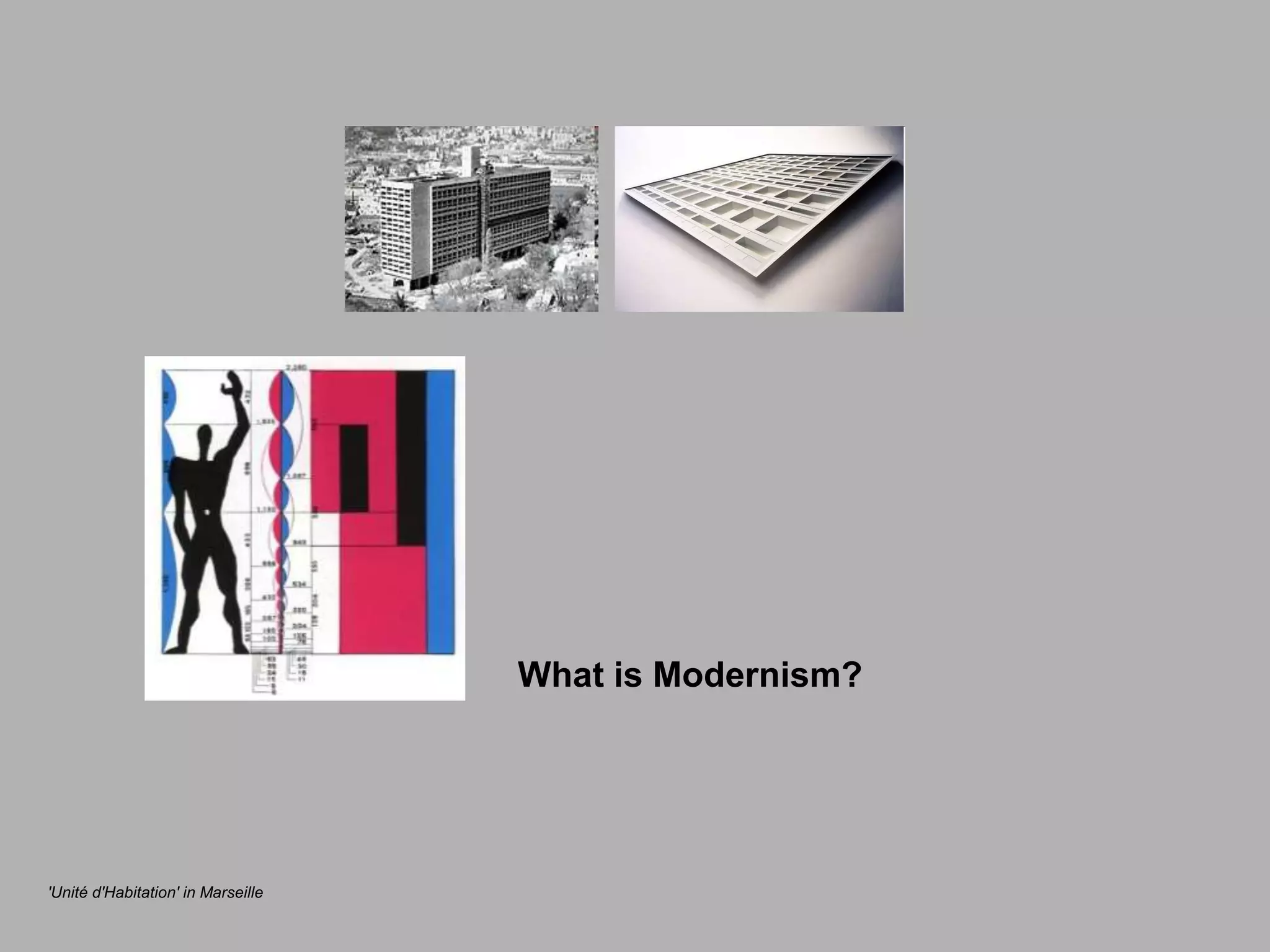
'Unité d'Habitation' in Marseille
What is Modernism?
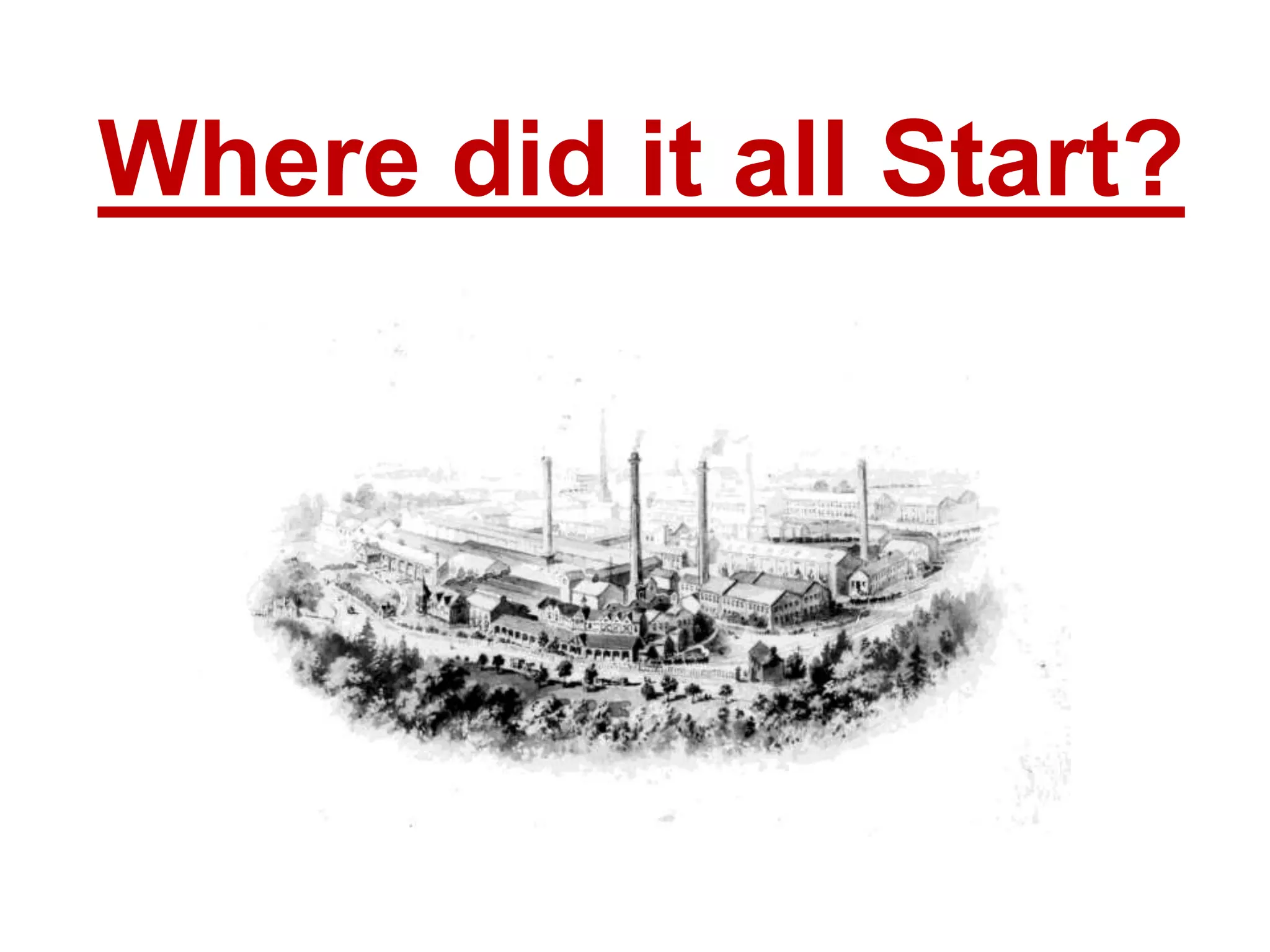
Where did it all Start?
Modernism
& Modernity
Modernism
Deliberate departure
from tradition
Modernity To be in the present;
“a shopping mall would instil a
spirit of modernity
Social & Political re structuring –
resulting from a fully industrialised
environment (in the West)
WW1 & WW2
The Cold War
The Race for Global Supremacy
hastened all aspects of modernism
Camera, Motorised Vehicles, Factory
Production, Radio, Space Travel,
Concrete
The start of modernism began with
the enclosures act and the industrial
revolution
Art, Literature, Music,
Architecture, Fashion
Urban Planning,
Furniture
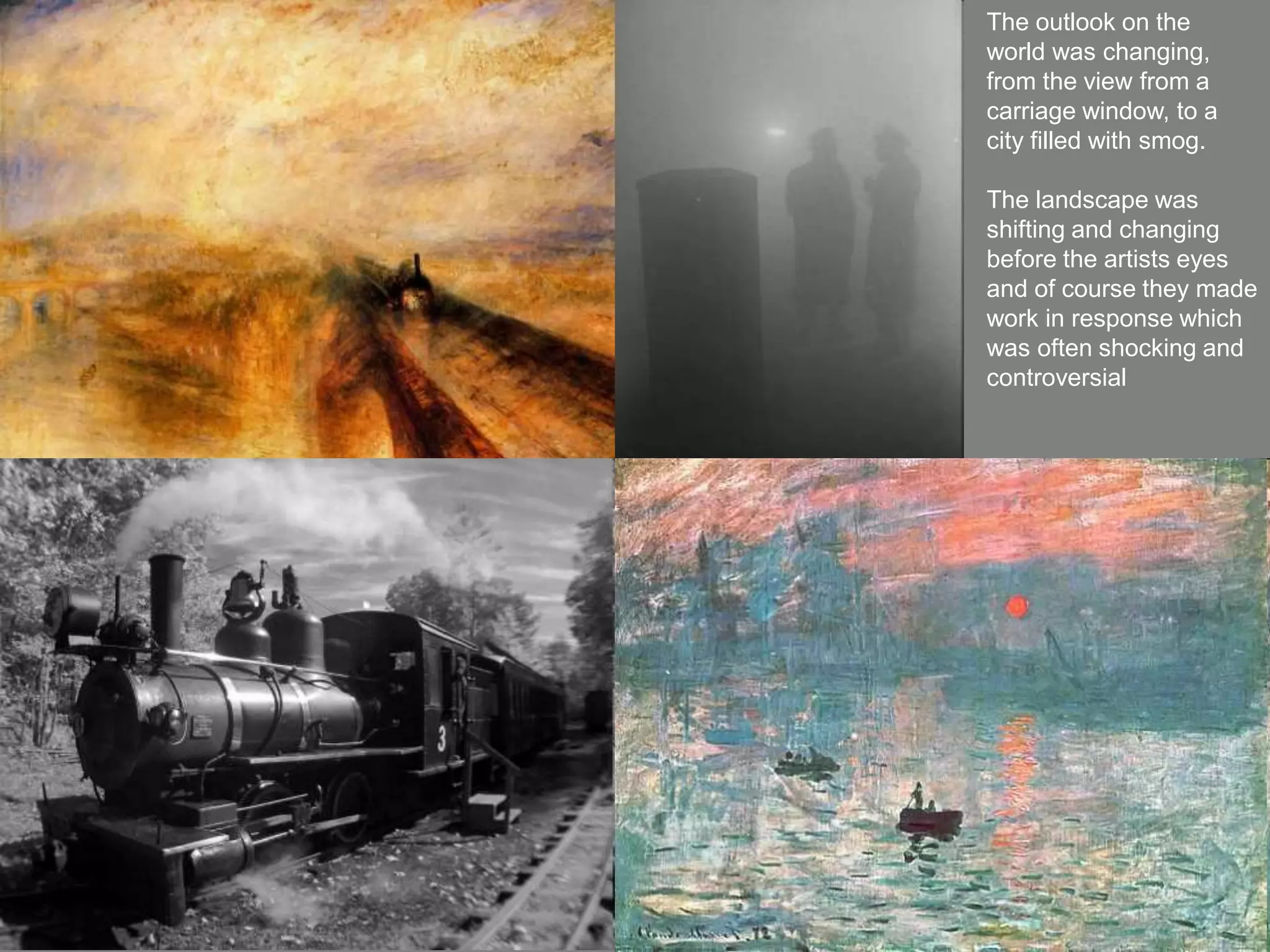
The outlook on the
world was changing,
from the view from a
carriage window, to a
city filled with smog.
The landscape was
shifting and changing
before the artists eyes
and of course they made
work in response which
was often shocking and
controversial
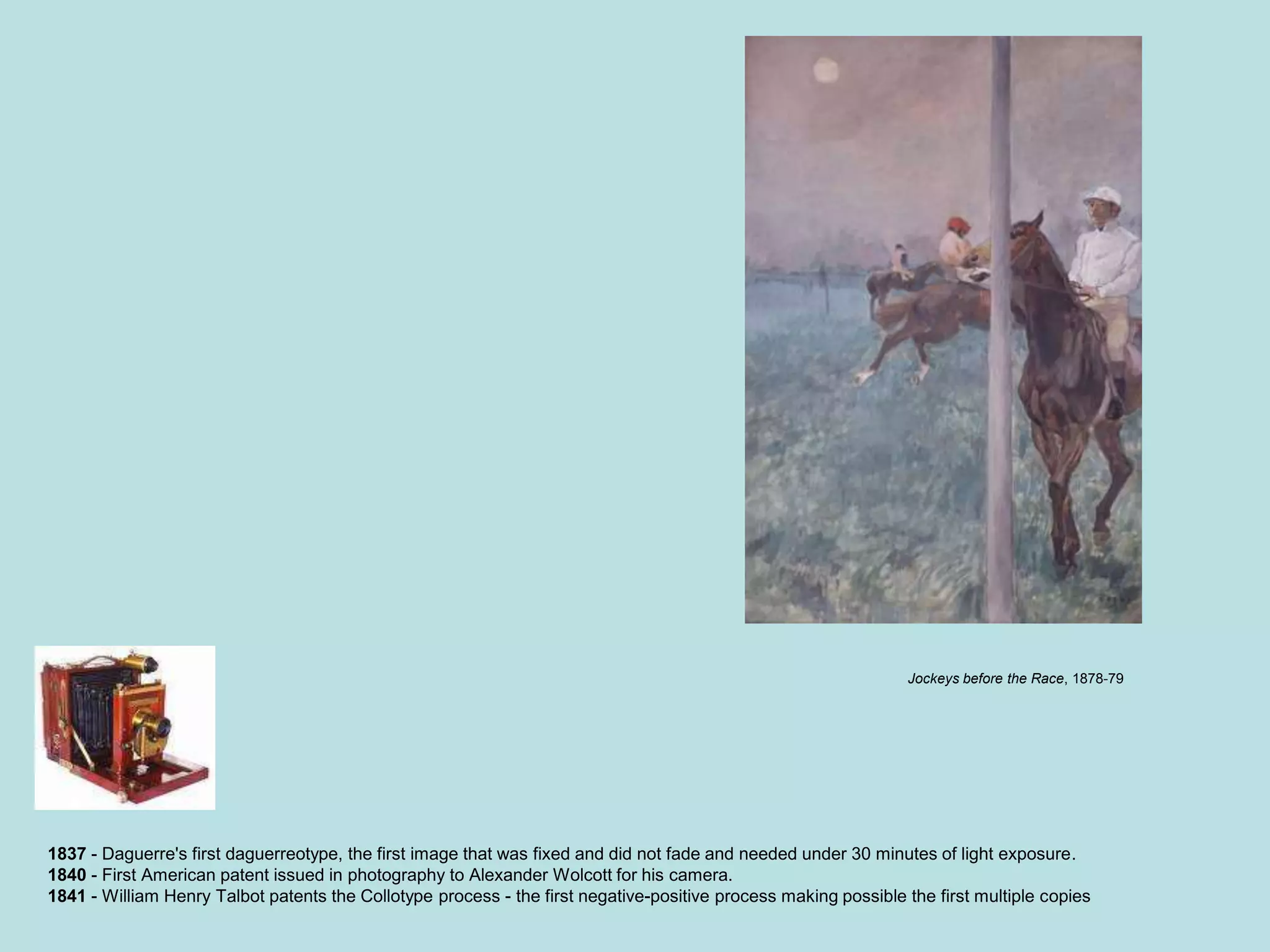
1837 - Daguerre's first daguerreotype, the first image that was fixed and did not fade and needed under 30 minutes of light exposure.
1840 - First American patent issued in photography to Alexander Wolcott for his camera.
1841 - William Henry Talbot patents the Collotype process - the first negative-positive process making possible the first multiple copies
Jockeys before the Race, 1878-79
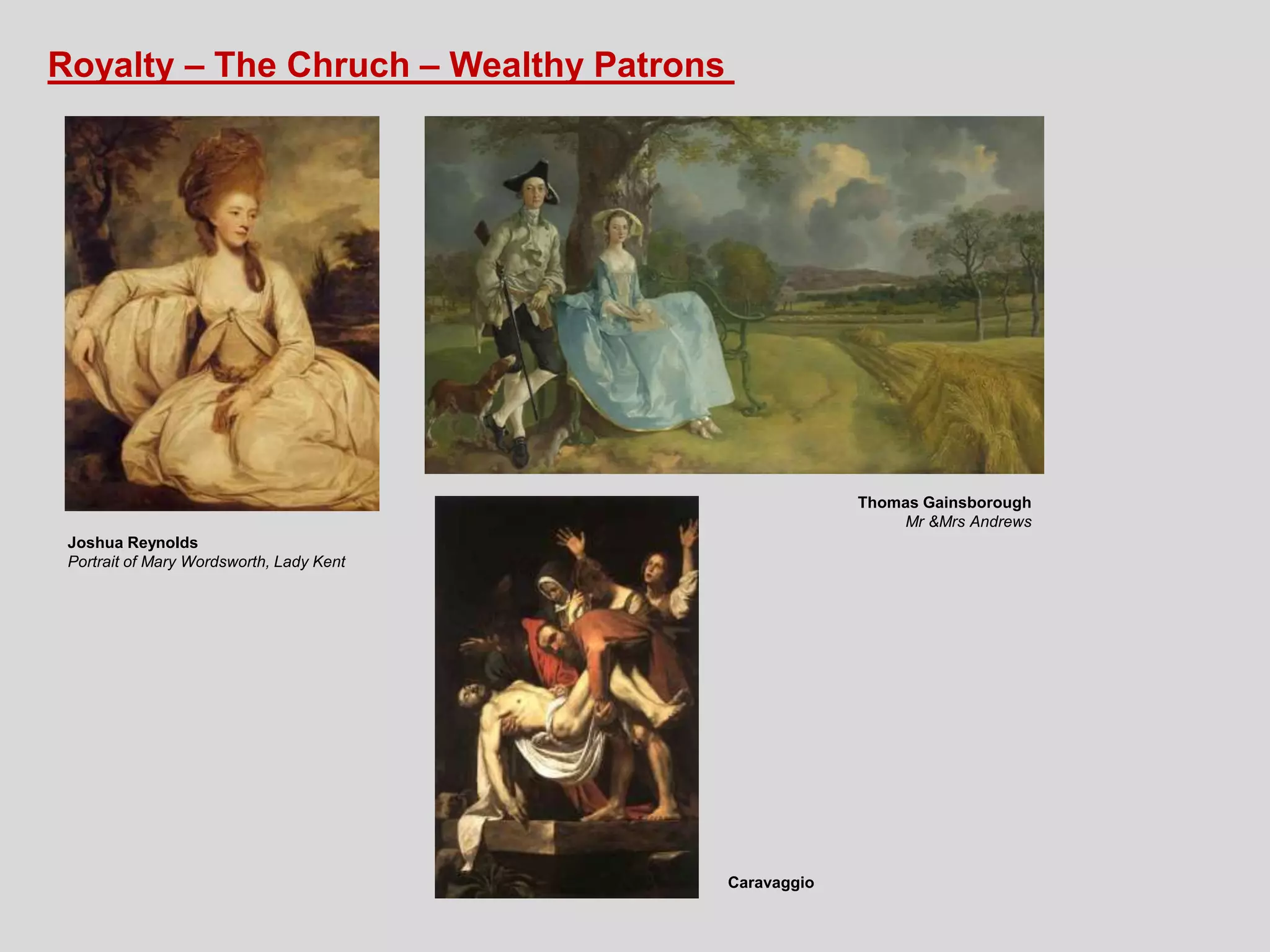
Royalty – The Chruch – Wealthy Patrons
Joshua Reynolds
Portrait of Mary Wordsworth, Lady Kent
Thomas Gainsborough
Mr &Mrs Andrews
Caravaggio
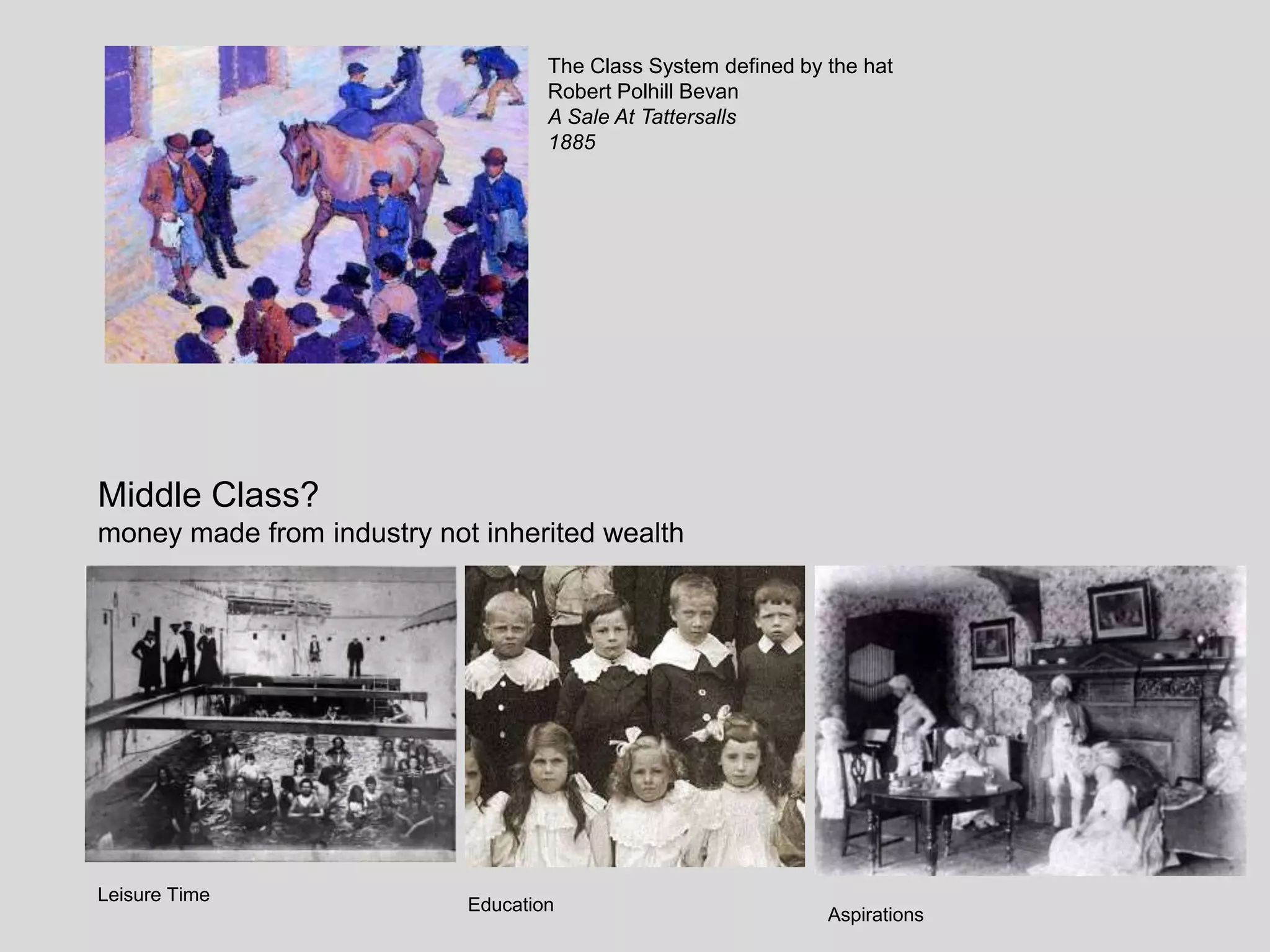
Middle Class?
money made from industry not inherited wealth
The Class System defined by the hat
Robert Polhill Bevan
A Sale At Tattersalls
1885
Leisure Time
Education
Aspirations
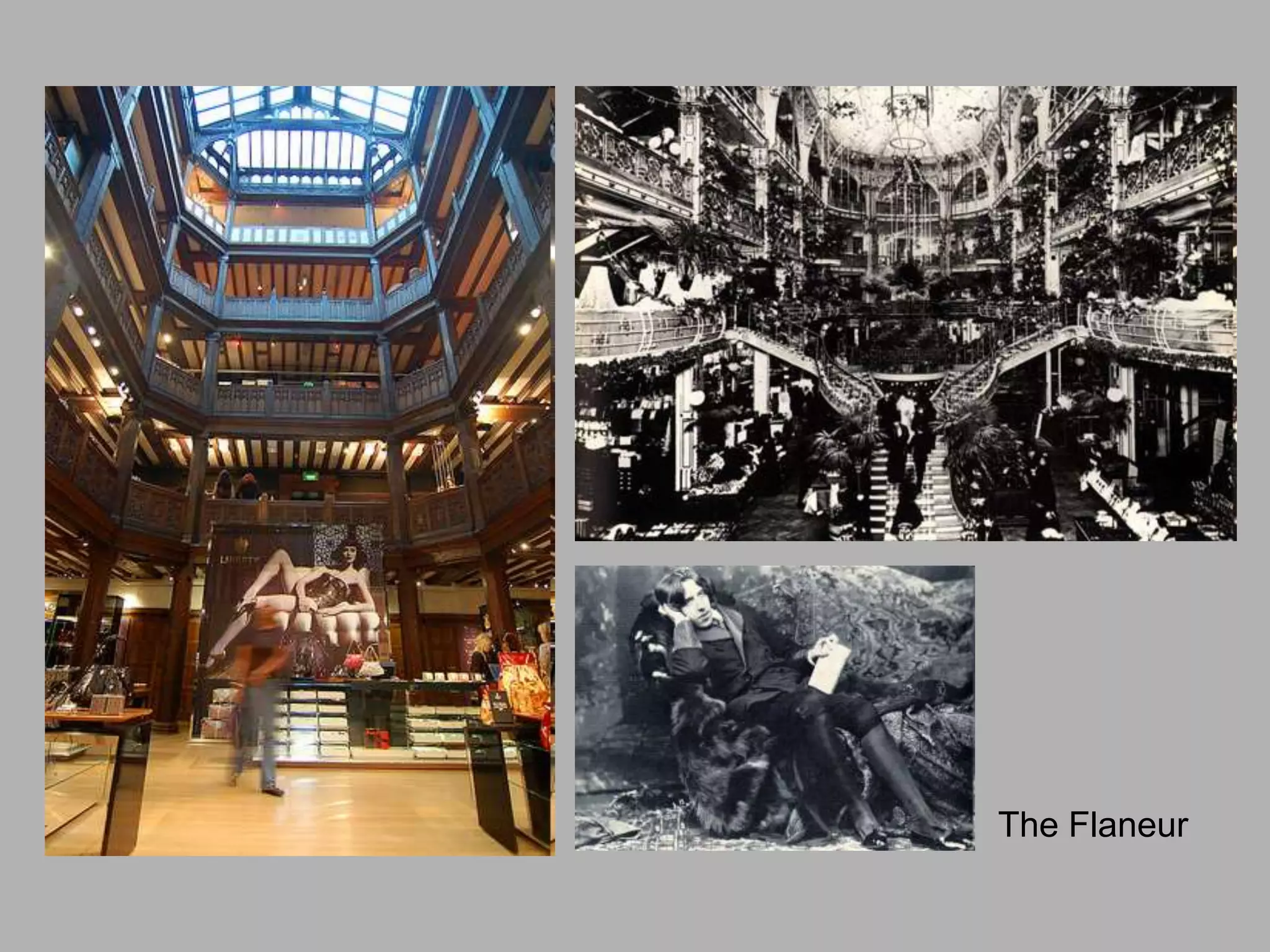
The Flaneur
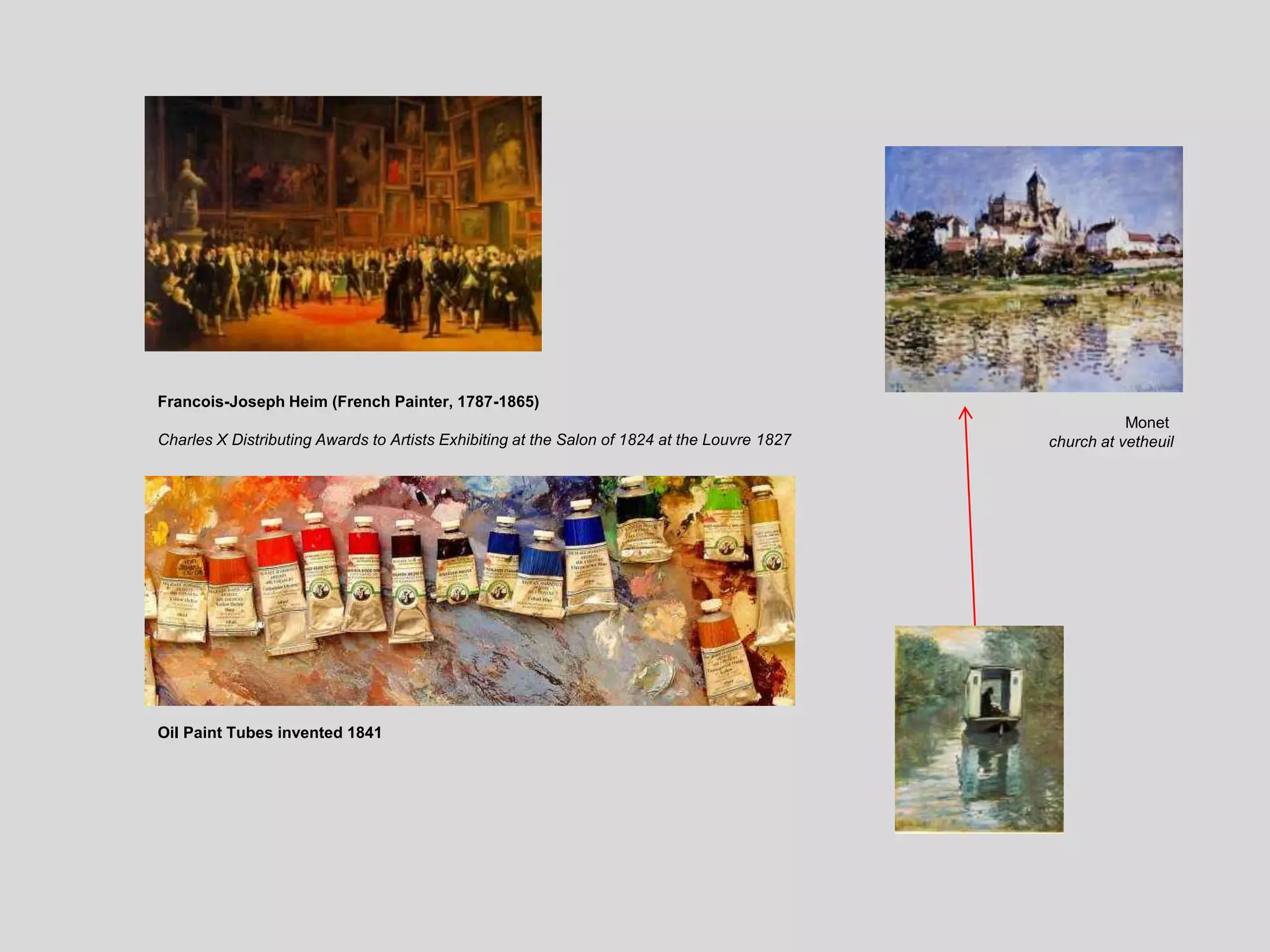
Francois-Joseph Heim (French Painter, 1787-1865)
Charles X Distributing Awards to Artists Exhibiting at the Salon of 1824 at the Louvre 1827
Oil Paint Tubes invented 1841
Monet
church at vetheuil
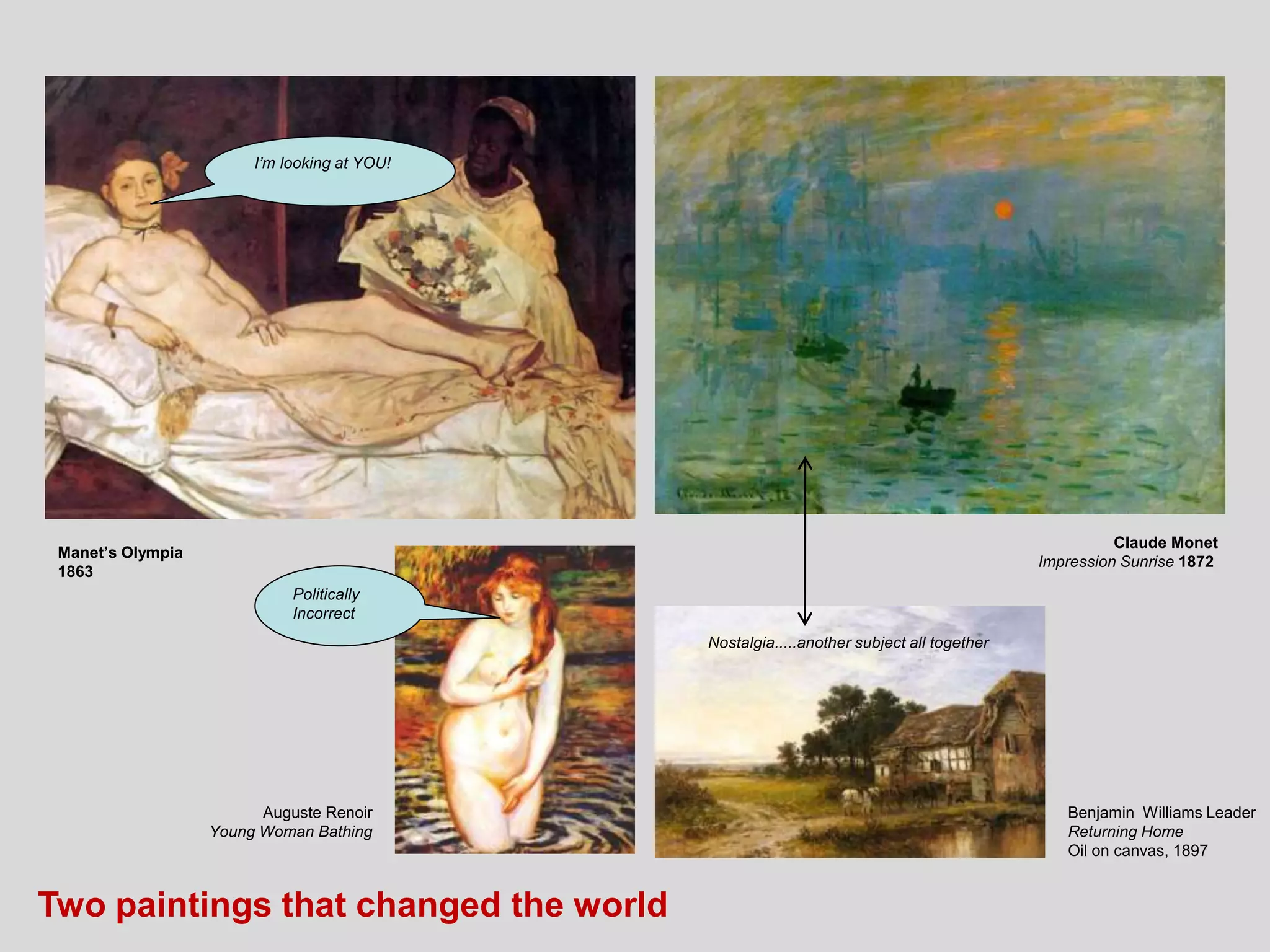
Manet’s Olympia
1863
Claude Monet
Impression Sunrise 1872
Two paintings that changed the world
Auguste Renoir
Young Woman Bathing
Benjamin Williams Leader
Returning Home
Oil on canvas, 1897
Nostalgia.....another subject all together
Politically
Incorrect
I’m looking at YOU!
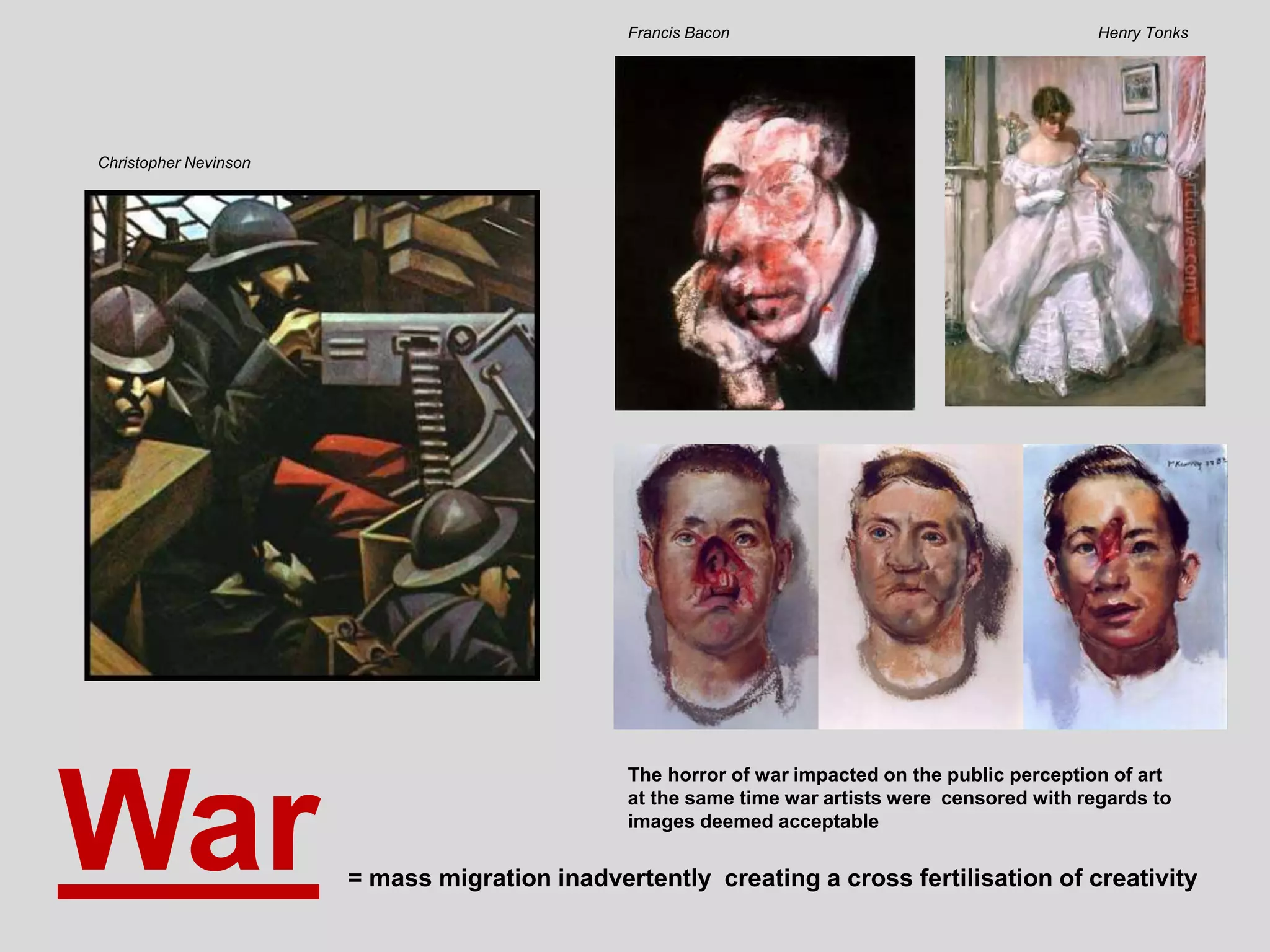
War
Henry TonksFrancis Bacon
Christopher Nevinson
= mass migration inadvertently creating a cross fertilisation of creativity
The horror of war impacted on the public perception of art
at the same time war artists were censored with regards to
images deemed acceptable
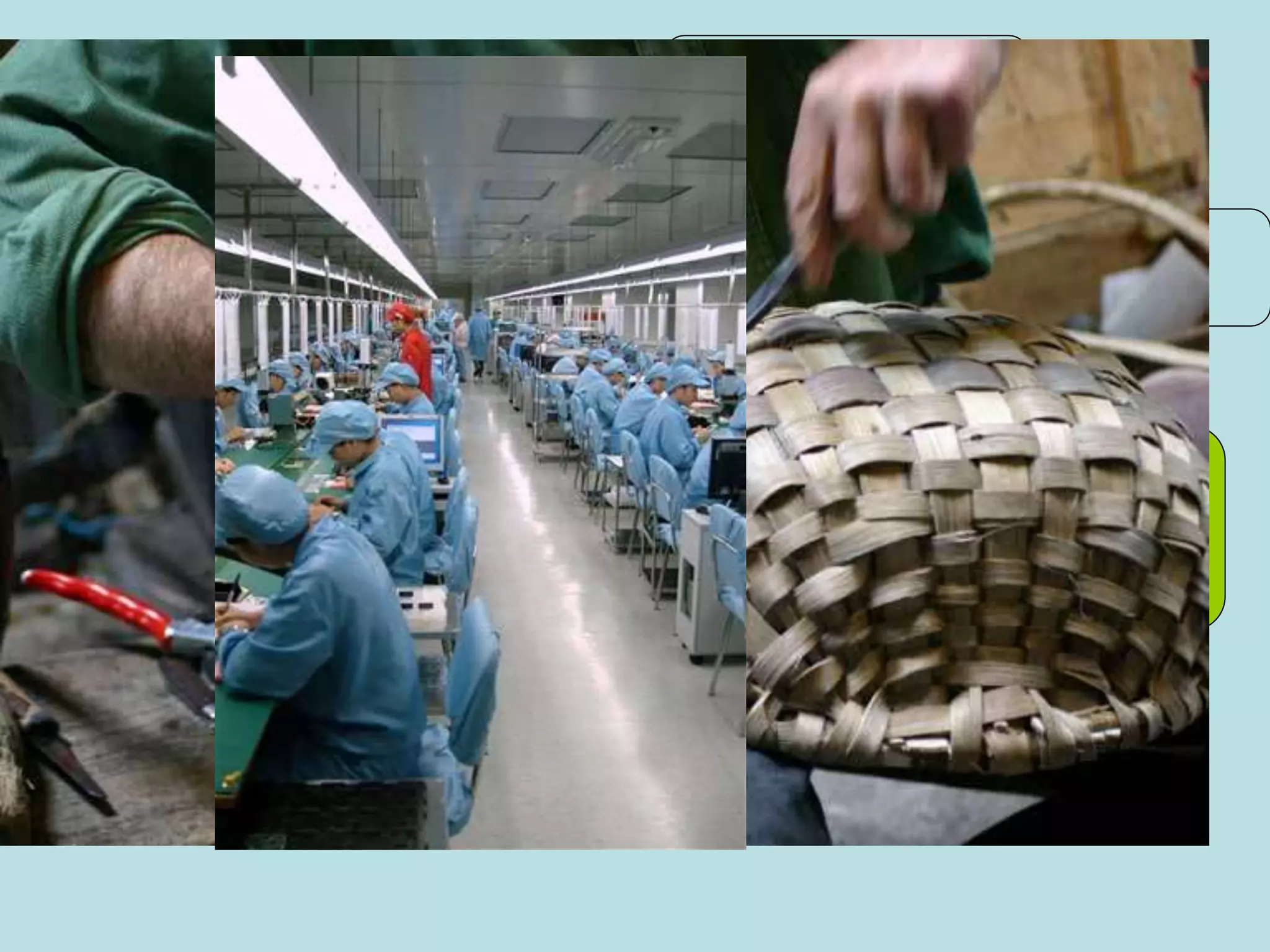
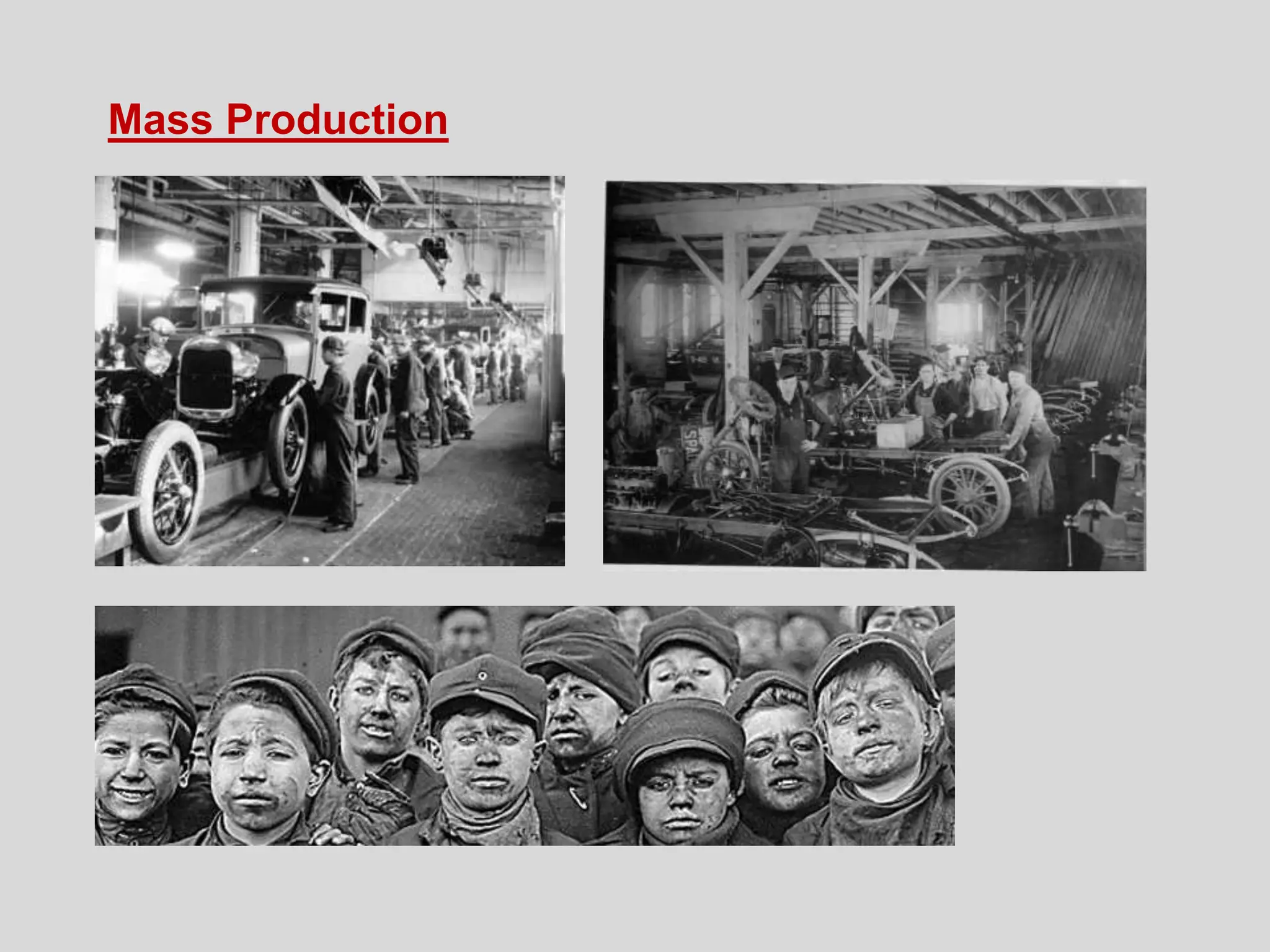
Mass Production
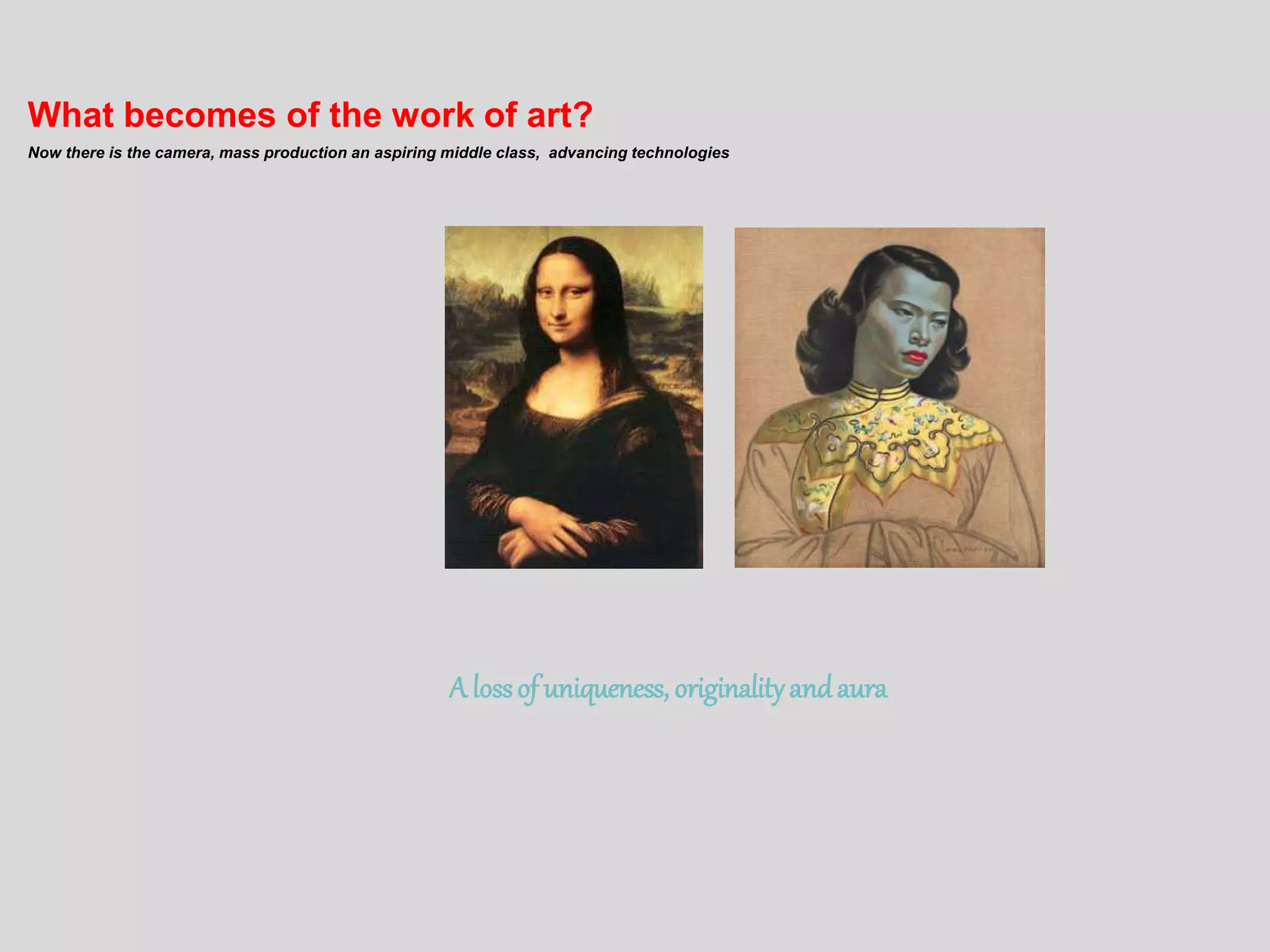
What becomes of the work of art?
Now there is the camera, mass production an aspiring middle class, advancing technologies
A lossof uniqueness, originalityandaura
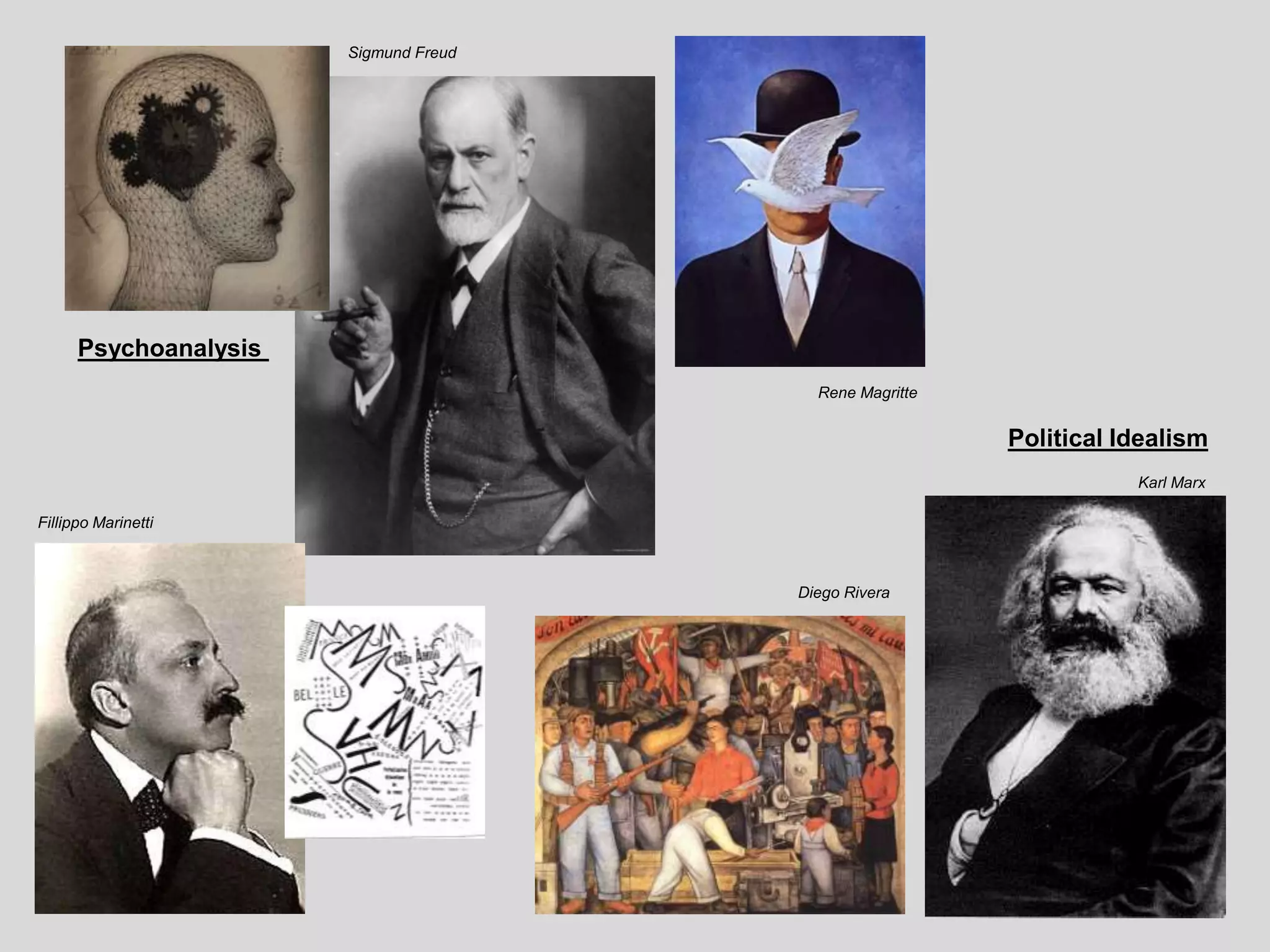
Psychoanalysis
Sigmund Freud
Rene Magritte
Fillippo Marinetti
Karl Marx
Diego Rivera
Political Idealism
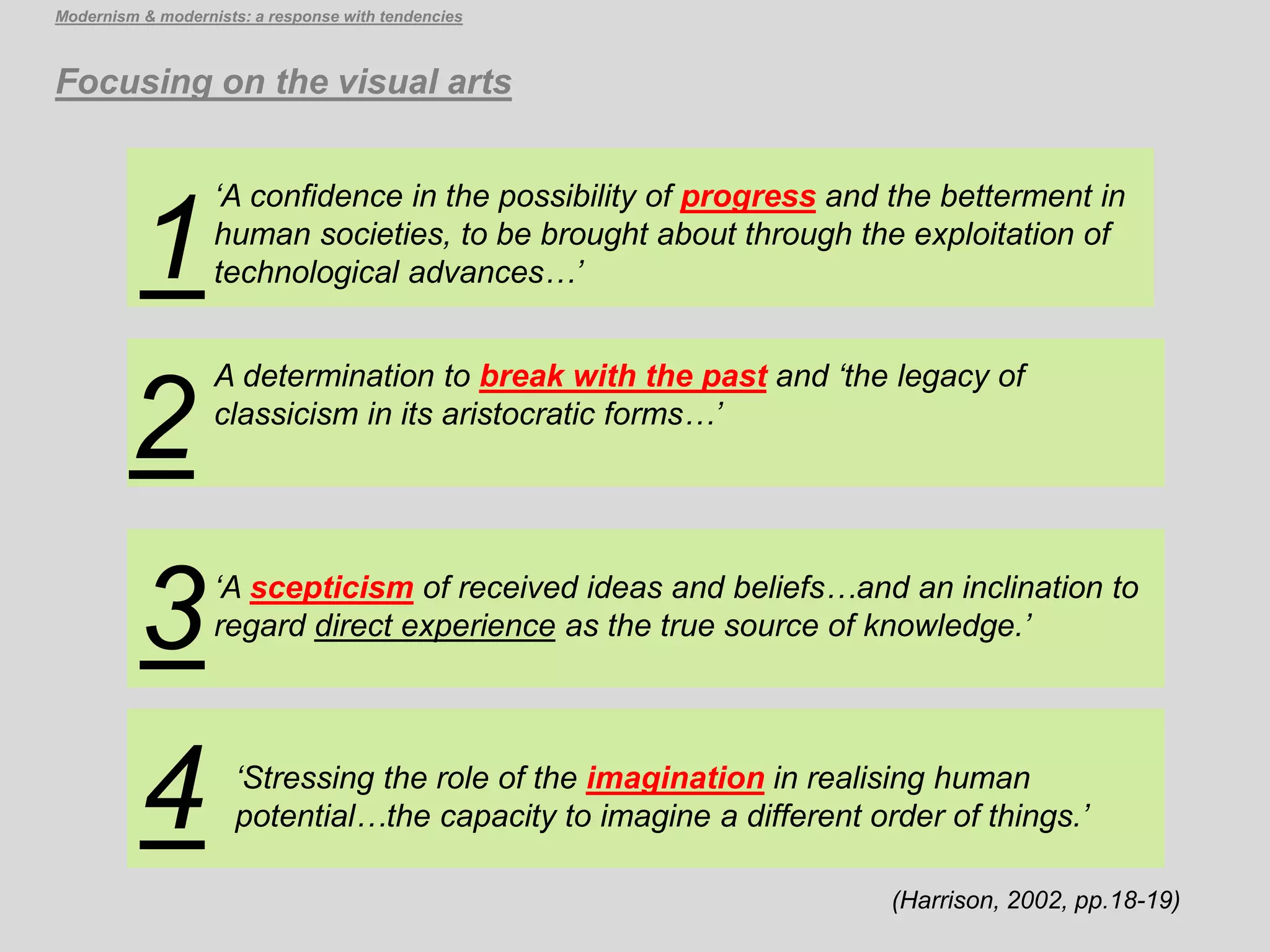
(Harrison, 2002, pp.18-19)
Focusing on the visual arts
Modernism & modernists: a response with tendencies
‘Stressing the role of the imagination in realising human
potential…the capacity to imagine a different order of things.’4
‘A scepticism of received ideas and beliefs…and an inclination to
regard direct experience as the true source of knowledge.’
A determination to break with the past and ‘the legacy of
classicism in its aristocratic forms…’
‘A confidence in the possibility of progress and the betterment in
human societies, to be brought about through the exploitation of
technological advances…’
3
1
2
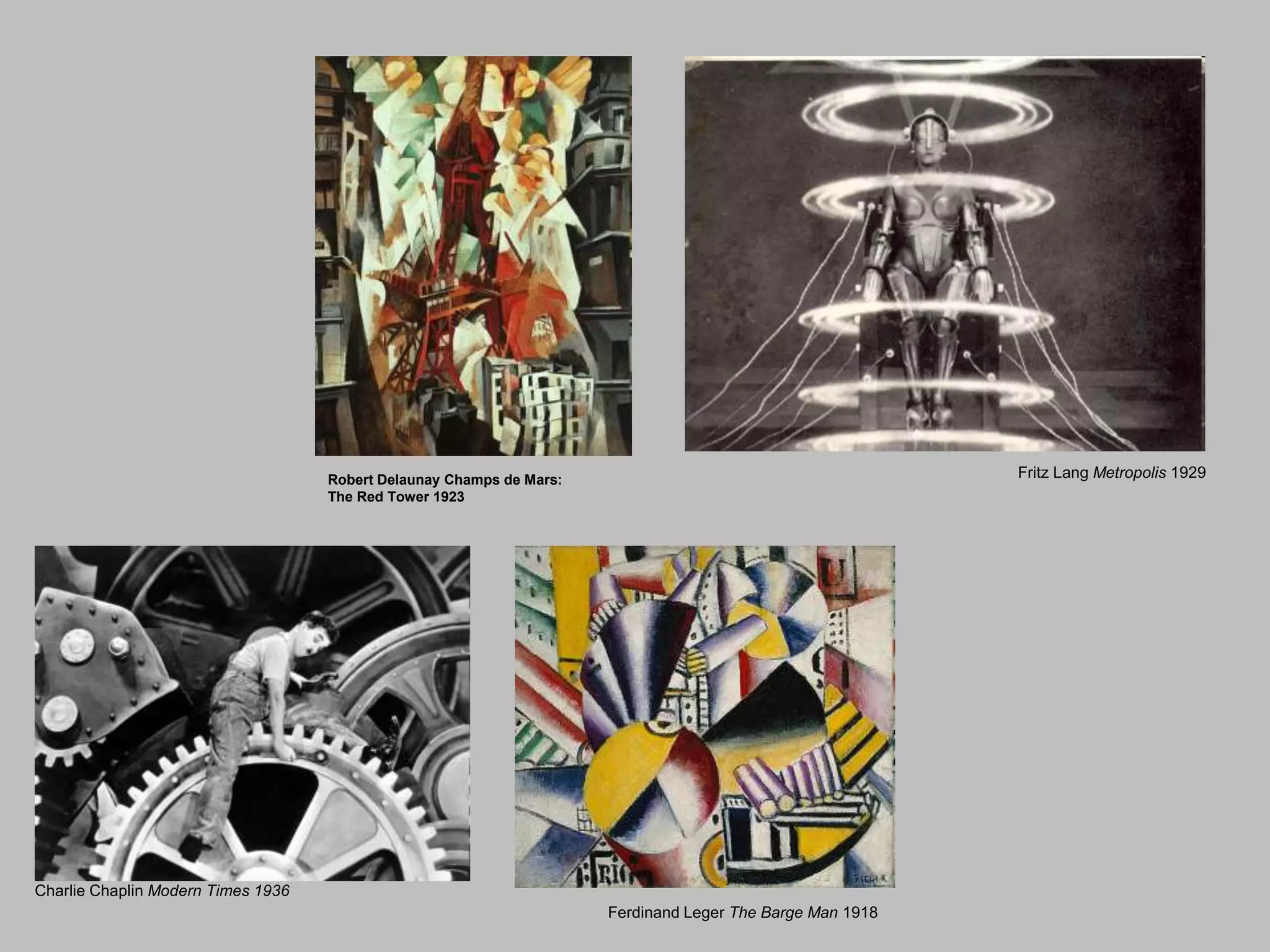
Robert Delaunay Champs de Mars:
The Red Tower 1923
Fritz Lang Metropolis 1929
Charlie Chaplin Modern Times 1936
Ferdinand Leger The Barge Man 1918
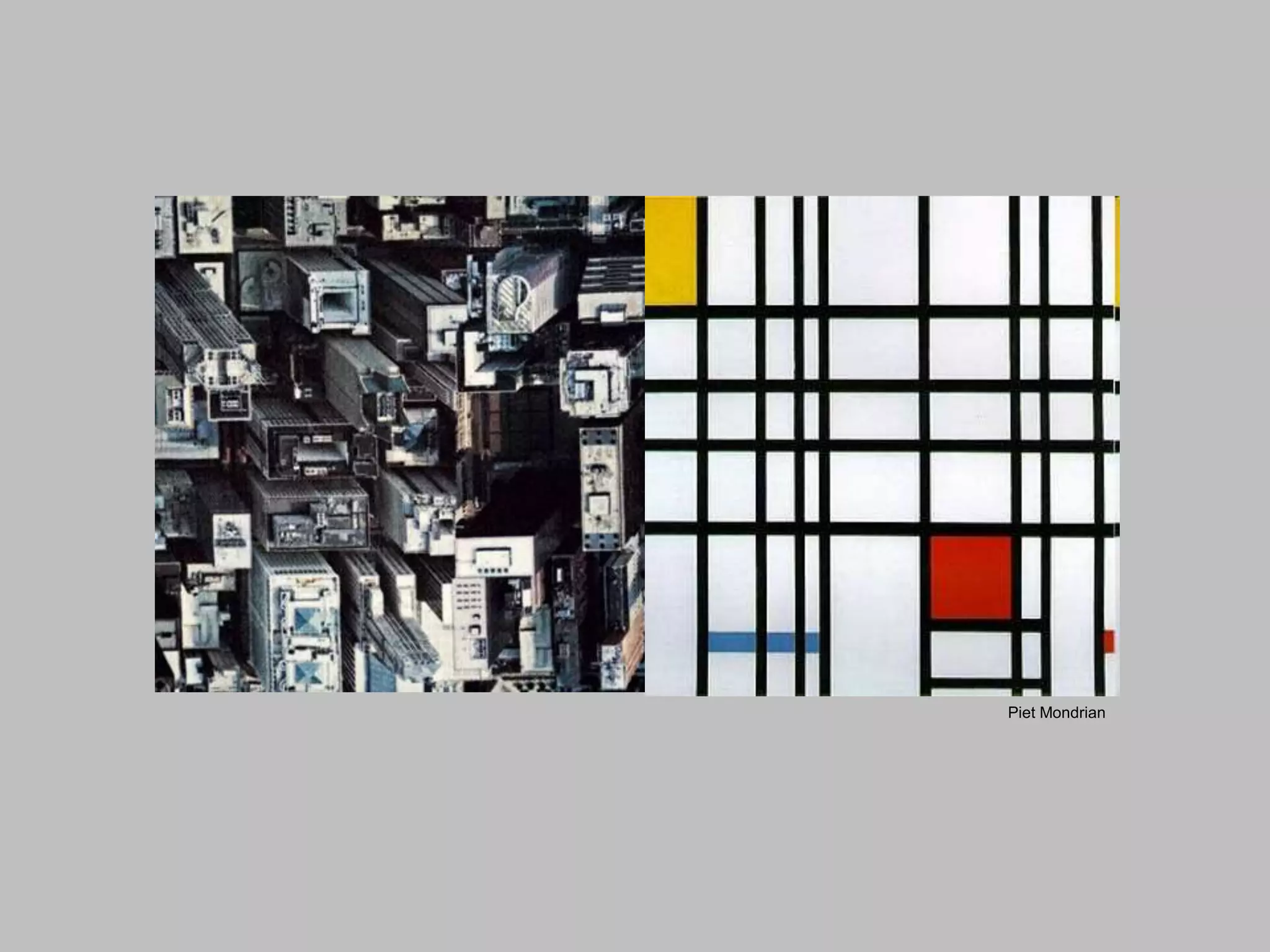
Piet Mondrian
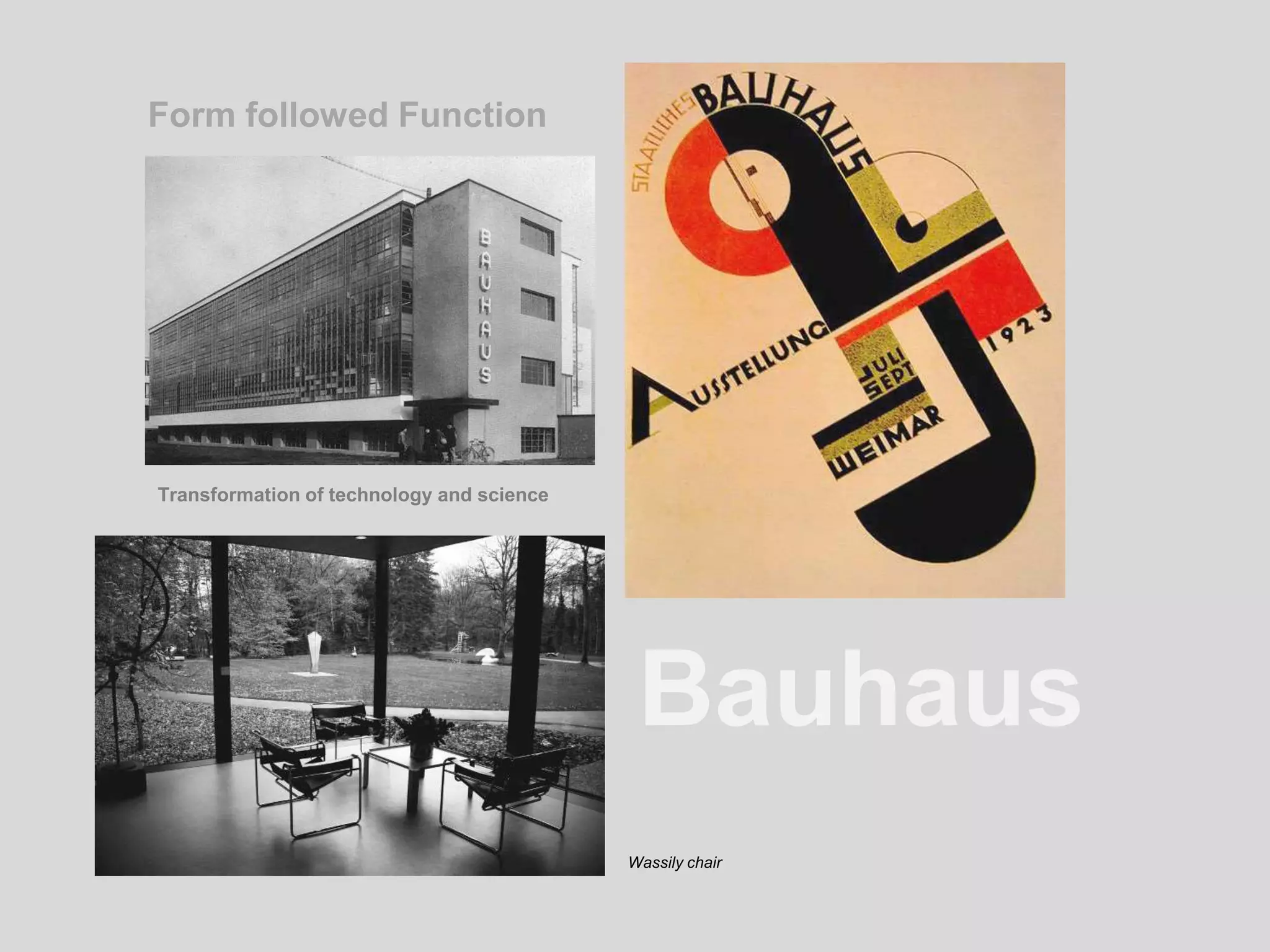
Bauhaus
Form followed Function
Transformation of technology and science
Wassily chair
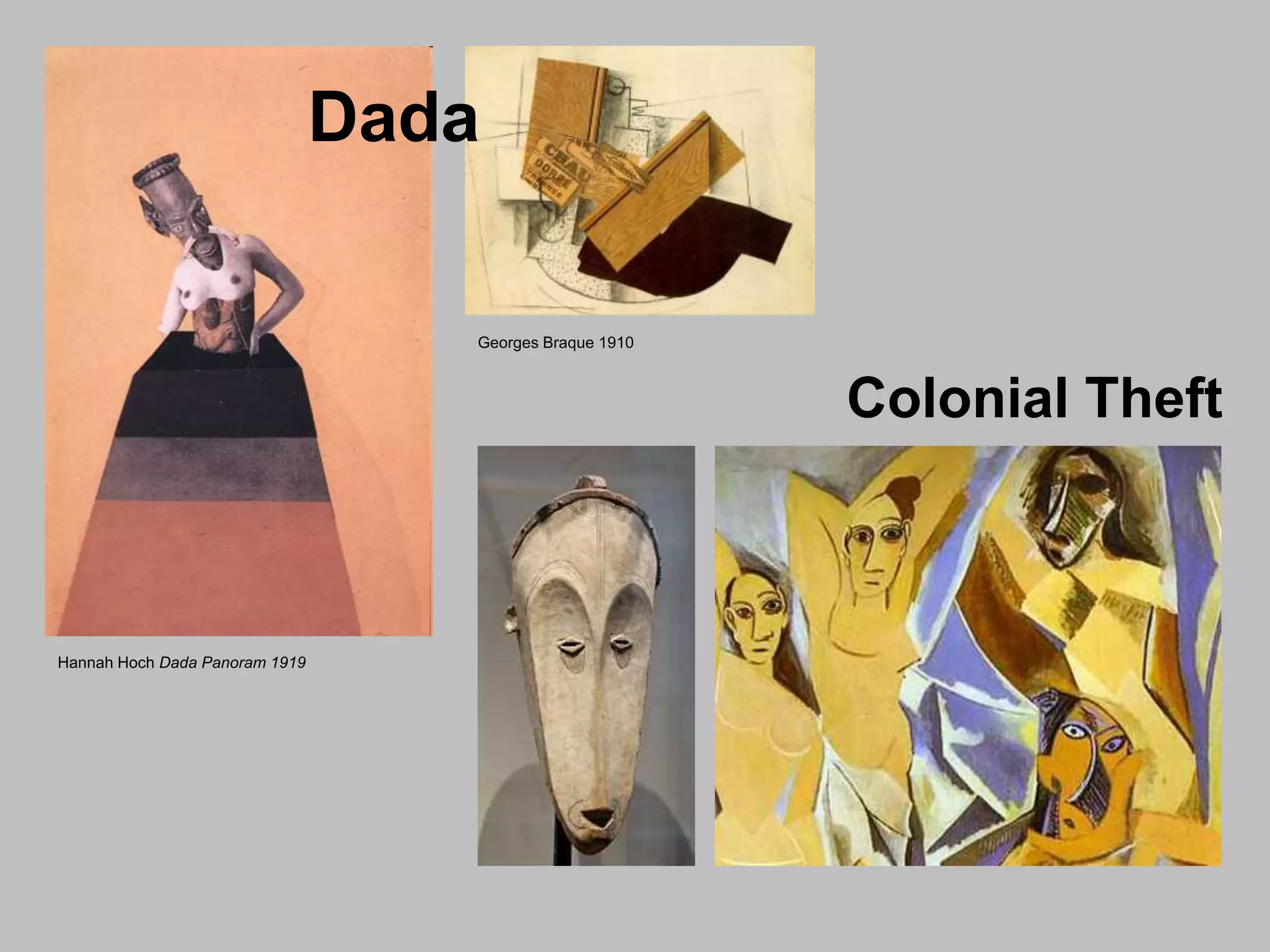
Hannah Hoch Dada Panoram 1919
Georges Braque 1910
Dada
Colonial Theft
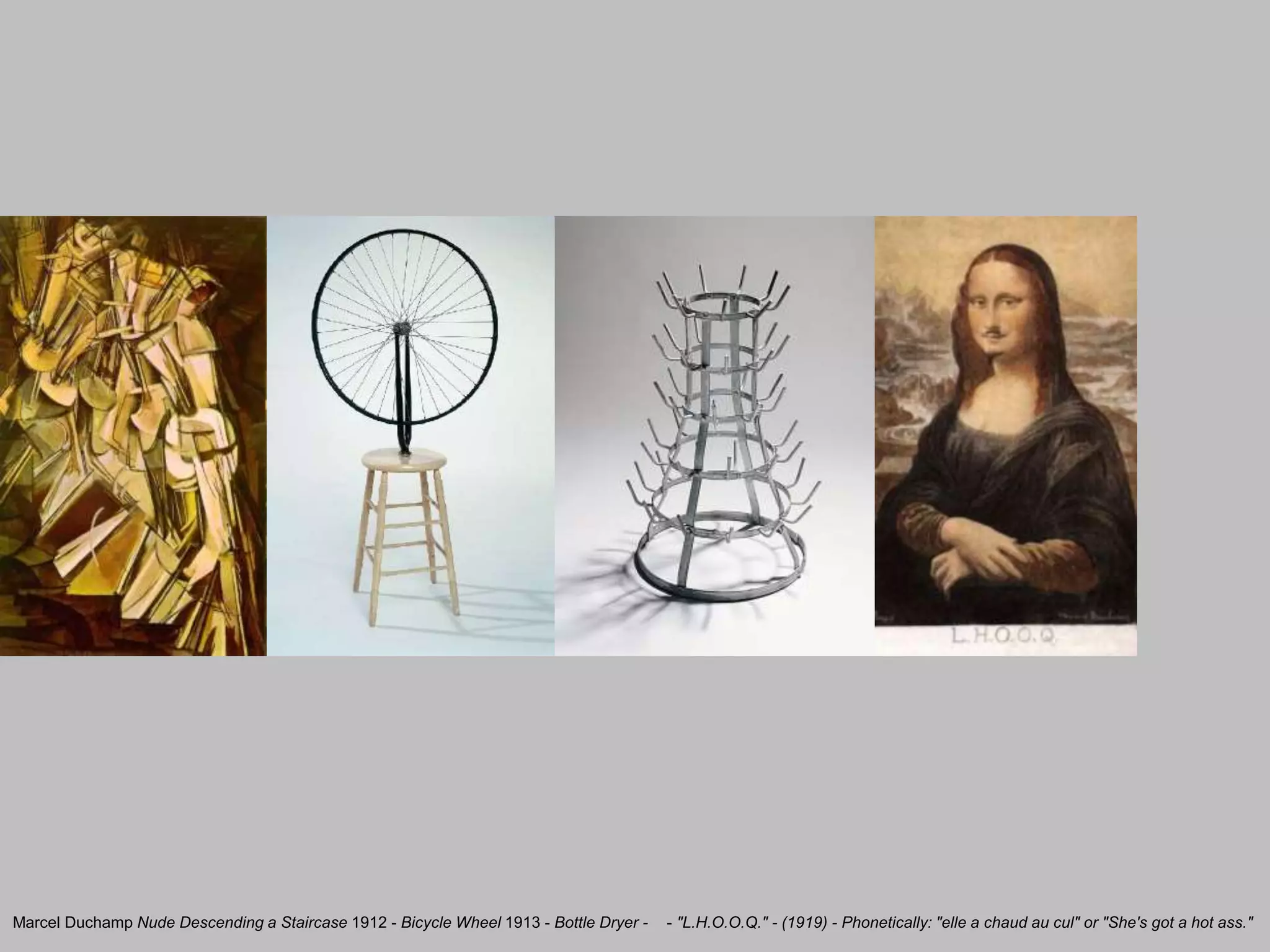
Marcel Duchamp Nude Descending a Staircase 1912 - Bicycle Wheel 1913 - Bottle Dryer - - "L.H.O.O.Q." - (1919) - Phonetically: "elle a chaud au cul" or "She's got a hot ass."
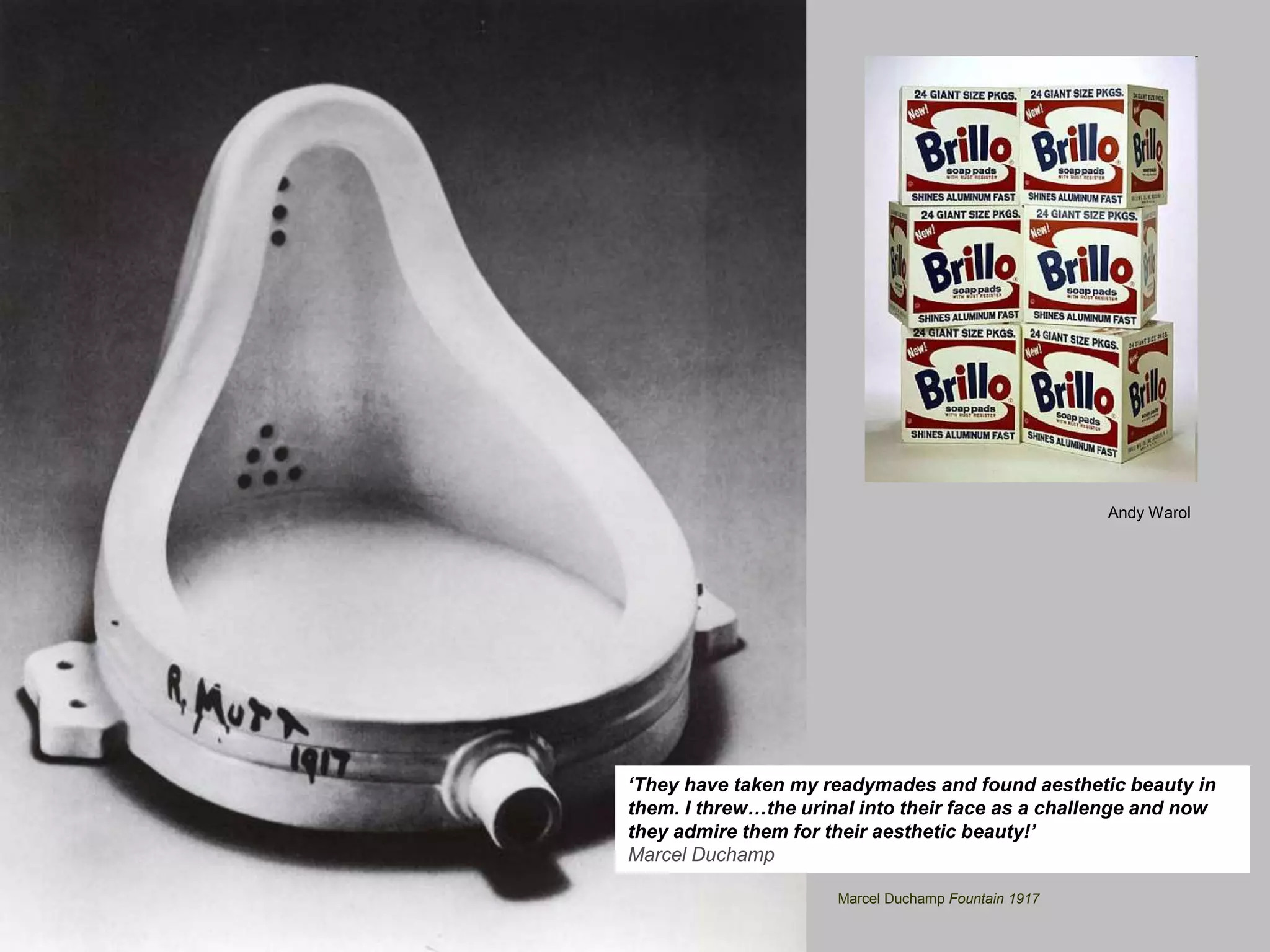
Marcel Duchamp Fountain 1917
Andy Warol
‘They have taken my readymades and found aesthetic beauty in
them. I threw…the urinal into their face as a challenge and now
they admire them for their aesthetic beauty!’
Marcel Duchamp
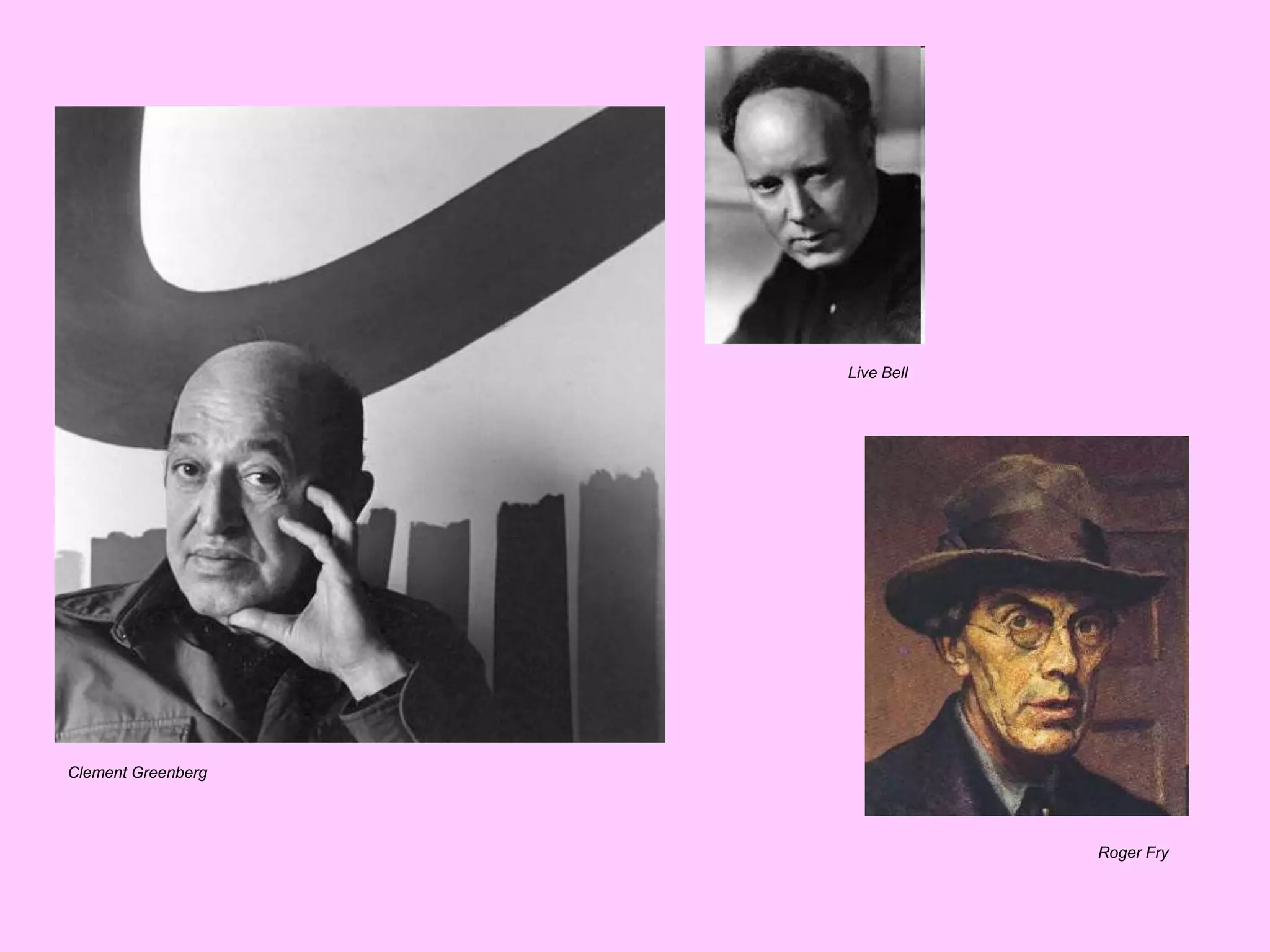
Clement Greenberg
Live Bell
Roger Fry
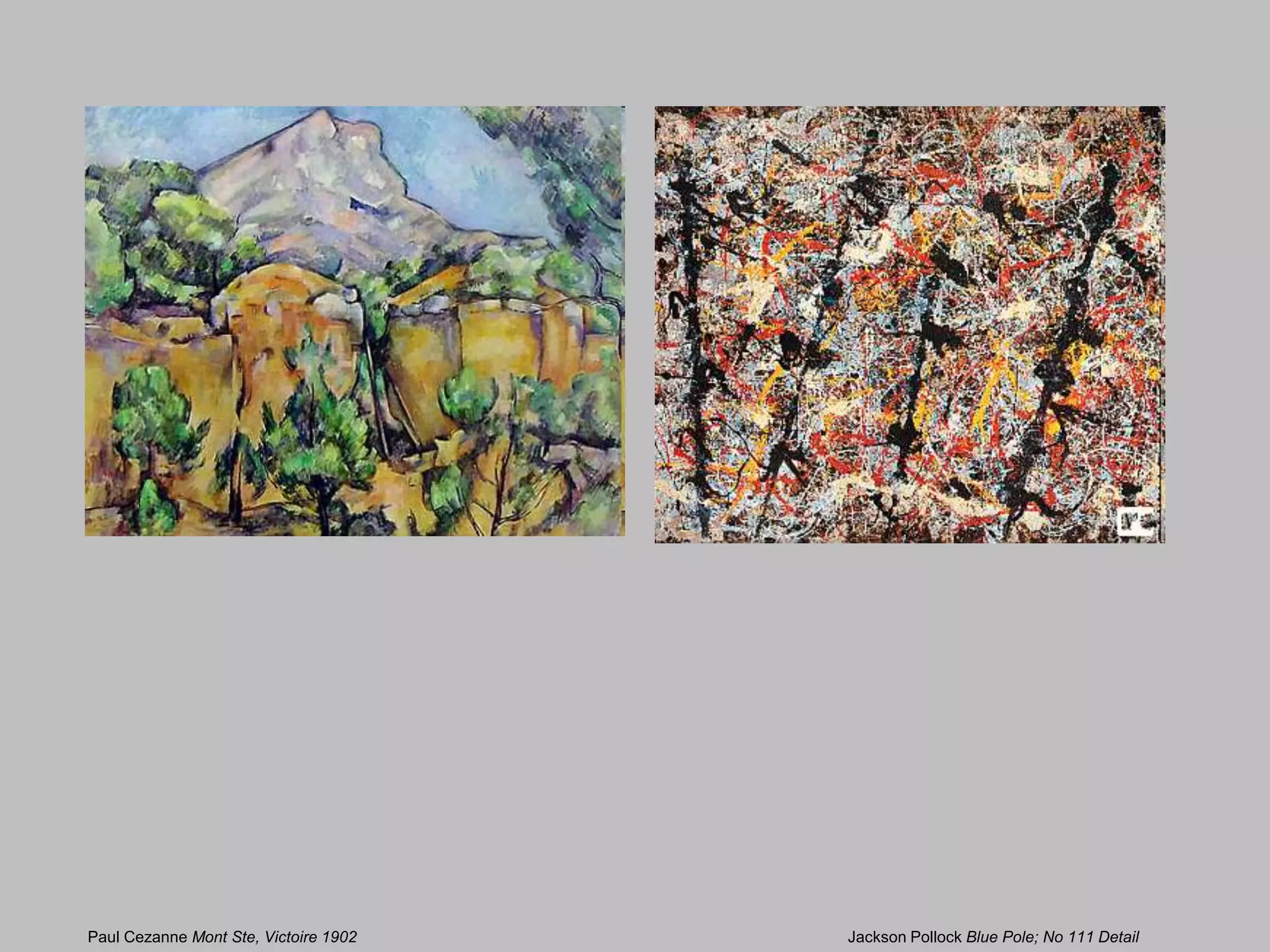
Paul Cezanne Mont Ste, Victoire 1902 Jackson Pollock Blue Pole; No 111 Detail
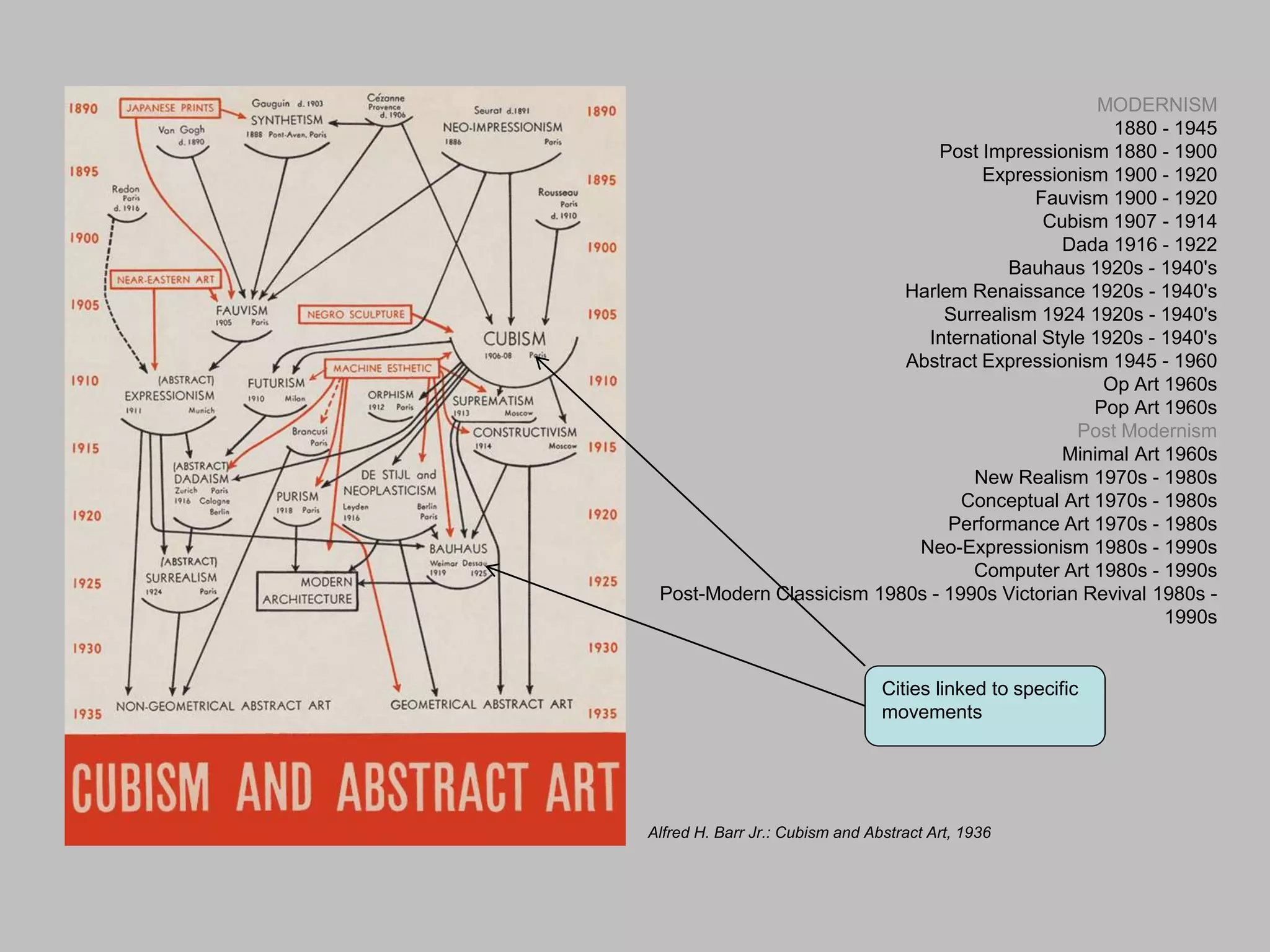
Alfred H. Barr Jr.: Cubism and Abstract Art, 1936
MODERNISM
1880 - 1945
Post Impressionism 1880 - 1900
Expressionism 1900 - 1920
Fauvism 1900 - 1920
Cubism 1907 - 1914
Dada 1916 - 1922
Bauhaus 1920s - 1940's
Harlem Renaissance 1920s - 1940's
Surrealism 1924 1920s - 1940's
International Style 1920s - 1940's
Abstract Expressionism 1945 - 1960
Op Art 1960s
Pop Art 1960s
Post Modernism
Minimal Art 1960s
New Realism 1970s - 1980s
Conceptual Art 1970s - 1980s
Performance Art 1970s - 1980s
Neo-Expressionism 1980s - 1990s
Computer Art 1980s - 1990s
Post-Modern Classicism 1980s - 1990s Victorian Revival 1980s -
1990s
Cities linked to specific
movements
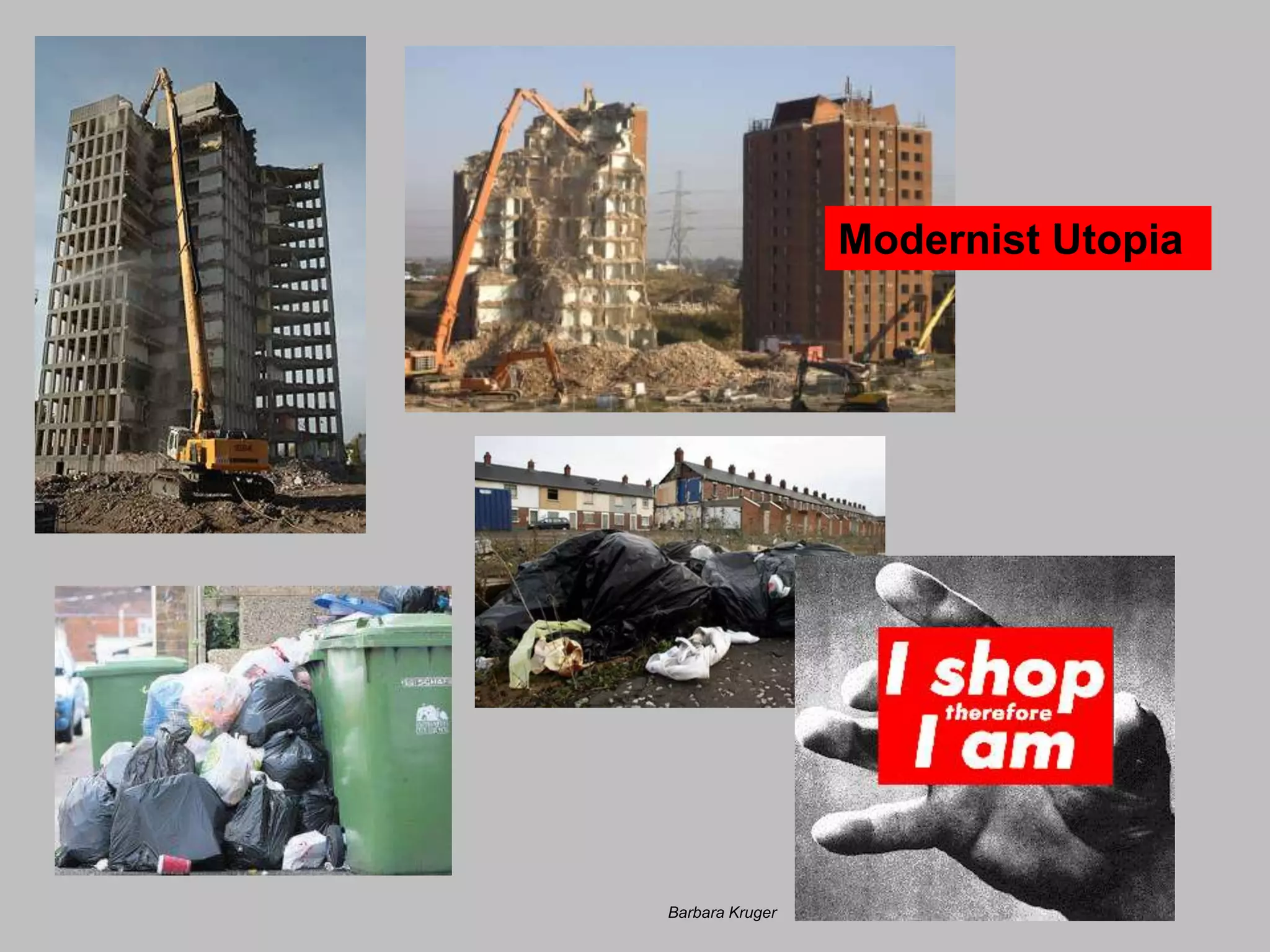
Barbara Kruger
Modernist Utopia
Modern Art – What a Load of Rubbish!
In 1972, Britain's Tate Gallery acquired Andre's Equivalent VIII, an arrangement of fireplace bricks. The piece
was exhibited several times without incident, but became the center of controversy in 1976 after being
featured in an article in The Sunday Times and later being defaced with paint. The "Bricks controversy"
became one of the most famous public debates in Britain about contemporary art.[10]
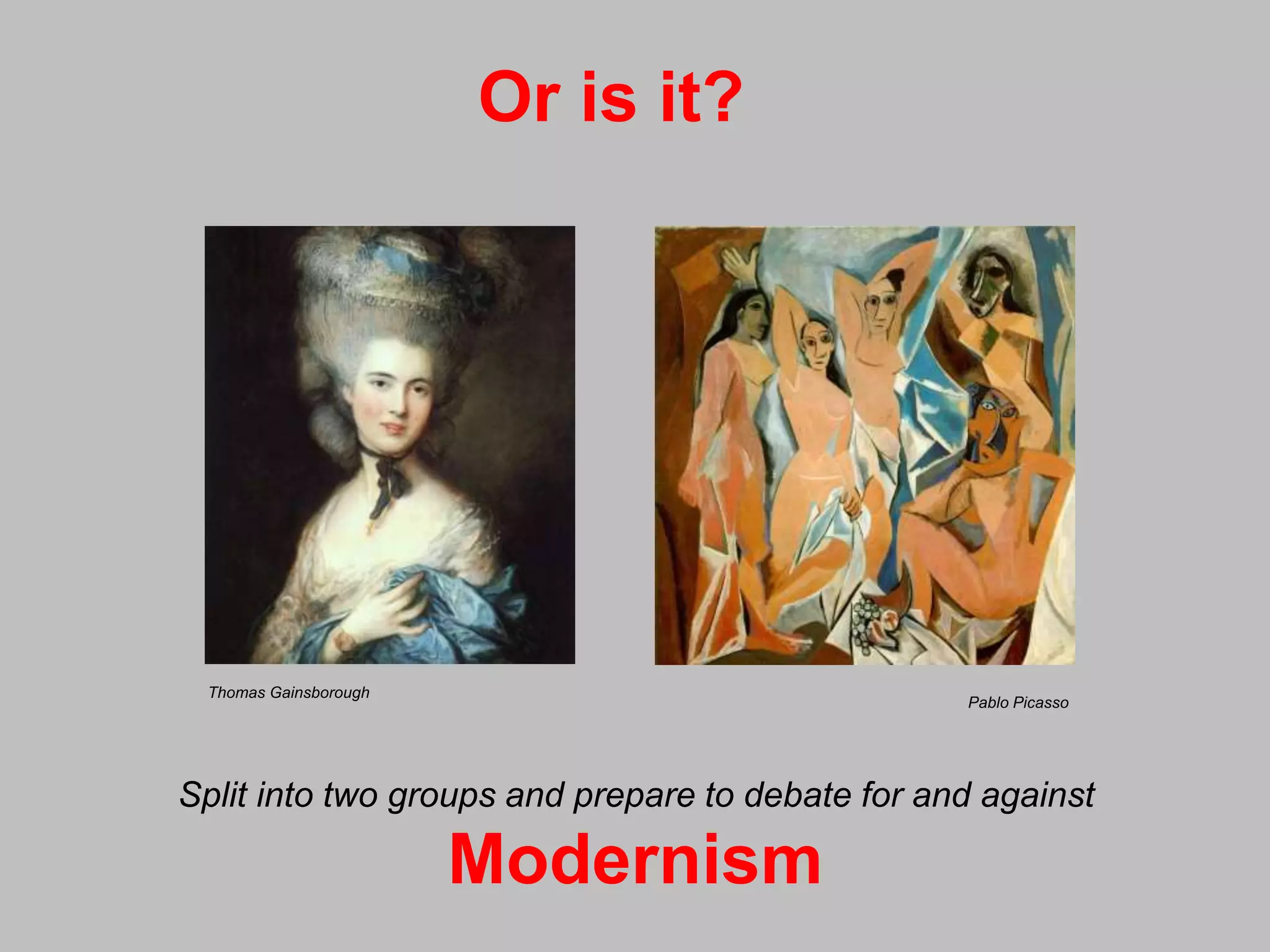
Or is it?
Thomas Gainsborough
Pablo Picasso
Split into two groups and prepare to debate for and against
Modernism

Modernism pp

  • 1.
  • 2.
    'Unité d'Habitation' inMarseille What is Modernism?
  • 3.
    Where did itall Start?
  • 4.
    Modernism & Modernity Modernism Deliberate departure fromtradition Modernity To be in the present; “a shopping mall would instil a spirit of modernity Social & Political re structuring – resulting from a fully industrialised environment (in the West) WW1 & WW2 The Cold War The Race for Global Supremacy hastened all aspects of modernism Camera, Motorised Vehicles, Factory Production, Radio, Space Travel, Concrete The start of modernism began with the enclosures act and the industrial revolution Art, Literature, Music, Architecture, Fashion Urban Planning, Furniture
  • 5.
    The outlook onthe world was changing, from the view from a carriage window, to a city filled with smog. The landscape was shifting and changing before the artists eyes and of course they made work in response which was often shocking and controversial
  • 6.
    1837 - Daguerre'sfirst daguerreotype, the first image that was fixed and did not fade and needed under 30 minutes of light exposure. 1840 - First American patent issued in photography to Alexander Wolcott for his camera. 1841 - William Henry Talbot patents the Collotype process - the first negative-positive process making possible the first multiple copies Jockeys before the Race, 1878-79
  • 7.
    Royalty – TheChruch – Wealthy Patrons Joshua Reynolds Portrait of Mary Wordsworth, Lady Kent Thomas Gainsborough Mr &Mrs Andrews Caravaggio
  • 8.
    Middle Class? money madefrom industry not inherited wealth The Class System defined by the hat Robert Polhill Bevan A Sale At Tattersalls 1885 Leisure Time Education Aspirations
  • 9.
  • 10.
    Francois-Joseph Heim (FrenchPainter, 1787-1865) Charles X Distributing Awards to Artists Exhibiting at the Salon of 1824 at the Louvre 1827 Oil Paint Tubes invented 1841 Monet church at vetheuil
  • 11.
    Manet’s Olympia 1863 Claude Monet ImpressionSunrise 1872 Two paintings that changed the world Auguste Renoir Young Woman Bathing Benjamin Williams Leader Returning Home Oil on canvas, 1897 Nostalgia.....another subject all together Politically Incorrect I’m looking at YOU!
  • 12.
    War Henry TonksFrancis Bacon ChristopherNevinson = mass migration inadvertently creating a cross fertilisation of creativity The horror of war impacted on the public perception of art at the same time war artists were censored with regards to images deemed acceptable
  • 13.
  • 14.
    What becomes ofthe work of art? Now there is the camera, mass production an aspiring middle class, advancing technologies A lossof uniqueness, originalityandaura
  • 15.
    Psychoanalysis Sigmund Freud Rene Magritte FillippoMarinetti Karl Marx Diego Rivera Political Idealism
  • 16.
    (Harrison, 2002, pp.18-19) Focusingon the visual arts Modernism & modernists: a response with tendencies ‘Stressing the role of the imagination in realising human potential…the capacity to imagine a different order of things.’4 ‘A scepticism of received ideas and beliefs…and an inclination to regard direct experience as the true source of knowledge.’ A determination to break with the past and ‘the legacy of classicism in its aristocratic forms…’ ‘A confidence in the possibility of progress and the betterment in human societies, to be brought about through the exploitation of technological advances…’ 3 1 2
  • 17.
    Robert Delaunay Champsde Mars: The Red Tower 1923 Fritz Lang Metropolis 1929 Charlie Chaplin Modern Times 1936 Ferdinand Leger The Barge Man 1918
  • 18.
  • 19.
    Bauhaus Form followed Function Transformationof technology and science Wassily chair
  • 20.
    Hannah Hoch DadaPanoram 1919 Georges Braque 1910 Dada Colonial Theft
  • 21.
    Marcel Duchamp NudeDescending a Staircase 1912 - Bicycle Wheel 1913 - Bottle Dryer - - "L.H.O.O.Q." - (1919) - Phonetically: "elle a chaud au cul" or "She's got a hot ass."
  • 22.
    Marcel Duchamp Fountain1917 Andy Warol ‘They have taken my readymades and found aesthetic beauty in them. I threw…the urinal into their face as a challenge and now they admire them for their aesthetic beauty!’ Marcel Duchamp
  • 23.
  • 24.
    Paul Cezanne MontSte, Victoire 1902 Jackson Pollock Blue Pole; No 111 Detail
  • 25.
    Alfred H. BarrJr.: Cubism and Abstract Art, 1936 MODERNISM 1880 - 1945 Post Impressionism 1880 - 1900 Expressionism 1900 - 1920 Fauvism 1900 - 1920 Cubism 1907 - 1914 Dada 1916 - 1922 Bauhaus 1920s - 1940's Harlem Renaissance 1920s - 1940's Surrealism 1924 1920s - 1940's International Style 1920s - 1940's Abstract Expressionism 1945 - 1960 Op Art 1960s Pop Art 1960s Post Modernism Minimal Art 1960s New Realism 1970s - 1980s Conceptual Art 1970s - 1980s Performance Art 1970s - 1980s Neo-Expressionism 1980s - 1990s Computer Art 1980s - 1990s Post-Modern Classicism 1980s - 1990s Victorian Revival 1980s - 1990s Cities linked to specific movements
  • 26.
  • 27.
    Modern Art –What a Load of Rubbish! In 1972, Britain's Tate Gallery acquired Andre's Equivalent VIII, an arrangement of fireplace bricks. The piece was exhibited several times without incident, but became the center of controversy in 1976 after being featured in an article in The Sunday Times and later being defaced with paint. The "Bricks controversy" became one of the most famous public debates in Britain about contemporary art.[10]
  • 28.
    Or is it? ThomasGainsborough Pablo Picasso Split into two groups and prepare to debate for and against Modernism