Modern lifestyle
A way of living of individual, families and societies,
which they manifest in coping with their physical,
psychological, social, and economic environment on a
day-to-day basis. Lifestyle is expressed in both work
and leisure behaviour patterns and (on an individual
basis) in activities, attitudes, interests, opinion, values,
and allocation of income. It also reflects people's self
image or self concept; the way they see themselves and
believe they are seen by the others. Lifestyle is a
composite of motivations, needs, and wants and is
influenced by factors such as culture, family, reference
groups, and social class.
Modern life style has a number of advantages which
includes easing peoples life, saving hundreds of peoples
lives by the new development of medicine and
vaccines. On the other hand different modern life style
patterns have negative effects on health physically,
psychologically, and socially. One of these modern ways
of living is the high intake of fast foods. This is due to
specific reasons such as the short time specified for
eating and choosing healthy food. Lack of physical
activity combination with fast foods leads to bad effects
on the heart's health. Use of high technology machines
is another way of modernity. Although use of these
machines has helped in saving the time to do a lot of
tasks, the wrong use of them will indirectly affect
health.
Another point is the advanced transportation
which reduces the time needed to travel and made
travelling an enjoyable time. Last, is the use of
computers and internet in the communication,
transfer of information, and entertainment as well.
Altogether will constitute the elements of a
sedentary life style. That means, high fatty foods
intake and lack of physical activity. Which both are
caused by fast foods, depending on high technology
machines and transportation, and sitting long hours
in front of the computer.
Modern life style increases the risk of obesity.
Consequently, leading to diabetes, heart diseases,
and cancers. Pollution caused by the machines and
advanced transportation causes different
respiratory diseases. Furthermore, it leads to atopic
diseases which are group of hereditary diseases
contributing to allergies and asthma.
Psychologically, persons are prone to increased
stress level and depression. Social isolation will
occurs due to spending long time on computer and
internet.
Problems of Modern Life-Style
• Tension - physical, mental, emotional
• Health problems - physical, mental and emotional
diseases (including psychosomatic disorders)
• Ecological pollution/rupture in ozone layer
• Disturbed family relations
• Violence and cruelty
• Corruption / dishonesty / immorality
• Drug-addiction
• Neglect of law & order and ethical, moral and social
discipline
• Armaments/nuclear weapons (militarism)
• Exploitation
Advantage of modern lifestyle
• The development of technology make it easier for
people to communicate, to travel, to work etc.
• The computers & mobile phones makes it easier for
us to communicate all over the world.
• Education has developed with the use of internet.
Disadvantage of modern lifestyle
• The culture and tradition is fading off.
• The traditional food, clothes etc are slipping
off from our minds.
• Technology also has reduced the interaction
with family members.
• The environmental damages like air pollution,
water pollution and noise pollution.
Hypokinetic diseases
Hypokinetic diseases are conditions that occur from a
sedentary lifestyle. "hypo" means less and "kinetic"
means movement. So Hypokinetic diseases are caused
due to lack of physical activity.
Hypokinetic diseases are conditions related to inactivity
or low levels of habitual activity. It describes many of
the diseases and conditions associated with inactivity
and poor fitness such as those conditions outlined in
"Physical Activity and Health. Health problems brought
about by lack of exercise have increased. This can be
accounted for, to some extent by the change from jobs
needing physical effort to more sedentary occupations
(e.g. office jobs).
Following are the main Hypokinetic diseases:
• Cardiovascular disease
• Some forms of cancer
• Back problems
• Obesity
• Type 2 diabetes
• Osteoporosis
• Mental health problems
• high blood pressure
• high cholesterol
PREVENTION
AND
MANAGEMENT
OF
HYPOKINETIC DISEASES
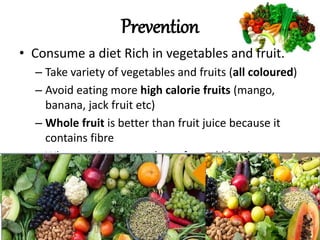
• Consume a diet Rich in vegetables and fruit.
– Take variety of vegetables and fruits (all coloured)
– Avoid eating more high calorie fruits (mango,
banana, jack fruit etc)
– Whole fruit is better than fruit juice because it
contains fibre
– Whatever is green reduces fat and blood sugar
– Sweet, sour and salty increases fat and blood
sugar
Prevention
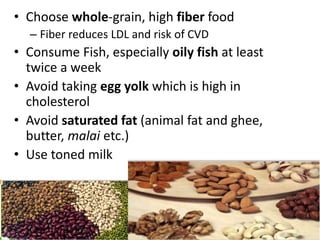
• Choose whole-grain, high fiber food
– Fiber reduces LDL and risk of CVD
• Consume Fish, especially oily fish at least
twice a week
• Avoid taking egg yolk which is high in
cholesterol
• Avoid saturated fat (animal fat and ghee,
butter, malai etc.)
• Use toned milk
• Minimise intake of sugar and sugar added
food (glucose, sucrose, fructose etc). Sugar
has hollow calorie and it is called sweet
poison.
• Eat Multi-grain bread/roti
• Use oil in limited quantity and in variety
• Prepare food with little or no salt
• Minimise animal protein
• Stop or minimize alcohol intake. Alcohol has
also hollow calorie.
• Drink sufficient water : 3 to 3.5 ltr
• Use boiling, roasting, steaming, baking for
cooking and avoid frying.
• Take medicine only if required and prescribed
by doctor
• Don’t take pain killer unnecessarily
• Trust on internal medicine factory of the body
• Use Tulsi-tea, lemon juice, amla juice, coconut
water etc
• Maintain PH value
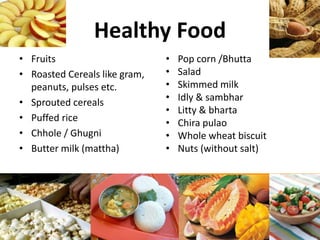
Healthy Food
• Fruits
• Roasted Cereals like gram,
peanuts, pulses etc.
• Sprouted cereals
• Puffed rice
• Chhole / Ghugni
• Butter milk (mattha)
• Pop corn /Bhutta
• Salad
• Skimmed milk
• Idly & sambhar
• Litty & bharta
• Chira pulao
• Whole wheat biscuit
• Nuts (without salt)

modern lifestyle.pptx

  • 2.
    Modern lifestyle A wayof living of individual, families and societies, which they manifest in coping with their physical, psychological, social, and economic environment on a day-to-day basis. Lifestyle is expressed in both work and leisure behaviour patterns and (on an individual basis) in activities, attitudes, interests, opinion, values, and allocation of income. It also reflects people's self image or self concept; the way they see themselves and believe they are seen by the others. Lifestyle is a composite of motivations, needs, and wants and is influenced by factors such as culture, family, reference groups, and social class.
  • 3.
    Modern life stylehas a number of advantages which includes easing peoples life, saving hundreds of peoples lives by the new development of medicine and vaccines. On the other hand different modern life style patterns have negative effects on health physically, psychologically, and socially. One of these modern ways of living is the high intake of fast foods. This is due to specific reasons such as the short time specified for eating and choosing healthy food. Lack of physical activity combination with fast foods leads to bad effects on the heart's health. Use of high technology machines is another way of modernity. Although use of these machines has helped in saving the time to do a lot of tasks, the wrong use of them will indirectly affect health.
  • 4.
    Another point isthe advanced transportation which reduces the time needed to travel and made travelling an enjoyable time. Last, is the use of computers and internet in the communication, transfer of information, and entertainment as well. Altogether will constitute the elements of a sedentary life style. That means, high fatty foods intake and lack of physical activity. Which both are caused by fast foods, depending on high technology machines and transportation, and sitting long hours in front of the computer.
  • 5.
    Modern life styleincreases the risk of obesity. Consequently, leading to diabetes, heart diseases, and cancers. Pollution caused by the machines and advanced transportation causes different respiratory diseases. Furthermore, it leads to atopic diseases which are group of hereditary diseases contributing to allergies and asthma. Psychologically, persons are prone to increased stress level and depression. Social isolation will occurs due to spending long time on computer and internet.
  • 6.
    Problems of ModernLife-Style • Tension - physical, mental, emotional • Health problems - physical, mental and emotional diseases (including psychosomatic disorders) • Ecological pollution/rupture in ozone layer • Disturbed family relations • Violence and cruelty • Corruption / dishonesty / immorality • Drug-addiction • Neglect of law & order and ethical, moral and social discipline • Armaments/nuclear weapons (militarism) • Exploitation
  • 7.
    Advantage of modernlifestyle • The development of technology make it easier for people to communicate, to travel, to work etc. • The computers & mobile phones makes it easier for us to communicate all over the world. • Education has developed with the use of internet.
  • 8.
    Disadvantage of modernlifestyle • The culture and tradition is fading off. • The traditional food, clothes etc are slipping off from our minds. • Technology also has reduced the interaction with family members. • The environmental damages like air pollution, water pollution and noise pollution.
  • 9.
  • 10.
    Hypokinetic diseases areconditions that occur from a sedentary lifestyle. "hypo" means less and "kinetic" means movement. So Hypokinetic diseases are caused due to lack of physical activity. Hypokinetic diseases are conditions related to inactivity or low levels of habitual activity. It describes many of the diseases and conditions associated with inactivity and poor fitness such as those conditions outlined in "Physical Activity and Health. Health problems brought about by lack of exercise have increased. This can be accounted for, to some extent by the change from jobs needing physical effort to more sedentary occupations (e.g. office jobs).
  • 11.
    Following are themain Hypokinetic diseases: • Cardiovascular disease • Some forms of cancer • Back problems • Obesity • Type 2 diabetes • Osteoporosis • Mental health problems • high blood pressure • high cholesterol
  • 12.
  • 14.
    • Consume adiet Rich in vegetables and fruit. – Take variety of vegetables and fruits (all coloured) – Avoid eating more high calorie fruits (mango, banana, jack fruit etc) – Whole fruit is better than fruit juice because it contains fibre – Whatever is green reduces fat and blood sugar – Sweet, sour and salty increases fat and blood sugar Prevention
  • 15.
    • Choose whole-grain,high fiber food – Fiber reduces LDL and risk of CVD • Consume Fish, especially oily fish at least twice a week • Avoid taking egg yolk which is high in cholesterol • Avoid saturated fat (animal fat and ghee, butter, malai etc.) • Use toned milk
  • 16.
    • Minimise intakeof sugar and sugar added food (glucose, sucrose, fructose etc). Sugar has hollow calorie and it is called sweet poison. • Eat Multi-grain bread/roti • Use oil in limited quantity and in variety • Prepare food with little or no salt • Minimise animal protein • Stop or minimize alcohol intake. Alcohol has also hollow calorie.
  • 17.
    • Drink sufficientwater : 3 to 3.5 ltr • Use boiling, roasting, steaming, baking for cooking and avoid frying. • Take medicine only if required and prescribed by doctor • Don’t take pain killer unnecessarily • Trust on internal medicine factory of the body • Use Tulsi-tea, lemon juice, amla juice, coconut water etc • Maintain PH value
  • 18.
    Healthy Food • Fruits •Roasted Cereals like gram, peanuts, pulses etc. • Sprouted cereals • Puffed rice • Chhole / Ghugni • Butter milk (mattha) • Pop corn /Bhutta • Salad • Skimmed milk • Idly & sambhar • Litty & bharta • Chira pulao • Whole wheat biscuit • Nuts (without salt)