International Journal of Power Electronics and Drive System (IJPEDS)
Vol. 5, No. 3, February 2015, pp. 344~354
ISSN: 2088-8694  344
Journal homepage: http://iaesjournal.com/online/index.php/IJPEDS
Modelling and Analysis of Induction Motor using LabVIEW
E.Ramprasath, P.Manojkumar
Departmentof Electrical and Electronics Engineering, K.S.Rangasamy College of Technology
Article Info ABSTRACT
Article history:
Received Oct 4, 2014
Revised Dec 22, 2014
Accepted Jan 13, 2015
Induction motor characteristics became complex to study, after the invention
of drives where the motor incorporated with power electronic switches such
as thyristor, diodes, GTO, and MOSFET. Induction motor characteristics can
be studied and modelled with software such as Finite Element Analysis and
Laboratory Virtual Instrument Engineering Workbench. Finite Element
Analysis is used to study and model the motor might be complex and the
time taken to compute was unreliable. In this paper induction motor was
modeled with the help of LabVIEW software this allows us to model and
simulate the motor in order to analyze the performance. The induction motor
modelled here was based on the mathematical equations.
Keyword:
Characteristics
Induction Motor
LabVIEW
Modelling
Simulation Copyright © 2015 Institute of Advanced Engineering and Science.
All rights reserved.
Corresponding Author:
E.Ramprasath,
Department of Electrical and Electronics Engineering,
K.S.Rangasamy College of Technology,
K.S.R Kalvi Nagar, Tiruchengode, Namakkal - 637215, Tamil Nadu, India.
Email: ramprasath009@gmail.com
1. INTRODUCTION
Induction motor designing based on the equation is bit complex, because equation whose terms are
not of the first degree and more over it is a strongly coupled system. The input and output variable
relationship is almost complex thus simulation of induction motor physically is hard. Most commonly
employed software are PSpice, Finite Element Analysis, Matrix Laboratory and Laboratory Virtual
Instrument Engineering Workbench other software rather than is, are created based on the text lines.
LabVIEW software is based on the graphical programming environment. LabVIEW software has a dynamic
nature which contributes to this dynamic tracking of processing the data. The changes in this data can be can
be observed continuously. Dynamic analyzing is established based on both the mathematical and physical
model. Normally equivalent circuit of induction motor resembles the equivalent circuit of transformer where
the airgap between the stator and rotor in the induction motor differentiate from the transformer. LabVIEW
software of following qualities such as multi-dimensional plots, xy graphs, report generation in excel, word
makes this software accessible and has a unique feature, which simplifies the simulation process [1].
The dynamic and steady state analysis of induction motor are difficult to compute so modelling a
motor using mathematical model helps to eliminate the further consequences. So the determination of
parameters must be accurate for carrying out multiple analysis. Machine performance changes as the coupled
system inertia changes it also contributes to the change in the load torque. Motor constancy changes if the
motor inertia and load torque of that motor changes. Identifying faults in electric motor using LabVIEW is
growing research area where many researchers giving their valuable contribution to find out faults in
motor.Electric motor comprises of numerous motor which are developed and improved day by day in that
Induction motor monitoring and faults diagnosis is a feature rich area because induction motor is the widely
used motor which occupies nearly 75 % of drives in industries so only they’re widely known as the work
horse of an industry [2-3].
IJPEDS ISSN: 2088-8694 
Modelling and Analysis of Induction Motor using LabVIEW (E.Ramprasath)
345
2. PRELIMINARY EQUIVALENT CIRCUIT & MATHEMATICAL EXPRESSION
Induction motor is commonly known as the work horse of an industry owing to the robust nature,
rugged construction and reliable operation. When an alternating current is provided to the secondary winding
circuit of the induction motor it produces the revolving magnetic flux around the stator. Air gap act as the
dielectric medium which separates the rotor from the stator without having any physical contact. This
revolving magnetic flux cuts the rotor windings axially as a result it produces an induced electromotive force
in the rotor which is sinusoidal in nature. In a squirrel cage induction motor the end rings are short circuited,
which provides the path for the induced current to flow across the rotor windings. The current induced in the
rotor starts to circulate which produces a magnetic field in a direction opposite to the cause. Production of
torque is owing to the fundamental interaction between these two counter balancing magnetic fields due to
the applied voltage to the stator [4].
Figure 1. Equivalent Circuit Parameters of an Induction Motor
Slip is defined as the ratio of the difference between the synchronous speed and the actual motor
speed to the ratio of the synchronous speed.
In general induction motor the torque is directly proportional to the product of the rotor current and
flux per stator pole. The electromagnetic torque in synchronous watt can be expressed as:
	 ∗
Stator copper loss which occurs at the induction motor:
Rotor copper loss which occurs at the induction motor:
Input power which of the induction motor:
√3 cos 3 cos
Air gap power of the induction motor:
Core loss which occurs at the induction motor:
Output power which of the induction motor:
Torque induced which occurs at the induction motor:
 ISSN: 2088-8694
IJPEDS Vol. 5, No. 3, February 2015 : 344 – 354
346
Figure 2. Power flow diagram of the induction motor
3. LabVIEW INTRODUCTION & BUILDING THE MODEL
National Instruments developed LabVIEW software for the first time in the year 1986 for the Apple
Macintosh Company. It was conceptualized as a programming environment for hardware control. The
introduction of an interface between the Personnel Computer and the instrument which is to be controlled by
software was the main aim. The graphical user interface which is used to simulate the controlled instrument
on the computer monitor itself with the help of LabVIEW software. LabVIEW is also a graphical
programming language, it is familiarly known as “G code”. Applications created in LabVIEW are called
“Virtual Instruments” [5]. Nowadays LabVIEW software is also compatible with other operating system such
as Windows and Linux, etc. The word LabVIEW is an acronym for Laboratory Virtual Instrument
Engineering Workbench which is a graphical programming language based on graphical icons instead of
number of programming codes for simulation purpose. LabVIEW software allows the user to build their own
set of virtual instrument easily. These programs are known as Virtual Instruments, or VIs, due to their
operational replica of physical instruments, like temperature monitor, spectral scopes, pressure gauges,
cathode ray oscilloscopes, and multi-meters etc.The inputs are known as controls and the outputs are known
as indicators are placed on the graphic user interface (GUI) called Front Panel (FP). They communicate with
each block diagram through terminals of the icons. In LabVIEW the data flow of the program will be from
left to write, but in C/C++ programming codes will be executed in order of top to bottom, errors in the
LabVIEW will be easily identified during the execution of the program itself [6].
4. SIMULATION OF INDUCTION MOTOR CHARACTERISTICS USING LabVIEW
Machine’s modelling developed in LabVIEW software is based on the mathematical expressions.
Mathematical equations are first derived then converted into models using icons from the arithmetic board
for further implementation in LabVIEW for graphical analysis [7]. List of simulation for Induction Machine
in LabVIEW follows:
a) Simulation Torque Vs Speed relationship of an Induction Motor
b) Simulation of Induction Motor Load Test
The above said simulation can be build using the parameters. Parameters which are used to model
the induction motor are described below with their corresponding symbols to have a clear idea before
modelling motor. The simulations performed here to analyses the modelled motor with its characteristics
which can be compared to the healthy motor in real time and it moreover helps to achieve the improvements
in motor modelling before manufacturing it in factories. By changing the above input parameters
corresponding values can be obtained in the form of graphical representation. By changing the given load
changes in the motor speed and torque can be achsievedand their corresponding characteristics of induction
motor can be displayed in the form of graph representation. By changing the individual parameter for a
particular speed will also be displayed in this simulation. Here core loss is the considered as the constant loss
of a particular induction motor which is to be modeled [8-17].
IJPEDS ISSN: 2088-8694 
Modelling and Analysis of Induction Motor using LabVIEW (E.Ramprasath)
347
Table 1. Motor internal parameter
Parameters Symbols Input values
Rotor Resistance R1 8.6
Rotor Reactance R2 0.332
Stator Resistance S1 1.106
Stator Reactance S2 0.464
Magnetizing Reactance Xm 26.3
Motor internal parameter are taken from the best operating conditions of induction motor these
values are made constant for the simulations of motor. For a particular operating load condition these values
are made constant. Parameters can be changed before simulating for different load condition. They
corresponding characteristics curve can be drawn.
Table 2. Motor input teminal
Parameters Symbols Input values
Phase voltage Vph 220
Frequency HZ 50
Number of poles P 4
Values are made constant throughout the simulation because small changes in these input values
will deviate simulation result.
Table 3. Motor core loss
Parameters Symbols Input values
Core Loss L 300
Core loss are made constantly throughout the simulation because they won’t change for a motor
throughout its lifetime. So it’s made as constant in this simulation.
5. MOTOR LOAD TEST SELECTION
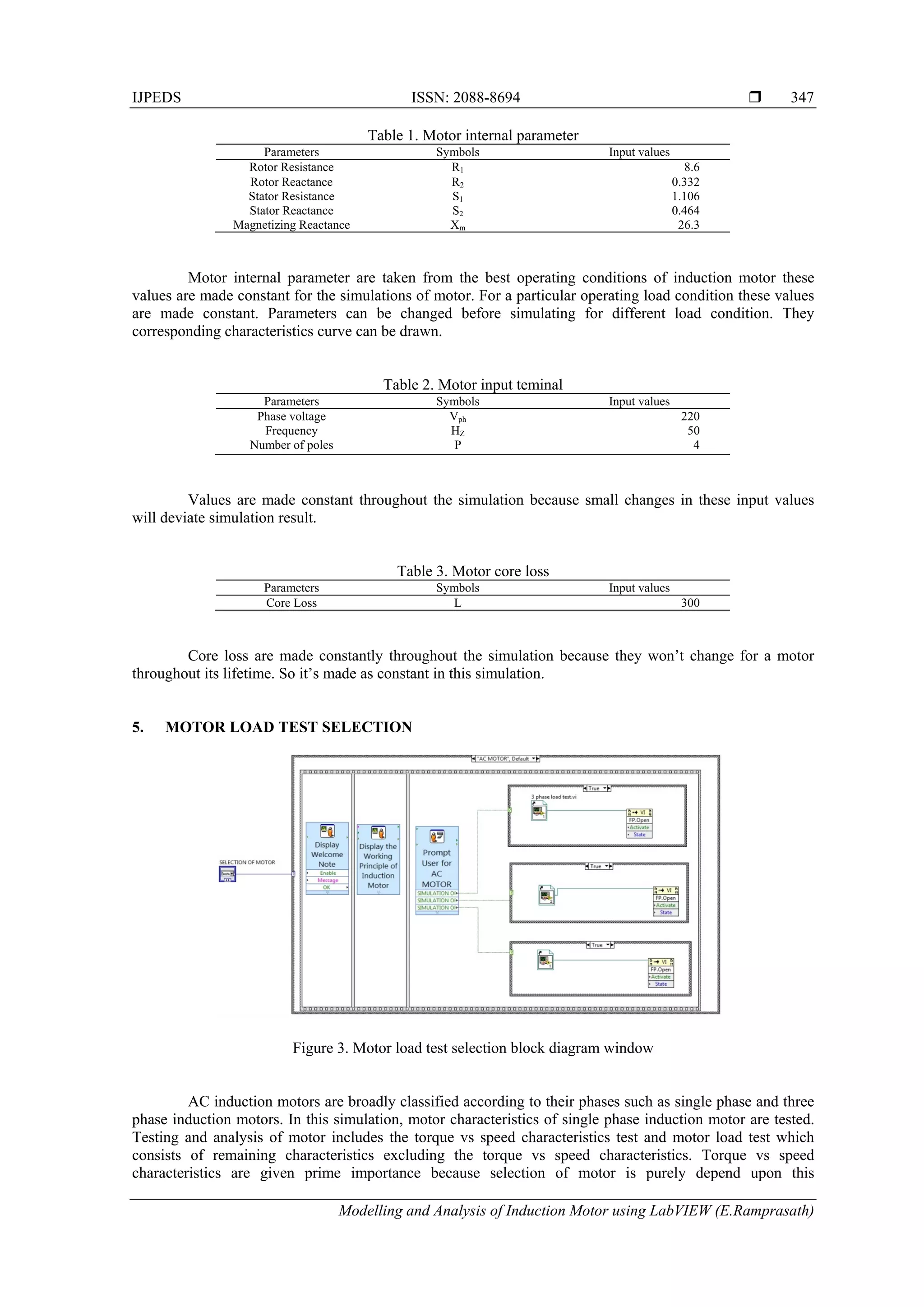
Figure 3. Motor load test selection block diagram window
AC induction motors are broadly classified according to their phases such as single phase and three
phase induction motors. In this simulation, motor characteristics of single phase induction motor are tested.
Testing and analysis of motor includes the torque vs speed characteristics test and motor load test which
consists of remaining characteristics excluding the torque vs speed characteristics. Torque vs speed
characteristics are given prime importance because selection of motor is purely depend upon this
 ISSN: 2088-8694
IJPEDS Vol. 5, No. 3, February 2015 : 344 – 354
348
characteristics, after this load curve analysis the other factors are also considered such as power rating, power
factor, torque induced for a particular load these characteristics can also be displayed using the motor load
test characteristics. Selection of load test is nothing but gives the user to select the motor characteristics
because if the user wants to analyses the torque vs speed characteristics this allows the user to select or if the
user wants analyses the motor characteristics then this program allows them to continue in that required field.
Basically LabVIEW flat sequence structure option enables the user for the selection process. The enum will
basically work towards the default selection. Inside the flat sequence it will have the sub VI’s which calls the
motor characteristics. The block diagram panel describes the execution structure of the program which have
been developed with a flat sequence structure in LabVIEW, their program flow is illustrated in the Figure 3.
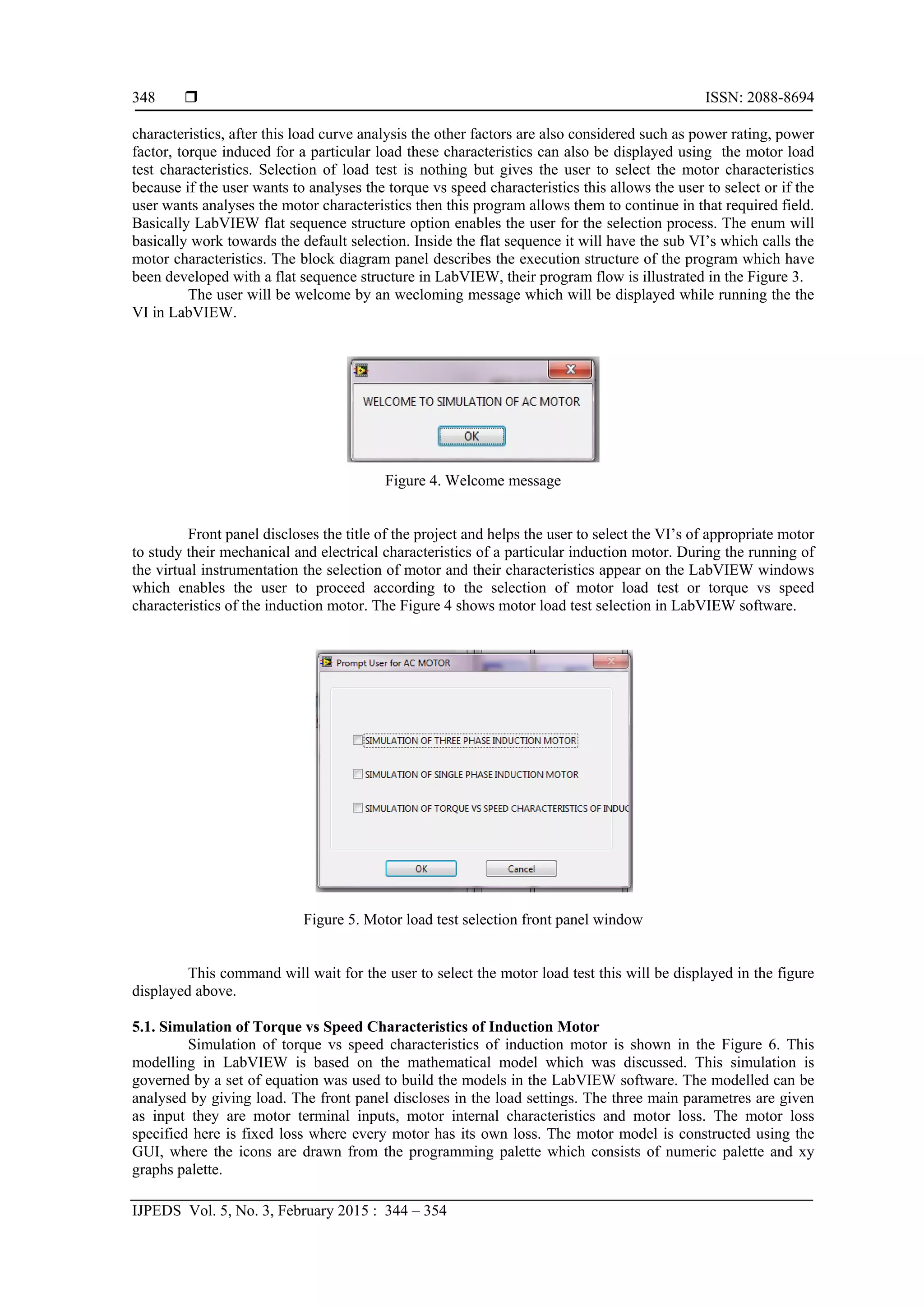
The user will be welcome by an wecloming message which will be displayed while running the the
VI in LabVIEW.
Figure 4. Welcome message
Front panel discloses the title of the project and helps the user to select the VI’s of appropriate motor
to study their mechanical and electrical characteristics of a particular induction motor. During the running of
the virtual instrumentation the selection of motor and their characteristics appear on the LabVIEW windows
which enables the user to proceed according to the selection of motor load test or torque vs speed
characteristics of the induction motor. The Figure 4 shows motor load test selection in LabVIEW software.
Figure 5. Motor load test selection front panel window
This command will wait for the user to select the motor load test this will be displayed in the figure
displayed above.
5.1. Simulation of Torque vs Speed Characteristics of Induction Motor
Simulation of torque vs speed characteristics of induction motor is shown in the Figure 6. This
modelling in LabVIEW is based on the mathematical model which was discussed. This simulation is
governed by a set of equation was used to build the models in the LabVIEW software. The modelled can be
analysed by giving load. The front panel discloses in the load settings. The three main parametres are given
as input they are motor terminal inputs, motor internal characteristics and motor loss. The motor loss
specified here is fixed loss where every motor has its own loss. The motor model is constructed using the
GUI, where the icons are drawn from the programming palette which consists of numeric palette and xy
graphs palette.
IJPEDS ISSN: 2088-8694 
Modelling and Analysis of Induction Motor using LabVIEW (E.Ramprasath)
349
Figure 6. Block diagram window of torque vs speed characteristics of induction motor
The arithmetic palette comprises of various icons which helps to build these models, the motor
modelled here are based on the mathematical equation.Mechanical characteristics of induction motor are to
be analysed in that torque vs speed characteristics plays a major role in analyses of induction motor.
Whenever the speed gets changed is nothing but when the load gets changed corresponding speed and torque
equations gets changed. This diagram comprises of three different types of torque positions knows as starting
torque, pull up torque, full load torque.
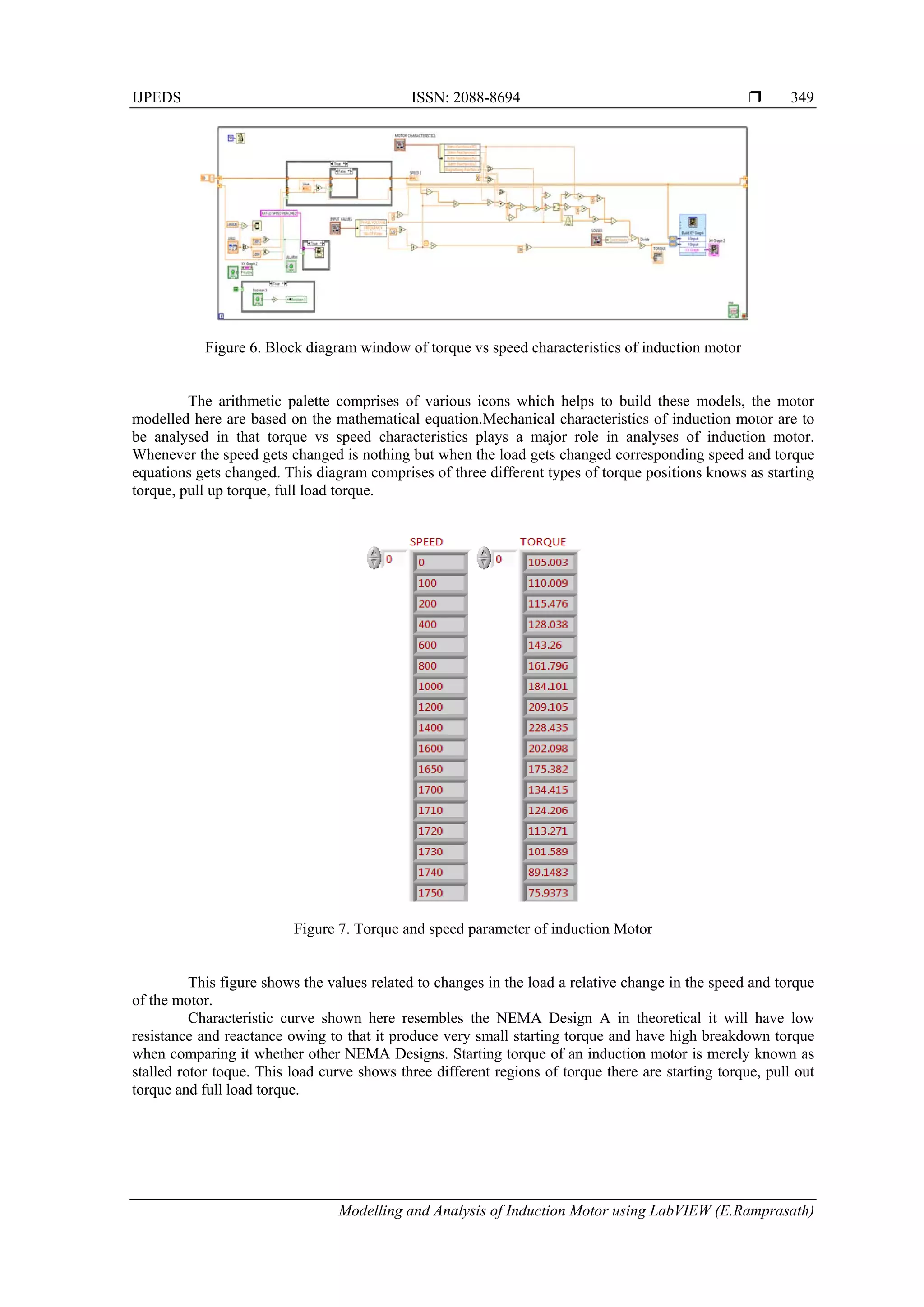
Figure 7. Torque and speed parameter of induction Motor
This figure shows the values related to changes in the load a relative change in the speed and torque
of the motor.
Characteristic curve shown here resembles the NEMA Design A in theoretical it will have low
resistance and reactance owing to that it produce very small starting torque and have high breakdown torque
when comparing it whether other NEMA Designs. Starting torque of an induction motor is merely known as
stalled rotor toque. This load curve shows three different regions of torque there are starting torque, pull out
torque and full load torque.
 ISSN: 2088-8694
IJPEDS Vol. 5, No. 3, February 2015 : 344 – 354
350
Figure 8. Torque vs speed characteristics of induction motor
5.2. Simulation of Induction Motor Load Test
The simulation of induction motor load test comprises of various output parameters which are
displayed in the below figure, according to the variation in parameters there are various parameters displayed
associated with the speed.
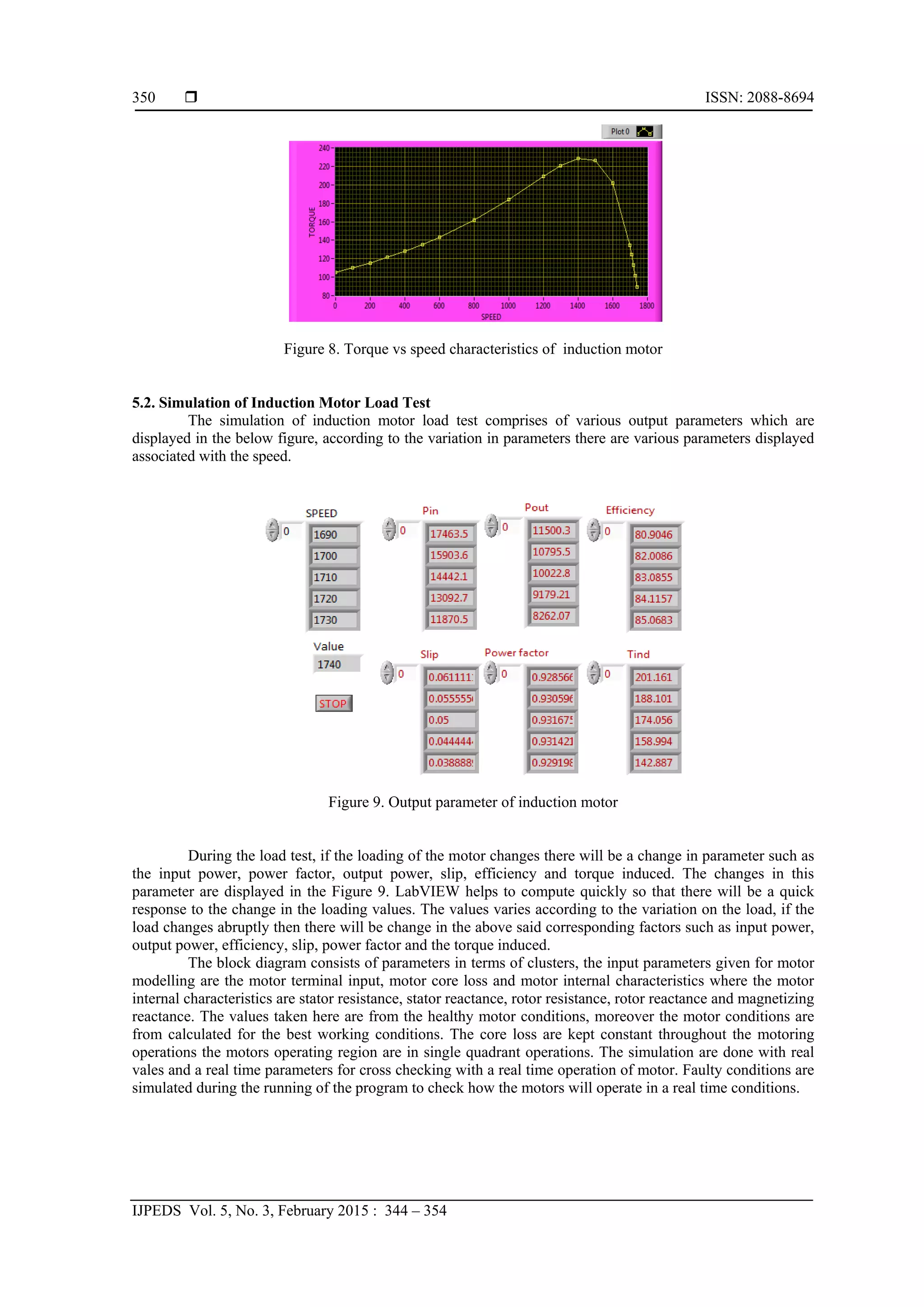
Figure 9. Output parameter of induction motor
During the load test, if the loading of the motor changes there will be a change in parameter such as
the input power, power factor, output power, slip, efficiency and torque induced. The changes in this
parameter are displayed in the Figure 9. LabVIEW helps to compute quickly so that there will be a quick
response to the change in the loading values. The values varies according to the variation on the load, if the
load changes abruptly then there will be change in the above said corresponding factors such as input power,
output power, efficiency, slip, power factor and the torque induced.
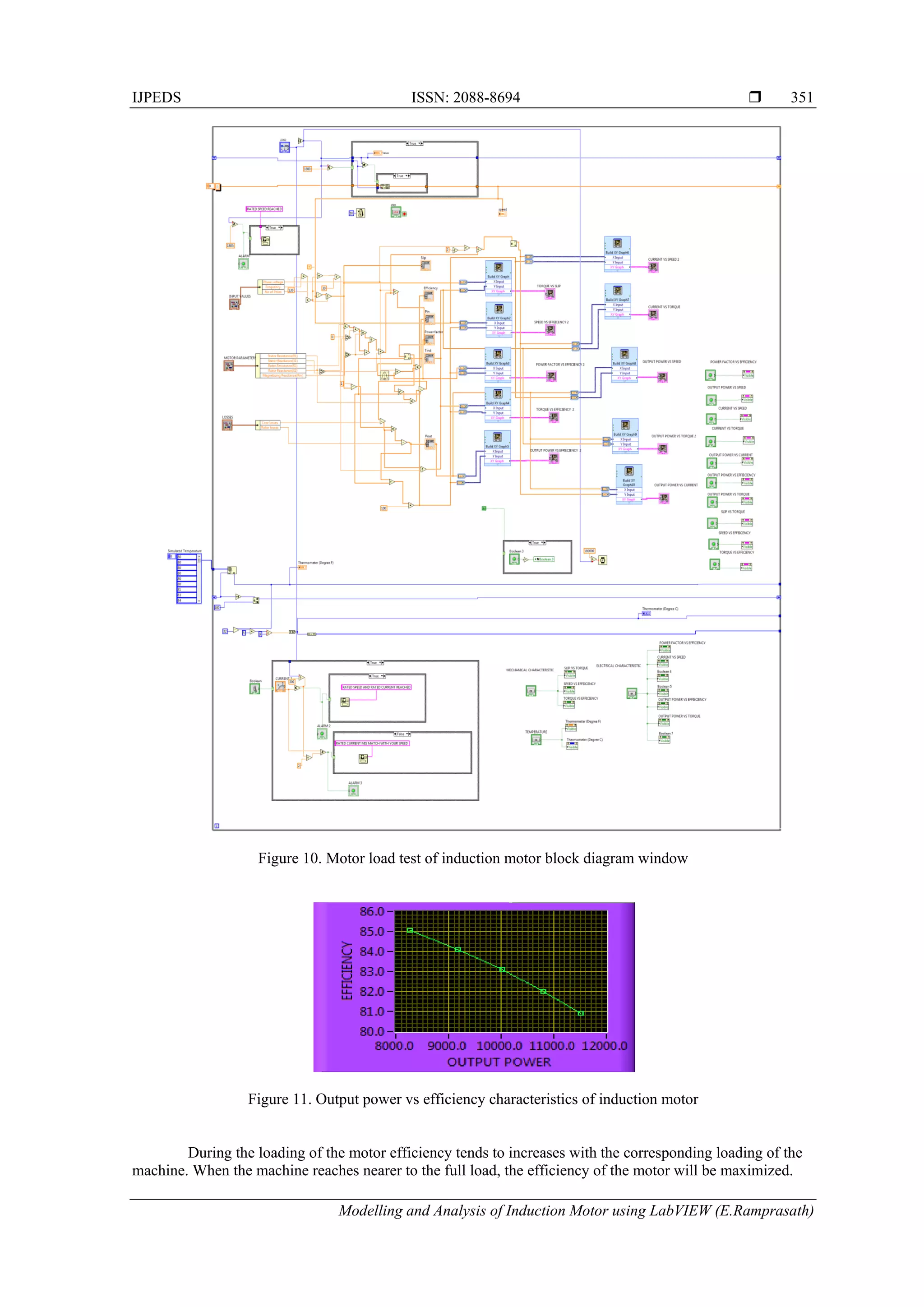
The block diagram consists of parameters in terms of clusters, the input parameters given for motor
modelling are the motor terminal input, motor core loss and motor internal characteristics where the motor
internal characteristics are stator resistance, stator reactance, rotor resistance, rotor reactance and magnetizing
reactance. The values taken here are from the healthy motor conditions, moreover the motor conditions are
from calculated for the best working conditions. The core loss are kept constant throughout the motoring
operations the motors operating region are in single quadrant operations. The simulation are done with real
vales and a real time parameters for cross checking with a real time operation of motor. Faulty conditions are
simulated during the running of the program to check how the motors will operate in a real time conditions.
IJPEDS ISSN: 2088-8694 
Modelling and Analysis of Induction Motor using LabVIEW (E.Ramprasath)
351
Figure 10. Motor load test of induction motor block diagram window
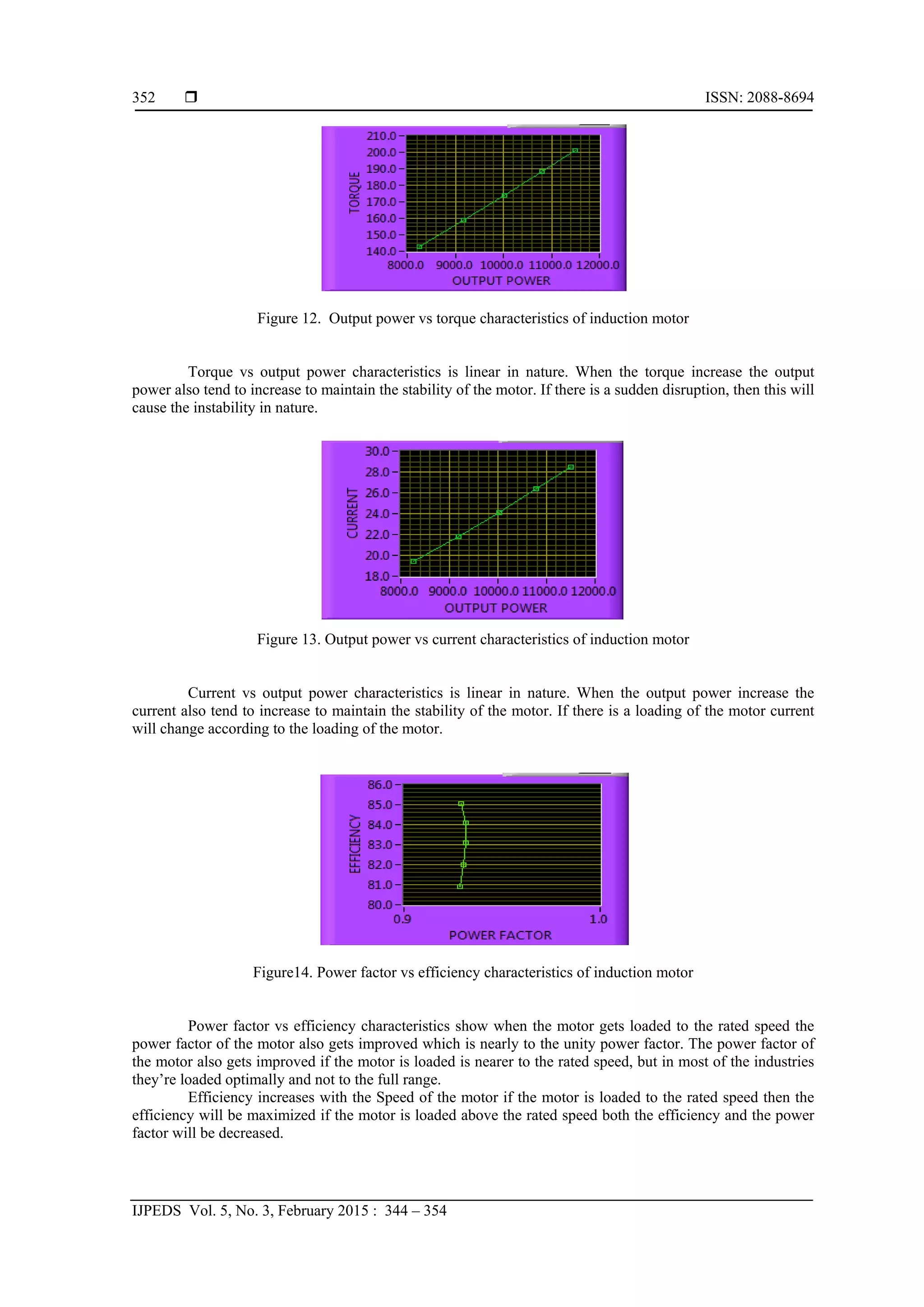
Figure 11. Output power vs efficiency characteristics of induction motor
During the loading of the motor efficiency tends to increases with the corresponding loading of the
machine. When the machine reaches nearer to the full load, the efficiency of the motor will be maximized.
 ISSN: 2088-8694
IJPEDS Vol. 5, No. 3, February 2015 : 344 – 354
352
Figure 12. Output power vs torque characteristics of induction motor
Torque vs output power characteristics is linear in nature. When the torque increase the output
power also tend to increase to maintain the stability of the motor. If there is a sudden disruption, then this will
cause the instability in nature.
Figure 13. Output power vs current characteristics of induction motor
Current vs output power characteristics is linear in nature. When the output power increase the
current also tend to increase to maintain the stability of the motor. If there is a loading of the motor current
will change according to the loading of the motor.
Figure14. Power factor vs efficiency characteristics of induction motor
Power factor vs efficiency characteristics show when the motor gets loaded to the rated speed the
power factor of the motor also gets improved which is nearly to the unity power factor. The power factor of
the motor also gets improved if the motor is loaded is nearer to the rated speed, but in most of the industries
they’re loaded optimally and not to the full range.
Efficiency increases with the Speed of the motor if the motor is loaded to the rated speed then the
efficiency will be maximized if the motor is loaded above the rated speed both the efficiency and the power
factor will be decreased.
IJPEDS ISSN: 2088-8694 
Modelling and Analysis of Induction Motor using LabVIEW (E.Ramprasath)
353
Figure 15. Speed vs efficiency characteristics of inducton motor
6. CONCLUSION
The analysis of this experimental result shows that induction motor model was built with the
LabVIEW software. It can be used to model and simulate the working process of induction motor by which
motor performance calculated, is set to compare with the real time operating consideration of the induction
motor for the optimal operation of machines. The creation of the induction motor model can be bundled into a
sub-Virtual Instrumentation, for further experimental studies. This type of work can be further proceeded to
the other machines such as DC machine and special electrical machine. It helps the manufacturer to study the
motor performance before manufacturing it. Modelling the electric motor in LabVIEW, gives the possibility,
to use the capabilities of this powerful graphical programming language, in studying various problems, related
to this component of the power system. Since LabVIEW interfaces easily to a large number of hardware by
multifunctional data acquisition cards, electric motors model can be easily modelled and they are used to study
the various characteristics of motors.Analysis can be further used to study the performance of the motor,
because testing a motor in real time situation requires huge initial investment and requires time. If the motor
fails to achieve the rated efficiency, efficacy, then it became useless. This modelling and analysis aid to avoid
these type of losses such recoverable financial loss and non-recoverable time loss and provide the best
platform to study the characteristics of the motor.
REFERENCES
[1] RK Rajput. Electrical Machines. First Edition, New York. McGraw-Hill. 199; 3352-353.
[2] R Krishnan. Electric Motor Drives Modeling, Analysis and Control. First Edition, Prentice-Hall International, Inc.
Upper Saddle River, New Jersey 07458, 2001.
[3] R Gunabalan et al. Simulation of Inverter fed Induction Motor Drive with LabVIEW. International Journal of
Electrical, Robotics Electronics and Communications Engineering. 2014; 8(1): 91-95.
[4] Gentian dume. Synchronous Generator Model based on LabVIEW Software. WSEAS Transactions on Advances in
Engineering Education. 2013; 10: 101-112.
[5] RA Jabbar, et al. Simulation of Electrical Machines Laboratory using LabVIEW. International Conference on
Computer, Electrical, andSystems Science, and Engineering, World Academy of Science Engineering and
Technology. 2010; 29-31.
[6] Abdenour Soualhi, et al. Detection and Diagnosis of Faults in Induction Motor using an Improved Artificial ANT
Clustering Technique. IEEE Transactions on Industrial Electronics. 2013; 60: 4053 – 4062.
[7] M Aderiano da Silva, et al. Rotor Bar Fault Monitoring method based on Analysis of Air-Gap Torques of Induction
Motors. IEEE Transactions on Industrial Informatics. 2013; 9: 2274–2283.
[8] Bogdan Virlan, et al. Induction Motor with outer Rotor and Ring Stator Winding for Multispeed Applications. IEEE
Transactions on Energy Conversion. 2013; 28: 999 – 1007.
[9] L Daniel Ransom, Randy Hamilton. Extending Motor Life with Updated Thermal Model Overload Protection. IEEE
Transactions on Industry Applications. 2013; 49: 2471 – 2477.
[10] Gianmario Pellegrino, et al. Comparison of Induction and PM Synchronous Motor Drives for EV Application
Including Design Examples. IEEE Transactions on Industry Applications. 2012; 48: 2322 – 2332.
[11] N Konstantinos Gyftakis, et al. A Novel Approach for Broken Bar Fault Diagnosis in Induction Motors through
Torque Monitoring. IEEE Transactions on Energy Conversion. 2013; 28: 267 – 277.
[12] Lu´ıs Alberto Pereira, et al. Influence of Saturation on the Airgap Induction Waveform of Five-Phase Induction
Machines. IEEE Transactions on energy Conversion. 2012; 27: 29 – 41.
[13] Pinjia Zhang, et al. A Nonintrusive Winding Heating Method for Induction Motor using Soft Starter forPreventing
Moisture Condensation. IEEE Transactions on Industry Applications. 2012; 48; 117 – 123.
[14] Sungho Lee, et al. Evaluation of the Influence of Rotor Axial Air Ducts on Condition Monitoring of Induction
Motors. IEEE Transactions on Industry Applications. 2013; 49: 2024 – 2033.
 ISSN: 2088-8694
IJPEDS Vol. 5, No. 3, February 2015 : 344 – 354
354
[15] Woosuk Sung, etal. Energy-Efficient and Robust Control for High-Performance Induction Motor Drive with an
Application in Electric Vehicles. IEEE Transactions on Vehicular Technology. 2012; 61: 3394 – 3405.
[16] K Vinoth kumar. A Review of Voltage and Current Signature Diagnosis in Industrial Drives. IJPEDS. 2011; 1: 75 –
82.
[17] RL Chakrasali, et al. A Novel Method of Starting Induction Motor – A Comparative Study. IJPEDS. 2011; 1: 41 –
46.
BIBLIOGRAPHY OF AUTHORS
E. Ramprasath received B.E degree in Electrical and Electronics engineering from Velalar
College of Technology, Thindal, Erode, Tamil Nadu, India. Now currently pursuing M.E degree
in Power Electronics and Drives at K.S.Rangasamy college of Technology, Tiruchengode,
Namakkal, Tamil Nadu, India. His area of interest is Power Electronics and Drives, and
Electrical Machines.
P.Manojkumar received B.E degree in Electrical and Electronics Engineering from Karpagam
University, Coimbatore, Tamil Nadu and India. He received M.Tech degree in Embedded
Systems from Amrita Vishwa Vidyapeetham University, Amrita Nagar, Coimbatore, Tamil
Nadu and India. He is currently working towards the Ph.D. degree in automotive electronics, his
area of research fuel savings in automobiles by universal ECU with multiple fuel ignition system
using LabVIEW at Anna University, Chennai, Tamil Nadu, and India. His area of interest is
Microprocessor and Microcontroller, and Embedded systems

Modelling and Analysis of Induction Motor using LabVIEW

  • 1.
    International Journal ofPower Electronics and Drive System (IJPEDS) Vol. 5, No. 3, February 2015, pp. 344~354 ISSN: 2088-8694  344 Journal homepage: http://iaesjournal.com/online/index.php/IJPEDS Modelling and Analysis of Induction Motor using LabVIEW E.Ramprasath, P.Manojkumar Departmentof Electrical and Electronics Engineering, K.S.Rangasamy College of Technology Article Info ABSTRACT Article history: Received Oct 4, 2014 Revised Dec 22, 2014 Accepted Jan 13, 2015 Induction motor characteristics became complex to study, after the invention of drives where the motor incorporated with power electronic switches such as thyristor, diodes, GTO, and MOSFET. Induction motor characteristics can be studied and modelled with software such as Finite Element Analysis and Laboratory Virtual Instrument Engineering Workbench. Finite Element Analysis is used to study and model the motor might be complex and the time taken to compute was unreliable. In this paper induction motor was modeled with the help of LabVIEW software this allows us to model and simulate the motor in order to analyze the performance. The induction motor modelled here was based on the mathematical equations. Keyword: Characteristics Induction Motor LabVIEW Modelling Simulation Copyright © 2015 Institute of Advanced Engineering and Science. All rights reserved. Corresponding Author: E.Ramprasath, Department of Electrical and Electronics Engineering, K.S.Rangasamy College of Technology, K.S.R Kalvi Nagar, Tiruchengode, Namakkal - 637215, Tamil Nadu, India. Email: ramprasath009@gmail.com 1. INTRODUCTION Induction motor designing based on the equation is bit complex, because equation whose terms are not of the first degree and more over it is a strongly coupled system. The input and output variable relationship is almost complex thus simulation of induction motor physically is hard. Most commonly employed software are PSpice, Finite Element Analysis, Matrix Laboratory and Laboratory Virtual Instrument Engineering Workbench other software rather than is, are created based on the text lines. LabVIEW software is based on the graphical programming environment. LabVIEW software has a dynamic nature which contributes to this dynamic tracking of processing the data. The changes in this data can be can be observed continuously. Dynamic analyzing is established based on both the mathematical and physical model. Normally equivalent circuit of induction motor resembles the equivalent circuit of transformer where the airgap between the stator and rotor in the induction motor differentiate from the transformer. LabVIEW software of following qualities such as multi-dimensional plots, xy graphs, report generation in excel, word makes this software accessible and has a unique feature, which simplifies the simulation process [1]. The dynamic and steady state analysis of induction motor are difficult to compute so modelling a motor using mathematical model helps to eliminate the further consequences. So the determination of parameters must be accurate for carrying out multiple analysis. Machine performance changes as the coupled system inertia changes it also contributes to the change in the load torque. Motor constancy changes if the motor inertia and load torque of that motor changes. Identifying faults in electric motor using LabVIEW is growing research area where many researchers giving their valuable contribution to find out faults in motor.Electric motor comprises of numerous motor which are developed and improved day by day in that Induction motor monitoring and faults diagnosis is a feature rich area because induction motor is the widely used motor which occupies nearly 75 % of drives in industries so only they’re widely known as the work horse of an industry [2-3].
  • 2.
    IJPEDS ISSN: 2088-8694 Modelling and Analysis of Induction Motor using LabVIEW (E.Ramprasath) 345 2. PRELIMINARY EQUIVALENT CIRCUIT & MATHEMATICAL EXPRESSION Induction motor is commonly known as the work horse of an industry owing to the robust nature, rugged construction and reliable operation. When an alternating current is provided to the secondary winding circuit of the induction motor it produces the revolving magnetic flux around the stator. Air gap act as the dielectric medium which separates the rotor from the stator without having any physical contact. This revolving magnetic flux cuts the rotor windings axially as a result it produces an induced electromotive force in the rotor which is sinusoidal in nature. In a squirrel cage induction motor the end rings are short circuited, which provides the path for the induced current to flow across the rotor windings. The current induced in the rotor starts to circulate which produces a magnetic field in a direction opposite to the cause. Production of torque is owing to the fundamental interaction between these two counter balancing magnetic fields due to the applied voltage to the stator [4]. Figure 1. Equivalent Circuit Parameters of an Induction Motor Slip is defined as the ratio of the difference between the synchronous speed and the actual motor speed to the ratio of the synchronous speed. In general induction motor the torque is directly proportional to the product of the rotor current and flux per stator pole. The electromagnetic torque in synchronous watt can be expressed as: ∗ Stator copper loss which occurs at the induction motor: Rotor copper loss which occurs at the induction motor: Input power which of the induction motor: √3 cos 3 cos Air gap power of the induction motor: Core loss which occurs at the induction motor: Output power which of the induction motor: Torque induced which occurs at the induction motor:
  • 3.
     ISSN: 2088-8694 IJPEDSVol. 5, No. 3, February 2015 : 344 – 354 346 Figure 2. Power flow diagram of the induction motor 3. LabVIEW INTRODUCTION & BUILDING THE MODEL National Instruments developed LabVIEW software for the first time in the year 1986 for the Apple Macintosh Company. It was conceptualized as a programming environment for hardware control. The introduction of an interface between the Personnel Computer and the instrument which is to be controlled by software was the main aim. The graphical user interface which is used to simulate the controlled instrument on the computer monitor itself with the help of LabVIEW software. LabVIEW is also a graphical programming language, it is familiarly known as “G code”. Applications created in LabVIEW are called “Virtual Instruments” [5]. Nowadays LabVIEW software is also compatible with other operating system such as Windows and Linux, etc. The word LabVIEW is an acronym for Laboratory Virtual Instrument Engineering Workbench which is a graphical programming language based on graphical icons instead of number of programming codes for simulation purpose. LabVIEW software allows the user to build their own set of virtual instrument easily. These programs are known as Virtual Instruments, or VIs, due to their operational replica of physical instruments, like temperature monitor, spectral scopes, pressure gauges, cathode ray oscilloscopes, and multi-meters etc.The inputs are known as controls and the outputs are known as indicators are placed on the graphic user interface (GUI) called Front Panel (FP). They communicate with each block diagram through terminals of the icons. In LabVIEW the data flow of the program will be from left to write, but in C/C++ programming codes will be executed in order of top to bottom, errors in the LabVIEW will be easily identified during the execution of the program itself [6]. 4. SIMULATION OF INDUCTION MOTOR CHARACTERISTICS USING LabVIEW Machine’s modelling developed in LabVIEW software is based on the mathematical expressions. Mathematical equations are first derived then converted into models using icons from the arithmetic board for further implementation in LabVIEW for graphical analysis [7]. List of simulation for Induction Machine in LabVIEW follows: a) Simulation Torque Vs Speed relationship of an Induction Motor b) Simulation of Induction Motor Load Test The above said simulation can be build using the parameters. Parameters which are used to model the induction motor are described below with their corresponding symbols to have a clear idea before modelling motor. The simulations performed here to analyses the modelled motor with its characteristics which can be compared to the healthy motor in real time and it moreover helps to achieve the improvements in motor modelling before manufacturing it in factories. By changing the above input parameters corresponding values can be obtained in the form of graphical representation. By changing the given load changes in the motor speed and torque can be achsievedand their corresponding characteristics of induction motor can be displayed in the form of graph representation. By changing the individual parameter for a particular speed will also be displayed in this simulation. Here core loss is the considered as the constant loss of a particular induction motor which is to be modeled [8-17].
  • 4.
    IJPEDS ISSN: 2088-8694 Modelling and Analysis of Induction Motor using LabVIEW (E.Ramprasath) 347 Table 1. Motor internal parameter Parameters Symbols Input values Rotor Resistance R1 8.6 Rotor Reactance R2 0.332 Stator Resistance S1 1.106 Stator Reactance S2 0.464 Magnetizing Reactance Xm 26.3 Motor internal parameter are taken from the best operating conditions of induction motor these values are made constant for the simulations of motor. For a particular operating load condition these values are made constant. Parameters can be changed before simulating for different load condition. They corresponding characteristics curve can be drawn. Table 2. Motor input teminal Parameters Symbols Input values Phase voltage Vph 220 Frequency HZ 50 Number of poles P 4 Values are made constant throughout the simulation because small changes in these input values will deviate simulation result. Table 3. Motor core loss Parameters Symbols Input values Core Loss L 300 Core loss are made constantly throughout the simulation because they won’t change for a motor throughout its lifetime. So it’s made as constant in this simulation. 5. MOTOR LOAD TEST SELECTION Figure 3. Motor load test selection block diagram window AC induction motors are broadly classified according to their phases such as single phase and three phase induction motors. In this simulation, motor characteristics of single phase induction motor are tested. Testing and analysis of motor includes the torque vs speed characteristics test and motor load test which consists of remaining characteristics excluding the torque vs speed characteristics. Torque vs speed characteristics are given prime importance because selection of motor is purely depend upon this
  • 5.
     ISSN: 2088-8694 IJPEDSVol. 5, No. 3, February 2015 : 344 – 354 348 characteristics, after this load curve analysis the other factors are also considered such as power rating, power factor, torque induced for a particular load these characteristics can also be displayed using the motor load test characteristics. Selection of load test is nothing but gives the user to select the motor characteristics because if the user wants to analyses the torque vs speed characteristics this allows the user to select or if the user wants analyses the motor characteristics then this program allows them to continue in that required field. Basically LabVIEW flat sequence structure option enables the user for the selection process. The enum will basically work towards the default selection. Inside the flat sequence it will have the sub VI’s which calls the motor characteristics. The block diagram panel describes the execution structure of the program which have been developed with a flat sequence structure in LabVIEW, their program flow is illustrated in the Figure 3. The user will be welcome by an wecloming message which will be displayed while running the the VI in LabVIEW. Figure 4. Welcome message Front panel discloses the title of the project and helps the user to select the VI’s of appropriate motor to study their mechanical and electrical characteristics of a particular induction motor. During the running of the virtual instrumentation the selection of motor and their characteristics appear on the LabVIEW windows which enables the user to proceed according to the selection of motor load test or torque vs speed characteristics of the induction motor. The Figure 4 shows motor load test selection in LabVIEW software. Figure 5. Motor load test selection front panel window This command will wait for the user to select the motor load test this will be displayed in the figure displayed above. 5.1. Simulation of Torque vs Speed Characteristics of Induction Motor Simulation of torque vs speed characteristics of induction motor is shown in the Figure 6. This modelling in LabVIEW is based on the mathematical model which was discussed. This simulation is governed by a set of equation was used to build the models in the LabVIEW software. The modelled can be analysed by giving load. The front panel discloses in the load settings. The three main parametres are given as input they are motor terminal inputs, motor internal characteristics and motor loss. The motor loss specified here is fixed loss where every motor has its own loss. The motor model is constructed using the GUI, where the icons are drawn from the programming palette which consists of numeric palette and xy graphs palette.
  • 6.
    IJPEDS ISSN: 2088-8694 Modelling and Analysis of Induction Motor using LabVIEW (E.Ramprasath) 349 Figure 6. Block diagram window of torque vs speed characteristics of induction motor The arithmetic palette comprises of various icons which helps to build these models, the motor modelled here are based on the mathematical equation.Mechanical characteristics of induction motor are to be analysed in that torque vs speed characteristics plays a major role in analyses of induction motor. Whenever the speed gets changed is nothing but when the load gets changed corresponding speed and torque equations gets changed. This diagram comprises of three different types of torque positions knows as starting torque, pull up torque, full load torque. Figure 7. Torque and speed parameter of induction Motor This figure shows the values related to changes in the load a relative change in the speed and torque of the motor. Characteristic curve shown here resembles the NEMA Design A in theoretical it will have low resistance and reactance owing to that it produce very small starting torque and have high breakdown torque when comparing it whether other NEMA Designs. Starting torque of an induction motor is merely known as stalled rotor toque. This load curve shows three different regions of torque there are starting torque, pull out torque and full load torque.
  • 7.
     ISSN: 2088-8694 IJPEDSVol. 5, No. 3, February 2015 : 344 – 354 350 Figure 8. Torque vs speed characteristics of induction motor 5.2. Simulation of Induction Motor Load Test The simulation of induction motor load test comprises of various output parameters which are displayed in the below figure, according to the variation in parameters there are various parameters displayed associated with the speed. Figure 9. Output parameter of induction motor During the load test, if the loading of the motor changes there will be a change in parameter such as the input power, power factor, output power, slip, efficiency and torque induced. The changes in this parameter are displayed in the Figure 9. LabVIEW helps to compute quickly so that there will be a quick response to the change in the loading values. The values varies according to the variation on the load, if the load changes abruptly then there will be change in the above said corresponding factors such as input power, output power, efficiency, slip, power factor and the torque induced. The block diagram consists of parameters in terms of clusters, the input parameters given for motor modelling are the motor terminal input, motor core loss and motor internal characteristics where the motor internal characteristics are stator resistance, stator reactance, rotor resistance, rotor reactance and magnetizing reactance. The values taken here are from the healthy motor conditions, moreover the motor conditions are from calculated for the best working conditions. The core loss are kept constant throughout the motoring operations the motors operating region are in single quadrant operations. The simulation are done with real vales and a real time parameters for cross checking with a real time operation of motor. Faulty conditions are simulated during the running of the program to check how the motors will operate in a real time conditions.
  • 8.
    IJPEDS ISSN: 2088-8694 Modelling and Analysis of Induction Motor using LabVIEW (E.Ramprasath) 351 Figure 10. Motor load test of induction motor block diagram window Figure 11. Output power vs efficiency characteristics of induction motor During the loading of the motor efficiency tends to increases with the corresponding loading of the machine. When the machine reaches nearer to the full load, the efficiency of the motor will be maximized.
  • 9.
     ISSN: 2088-8694 IJPEDSVol. 5, No. 3, February 2015 : 344 – 354 352 Figure 12. Output power vs torque characteristics of induction motor Torque vs output power characteristics is linear in nature. When the torque increase the output power also tend to increase to maintain the stability of the motor. If there is a sudden disruption, then this will cause the instability in nature. Figure 13. Output power vs current characteristics of induction motor Current vs output power characteristics is linear in nature. When the output power increase the current also tend to increase to maintain the stability of the motor. If there is a loading of the motor current will change according to the loading of the motor. Figure14. Power factor vs efficiency characteristics of induction motor Power factor vs efficiency characteristics show when the motor gets loaded to the rated speed the power factor of the motor also gets improved which is nearly to the unity power factor. The power factor of the motor also gets improved if the motor is loaded is nearer to the rated speed, but in most of the industries they’re loaded optimally and not to the full range. Efficiency increases with the Speed of the motor if the motor is loaded to the rated speed then the efficiency will be maximized if the motor is loaded above the rated speed both the efficiency and the power factor will be decreased.
  • 10.
    IJPEDS ISSN: 2088-8694 Modelling and Analysis of Induction Motor using LabVIEW (E.Ramprasath) 353 Figure 15. Speed vs efficiency characteristics of inducton motor 6. CONCLUSION The analysis of this experimental result shows that induction motor model was built with the LabVIEW software. It can be used to model and simulate the working process of induction motor by which motor performance calculated, is set to compare with the real time operating consideration of the induction motor for the optimal operation of machines. The creation of the induction motor model can be bundled into a sub-Virtual Instrumentation, for further experimental studies. This type of work can be further proceeded to the other machines such as DC machine and special electrical machine. It helps the manufacturer to study the motor performance before manufacturing it. Modelling the electric motor in LabVIEW, gives the possibility, to use the capabilities of this powerful graphical programming language, in studying various problems, related to this component of the power system. Since LabVIEW interfaces easily to a large number of hardware by multifunctional data acquisition cards, electric motors model can be easily modelled and they are used to study the various characteristics of motors.Analysis can be further used to study the performance of the motor, because testing a motor in real time situation requires huge initial investment and requires time. If the motor fails to achieve the rated efficiency, efficacy, then it became useless. This modelling and analysis aid to avoid these type of losses such recoverable financial loss and non-recoverable time loss and provide the best platform to study the characteristics of the motor. REFERENCES [1] RK Rajput. Electrical Machines. First Edition, New York. McGraw-Hill. 199; 3352-353. [2] R Krishnan. Electric Motor Drives Modeling, Analysis and Control. First Edition, Prentice-Hall International, Inc. Upper Saddle River, New Jersey 07458, 2001. [3] R Gunabalan et al. Simulation of Inverter fed Induction Motor Drive with LabVIEW. International Journal of Electrical, Robotics Electronics and Communications Engineering. 2014; 8(1): 91-95. [4] Gentian dume. Synchronous Generator Model based on LabVIEW Software. WSEAS Transactions on Advances in Engineering Education. 2013; 10: 101-112. [5] RA Jabbar, et al. Simulation of Electrical Machines Laboratory using LabVIEW. International Conference on Computer, Electrical, andSystems Science, and Engineering, World Academy of Science Engineering and Technology. 2010; 29-31. [6] Abdenour Soualhi, et al. Detection and Diagnosis of Faults in Induction Motor using an Improved Artificial ANT Clustering Technique. IEEE Transactions on Industrial Electronics. 2013; 60: 4053 – 4062. [7] M Aderiano da Silva, et al. Rotor Bar Fault Monitoring method based on Analysis of Air-Gap Torques of Induction Motors. IEEE Transactions on Industrial Informatics. 2013; 9: 2274–2283. [8] Bogdan Virlan, et al. Induction Motor with outer Rotor and Ring Stator Winding for Multispeed Applications. IEEE Transactions on Energy Conversion. 2013; 28: 999 – 1007. [9] L Daniel Ransom, Randy Hamilton. Extending Motor Life with Updated Thermal Model Overload Protection. IEEE Transactions on Industry Applications. 2013; 49: 2471 – 2477. [10] Gianmario Pellegrino, et al. Comparison of Induction and PM Synchronous Motor Drives for EV Application Including Design Examples. IEEE Transactions on Industry Applications. 2012; 48: 2322 – 2332. [11] N Konstantinos Gyftakis, et al. A Novel Approach for Broken Bar Fault Diagnosis in Induction Motors through Torque Monitoring. IEEE Transactions on Energy Conversion. 2013; 28: 267 – 277. [12] Lu´ıs Alberto Pereira, et al. Influence of Saturation on the Airgap Induction Waveform of Five-Phase Induction Machines. IEEE Transactions on energy Conversion. 2012; 27: 29 – 41. [13] Pinjia Zhang, et al. A Nonintrusive Winding Heating Method for Induction Motor using Soft Starter forPreventing Moisture Condensation. IEEE Transactions on Industry Applications. 2012; 48; 117 – 123. [14] Sungho Lee, et al. Evaluation of the Influence of Rotor Axial Air Ducts on Condition Monitoring of Induction Motors. IEEE Transactions on Industry Applications. 2013; 49: 2024 – 2033.
  • 11.
     ISSN: 2088-8694 IJPEDSVol. 5, No. 3, February 2015 : 344 – 354 354 [15] Woosuk Sung, etal. Energy-Efficient and Robust Control for High-Performance Induction Motor Drive with an Application in Electric Vehicles. IEEE Transactions on Vehicular Technology. 2012; 61: 3394 – 3405. [16] K Vinoth kumar. A Review of Voltage and Current Signature Diagnosis in Industrial Drives. IJPEDS. 2011; 1: 75 – 82. [17] RL Chakrasali, et al. A Novel Method of Starting Induction Motor – A Comparative Study. IJPEDS. 2011; 1: 41 – 46. BIBLIOGRAPHY OF AUTHORS E. Ramprasath received B.E degree in Electrical and Electronics engineering from Velalar College of Technology, Thindal, Erode, Tamil Nadu, India. Now currently pursuing M.E degree in Power Electronics and Drives at K.S.Rangasamy college of Technology, Tiruchengode, Namakkal, Tamil Nadu, India. His area of interest is Power Electronics and Drives, and Electrical Machines. P.Manojkumar received B.E degree in Electrical and Electronics Engineering from Karpagam University, Coimbatore, Tamil Nadu and India. He received M.Tech degree in Embedded Systems from Amrita Vishwa Vidyapeetham University, Amrita Nagar, Coimbatore, Tamil Nadu and India. He is currently working towards the Ph.D. degree in automotive electronics, his area of research fuel savings in automobiles by universal ECU with multiple fuel ignition system using LabVIEW at Anna University, Chennai, Tamil Nadu, and India. His area of interest is Microprocessor and Microcontroller, and Embedded systems