P. Thameem Banu Int. Journal of Engineering Research and Applications www.ijera.com
ISSN : 2248-9622, Vol. 5, Issue 6, ( Part -1) June 2015, pp.04-08
www.ijera.com 4 | P a g e
Modeling and Analysis of Bracket Assembly in Aerospace
Industry
P. Thameem Banu1
, Dr. R. Satya Meher2
1
M.Tech, Student, Department of Mechanical Engineering, QIS College of Engineering & Technology, Ongole
2
Professor, Department of Mechanical Engineering, QIS College of Engineering & Technology, Ongole
ABSTRACT
This project deals with the Model and static Analysis of Bracket assembly used in Aerospace Industry. This
bracket assembly is used for placing components for various purposes like carrying fuel and air. The mounting
bracket assembly consists of a circular plate with nine lugs for which three different tanks are mounted.
The individual components i.e., circular plate, lugs etc are modeled and assembled through NX-CAD
Software.The loads are transferred by the tanks to the bracket are considered as pressure loads. To reveal the
stresses induced due to pressure loads, Finite Element (FE) Analysis is performed with the help of ANSYS.
Then the occurrence of max stress is found and factor of safety is calculated. This project provides a
methodology for analysis of an assembly consisting of components made of composite materials and metal
components.
Keywords: NX-CAD, ANSYS, metal and composite materials.
I. INTRODUCTION:
In this current project the mounting bracket is a
bracket assembly which consist of a circular plate
with nine lugs for mounting three different sizes
tanks. Tanks are filled with fuel and oxygen. These
gases are actually used during propulsion time to
mount these tanks. For that we use composite circular
plate which is made up of carbon composite material.
This assembly usually consists of a circular
plate, lugs and tanks. It is used to mount three tanks
on a composite plate. The circular plate is considered
to be thin (of thickness 11.7mm) and consists of ribs
to increase the strength. On the circular plate, nine
lugs are placed with varied dimensions. On every set
of three lugs, one tank is being inserted. Tanks are
used to carry air and fuel. This whole assembly is
then fixed on a circular ring of the conical section,
which is one of the peripherals of the aerospace
vehicle. As the tanks are fixed on the lugs, the lugs
have to bear the weight of tanks which further acts on
the circular plate and finally on the circular ring,
which is a part of the conical section, also known as
bracket. The load transferred by the tanks to the
conical section is considered as the pressure load. In
order to reveal the stresses induced due to these
pressure loads, static and modal analysis are carried
out to a very high acceleration. Then, the occurrence
of maximum stress is found and factor of safety is
calculated to check whether it is safe or not.
The modeling of the individual components and
assembly is done in the modeling software NX-CAD
and analysis is carried out by using ANSYS 10.0
software.
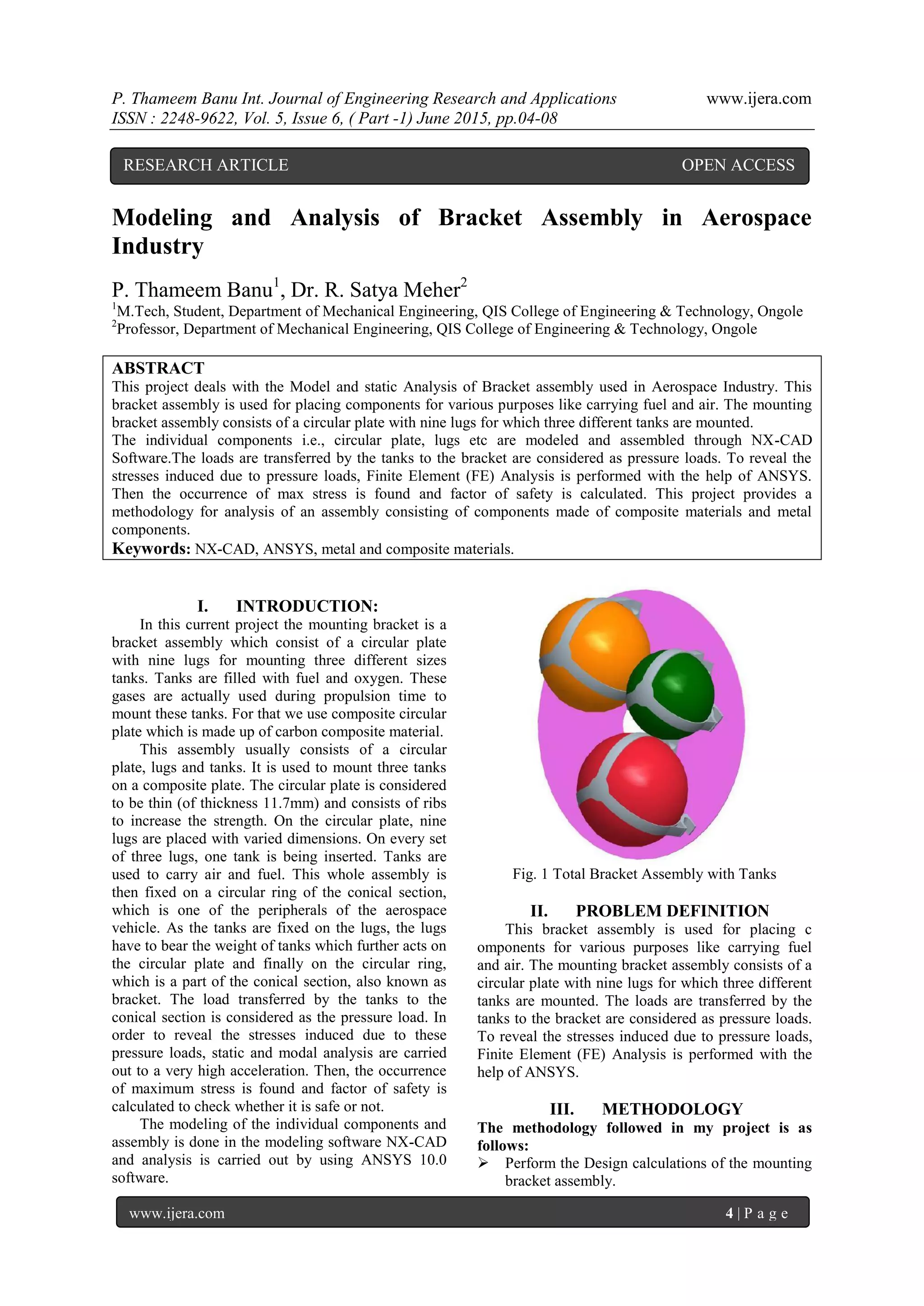
Fig. 1 Total Bracket Assembly with Tanks
II. PROBLEM DEFINITION
This bracket assembly is used for placing c
omponents for various purposes like carrying fuel
and air. The mounting bracket assembly consists of a
circular plate with nine lugs for which three different
tanks are mounted. The loads are transferred by the
tanks to the bracket are considered as pressure loads.
To reveal the stresses induced due to pressure loads,
Finite Element (FE) Analysis is performed with the
help of ANSYS.
III. METHODOLOGY
The methodology followed in my project is as
follows:
 Perform the Design calculations of the mounting
bracket assembly.
RESEARCH ARTICLE OPEN ACCESS
P. Thameem Banu Int. Journal of Engineering Research and Applications www.ijera.com
ISSN : 2248-9622, Vol. 5, Issue 6, ( Part -1) June 2015, pp.04-08
www.ijera.com 5 | P a g e
 Create a 3D model of the mounting bracket
assembly using NX-CAD software.
 Perform steady state analysis using ANSYS
software and obtain the deflections and von
mises stresses for aluminum alloy.
 Perform steady state analysis using ANSYS
software and obtain the deflections and stresses
for composite materials like HM carbon /epoxy
materials.
 Perform steady state analysis using ANSYS
software and obtain the deflections and stresses
for composite materials like HS carbon /epoxy
materials.
 Perform steady state analysis using ANSYS
software and obtain the deflections and stresses
for composite materials like BMI carbon /epoxy
materials.
IV. MODELLING OF BRACKET
ASSEMBLY: CIRCULAR PLATE
Initially the circular plate was modeled by using
commands revolve ,extrude, cut of dimensions
516mm as radius and thickness of 11.6 mm. This
circular plate have equal spaced holes of pitch circle
diameter as 1060mm and hole diameter as 8.5mm.
The circular plate has ribs on both sides for
strengthening of plate was extruded by 11.7mm. Now
the total thickness of the plate becomes 35mm. The
length of ribs on top same as plate diameter and
length of ribs on bottom of plate is 512.5mm from
center of plate.
V. SMALL LUG
Then we model the lugs, which are used to place
the tanks. There are two different sizes of tanks. The
smaller one has dimensions of 100*120*50mm.by
using extrudes command. In this lug has a round
corner by using fillet command as per the given
dimension. The lug have holes of same dimensions as
that of holes on the circular plate diameter is 8.6mm
for fixing bolt and nut assembly.
BIG LUG:
The bigger one has dimensions of 198*175*70
mm by using extrudes command. In this lug has a
round corner by using fillet command as per the
given dimension. The lug has holes of same
dimensions as that of holes on the circular plate
diameter is 8.6mm for fixing bolt and nut assembly.
ASSEMBLY:
The components circular plate, big lug and small
lug are assembled by the assembly options with fully
constrains. The following assemble is obtained.
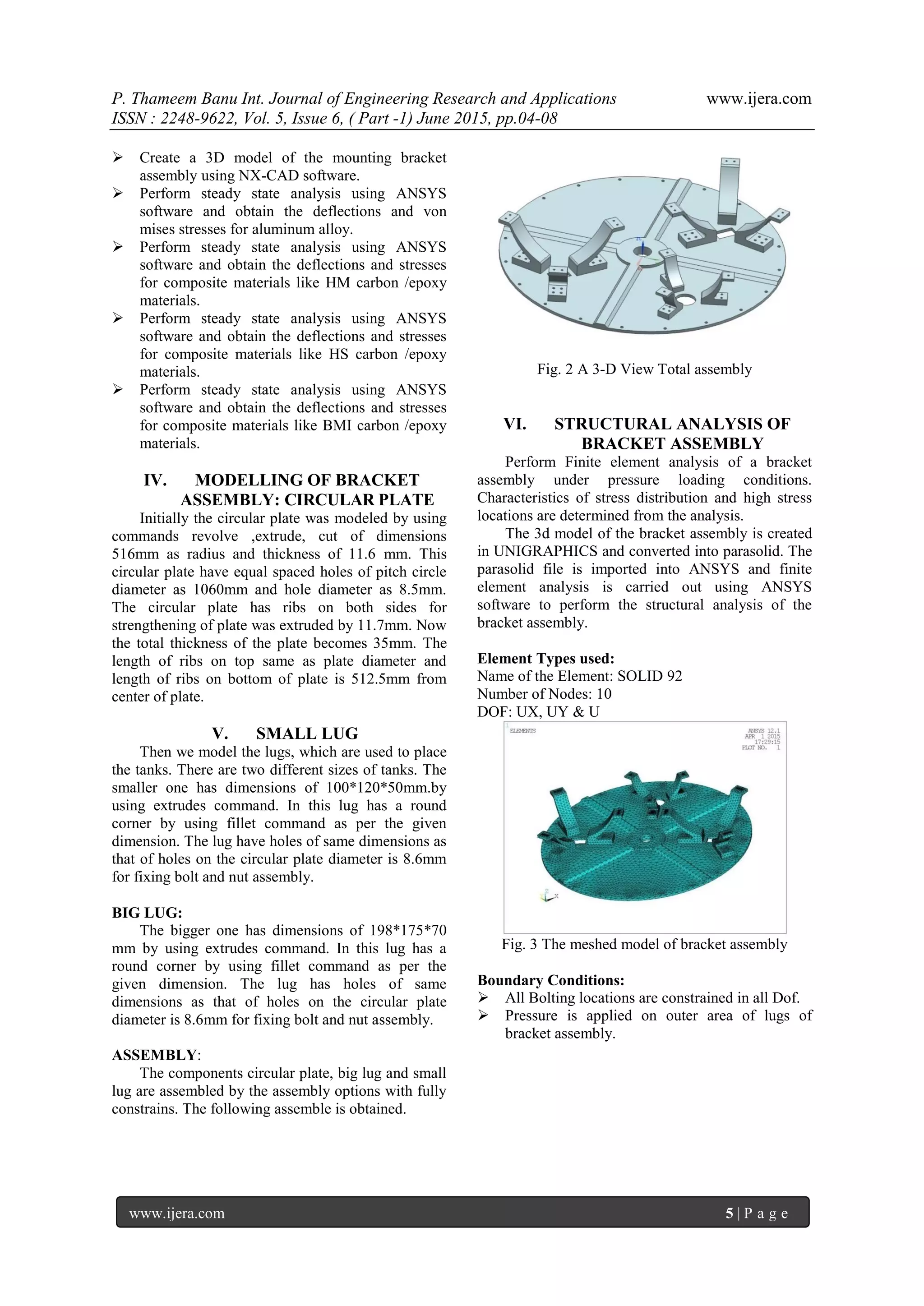
Fig. 2 A 3-D View Total assembly
VI. STRUCTURAL ANALYSIS OF
BRACKET ASSEMBLY
Perform Finite element analysis of a bracket
assembly under pressure loading conditions.
Characteristics of stress distribution and high stress
locations are determined from the analysis.
The 3d model of the bracket assembly is created
in UNIGRAPHICS and converted into parasolid. The
parasolid file is imported into ANSYS and finite
element analysis is carried out using ANSYS
software to perform the structural analysis of the
bracket assembly.
Element Types used:
Name of the Element: SOLID 92
Number of Nodes: 10
DOF: UX, UY & U
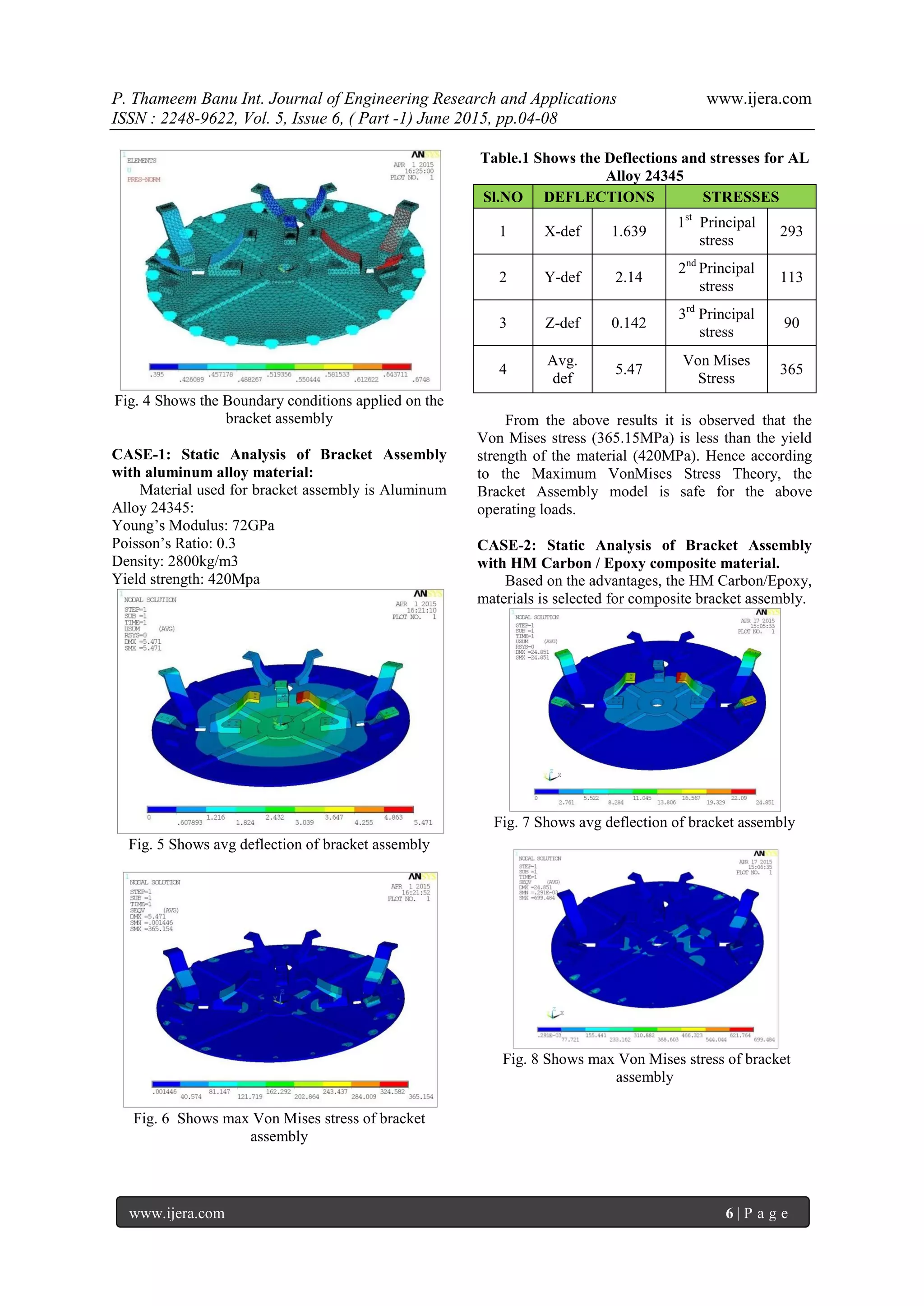
Fig. 3 The meshed model of bracket assembly
Boundary Conditions:
 All Bolting locations are constrained in all Dof.
 Pressure is applied on outer area of lugs of
bracket assembly.
P. Thameem Banu Int. Journal of Engineering Research and Applications www.ijera.com
ISSN : 2248-9622, Vol. 5, Issue 6, ( Part -1) June 2015, pp.04-08
www.ijera.com 6 | P a g e
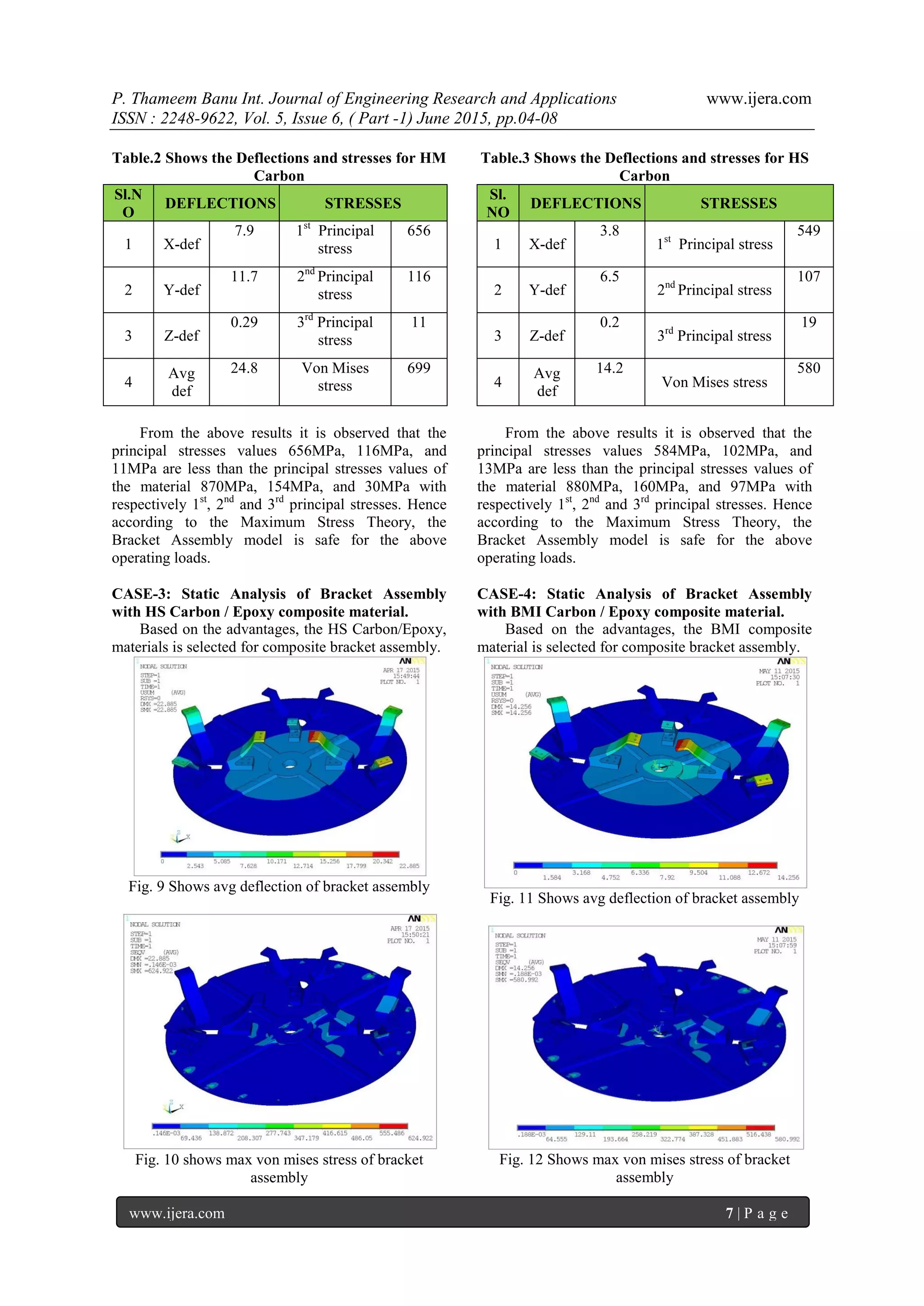
Fig. 4 Shows the Boundary conditions applied on the
bracket assembly
CASE-1: Static Analysis of Bracket Assembly
with aluminum alloy material:
Material used for bracket assembly is Aluminum
Alloy 24345:
Young’s Modulus: 72GPa
Poisson’s Ratio: 0.3
Density: 2800kg/m3
Yield strength: 420Mpa
Fig. 5 Shows avg deflection of bracket assembly
Fig. 6 Shows max Von Mises stress of bracket
assembly
Table.1 Shows the Deflections and stresses for AL
Alloy 24345
Sl.NO DEFLECTIONS STRESSES
1 X-def 1.639
1st
Principal
stress
293
2 Y-def 2.14
2nd
Principal
stress
113
3 Z-def 0.142
3rd
Principal
stress
90
4
Avg.
def
5.47
Von Mises
Stress
365
From the above results it is observed that the
Von Mises stress (365.15MPa) is less than the yield
strength of the material (420MPa). Hence according
to the Maximum VonMises Stress Theory, the
Bracket Assembly model is safe for the above
operating loads.
CASE-2: Static Analysis of Bracket Assembly
with HM Carbon / Epoxy composite material.
Based on the advantages, the HM Carbon/Epoxy,
materials is selected for composite bracket assembly.
Fig. 7 Shows avg deflection of bracket assembly
Fig. 8 Shows max Von Mises stress of bracket
assembly
P. Thameem Banu Int. Journal of Engineering Research and Applications www.ijera.com
ISSN : 2248-9622, Vol. 5, Issue 6, ( Part -1) June 2015, pp.04-08
www.ijera.com 7 | P a g e
Table.2 Shows the Deflections and stresses for HM
Carbon
Sl.N
O
DEFLECTIONS STRESSES
1 X-def
7.9 1st
Principal
stress
656
2 Y-def
11.7 2nd
Principal
stress
116
3 Z-def
0.29 3rd
Principal
stress
11
4
Avg
def
24.8 Von Mises
stress
699
From the above results it is observed that the
principal stresses values 656MPa, 116MPa, and
11MPa are less than the principal stresses values of
the material 870MPa, 154MPa, and 30MPa with
respectively 1st
, 2nd
and 3rd
principal stresses. Hence
according to the Maximum Stress Theory, the
Bracket Assembly model is safe for the above
operating loads.
CASE-3: Static Analysis of Bracket Assembly
with HS Carbon / Epoxy composite material.
Based on the advantages, the HS Carbon/Epoxy,
materials is selected for composite bracket assembly.
Fig. 9 Shows avg deflection of bracket assembly
Fig. 10 shows max von mises stress of bracket
assembly
Table.3 Shows the Deflections and stresses for HS
Carbon
Sl.
NO
DEFLECTIONS STRESSES
1 X-def
3.8
1st
Principal stress
549
2 Y-def
6.5
2nd
Principal stress
107
3 Z-def
0.2
3rd
Principal stress
19
4
Avg
def
14.2
Von Mises stress
580
From the above results it is observed that the
principal stresses values 584MPa, 102MPa, and
13MPa are less than the principal stresses values of
the material 880MPa, 160MPa, and 97MPa with
respectively 1st
, 2nd
and 3rd
principal stresses. Hence
according to the Maximum Stress Theory, the
Bracket Assembly model is safe for the above
operating loads.
CASE-4: Static Analysis of Bracket Assembly
with BMI Carbon / Epoxy composite material.
Based on the advantages, the BMI composite
material is selected for composite bracket assembly.
Fig. 11 Shows avg deflection of bracket assembly
Fig. 12 Shows max von mises stress of bracket
assembly
P. Thameem Banu Int. Journal of Engineering Research and Applications www.ijera.com
ISSN : 2248-9622, Vol. 5, Issue 6, ( Part -1) June 2015, pp.04-08
www.ijera.com 8 | P a g e
Table.4 Shows the Deflections and stresses for
BMI
Sl.N
O
DEFLECTIONS STRESSES
1 X-def
6.5 1st
Principal
stress
584
2 Y-def
10.7 2nd
Principal
stress
102
3 Z-def
0.28 3rd
Principal
stress
13
4 Avg def
22.8 Von Mises
stress
624
From the above results it is observed that the
principal stresses values 549MPa, 107MPa, and
19MPa are less than the principal stresses values of
the material 765MPa, 168MPa, and 32MPa with
respectively 1st
, 2nd
and 3rd
principal stresses. Hence
according to the Maximum Stress Theory, the
Bracket Assembly model is safe for the above
operating loads.
VII. CONCLUSIONS
 In the present project a Bracket Assembly has
been modeled for static loading conditions with
different material properties.
 From the above analysis it is concluded that the
Bracket Assembly has stresses and deflections
within the design limits of the aluminum alloy
material and composite materials (HM Carbon
/epoxy, HS Carbon /epoxy and BMI Carbon
/epoxy,).
 From the above analysis it is also concluded that
the HS Carbon /epoxy composite Bracket
Assembly model having high factor of safety
(1.4) than the other materials and also have less
weight than the aluminum alloy model, because
of the HS Carbon /epoxy density is less than the
aluminum alloy.
REFERNECES:
[1] Materials Science And Engineering – Vol.
III – Aerospace and Space Materials – M.
Peters and C. Leyens
[2] Dieter G. E. (1997). ASM Handbook
Materials Selection and Design, Vol. 20,
pp.900.Materials Park, OH: ASM
International. [Comprehensive overview on
design concepts and criteria, design tools,
materials properties and selection, and
manufacturing aspects of design.]
[3] Vasudevan A. K. and Doherty, R. D.
(1989).Aluminium Alloys– Contemporary
Research and Applications, pp.702. San
Diego, CA: Academic Press. [Research and
technology on processing, structure and
properties of present and future Al alloys.]
[4] E.L. Wilson, “Automation of the Finite
Element Method—A personal Historical
View,” Finite Element in Analysis and
Design, vol.13, Nos. 2&3, 1993, pp- 91-104
[5] HarrisS,B. A perspective view of composite
materials. Mat & Design, vol 12, no. 5.1991.
pp. 259-271.
[6] Carter ,F.C., and Paul,D.E. Material science
and engineering. Ohio, ASM
International,1991 351 pp
[7] Bodily B, Heinimann M, Bray G, Colvin E,
Witters J. Advanced aluminum and
aluminum lithium solutions for derivative
and next generation aerospace structures.
SAE paper no 2012-01-1874

Modeling and Analysis of Bracket Assembly in Aerospace Industry

  • 1.
    P. Thameem BanuInt. Journal of Engineering Research and Applications www.ijera.com ISSN : 2248-9622, Vol. 5, Issue 6, ( Part -1) June 2015, pp.04-08 www.ijera.com 4 | P a g e Modeling and Analysis of Bracket Assembly in Aerospace Industry P. Thameem Banu1 , Dr. R. Satya Meher2 1 M.Tech, Student, Department of Mechanical Engineering, QIS College of Engineering & Technology, Ongole 2 Professor, Department of Mechanical Engineering, QIS College of Engineering & Technology, Ongole ABSTRACT This project deals with the Model and static Analysis of Bracket assembly used in Aerospace Industry. This bracket assembly is used for placing components for various purposes like carrying fuel and air. The mounting bracket assembly consists of a circular plate with nine lugs for which three different tanks are mounted. The individual components i.e., circular plate, lugs etc are modeled and assembled through NX-CAD Software.The loads are transferred by the tanks to the bracket are considered as pressure loads. To reveal the stresses induced due to pressure loads, Finite Element (FE) Analysis is performed with the help of ANSYS. Then the occurrence of max stress is found and factor of safety is calculated. This project provides a methodology for analysis of an assembly consisting of components made of composite materials and metal components. Keywords: NX-CAD, ANSYS, metal and composite materials. I. INTRODUCTION: In this current project the mounting bracket is a bracket assembly which consist of a circular plate with nine lugs for mounting three different sizes tanks. Tanks are filled with fuel and oxygen. These gases are actually used during propulsion time to mount these tanks. For that we use composite circular plate which is made up of carbon composite material. This assembly usually consists of a circular plate, lugs and tanks. It is used to mount three tanks on a composite plate. The circular plate is considered to be thin (of thickness 11.7mm) and consists of ribs to increase the strength. On the circular plate, nine lugs are placed with varied dimensions. On every set of three lugs, one tank is being inserted. Tanks are used to carry air and fuel. This whole assembly is then fixed on a circular ring of the conical section, which is one of the peripherals of the aerospace vehicle. As the tanks are fixed on the lugs, the lugs have to bear the weight of tanks which further acts on the circular plate and finally on the circular ring, which is a part of the conical section, also known as bracket. The load transferred by the tanks to the conical section is considered as the pressure load. In order to reveal the stresses induced due to these pressure loads, static and modal analysis are carried out to a very high acceleration. Then, the occurrence of maximum stress is found and factor of safety is calculated to check whether it is safe or not. The modeling of the individual components and assembly is done in the modeling software NX-CAD and analysis is carried out by using ANSYS 10.0 software. Fig. 1 Total Bracket Assembly with Tanks II. PROBLEM DEFINITION This bracket assembly is used for placing c omponents for various purposes like carrying fuel and air. The mounting bracket assembly consists of a circular plate with nine lugs for which three different tanks are mounted. The loads are transferred by the tanks to the bracket are considered as pressure loads. To reveal the stresses induced due to pressure loads, Finite Element (FE) Analysis is performed with the help of ANSYS. III. METHODOLOGY The methodology followed in my project is as follows:  Perform the Design calculations of the mounting bracket assembly. RESEARCH ARTICLE OPEN ACCESS
  • 2.
    P. Thameem BanuInt. Journal of Engineering Research and Applications www.ijera.com ISSN : 2248-9622, Vol. 5, Issue 6, ( Part -1) June 2015, pp.04-08 www.ijera.com 5 | P a g e  Create a 3D model of the mounting bracket assembly using NX-CAD software.  Perform steady state analysis using ANSYS software and obtain the deflections and von mises stresses for aluminum alloy.  Perform steady state analysis using ANSYS software and obtain the deflections and stresses for composite materials like HM carbon /epoxy materials.  Perform steady state analysis using ANSYS software and obtain the deflections and stresses for composite materials like HS carbon /epoxy materials.  Perform steady state analysis using ANSYS software and obtain the deflections and stresses for composite materials like BMI carbon /epoxy materials. IV. MODELLING OF BRACKET ASSEMBLY: CIRCULAR PLATE Initially the circular plate was modeled by using commands revolve ,extrude, cut of dimensions 516mm as radius and thickness of 11.6 mm. This circular plate have equal spaced holes of pitch circle diameter as 1060mm and hole diameter as 8.5mm. The circular plate has ribs on both sides for strengthening of plate was extruded by 11.7mm. Now the total thickness of the plate becomes 35mm. The length of ribs on top same as plate diameter and length of ribs on bottom of plate is 512.5mm from center of plate. V. SMALL LUG Then we model the lugs, which are used to place the tanks. There are two different sizes of tanks. The smaller one has dimensions of 100*120*50mm.by using extrudes command. In this lug has a round corner by using fillet command as per the given dimension. The lug have holes of same dimensions as that of holes on the circular plate diameter is 8.6mm for fixing bolt and nut assembly. BIG LUG: The bigger one has dimensions of 198*175*70 mm by using extrudes command. In this lug has a round corner by using fillet command as per the given dimension. The lug has holes of same dimensions as that of holes on the circular plate diameter is 8.6mm for fixing bolt and nut assembly. ASSEMBLY: The components circular plate, big lug and small lug are assembled by the assembly options with fully constrains. The following assemble is obtained. Fig. 2 A 3-D View Total assembly VI. STRUCTURAL ANALYSIS OF BRACKET ASSEMBLY Perform Finite element analysis of a bracket assembly under pressure loading conditions. Characteristics of stress distribution and high stress locations are determined from the analysis. The 3d model of the bracket assembly is created in UNIGRAPHICS and converted into parasolid. The parasolid file is imported into ANSYS and finite element analysis is carried out using ANSYS software to perform the structural analysis of the bracket assembly. Element Types used: Name of the Element: SOLID 92 Number of Nodes: 10 DOF: UX, UY & U Fig. 3 The meshed model of bracket assembly Boundary Conditions:  All Bolting locations are constrained in all Dof.  Pressure is applied on outer area of lugs of bracket assembly.
  • 3.
    P. Thameem BanuInt. Journal of Engineering Research and Applications www.ijera.com ISSN : 2248-9622, Vol. 5, Issue 6, ( Part -1) June 2015, pp.04-08 www.ijera.com 6 | P a g e Fig. 4 Shows the Boundary conditions applied on the bracket assembly CASE-1: Static Analysis of Bracket Assembly with aluminum alloy material: Material used for bracket assembly is Aluminum Alloy 24345: Young’s Modulus: 72GPa Poisson’s Ratio: 0.3 Density: 2800kg/m3 Yield strength: 420Mpa Fig. 5 Shows avg deflection of bracket assembly Fig. 6 Shows max Von Mises stress of bracket assembly Table.1 Shows the Deflections and stresses for AL Alloy 24345 Sl.NO DEFLECTIONS STRESSES 1 X-def 1.639 1st Principal stress 293 2 Y-def 2.14 2nd Principal stress 113 3 Z-def 0.142 3rd Principal stress 90 4 Avg. def 5.47 Von Mises Stress 365 From the above results it is observed that the Von Mises stress (365.15MPa) is less than the yield strength of the material (420MPa). Hence according to the Maximum VonMises Stress Theory, the Bracket Assembly model is safe for the above operating loads. CASE-2: Static Analysis of Bracket Assembly with HM Carbon / Epoxy composite material. Based on the advantages, the HM Carbon/Epoxy, materials is selected for composite bracket assembly. Fig. 7 Shows avg deflection of bracket assembly Fig. 8 Shows max Von Mises stress of bracket assembly
  • 4.
    P. Thameem BanuInt. Journal of Engineering Research and Applications www.ijera.com ISSN : 2248-9622, Vol. 5, Issue 6, ( Part -1) June 2015, pp.04-08 www.ijera.com 7 | P a g e Table.2 Shows the Deflections and stresses for HM Carbon Sl.N O DEFLECTIONS STRESSES 1 X-def 7.9 1st Principal stress 656 2 Y-def 11.7 2nd Principal stress 116 3 Z-def 0.29 3rd Principal stress 11 4 Avg def 24.8 Von Mises stress 699 From the above results it is observed that the principal stresses values 656MPa, 116MPa, and 11MPa are less than the principal stresses values of the material 870MPa, 154MPa, and 30MPa with respectively 1st , 2nd and 3rd principal stresses. Hence according to the Maximum Stress Theory, the Bracket Assembly model is safe for the above operating loads. CASE-3: Static Analysis of Bracket Assembly with HS Carbon / Epoxy composite material. Based on the advantages, the HS Carbon/Epoxy, materials is selected for composite bracket assembly. Fig. 9 Shows avg deflection of bracket assembly Fig. 10 shows max von mises stress of bracket assembly Table.3 Shows the Deflections and stresses for HS Carbon Sl. NO DEFLECTIONS STRESSES 1 X-def 3.8 1st Principal stress 549 2 Y-def 6.5 2nd Principal stress 107 3 Z-def 0.2 3rd Principal stress 19 4 Avg def 14.2 Von Mises stress 580 From the above results it is observed that the principal stresses values 584MPa, 102MPa, and 13MPa are less than the principal stresses values of the material 880MPa, 160MPa, and 97MPa with respectively 1st , 2nd and 3rd principal stresses. Hence according to the Maximum Stress Theory, the Bracket Assembly model is safe for the above operating loads. CASE-4: Static Analysis of Bracket Assembly with BMI Carbon / Epoxy composite material. Based on the advantages, the BMI composite material is selected for composite bracket assembly. Fig. 11 Shows avg deflection of bracket assembly Fig. 12 Shows max von mises stress of bracket assembly
  • 5.
    P. Thameem BanuInt. Journal of Engineering Research and Applications www.ijera.com ISSN : 2248-9622, Vol. 5, Issue 6, ( Part -1) June 2015, pp.04-08 www.ijera.com 8 | P a g e Table.4 Shows the Deflections and stresses for BMI Sl.N O DEFLECTIONS STRESSES 1 X-def 6.5 1st Principal stress 584 2 Y-def 10.7 2nd Principal stress 102 3 Z-def 0.28 3rd Principal stress 13 4 Avg def 22.8 Von Mises stress 624 From the above results it is observed that the principal stresses values 549MPa, 107MPa, and 19MPa are less than the principal stresses values of the material 765MPa, 168MPa, and 32MPa with respectively 1st , 2nd and 3rd principal stresses. Hence according to the Maximum Stress Theory, the Bracket Assembly model is safe for the above operating loads. VII. CONCLUSIONS  In the present project a Bracket Assembly has been modeled for static loading conditions with different material properties.  From the above analysis it is concluded that the Bracket Assembly has stresses and deflections within the design limits of the aluminum alloy material and composite materials (HM Carbon /epoxy, HS Carbon /epoxy and BMI Carbon /epoxy,).  From the above analysis it is also concluded that the HS Carbon /epoxy composite Bracket Assembly model having high factor of safety (1.4) than the other materials and also have less weight than the aluminum alloy model, because of the HS Carbon /epoxy density is less than the aluminum alloy. REFERNECES: [1] Materials Science And Engineering – Vol. III – Aerospace and Space Materials – M. Peters and C. Leyens [2] Dieter G. E. (1997). ASM Handbook Materials Selection and Design, Vol. 20, pp.900.Materials Park, OH: ASM International. [Comprehensive overview on design concepts and criteria, design tools, materials properties and selection, and manufacturing aspects of design.] [3] Vasudevan A. K. and Doherty, R. D. (1989).Aluminium Alloys– Contemporary Research and Applications, pp.702. San Diego, CA: Academic Press. [Research and technology on processing, structure and properties of present and future Al alloys.] [4] E.L. Wilson, “Automation of the Finite Element Method—A personal Historical View,” Finite Element in Analysis and Design, vol.13, Nos. 2&3, 1993, pp- 91-104 [5] HarrisS,B. A perspective view of composite materials. Mat & Design, vol 12, no. 5.1991. pp. 259-271. [6] Carter ,F.C., and Paul,D.E. Material science and engineering. Ohio, ASM International,1991 351 pp [7] Bodily B, Heinimann M, Bray G, Colvin E, Witters J. Advanced aluminum and aluminum lithium solutions for derivative and next generation aerospace structures. SAE paper no 2012-01-1874