IJSRD - International Journal for Scientific Research & Development| Vol. 3, Issue 10, 2015 | ISSN (online): 2321-0613
All rights reserved by www.ijsrd.com 720
Design and Analysis of Nose Landing Gear Supportive Bracket by
Varying Stress Concentration Area, Based on ANSYS
Raviteja B1
Srinivas Prasad S2
P.S Subrahmanyam3
N.V.S.Anil Babu Javaji4
Chethana.K.Y5
1,2,3,4
Department Of Mechanical Engineering
1,2,3
NOVA College of Engineering and Technology, Department of mechanical Engineering,Jupudi(V),
Ibrahimpatnam(M), Krishna(DT), Andhra Pradesh – India
4
AMC Engineering College, Department of mechanical Engineering, Bangalore -560072, India
Abstract— Nose landing gear support bracket is one of the
main parts in the nose landing gear assembly, whose
function is to maintain the stability of the landing gear
during the movements. This work is focused on the FEA
analysis of support bracket by varying the stress
concentration area, The objective of this work is to
determine the static and modal analysis of support bracket
with different stress concentration areas, then analysis is
done using ANSYS WORKBENCH, These results could
provide some useful suggestions for design and
improvement for the better component
.Key words: Nose landing gear support bracket, Stress
concentration area, FEA, Static analysis, Modal analysis,
ANSYS WORKBENCH.
I. INTRODUCTION
Engineering machines and structure in service, experiences
stress, strain vibration, and their design generally requires
consideration of their dynamic behavior. The type of input
forces experienced by different components of aerospace in
service is dynamic. The progressive, localized and
permanent structure change that occurs in a material
subjected to stress concentration area and fluctuating strains
at nominal stresses that have maximum values less than the
tensile strength of the material which may culminates in
cracks and causes fracture after a sufficient number of
fluctuations.
Durability design of any component of an
aerospace structure plays an important role to ensure
reliability. The total damage and life of a structure is due to
a combination of static and dynamic loads arising from
engine vibrations, service load. The basic aim is to enable
stress strain and deformation calculations to be done at the
design stage of a development process. It is necessary to
clarify the modal analysis to obtain the natural frequency of
the component or structure.
Ravi Kumar [1] investigates the fatigue analysis of nose
landing gear support bracket with 4mm rectangular slot by
taking into the x direction loading and z direction loading to.
In their work they attempt to establish a comprehensive
mathematical model for obtaining the static analysis and
fatigue results.
Prasad kabade and Ravi ligannanavar [2] investigates design
and analysis of landing gear lug attachment in an airframe
by considering the standard passenger planes of 150-200
seating capacity the approximate specification and obtained
the failure of the lug,failure of the pin by considering the
axial and Transeverse loads,FEA is used to carryout and
compare the design calculations and determine the stress
concentration factor in order to estimate the maximum local
tensile stress.
Norman s.Currey[3] shows the aircraft landing gear
design.
Anil kumar.Matta[4] investigates the design optimization of
landing gear’s leg for unmanned aerial vehicle he obtained
the optimized leg’s weight and thickness results by
kinematic analysis
II. COMPONENTS USED FOR TEST
For the present study, Four models are used for
analysis.SAE1045 Steel is the material, Model with
rectangular 4mm slot as the present working
component[1],by changing the slots like circular, single
Double V slots another three models are designed.
III. FINITE ELEMENT ANALYSIS OF COMPONENT
The component is modeled using CATIA V5 software.
Manufacture of the component and geometric dimensions
there on are used to model the component. Using the cross
sectional area, the part is extruded. Displacement boundary
conditions on the model with all degree of freedom
constrained on the surfaces.
Also the evaluated engineering properties of the
component are given in Table 1
Property Unit
Density Kg/m3
7870
Modulus of Elasticity
GPa
202
Poisson’s ratio 0.3
Yield strength MPa 380
Ultimate strength MPa 724
Table 1: Engineering Properties of SAE 1045 Steel
component
IV. FINITE ELEMENT ANALYSIS OF COMPONENT
The component is modeled using solid edge
software. Manufacture of the component and geometric
dimensions there on are used to model the component.
Using the cross sectional area, the part is extruded.
Displacement boundary conditions on the model with all
degree of freedom constrained on the surfaces
Fig. 1: Meshed model with rectangular slot component
Design and Analysis of Nose Landing Gear Supportive Bracket by Varying Stress Concentration Area, Based on ANSYS
(IJSRD/Vol. 3/Issue 10/2015/154)
All rights reserved by www.ijsrd.com 721
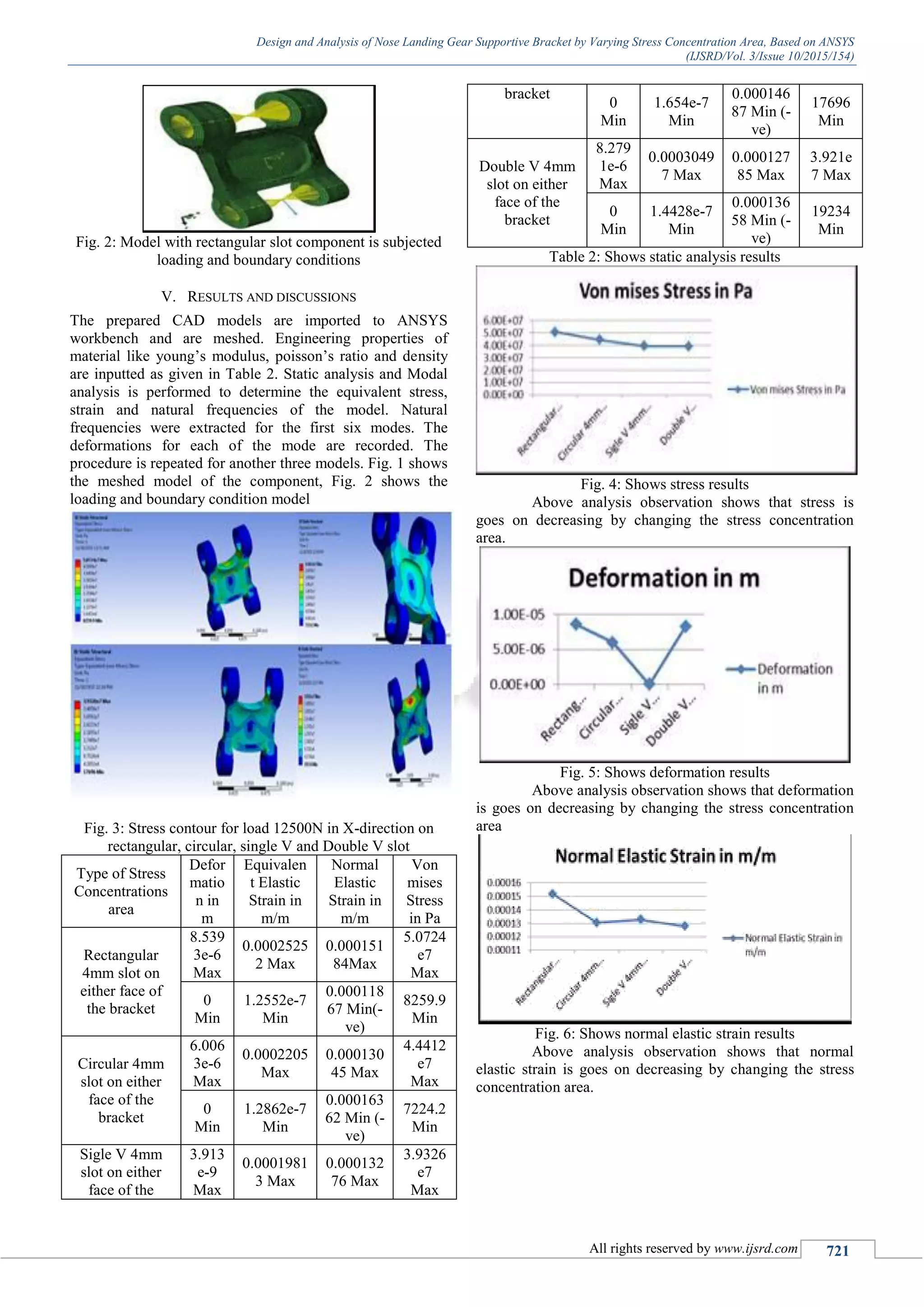
Fig. 2: Model with rectangular slot component is subjected
loading and boundary conditions
V. RESULTS AND DISCUSSIONS
The prepared CAD models are imported to ANSYS
workbench and are meshed. Engineering properties of
material like young’s modulus, poisson’s ratio and density
are inputted as given in Table 2. Static analysis and Modal
analysis is performed to determine the equivalent stress,
strain and natural frequencies of the model. Natural
frequencies were extracted for the first six modes. The
deformations for each of the mode are recorded. The
procedure is repeated for another three models. Fig. 1 shows
the meshed model of the component, Fig. 2 shows the
loading and boundary condition model
Fig. 3: Stress contour for load 12500N in X-direction on
rectangular, circular, single V and Double V slot
Type of Stress
Concentrations
area
Defor
matio
n in
m
Equivalen
t Elastic
Strain in
m/m
Normal
Elastic
Strain in
m/m
Von
mises
Stress
in Pa
Rectangular
4mm slot on
either face of
the bracket
8.539
3e-6
Max
0.0002525
2 Max
0.000151
84Max
5.0724
e7
Max
0
Min
1.2552e-7
Min
0.000118
67 Min(-
ve)
8259.9
Min
Circular 4mm
slot on either
face of the
bracket
6.006
3e-6
Max
0.0002205
Max
0.000130
45 Max
4.4412
e7
Max
0
Min
1.2862e-7
Min
0.000163
62 Min (-
ve)
7224.2
Min
Sigle V 4mm
slot on either
face of the
3.913
e-9
Max
0.0001981
3 Max
0.000132
76 Max
3.9326
e7
Max
bracket
0
Min
1.654e-7
Min
0.000146
87 Min (-
ve)
17696
Min
Double V 4mm
slot on either
face of the
bracket
8.279
1e-6
Max
0.0003049
7 Max
0.000127
85 Max
3.921e
7 Max
0
Min
1.4428e-7
Min
0.000136
58 Min (-
ve)
19234
Min
Table 2: Shows static analysis results
Fig. 4: Shows stress results
Above analysis observation shows that stress is
goes on decreasing by changing the stress concentration
area.
Fig. 5: Shows deformation results
Above analysis observation shows that deformation
is goes on decreasing by changing the stress concentration
area
Fig. 6: Shows normal elastic strain results
Above analysis observation shows that normal
elastic strain is goes on decreasing by changing the stress
concentration area.
Design and Analysis of Nose Landing Gear Supportive Bracket by Varying Stress Concentration Area, Based on ANSYS
(IJSRD/Vol. 3/Issue 10/2015/154)
All rights reserved by www.ijsrd.com 722
Fig. 7: Shows modal analysis results of rectangular, circular,
single V, double V components
Type of Stress
Concentration area
M
OD
E 1
M
OD
E 2
M
OD
E 3
M
OD
E 4
M
OD
E 5
M
OD
E 6
Rectangular 4mm
slot on either face of
the bracket
832
1
130
38
137
28
143
57
165
91
181
53
Circular 4mm slot on
either face of the
bracket
865
2.6
135
24
135
81
138
35
166
26
193
26
single V 4mm slot
on either face of the
bracket
843
8.7
132
07
137
24
140
49
174
89
179
89
Double V 4mm slot
on either face of the
bracket
840
9.6
130
72
138
62
147
91
175
17
187
72
Table 3: Shows Modal analysis results
Fig. 8: Shows Modal analysis results
Above observation shows that by changing the
stress concentration area natural frequency of the models
will not much varies in these components
VI. CONCLUSIONS
Deformation goes on decreases by changing the stress
concentration area in the order of circular, single v slot,
double v slot. Stress and strains also decreases by changing
the stress concentration area in the order of circular, single v
slot, double v slot.
Changing of the stress concentration area is not
much effect on the natural frequency of the component
obtained frequencies are of same order
REFERENCES
[1] Marcelino P, Nascimento, Herman J.C, Voorwald, Joao
da C, Payao Filho, “Fatigue strength of tungsten
inert gas repaired weld joints in airplane critical
structures”, Journal of Material processing
Technology, Vol.211, 2011, pp 1126-1135.
[2] Ossa E.A, “Failure Analysis of civil aircraft landing
gear”, Engineering Failure Analysis, Vol.13, 2006, pp
1177-83.
[3] Joy Xiaoya Tao, Steve Smith, Andrew Duff “The effect
of overloading sequences on landing gear fatigue
damage”, International Journal of Fatigue, Vol.31, 2009
pp 1837-1847.
[4] De Farias Azevedo CR, Hippert E, “Fracture of an
aircrafts landing gear”, Engineering Failure Analysis,
Vol.9, 2002, pp 265-75.

Design and Analysis Nose Landing Gear Support

  • 1.
    IJSRD - InternationalJournal for Scientific Research & Development| Vol. 3, Issue 10, 2015 | ISSN (online): 2321-0613 All rights reserved by www.ijsrd.com 720 Design and Analysis of Nose Landing Gear Supportive Bracket by Varying Stress Concentration Area, Based on ANSYS Raviteja B1 Srinivas Prasad S2 P.S Subrahmanyam3 N.V.S.Anil Babu Javaji4 Chethana.K.Y5 1,2,3,4 Department Of Mechanical Engineering 1,2,3 NOVA College of Engineering and Technology, Department of mechanical Engineering,Jupudi(V), Ibrahimpatnam(M), Krishna(DT), Andhra Pradesh – India 4 AMC Engineering College, Department of mechanical Engineering, Bangalore -560072, India Abstract— Nose landing gear support bracket is one of the main parts in the nose landing gear assembly, whose function is to maintain the stability of the landing gear during the movements. This work is focused on the FEA analysis of support bracket by varying the stress concentration area, The objective of this work is to determine the static and modal analysis of support bracket with different stress concentration areas, then analysis is done using ANSYS WORKBENCH, These results could provide some useful suggestions for design and improvement for the better component .Key words: Nose landing gear support bracket, Stress concentration area, FEA, Static analysis, Modal analysis, ANSYS WORKBENCH. I. INTRODUCTION Engineering machines and structure in service, experiences stress, strain vibration, and their design generally requires consideration of their dynamic behavior. The type of input forces experienced by different components of aerospace in service is dynamic. The progressive, localized and permanent structure change that occurs in a material subjected to stress concentration area and fluctuating strains at nominal stresses that have maximum values less than the tensile strength of the material which may culminates in cracks and causes fracture after a sufficient number of fluctuations. Durability design of any component of an aerospace structure plays an important role to ensure reliability. The total damage and life of a structure is due to a combination of static and dynamic loads arising from engine vibrations, service load. The basic aim is to enable stress strain and deformation calculations to be done at the design stage of a development process. It is necessary to clarify the modal analysis to obtain the natural frequency of the component or structure. Ravi Kumar [1] investigates the fatigue analysis of nose landing gear support bracket with 4mm rectangular slot by taking into the x direction loading and z direction loading to. In their work they attempt to establish a comprehensive mathematical model for obtaining the static analysis and fatigue results. Prasad kabade and Ravi ligannanavar [2] investigates design and analysis of landing gear lug attachment in an airframe by considering the standard passenger planes of 150-200 seating capacity the approximate specification and obtained the failure of the lug,failure of the pin by considering the axial and Transeverse loads,FEA is used to carryout and compare the design calculations and determine the stress concentration factor in order to estimate the maximum local tensile stress. Norman s.Currey[3] shows the aircraft landing gear design. Anil kumar.Matta[4] investigates the design optimization of landing gear’s leg for unmanned aerial vehicle he obtained the optimized leg’s weight and thickness results by kinematic analysis II. COMPONENTS USED FOR TEST For the present study, Four models are used for analysis.SAE1045 Steel is the material, Model with rectangular 4mm slot as the present working component[1],by changing the slots like circular, single Double V slots another three models are designed. III. FINITE ELEMENT ANALYSIS OF COMPONENT The component is modeled using CATIA V5 software. Manufacture of the component and geometric dimensions there on are used to model the component. Using the cross sectional area, the part is extruded. Displacement boundary conditions on the model with all degree of freedom constrained on the surfaces. Also the evaluated engineering properties of the component are given in Table 1 Property Unit Density Kg/m3 7870 Modulus of Elasticity GPa 202 Poisson’s ratio 0.3 Yield strength MPa 380 Ultimate strength MPa 724 Table 1: Engineering Properties of SAE 1045 Steel component IV. FINITE ELEMENT ANALYSIS OF COMPONENT The component is modeled using solid edge software. Manufacture of the component and geometric dimensions there on are used to model the component. Using the cross sectional area, the part is extruded. Displacement boundary conditions on the model with all degree of freedom constrained on the surfaces Fig. 1: Meshed model with rectangular slot component
  • 2.
    Design and Analysisof Nose Landing Gear Supportive Bracket by Varying Stress Concentration Area, Based on ANSYS (IJSRD/Vol. 3/Issue 10/2015/154) All rights reserved by www.ijsrd.com 721 Fig. 2: Model with rectangular slot component is subjected loading and boundary conditions V. RESULTS AND DISCUSSIONS The prepared CAD models are imported to ANSYS workbench and are meshed. Engineering properties of material like young’s modulus, poisson’s ratio and density are inputted as given in Table 2. Static analysis and Modal analysis is performed to determine the equivalent stress, strain and natural frequencies of the model. Natural frequencies were extracted for the first six modes. The deformations for each of the mode are recorded. The procedure is repeated for another three models. Fig. 1 shows the meshed model of the component, Fig. 2 shows the loading and boundary condition model Fig. 3: Stress contour for load 12500N in X-direction on rectangular, circular, single V and Double V slot Type of Stress Concentrations area Defor matio n in m Equivalen t Elastic Strain in m/m Normal Elastic Strain in m/m Von mises Stress in Pa Rectangular 4mm slot on either face of the bracket 8.539 3e-6 Max 0.0002525 2 Max 0.000151 84Max 5.0724 e7 Max 0 Min 1.2552e-7 Min 0.000118 67 Min(- ve) 8259.9 Min Circular 4mm slot on either face of the bracket 6.006 3e-6 Max 0.0002205 Max 0.000130 45 Max 4.4412 e7 Max 0 Min 1.2862e-7 Min 0.000163 62 Min (- ve) 7224.2 Min Sigle V 4mm slot on either face of the 3.913 e-9 Max 0.0001981 3 Max 0.000132 76 Max 3.9326 e7 Max bracket 0 Min 1.654e-7 Min 0.000146 87 Min (- ve) 17696 Min Double V 4mm slot on either face of the bracket 8.279 1e-6 Max 0.0003049 7 Max 0.000127 85 Max 3.921e 7 Max 0 Min 1.4428e-7 Min 0.000136 58 Min (- ve) 19234 Min Table 2: Shows static analysis results Fig. 4: Shows stress results Above analysis observation shows that stress is goes on decreasing by changing the stress concentration area. Fig. 5: Shows deformation results Above analysis observation shows that deformation is goes on decreasing by changing the stress concentration area Fig. 6: Shows normal elastic strain results Above analysis observation shows that normal elastic strain is goes on decreasing by changing the stress concentration area.
  • 3.
    Design and Analysisof Nose Landing Gear Supportive Bracket by Varying Stress Concentration Area, Based on ANSYS (IJSRD/Vol. 3/Issue 10/2015/154) All rights reserved by www.ijsrd.com 722 Fig. 7: Shows modal analysis results of rectangular, circular, single V, double V components Type of Stress Concentration area M OD E 1 M OD E 2 M OD E 3 M OD E 4 M OD E 5 M OD E 6 Rectangular 4mm slot on either face of the bracket 832 1 130 38 137 28 143 57 165 91 181 53 Circular 4mm slot on either face of the bracket 865 2.6 135 24 135 81 138 35 166 26 193 26 single V 4mm slot on either face of the bracket 843 8.7 132 07 137 24 140 49 174 89 179 89 Double V 4mm slot on either face of the bracket 840 9.6 130 72 138 62 147 91 175 17 187 72 Table 3: Shows Modal analysis results Fig. 8: Shows Modal analysis results Above observation shows that by changing the stress concentration area natural frequency of the models will not much varies in these components VI. CONCLUSIONS Deformation goes on decreases by changing the stress concentration area in the order of circular, single v slot, double v slot. Stress and strains also decreases by changing the stress concentration area in the order of circular, single v slot, double v slot. Changing of the stress concentration area is not much effect on the natural frequency of the component obtained frequencies are of same order REFERENCES [1] Marcelino P, Nascimento, Herman J.C, Voorwald, Joao da C, Payao Filho, “Fatigue strength of tungsten inert gas repaired weld joints in airplane critical structures”, Journal of Material processing Technology, Vol.211, 2011, pp 1126-1135. [2] Ossa E.A, “Failure Analysis of civil aircraft landing gear”, Engineering Failure Analysis, Vol.13, 2006, pp 1177-83. [3] Joy Xiaoya Tao, Steve Smith, Andrew Duff “The effect of overloading sequences on landing gear fatigue damage”, International Journal of Fatigue, Vol.31, 2009 pp 1837-1847. [4] De Farias Azevedo CR, Hippert E, “Fracture of an aircrafts landing gear”, Engineering Failure Analysis, Vol.9, 2002, pp 265-75.