Modals
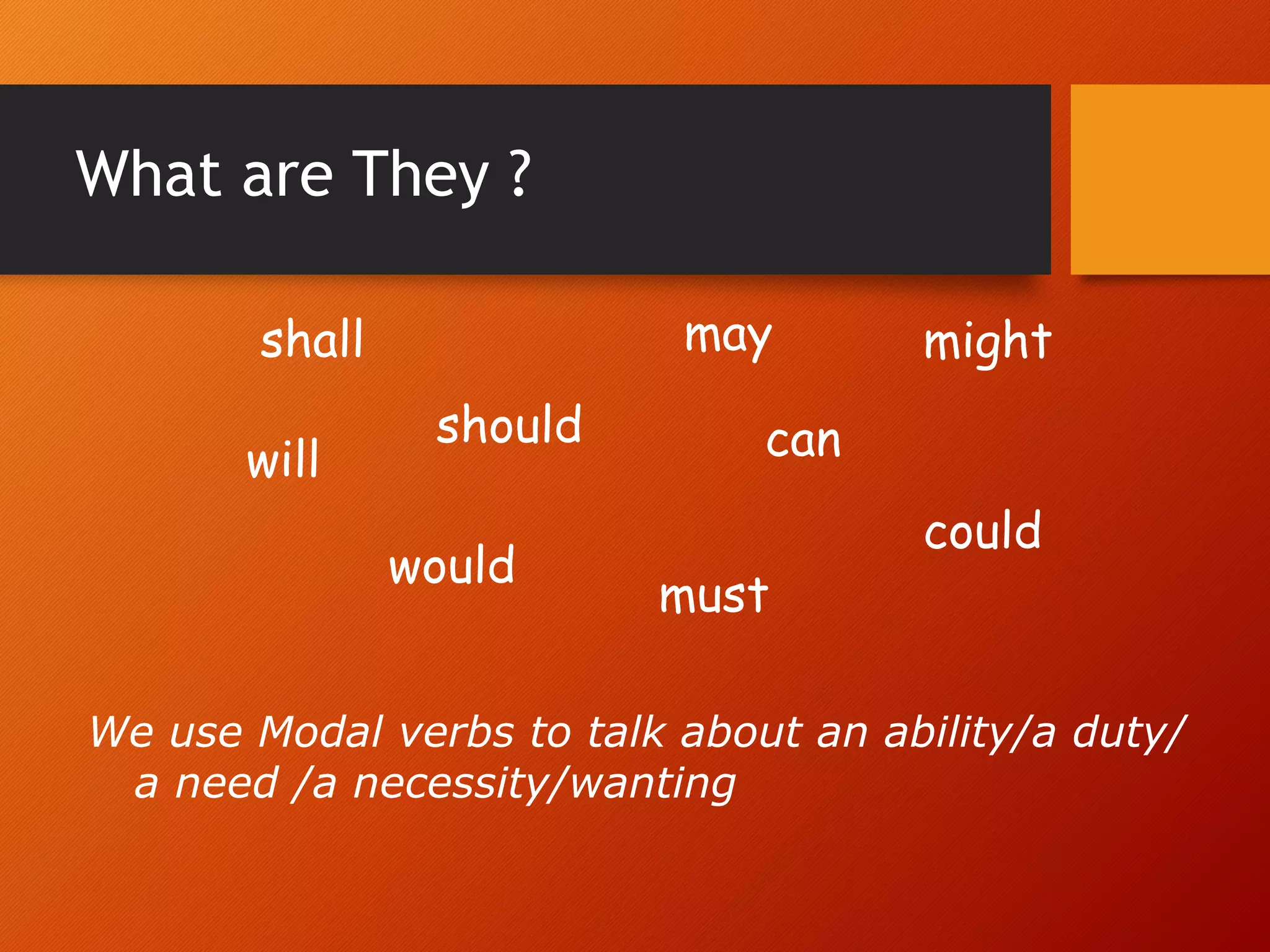
What are They ?
can
could
may might
must
should
will
shall
would
We use Modal verbs to talk about an ability/a duty/
a need /a necessity/wanting
What is special about them?
Modal verbs behave very differently
from normal verbs.
Here are some important differences:
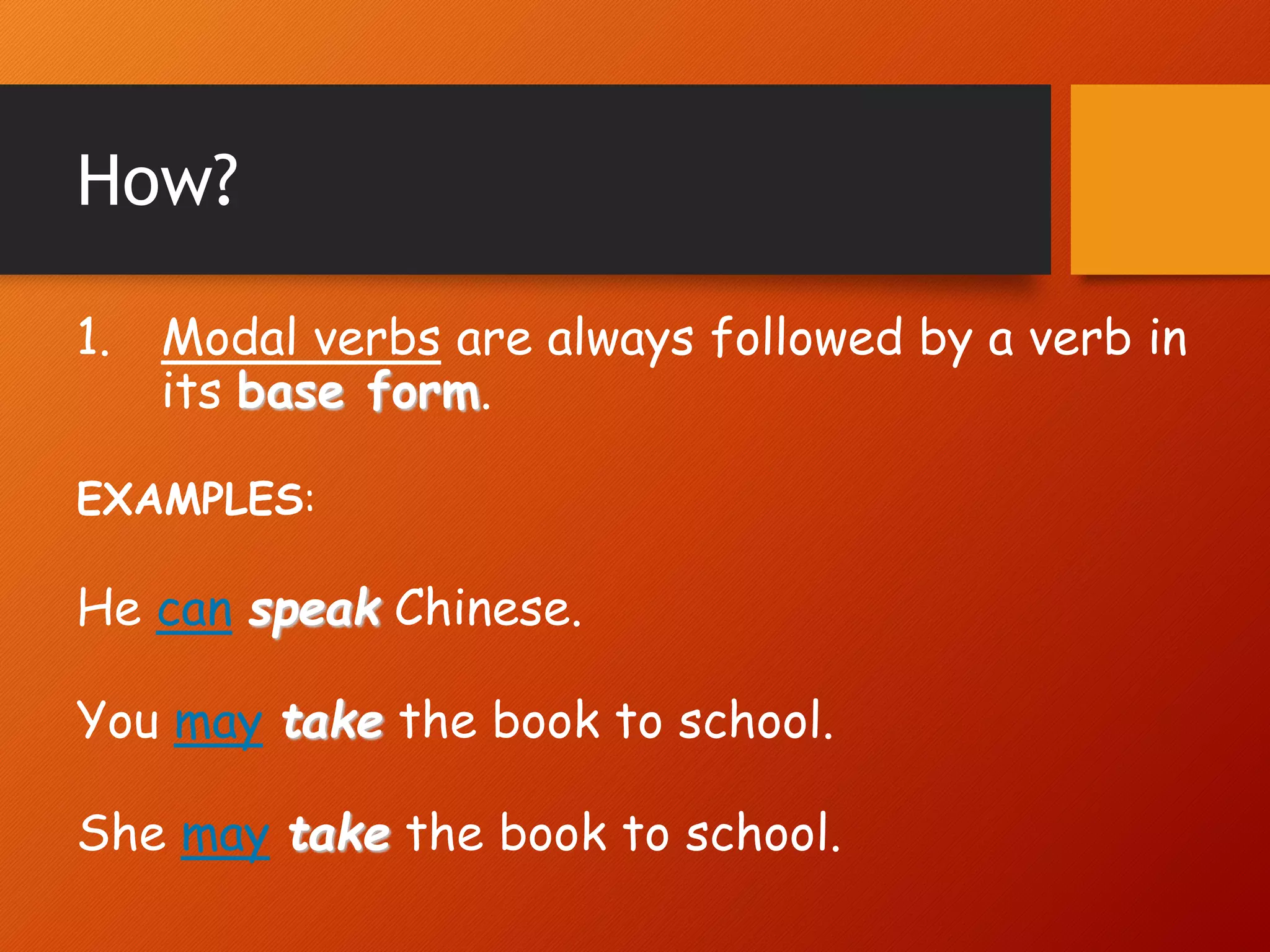
How?
1. Modal verbs are always followed by a verb in
its base form.
EXAMPLES:
He can speak Chinese.
You may take the book to school.
She may take the book to school.
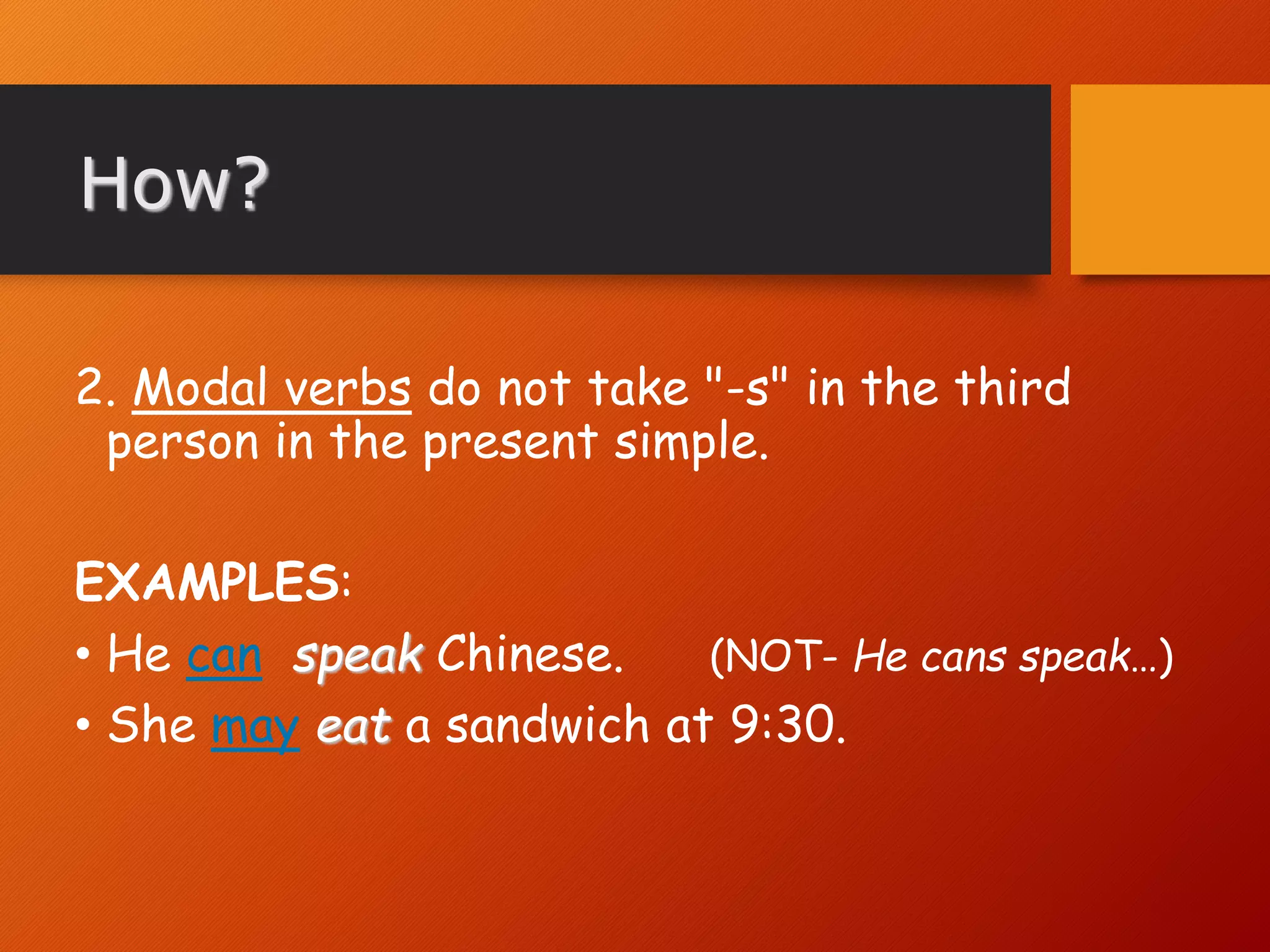
2. Modal verbs do not take "-s" in the third
person in the present simple.
EXAMPLES:
• He can speak Chinese. (NOT- He cans speak…)
• She may eat a sandwich at 9:30.
How?
Modal Verbs and their substitutes
• Many modal verbs cannot be used in
all of the English tenses. That's why
we need to know their meaning and
the substitute for these modal verbs.
will- will not - won’t
We use these modals to speak about
future actions that we are sure/
convinced about.
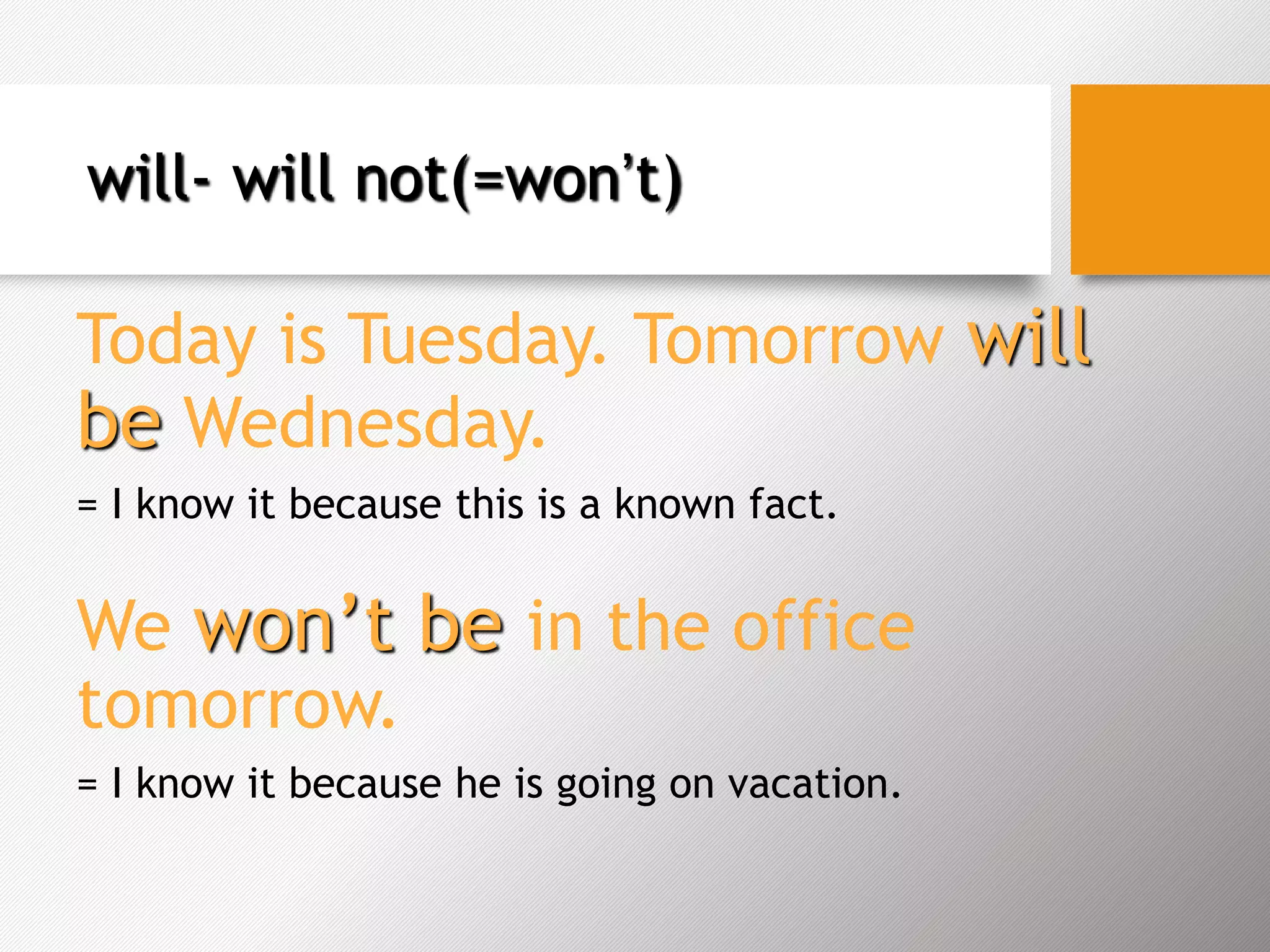
will- will not(=won’t)
Today is Tuesday. Tomorrow will
be Wednesday.
= I know it because this is a known fact.
We won’t be in the office
tomorrow.
= I know it because he is going on vacation.
will- will not(=won’t)
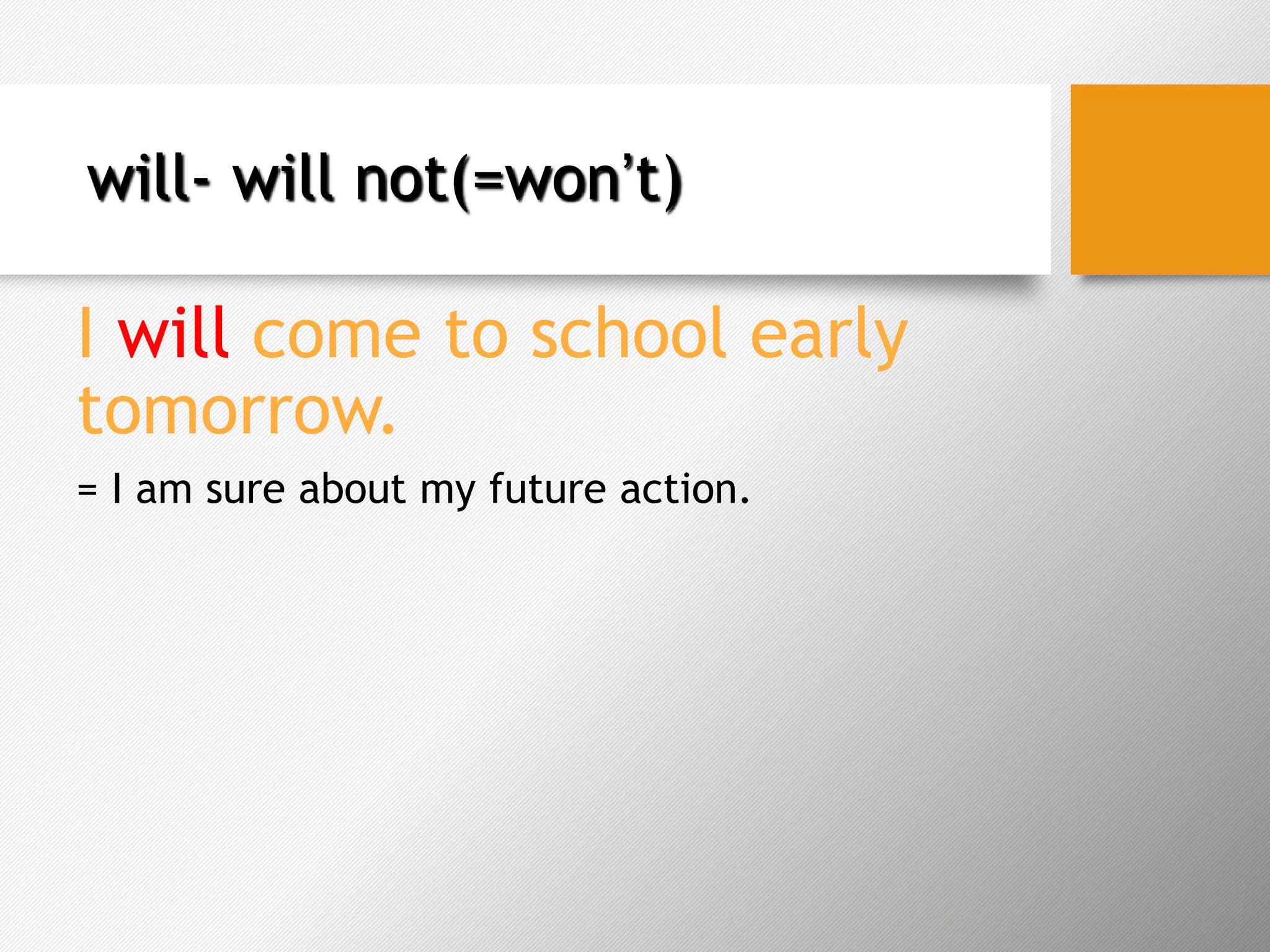
I will come to school early
tomorrow.
= I am sure about my future action.
Can – Could –Be able to
We use these modals to express:
• General ability/ disability
• possibility / impossibility
• opportunity
• Permission
• request
Can
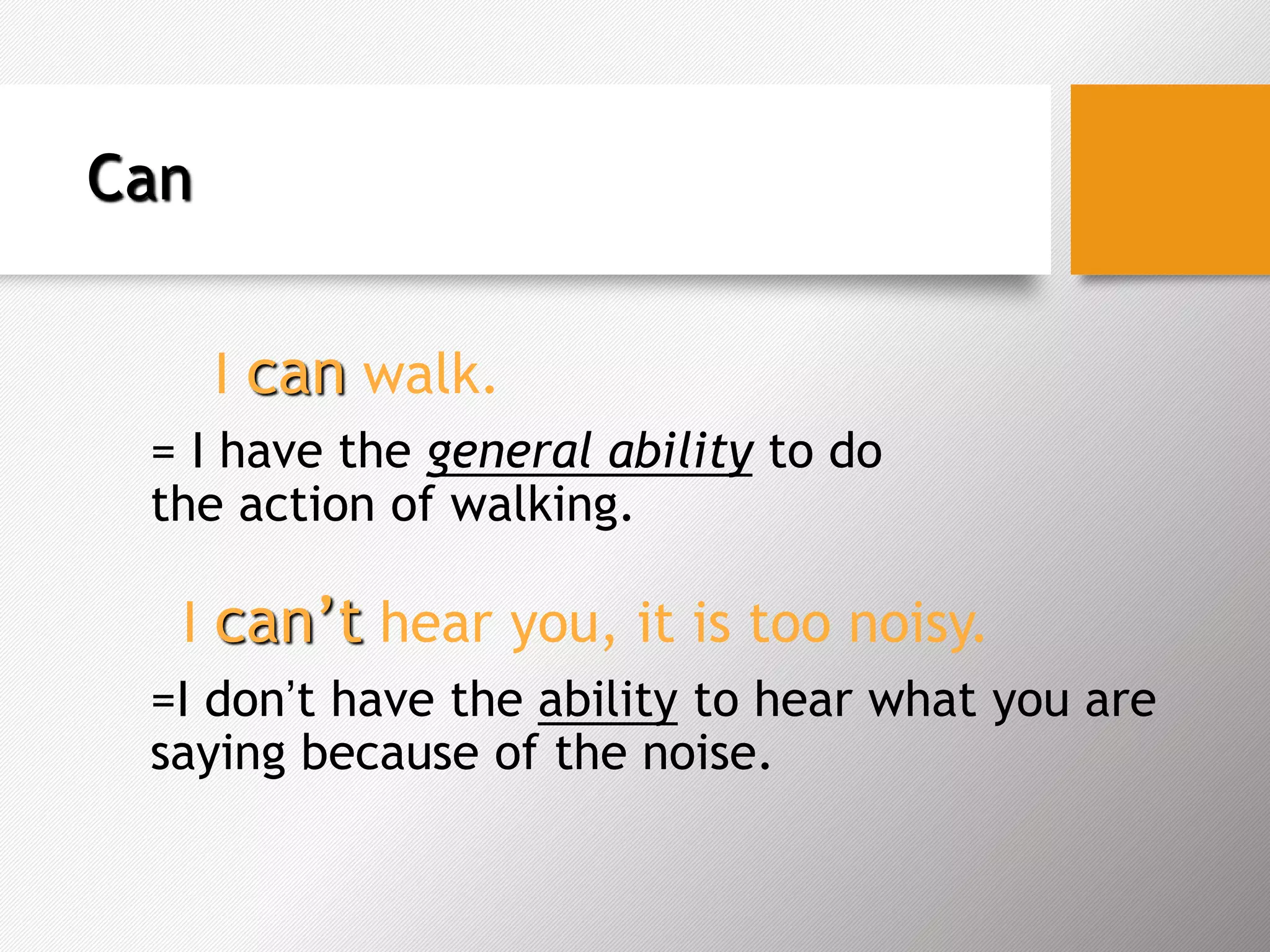
I can walk.
= I have the general ability to do
the action of walking.
I can’t hear you, it is too noisy.
=I don’t have the ability to hear what you are
saying because of the noise.
Can Could
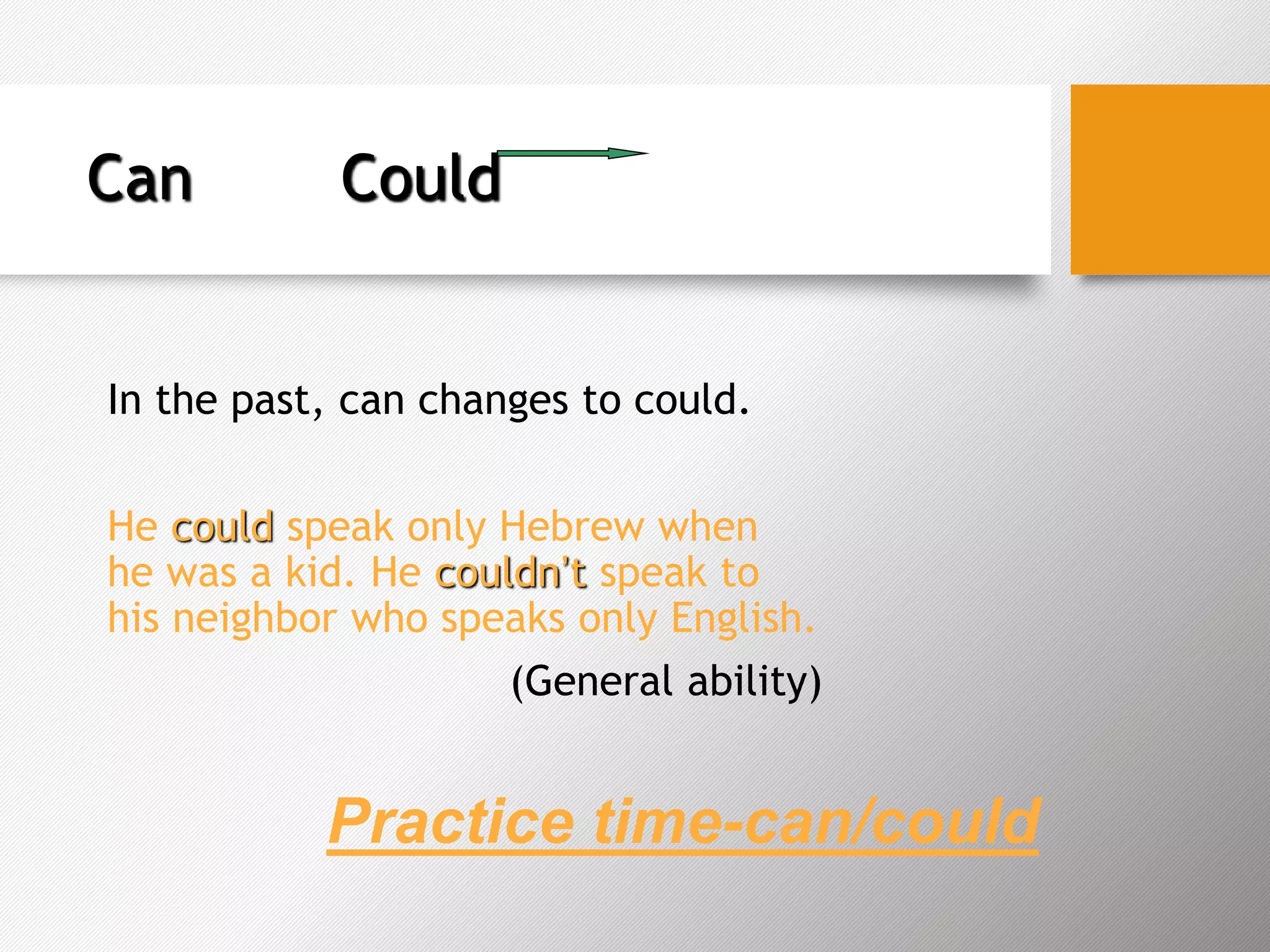
In the past, can changes to could.
He could speak only Hebrew when
he was a kid. He couldn’t speak to
his neighbor who speaks only English.
(General ability)
Practice time-can/could
may
=future possibility/get
permission/give permission
may
• I may choose to wear the red dress to the party.
=I have two dresses. There is a chance that I
will choose to wear the red dress and not the
blue one.
• Today, he may come on time.
=Although usually he comes late,
There is a possibility that today he will come
on time.
may
• May I come to visit you at 5 o’clock?
=get permission
• You may take only one candy.
=give permission
might
=lesser degree of
possibility or certainty
might
• We may come on time, but if you miss the bus, we
might be late.
=I plan to come on time and this is why I I want to
catch the 7:15 bus.
If I catch the 7:30 bus, I can come on time or not,
I’m not sure.
• If you advertise on the Internet you might get a lot
of spam to your e-mail box.
=Although you don’t want to get spam, there’s a
risk that you will get it.
should
= advice or a strong
suggestion.
• If you want to be a champion you should practice
every day.
• When you make a cheese cake, you should first
check that you have cheese.
must - mustn’t
Must – very strong advice/ obligation
Mustn't – things you're not allowed to do.‫אסור‬
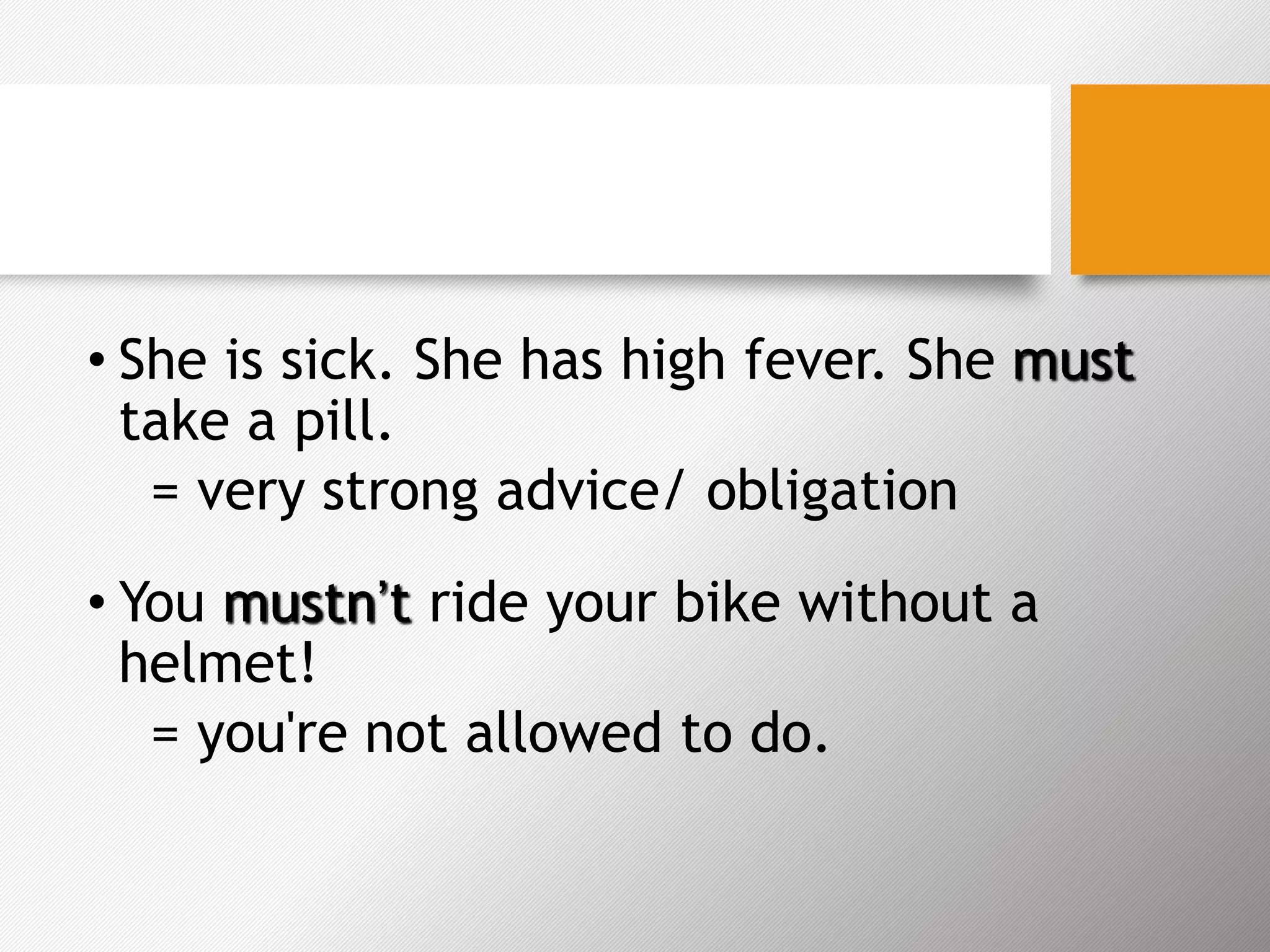
• She is sick. She has high fever. She must
take a pill.
= very strong advice/ obligation
• You mustn’t ride your bike without a
helmet!
= you're not allowed to do.
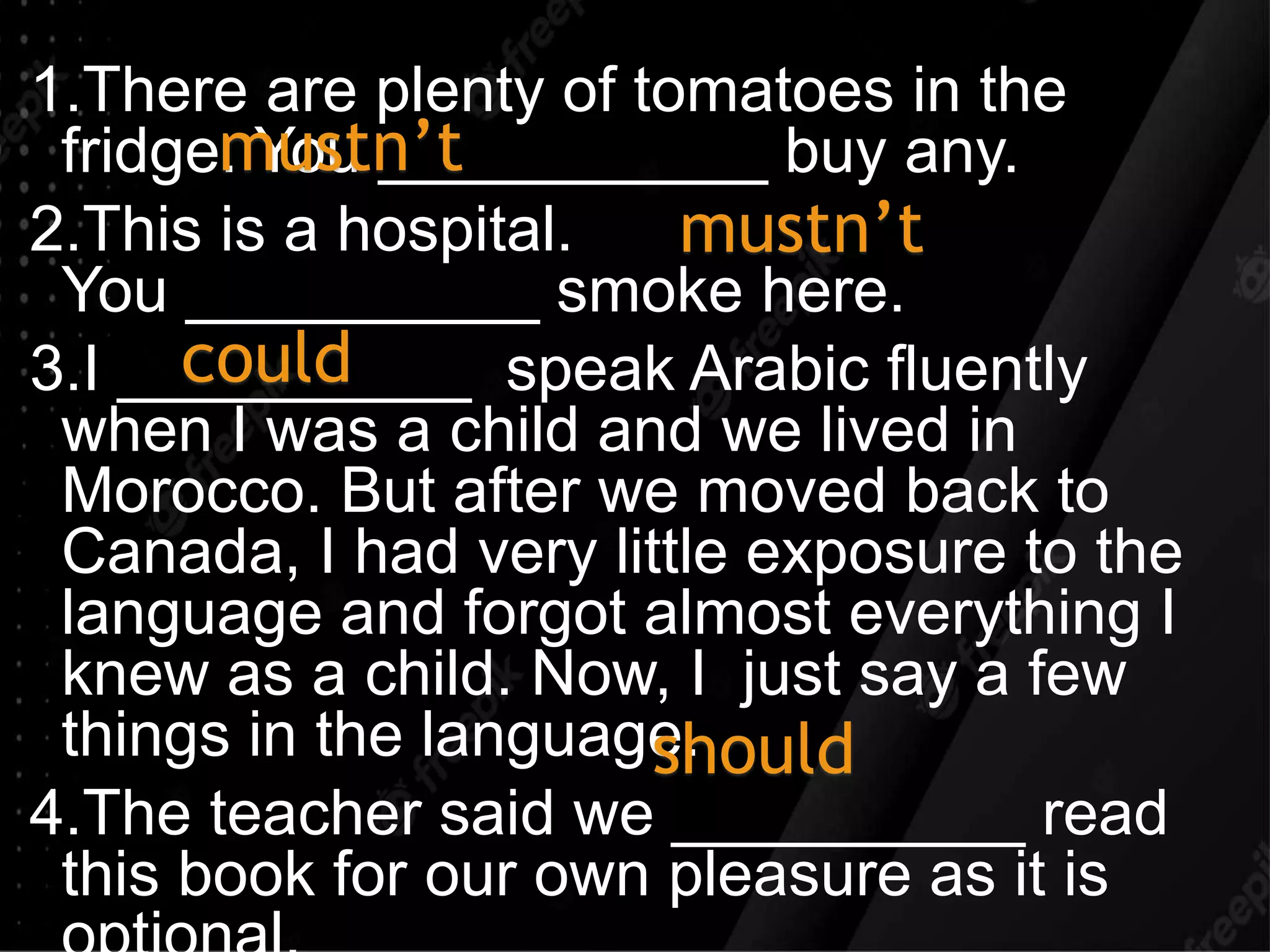
1.There are plenty of tomatoes in the
fridge. You ___________ buy any.
2.This is a hospital.
You __________ smoke here.
3.I __________ speak Arabic fluently
when I was a child and we lived in
Morocco. But after we moved back to
Canada, I had very little exposure to the
language and forgot almost everything I
knew as a child. Now, I just say a few
things in the language.
4.The teacher said we __________ read
this book for our own pleasure as it is
mustn’t
mustn’t
could
should
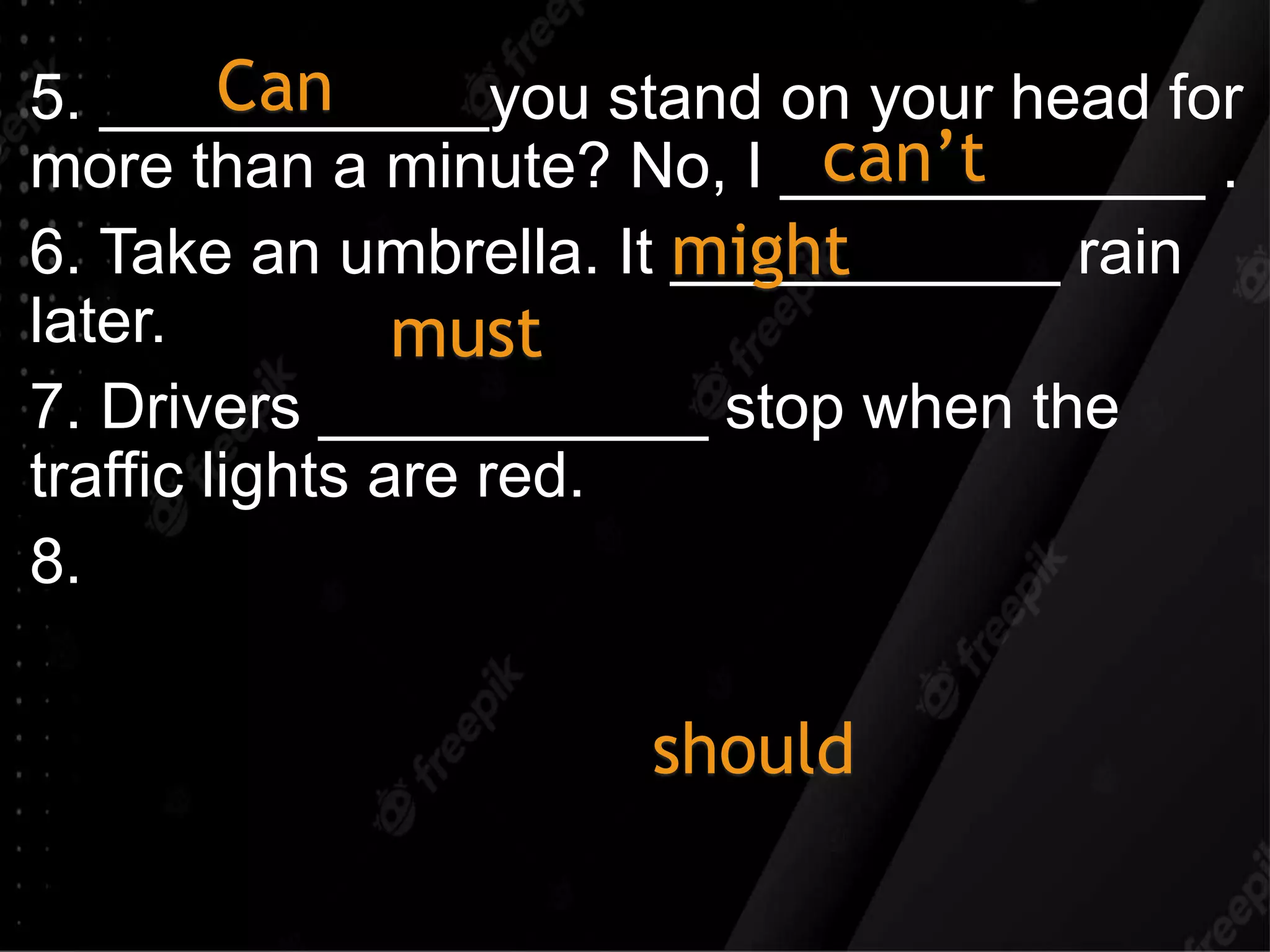
5. ___________you stand on your head for
more than a minute? No, I ____________ .
6. Take an umbrella. It ___________ rain
later.
7. Drivers ___________ stop when the
traffic lights are red.
8.
Can
can’t
might
should
must

Modals.pptx

  • 1.
  • 2.
    What are They? can could may might must should will shall would We use Modal verbs to talk about an ability/a duty/ a need /a necessity/wanting
  • 3.
    What is specialabout them? Modal verbs behave very differently from normal verbs. Here are some important differences:
  • 4.
    How? 1. Modal verbsare always followed by a verb in its base form. EXAMPLES: He can speak Chinese. You may take the book to school. She may take the book to school.
  • 5.
    2. Modal verbsdo not take "-s" in the third person in the present simple. EXAMPLES: • He can speak Chinese. (NOT- He cans speak…) • She may eat a sandwich at 9:30. How?
  • 6.
    Modal Verbs andtheir substitutes • Many modal verbs cannot be used in all of the English tenses. That's why we need to know their meaning and the substitute for these modal verbs.
  • 7.
    will- will not- won’t We use these modals to speak about future actions that we are sure/ convinced about.
  • 8.
    will- will not(=won’t) Todayis Tuesday. Tomorrow will be Wednesday. = I know it because this is a known fact. We won’t be in the office tomorrow. = I know it because he is going on vacation.
  • 9.
    will- will not(=won’t) Iwill come to school early tomorrow. = I am sure about my future action.
  • 10.
    Can – Could–Be able to We use these modals to express: • General ability/ disability • possibility / impossibility • opportunity • Permission • request
  • 11.
    Can I can walk. =I have the general ability to do the action of walking. I can’t hear you, it is too noisy. =I don’t have the ability to hear what you are saying because of the noise.
  • 12.
    Can Could In thepast, can changes to could. He could speak only Hebrew when he was a kid. He couldn’t speak to his neighbor who speaks only English. (General ability) Practice time-can/could
  • 13.
  • 14.
    may • I maychoose to wear the red dress to the party. =I have two dresses. There is a chance that I will choose to wear the red dress and not the blue one. • Today, he may come on time. =Although usually he comes late, There is a possibility that today he will come on time.
  • 15.
    may • May Icome to visit you at 5 o’clock? =get permission • You may take only one candy. =give permission
  • 16.
  • 17.
    might • We maycome on time, but if you miss the bus, we might be late. =I plan to come on time and this is why I I want to catch the 7:15 bus. If I catch the 7:30 bus, I can come on time or not, I’m not sure. • If you advertise on the Internet you might get a lot of spam to your e-mail box. =Although you don’t want to get spam, there’s a risk that you will get it.
  • 18.
    should = advice ora strong suggestion.
  • 19.
    • If youwant to be a champion you should practice every day. • When you make a cheese cake, you should first check that you have cheese.
  • 20.
    must - mustn’t Must– very strong advice/ obligation Mustn't – things you're not allowed to do.‫אסור‬
  • 21.
    • She issick. She has high fever. She must take a pill. = very strong advice/ obligation • You mustn’t ride your bike without a helmet! = you're not allowed to do.
  • 22.
    1.There are plentyof tomatoes in the fridge. You ___________ buy any. 2.This is a hospital. You __________ smoke here. 3.I __________ speak Arabic fluently when I was a child and we lived in Morocco. But after we moved back to Canada, I had very little exposure to the language and forgot almost everything I knew as a child. Now, I just say a few things in the language. 4.The teacher said we __________ read this book for our own pleasure as it is mustn’t mustn’t could should
  • 23.
    5. ___________you standon your head for more than a minute? No, I ____________ . 6. Take an umbrella. It ___________ rain later. 7. Drivers ___________ stop when the traffic lights are red. 8. Can can’t might should must