Humility
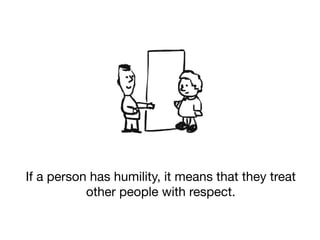
If a person has humility, it means that they treat
other people with respect.
They freely listen to someone before trying to
resolve their problems.
They put themselves at someone else's service.
Having humility does not mean that you
have an inferiority complex, that you have a
poor image of yourself, that you are not
confident, or that you hide your talents in
order to make someone else feel better.
It just means that you turn away from your
selfishness and try to enter into the other
person's world.
A person with humility tries to understand another
person's sufferings and joys.
If the other person opens up to them, they keep
their secrets and do not judge the person or
spread gossip about them.
When someone is speaking to them, they pay
attention and try to see the other person's
point of view.
They try to understand what the other person is
really saying, even if their own life is very different
from that person's.
Instead of quickly saying, "I know how to get
you back on your feet, I'll tell you what to do..."
...they remain open and ask God to help them find
the right pathway.
A humble person does not always
have to be right.
The attitude of humility comes from God's
power within us. Humility helps us speak at
the right moment, have good intentions, and
ask God for the right words.
If a person has humility, they will not feel
superior to someone else just because they are
poor or they have a disability.
Instead, the person with humility will think,
"This person could have something unique to
say, that I do not even suspect. They may be
able to teach me something very good that I
will never forget."
This is why people with humility will even go so far
as to say that poor people are "their masters"--
because they have experienced that a poor person
can preach to them, just by being there.
Often times a poor person will need a boost in
confidence.
A humble person will keep watching out for
signs of the other person's hopes or dreams
as they are telling their story.
If the poor person feels understood, it
then becomes possible to begin
something with them.
A person with humility will not say, "Oh, the
same thing happened to me once, let me tell
you all about how I solved my problem and
got over it." A humble person tries not to
make hurtful comparisons.
It is human nature to make ourselves look good, to
criticize, to want to have power over other people,
and to prove that we are right.
Humility is when we avoid all this, out of love
for the other person.
A person mostly needs to be acknowledged and
listened to, before being helped.
The way that a person presents themselves to us
depends a lot on our attitude towards them.
So it is best to practice humility, always reminding
ourselves to approach another person in faith and
recognize the presence of God in them.
brought to you by
vinformation.org
based on "The Spirituality of the Daughter of Charity"
by Sr. Anne Prévost, D.C.; Vincentiana, 2001

Humility

  • 1.
  • 2.
    If a personhas humility, it means that they treat other people with respect.
  • 3.
    They freely listento someone before trying to resolve their problems.
  • 4.
    They put themselvesat someone else's service.
  • 5.
    Having humility doesnot mean that you have an inferiority complex, that you have a poor image of yourself, that you are not confident, or that you hide your talents in order to make someone else feel better.
  • 6.
    It just meansthat you turn away from your selfishness and try to enter into the other person's world.
  • 7.
    A person withhumility tries to understand another person's sufferings and joys.
  • 8.
    If the otherperson opens up to them, they keep their secrets and do not judge the person or spread gossip about them.
  • 9.
    When someone isspeaking to them, they pay attention and try to see the other person's point of view.
  • 10.
    They try tounderstand what the other person is really saying, even if their own life is very different from that person's.
  • 11.
    Instead of quicklysaying, "I know how to get you back on your feet, I'll tell you what to do..."
  • 12.
    ...they remain openand ask God to help them find the right pathway.
  • 13.
    A humble persondoes not always have to be right.
  • 14.
    The attitude ofhumility comes from God's power within us. Humility helps us speak at the right moment, have good intentions, and ask God for the right words.
  • 15.
    If a personhas humility, they will not feel superior to someone else just because they are poor or they have a disability.
  • 16.
    Instead, the personwith humility will think, "This person could have something unique to say, that I do not even suspect. They may be able to teach me something very good that I will never forget."
  • 17.
    This is whypeople with humility will even go so far as to say that poor people are "their masters"-- because they have experienced that a poor person can preach to them, just by being there.
  • 18.
    Often times apoor person will need a boost in confidence.
  • 19.
    A humble personwill keep watching out for signs of the other person's hopes or dreams as they are telling their story.
  • 20.
    If the poorperson feels understood, it then becomes possible to begin something with them.
  • 21.
    A person withhumility will not say, "Oh, the same thing happened to me once, let me tell you all about how I solved my problem and got over it." A humble person tries not to make hurtful comparisons.
  • 22.
    It is humannature to make ourselves look good, to criticize, to want to have power over other people, and to prove that we are right.
  • 23.
    Humility is whenwe avoid all this, out of love for the other person.
  • 24.
    A person mostlyneeds to be acknowledged and listened to, before being helped.
  • 25.
    The way thata person presents themselves to us depends a lot on our attitude towards them.
  • 26.
    So it isbest to practice humility, always reminding ourselves to approach another person in faith and recognize the presence of God in them.
  • 27.
    brought to youby vinformation.org based on "The Spirituality of the Daughter of Charity" by Sr. Anne Prévost, D.C.; Vincentiana, 2001