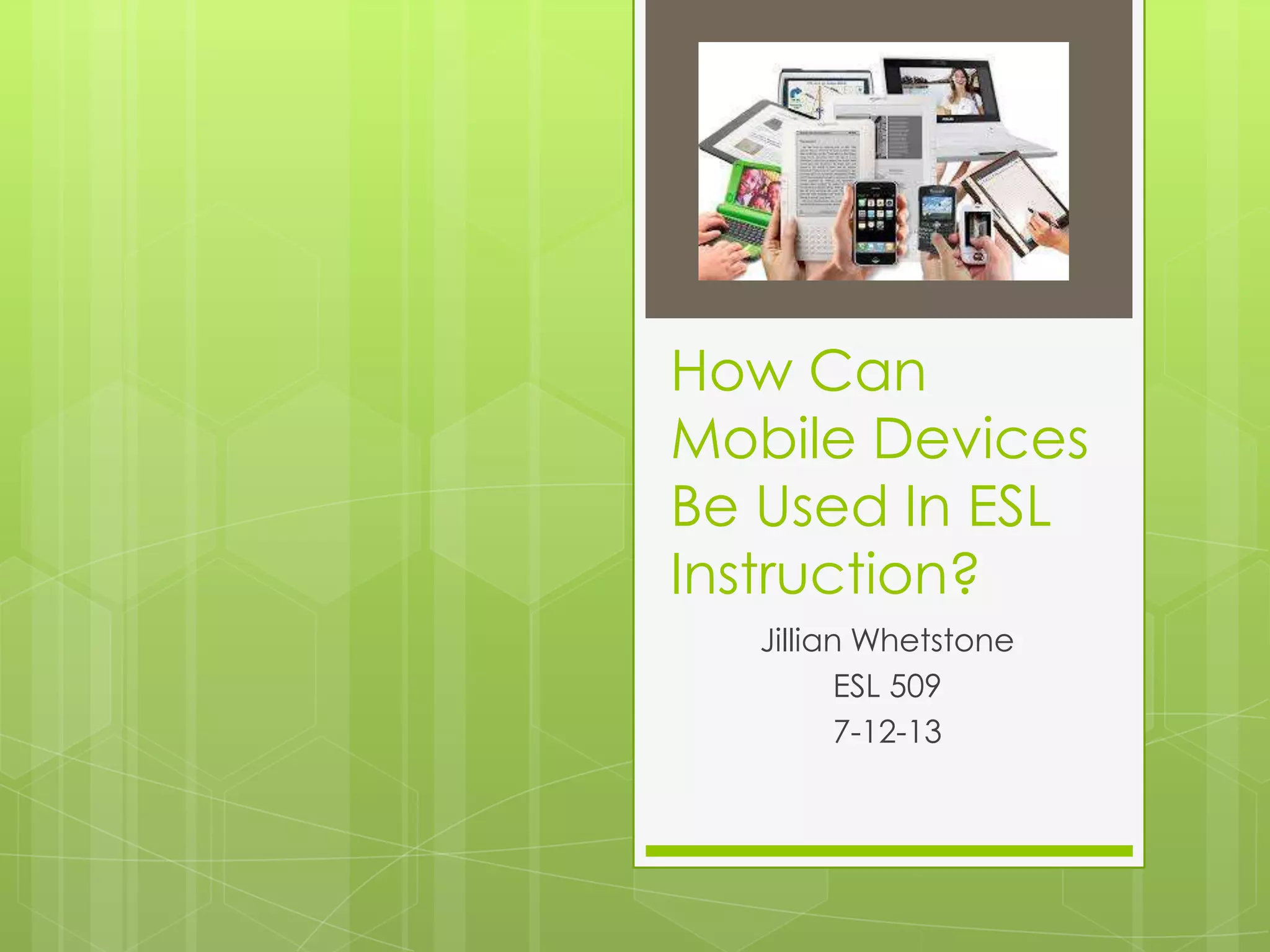
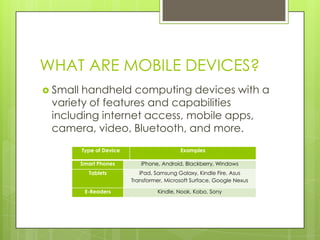
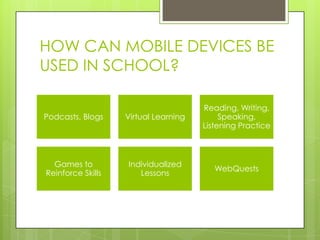
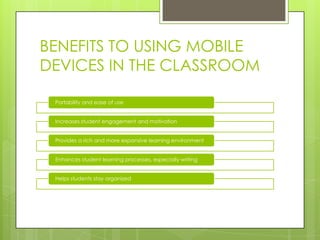
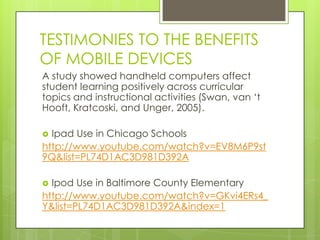
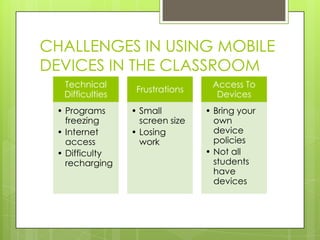
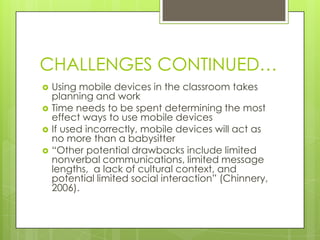
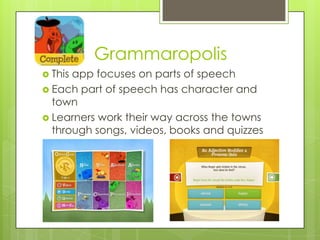
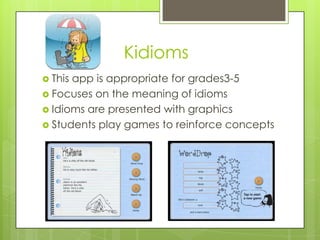
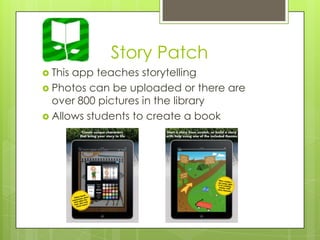
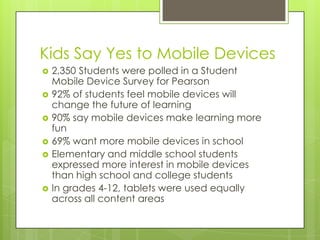
This document discusses how mobile devices can be used to support English language instruction. It defines mobile devices as small handheld computers like smartphones, tablets, and e-readers. Mobile devices can be used to provide language learning through podcasts, blogs, reading materials, speaking and listening practice, games, and individualized lessons. The benefits of using mobile devices include increased student engagement, a richer learning environment, and enhanced learning processes. Some challenges are technical difficulties, small screen sizes, and ensuring all students have access to devices. The document provides examples of educational apps that target vocabulary, grammar, history, figurative language, writing, and storytelling skills. In conclusion, mobile devices are promising tools for language learning when used appropriately.