MOBILE APPS AND
SECURITY ATTACKS
An Introduction
What is security?
• We have locks on our doors
• We have security personnel for our residential societies
• We have police for the city
• We have armed forces for our borders
What is security?
• What is precious to you?
• Know how someone can attack
• Think how you can protect
Mobile device is the biggest
threat vector
• Approximately, more than 3 billion iOS and Android mobile devices are now in market
• Mobiles have critical data:
• Personal
• Financial
• Social
• Corporate
• These devices offer minimum security (PIN, Pattern, Biometric)
Unfortunately, mobile users think that iOS and Android OS provide enough security.
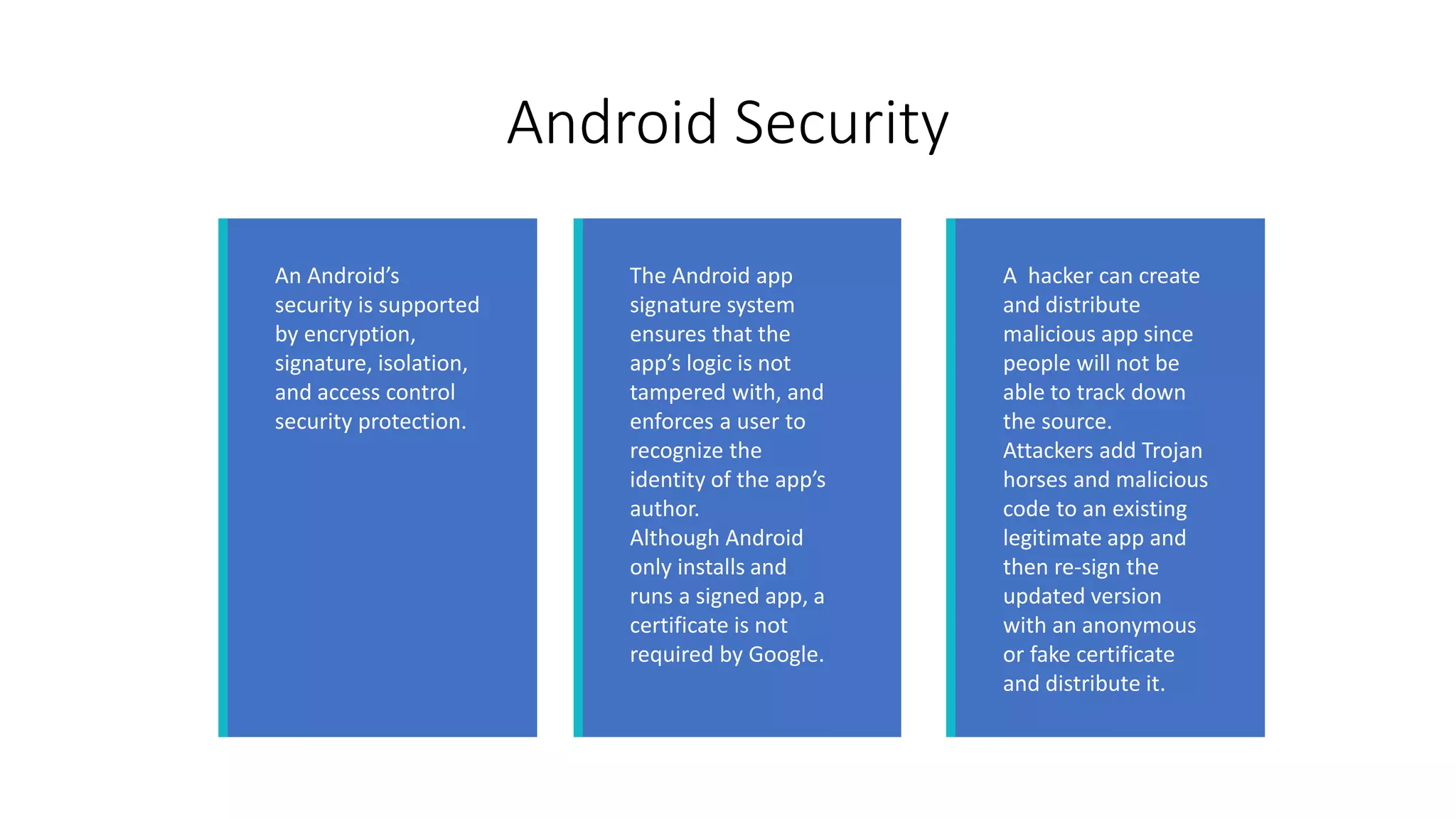
Android Security
An Android’s
security is supported
by encryption,
signature, isolation,
and access control
security protection.
The Android app
signature system
ensures that the
app’s logic is not
tampered with, and
enforces a user to
recognize the
identity of the app’s
author.
Although Android
only installs and
runs a signed app, a
certificate is not
required by Google.
A hacker can create
and distribute
malicious app since
people will not be
able to track down
the source.
Attackers add Trojan
horses and malicious
code to an existing
legitimate app and
then re-sign the
updated version
with an anonymous
or fake certificate
and distribute it.
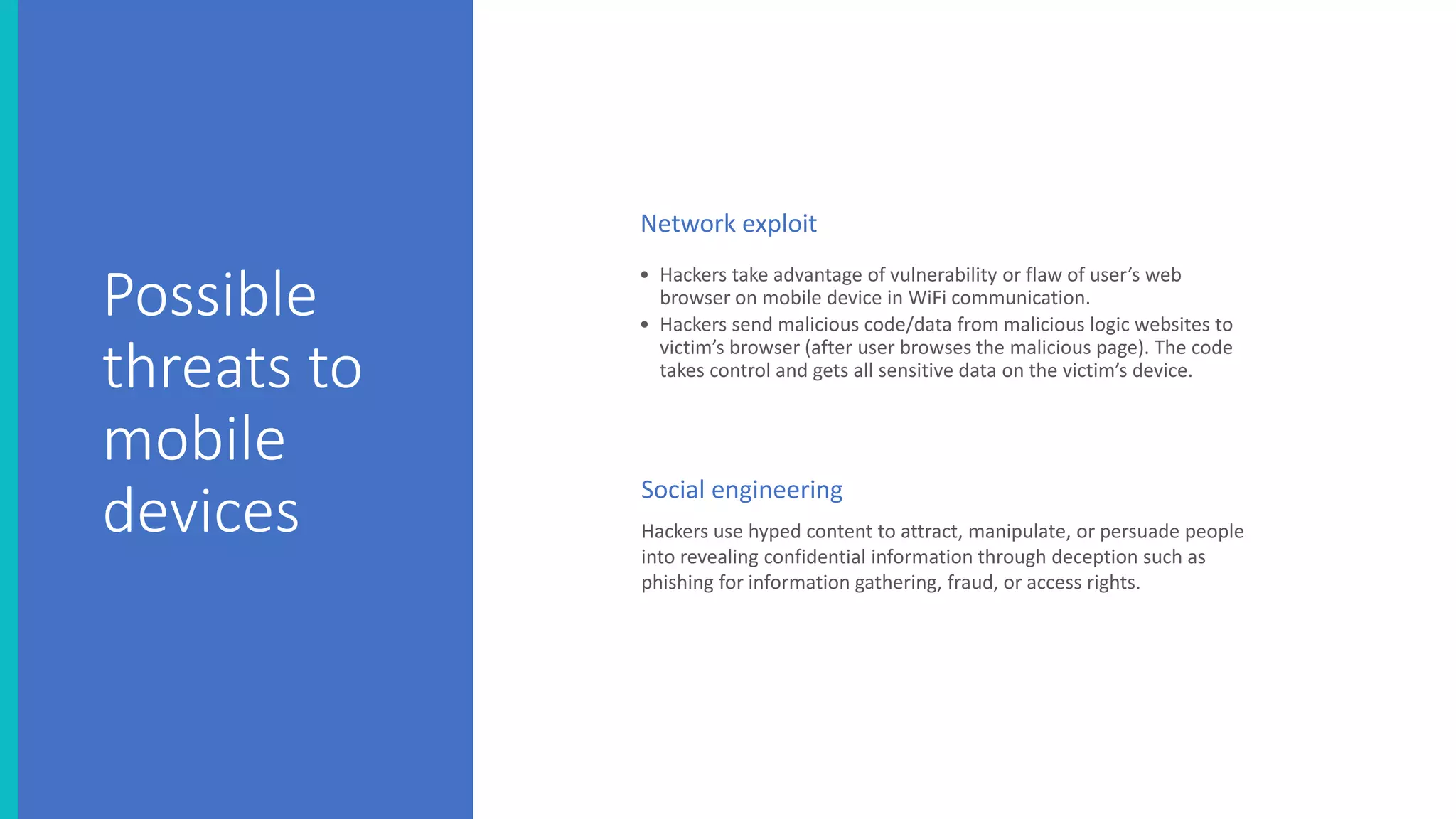
Possible
threats to
mobile
devices
• Hackers take advantage of vulnerability or flaw of user’s web
browser on mobile device in WiFi communication.
• Hackers send malicious code/data from malicious logic websites to
victim’s browser (after user browses the malicious page). The code
takes control and gets all sensitive data on the victim’s device.
Hackers use hyped content to attract, manipulate, or persuade people
into revealing confidential information through deception such as
phishing for information gathering, fraud, or access rights.
Social engineering
Network exploit
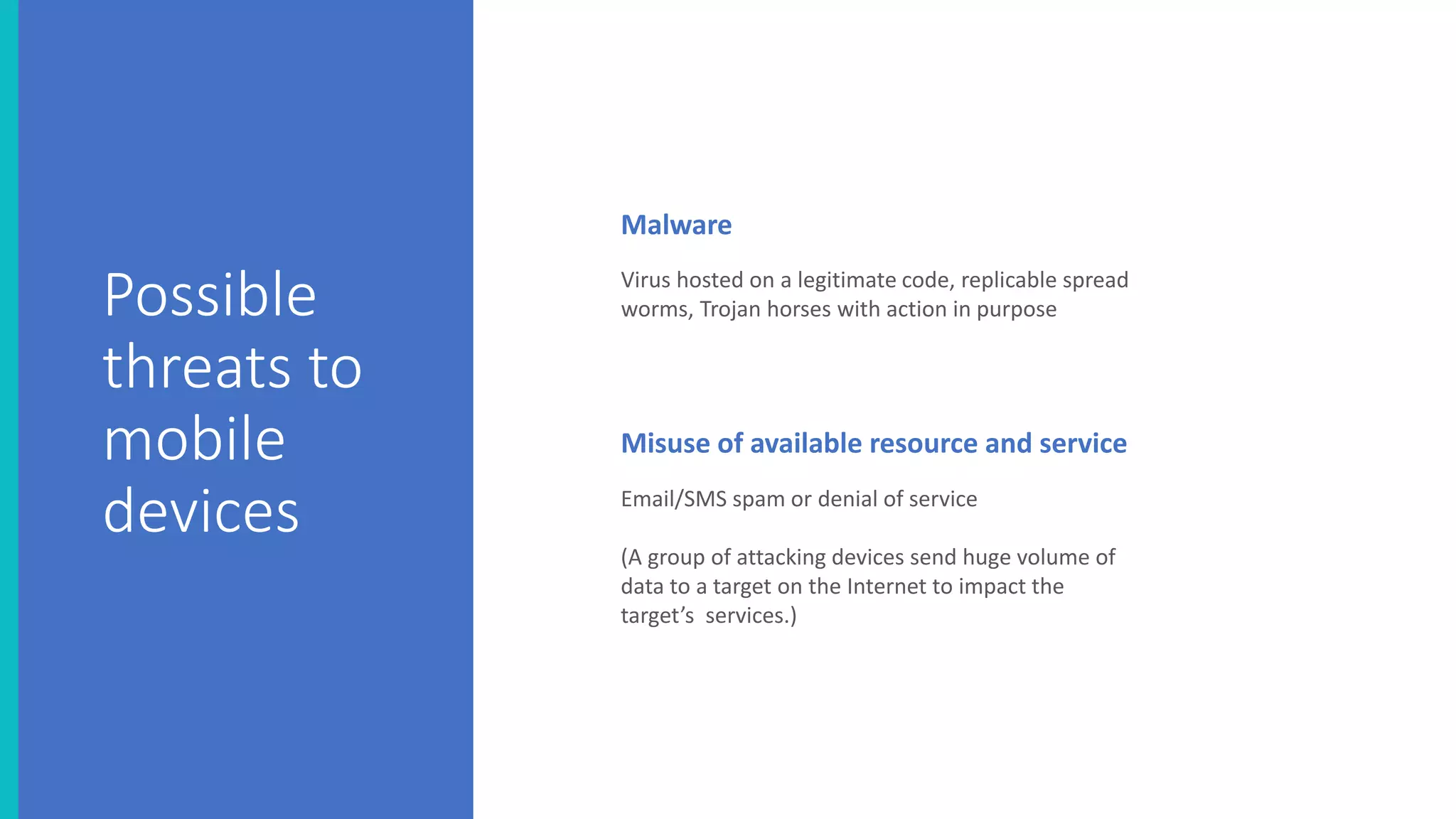
Virus hosted on a legitimate code, replicable spread
worms, Trojan horses with action in purpose
Email/SMS spam or denial of service
(A group of attacking devices send huge volume of
data to a target on the Internet to impact the
target’s services.)
Misuse of available resource and service
Malware
Possible
threats to
mobile
devices
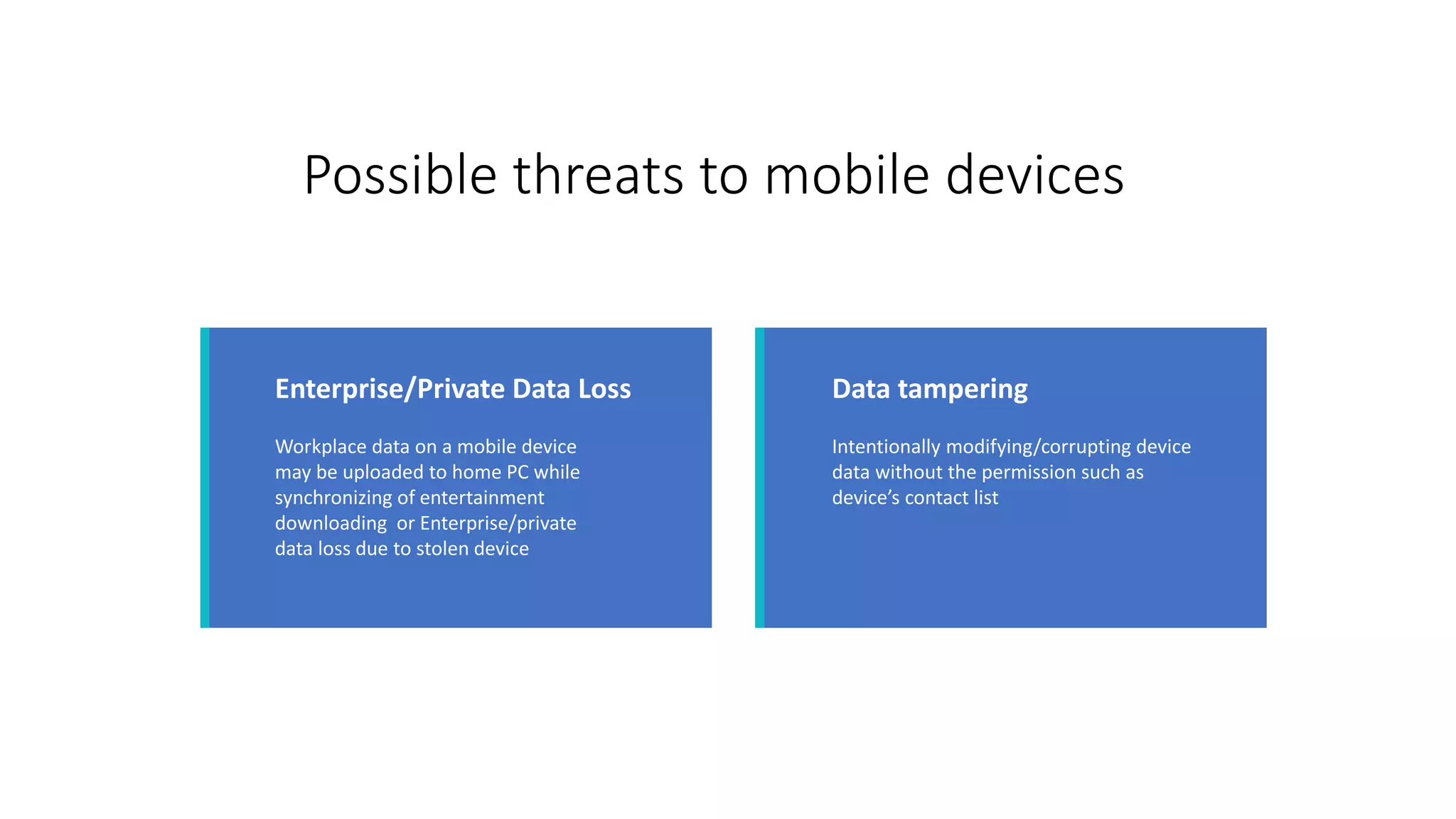
Possible threats to mobile devices
Workplace data on a mobile device
may be uploaded to home PC while
synchronizing of entertainment
downloading or Enterprise/private
data loss due to stolen device
Enterprise/Private Data Loss
Intentionally modifying/corrupting device
data without the permission such as
device’s contact list
Data tampering
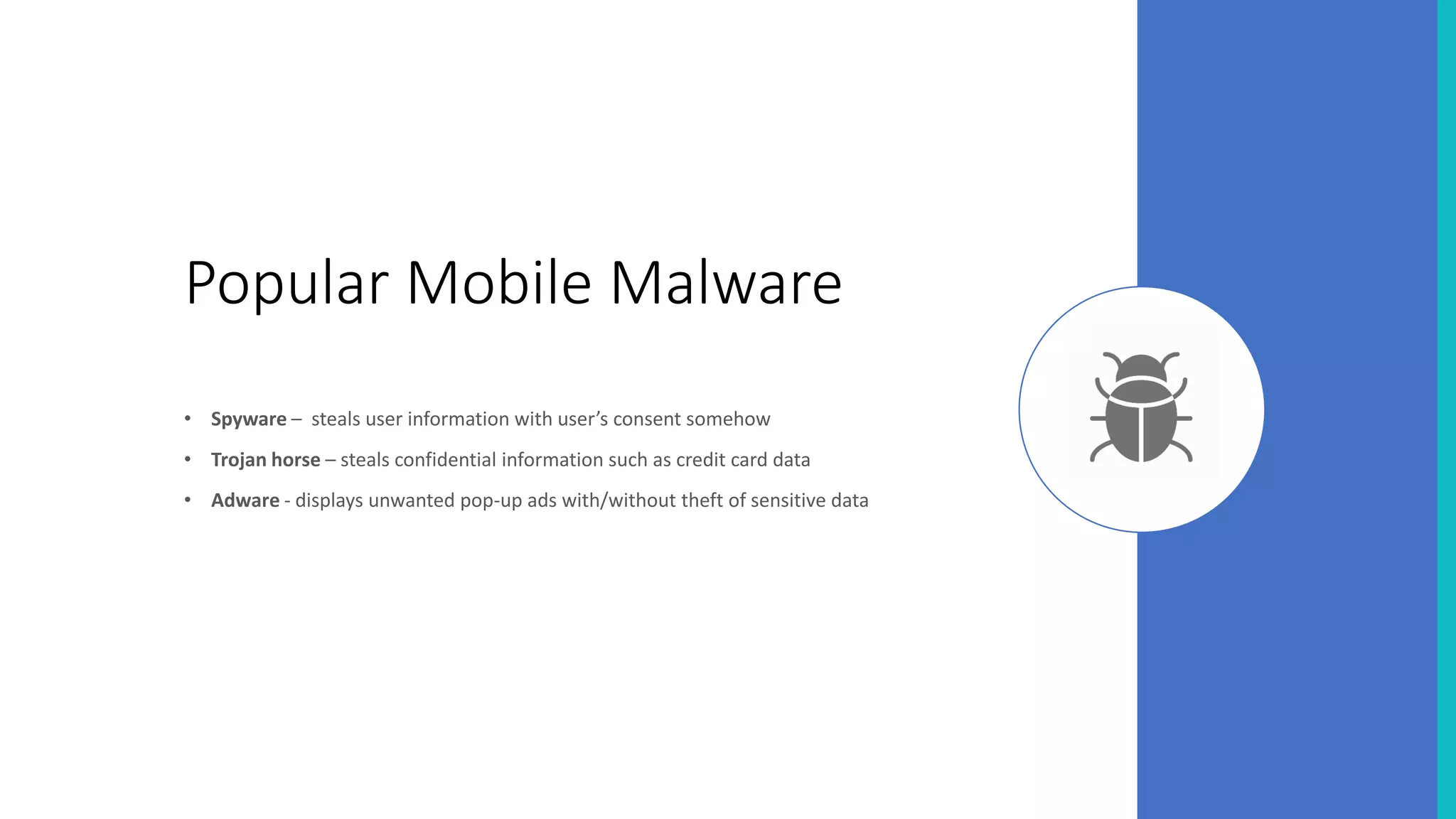
Popular Mobile Malware
• Spyware – steals user information with user’s consent somehow
• Trojan horse – steals confidential information such as credit card data
• Adware - displays unwanted pop-up ads with/without theft of sensitive data
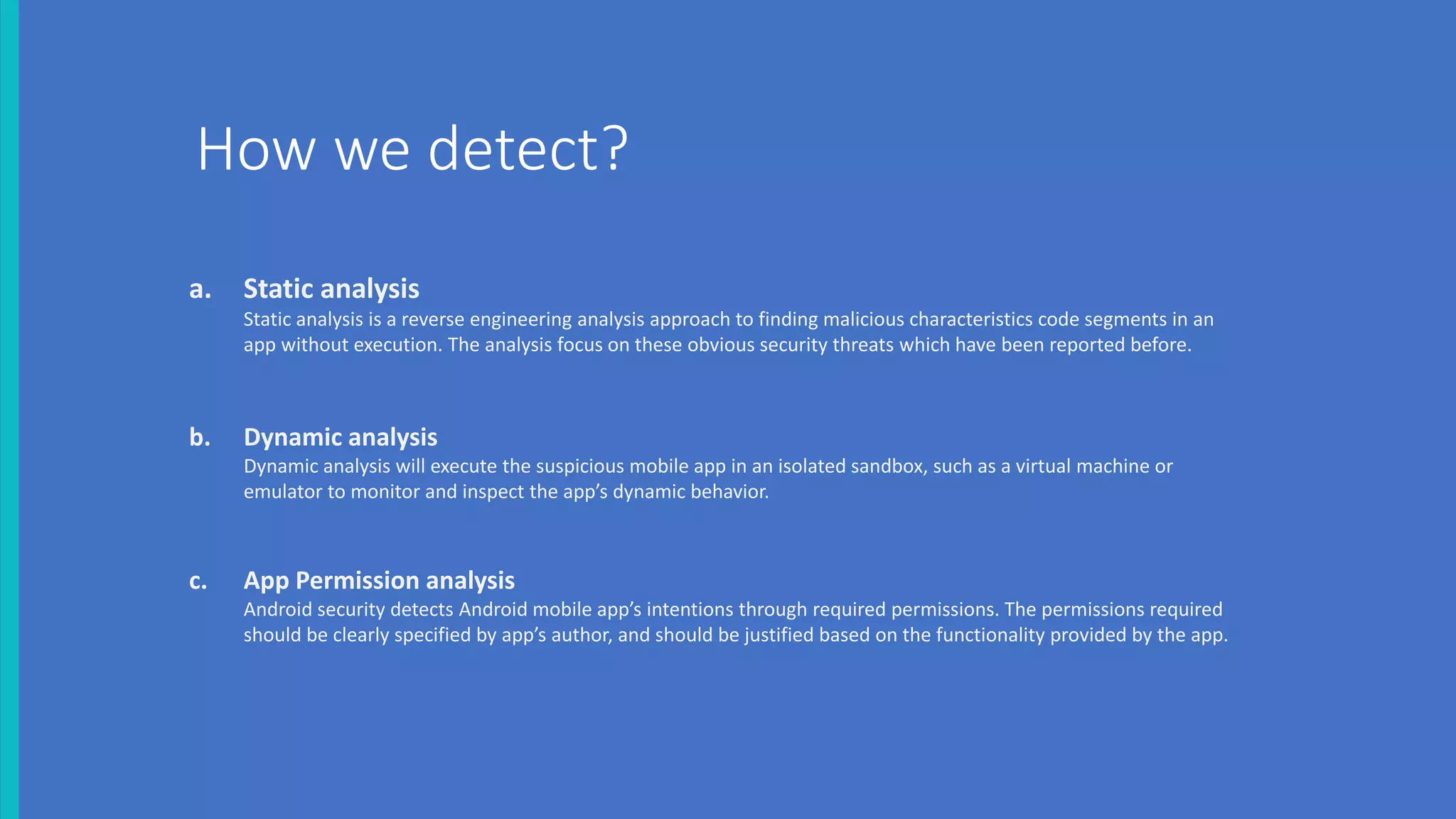
a. Static analysis
Static analysis is a reverse engineering analysis approach to finding malicious characteristics code segments in an
app without execution. The analysis focus on these obvious security threats which have been reported before.
b. Dynamic analysis
Dynamic analysis will execute the suspicious mobile app in an isolated sandbox, such as a virtual machine or
emulator to monitor and inspect the app’s dynamic behavior.
c. App Permission analysis
Android security detects Android mobile app’s intentions through required permissions. The permissions required
should be clearly specified by app’s author, and should be justified based on the functionality provided by the app.
How we detect?
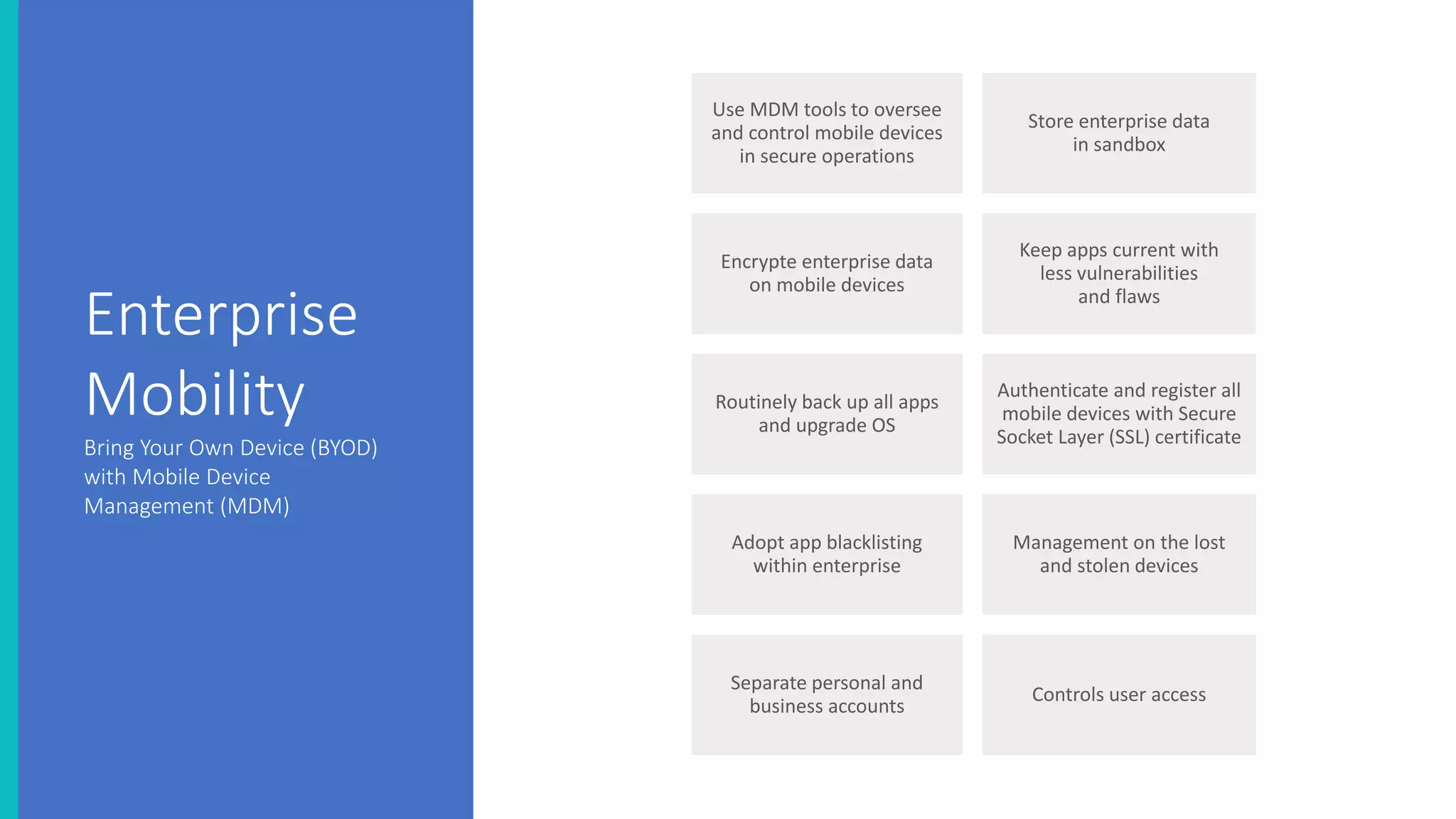
Use MDM tools to oversee
and control mobile devices
in secure operations
Store enterprise data
in sandbox
Encrypte enterprise data
on mobile devices
Keep apps current with
less vulnerabilities
and flaws
Routinely back up all apps
and upgrade OS
Authenticate and register all
mobile devices with Secure
Socket Layer (SSL) certificate
Adopt app blacklisting
within enterprise
Management on the lost
and stolen devices
Separate personal and
business accounts
Controls user access
Enterprise
Mobility
Bring Your Own Device (BYOD)
with Mobile Device
Management (MDM)
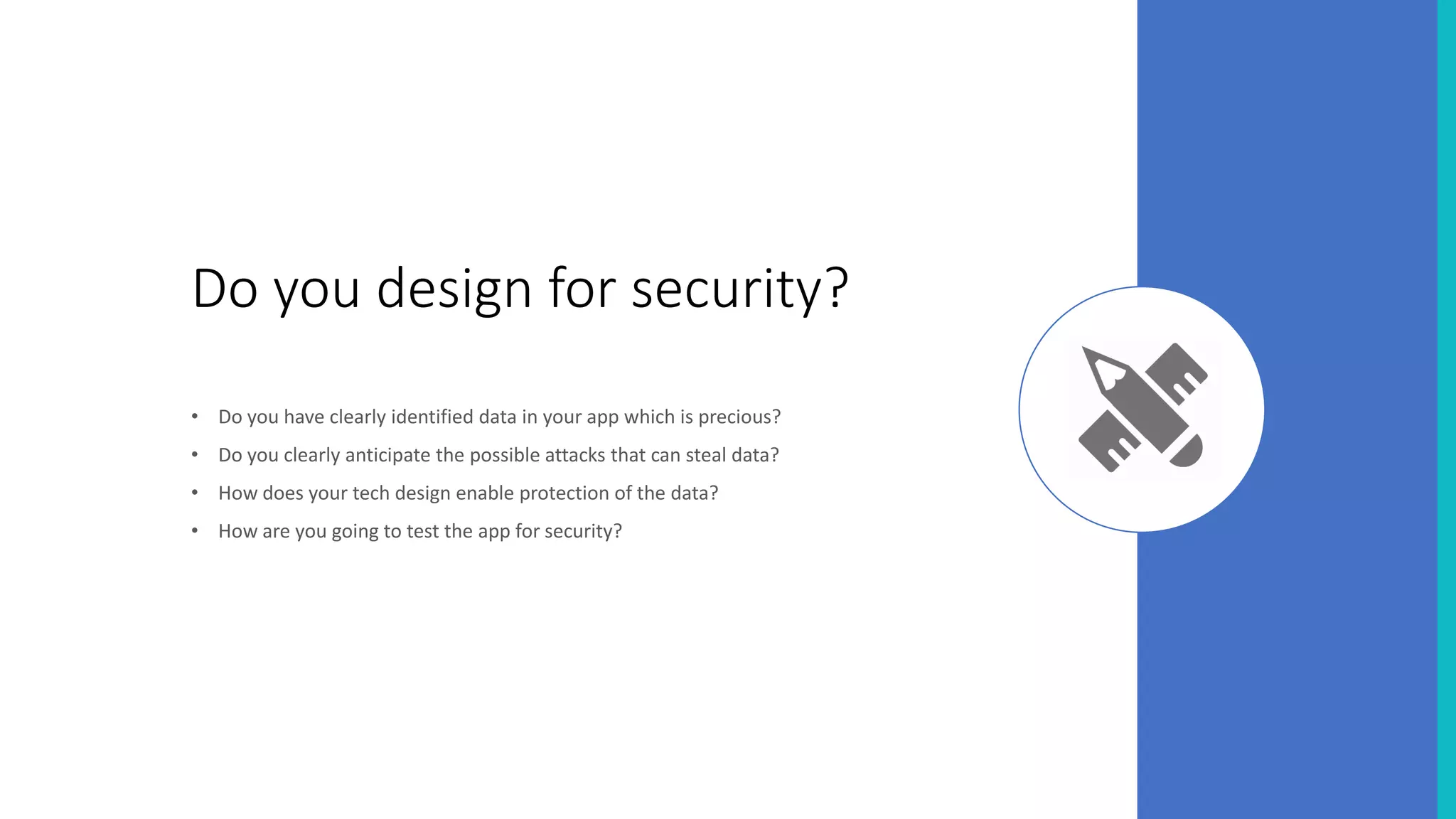
Do you design for security?
• Do you have clearly identified data in your app which is precious?
• Do you clearly anticipate the possible attacks that can steal data?
• How does your tech design enable protection of the data?
• How are you going to test the app for security?
Nagarro drives technology-led business breakthroughs for industry leaders and challengers. When our clients want to move
fast and make things, they turn to us. Some of our clients include Siemens, GE, Lufthansa, Viacom, Estēe Lauder, ASSA
ABLOY, Ericsson, DHL, Mitsubishi, BMW, the City of New York, T-Systems, SAP and Infor. Working with these clients, we
continually push the boundaries of what is possible to do through technology, and in what time frame.
Today, we are more than 5,000 experts across 20 countries. Together we form Nagarro, the global services division of
Munich-based Allgeier SE.
Sources
• https://www.macrumors.com/2017/05/17/2-billion-active-android-devices/
• https://www.utc.edu/faculty/li-yang/5.mobilethreatsattacks.pptx

Mobile Apps and Security Attacks: An Introduction

  • 1.
    MOBILE APPS AND SECURITYATTACKS An Introduction
  • 2.
    What is security? •We have locks on our doors • We have security personnel for our residential societies • We have police for the city • We have armed forces for our borders
  • 3.
    What is security? •What is precious to you? • Know how someone can attack • Think how you can protect
  • 4.
    Mobile device isthe biggest threat vector • Approximately, more than 3 billion iOS and Android mobile devices are now in market • Mobiles have critical data: • Personal • Financial • Social • Corporate • These devices offer minimum security (PIN, Pattern, Biometric) Unfortunately, mobile users think that iOS and Android OS provide enough security.
  • 5.
    Android Security An Android’s securityis supported by encryption, signature, isolation, and access control security protection. The Android app signature system ensures that the app’s logic is not tampered with, and enforces a user to recognize the identity of the app’s author. Although Android only installs and runs a signed app, a certificate is not required by Google. A hacker can create and distribute malicious app since people will not be able to track down the source. Attackers add Trojan horses and malicious code to an existing legitimate app and then re-sign the updated version with an anonymous or fake certificate and distribute it.
  • 6.
    Possible threats to mobile devices • Hackerstake advantage of vulnerability or flaw of user’s web browser on mobile device in WiFi communication. • Hackers send malicious code/data from malicious logic websites to victim’s browser (after user browses the malicious page). The code takes control and gets all sensitive data on the victim’s device. Hackers use hyped content to attract, manipulate, or persuade people into revealing confidential information through deception such as phishing for information gathering, fraud, or access rights. Social engineering Network exploit
  • 7.
    Virus hosted ona legitimate code, replicable spread worms, Trojan horses with action in purpose Email/SMS spam or denial of service (A group of attacking devices send huge volume of data to a target on the Internet to impact the target’s services.) Misuse of available resource and service Malware Possible threats to mobile devices
  • 8.
    Possible threats tomobile devices Workplace data on a mobile device may be uploaded to home PC while synchronizing of entertainment downloading or Enterprise/private data loss due to stolen device Enterprise/Private Data Loss Intentionally modifying/corrupting device data without the permission such as device’s contact list Data tampering
  • 9.
    Popular Mobile Malware •Spyware – steals user information with user’s consent somehow • Trojan horse – steals confidential information such as credit card data • Adware - displays unwanted pop-up ads with/without theft of sensitive data
  • 10.
    a. Static analysis Staticanalysis is a reverse engineering analysis approach to finding malicious characteristics code segments in an app without execution. The analysis focus on these obvious security threats which have been reported before. b. Dynamic analysis Dynamic analysis will execute the suspicious mobile app in an isolated sandbox, such as a virtual machine or emulator to monitor and inspect the app’s dynamic behavior. c. App Permission analysis Android security detects Android mobile app’s intentions through required permissions. The permissions required should be clearly specified by app’s author, and should be justified based on the functionality provided by the app. How we detect?
  • 11.
    Use MDM toolsto oversee and control mobile devices in secure operations Store enterprise data in sandbox Encrypte enterprise data on mobile devices Keep apps current with less vulnerabilities and flaws Routinely back up all apps and upgrade OS Authenticate and register all mobile devices with Secure Socket Layer (SSL) certificate Adopt app blacklisting within enterprise Management on the lost and stolen devices Separate personal and business accounts Controls user access Enterprise Mobility Bring Your Own Device (BYOD) with Mobile Device Management (MDM)
  • 12.
    Do you designfor security? • Do you have clearly identified data in your app which is precious? • Do you clearly anticipate the possible attacks that can steal data? • How does your tech design enable protection of the data? • How are you going to test the app for security?
  • 13.
    Nagarro drives technology-ledbusiness breakthroughs for industry leaders and challengers. When our clients want to move fast and make things, they turn to us. Some of our clients include Siemens, GE, Lufthansa, Viacom, Estēe Lauder, ASSA ABLOY, Ericsson, DHL, Mitsubishi, BMW, the City of New York, T-Systems, SAP and Infor. Working with these clients, we continually push the boundaries of what is possible to do through technology, and in what time frame. Today, we are more than 5,000 experts across 20 countries. Together we form Nagarro, the global services division of Munich-based Allgeier SE. Sources • https://www.macrumors.com/2017/05/17/2-billion-active-android-devices/ • https://www.utc.edu/faculty/li-yang/5.mobilethreatsattacks.pptx