The Marketing Research Report: Preparation
and Presentation
Course: MBA
Subject: MM II
Unit: I
The Marketing Research Report
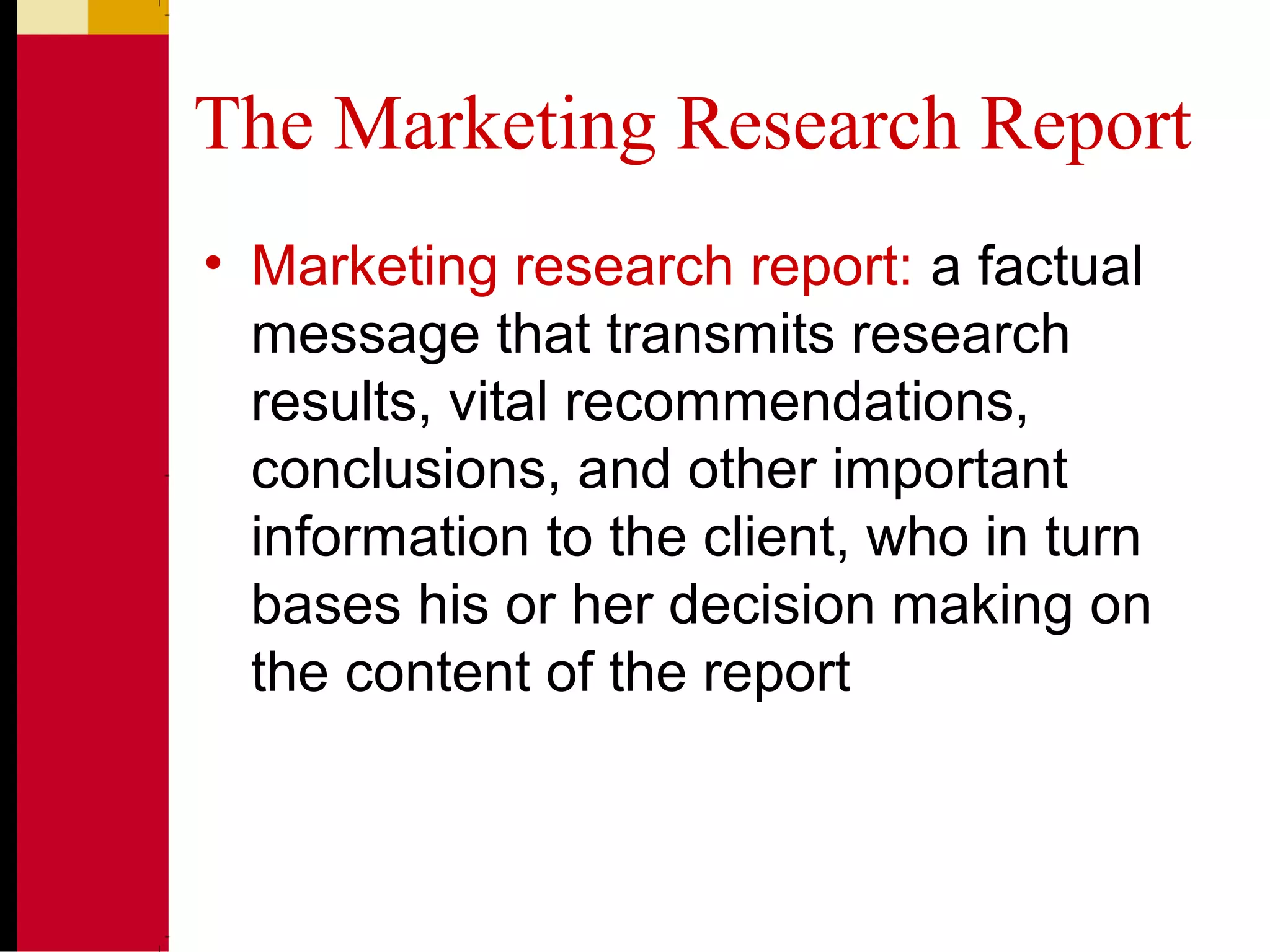
• Marketing research report: a factual
message that transmits research
results, vital recommendations,
conclusions, and other important
information to the client, who in turn
bases his or her decision making on
the content of the report
The Importance of the Marketing
Research Report
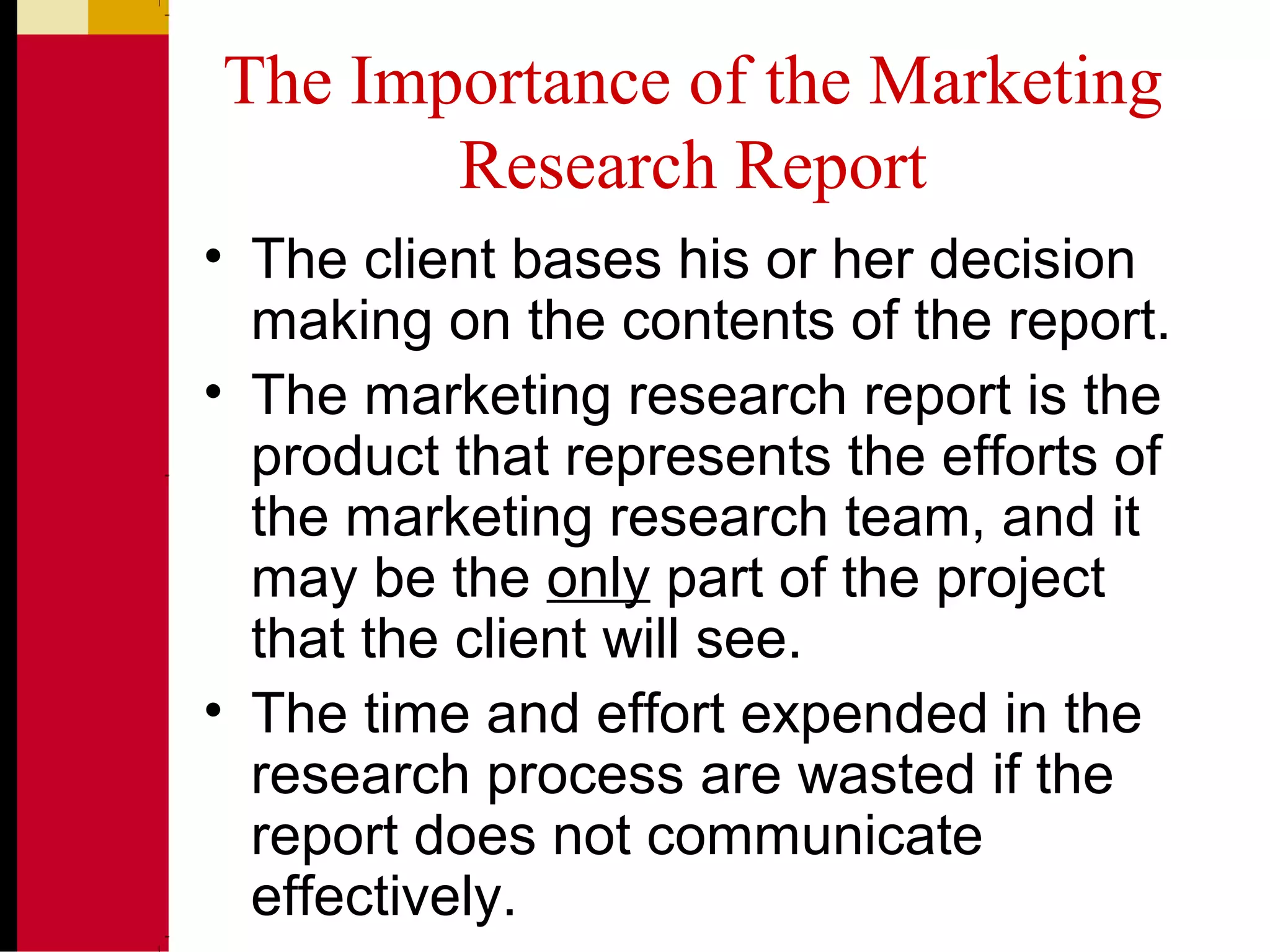
• The client bases his or her decision
making on the contents of the report.
• The marketing research report is the
product that represents the efforts of
the marketing research team, and it
may be the only part of the project
that the client will see.
• The time and effort expended in the
research process are wasted if the
report does not communicate
effectively.
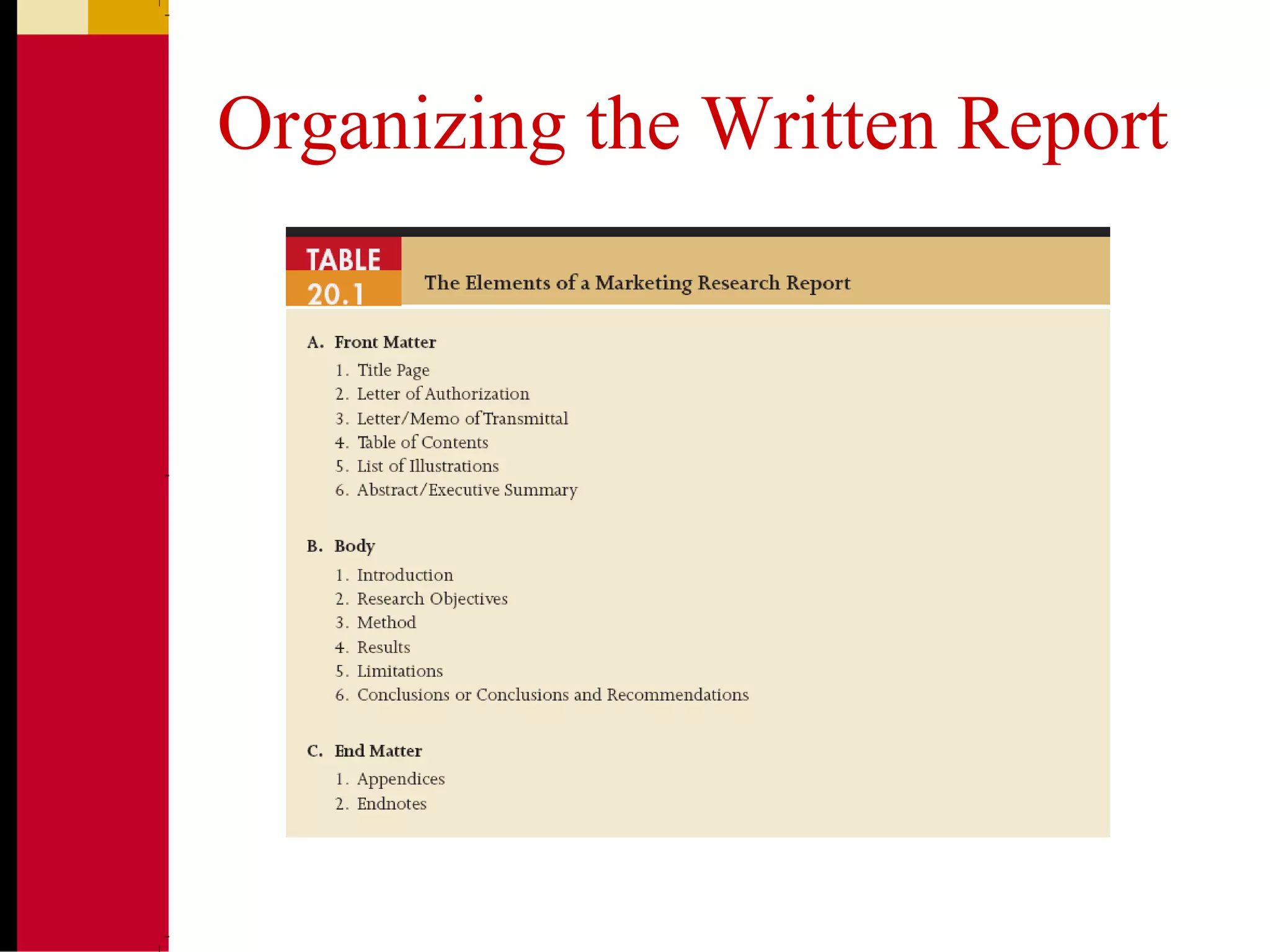
Organizing the Written Report
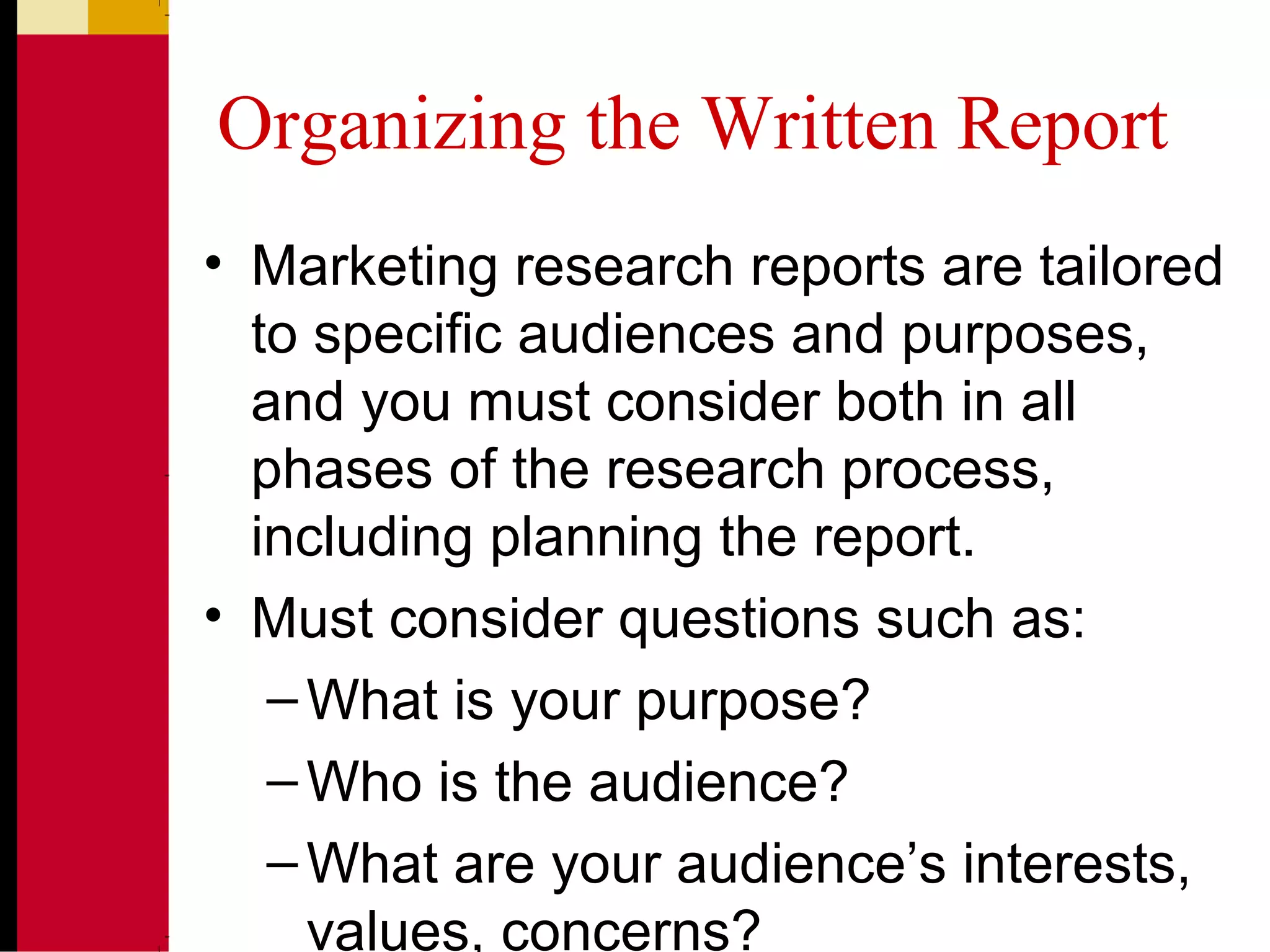
• Marketing research reports are tailored
to specific audiences and purposes,
and you must consider both in all
phases of the research process,
including planning the report.
• Must consider questions such as:
–What is your purpose?
–Who is the audience?
–What are your audience’s interests,
values, concerns?
Organizing the Written Report
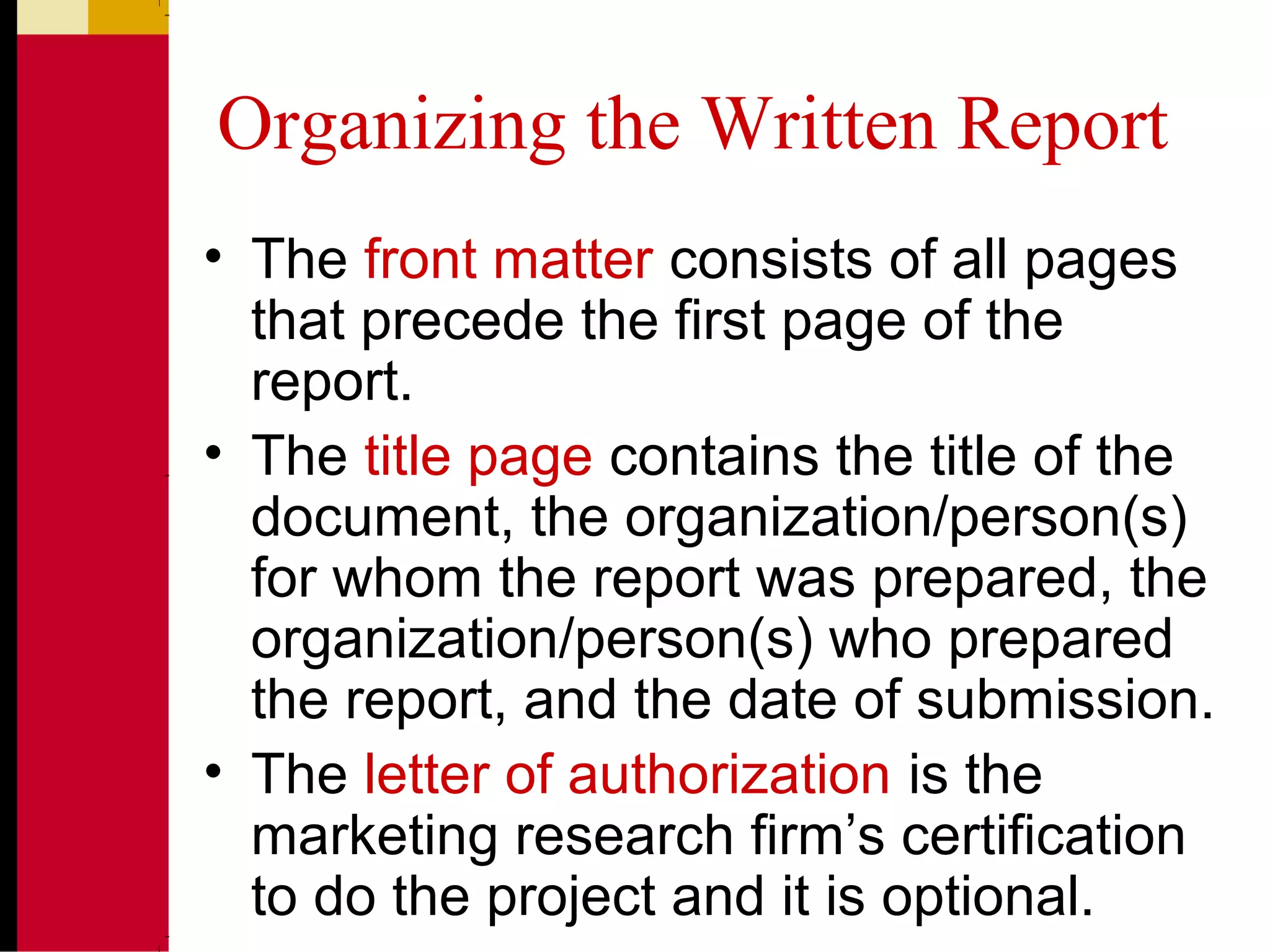
• The front matter consists of all pages
that precede the first page of the
report.
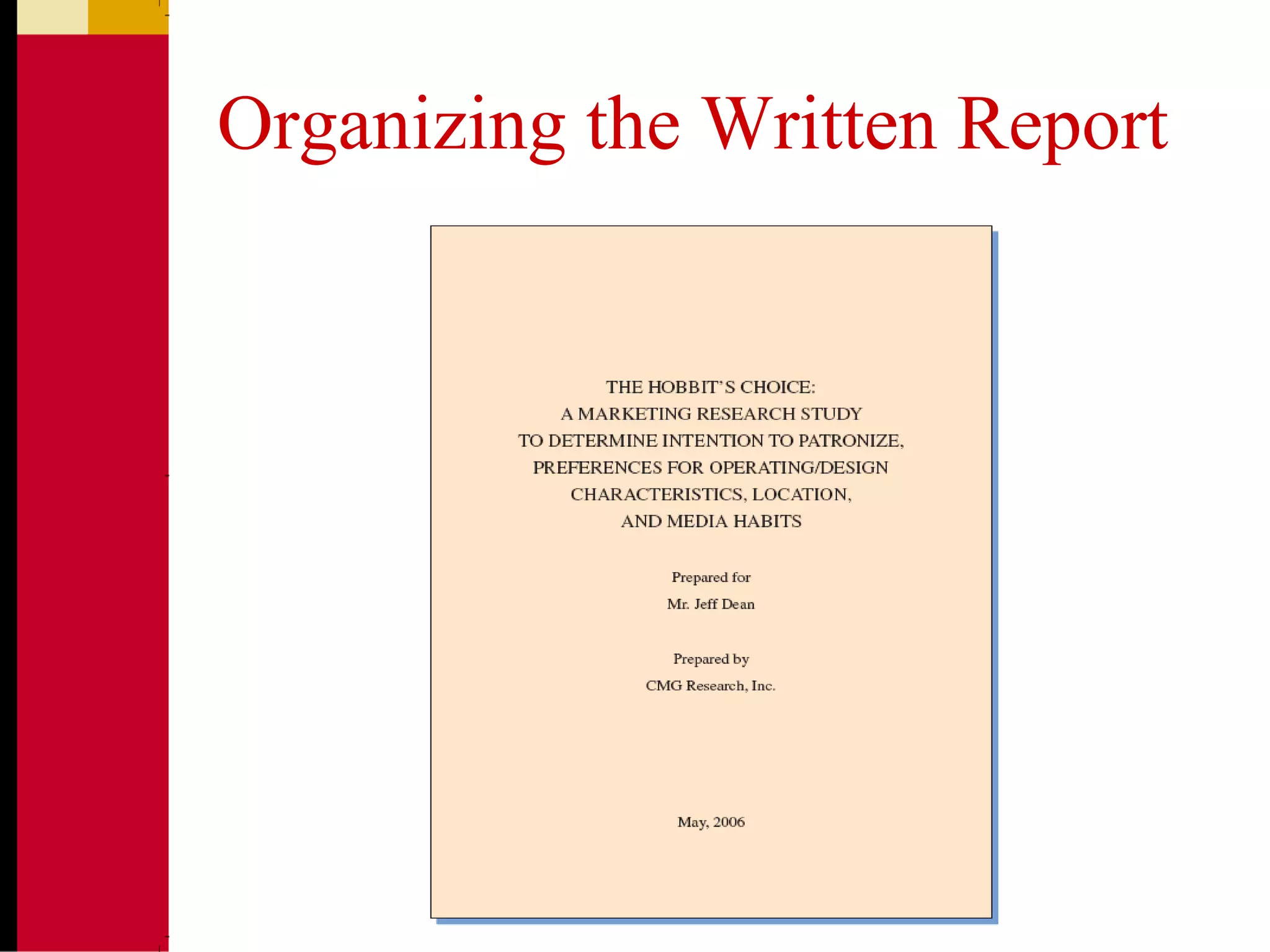
• The title page contains the title of the
document, the organization/person(s)
for whom the report was prepared, the
organization/person(s) who prepared
the report, and the date of submission.
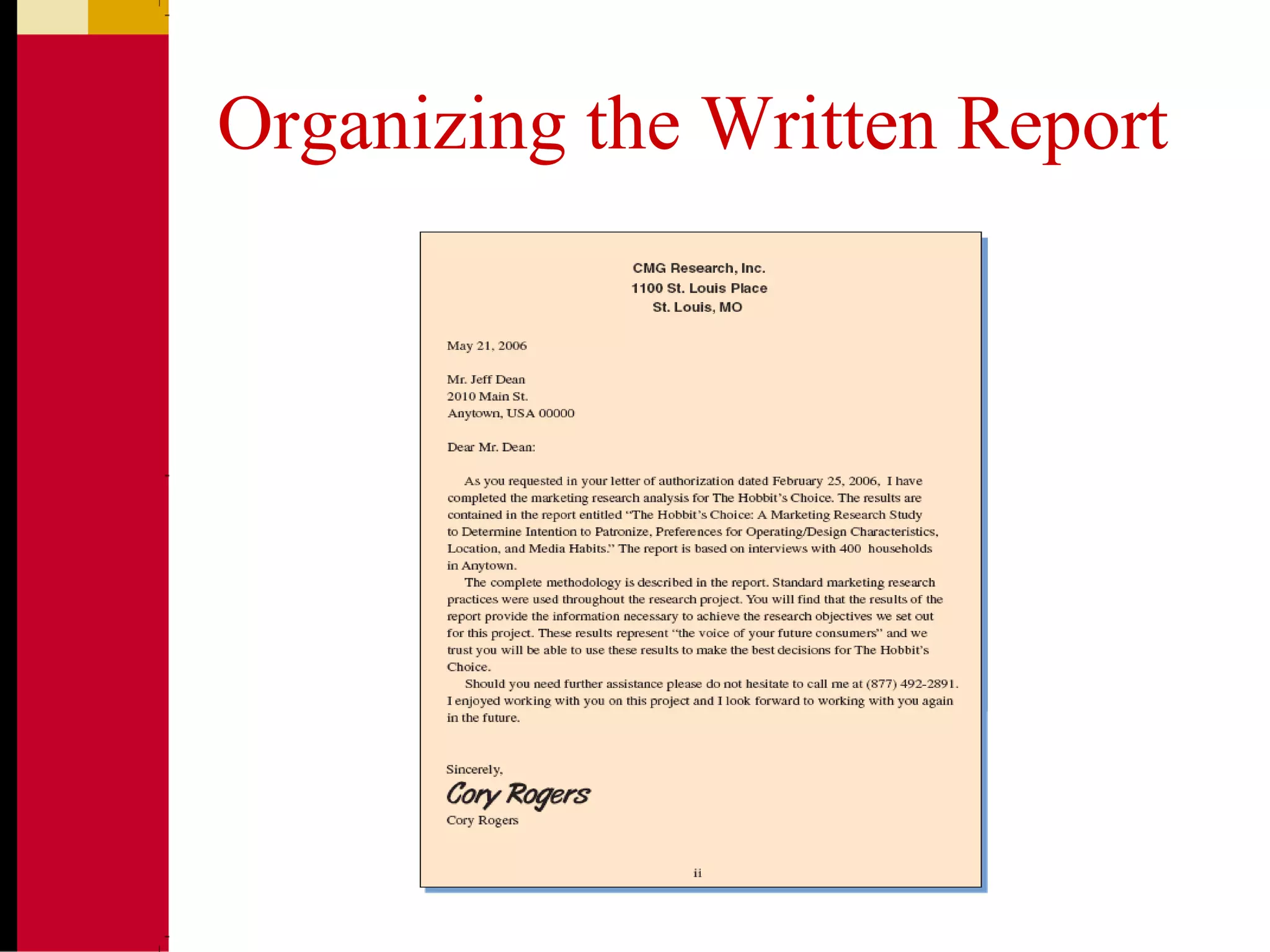
• The letter of authorization is the
marketing research firm’s certification
to do the project and it is optional.
Organizing the Written Report
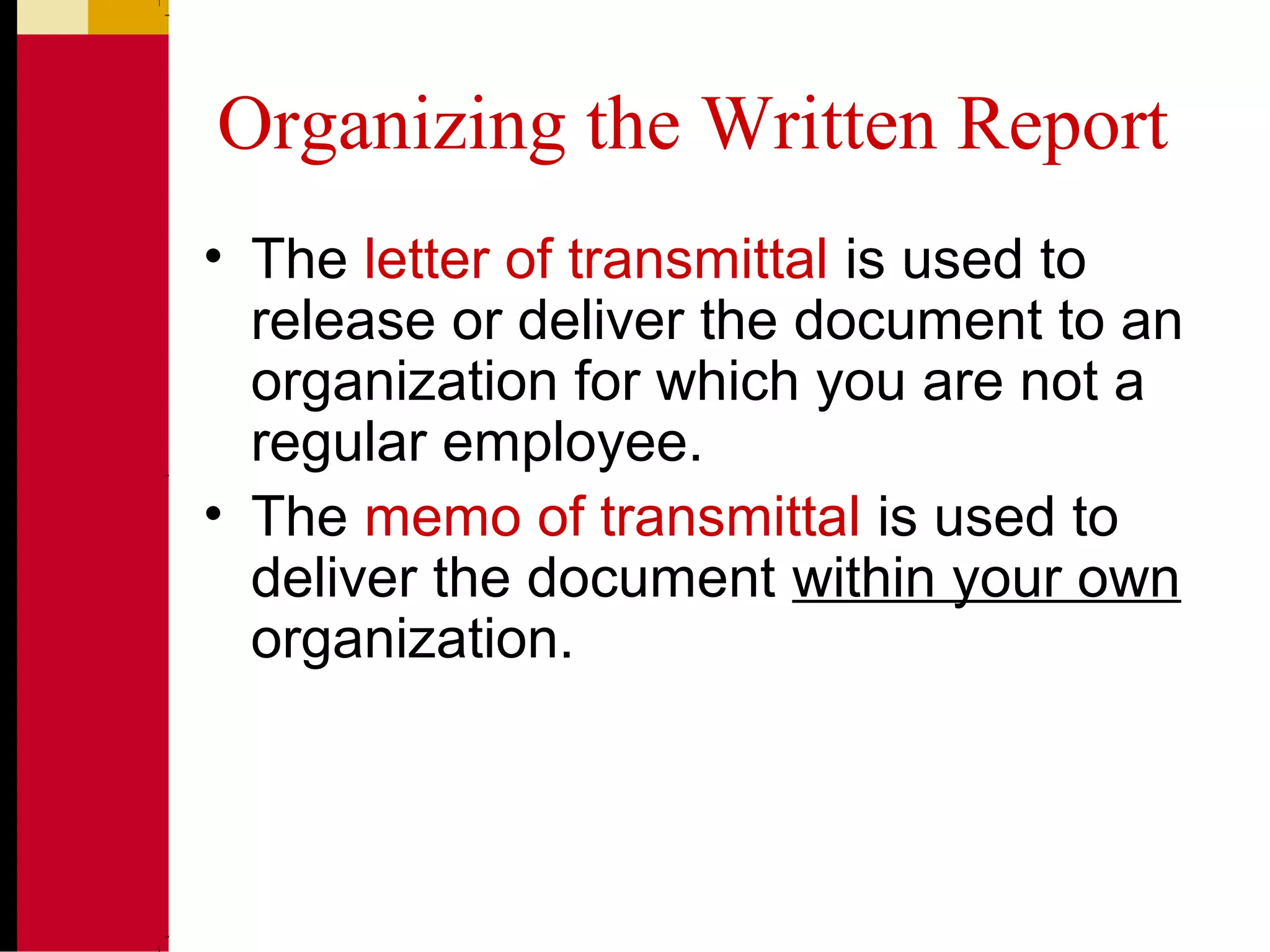
• The letter of transmittal is used to
release or deliver the document to an
organization for which you are not a
regular employee.
• The memo of transmittal is used to
deliver the document within your own
organization.
Organizing the Written Report
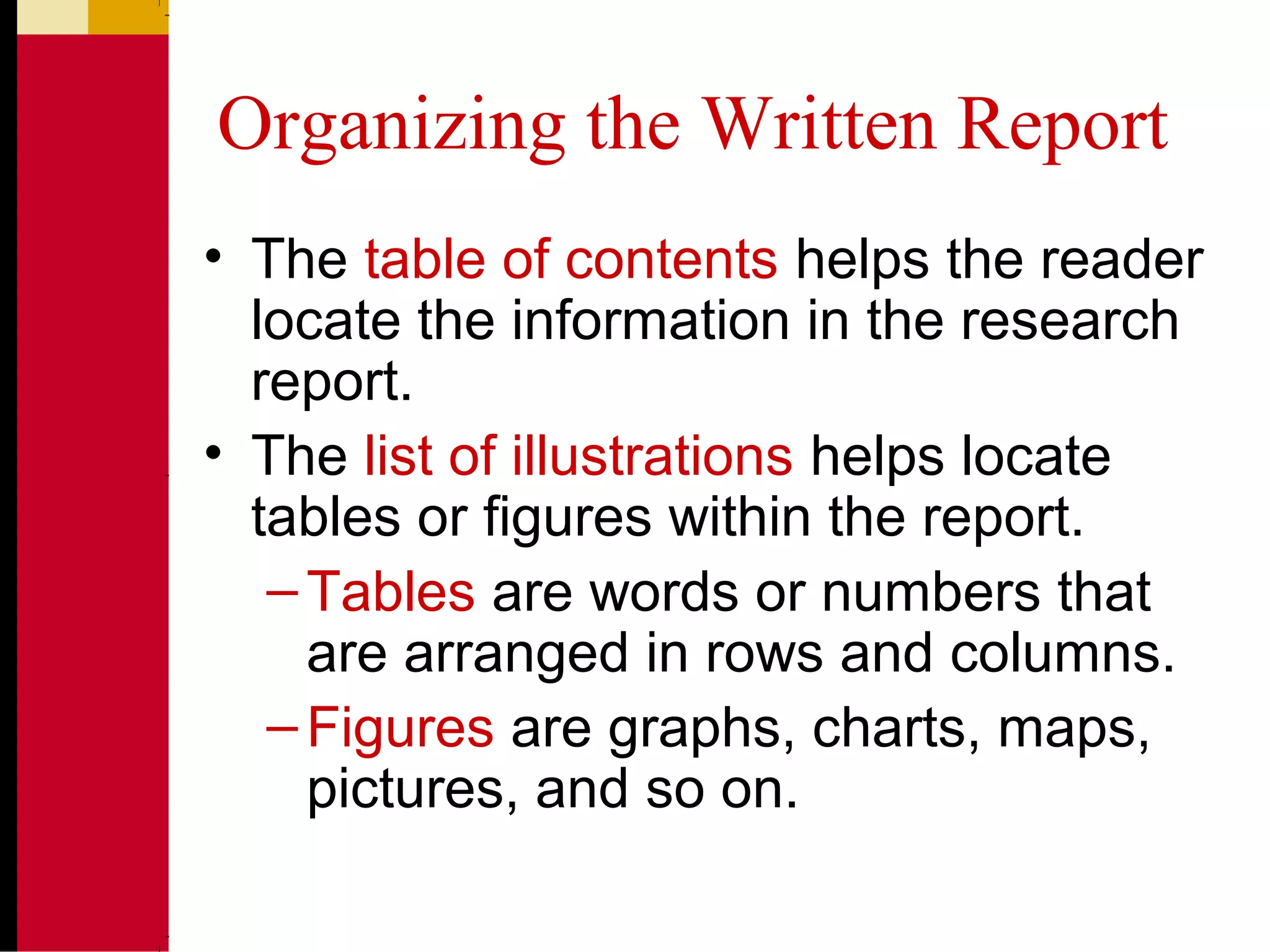
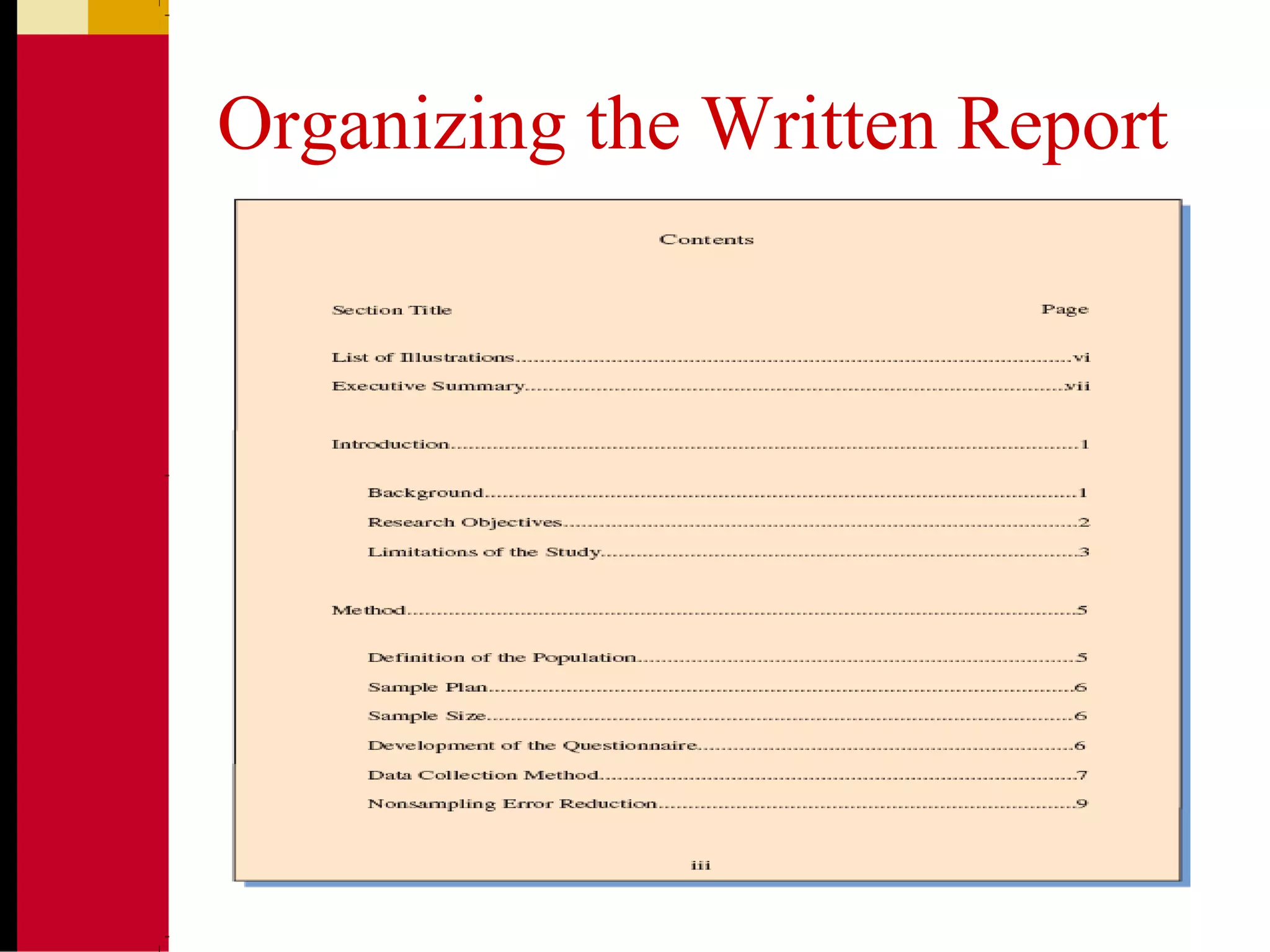
• The table of contents helps the reader
locate the information in the research
report.
• The list of illustrations helps locate
tables or figures within the report.
–Tables are words or numbers that
are arranged in rows and columns.
–Figures are graphs, charts, maps,
pictures, and so on.
Organizing the Written Report
• Abstract/executive summary: skeleton
of your report
• Body: bulk of the report, including
introduction, explanation of method,
discussion of results, statement of
limitations, and a list of
recommendations and conclusions
Introduction
• The introduction may contain:
–A statement of the background
situation leading to the problem
–The statement of the problem
–A summary description of how the
research process was initiated.
Introduction
• It should contain a statement of the
general purpose of the report and
also the specific objectives for the
research.
• Research objectives may be listed
here or in a separate section.
Organizing the Written Report
• Method describes in detail how the
research was conducted, who (or
what) the subjects were, and what
methods were used to achieve the
objectives
• Methodology refers to the science of
determining appropriate methods to
conduct research.
• Method refers to the tools used in a
scientific investigation.
• Use method, not methodology!
Organizing the Written Report
• Results present the findings of the
research.
• Limitations may focus on, but not
limited to, time, money, personnel, and
size of population.
Organizing the Written Report
• Conclusions are the outcomes and
decisions you have reached based on
your research results.
• Recommendations are suggestions for
how to proceed based on the
conclusions.
• The end matter contains information
that the reader may need to refer to for
further reading but that is not essential
to reporting the data.
Plagiarism
• Plagiarism refers to presenting the
work of others as your own and is a
serious offense.
–If you are in doubt, document!
Following Guidelines and
Principles for the Written Report
• Headings indicate the topic of each
section.
• Subheadings should divide that
information into segments.
• Visuals are tables, figures, charts,
diagrams, graphs, and other graphic
aids.
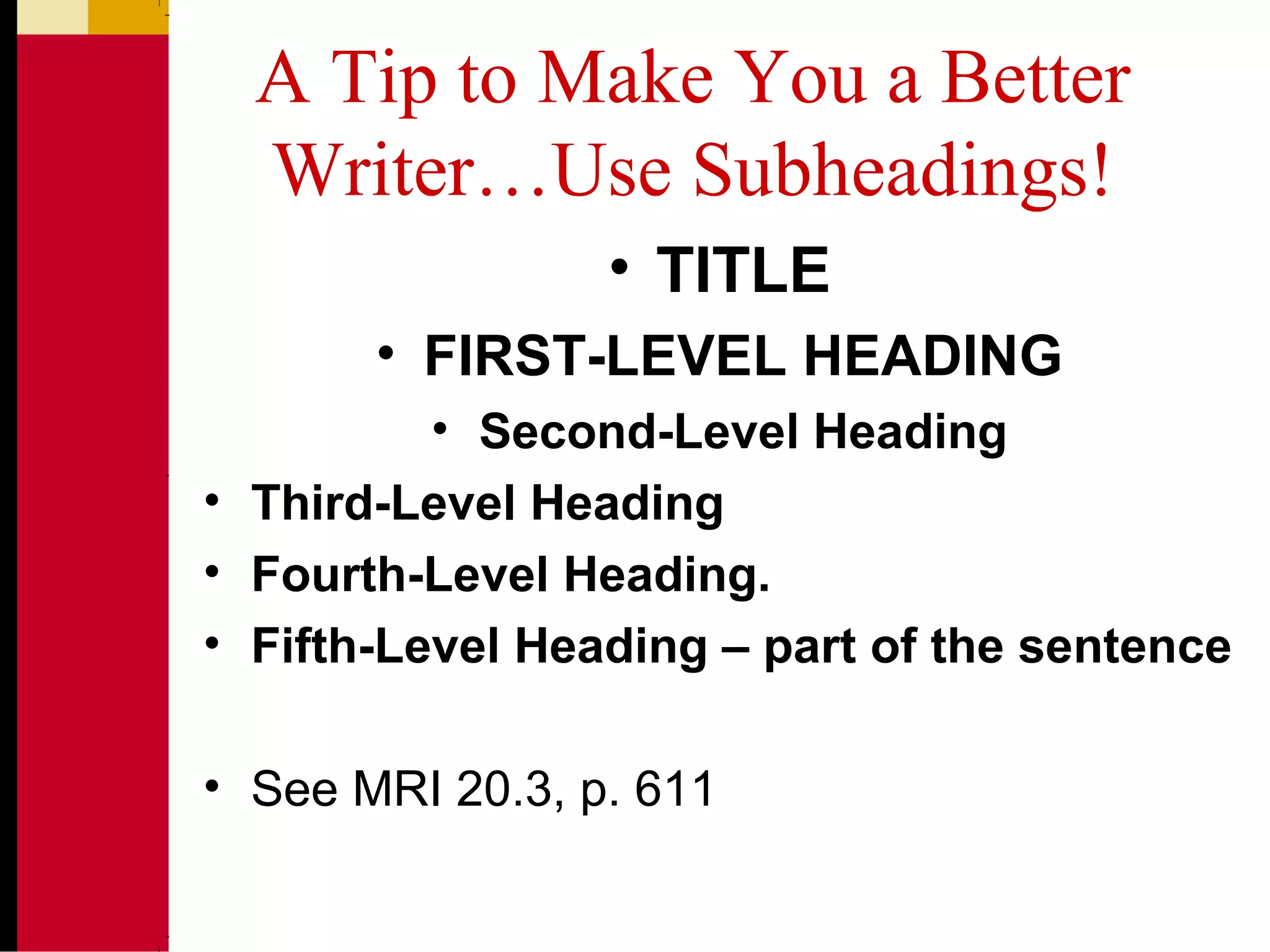
A Tip to Make You a Better
Writer…Use Subheadings!
• TITLE
• FIRST-LEVEL HEADING
• Second-Level Heading
• Third-Level Heading
• Fourth-Level Heading.
• Fifth-Level Heading – part of the sentence
• See MRI 20.3, p. 611
Style
• Stylistic devices can make the
difference in whether or not your
reader gets the message as you
intended it.
–Examples:
• A good paragraph has one main
idea… See MRI 20.4 on p. 612.
• Capitalize on white space.
Using Visuals:
Tables and Figures
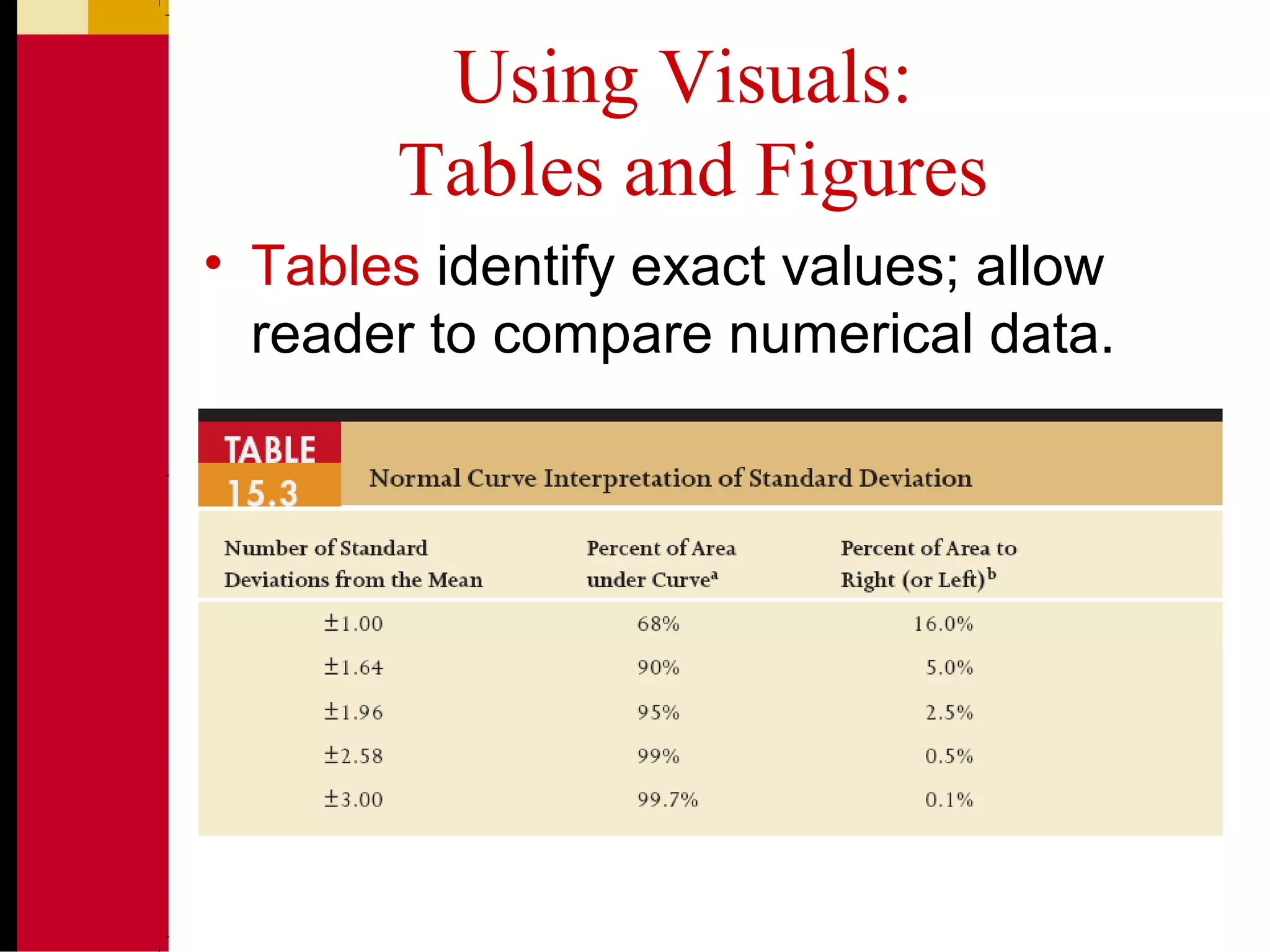
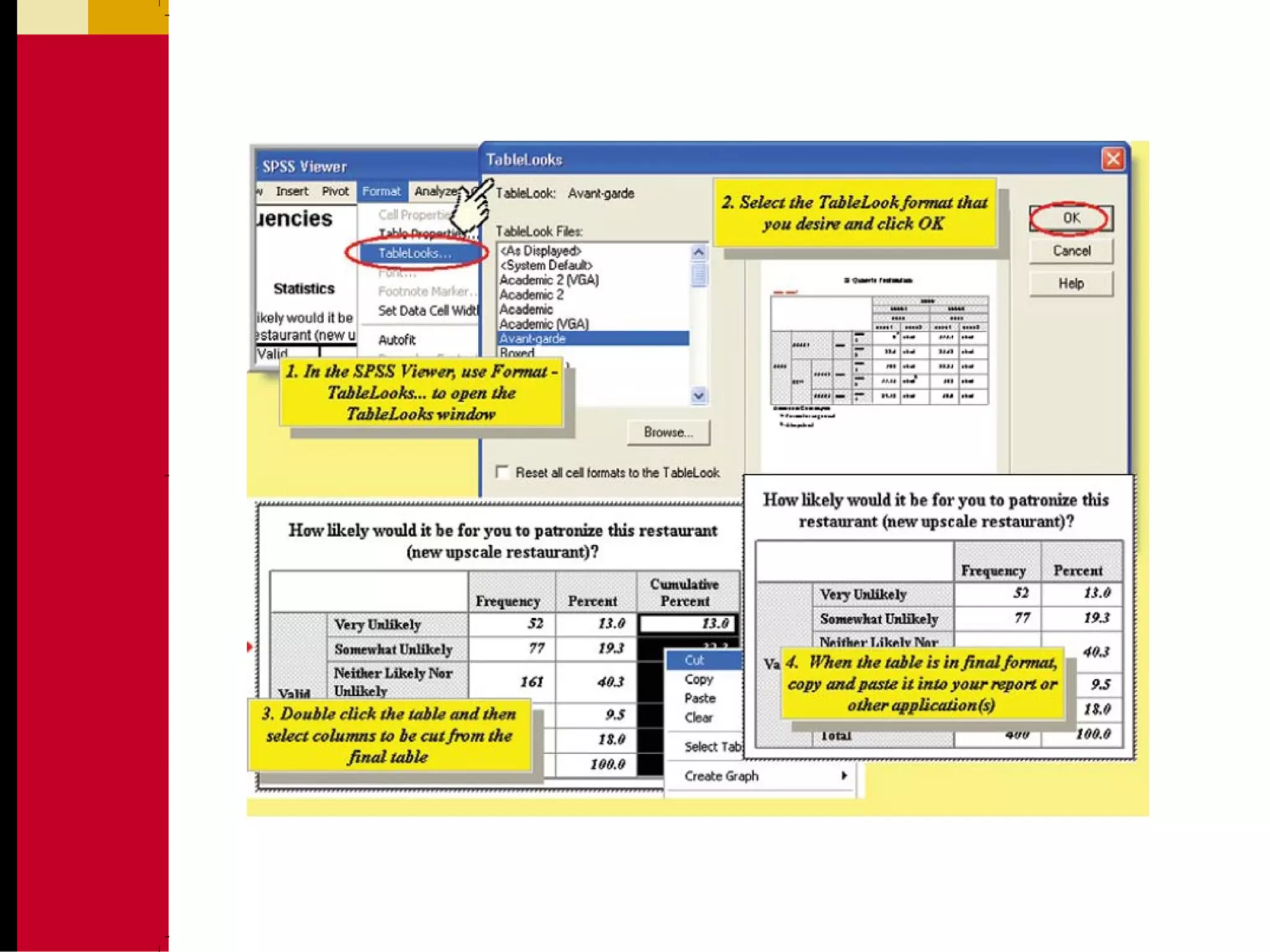
• Tables identify exact values; allow
reader to compare numerical data.
Using Visuals:
Tables and Figures
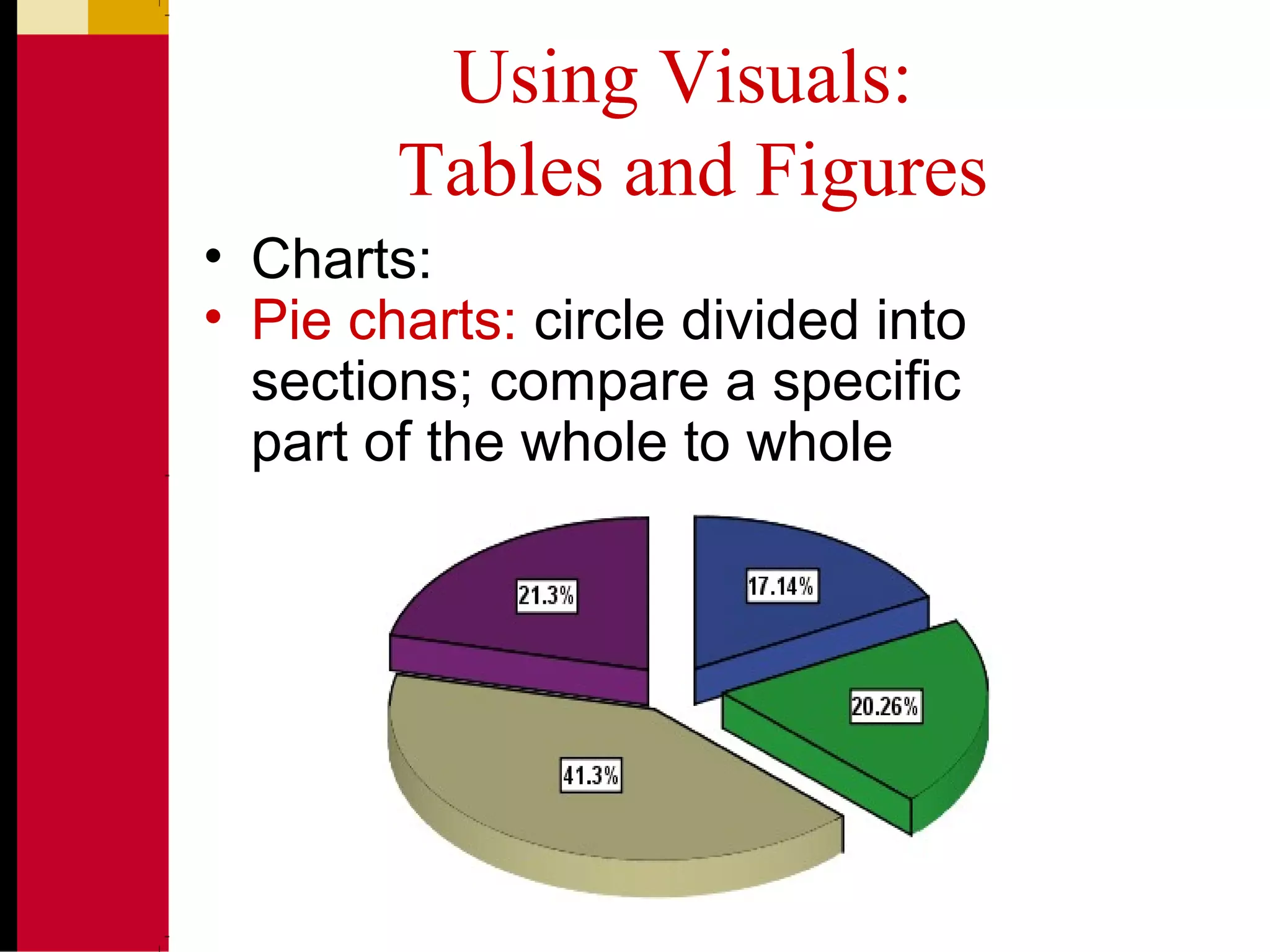
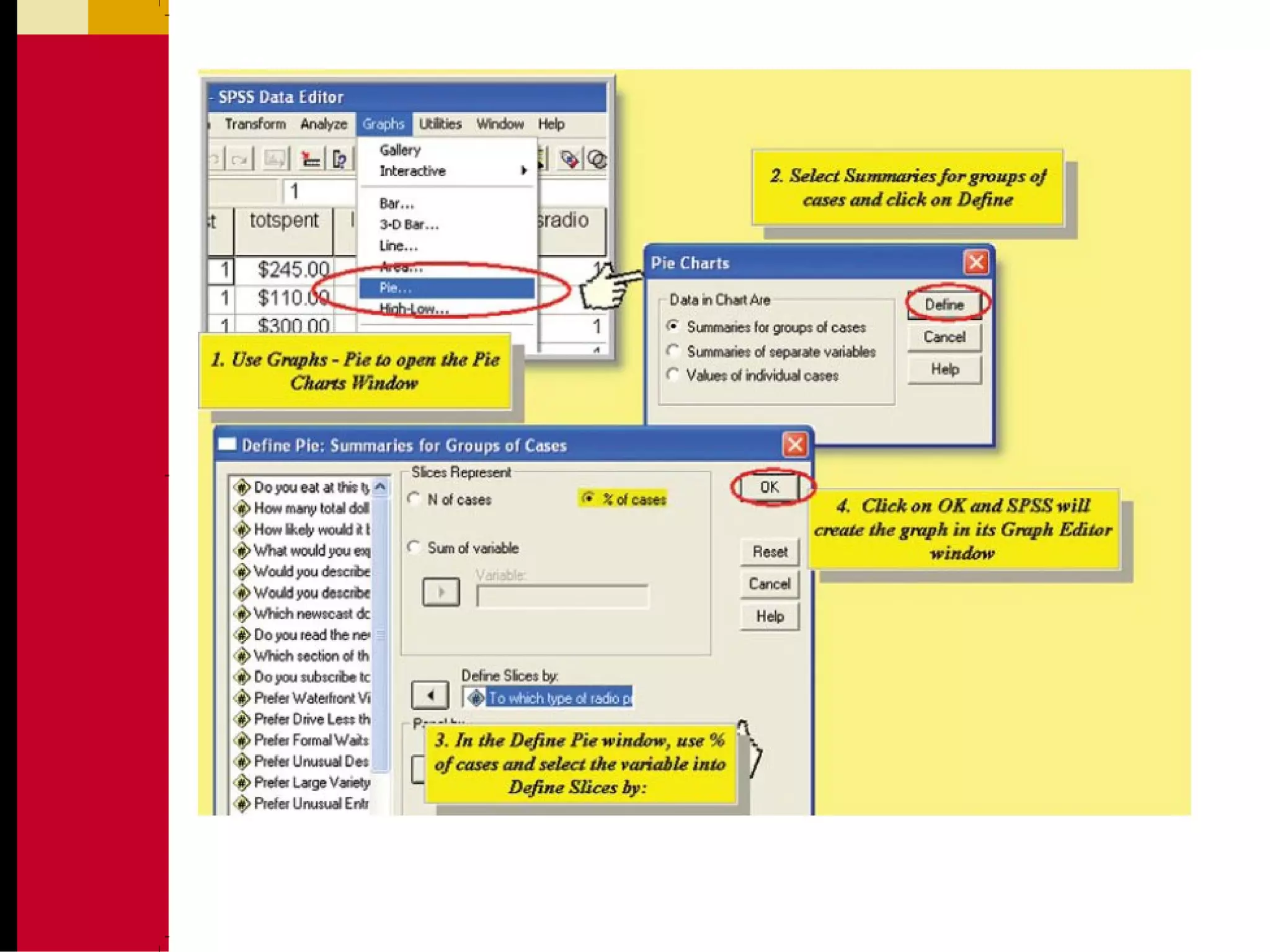
• Charts:
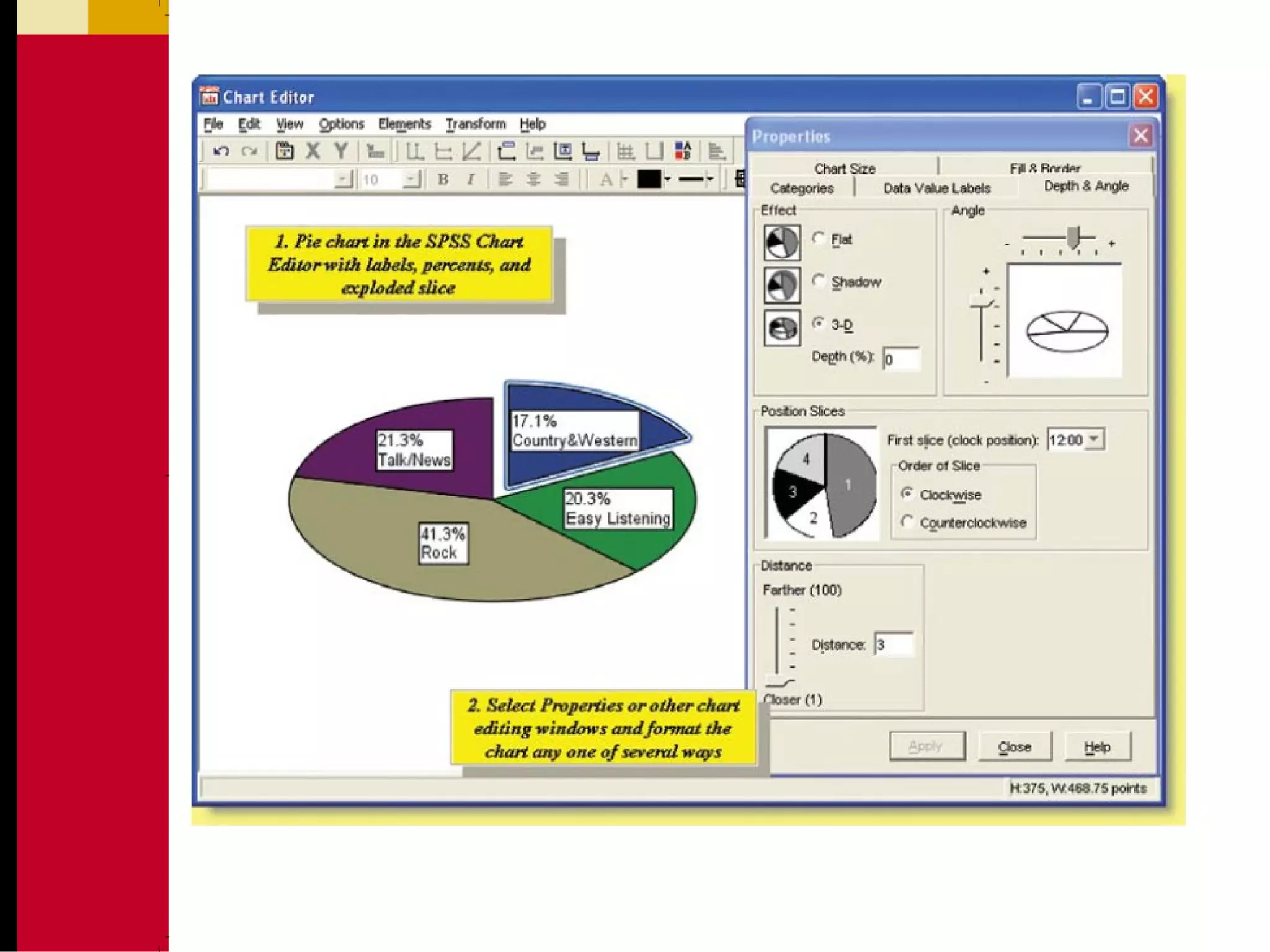
• Pie charts: circle divided into
sections; compare a specific
part of the whole to whole
Using Visuals:
Tables and Figures
• Charts:
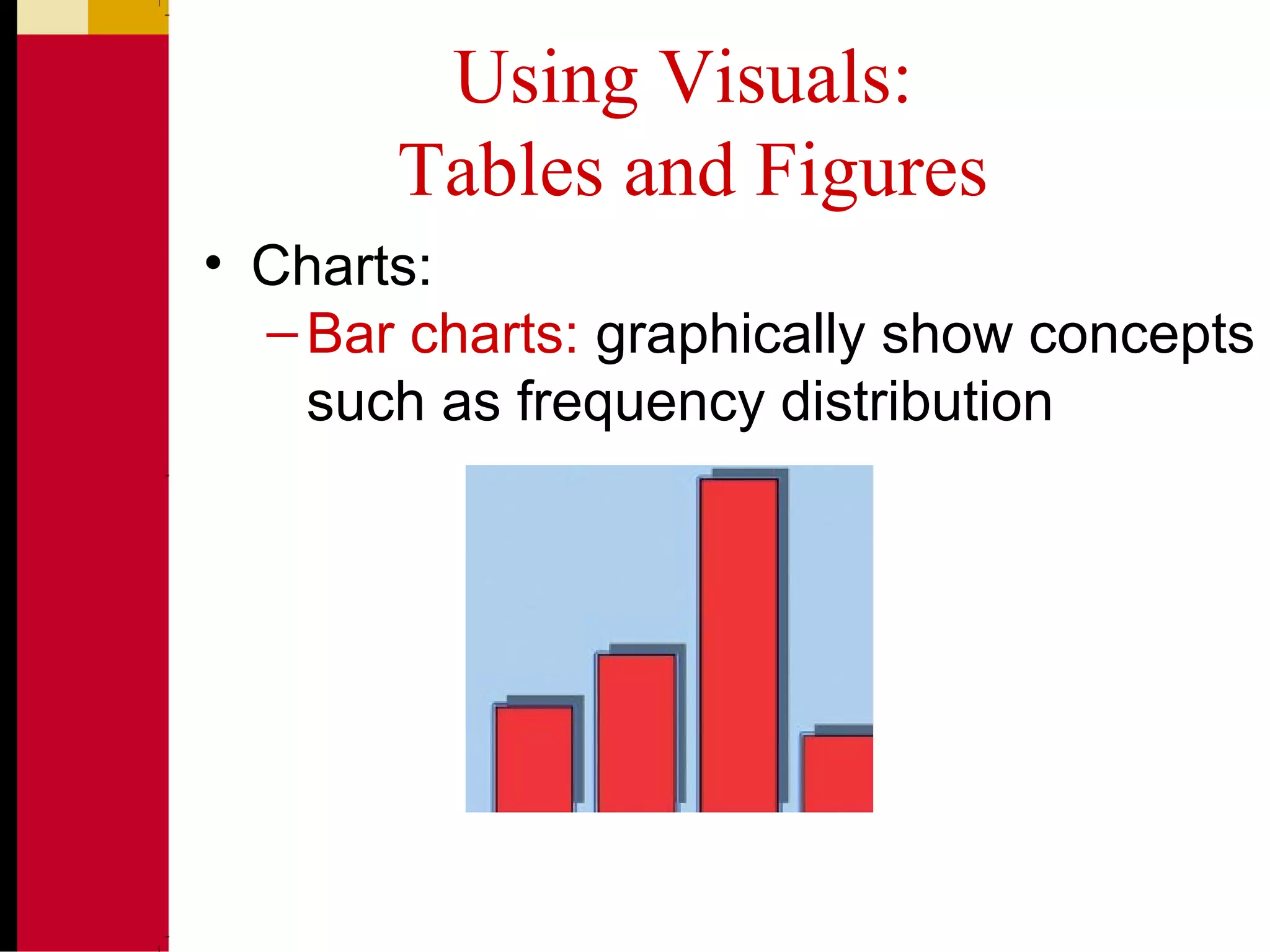
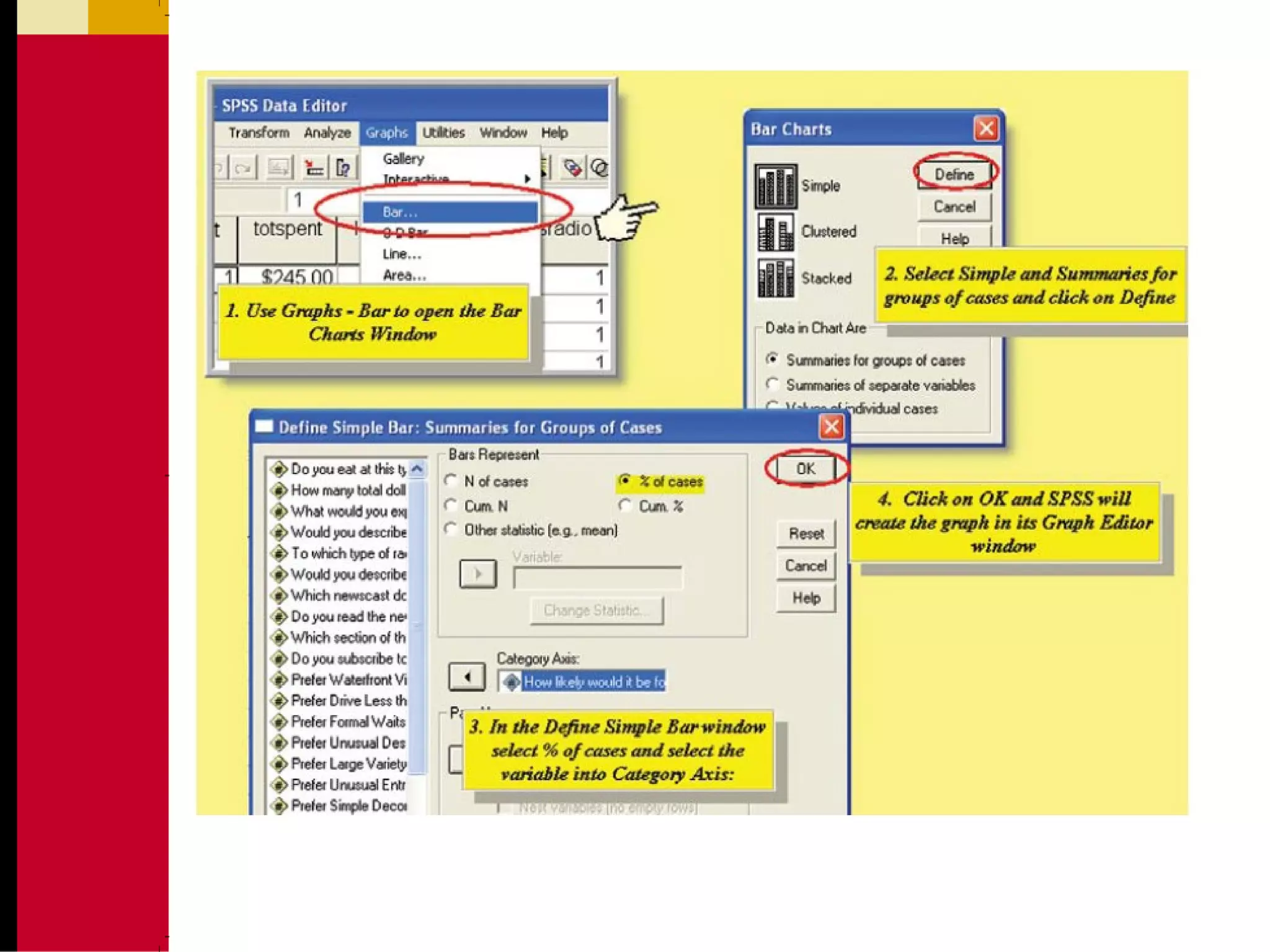
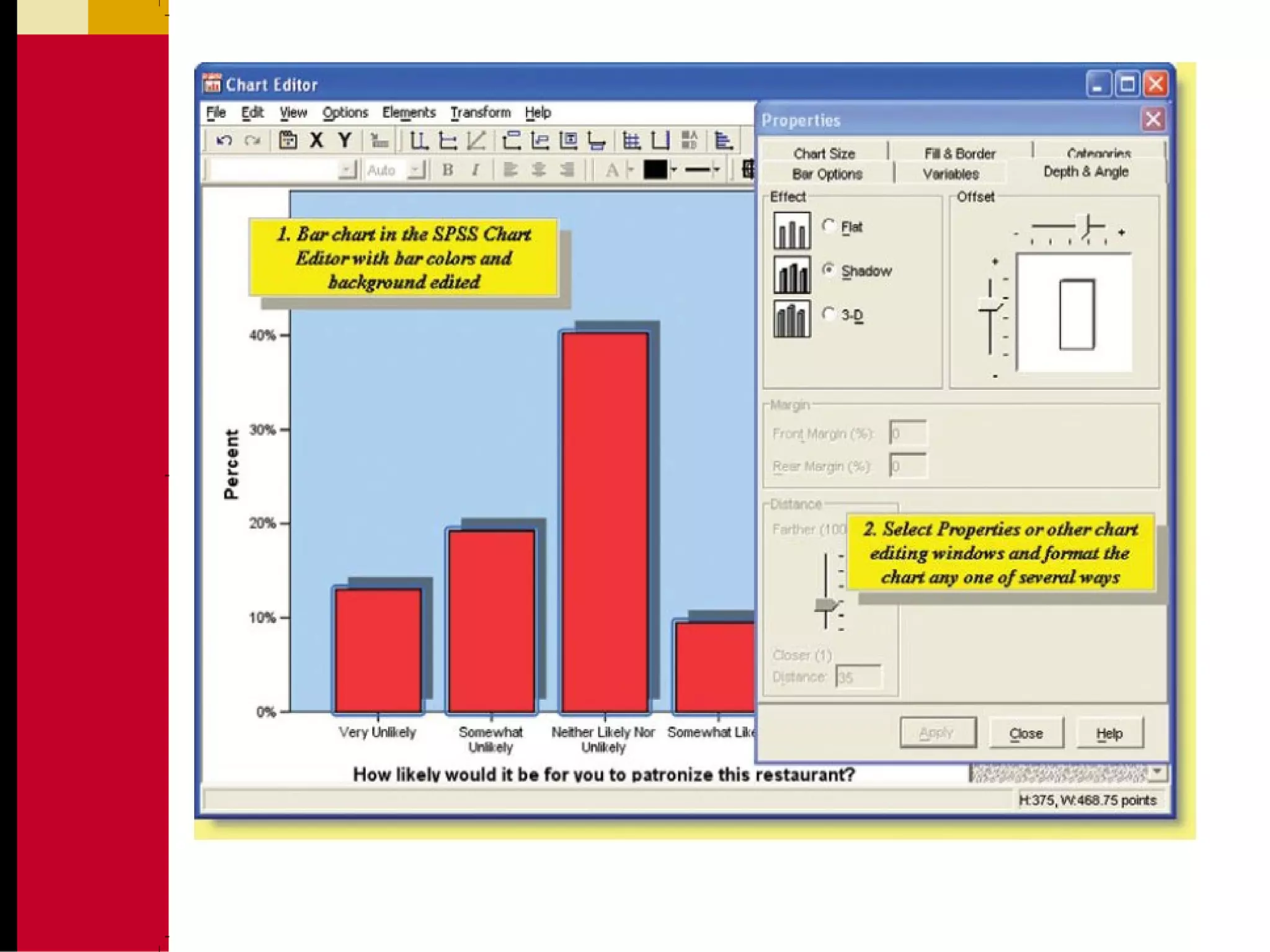
–Bar charts: graphically show concepts
such as frequency distribution
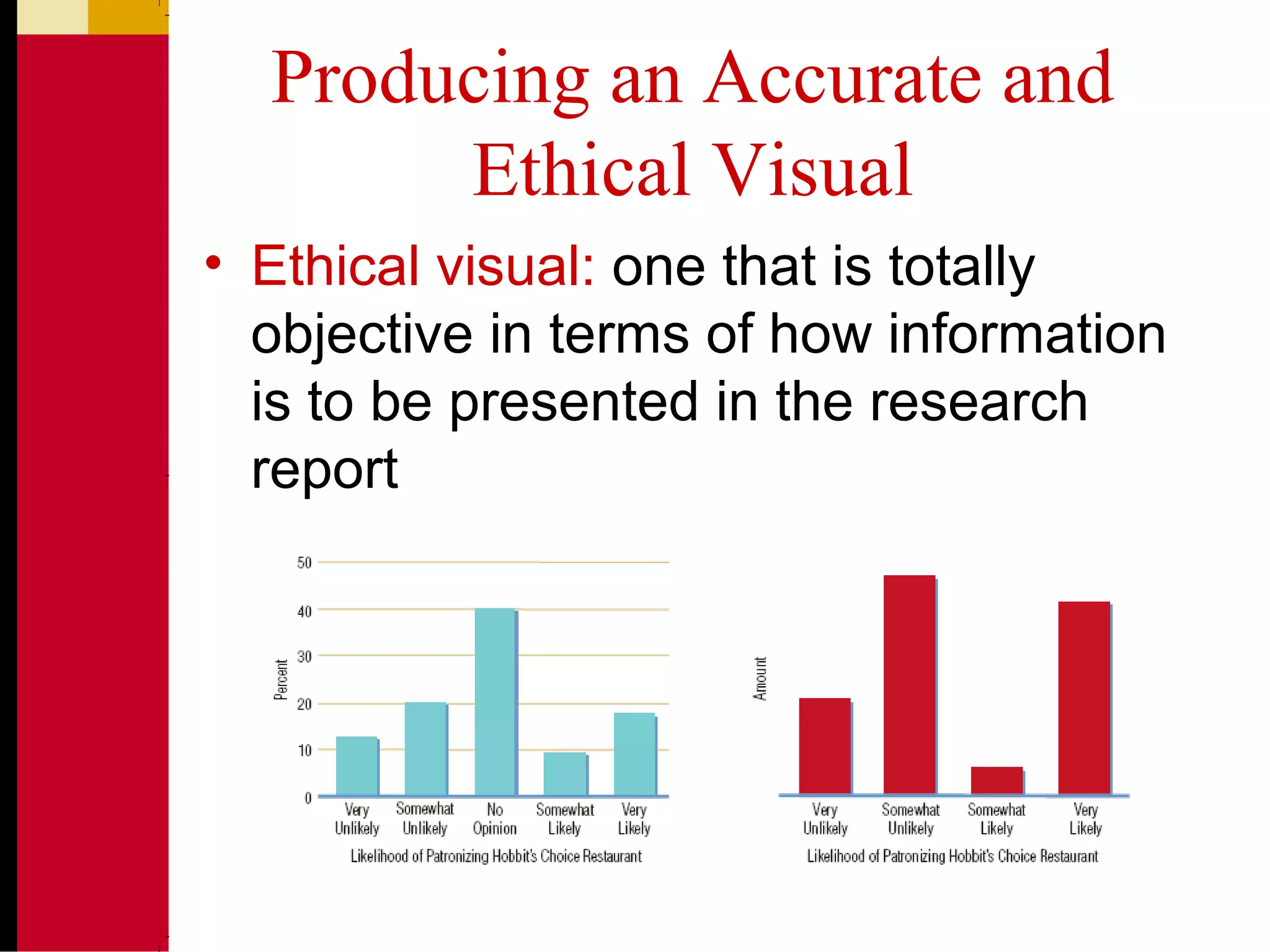
Producing an Accurate and
Ethical Visual
• Ethical visual: one that is totally
objective in terms of how information
is to be presented in the research
report
Ethical Visuals
• An ethical visual is one that is totally
objective in terms of how information
is presented in the research report.
–Double- and triple-check all labels,
numbers, and visual shapes.
–Exercise caution if you use three-
dimensional figures.
–Make sure all parts of the scales
are presented.
Presenting Your Research
Orally
• The purpose of an oral presentation
is to succinctly present the research
information and to provide an
opportunity for questions and
discussion.
Presenting Your Research
Orally
• To be prepared follow these steps:
–Identify and analyze your
audience.
–Find out the expectations your
audience has for your
presentation.
–Determine the key points your
audience needs to hear.
–Outline the key points so you can
easily refer to them.
Presenting Your Research
Orally
–Make sure your visuals graphically
and ethically portray your key points.
–Practice your presentation.
–Check out the room and media
equipment prior to the presentation.
–Arrive early.
–Be positive and confident.
–Practice good presentation skills
(volume, enunciation, eye contact,
good posture, professional dress).
Sources
• http://www.google.co.in/url?
sa=t&rct=j&q=&esrc=s&source=web&cd=3&cad=rja&uact=8&ved=0CCgQF
jAC&url=http%3A%2F%2F140.133.72.206%3A8080%2F7300%2F
%25E4%25B8%2596%25E7%2595%258C%25E5%2590%258D
%25E6%259B%25B2100%25E9%25A6%2596%2F%25E8%25A1%258C
%25E9%258A%25B7%25E7%25A0%2594%25E7%25A9%25B6%2F
%25E6%25B2%2588%25E6%25B0%25B8%25E6%25AD
%25A3%2F18031%25E8%258B
%25B1%25E6%2596%2587%25E7%2589%2588%25E6%2595%2599%2
5E5%25AD%25B8%25E9%2585%258D%25E4%25BB%25B6%2Fcontent
%2FChapter_20%2FPresent%2FPowerPoint
%2Fburns05_ppt20.ppt&ei=XbW0VKbeDYKauQSkn4D4Dw&usg=AFQjCN
HyNJ4V2EwJ1ndbWErWeEz1gfrQpw&bvm=bv.83339334,d.c2E

Mm unit 1point2

  • 1.
    The Marketing ResearchReport: Preparation and Presentation Course: MBA Subject: MM II Unit: I
  • 2.
    The Marketing ResearchReport • Marketing research report: a factual message that transmits research results, vital recommendations, conclusions, and other important information to the client, who in turn bases his or her decision making on the content of the report
  • 3.
    The Importance ofthe Marketing Research Report • The client bases his or her decision making on the contents of the report. • The marketing research report is the product that represents the efforts of the marketing research team, and it may be the only part of the project that the client will see. • The time and effort expended in the research process are wasted if the report does not communicate effectively.
  • 4.
    Organizing the WrittenReport • Marketing research reports are tailored to specific audiences and purposes, and you must consider both in all phases of the research process, including planning the report. • Must consider questions such as: –What is your purpose? –Who is the audience? –What are your audience’s interests, values, concerns?
  • 5.
  • 6.
    Organizing the WrittenReport • The front matter consists of all pages that precede the first page of the report. • The title page contains the title of the document, the organization/person(s) for whom the report was prepared, the organization/person(s) who prepared the report, and the date of submission. • The letter of authorization is the marketing research firm’s certification to do the project and it is optional.
  • 7.
    Organizing the WrittenReport • The letter of transmittal is used to release or deliver the document to an organization for which you are not a regular employee. • The memo of transmittal is used to deliver the document within your own organization.
  • 8.
    Organizing the WrittenReport • The table of contents helps the reader locate the information in the research report. • The list of illustrations helps locate tables or figures within the report. –Tables are words or numbers that are arranged in rows and columns. –Figures are graphs, charts, maps, pictures, and so on.
  • 9.
  • 10.
  • 11.
  • 12.
    Organizing the WrittenReport • Abstract/executive summary: skeleton of your report • Body: bulk of the report, including introduction, explanation of method, discussion of results, statement of limitations, and a list of recommendations and conclusions
  • 13.
    Introduction • The introductionmay contain: –A statement of the background situation leading to the problem –The statement of the problem –A summary description of how the research process was initiated.
  • 14.
    Introduction • It shouldcontain a statement of the general purpose of the report and also the specific objectives for the research. • Research objectives may be listed here or in a separate section.
  • 15.
    Organizing the WrittenReport • Method describes in detail how the research was conducted, who (or what) the subjects were, and what methods were used to achieve the objectives • Methodology refers to the science of determining appropriate methods to conduct research. • Method refers to the tools used in a scientific investigation. • Use method, not methodology!
  • 16.
    Organizing the WrittenReport • Results present the findings of the research. • Limitations may focus on, but not limited to, time, money, personnel, and size of population.
  • 17.
    Organizing the WrittenReport • Conclusions are the outcomes and decisions you have reached based on your research results. • Recommendations are suggestions for how to proceed based on the conclusions. • The end matter contains information that the reader may need to refer to for further reading but that is not essential to reporting the data.
  • 18.
    Plagiarism • Plagiarism refersto presenting the work of others as your own and is a serious offense. –If you are in doubt, document!
  • 19.
    Following Guidelines and Principlesfor the Written Report • Headings indicate the topic of each section. • Subheadings should divide that information into segments. • Visuals are tables, figures, charts, diagrams, graphs, and other graphic aids.
  • 20.
    A Tip toMake You a Better Writer…Use Subheadings! • TITLE • FIRST-LEVEL HEADING • Second-Level Heading • Third-Level Heading • Fourth-Level Heading. • Fifth-Level Heading – part of the sentence • See MRI 20.3, p. 611
  • 21.
    Style • Stylistic devicescan make the difference in whether or not your reader gets the message as you intended it. –Examples: • A good paragraph has one main idea… See MRI 20.4 on p. 612. • Capitalize on white space.
  • 22.
    Using Visuals: Tables andFigures • Tables identify exact values; allow reader to compare numerical data.
  • 24.
    Using Visuals: Tables andFigures • Charts: • Pie charts: circle divided into sections; compare a specific part of the whole to whole
  • 27.
    Using Visuals: Tables andFigures • Charts: –Bar charts: graphically show concepts such as frequency distribution
  • 30.
    Producing an Accurateand Ethical Visual • Ethical visual: one that is totally objective in terms of how information is to be presented in the research report
  • 31.
    Ethical Visuals • Anethical visual is one that is totally objective in terms of how information is presented in the research report. –Double- and triple-check all labels, numbers, and visual shapes. –Exercise caution if you use three- dimensional figures. –Make sure all parts of the scales are presented.
  • 32.
    Presenting Your Research Orally •The purpose of an oral presentation is to succinctly present the research information and to provide an opportunity for questions and discussion.
  • 33.
    Presenting Your Research Orally •To be prepared follow these steps: –Identify and analyze your audience. –Find out the expectations your audience has for your presentation. –Determine the key points your audience needs to hear. –Outline the key points so you can easily refer to them.
  • 34.
    Presenting Your Research Orally –Makesure your visuals graphically and ethically portray your key points. –Practice your presentation. –Check out the room and media equipment prior to the presentation. –Arrive early. –Be positive and confident. –Practice good presentation skills (volume, enunciation, eye contact, good posture, professional dress).
  • 35.