We understand your world

Prepared by:
Rahul Mandloi
Aziz Bhatia
TYPES OF BANKING…

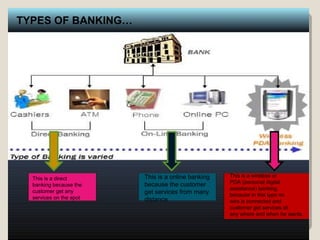
This is a direct
banking because the
customer get any
services on the spot

This is a online banking
because the customer
get services from many
distance

This is a wireless or
PDA (personal digital
assistance) banking
because in this type no
wire is connected and
customer get services at
any where and when he wants.
TYPES OF E-BANKING…
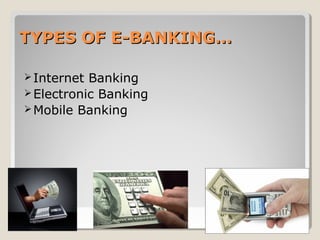
 Internet

Banking
 Electronic Banking
 Mobile Banking
Electronic Banking…


E-Banking is combination of two, electronic technology and
banking.



It is a process by which a customer performs banking transactions
electronically without visiting brick and morter institutions.



It is also called online and internet banking.



E-Banking is delivery of banking services to the customer through
the use of electronic communication primarily with the internet.
Indian E-Banking scenario…


Opening up of economy in 1991 marked the entry of foreign banks.
They brought new technology with them.



ICICI bank kicked off online banking in 1996.



Cost comes down from $ 1.1. to $ 0.27
Products and Services of E-Banking
Products




ATMs
Debit Cards
Credit Cards

Services
RTGS
Bill payment Service
Fund Transfer
Railway Pass
Recharging prepaid
phones
 Shopping
 Online movie tickets
 Mutual fund





About HDFC…
Incorporated in the year of 1994 by HDFC Ltd. India's
premier housing finance company.


It

was among the first companies to receive an 'in
principle' approval from the RBI to set up a bank in the
private sector.
The

Bank commenced its operations as a Scheduled
Commercial Bank in January 1995.
Authorized
Its

share capital is 550 crore.

branches are 1725 in india and has a network of 4393
ATM’s across india
Mergers & Amalgamations…
2000
Times bank limited merged
with HDFC bank

2008
HDFC acquired Centurian
Bank of Punjab
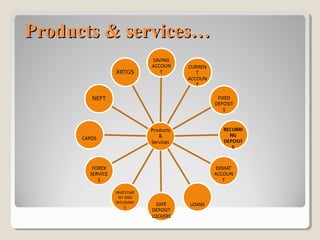
Products & services…
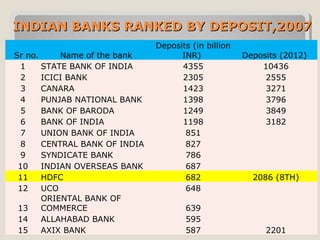
INDIAN BANKS RANKED BY DEPOSIT,2007
Sr no.
Name of the bank
1
STATE BANK OF INDIA
2
ICICI BANK
3
CANARA
4
PUNJAB NATIONAL BANK
5
BANK OF BARODA
6
BANK OF INDIA
7
UNION BANK OF INDIA
8
CENTRAL BANK OF INDIA
9
SYNDICATE BANK
10
INDIAN OVERSEAS BANK
11
HDFC
12
UCO
ORIENTAL BANK OF
13
COMMERCE
14
ALLAHABAD BANK
15
AXIX BANK

Deposits (in billion
INR)
4355
2305
1423
1398
1249
1198
851
827
786
687
682
648
639
595
587

Deposits (2012)
10436
2555
3271
3796
3849
3182

2086 (8TH)

2201
RBI regulations
Technology

and security issues
Legal issues
Regulatory and supervisory issues.
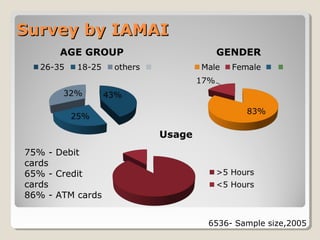
Survey by IAMAI

75% - Debit
cards
65% - Credit
cards
86% - ATM cards
6536- Sample size,2005
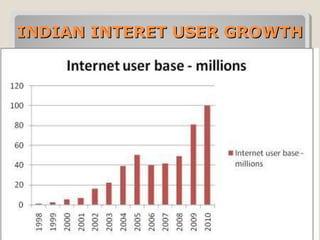
INDIAN INTERET USER GROWTH
Benefits of online banking
Speeded

up responses time
Improved quality of services
Flexibility
Security
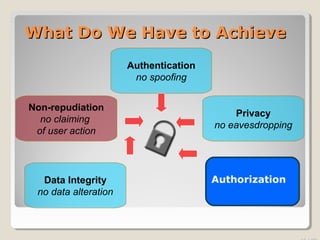
What Do We Have to Achieve
Authentication
no spoofing
Non-repudiation
no claiming
of user action

Data Integrity
no data alteration

Privacy
no eavesdropping

Authorization
Why Security?
Computer-based

businesses
Advances in technology
Internet crimes
September 11th attacks
Cyber-terrorism
Internet banking
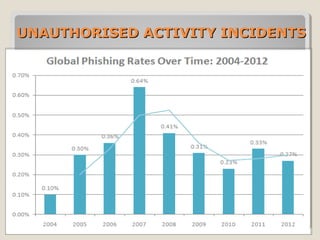
UNAUTHORISED ACTIVITY INCIDENTS
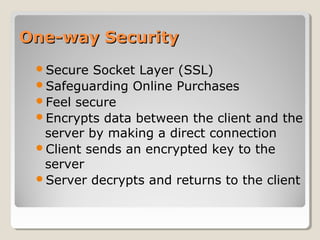
One-way Security
Secure

Socket Layer (SSL)
Safeguarding Online Purchases
Feel secure
Encrypts data between the client and the
server by making a direct connection
Client sends an encrypted key to the
server
Server decrypts and returns to the client
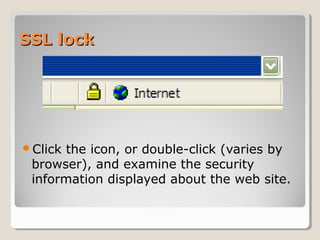
SSL lock

Click

the icon, or double-click (varies by
browser), and examine the security
information displayed about the web site.
Two-Way Security
Public

Key Infrastructure (PKI)

Insures

privacy for both online company
and online bank customer

Enables

users to securely exchange data
and money through public network
THANK YOU

Mis my part

  • 1.
    We understand yourworld Prepared by: Rahul Mandloi Aziz Bhatia
  • 2.
    TYPES OF BANKING… Thisis a direct banking because the customer get any services on the spot This is a online banking because the customer get services from many distance This is a wireless or PDA (personal digital assistance) banking because in this type no wire is connected and customer get services at any where and when he wants.
  • 3.
    TYPES OF E-BANKING… Internet Banking  Electronic Banking  Mobile Banking
  • 4.
    Electronic Banking…  E-Banking iscombination of two, electronic technology and banking.  It is a process by which a customer performs banking transactions electronically without visiting brick and morter institutions.  It is also called online and internet banking.  E-Banking is delivery of banking services to the customer through the use of electronic communication primarily with the internet.
  • 5.
    Indian E-Banking scenario…  Openingup of economy in 1991 marked the entry of foreign banks. They brought new technology with them.  ICICI bank kicked off online banking in 1996.  Cost comes down from $ 1.1. to $ 0.27
  • 6.
    Products and Servicesof E-Banking Products    ATMs Debit Cards Credit Cards Services RTGS Bill payment Service Fund Transfer Railway Pass Recharging prepaid phones  Shopping  Online movie tickets  Mutual fund     
  • 7.
    About HDFC… Incorporated inthe year of 1994 by HDFC Ltd. India's premier housing finance company.  It was among the first companies to receive an 'in principle' approval from the RBI to set up a bank in the private sector. The Bank commenced its operations as a Scheduled Commercial Bank in January 1995. Authorized Its share capital is 550 crore. branches are 1725 in india and has a network of 4393 ATM’s across india
  • 8.
    Mergers & Amalgamations… 2000 Timesbank limited merged with HDFC bank 2008 HDFC acquired Centurian Bank of Punjab
  • 9.
  • 10.
    INDIAN BANKS RANKEDBY DEPOSIT,2007 Sr no. Name of the bank 1 STATE BANK OF INDIA 2 ICICI BANK 3 CANARA 4 PUNJAB NATIONAL BANK 5 BANK OF BARODA 6 BANK OF INDIA 7 UNION BANK OF INDIA 8 CENTRAL BANK OF INDIA 9 SYNDICATE BANK 10 INDIAN OVERSEAS BANK 11 HDFC 12 UCO ORIENTAL BANK OF 13 COMMERCE 14 ALLAHABAD BANK 15 AXIX BANK Deposits (in billion INR) 4355 2305 1423 1398 1249 1198 851 827 786 687 682 648 639 595 587 Deposits (2012) 10436 2555 3271 3796 3849 3182 2086 (8TH) 2201
  • 11.
    RBI regulations Technology and securityissues Legal issues Regulatory and supervisory issues.
  • 12.
    Survey by IAMAI 75%- Debit cards 65% - Credit cards 86% - ATM cards 6536- Sample size,2005
  • 14.
  • 15.
    Benefits of onlinebanking Speeded up responses time Improved quality of services Flexibility Security
  • 16.
    What Do WeHave to Achieve Authentication no spoofing Non-repudiation no claiming of user action Data Integrity no data alteration Privacy no eavesdropping Authorization
  • 17.
    Why Security? Computer-based businesses Advances intechnology Internet crimes September 11th attacks Cyber-terrorism Internet banking
  • 18.
  • 19.
    One-way Security Secure Socket Layer(SSL) Safeguarding Online Purchases Feel secure Encrypts data between the client and the server by making a direct connection Client sends an encrypted key to the server Server decrypts and returns to the client
  • 20.
    SSL lock Click the icon,or double-click (varies by browser), and examine the security information displayed about the web site.
  • 21.
    Two-Way Security Public Key Infrastructure(PKI) Insures privacy for both online company and online bank customer Enables users to securely exchange data and money through public network
  • 22.