Diane C. Mirvis
Associate Vice President Information Technology & CIO
dmirvis@bridgeport.edu
NISO Forum: Library Resource Management Systems
October 9, 2009 • Boston, MA
 Fundamental rethinking of how work gets
done by scholars, students, staff
 Impacts entire organizational structure, roles
 Workflow and knowledge management
become pivotal concepts
 Drives technology and Library purchasing
 For Librarians, spotlights value of information
in all forms
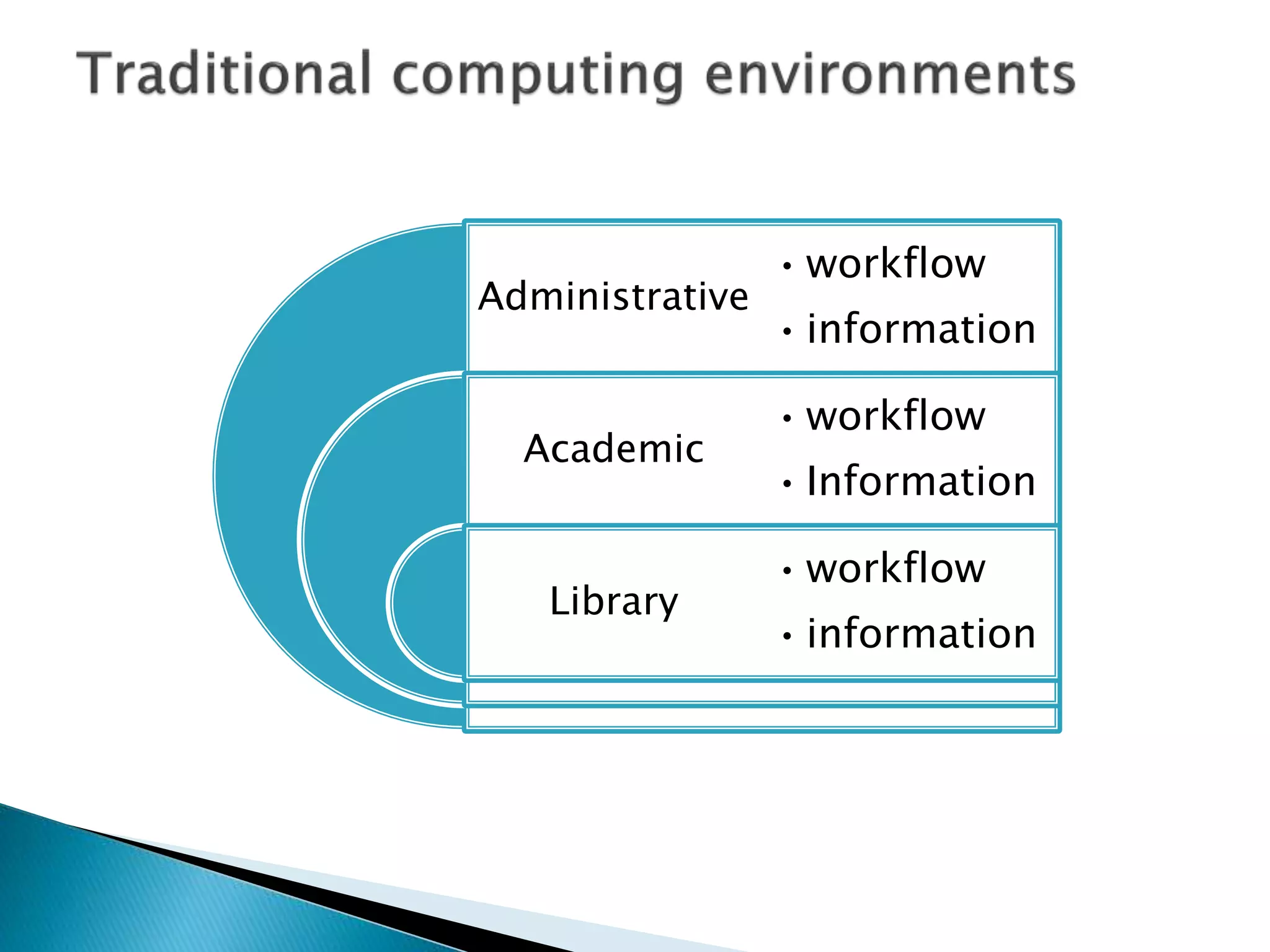
Administrative
Academic
Library
•workflow
•information
•workflow
•Information
•workflow
•information
 Silo thinking among constituencies
 Proprietary technology
 Niche vendors
 Mix of content aggregators, publishers with
licensing agreements selling to organizational
consumers. Little opportunity to view
information resources holistically.
 Lack of skilled technical staff for integration
Where in the organization is information?
And who owns it?
Everywhere and Everybody
(Including in the Library)
At the University of Bridgeport………
We are stepping back together to reconsider
our enterprise information needs, and rethink
how we use information as students, faculty,
staff and alumni
The University is examining how workflow and
content can be more effectively managed
One surprise for Librarians – the many “stealth”
database providers
 Datatel Student Information System
 Datatel Enterprise Portal
 Datatel e-Business Solution (CRM)
 Visionary Clinical Information System (CIS)
 Campus Security
 3rd Party Vendors
 Cloud Applications
 Campus Digital Signage
 Web site
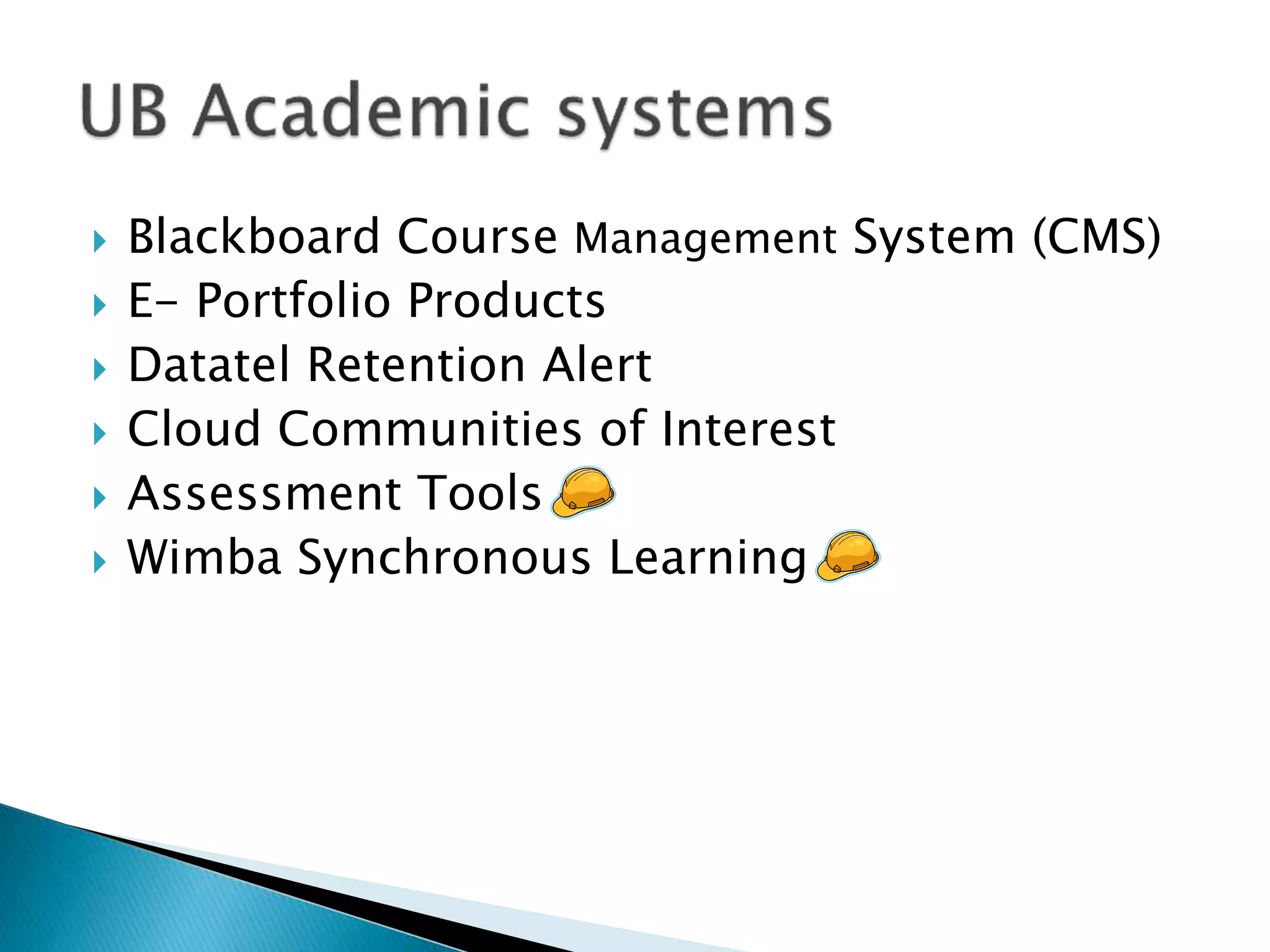
 Blackboard Course Management System (CMS)
 E- Portfolio Products
 Datatel Retention Alert
 Cloud Communities of Interest
 Assessment Tools
 Wimba Synchronous Learning
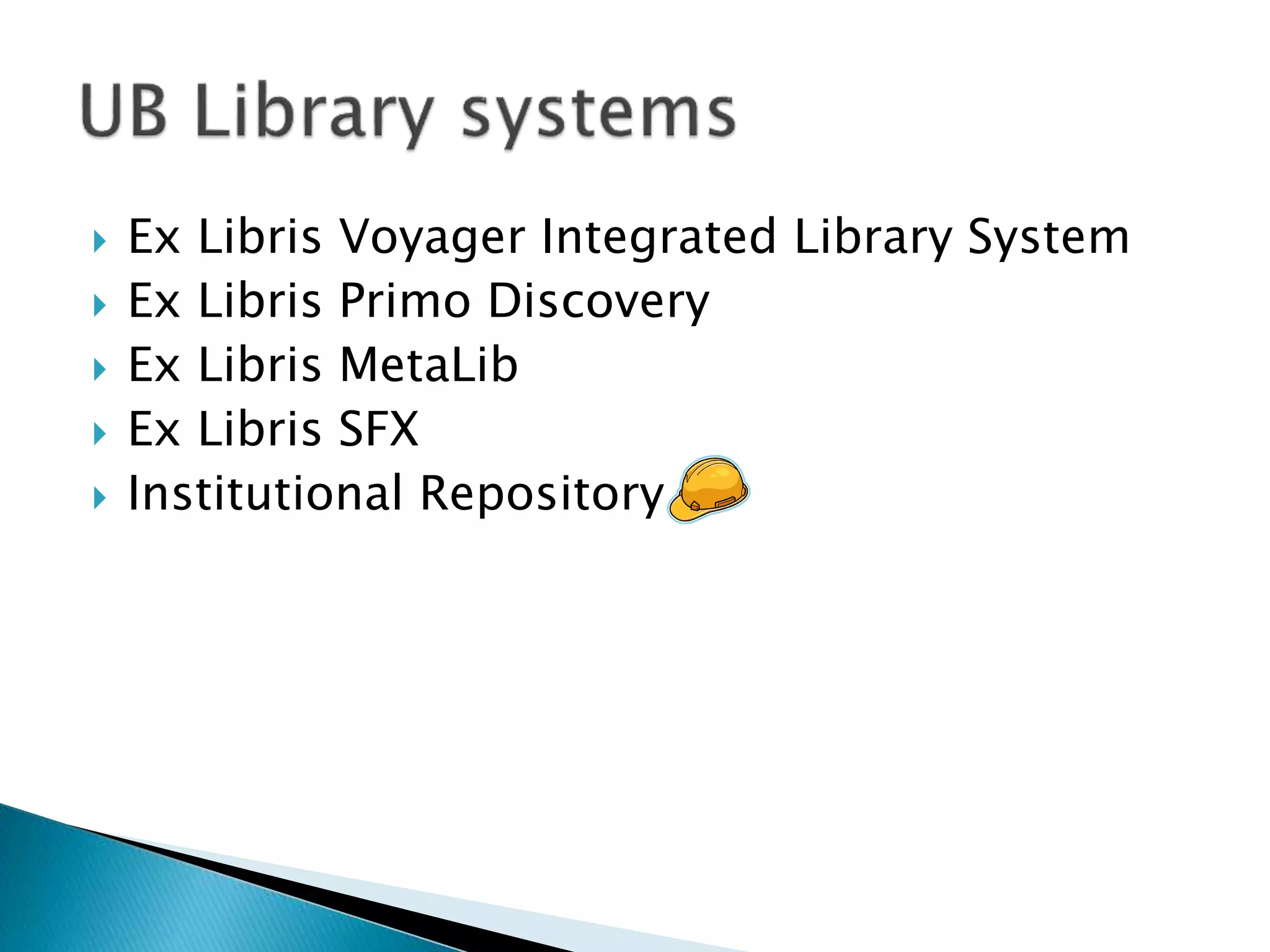
 Ex Libris Voyager Integrated Library System
 Ex Libris Primo Discovery
 Ex Libris MetaLib
 Ex Libris SFX
 Institutional Repository
 We are working to optimize workflow
 Vendors extending beyond traditional niches
 Technology product overlaps, interoperability proffered
 Purchasing decisions more centralized
 Content and technology vendors often one in same
 Open Source initiatives
 Role Blurring among Information Seekers
 Scholarship, marketing, retention, fiscal tracking, etc.
 Standards adherence
 Organizational & cultural issues
 Cost
 Staffing
 Evidence Based Management
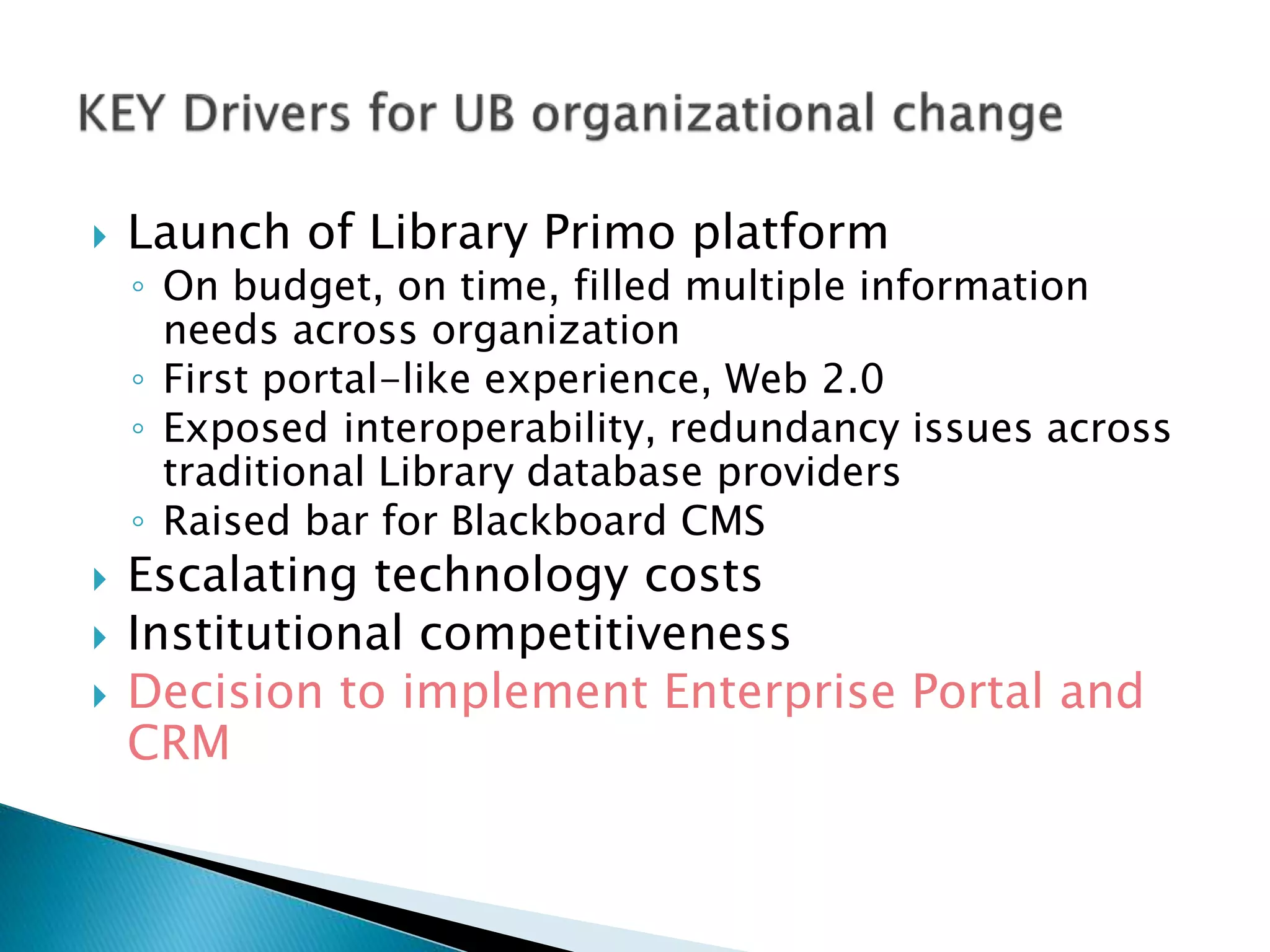
 Launch of Library Primo platform
◦ On budget, on time, filled multiple information
needs across organization
◦ First portal-like experience, Web 2.0
◦ Exposed interoperability, redundancy issues across
traditional Library database providers
◦ Raised bar for Blackboard CMS
 Escalating technology costs
 Institutional competitiveness
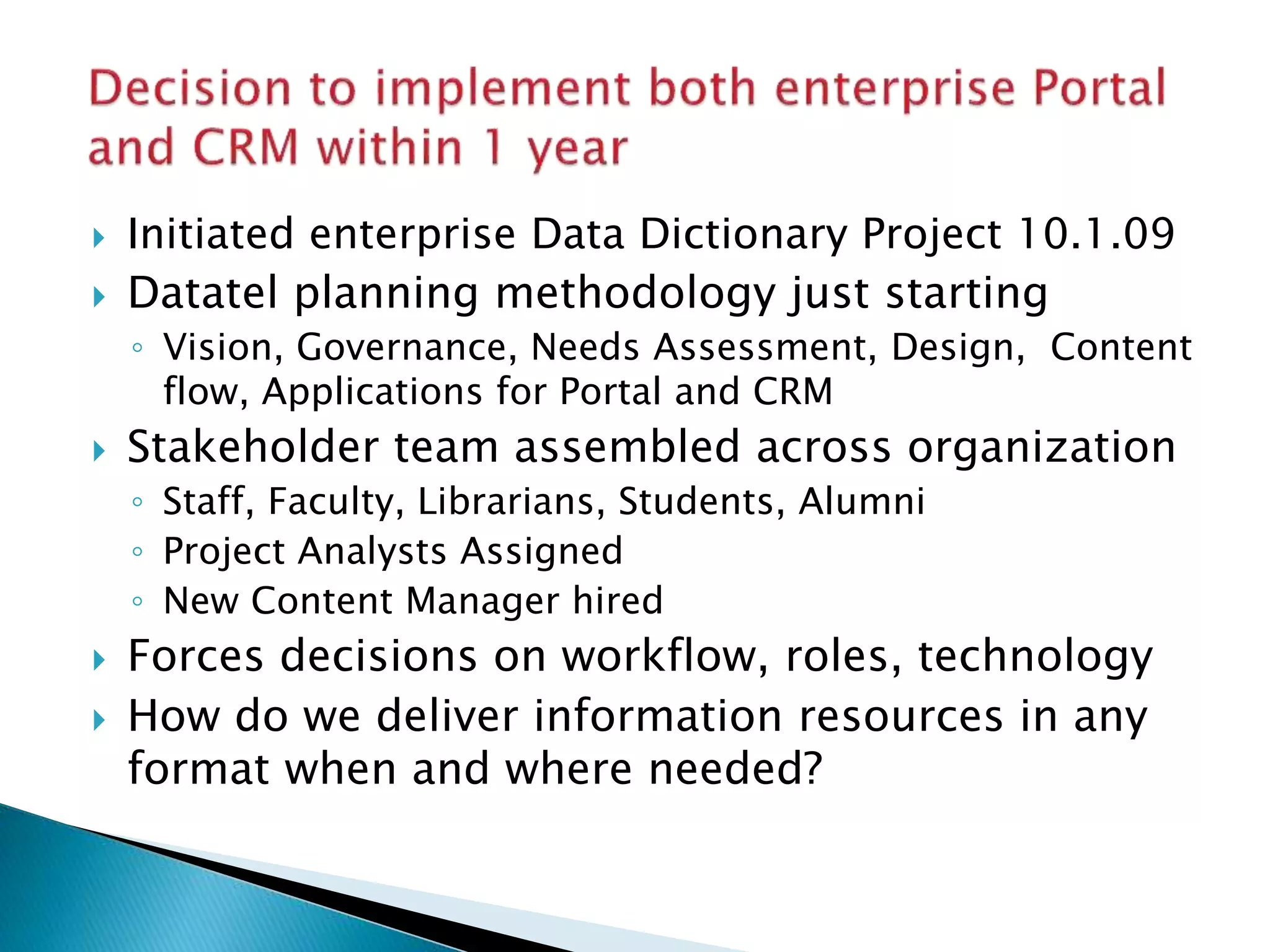
 Decision to implement Enterprise Portal and
CRM
 Initiated enterprise Data Dictionary Project 10.1.09
 Datatel planning methodology just starting
◦ Vision, Governance, Needs Assessment, Design, Content
flow, Applications for Portal and CRM
 Stakeholder team assembled across organization
◦ Staff, Faculty, Librarians, Students, Alumni
◦ Project Analysts Assigned
◦ New Content Manager hired
 Forces decisions on workflow, roles, technology
 How do we deliver information resources in any
format when and where needed?
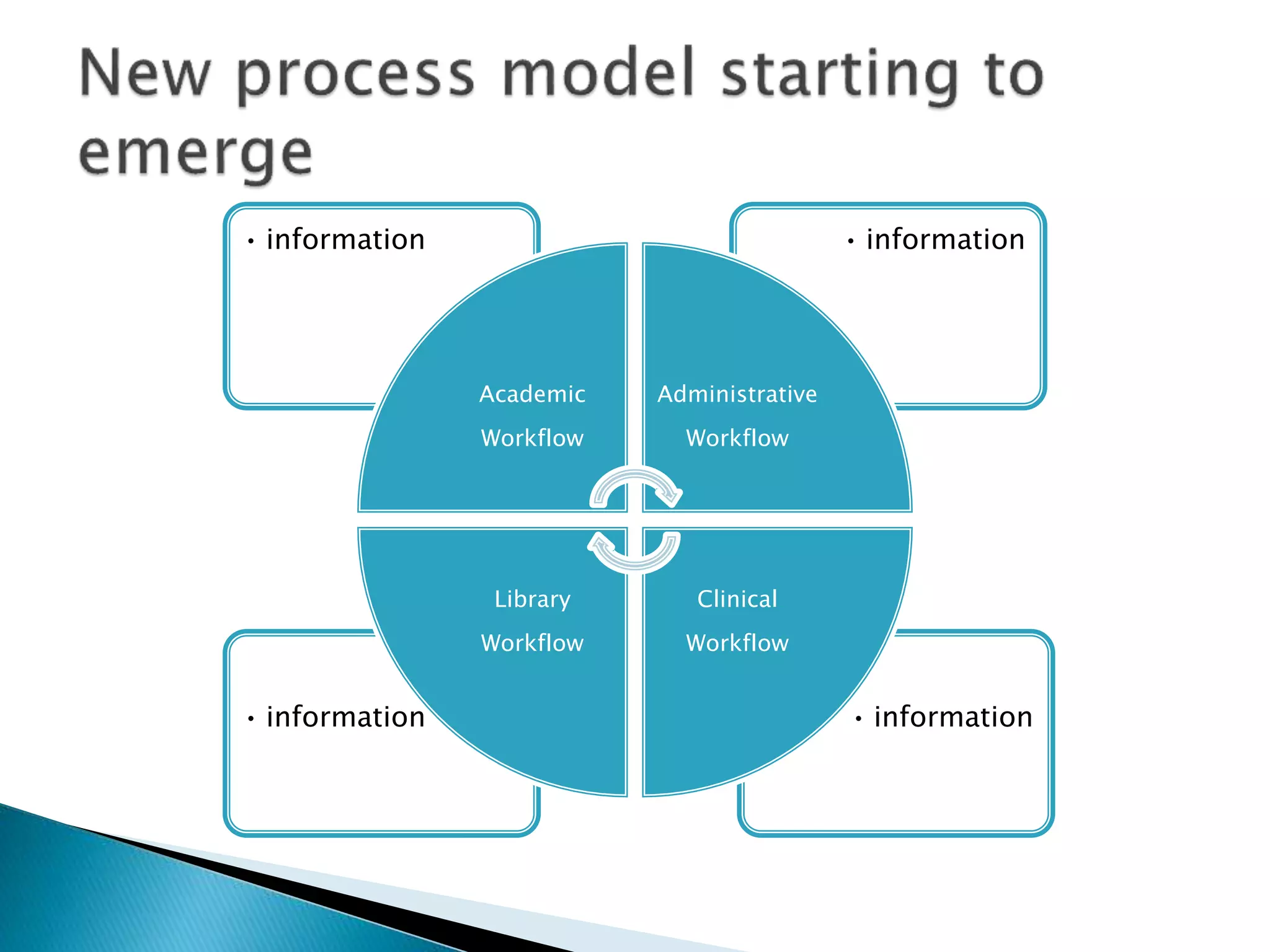
• information• information
Academic
Workflow
Administrative
Workflow
Clinical
Workflow
Library
Workflow
Portal, CRM, CIS raise new issues beyond
integration with CMS
 Linking systems, embedding content delivery,
web parts - all options
 Multiple content management systems
 Library Discovery system rich, well liked
 Synching up roles across delivery platforms
 Layering of repository systems a concern
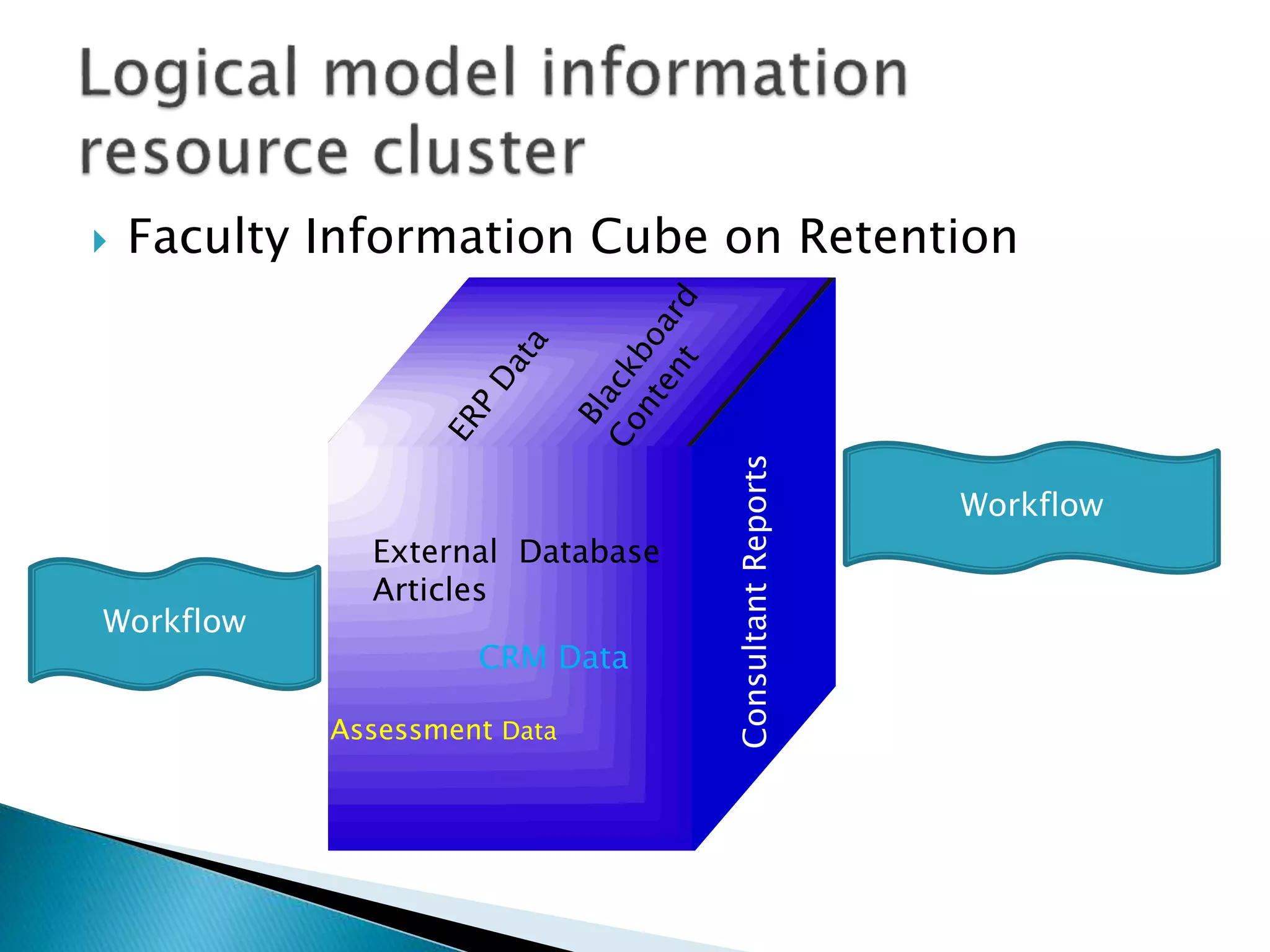
 Faculty Information Cube on Retention
External Database
Articles
ConsultantReports
Assessment Data
CRM Data
Workflow
Workflow
 Convergence weighs heavily in investment decisions.
New purchasing approval policies established.
 Questions swirl around information content –
stewardship, repositories, harvesting, ingesting,
embedding, purchased and free database content
 Do we link in layers of different systems, or
deconstruct site architecture based on workflow?
◦ Librarians busy visioning what next gen digital platform will
look like in Portal
 How feasible is it to think convergence can be
achieved given technical, organizational and legal
barriers?
 Will vendors and open source communities see
convergence as opportunity or threat?
 Library, IT and academic departments all were
investigating options independently
 Multiple vendors and open source
communities
 Overlapping functionality of products
◦ Revenue potential for faculty
 University decided to build a no cost pilot
using Primo until larger Topology was
determined
 Check out publications and contact
colleagues in:
◦ Operations Research
◦ Information Technology
◦ Knowledge Management
◦ Library Science
Thank You
dmirvis@bridgeport.edu

Mirvis, "Considering a New Information Topology"

  • 1.
    Diane C. Mirvis AssociateVice President Information Technology & CIO dmirvis@bridgeport.edu NISO Forum: Library Resource Management Systems October 9, 2009 • Boston, MA
  • 2.
     Fundamental rethinkingof how work gets done by scholars, students, staff  Impacts entire organizational structure, roles  Workflow and knowledge management become pivotal concepts  Drives technology and Library purchasing  For Librarians, spotlights value of information in all forms
  • 3.
  • 4.
     Silo thinkingamong constituencies  Proprietary technology  Niche vendors  Mix of content aggregators, publishers with licensing agreements selling to organizational consumers. Little opportunity to view information resources holistically.  Lack of skilled technical staff for integration
  • 5.
    Where in theorganization is information? And who owns it? Everywhere and Everybody (Including in the Library)
  • 6.
    At the Universityof Bridgeport……… We are stepping back together to reconsider our enterprise information needs, and rethink how we use information as students, faculty, staff and alumni The University is examining how workflow and content can be more effectively managed One surprise for Librarians – the many “stealth” database providers
  • 7.
     Datatel StudentInformation System  Datatel Enterprise Portal  Datatel e-Business Solution (CRM)  Visionary Clinical Information System (CIS)  Campus Security  3rd Party Vendors  Cloud Applications  Campus Digital Signage  Web site
  • 8.
     Blackboard CourseManagement System (CMS)  E- Portfolio Products  Datatel Retention Alert  Cloud Communities of Interest  Assessment Tools  Wimba Synchronous Learning
  • 9.
     Ex LibrisVoyager Integrated Library System  Ex Libris Primo Discovery  Ex Libris MetaLib  Ex Libris SFX  Institutional Repository
  • 10.
     We areworking to optimize workflow  Vendors extending beyond traditional niches  Technology product overlaps, interoperability proffered  Purchasing decisions more centralized  Content and technology vendors often one in same  Open Source initiatives  Role Blurring among Information Seekers  Scholarship, marketing, retention, fiscal tracking, etc.  Standards adherence  Organizational & cultural issues  Cost  Staffing  Evidence Based Management
  • 11.
     Launch ofLibrary Primo platform ◦ On budget, on time, filled multiple information needs across organization ◦ First portal-like experience, Web 2.0 ◦ Exposed interoperability, redundancy issues across traditional Library database providers ◦ Raised bar for Blackboard CMS  Escalating technology costs  Institutional competitiveness  Decision to implement Enterprise Portal and CRM
  • 12.
     Initiated enterpriseData Dictionary Project 10.1.09  Datatel planning methodology just starting ◦ Vision, Governance, Needs Assessment, Design, Content flow, Applications for Portal and CRM  Stakeholder team assembled across organization ◦ Staff, Faculty, Librarians, Students, Alumni ◦ Project Analysts Assigned ◦ New Content Manager hired  Forces decisions on workflow, roles, technology  How do we deliver information resources in any format when and where needed?
  • 13.
    • information• information •information• information Academic Workflow Administrative Workflow Clinical Workflow Library Workflow
  • 14.
    Portal, CRM, CISraise new issues beyond integration with CMS  Linking systems, embedding content delivery, web parts - all options  Multiple content management systems  Library Discovery system rich, well liked  Synching up roles across delivery platforms  Layering of repository systems a concern
  • 15.
     Faculty InformationCube on Retention External Database Articles ConsultantReports Assessment Data CRM Data Workflow Workflow
  • 16.
     Convergence weighsheavily in investment decisions. New purchasing approval policies established.  Questions swirl around information content – stewardship, repositories, harvesting, ingesting, embedding, purchased and free database content  Do we link in layers of different systems, or deconstruct site architecture based on workflow? ◦ Librarians busy visioning what next gen digital platform will look like in Portal  How feasible is it to think convergence can be achieved given technical, organizational and legal barriers?  Will vendors and open source communities see convergence as opportunity or threat?
  • 17.
     Library, ITand academic departments all were investigating options independently  Multiple vendors and open source communities  Overlapping functionality of products ◦ Revenue potential for faculty  University decided to build a no cost pilot using Primo until larger Topology was determined
  • 19.
     Check outpublications and contact colleagues in: ◦ Operations Research ◦ Information Technology ◦ Knowledge Management ◦ Library Science
  • 20.