Role of Information Technology in
Library Management in Digital Era
Rabishankar Giri
Organized by
Invited Presentation
Challenges
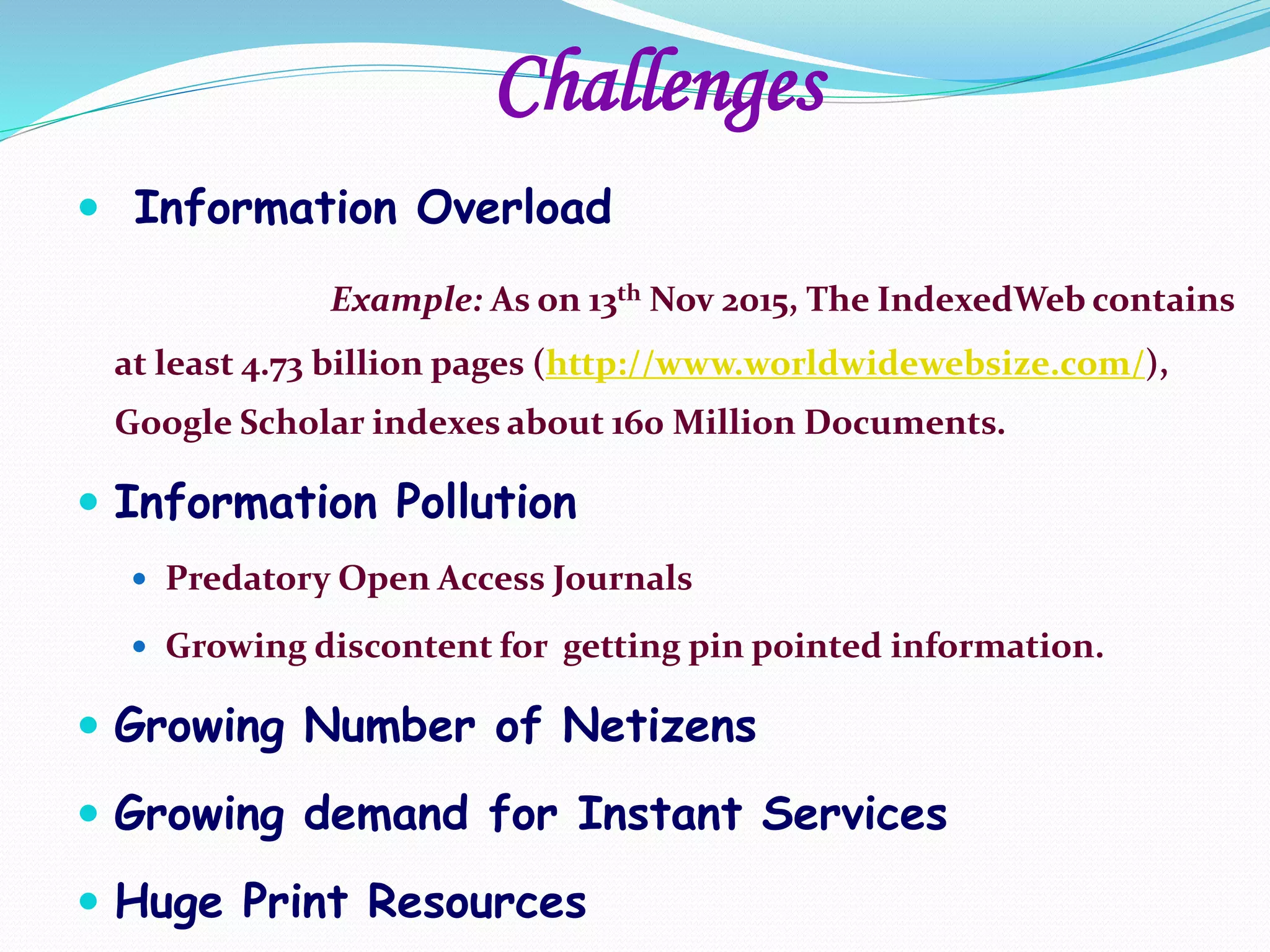
 Information Overload
Example: As on 13th Nov 2015, The IndexedWeb contains
at least 4.73 billion pages (http://www.worldwidewebsize.com/),
Google Scholar indexes about 160 Million Documents.
 Information Pollution
 Predatory Open Access Journals
 Growing discontent for getting pin pointed information.
 Growing Number of Netizens
 Growing demand for Instant Services
 Huge Print Resources
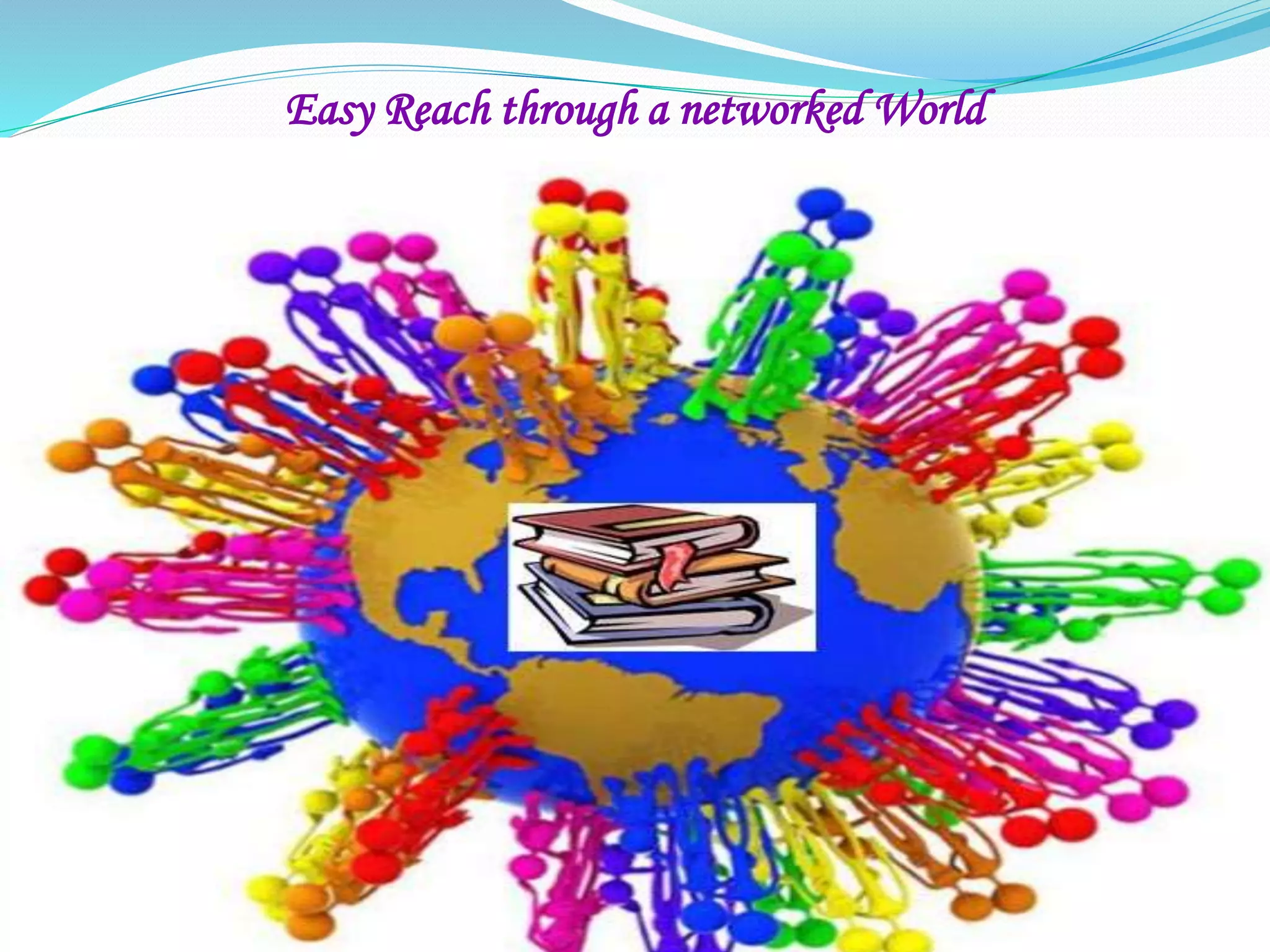
Easy Reach through a networked World
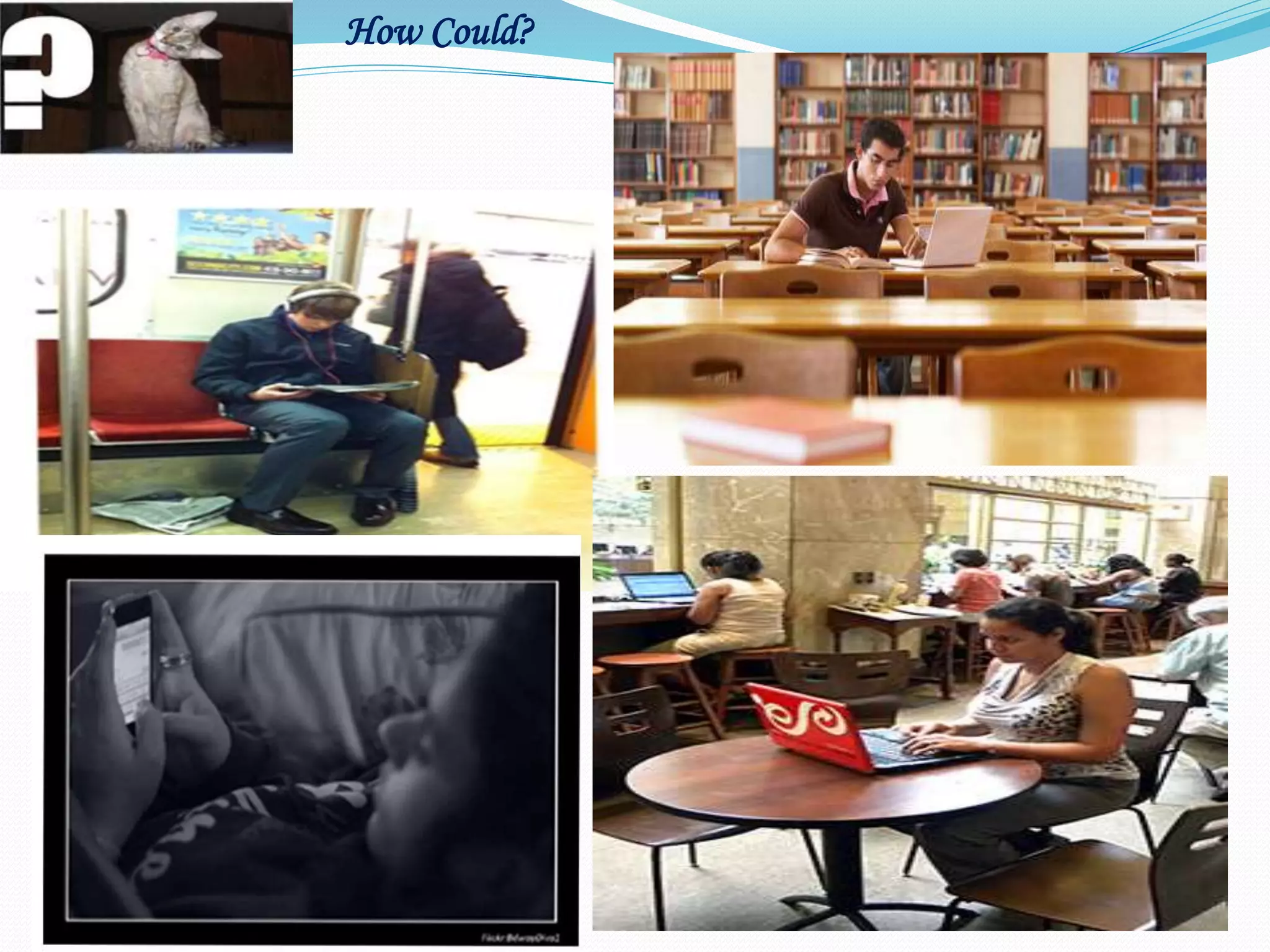
How Could?
Library Management
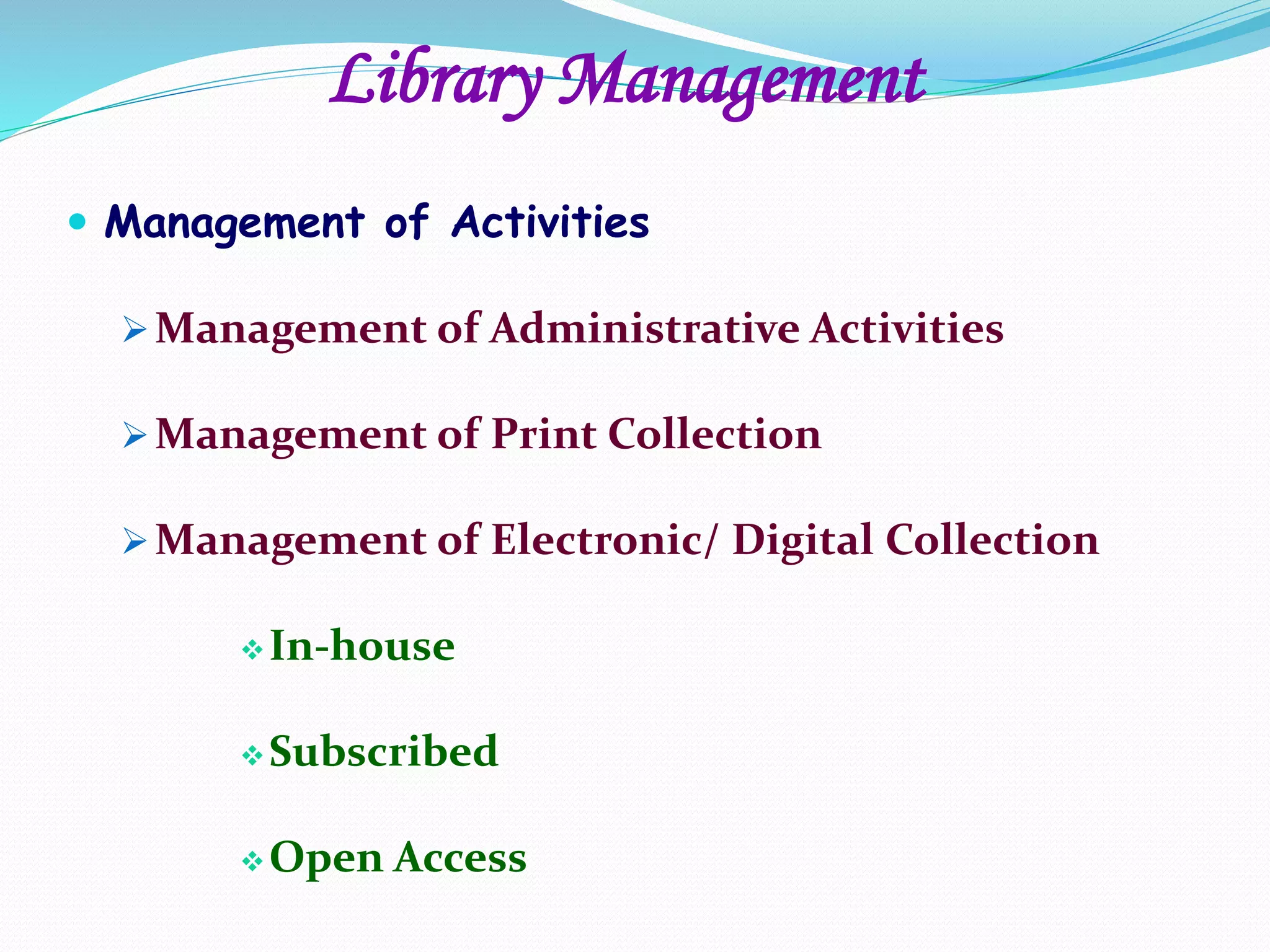
 Management of Activities
Management of Administrative Activities
Management of Print Collection
Management of Electronic/ Digital Collection
In-house
Subscribed
Open Access
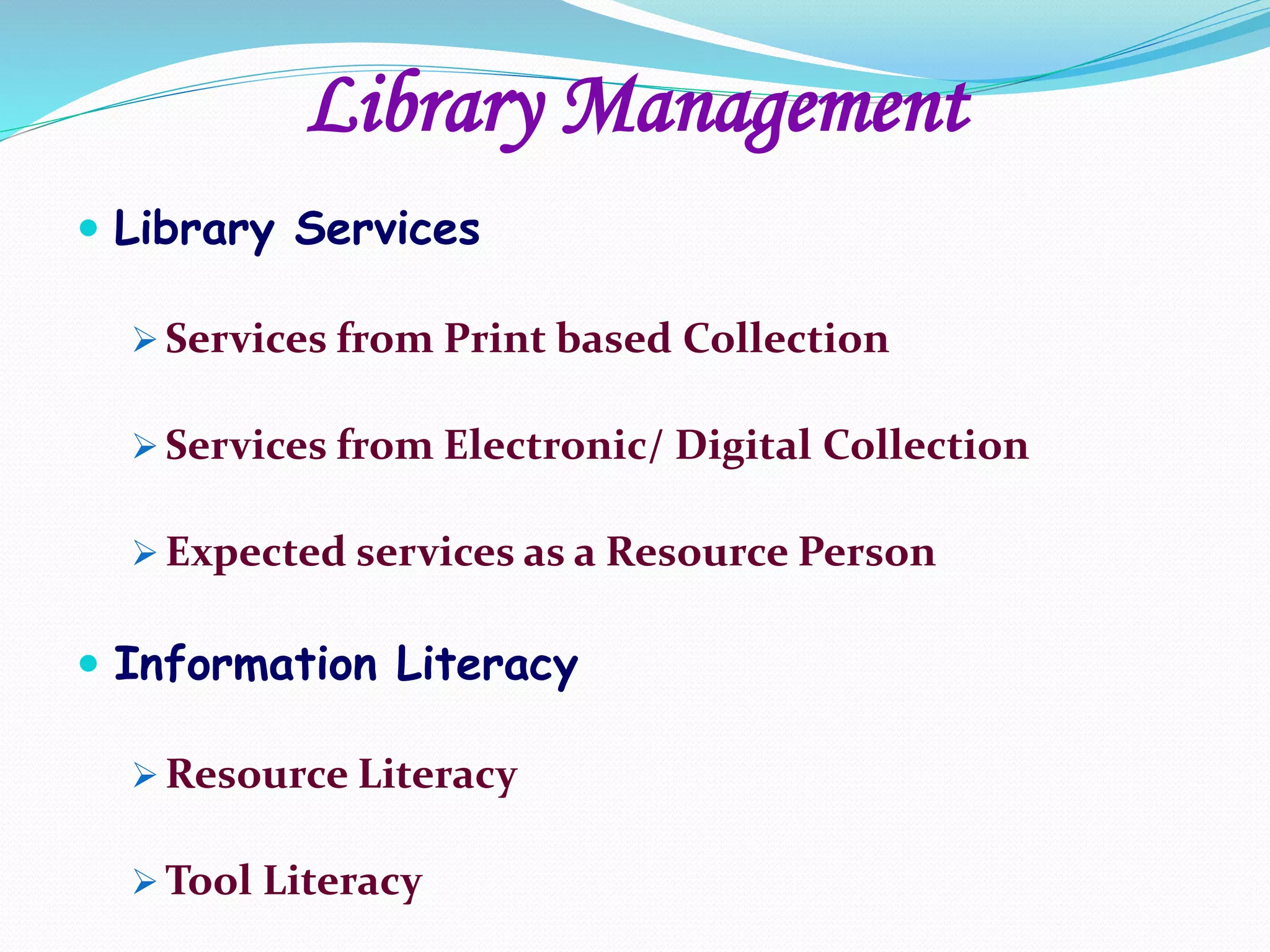
 Library Services
 Services from Print based Collection
 Services from Electronic/ Digital Collection
 Expected services as a Resource Person
 Information Literacy
 Resource Literacy
 Tool Literacy
Library Management
Tools
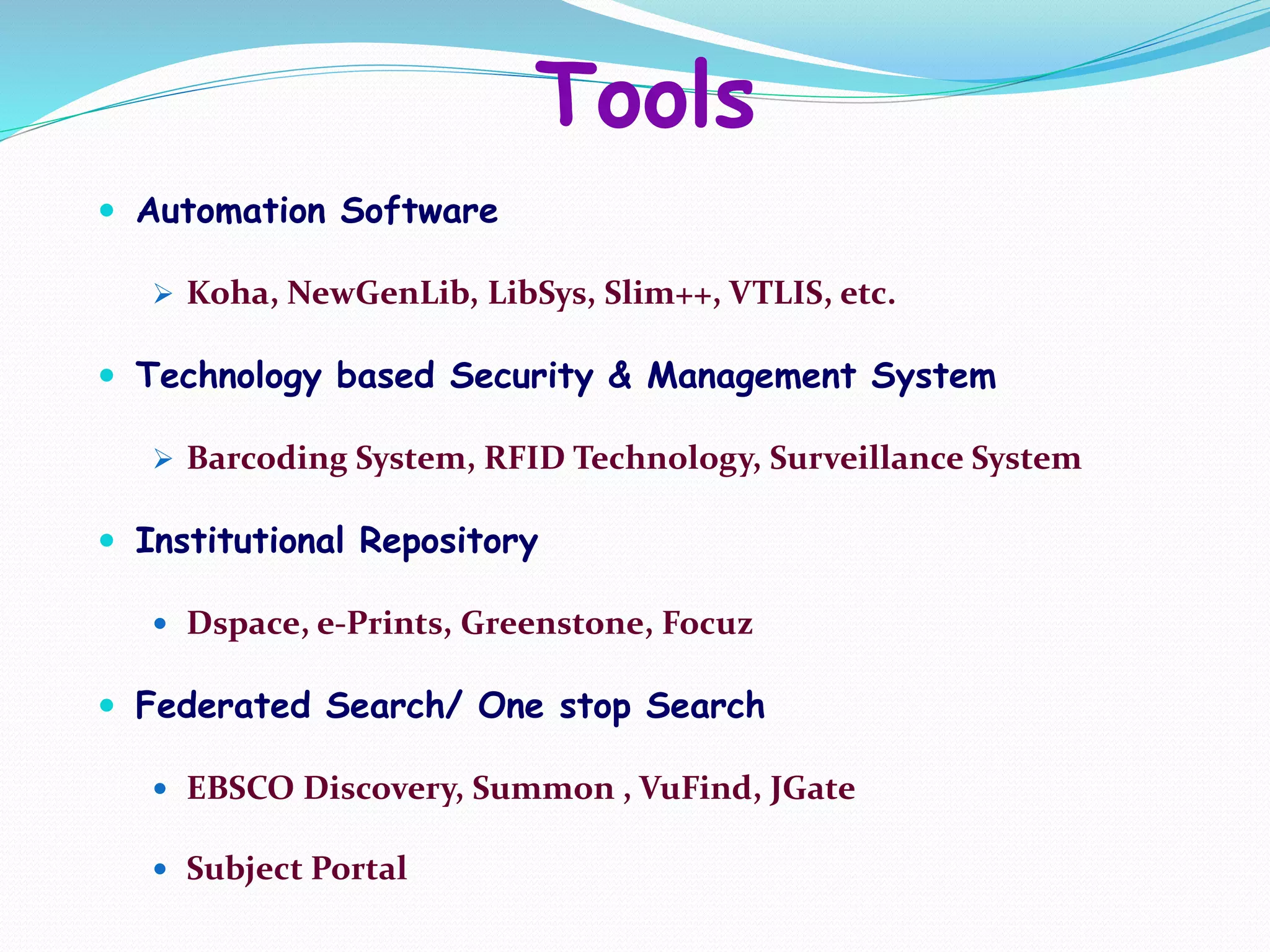
 Automation Software
 Koha, NewGenLib, LibSys, Slim++, VTLIS, etc.
 Technology based Security & Management System
 Barcoding System, RFID Technology, Surveillance System
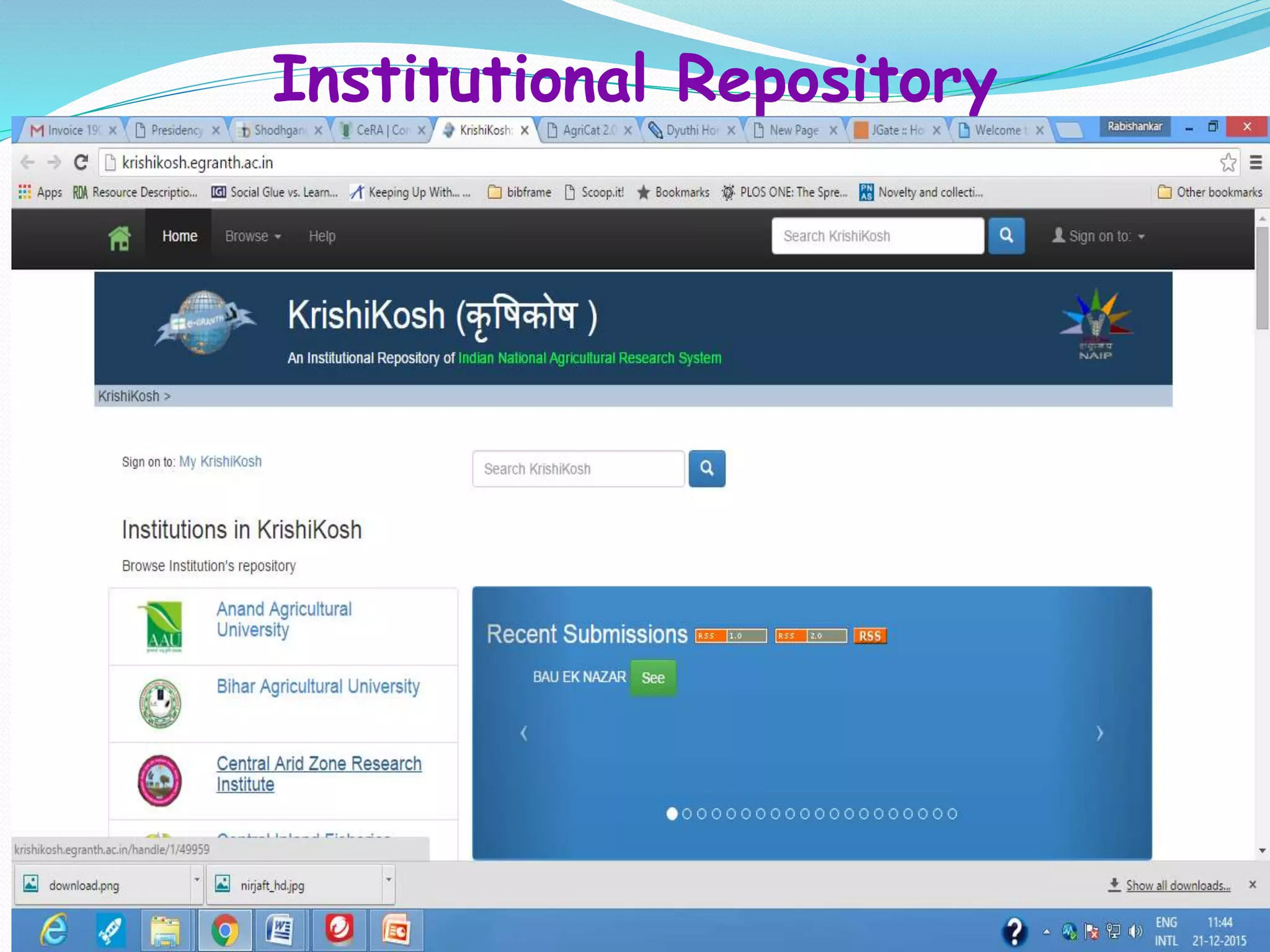
 Institutional Repository
 Dspace, e-Prints, Greenstone, Focuz
 Federated Search/ One stop Search
 EBSCO Discovery, Summon , VuFind, JGate
 Subject Portal
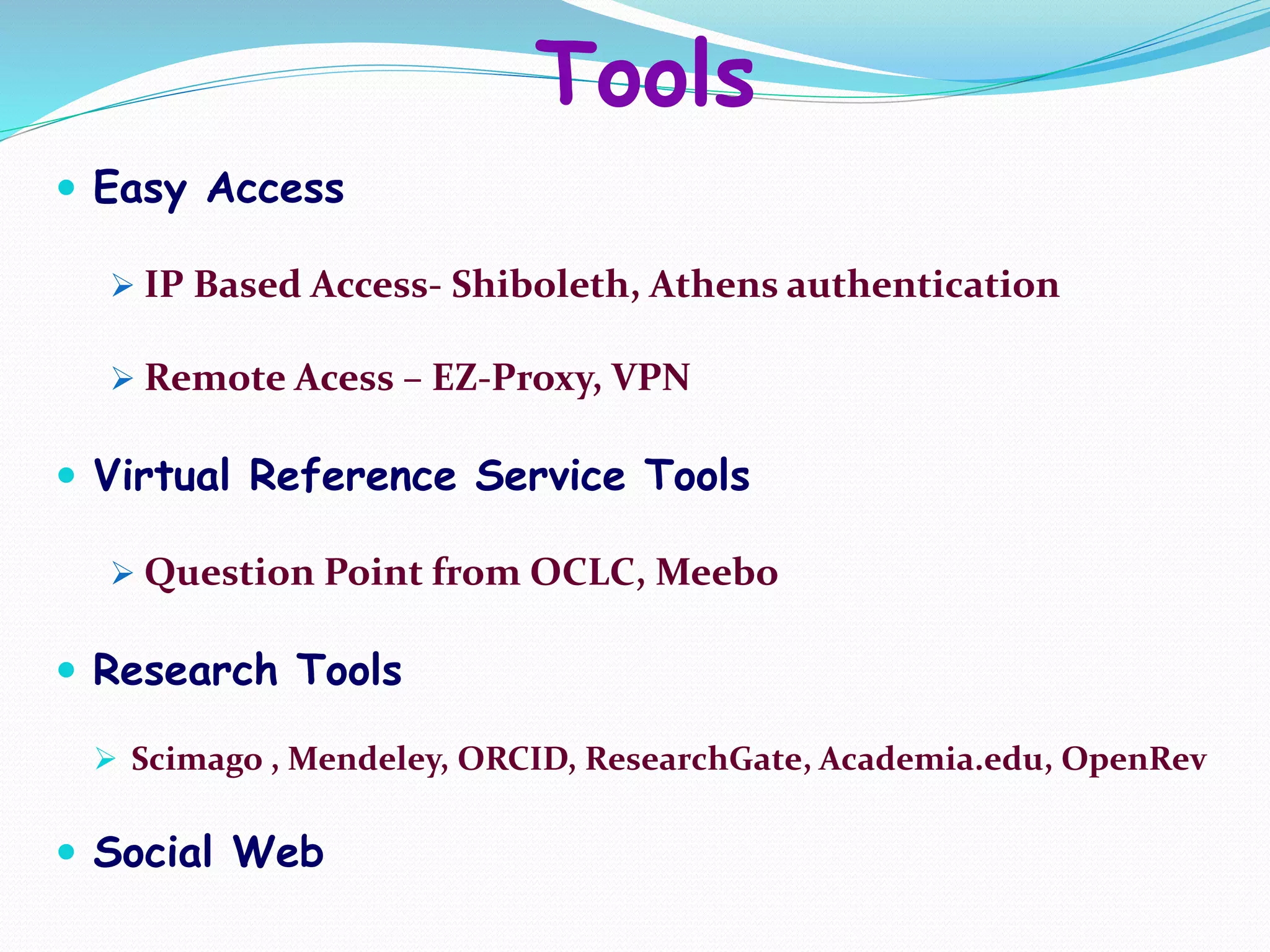
 Easy Access
 IP Based Access- Shiboleth, Athens authentication
 Remote Acess – EZ-Proxy, VPN
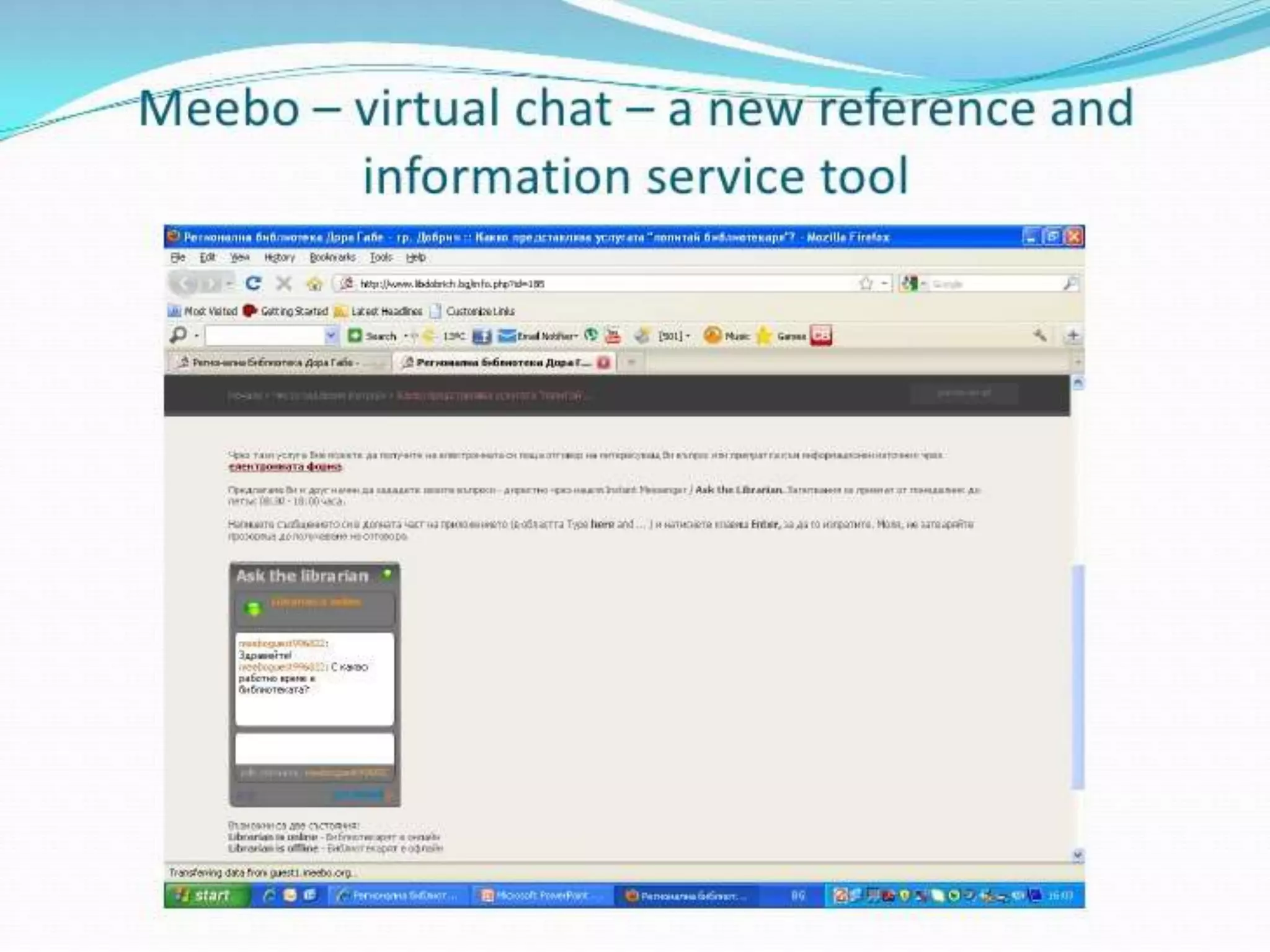
 Virtual Reference Service Tools
 Question Point from OCLC, Meebo
 Research Tools
 Scimago , Mendeley, ORCID, ResearchGate, Academia.edu, OpenRev
 Social Web
Tools
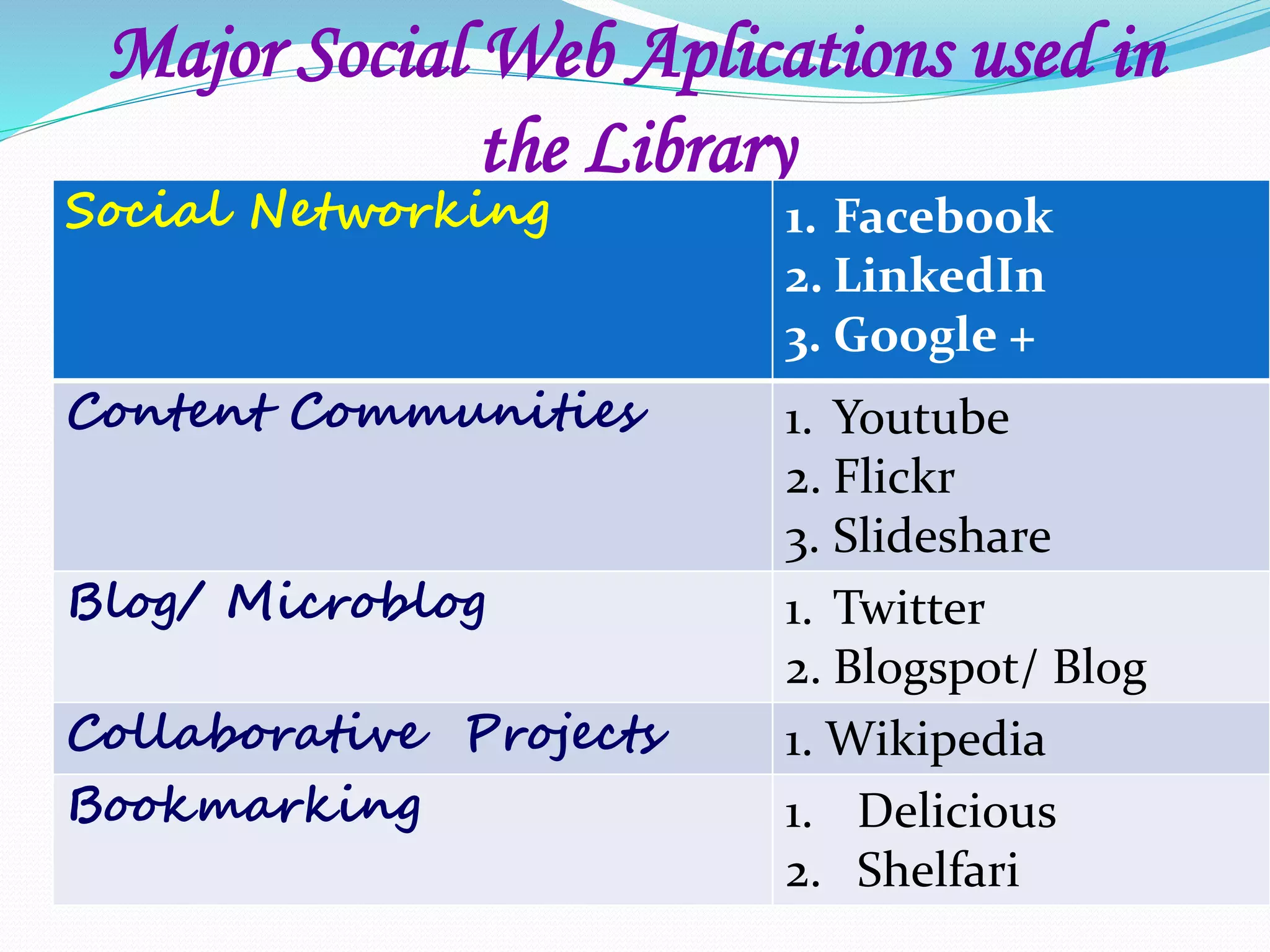
Major Social Web Aplications used in
the Library
Social Networking 1. Facebook
2. LinkedIn
3. Google +
Content Communities 1. Youtube
2. Flickr
3. Slideshare
Blog/ Microblog 1. Twitter
2. Blogspot/ Blog
Collaborative Projects 1. Wikipedia
Bookmarking 1. Delicious
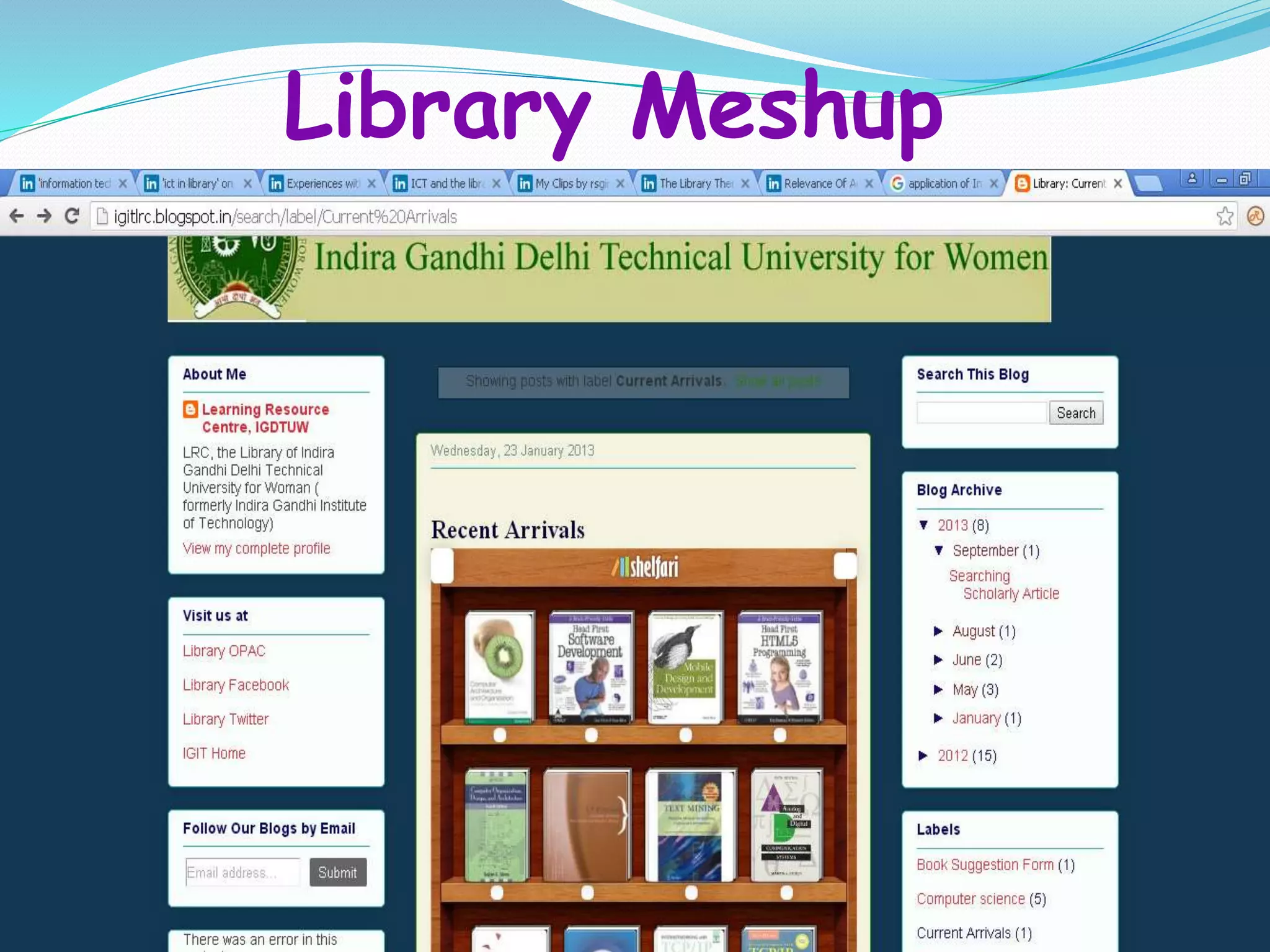
2. Shelfari
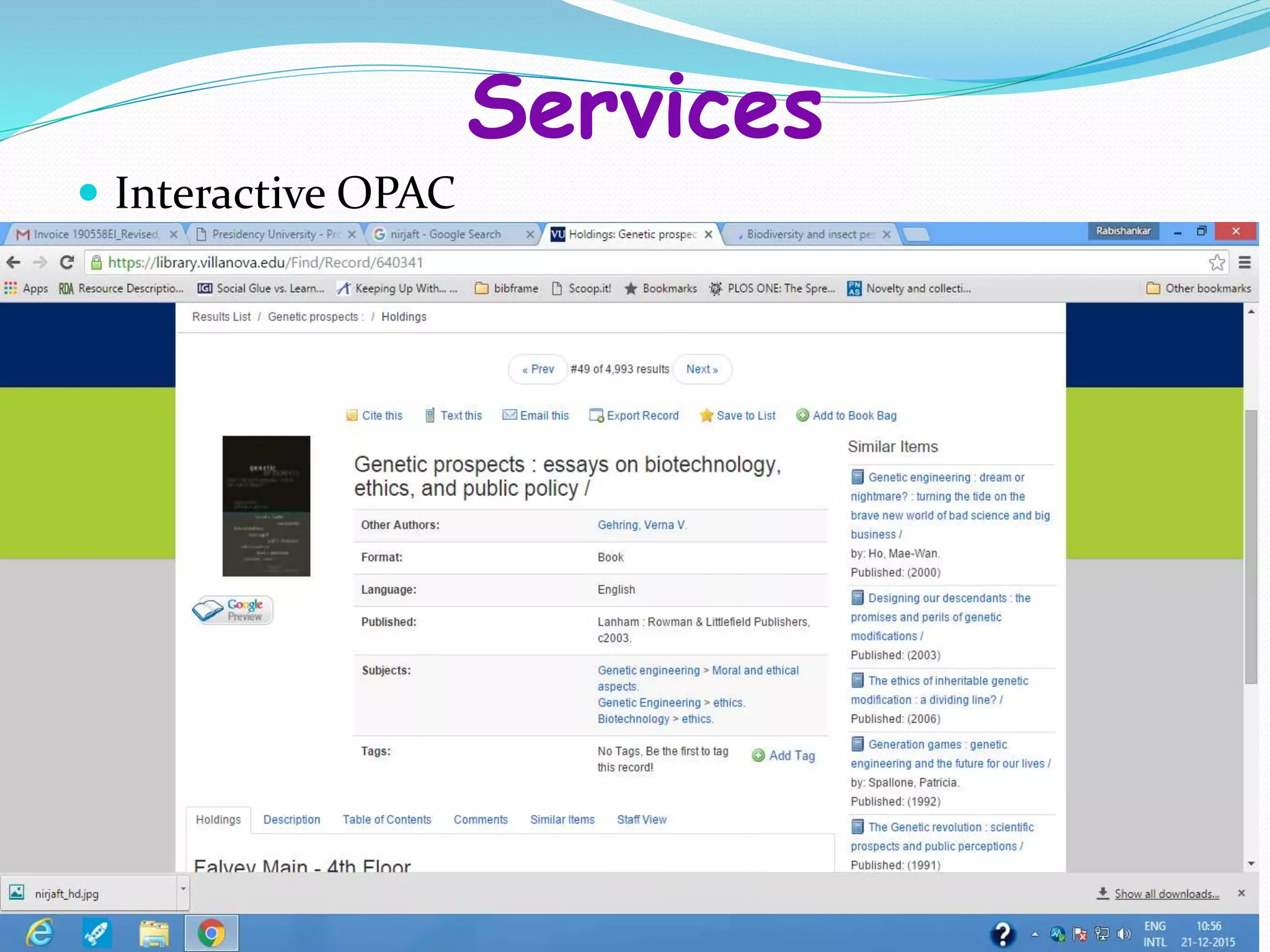
Services
 Interactive OPAC
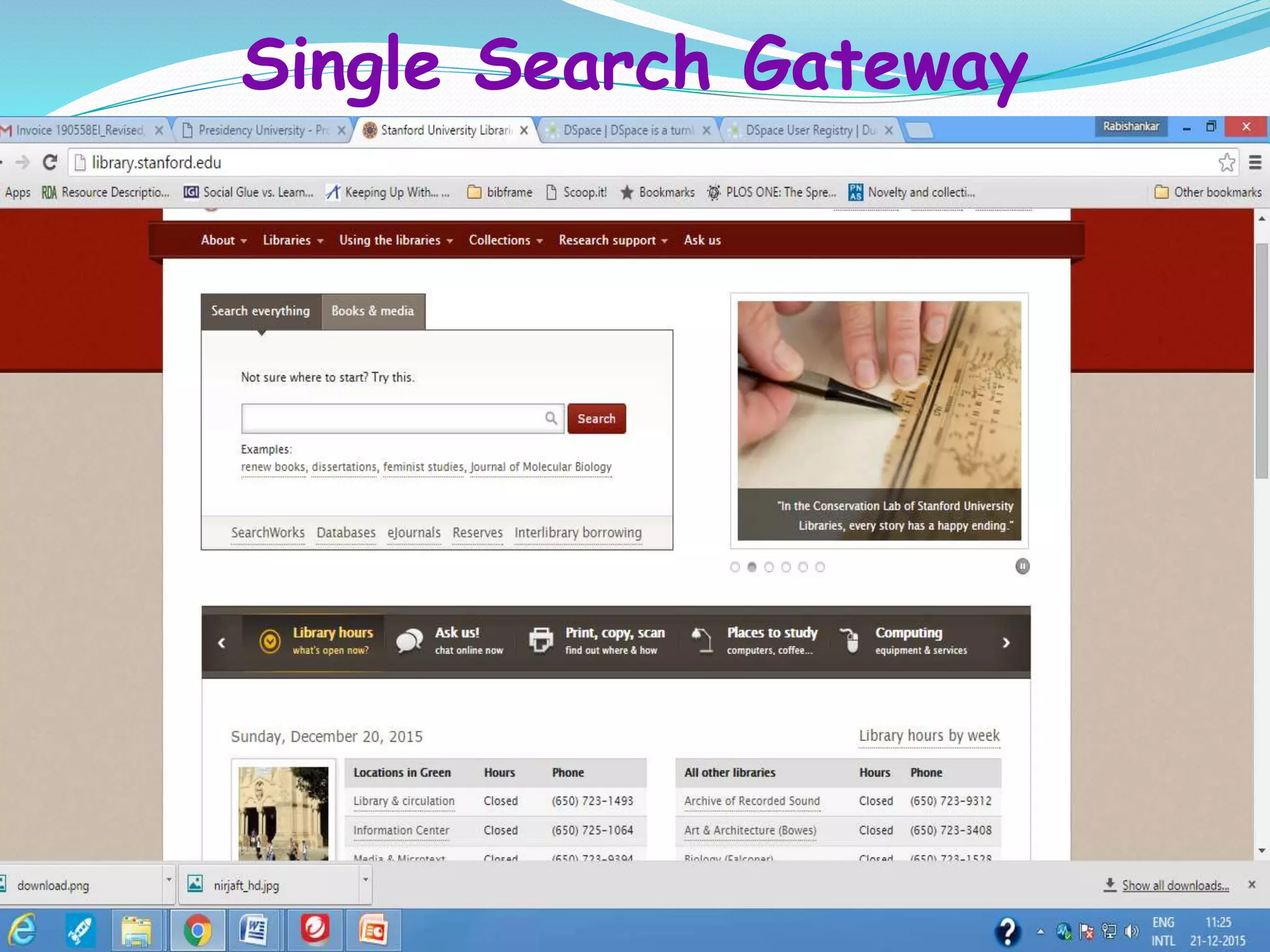
Single Search Gateway
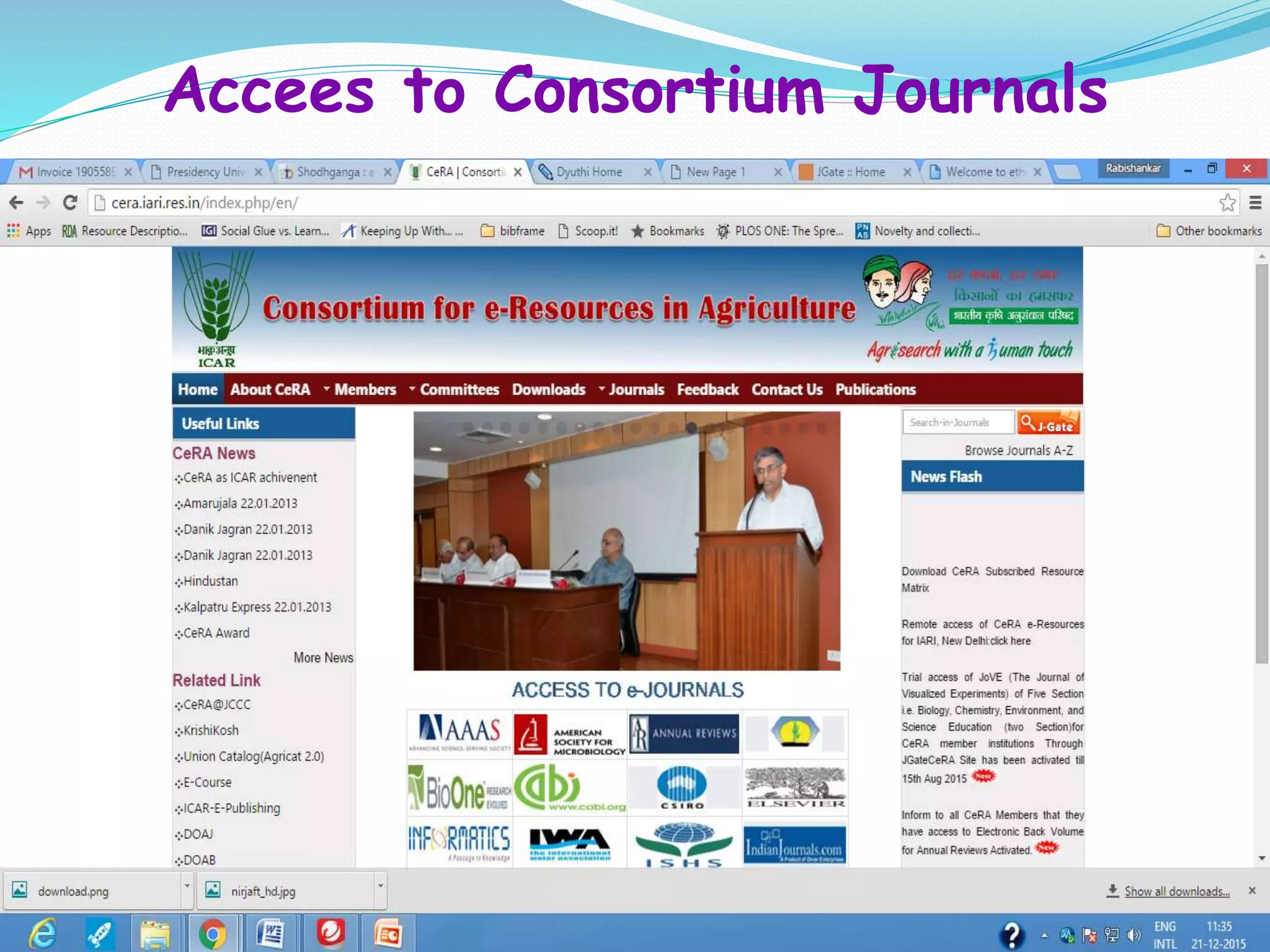
Accees to Consortium Journals
Institutional Repository
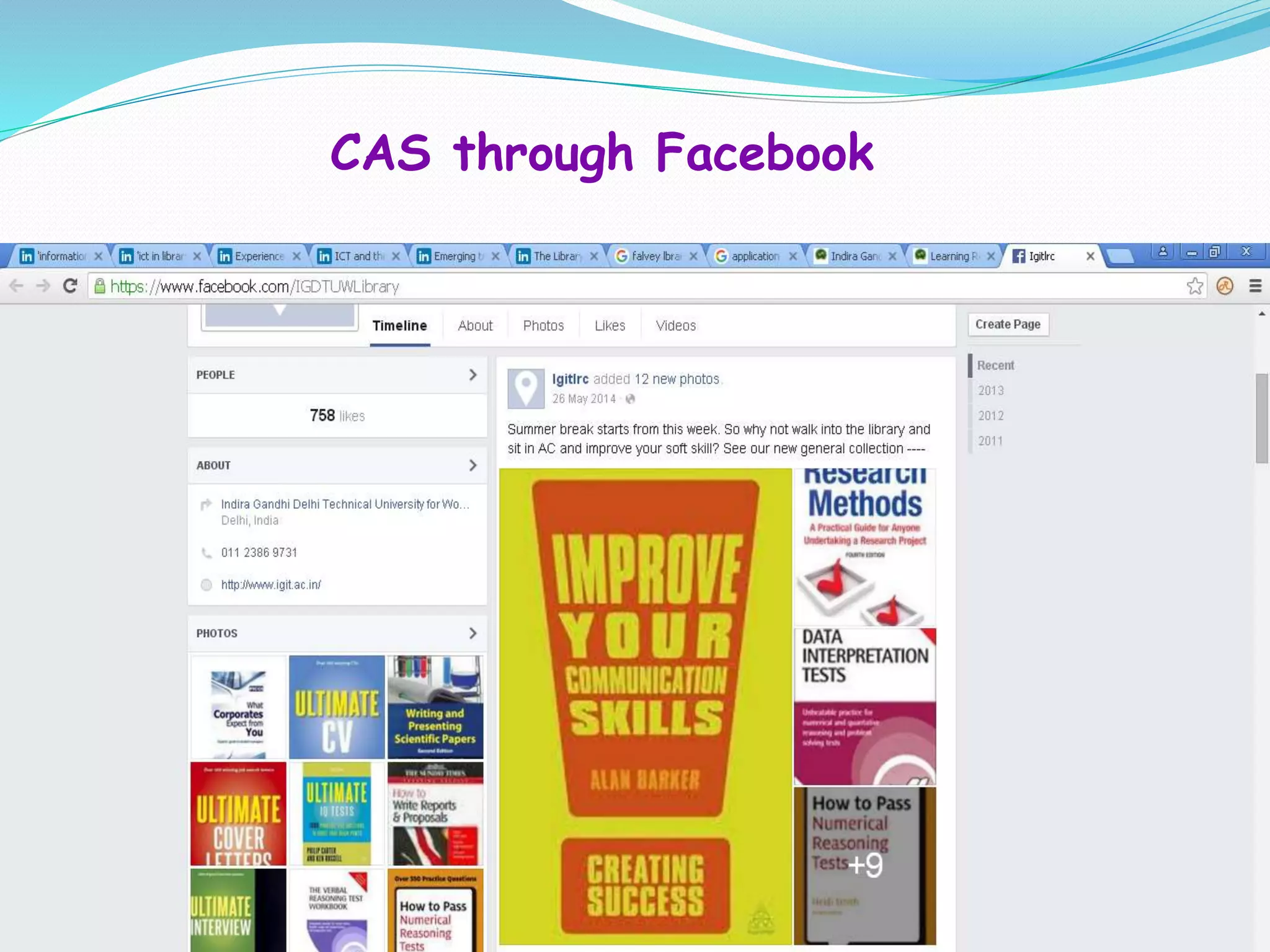
CAS through Facebook
Library Meshup
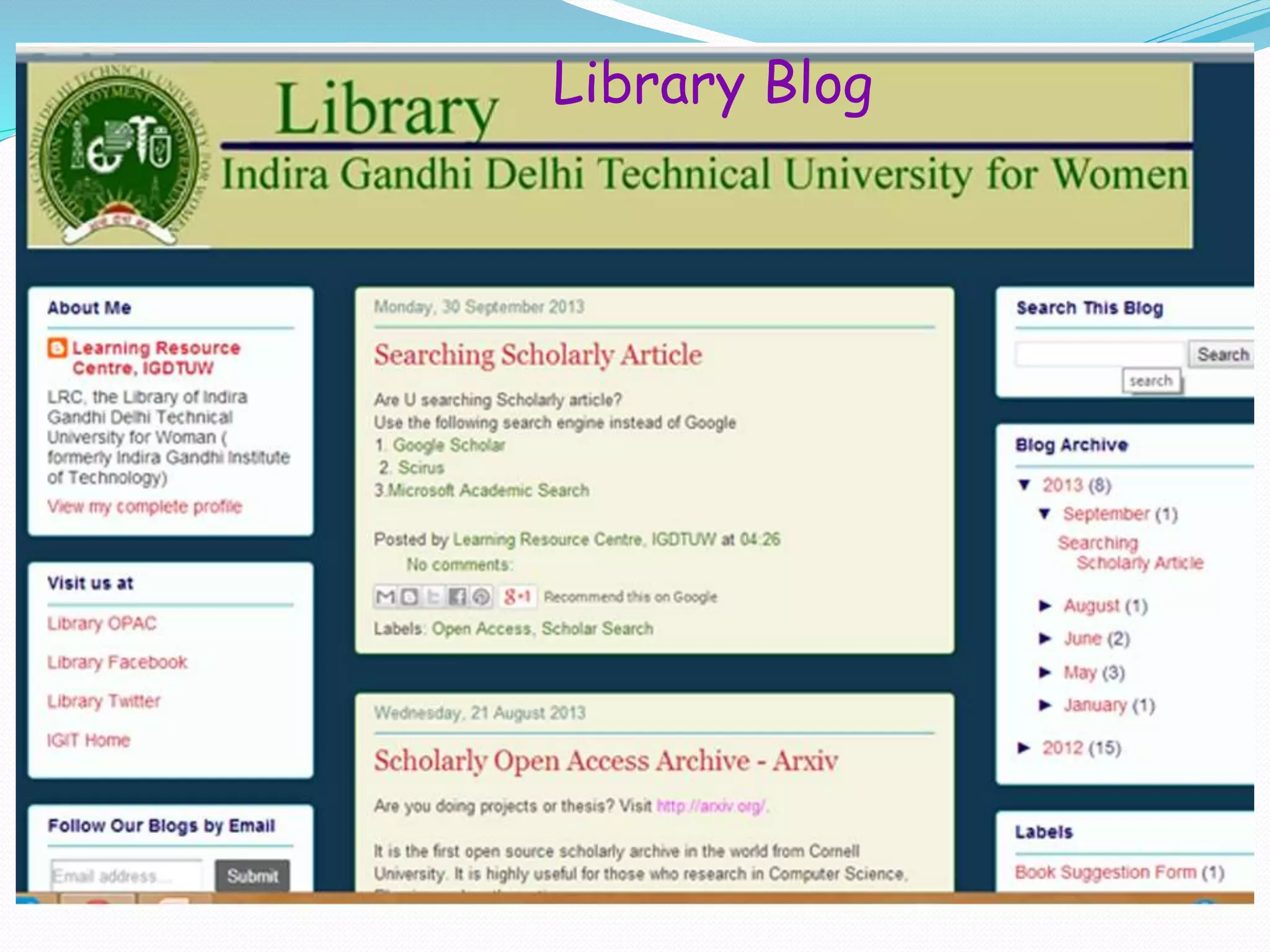
Library Blog
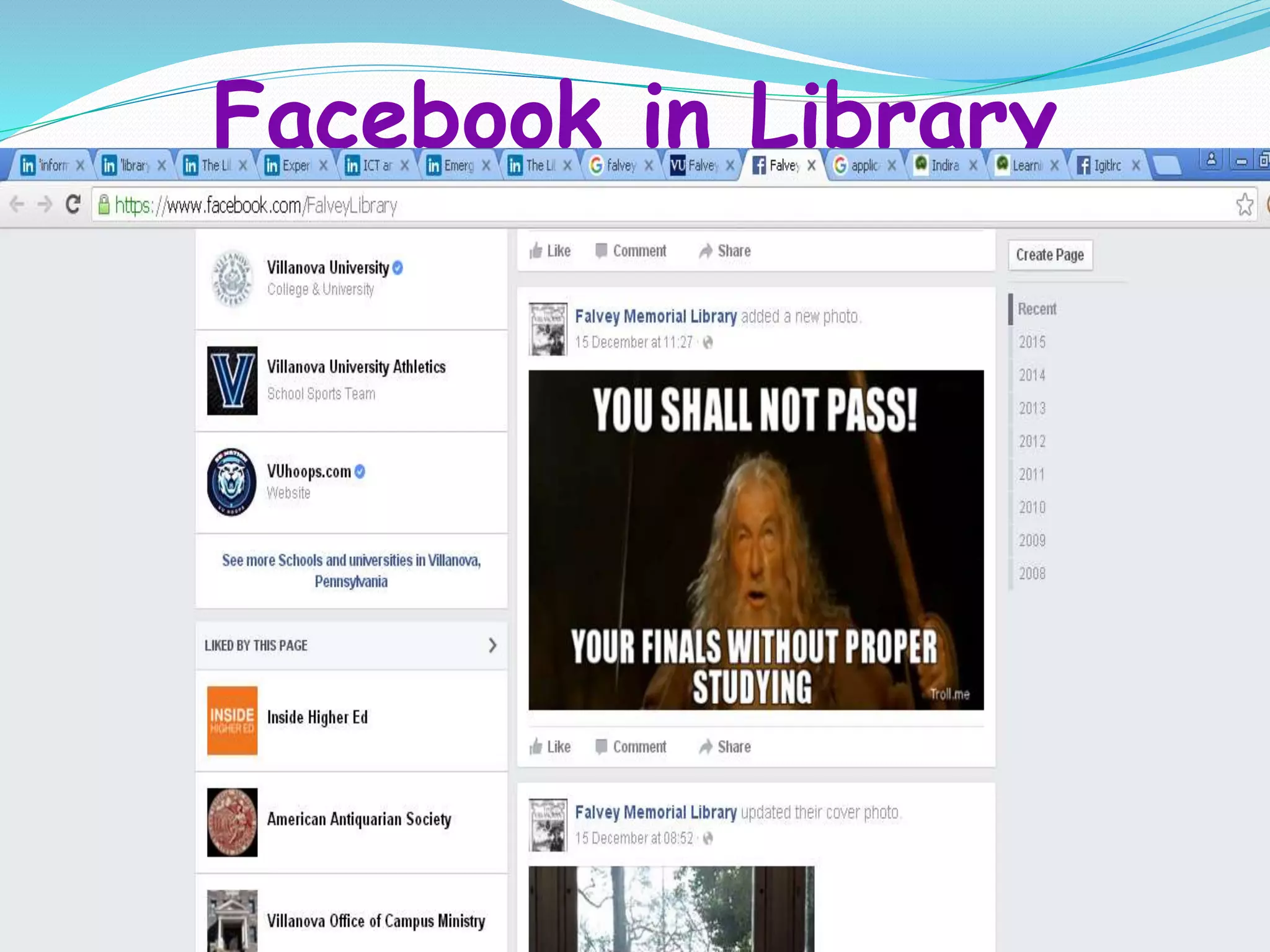
Facebook in Library
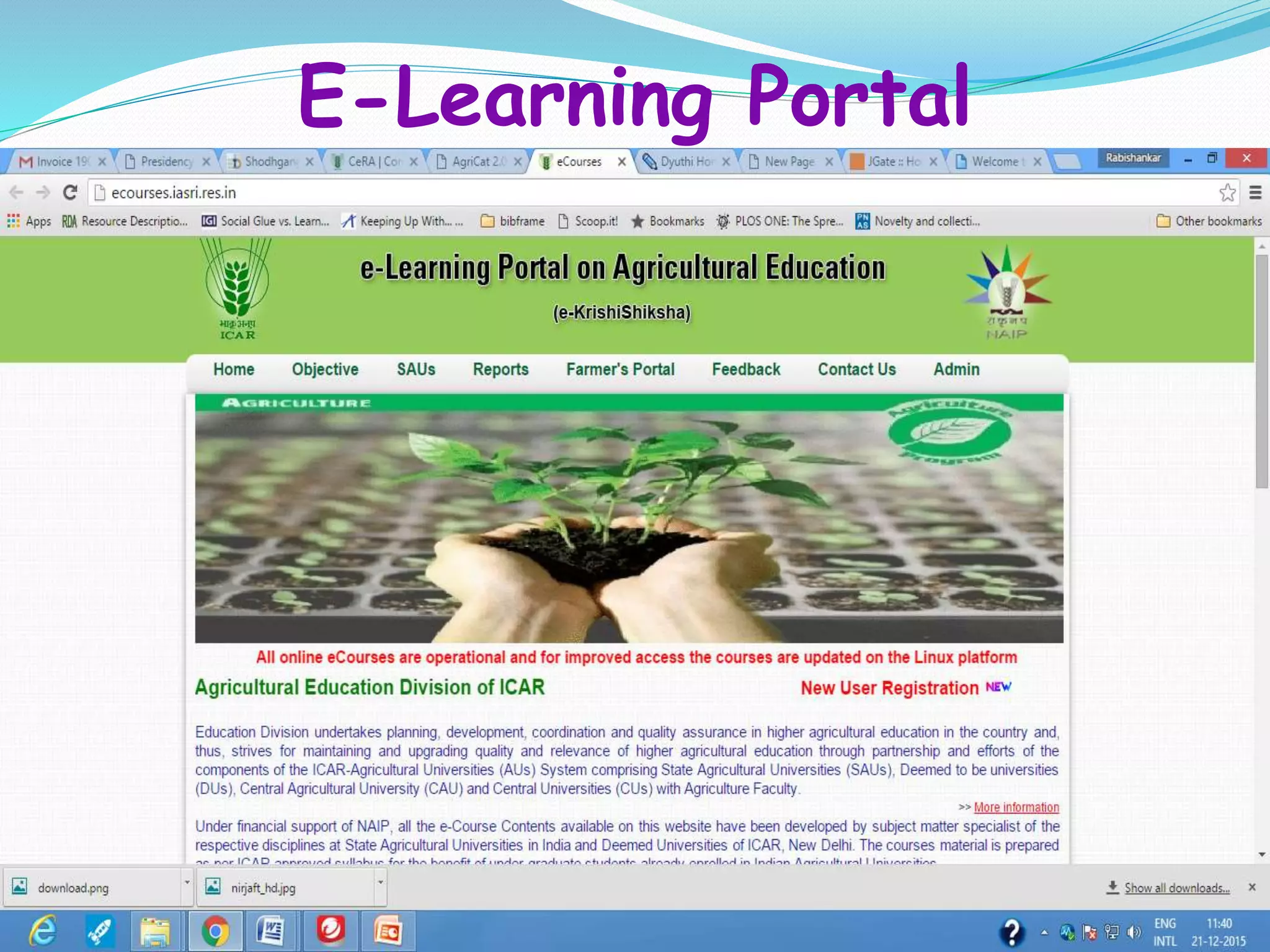
E-Learning Portal
Conclusions
 Think of as
Scholarly Reource Manager
Scholarly Resource Locator
Idea Developers
Service Providers
Personal Coaches
I call them Librarian
THANK YOU

Role of Information Technology in Library Management in Digital Era

  • 1.
    Role of InformationTechnology in Library Management in Digital Era Rabishankar Giri Organized by Invited Presentation
  • 2.
    Challenges  Information Overload Example:As on 13th Nov 2015, The IndexedWeb contains at least 4.73 billion pages (http://www.worldwidewebsize.com/), Google Scholar indexes about 160 Million Documents.  Information Pollution  Predatory Open Access Journals  Growing discontent for getting pin pointed information.  Growing Number of Netizens  Growing demand for Instant Services  Huge Print Resources
  • 3.
    Easy Reach througha networked World
  • 4.
  • 5.
    Library Management  Managementof Activities Management of Administrative Activities Management of Print Collection Management of Electronic/ Digital Collection In-house Subscribed Open Access
  • 6.
     Library Services Services from Print based Collection  Services from Electronic/ Digital Collection  Expected services as a Resource Person  Information Literacy  Resource Literacy  Tool Literacy Library Management
  • 7.
    Tools  Automation Software Koha, NewGenLib, LibSys, Slim++, VTLIS, etc.  Technology based Security & Management System  Barcoding System, RFID Technology, Surveillance System  Institutional Repository  Dspace, e-Prints, Greenstone, Focuz  Federated Search/ One stop Search  EBSCO Discovery, Summon , VuFind, JGate  Subject Portal
  • 8.
     Easy Access IP Based Access- Shiboleth, Athens authentication  Remote Acess – EZ-Proxy, VPN  Virtual Reference Service Tools  Question Point from OCLC, Meebo  Research Tools  Scimago , Mendeley, ORCID, ResearchGate, Academia.edu, OpenRev  Social Web Tools
  • 9.
    Major Social WebAplications used in the Library Social Networking 1. Facebook 2. LinkedIn 3. Google + Content Communities 1. Youtube 2. Flickr 3. Slideshare Blog/ Microblog 1. Twitter 2. Blogspot/ Blog Collaborative Projects 1. Wikipedia Bookmarking 1. Delicious 2. Shelfari
  • 10.
  • 11.
  • 12.
  • 13.
  • 15.
  • 16.
  • 17.
  • 18.
  • 19.
  • 20.
    Conclusions  Think ofas Scholarly Reource Manager Scholarly Resource Locator Idea Developers Service Providers Personal Coaches I call them Librarian
  • 21.