Downloaded 361 times


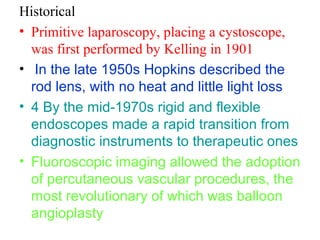
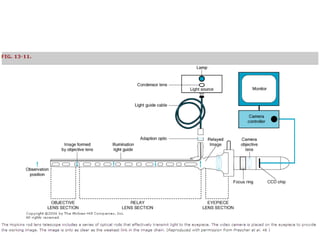
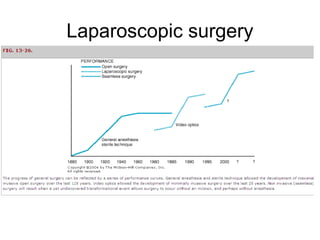
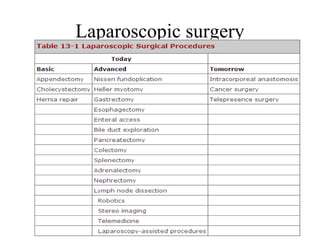
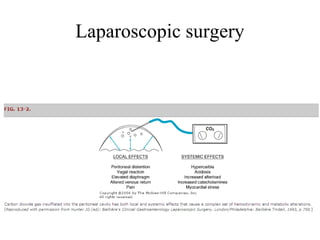
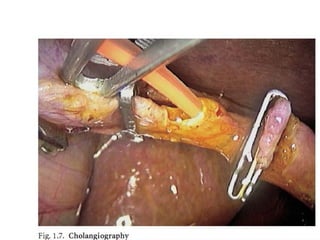
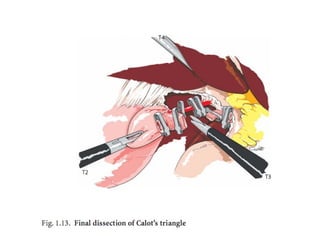
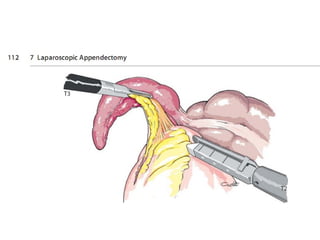
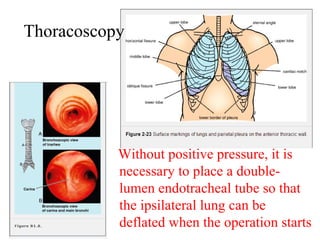
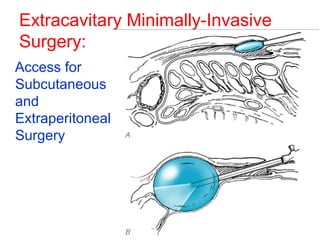
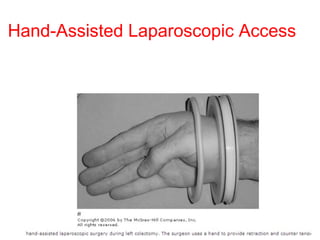
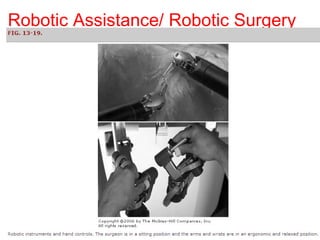
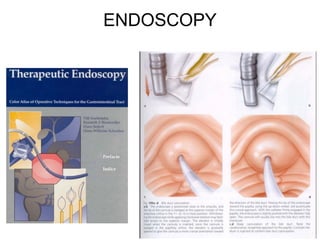

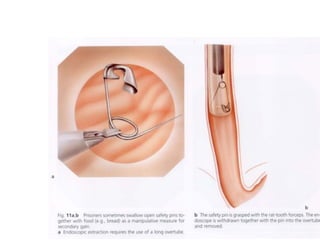
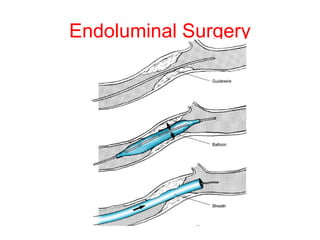
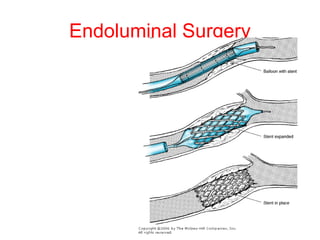
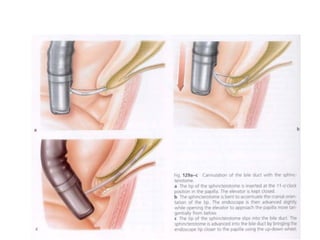
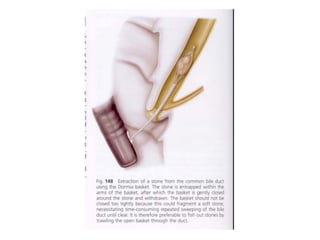
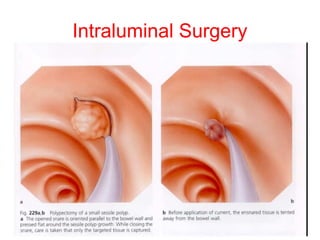
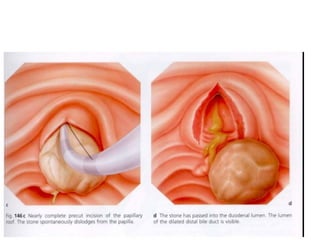
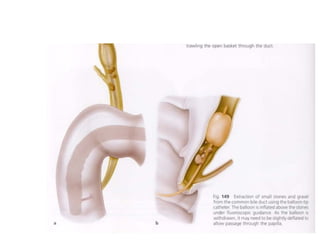
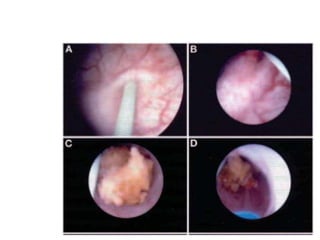
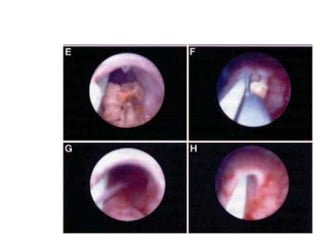


Minimally invasive surgery uses small incisions and miniaturized imaging systems to perform major operations with less trauma than traditional open surgery. The techniques were developed starting in the early 1900s and improved with advances like rod lens endoscopes, flexible instruments, and fluoroscopic imaging. Laparoscopic surgery involves inflating the abdominal cavity with gas to provide space to see and operate. Thoracoscopy may require deflating one lung. Other minimally invasive techniques provide access through subcutaneous tissues or body cavities without requiring incisions into organs. Endoluminal and intraluminal procedures operate from within lumens like blood vessels or the digestive tract.


