Minerals in Human Body
General Introduction
BY: Pramod Machimada Appaiah
Introduction
 Minerals are inorganic substances.
 Minerals are present in all body tissues and
fluids.
 In bones and teeth the minerals calcium and
phosphorus are deposited in protein material.
 Iron is found in blood as a part of the red
pigment, haemoglobin.
 Minerals occur in foods as salts and also in
combination with organic substances.
 Minerals have two distinct characteristics
• Mineral elements do not provide energy.
• Mineral elements are not destroyed during food
preparation.
 The mineral elements found in the body form
only 4 to 6 % of the weight of adult body.
 This means that about 2 to 3 kg of body weight
consists of minerals.
 Of this 90 % is accounted for by seven minerals
(calcium, phosphorus, potassium, sulphur,
sodium, chloride and magnesium).
 The other minerals are known as minor and
trace elements, as these add together to
about 10 % of the total mineral content of the
body.
 The largest concentration of minerals is found
in the bones and teeth.
 Minerals are also found in soft tissues such as
nerves and muscles and in blood and other
body fluids.
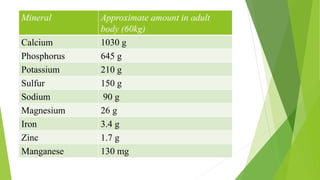
Mineral Approximate amount in adult
body (60kg)
Calcium 1030 g
Phosphorus 645 g
Potassium 210 g
Sulfur 150 g
Sodium 90 g
Magnesium 26 g
Iron 3.4 g
Zinc 1.7 g
Manganese 130 mg
General Functions of Minerals
1. Maintenance of acid-base balance.
2. Control of water balance.
3. Contraction of muscles.
4. Normal response of nerves to physiological stimulation.
5. Clotting of blood.
Minerals do not act singly in their function and
regulation of body processes, but work with the help of
other minerals and organic compounds. A certain
concentration of each element must be present for
efficient functioning of the body.
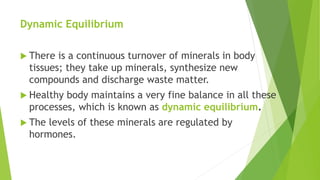
Dynamic Equilibrium
 There is a continuous turnover of minerals in body
tissues; they take up minerals, synthesize new
compounds and discharge waste matter.
 Healthy body maintains a very fine balance in all these
processes, which is known as dynamic equilibrium.
 The levels of these minerals are regulated by
hormones.
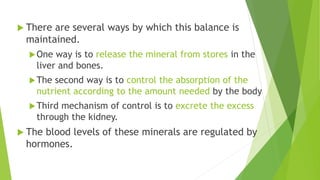
 There are several ways by which this balance is
maintained.
One way is to release the mineral from stores in the
liver and bones.
The second way is to control the absorption of the
nutrient according to the amount needed by the body
Third mechanism of control is to excrete the excess
through the kidney.
 The blood levels of these minerals are regulated by
hormones.
Absorption of mineral elements is
favoured by
(a)Body requirement: If the body needs are high,
as in pregnancy and growth stage of children,
there is higher absorption of calcium and iron
(up to 60 per cent) from the diet.
(b)Stomach acidity: Absorption of several
minerals, for example, calcium and iron is
improved by the presence of acid conditions.
 Thus absorption of calcium in the intestinal
tract is enhanced by lactose, which is
hydrolysed to lactic acid.
 The absorption of calcium, iron and zinc is
improved by ascorbic acid.
(c)Form in which the mineral is present in the
food: Haeme iron in animal foods is more easily
absorbed in the body than iron compounds
present in plant foods.
Absorption of mineral elements is
reduced by
(a) Dietary components, which combine with
mineral elements to form insoluble complexes,
reduce their absorption. These components include
oxalic acid, phytic acid, excess fiber and others.
Minerals are also bound by some medications.
(b) The absorption of some minerals is adversely
affected by an excessive intake of other minerals.
Such a situation arises when supplements of
minerals are taken. For example, intake of iron
supplements hinders the absorption of zinc, while
zinc supplements reduce the absorption of copper.
(c) Increased mobility of intestinal track due to
diarrhoea, intake of laxatives, etc., reduces the
time of absorption and hence the amount
absorbed.
(d) Parasites present in the intestinal tract also
interfere with the absorption of minerals. Iron
deficiency anaemia in children is attributed to
this factor.
Toxicity
Excessive intake, which can be toxic, is possible only
when —
Iron pills or other nutritional supplements are taken in
excess
Errors are made in substituting supplements
Exposures to toxic levels of chemicals occur in an
industrial plant.
Children consume excessive number of iron pills
accidentally.
 Even common salt used in the kitchen can be toxic, if
fed by mistake in excess to infants.

Minerals in human body general introduction

  • 1.
    Minerals in HumanBody General Introduction BY: Pramod Machimada Appaiah
  • 2.
    Introduction  Minerals areinorganic substances.  Minerals are present in all body tissues and fluids.  In bones and teeth the minerals calcium and phosphorus are deposited in protein material.  Iron is found in blood as a part of the red pigment, haemoglobin.  Minerals occur in foods as salts and also in combination with organic substances.
  • 3.
     Minerals havetwo distinct characteristics • Mineral elements do not provide energy. • Mineral elements are not destroyed during food preparation.
  • 4.
     The mineralelements found in the body form only 4 to 6 % of the weight of adult body.  This means that about 2 to 3 kg of body weight consists of minerals.  Of this 90 % is accounted for by seven minerals (calcium, phosphorus, potassium, sulphur, sodium, chloride and magnesium).
  • 5.
     The otherminerals are known as minor and trace elements, as these add together to about 10 % of the total mineral content of the body.  The largest concentration of minerals is found in the bones and teeth.  Minerals are also found in soft tissues such as nerves and muscles and in blood and other body fluids.
  • 6.
    Mineral Approximate amountin adult body (60kg) Calcium 1030 g Phosphorus 645 g Potassium 210 g Sulfur 150 g Sodium 90 g Magnesium 26 g Iron 3.4 g Zinc 1.7 g Manganese 130 mg
  • 7.
    General Functions ofMinerals 1. Maintenance of acid-base balance. 2. Control of water balance. 3. Contraction of muscles. 4. Normal response of nerves to physiological stimulation. 5. Clotting of blood. Minerals do not act singly in their function and regulation of body processes, but work with the help of other minerals and organic compounds. A certain concentration of each element must be present for efficient functioning of the body.
  • 8.
    Dynamic Equilibrium  Thereis a continuous turnover of minerals in body tissues; they take up minerals, synthesize new compounds and discharge waste matter.  Healthy body maintains a very fine balance in all these processes, which is known as dynamic equilibrium.  The levels of these minerals are regulated by hormones.
  • 9.
     There areseveral ways by which this balance is maintained. One way is to release the mineral from stores in the liver and bones. The second way is to control the absorption of the nutrient according to the amount needed by the body Third mechanism of control is to excrete the excess through the kidney.  The blood levels of these minerals are regulated by hormones.
  • 10.
    Absorption of mineralelements is favoured by (a)Body requirement: If the body needs are high, as in pregnancy and growth stage of children, there is higher absorption of calcium and iron (up to 60 per cent) from the diet.
  • 11.
    (b)Stomach acidity: Absorptionof several minerals, for example, calcium and iron is improved by the presence of acid conditions.  Thus absorption of calcium in the intestinal tract is enhanced by lactose, which is hydrolysed to lactic acid.  The absorption of calcium, iron and zinc is improved by ascorbic acid.
  • 12.
    (c)Form in whichthe mineral is present in the food: Haeme iron in animal foods is more easily absorbed in the body than iron compounds present in plant foods.
  • 13.
    Absorption of mineralelements is reduced by (a) Dietary components, which combine with mineral elements to form insoluble complexes, reduce their absorption. These components include oxalic acid, phytic acid, excess fiber and others. Minerals are also bound by some medications.
  • 14.
    (b) The absorptionof some minerals is adversely affected by an excessive intake of other minerals. Such a situation arises when supplements of minerals are taken. For example, intake of iron supplements hinders the absorption of zinc, while zinc supplements reduce the absorption of copper.
  • 15.
    (c) Increased mobilityof intestinal track due to diarrhoea, intake of laxatives, etc., reduces the time of absorption and hence the amount absorbed. (d) Parasites present in the intestinal tract also interfere with the absorption of minerals. Iron deficiency anaemia in children is attributed to this factor.
  • 16.
    Toxicity Excessive intake, whichcan be toxic, is possible only when — Iron pills or other nutritional supplements are taken in excess Errors are made in substituting supplements Exposures to toxic levels of chemicals occur in an industrial plant. Children consume excessive number of iron pills accidentally.  Even common salt used in the kitchen can be toxic, if fed by mistake in excess to infants.