A large scale social network visualization Rashid Bhamjee Supervised by Dr. Benoit Gaudin
Project Motivation Many applications exist to provide a visualization of how a person and their friends are connected. None provide a visualization of their  greater  network. Provide a visual representation of how a person is connected to their friends and how their friends are connected to each other.
Problems An extremely large amount of data to visualize. A standard graph drawing is too cluttered making it difficult to visualize meaningful information.
A Solution Use clustering techniques to reduce the size of the graph. Two types of clustering techniques: “Classic” clustering, structural clustering. Use a combination of both techniques
Classic Clustering Group strongly connected people together. Identifies social cliques within the network.
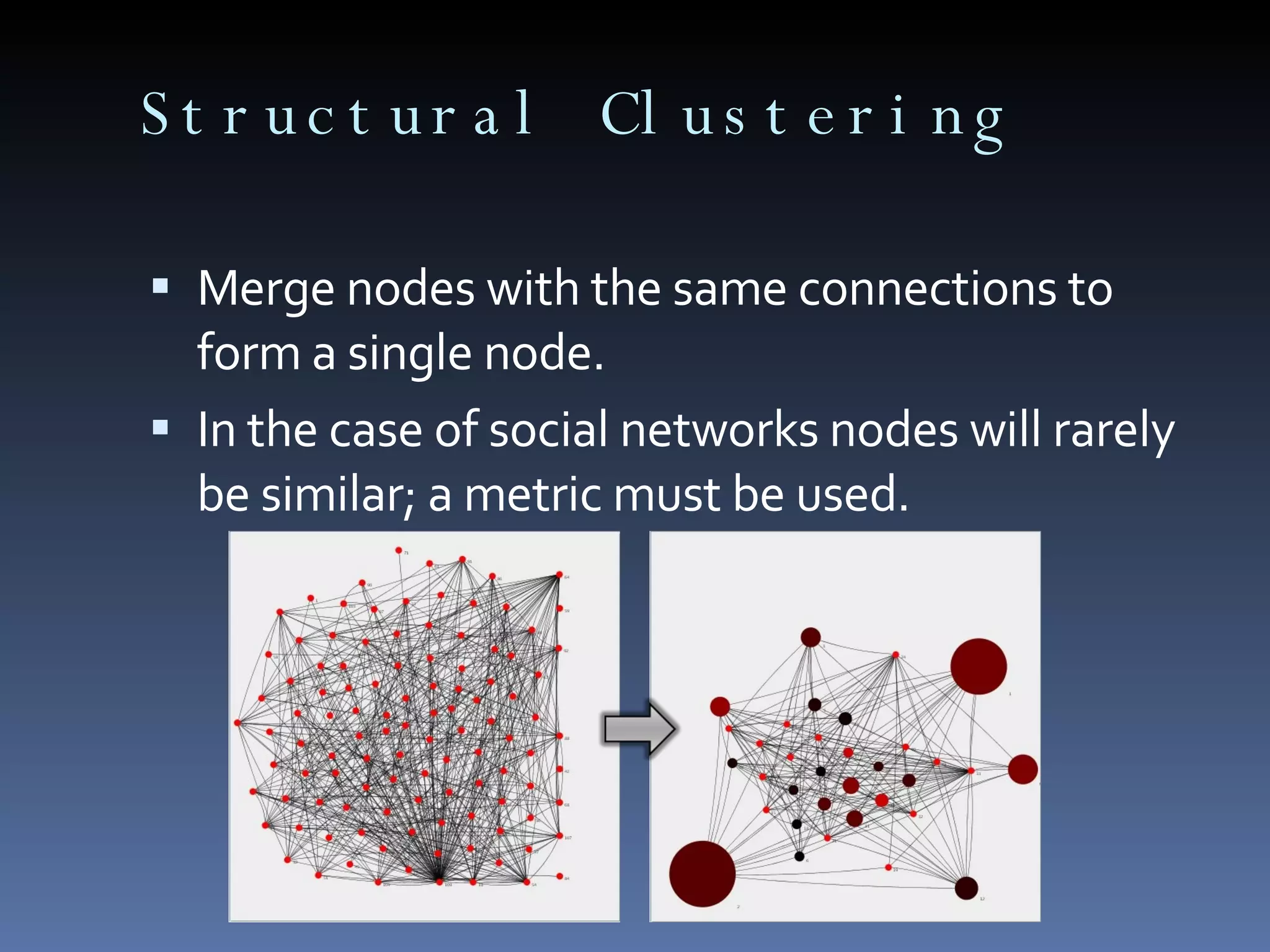
Structural Clustering Merge nodes with the same connections to form a single node. In the case of social networks nodes will rarely be similar; a metric must be used.
Implemented Downloaded HTML and parsed profile data and friend relations into a database. ~7,500 nodes ~750,000 edges
What’s Left To Do... Study: Impact of each clustering techniques. Combine different types of clustering. Implementation: Several clustering algorithms. Visual interface. Experiment on the usability of the application.

Midterm

  • 1.
    A large scalesocial network visualization Rashid Bhamjee Supervised by Dr. Benoit Gaudin
  • 2.
    Project Motivation Manyapplications exist to provide a visualization of how a person and their friends are connected. None provide a visualization of their greater network. Provide a visual representation of how a person is connected to their friends and how their friends are connected to each other.
  • 3.
    Problems An extremelylarge amount of data to visualize. A standard graph drawing is too cluttered making it difficult to visualize meaningful information.
  • 4.
    A Solution Useclustering techniques to reduce the size of the graph. Two types of clustering techniques: “Classic” clustering, structural clustering. Use a combination of both techniques
  • 5.
    Classic Clustering Groupstrongly connected people together. Identifies social cliques within the network.
  • 6.
    Structural Clustering Mergenodes with the same connections to form a single node. In the case of social networks nodes will rarely be similar; a metric must be used.
  • 7.
    Implemented Downloaded HTMLand parsed profile data and friend relations into a database. ~7,500 nodes ~750,000 edges
  • 8.
    What’s Left ToDo... Study: Impact of each clustering techniques. Combine different types of clustering. Implementation: Several clustering algorithms. Visual interface. Experiment on the usability of the application.