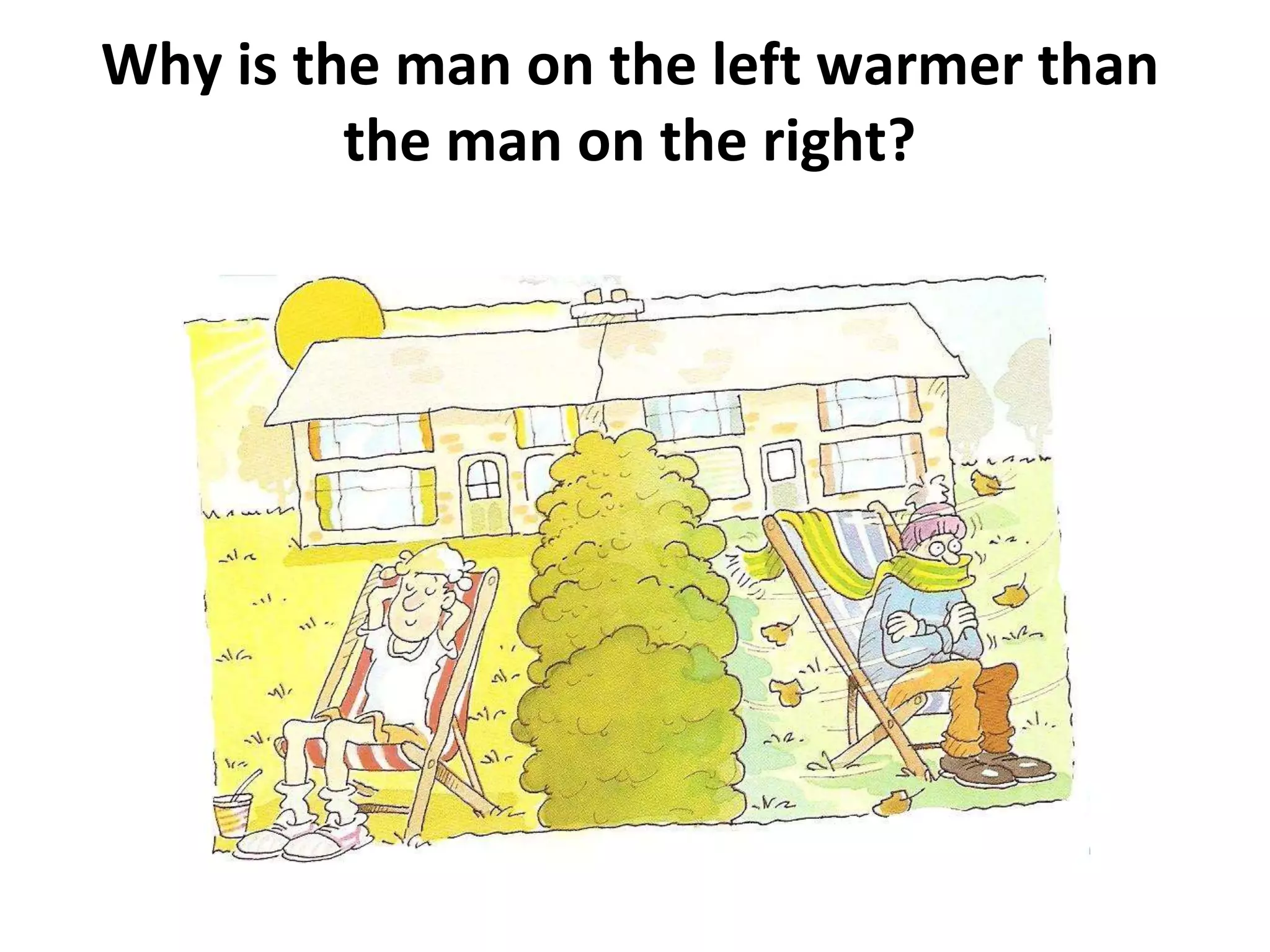
Why is the man on the left warmer than
the man on the right?
Learning Outcomes
• To understand the factors that influence the
microclimate of a place
• To investigate the changes in microclimate around
the school site
What is a microclimate?
• What does micro mean?
• What does climate mean?
What local features affect
temperature and wind?
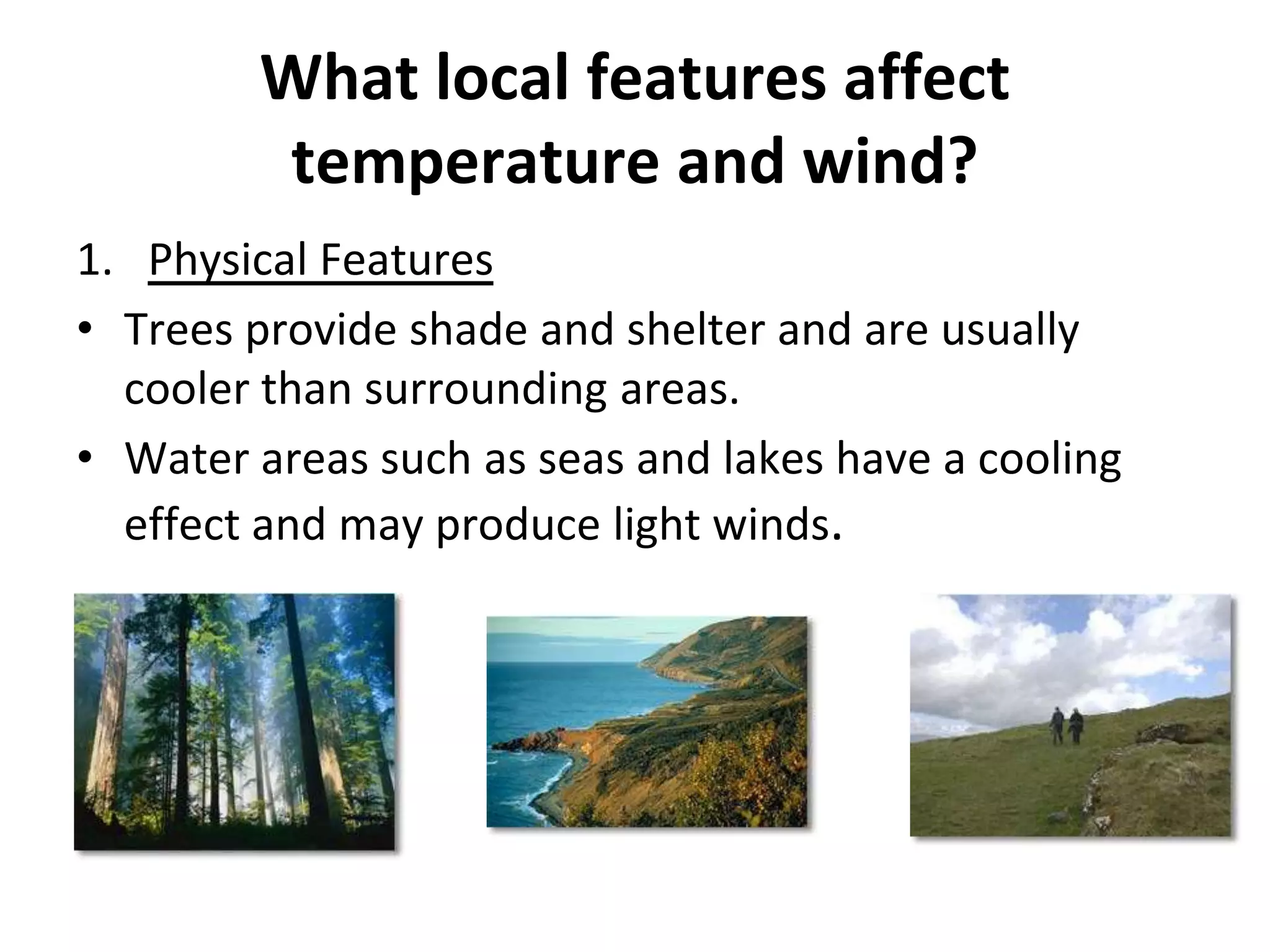
1. Physical Features
• Trees provide shade and shelter and are usually
cooler than surrounding areas.
• Water areas such as seas and lakes have a cooling
effect and may produce light winds.
What local features affect
temperature and wind?
2. Shelter
• Trees, hedges, walls, buildings and even hills can
provide shelter from the wind.
• Wind speed may be reduced and its direction
changed.
• Places sheltered from cold winds will be warmer.
What local features affect
temperature and wind?
• 3. Surface
• Colour of the ground surface affects warming
• Dark surfaces such as tarmac and soil absorbs more
radiation than lighter coloured surfaces.
• Lighter colour surfaces such as grass will reflect more
radiation.
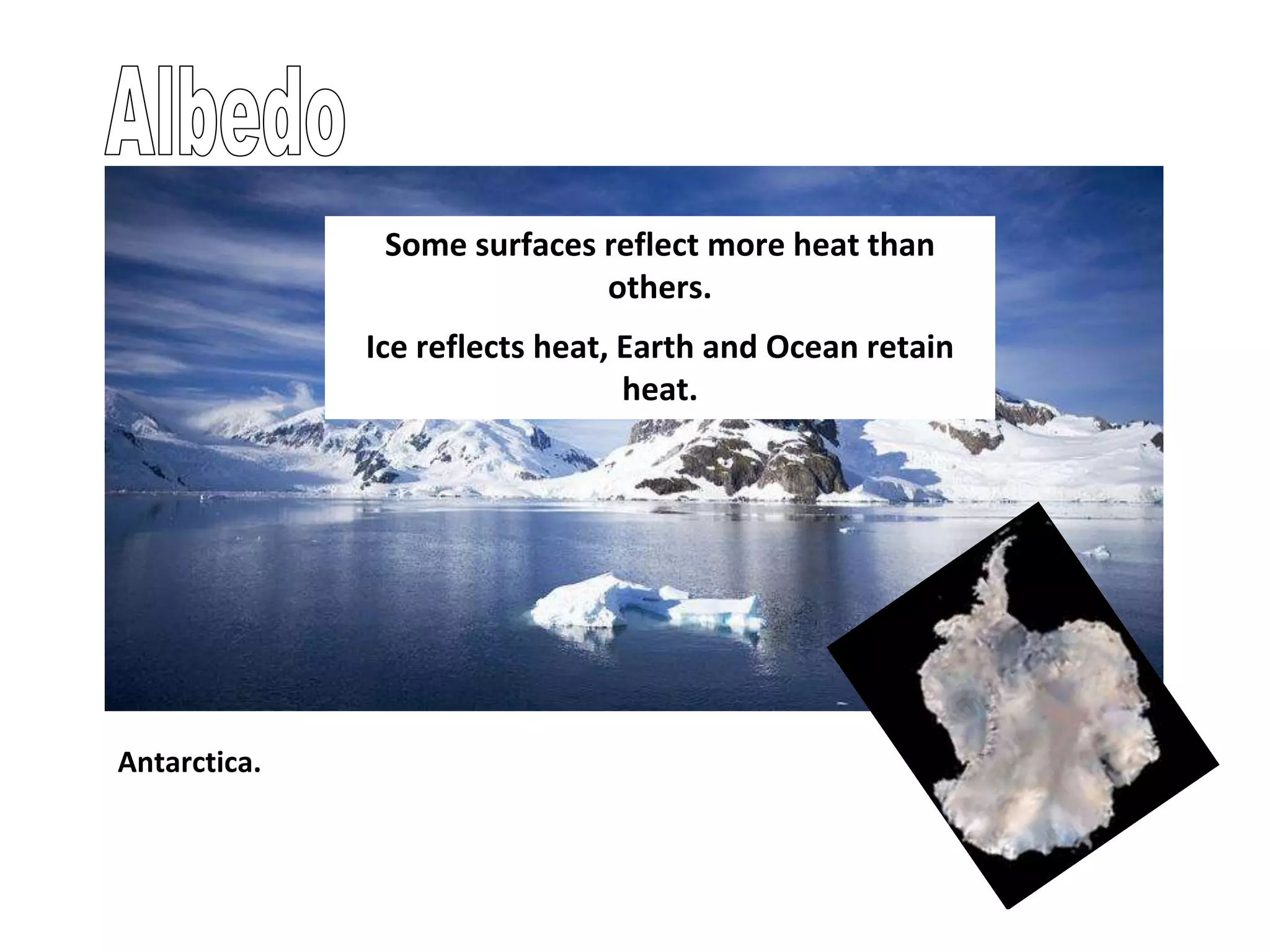
Antarctica.
Some surfaces reflect more heat than
others.
Ice reflects heat, Earth and Ocean retain
heat.
What local features affect
temperature and wind?
4. Buildings
• Buildings give off heat that has been stored from the
sun during the day which leaks out from their heating
systems.
• Temperatures near buildings may be 2 to 3 degrees
higher.
• Buildings also break up the wind and can reduce wind
speeds by up to a third.
• Sometimes wind can increase in speed as it rushes
through buildings.
What local features affect
temperature and wind?
5. Aspect
• The direction in which a place is facing is called its
aspect.
• Placing facing the sun will be warmer than those in
shadow.

Microclimates

  • 1.
    Why is theman on the left warmer than the man on the right?
  • 2.
    Learning Outcomes • Tounderstand the factors that influence the microclimate of a place • To investigate the changes in microclimate around the school site
  • 3.
    What is amicroclimate? • What does micro mean? • What does climate mean?
  • 4.
    What local featuresaffect temperature and wind? 1. Physical Features • Trees provide shade and shelter and are usually cooler than surrounding areas. • Water areas such as seas and lakes have a cooling effect and may produce light winds.
  • 5.
    What local featuresaffect temperature and wind? 2. Shelter • Trees, hedges, walls, buildings and even hills can provide shelter from the wind. • Wind speed may be reduced and its direction changed. • Places sheltered from cold winds will be warmer.
  • 6.
    What local featuresaffect temperature and wind? • 3. Surface • Colour of the ground surface affects warming • Dark surfaces such as tarmac and soil absorbs more radiation than lighter coloured surfaces. • Lighter colour surfaces such as grass will reflect more radiation.
  • 7.
    Antarctica. Some surfaces reflectmore heat than others. Ice reflects heat, Earth and Ocean retain heat.
  • 8.
    What local featuresaffect temperature and wind? 4. Buildings • Buildings give off heat that has been stored from the sun during the day which leaks out from their heating systems. • Temperatures near buildings may be 2 to 3 degrees higher. • Buildings also break up the wind and can reduce wind speeds by up to a third. • Sometimes wind can increase in speed as it rushes through buildings.
  • 9.
    What local featuresaffect temperature and wind? 5. Aspect • The direction in which a place is facing is called its aspect. • Placing facing the sun will be warmer than those in shadow.