PRESENTED BY
SHALINI RANA
B.SC (H)NURSING ,M.A PSYCHOLOGY
Gram positive bacteria
1. Staphylococcus
2. Streptococcus
3. Pneumococcus
4. Mycobacterium
5. Clostridium tetani
6. Bacillus anthracis
7. lactobacillus
Gram negative bacteria
 Neisseria gonorrhoea
 Neisseria meningitidis
 Pseudomonas
 Vibrio cholerae
 Salmonella
 Escherichia coli
 Shigella
 brucella
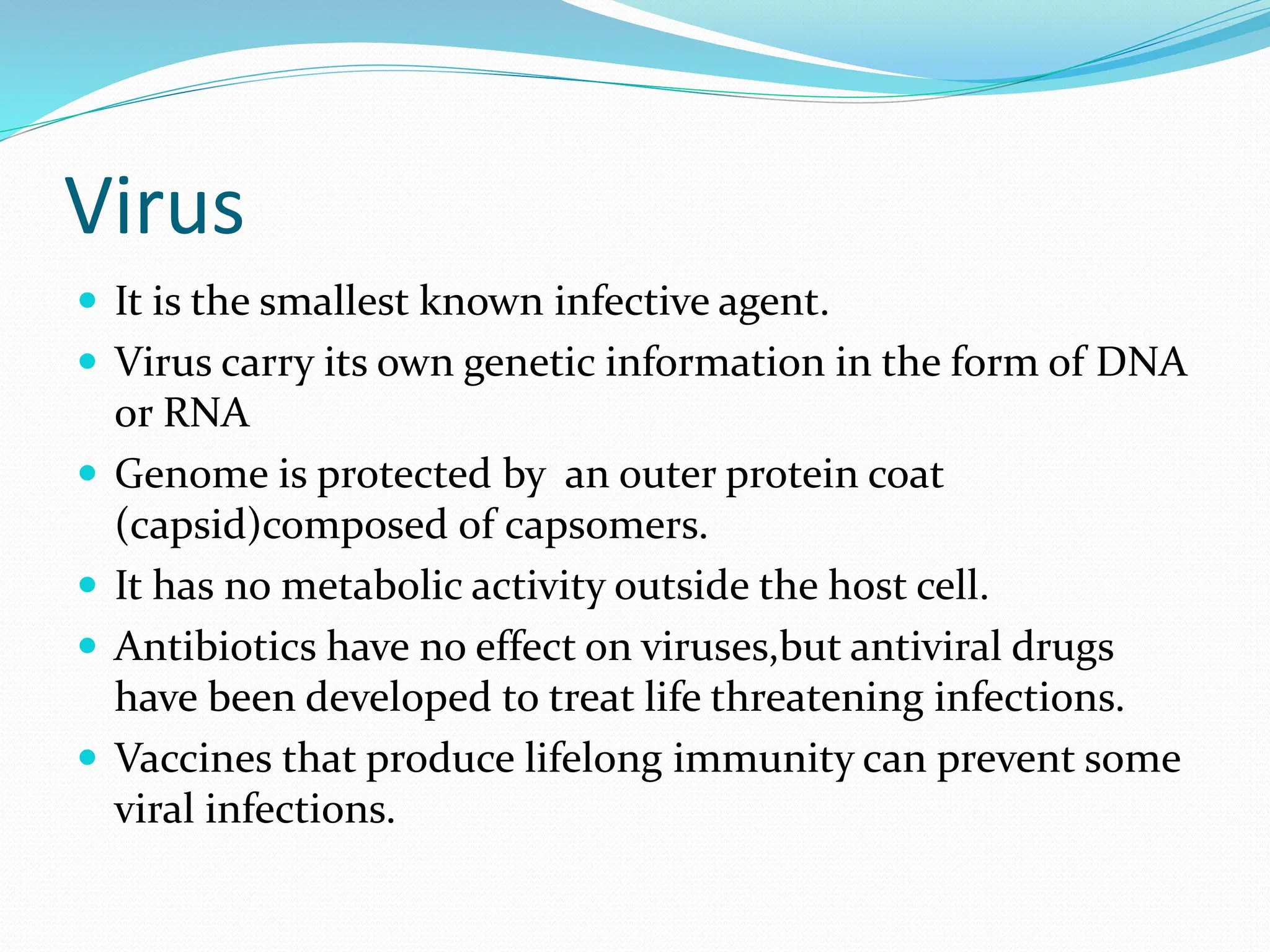
Virus
 It is the smallest known infective agent.
 Virus carry its own genetic information in the form of DNA
or RNA
 Genome is protected by an outer protein coat
(capsid)composed of capsomers.
 It has no metabolic activity outside the host cell.
 Antibiotics have no effect on viruses,but antiviral drugs
have been developed to treat life threatening infections.
 Vaccines that produce lifelong immunity can prevent some
viral infections.
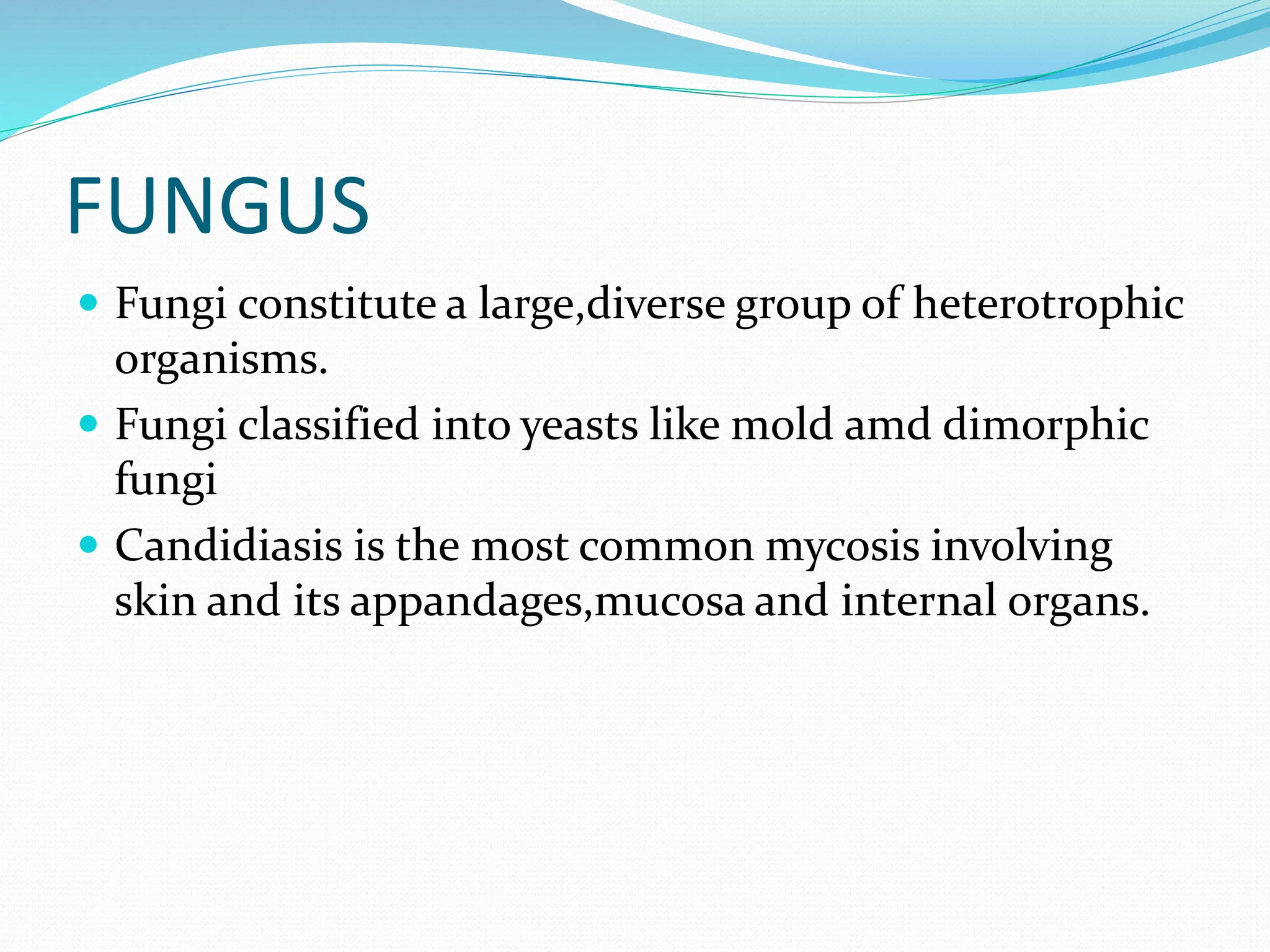
FUNGUS
 Fungi constitute a large,diverse group of heterotrophic
organisms.
 Fungi classified into yeasts like mold amd dimorphic
fungi
 Candidiasis is the most common mycosis involving
skin and its appandages,mucosa and internal organs.
PARASITES
 These are an animal or plant which lives in or upon
another organism and derives its nutrient directly
from it.
 Parasites are classified as protozoa (unicellular
organisms) and helminths (multicellular organisms.
 Parasites exist in three morphological forms
trophozite,precyst and cyst.
Shapes of bacteria
Shape of viruses

MICROBIOLOGY-bacteria and viruses.......

  • 1.
    PRESENTED BY SHALINI RANA B.SC(H)NURSING ,M.A PSYCHOLOGY
  • 2.
    Gram positive bacteria 1.Staphylococcus 2. Streptococcus 3. Pneumococcus 4. Mycobacterium 5. Clostridium tetani 6. Bacillus anthracis 7. lactobacillus
  • 3.
    Gram negative bacteria Neisseria gonorrhoea  Neisseria meningitidis  Pseudomonas  Vibrio cholerae  Salmonella  Escherichia coli  Shigella  brucella
  • 4.
    Virus  It isthe smallest known infective agent.  Virus carry its own genetic information in the form of DNA or RNA  Genome is protected by an outer protein coat (capsid)composed of capsomers.  It has no metabolic activity outside the host cell.  Antibiotics have no effect on viruses,but antiviral drugs have been developed to treat life threatening infections.  Vaccines that produce lifelong immunity can prevent some viral infections.
  • 5.
    FUNGUS  Fungi constitutea large,diverse group of heterotrophic organisms.  Fungi classified into yeasts like mold amd dimorphic fungi  Candidiasis is the most common mycosis involving skin and its appandages,mucosa and internal organs.
  • 6.
    PARASITES  These arean animal or plant which lives in or upon another organism and derives its nutrient directly from it.  Parasites are classified as protozoa (unicellular organisms) and helminths (multicellular organisms.  Parasites exist in three morphological forms trophozite,precyst and cyst.
  • 7.
  • 8.