MICROBIAL
CLOCK
By Arjoo
MCA 3rd Sem.
403
Microbes are single –cell organisms so tiny
that millions can fit into the eye of needle.
They are the oldest form of life on earth.
Micro-organisms(or microbes for short) play a
very important role in our lives. Some
microbes cause disease but the majority are
completely harmless. In fact we couldn’t live
without them, but they could live without us.
Our genome is the same right now as it was
yesterday, last week, last year, or the day we
were born. But our microbiomes—the
combined genes of all the trillions of microbes
that share our body—have shifted since the
sun came up this morning. And they will
change again before the next sunrise.
Types of Microbes
Microbes can be divided into six main
types Archaea, Bacteria, Fungi, Protista,
Viruses, and Microbial Mergers.
 Archaea- These bacteria look-alikes are living
fossils that are providing clues to the earliest
forms of life on Earth
 Bacteria- Often dismissed as “germs” that cause
illness, bacteria help us do an amazing array of
useful things, like make vitamins, break down
some types of garbage, and maintain our
atmosphere.
 Fungi- From a single-celled yeast to a 3.5-mile-
wide mushroom, fungi do everything from
helping to bake bread to recycling to
decomposing waste.
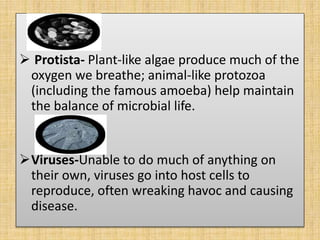
 Protista- Plant-like algae produce much of the
oxygen we breathe; animal-like protozoa
(including the famous amoeba) help maintain
the balance of microbial life.
Viruses-Unable to do much of anything on
their own, viruses go into host cells to
reproduce, often wreaking havoc and causing
disease.
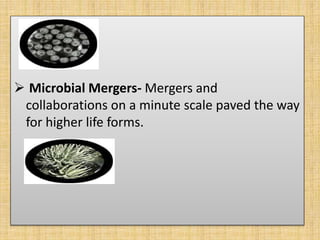
 Microbial Mergers- Mergers and
collaborations on a minute scale paved the way
for higher life forms.
Establishing the time since death is critical in
every death investigation, yet existing
techniques are susceptible to a range of errors.
Example:
Forensic entomology - Used to
asses the postmortem(PMI).
Microbes may provide a novel method for
estimating PMI that avoids many limitations.
A new study led by the University of Colorado
Boulder suggests that forensic scientists could use
the microbial clock to determine time of death.
One of the first questions asked – which you
would know if you watch Law and Order – is what
time did the victim die? But current techniques,
like timing of last text messages, aren’t reliable. A
microbial clock is essentially a succession of
bacterial changes that occur postmortem as
bodies move through the decay process. And
researchers say these patterns are consistent in
corpses post-mortem, and this technique could be
complementary to current techniques.
Study finds ‘microbial clock’ may help
determine time of death
An intriguing study led by the University of
Colorado Boulder may provide a powerful new
tool in the quiver of forensic scientists
attempting to determine the time of death in
cases involving human corpses .
A Microbial Clock-Forensic scientists looking
for the exact time of death of a human corpse
may have just gotten a new, powerful tool: the
human body's own "microbial clock."
• Human body is home to about 100 trillion
microbes. This so-called “microbial clock” is
essentially the succession of bacterial changes
that the decaying body goes through
postmortem.
• Authors of study said, “our results provide a
detailed understanding of the bacterial
changes that occur as mouse corpses
decompose, and we believe this method has
the potential to be complementary forensic
tool for estimating time of death”.
By using bacteria that counts time together,
gene sequencing, research should be able to
find the amount of time that passed of the
deceased individual.
ROUNDWORM found by microbial clock
Revolutionize Forensic Studies through future
research on Microbial clock by…..
Helping to determine events before and after
death
Analyzing lifestyle of deceased
Understanding diet of deceased
Information about travel
Personal interest/ethics
Pros
Makes finding time of death easier and with
more efficiency as well as stretches science in
positive direction.
Cons
Can still provide unreliable results to
scientists.
About
Forensic entomology is widely used to assess the
post-mortem interval (PMI), but errors can range
from days to weeks. Microbes may provide a novel
method for estimating PMI that avoids many of these
limitations. Here we show that postmortem
microbial community changes are dramatic,
measurable, and repeatable in a mouse model
system, allowing estimates of PMI to within 3 days
over 48 days. Our results provide a detailed
understanding of bacterial and microbial eukaryotic
ecology within a decomposing corpse system and
suggest that microbial community data can be
developed into a forensic tool for estimating PMI.
Personal opinion
I think it is important because it can assist in
finding the truth about someone’s death and
justifying it. I choose this topic because I
found the new invention intriguing and
revolutionary to Forensics Science.
Thank you !

Microbial clock

  • 1.
  • 2.
    Microbes are single–cell organisms so tiny that millions can fit into the eye of needle. They are the oldest form of life on earth. Micro-organisms(or microbes for short) play a very important role in our lives. Some microbes cause disease but the majority are completely harmless. In fact we couldn’t live without them, but they could live without us.
  • 3.
    Our genome isthe same right now as it was yesterday, last week, last year, or the day we were born. But our microbiomes—the combined genes of all the trillions of microbes that share our body—have shifted since the sun came up this morning. And they will change again before the next sunrise.
  • 4.
    Types of Microbes Microbescan be divided into six main types Archaea, Bacteria, Fungi, Protista, Viruses, and Microbial Mergers.  Archaea- These bacteria look-alikes are living fossils that are providing clues to the earliest forms of life on Earth
  • 5.
     Bacteria- Oftendismissed as “germs” that cause illness, bacteria help us do an amazing array of useful things, like make vitamins, break down some types of garbage, and maintain our atmosphere.  Fungi- From a single-celled yeast to a 3.5-mile- wide mushroom, fungi do everything from helping to bake bread to recycling to decomposing waste.
  • 6.
     Protista- Plant-likealgae produce much of the oxygen we breathe; animal-like protozoa (including the famous amoeba) help maintain the balance of microbial life. Viruses-Unable to do much of anything on their own, viruses go into host cells to reproduce, often wreaking havoc and causing disease.
  • 7.
     Microbial Mergers-Mergers and collaborations on a minute scale paved the way for higher life forms.
  • 8.
    Establishing the timesince death is critical in every death investigation, yet existing techniques are susceptible to a range of errors. Example: Forensic entomology - Used to asses the postmortem(PMI). Microbes may provide a novel method for estimating PMI that avoids many limitations.
  • 9.
    A new studyled by the University of Colorado Boulder suggests that forensic scientists could use the microbial clock to determine time of death. One of the first questions asked – which you would know if you watch Law and Order – is what time did the victim die? But current techniques, like timing of last text messages, aren’t reliable. A microbial clock is essentially a succession of bacterial changes that occur postmortem as bodies move through the decay process. And researchers say these patterns are consistent in corpses post-mortem, and this technique could be complementary to current techniques.
  • 10.
    Study finds ‘microbialclock’ may help determine time of death An intriguing study led by the University of Colorado Boulder may provide a powerful new tool in the quiver of forensic scientists attempting to determine the time of death in cases involving human corpses . A Microbial Clock-Forensic scientists looking for the exact time of death of a human corpse may have just gotten a new, powerful tool: the human body's own "microbial clock."
  • 11.
    • Human bodyis home to about 100 trillion microbes. This so-called “microbial clock” is essentially the succession of bacterial changes that the decaying body goes through postmortem. • Authors of study said, “our results provide a detailed understanding of the bacterial changes that occur as mouse corpses decompose, and we believe this method has the potential to be complementary forensic tool for estimating time of death”.
  • 12.
    By using bacteriathat counts time together, gene sequencing, research should be able to find the amount of time that passed of the deceased individual. ROUNDWORM found by microbial clock
  • 13.
    Revolutionize Forensic Studiesthrough future research on Microbial clock by….. Helping to determine events before and after death Analyzing lifestyle of deceased Understanding diet of deceased Information about travel Personal interest/ethics
  • 15.
    Pros Makes finding timeof death easier and with more efficiency as well as stretches science in positive direction. Cons Can still provide unreliable results to scientists.
  • 16.
    About Forensic entomology iswidely used to assess the post-mortem interval (PMI), but errors can range from days to weeks. Microbes may provide a novel method for estimating PMI that avoids many of these limitations. Here we show that postmortem microbial community changes are dramatic, measurable, and repeatable in a mouse model system, allowing estimates of PMI to within 3 days over 48 days. Our results provide a detailed understanding of bacterial and microbial eukaryotic ecology within a decomposing corpse system and suggest that microbial community data can be developed into a forensic tool for estimating PMI.
  • 17.
    Personal opinion I thinkit is important because it can assist in finding the truth about someone’s death and justifying it. I choose this topic because I found the new invention intriguing and revolutionary to Forensics Science.
  • 18.