Methods of DevelopmentAnd Organization
Remember that unless you are writing a very short essay, it’s unlikely that you will write an entire academic paper as “comparison/contrast,” “process,” “definition” or whatever.  However, portions of your essay could be written in any one of these, and, as you will see, brainstorming how your essay could be developed in a variety of methods can help you organize and develop your paper.
Example and AnalysisThe basic building block of the academic paper, using logical organization.This is the TEA paragraph, the “dna” of critical analysis, that you have been using so far all term.Get into the habit, as you read, of summarizing and analyzing your reading and keep records in your notes.  You can then use these directly in your paper (remembering to cite, of course).
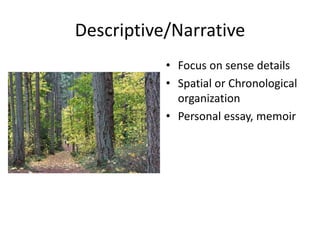
Descriptive/NarrativeFocus on sense detailsSpatial or Chronological organizationPersonal essay, memoir
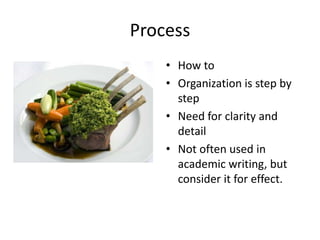
ProcessHow toOrganization is step by stepNeed for clarity and detailNot often used in academic writing, but consider it for effect.
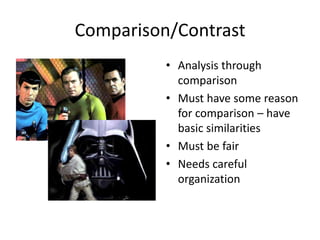
Comparison/ContrastAnalysis through comparisonMust have some reason for comparison – have basic similaritiesMust be fairNeeds careful organization
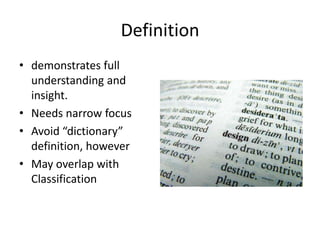
Definitiondemonstrates full understanding and insight.Needs narrow focusAvoid “dictionary” definition, howeverMay overlap with Classification
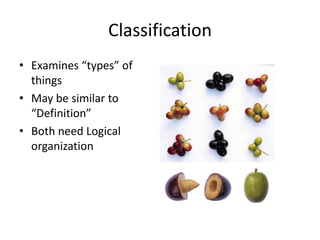
ClassificationExamines “types” of thingsMay be similar to “Definition”Both need Logical organization
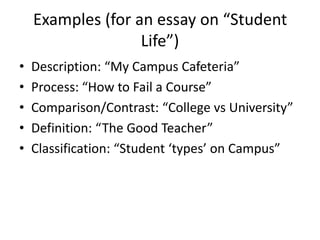
Examples (for an essay on “Student Life”)Description: “My Campus Cafeteria”Process: “How to Fail a Course”Comparison/Contrast: “College vs University”Definition: “The Good Teacher”Classification: “Student ‘types’ on Campus”

Methods Of Development

  • 1.
  • 2.
    Remember that unlessyou are writing a very short essay, it’s unlikely that you will write an entire academic paper as “comparison/contrast,” “process,” “definition” or whatever. However, portions of your essay could be written in any one of these, and, as you will see, brainstorming how your essay could be developed in a variety of methods can help you organize and develop your paper.
  • 3.
    Example and AnalysisThebasic building block of the academic paper, using logical organization.This is the TEA paragraph, the “dna” of critical analysis, that you have been using so far all term.Get into the habit, as you read, of summarizing and analyzing your reading and keep records in your notes. You can then use these directly in your paper (remembering to cite, of course).
  • 4.
    Descriptive/NarrativeFocus on sensedetailsSpatial or Chronological organizationPersonal essay, memoir
  • 5.
    ProcessHow toOrganization isstep by stepNeed for clarity and detailNot often used in academic writing, but consider it for effect.
  • 6.
    Comparison/ContrastAnalysis through comparisonMusthave some reason for comparison – have basic similaritiesMust be fairNeeds careful organization
  • 7.
    Definitiondemonstrates full understandingand insight.Needs narrow focusAvoid “dictionary” definition, howeverMay overlap with Classification
  • 8.
    ClassificationExamines “types” ofthingsMay be similar to “Definition”Both need Logical organization
  • 9.
    Examples (for anessay on “Student Life”)Description: “My Campus Cafeteria”Process: “How to Fail a Course”Comparison/Contrast: “College vs University”Definition: “The Good Teacher”Classification: “Student ‘types’ on Campus”