Methanotrophs
KKR1116 1
Methanotrophs
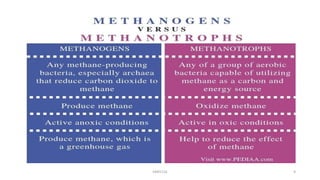
Methanotrophs (sometimes called
methanophiles) are prokaryotes that
metabolize methane as their source
of carbon and energy.
They can be either bacteria or
archaea and can grow aerobically or
anaerobically, and require single-
carbon compounds to survive.
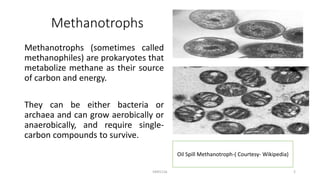
Oil Spill Methanotroph-( Courtesy- Wikipedia)
KKR1116 2
Methanotrophs
Methanotrophs are especially
common in or near environments
where methane is produced,
although some methanotrophs can
oxidize atmospheric methane.
Their habitats include wetlands,
soil, Marshes, Rice paddies,
landfills, Aquatic systems (lakes,
oceans, Ponds, streams etc.,) and
more.
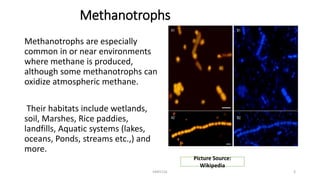
Picture Source:
Wikipedia
KKR1116 3
Aerobic methanotrophs are a unique group of Gram-negative
bacteria capable of utilizing methane as sole carbon and energy
source.
Methanotrophs are present in a wide variety of environments and
play an important role in the oxidation of methane in the natural
world.
Methanotrophs are a subset of the methylotrophic bacteria which
can use other one-carbon compounds, including methanol,
methylated amines, halomethanes, and methylated compounds
containing sulfur.
KKR1116 4
Methane monooxygenase (MMO), which catalyzes the
oxidation of methane to methanol, is a defining feature
of methanotrophs.
MMO has two distinct forms: a soluble cytoplasmic form
(sMMO) and a particulate membrane-associated form
(pMMO).
Both forms of enzyme have broad substrate specificities,
especially sMMO, which can oxidize alkanes, alkenes,
alicyclics, aromatics, ethers, heterocyclics and ammonia.
KKR1116 5
KKR1116 6
Methanotrophs play an important role in the oxidation of methane in the natural
environment.
They oxidize methane produced geothermally and by the anaerobic metabolism of
methanogenic bacteria, thereby reducing the release of methane to the atmosphere
from landfill sites, wetlands, and rice paddies.
Methanotrophs can also oxidize very low concentrations of methane (∼2 ppmv) found in
the atmosphere. They are therefore key players in the global methane cycle.
Methanotrophs are ubiquitous in nature and have been isolated from many
environments including soils, peatlands, rice paddies, sediments, freshwater and marine
systems, acidic hot springs, mud pots, alkaline soda lakes, cold environments, and tissues
of higher organisms.
KKR1116 7
Methanotrophs were generally mesophilic, neutrophilic bacteria
of the genera Methylomonas, Methylobacter, Methylococcus
(type I), and Methylosinus and Methylocystis (type II).
Since then several new genera of methanotrophs have been
described, including psychrophiles (Methylosphaera),
thermophiles (Methylocaldum, Methylothermus), halophiles
(Methylohalobius), and moderate acidophiles (Methylocella and
Methylocapsa).
KKR1116 8
KKR1116 9
Applications of Methanotrophs
Methanotrophs have significant potential for applied
microbiology and biochemical engineering,
• bioremediation of pollutants (e.g., halogenated hydrocarbons)
via co-metabolism by MMOs,
• biotransformation of diverse organic substrates (e.g.,
propylene to epoxypropane and production of chiral alcohols),
KKR1116 10
Methanotrophs are unique and ubiquitous bacteria that utilize
methane as a sole source of carbon and energy from the atmosphere.
Besides, methanotrophs may also be targeted for bioremediation of
diverse type of heavy metals and organic pollutants owing to the
presence of broad-spectrum methane monooxygenases enzyme.
They are highly specialized group of aerobic bacteria and have a unique
capacity for oxidation of certain types of organic pollutants like
alkanes, aromatics, halogenated alkenes, etc.
KKR1116 11

Methanotrophs

  • 1.
  • 2.
    Methanotrophs Methanotrophs (sometimes called methanophiles)are prokaryotes that metabolize methane as their source of carbon and energy. They can be either bacteria or archaea and can grow aerobically or anaerobically, and require single- carbon compounds to survive. Oil Spill Methanotroph-( Courtesy- Wikipedia) KKR1116 2
  • 3.
    Methanotrophs Methanotrophs are especially commonin or near environments where methane is produced, although some methanotrophs can oxidize atmospheric methane. Their habitats include wetlands, soil, Marshes, Rice paddies, landfills, Aquatic systems (lakes, oceans, Ponds, streams etc.,) and more. Picture Source: Wikipedia KKR1116 3
  • 4.
    Aerobic methanotrophs area unique group of Gram-negative bacteria capable of utilizing methane as sole carbon and energy source. Methanotrophs are present in a wide variety of environments and play an important role in the oxidation of methane in the natural world. Methanotrophs are a subset of the methylotrophic bacteria which can use other one-carbon compounds, including methanol, methylated amines, halomethanes, and methylated compounds containing sulfur. KKR1116 4
  • 5.
    Methane monooxygenase (MMO),which catalyzes the oxidation of methane to methanol, is a defining feature of methanotrophs. MMO has two distinct forms: a soluble cytoplasmic form (sMMO) and a particulate membrane-associated form (pMMO). Both forms of enzyme have broad substrate specificities, especially sMMO, which can oxidize alkanes, alkenes, alicyclics, aromatics, ethers, heterocyclics and ammonia. KKR1116 5
  • 6.
  • 7.
    Methanotrophs play animportant role in the oxidation of methane in the natural environment. They oxidize methane produced geothermally and by the anaerobic metabolism of methanogenic bacteria, thereby reducing the release of methane to the atmosphere from landfill sites, wetlands, and rice paddies. Methanotrophs can also oxidize very low concentrations of methane (∼2 ppmv) found in the atmosphere. They are therefore key players in the global methane cycle. Methanotrophs are ubiquitous in nature and have been isolated from many environments including soils, peatlands, rice paddies, sediments, freshwater and marine systems, acidic hot springs, mud pots, alkaline soda lakes, cold environments, and tissues of higher organisms. KKR1116 7
  • 8.
    Methanotrophs were generallymesophilic, neutrophilic bacteria of the genera Methylomonas, Methylobacter, Methylococcus (type I), and Methylosinus and Methylocystis (type II). Since then several new genera of methanotrophs have been described, including psychrophiles (Methylosphaera), thermophiles (Methylocaldum, Methylothermus), halophiles (Methylohalobius), and moderate acidophiles (Methylocella and Methylocapsa). KKR1116 8
  • 9.
  • 10.
    Applications of Methanotrophs Methanotrophshave significant potential for applied microbiology and biochemical engineering, • bioremediation of pollutants (e.g., halogenated hydrocarbons) via co-metabolism by MMOs, • biotransformation of diverse organic substrates (e.g., propylene to epoxypropane and production of chiral alcohols), KKR1116 10
  • 11.
    Methanotrophs are uniqueand ubiquitous bacteria that utilize methane as a sole source of carbon and energy from the atmosphere. Besides, methanotrophs may also be targeted for bioremediation of diverse type of heavy metals and organic pollutants owing to the presence of broad-spectrum methane monooxygenases enzyme. They are highly specialized group of aerobic bacteria and have a unique capacity for oxidation of certain types of organic pollutants like alkanes, aromatics, halogenated alkenes, etc. KKR1116 11