kalusugang pangkaisipan at kagalingan
MENTAL HEALTH
AND WELL-BEING
What Is Mental Health?
“Mental health is a state of well-being in which
an individual realizes his or her own abilities,
can cope with the normal stresses of life, can
work productively, and is able to make a
contribution to his or her community.”
WHAT IS MENTAL WELL-BEING?
Your mental well-being is about your thoughts
and feelings and how you cope with the ups
and downs of everyday life.
‘MentalWell-beingis not thesamethingas MentalHealth,althoughthetwocaninfluenceeachother.Long
periodsof lowmentalwellbeingcanleadtothedevelopmentof diagnosablementalhealthconditionssuchas
anxietyordepression.If you'relivingwitha mentalhealthcondition,youmayexperiencelowmental
wellbeingmoreoften,buttherewillalsobelongperiodswhereyou'reabletomaintaingoodmentalwellbeing.”
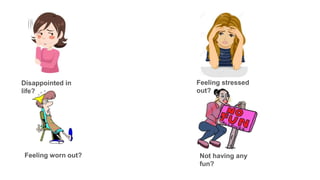
Feeling worn out?
Disappointed in
life?
Feeling stressed
out?
Not having any
fun?
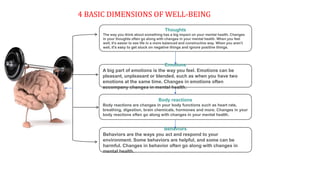
4 BASIC DIMENSIONS OF WELL-BEING
Thoughts
The way you think about something has a big impact on your mental health. Changes
in your thoughts often go along with changes in your mental health. When you feel
well, it's easier to see life in a more balanced and constructive way. When you aren't
well, it's easy to get stuck on negative things and ignore positive things.
Behaviors
Behaviors are the ways you act and respond to your
environment. Some behaviors are helpful, and some can be
harmful. Changes in behavior often go along with changes in
mental health.
Body reactions
Body reactions are changes in your body functions such as heart rate,
breathing, digestion, brain chemicals, hormones and more. Changes in your
body reactions often go along with changes in your mental health.
Emotions
A big part of emotions is the way you feel. Emotions can be
pleasant, unpleasant or blended, such as when you have two
emotions at the same time. Changes in emotions often
accompany changes in mental health.
Your mental health can affect many areas of your
life
•Work, school, or home life
•Relationships with others
•Sleep
•Appetite
•Energy levels
•Ability to think clearly or make decisions
•Physical health
•Life satisfaction and more...
To have Positive Mental Health you must have a Healthy Mental
Wellbeing.
How?
Steps to a Healthy Mental Wellbeing
1. PRAY
2. Healthy Diet
3. Sleep
4. Physical Activity
5. Enjoy Life
6. Stay Connected
7. Be Active
What does good mental well-being look like?
Importantly, good mental well-being is not the
absence of negative thoughts and feelings. We all
face difficult and challenging situations that cause us
to feel angry, sad, overwhelmed and everything in-
between. Instead, it's about being able to
understand and manage those feelings, so that
generally you're able to:
• feel confident in yourself
• build and maintain positive relationships
• have a sense of purpose
• live and work productively
• cope with the normal stresses of day-to-day life
• manage when things change
Early Warning Signs of low Mental health
Experiencing one or more of the following feelings or
behaviors can be an early warning sign of a problem:
• Eating or sleeping too much or too little
• Pulling away from people and usual activities
• Having low or no energy
• Feeling numb or like nothing matters
• Having unexplained aches and pains
• Feeling helpless or hopeless
• Smoking, drinking, or using drugs more than usual
• Feeling unusually confused, forgetful, on edge, angry,
upset, worried, or scared
• Yelling or fighting with family and friends
• Experiencing severe mood swings that cause problems
in relationships
• Having persistent thoughts and memories you can't get
out of your head
• Hearing voices or believing things that are not true
• Thinking of harming yourself or others
• Inability to perform daily tasks like taking care of your
kids or getting to work or school
Why is it important to work daily on your MENTAL
HEALTH?
• So that you can find time to relax, take a break
• So that you can regularly build coping skills.
• So that emotions and thoughts don’t build up and
whelming.
• So that you can find time to do activities that
sense of selfcare.
• So that you can take time to be kind to yourself.
• So that you can engage in behaviors that boost
stress and anxiety
• So that you can become more aware of your
check in regularly with your feelings and
• So that you can adopt a proactive mindset
yourself.
MENTAL-HEALTH-2021.pptx

MENTAL-HEALTH-2021.pptx

  • 1.
    kalusugang pangkaisipan atkagalingan MENTAL HEALTH AND WELL-BEING
  • 2.
    What Is MentalHealth? “Mental health is a state of well-being in which an individual realizes his or her own abilities, can cope with the normal stresses of life, can work productively, and is able to make a contribution to his or her community.” WHAT IS MENTAL WELL-BEING? Your mental well-being is about your thoughts and feelings and how you cope with the ups and downs of everyday life. ‘MentalWell-beingis not thesamethingas MentalHealth,althoughthetwocaninfluenceeachother.Long periodsof lowmentalwellbeingcanleadtothedevelopmentof diagnosablementalhealthconditionssuchas anxietyordepression.If you'relivingwitha mentalhealthcondition,youmayexperiencelowmental wellbeingmoreoften,buttherewillalsobelongperiodswhereyou'reabletomaintaingoodmentalwellbeing.”
  • 3.
    Feeling worn out? Disappointedin life? Feeling stressed out? Not having any fun?
  • 5.
    4 BASIC DIMENSIONSOF WELL-BEING Thoughts The way you think about something has a big impact on your mental health. Changes in your thoughts often go along with changes in your mental health. When you feel well, it's easier to see life in a more balanced and constructive way. When you aren't well, it's easy to get stuck on negative things and ignore positive things. Behaviors Behaviors are the ways you act and respond to your environment. Some behaviors are helpful, and some can be harmful. Changes in behavior often go along with changes in mental health. Body reactions Body reactions are changes in your body functions such as heart rate, breathing, digestion, brain chemicals, hormones and more. Changes in your body reactions often go along with changes in your mental health. Emotions A big part of emotions is the way you feel. Emotions can be pleasant, unpleasant or blended, such as when you have two emotions at the same time. Changes in emotions often accompany changes in mental health.
  • 6.
    Your mental healthcan affect many areas of your life •Work, school, or home life •Relationships with others •Sleep •Appetite •Energy levels •Ability to think clearly or make decisions •Physical health •Life satisfaction and more...
  • 7.
    To have PositiveMental Health you must have a Healthy Mental Wellbeing. How? Steps to a Healthy Mental Wellbeing 1. PRAY 2. Healthy Diet 3. Sleep 4. Physical Activity 5. Enjoy Life 6. Stay Connected 7. Be Active
  • 8.
    What does goodmental well-being look like? Importantly, good mental well-being is not the absence of negative thoughts and feelings. We all face difficult and challenging situations that cause us to feel angry, sad, overwhelmed and everything in- between. Instead, it's about being able to understand and manage those feelings, so that generally you're able to: • feel confident in yourself • build and maintain positive relationships • have a sense of purpose • live and work productively • cope with the normal stresses of day-to-day life • manage when things change Early Warning Signs of low Mental health Experiencing one or more of the following feelings or behaviors can be an early warning sign of a problem: • Eating or sleeping too much or too little • Pulling away from people and usual activities • Having low or no energy • Feeling numb or like nothing matters • Having unexplained aches and pains • Feeling helpless or hopeless • Smoking, drinking, or using drugs more than usual • Feeling unusually confused, forgetful, on edge, angry, upset, worried, or scared • Yelling or fighting with family and friends • Experiencing severe mood swings that cause problems in relationships • Having persistent thoughts and memories you can't get out of your head • Hearing voices or believing things that are not true • Thinking of harming yourself or others • Inability to perform daily tasks like taking care of your kids or getting to work or school
  • 9.
    Why is itimportant to work daily on your MENTAL HEALTH? • So that you can find time to relax, take a break • So that you can regularly build coping skills. • So that emotions and thoughts don’t build up and whelming. • So that you can find time to do activities that sense of selfcare. • So that you can take time to be kind to yourself. • So that you can engage in behaviors that boost stress and anxiety • So that you can become more aware of your check in regularly with your feelings and • So that you can adopt a proactive mindset yourself.