

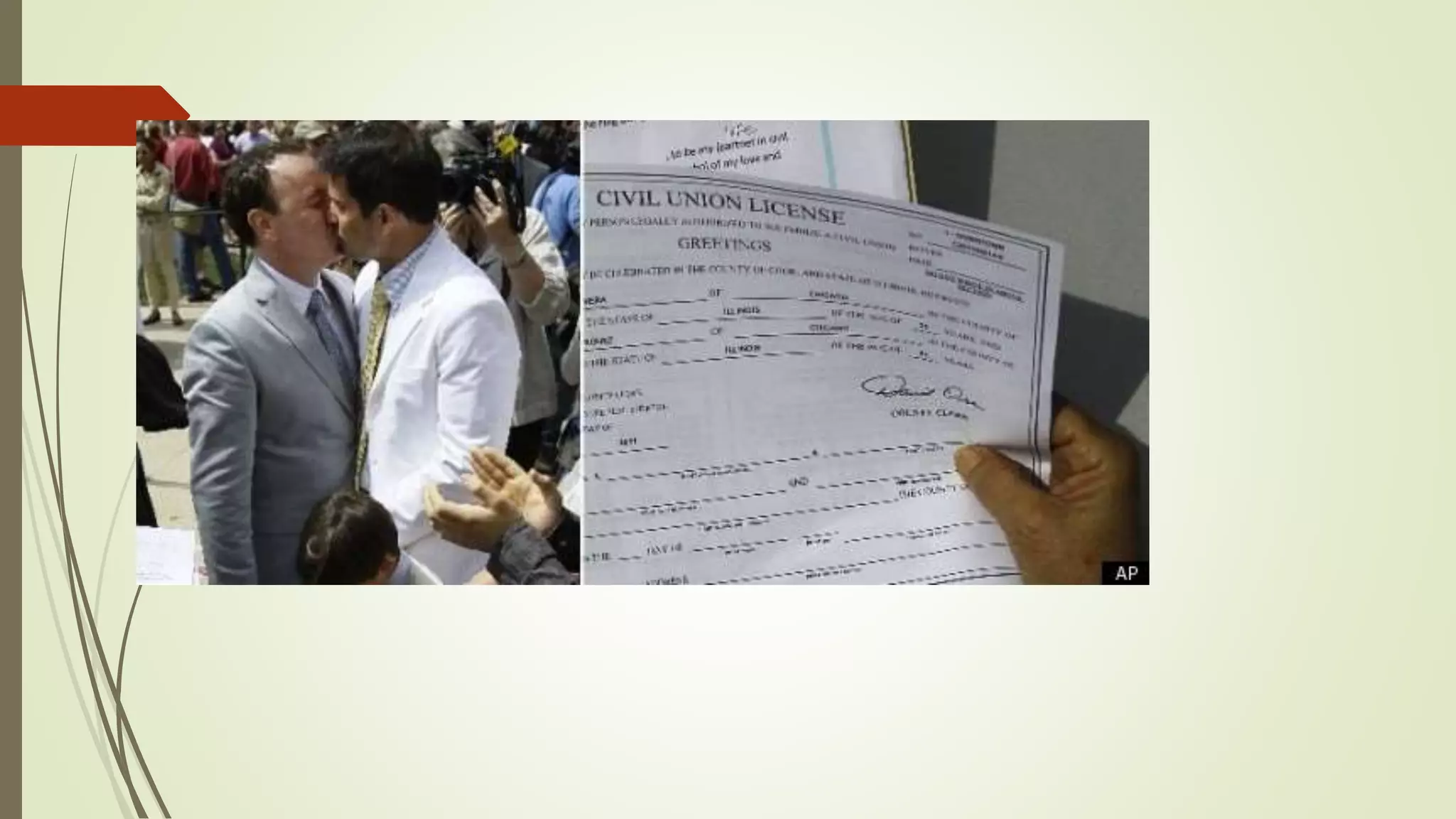

Talk about memorable
events
SO
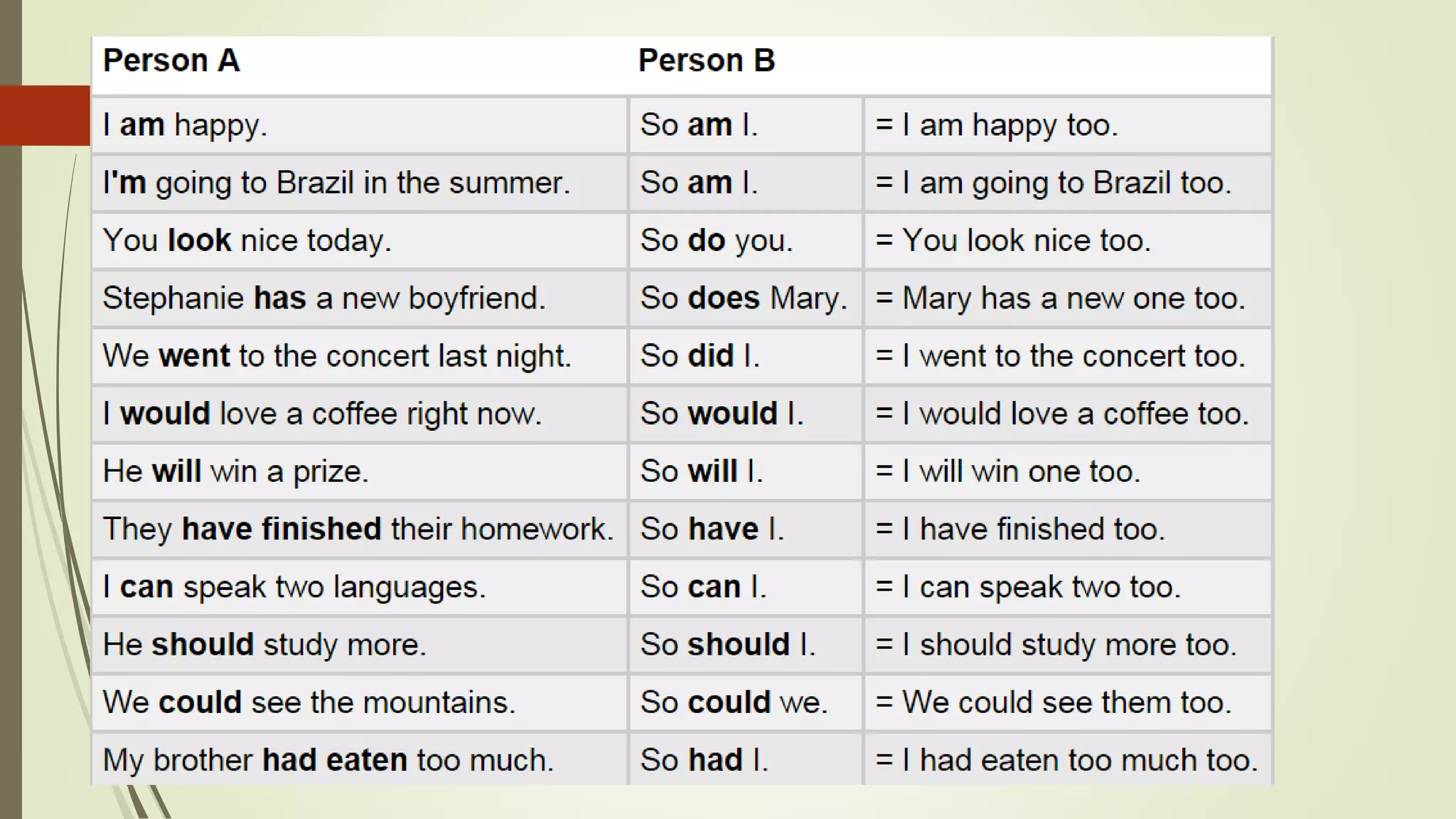
SO is used to show agreement with positive statements.
SO + Auxiliary + Subject (pronoun)
The Auxiliary needs to agree with the verb tense in the
original statement.
It is similar to using TOO at the end of a sentence.
Eg.
I am crazy about English ->So am I
I was born in 1994 -> So was I
I like it -> So do I
I have been to cusco -> So have I
I went to the cinema yesteday -> so did I
NEITHER
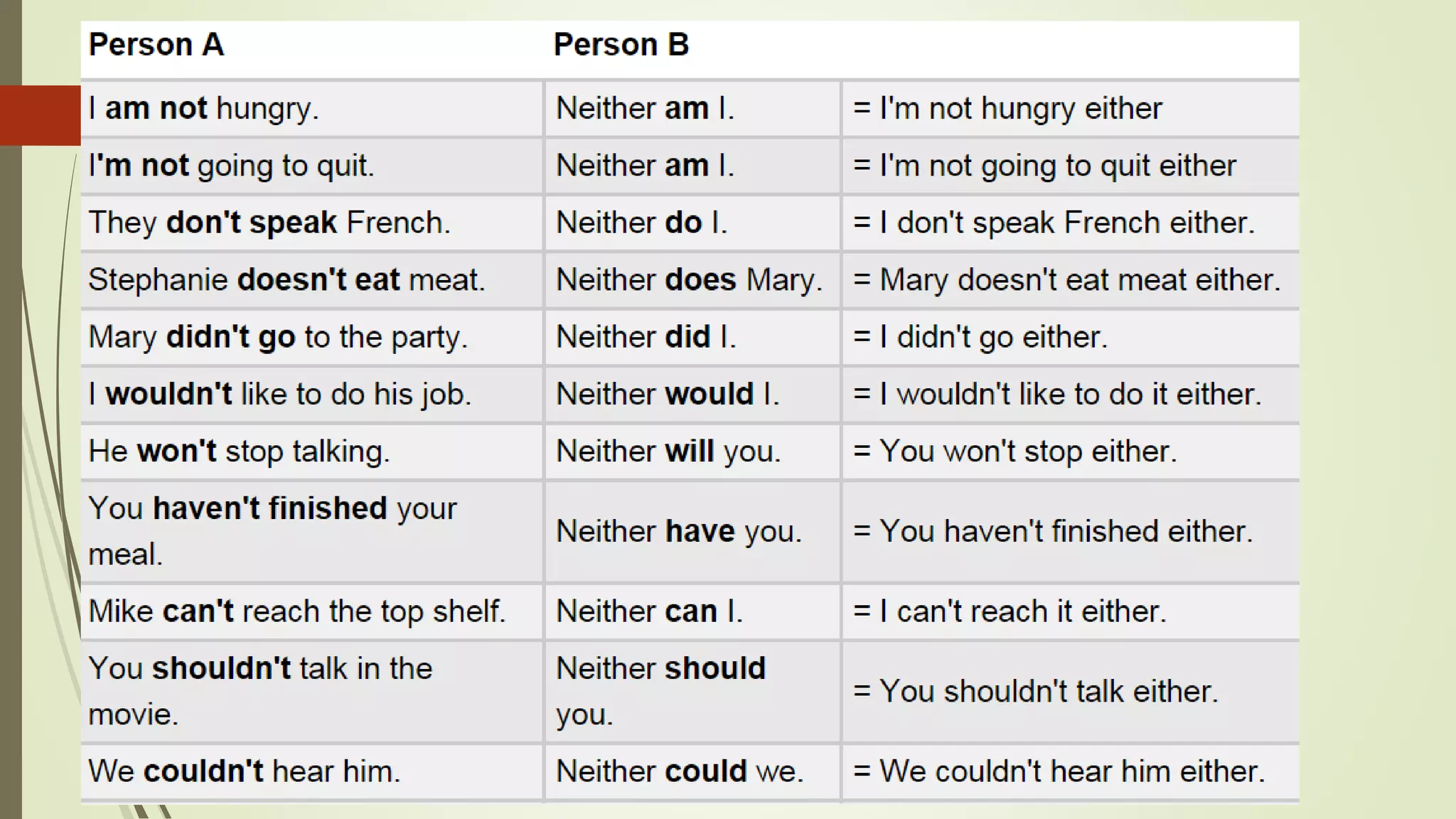
Neither is used to show agreement with negative statements.
Neither + Auxiliary + Subject (pronoun)
The Auxiliary needs to agree with the verb tense in the original
statement.
It is similar to using either at the end of a sentence,
although Neither is more commonly used, especially in spoken
English.
A: I don't understand Spanish.
B: Neither do I. (= I don't understand Spanish either.)
A: I cannot swim.
B: Neither can I. (= I can't swim either.)
Sometimes people respond Me Neither instead of Neither +
Auxiliary + Subject though this is very informal spoken English.
WANNA PLAY?
 http://www.grammar.cl/Games/So_Neither_Either.htm
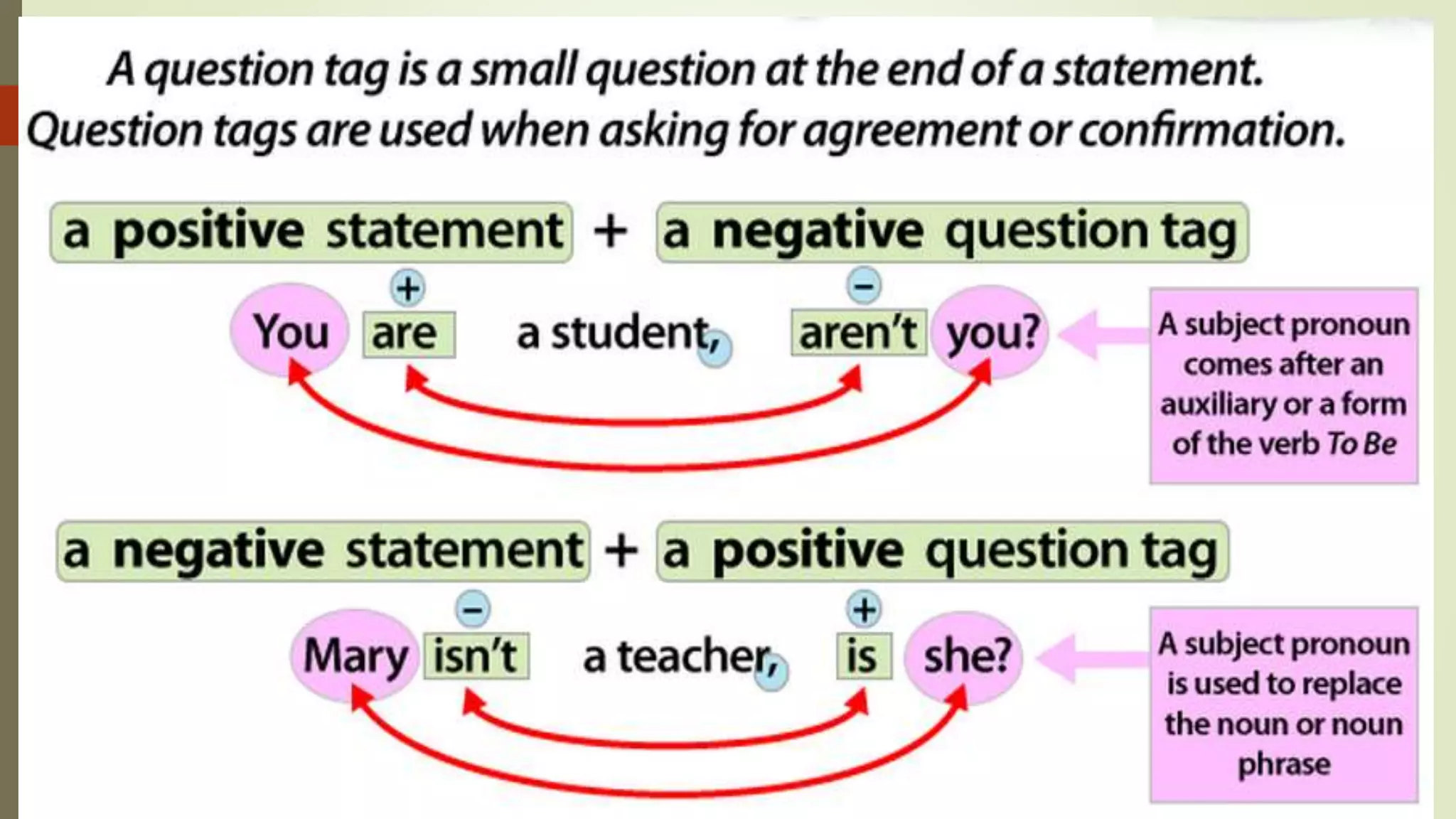
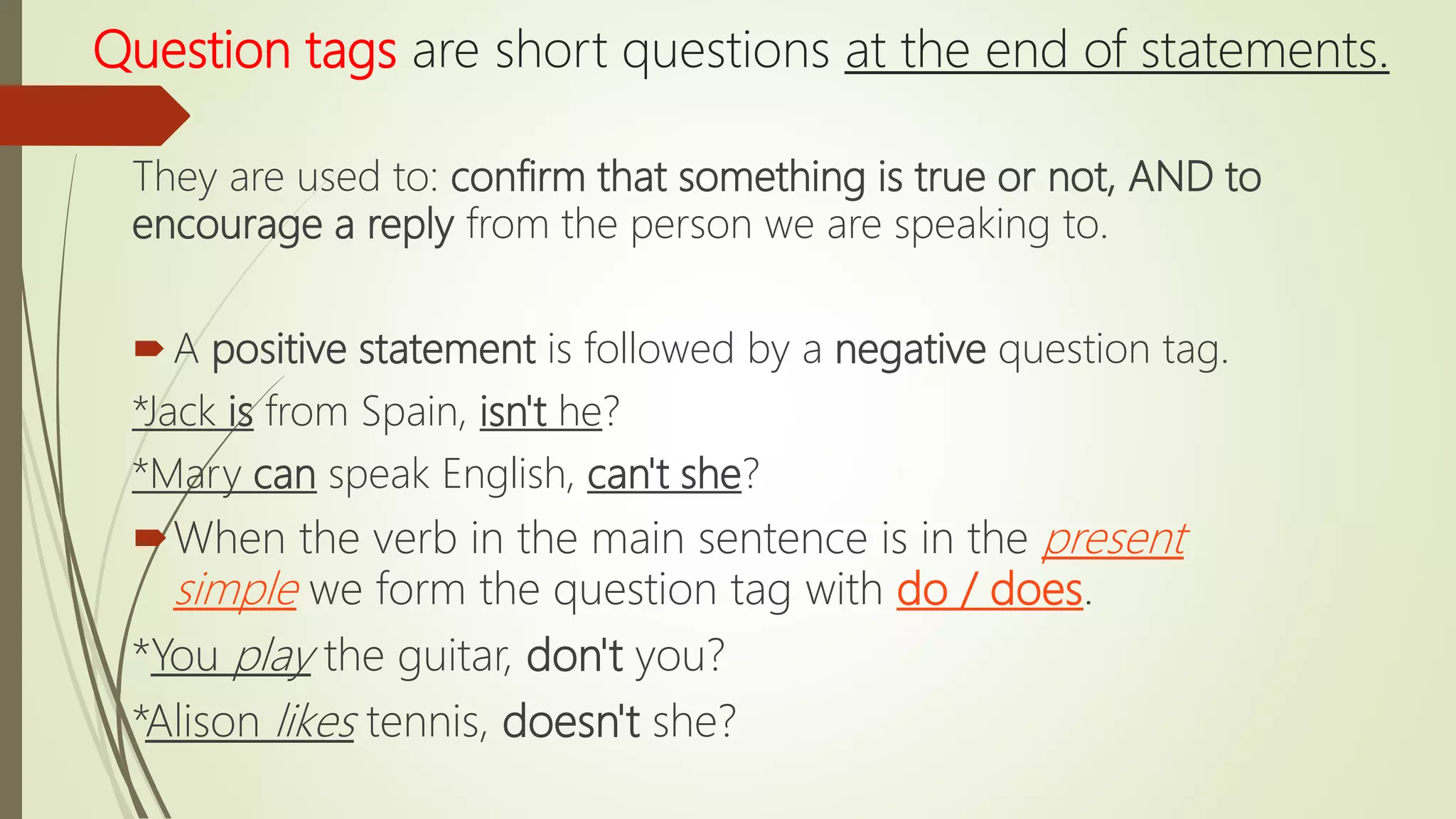
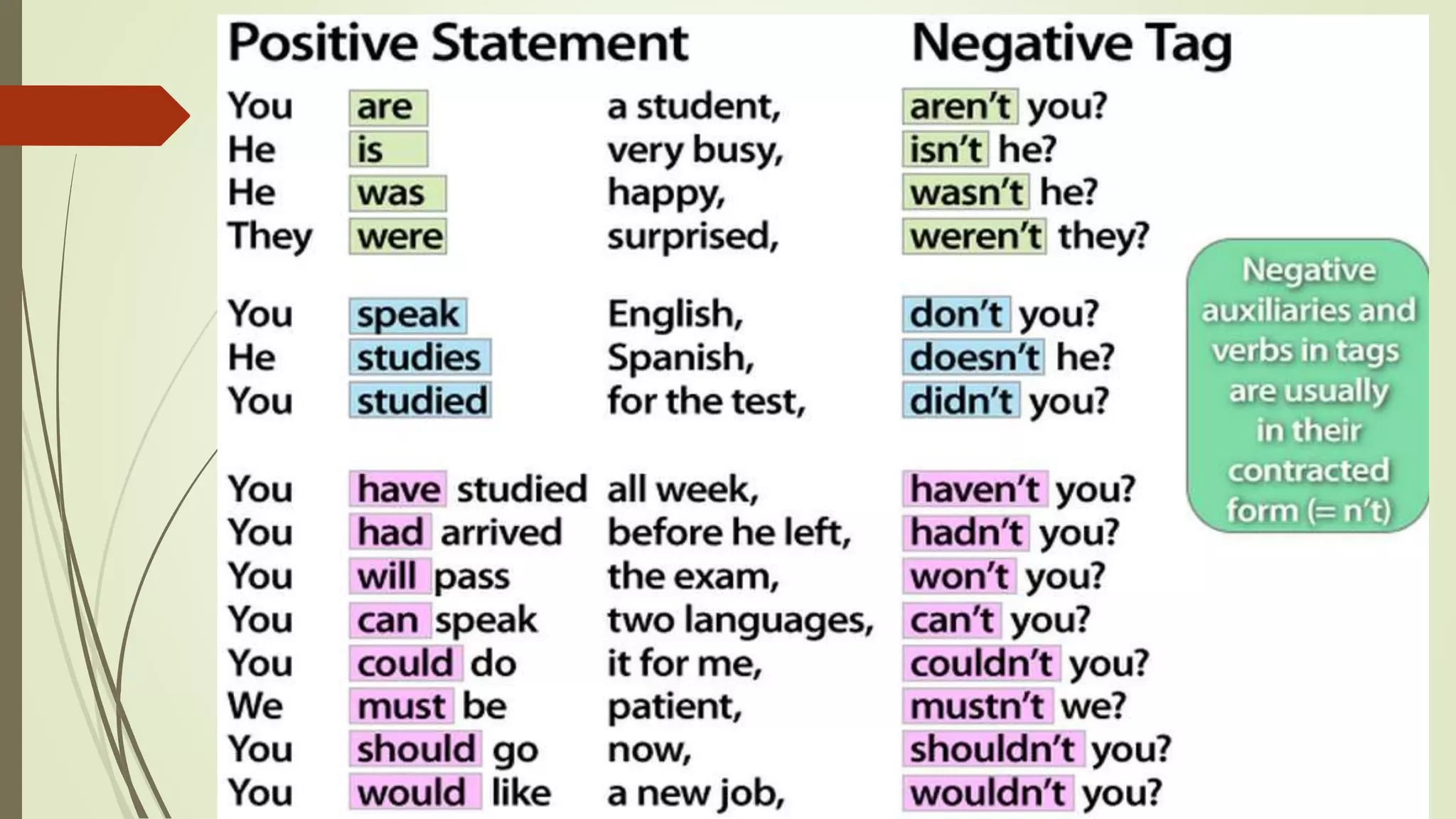
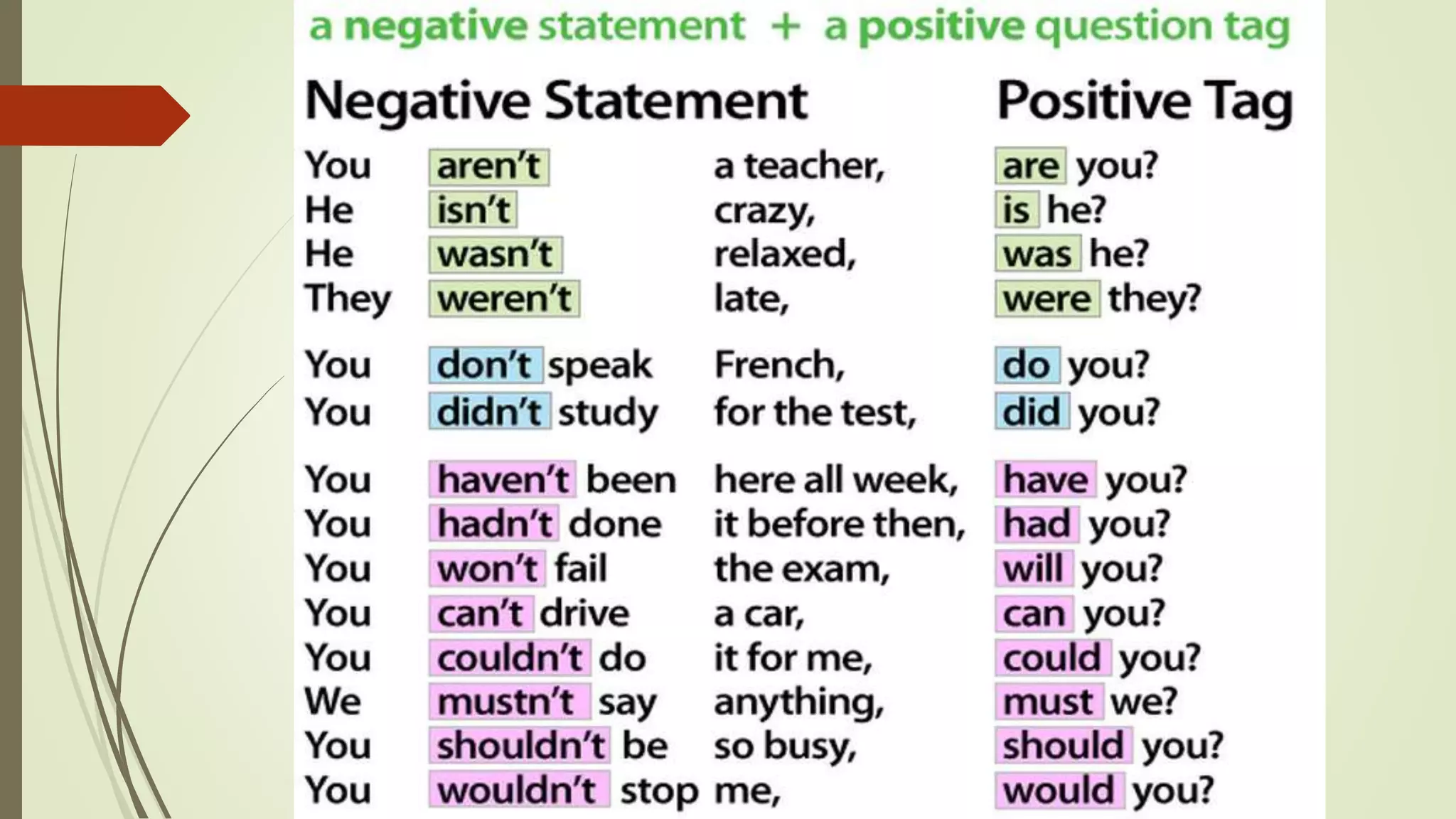
Question tags are short questions at the end of statements.
They are used to: confirm that something is true or not, AND to
encourage a reply from the person we are speaking to.
A positive statement is followed by a negative question tag.
*Jack is from Spain, isn't he?
*Mary can speak English, can't she?
When the verb in the main sentence is in the present
simple we form the question tag with do / does.
*You play the guitar, don't you?
*Alison likes tennis, doesn't she?
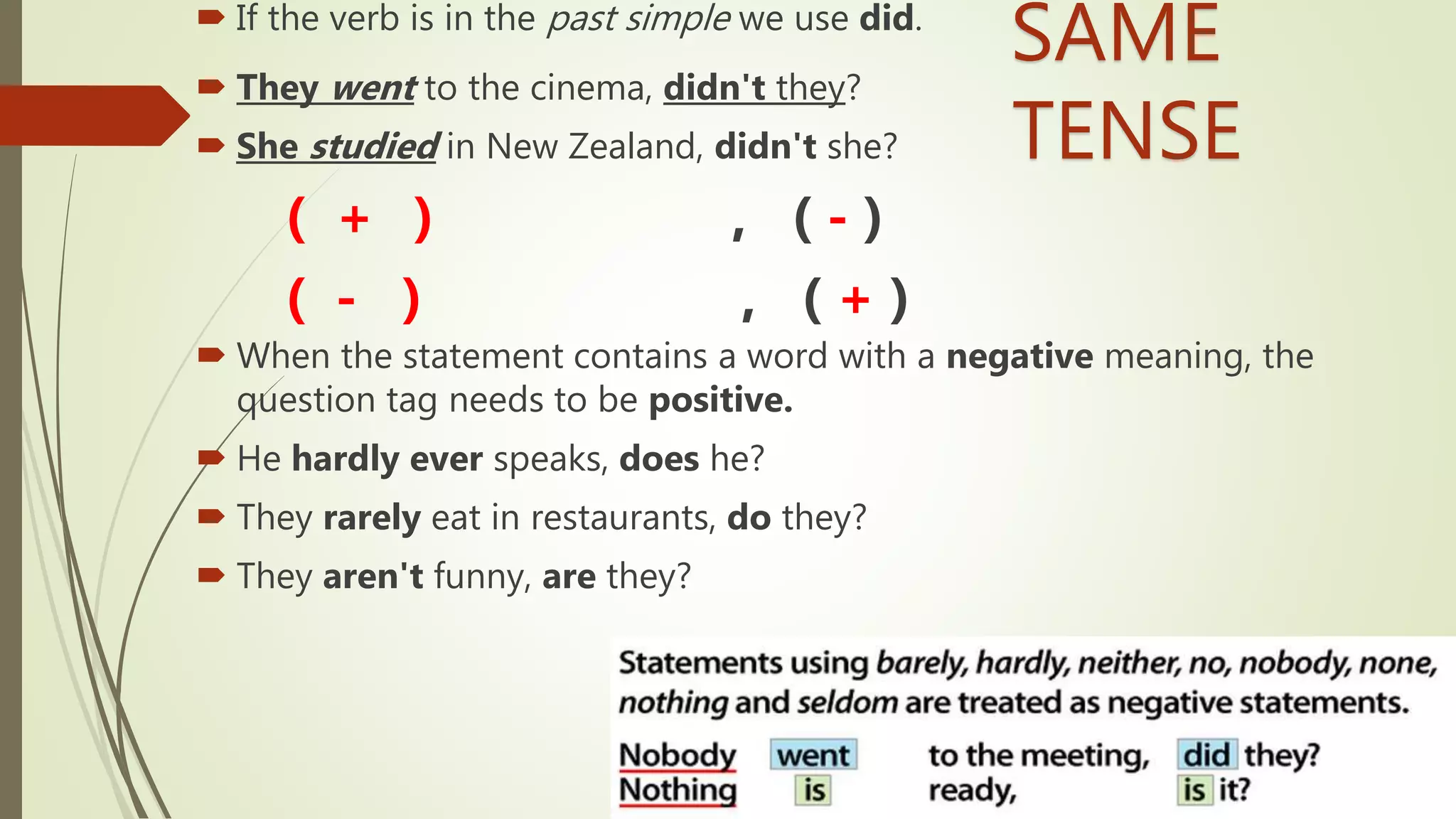
 If the verb is in the past simple we use did.
 They went to the cinema, didn't they?
 She studied in New Zealand, didn't she?
( + ) , ( - )
( - ) , ( + )
 When the statement contains a word with a negative meaning, the
question tag needs to be positive.
 He hardly ever speaks, does he?
 They rarely eat in restaurants, do they?
 They aren't funny, are they?
SAME
TENSE
PRACTICE using question tags!
 http://www.agendaweb.org/grammar/questions_tag-
exercises.html

Memorable events & neither - either - so - question tag

  • 1.
  • 9.
    SO SO is usedto show agreement with positive statements. SO + Auxiliary + Subject (pronoun) The Auxiliary needs to agree with the verb tense in the original statement. It is similar to using TOO at the end of a sentence. Eg. I am crazy about English ->So am I I was born in 1994 -> So was I I like it -> So do I I have been to cusco -> So have I I went to the cinema yesteday -> so did I
  • 11.
    NEITHER Neither is usedto show agreement with negative statements. Neither + Auxiliary + Subject (pronoun) The Auxiliary needs to agree with the verb tense in the original statement. It is similar to using either at the end of a sentence, although Neither is more commonly used, especially in spoken English. A: I don't understand Spanish. B: Neither do I. (= I don't understand Spanish either.) A: I cannot swim. B: Neither can I. (= I can't swim either.) Sometimes people respond Me Neither instead of Neither + Auxiliary + Subject though this is very informal spoken English.
  • 13.
  • 15.
    Question tags areshort questions at the end of statements. They are used to: confirm that something is true or not, AND to encourage a reply from the person we are speaking to. A positive statement is followed by a negative question tag. *Jack is from Spain, isn't he? *Mary can speak English, can't she? When the verb in the main sentence is in the present simple we form the question tag with do / does. *You play the guitar, don't you? *Alison likes tennis, doesn't she?
  • 18.
     If theverb is in the past simple we use did.  They went to the cinema, didn't they?  She studied in New Zealand, didn't she? ( + ) , ( - ) ( - ) , ( + )  When the statement contains a word with a negative meaning, the question tag needs to be positive.  He hardly ever speaks, does he?  They rarely eat in restaurants, do they?  They aren't funny, are they? SAME TENSE
  • 19.
    PRACTICE using questiontags!  http://www.agendaweb.org/grammar/questions_tag- exercises.html