Early castles
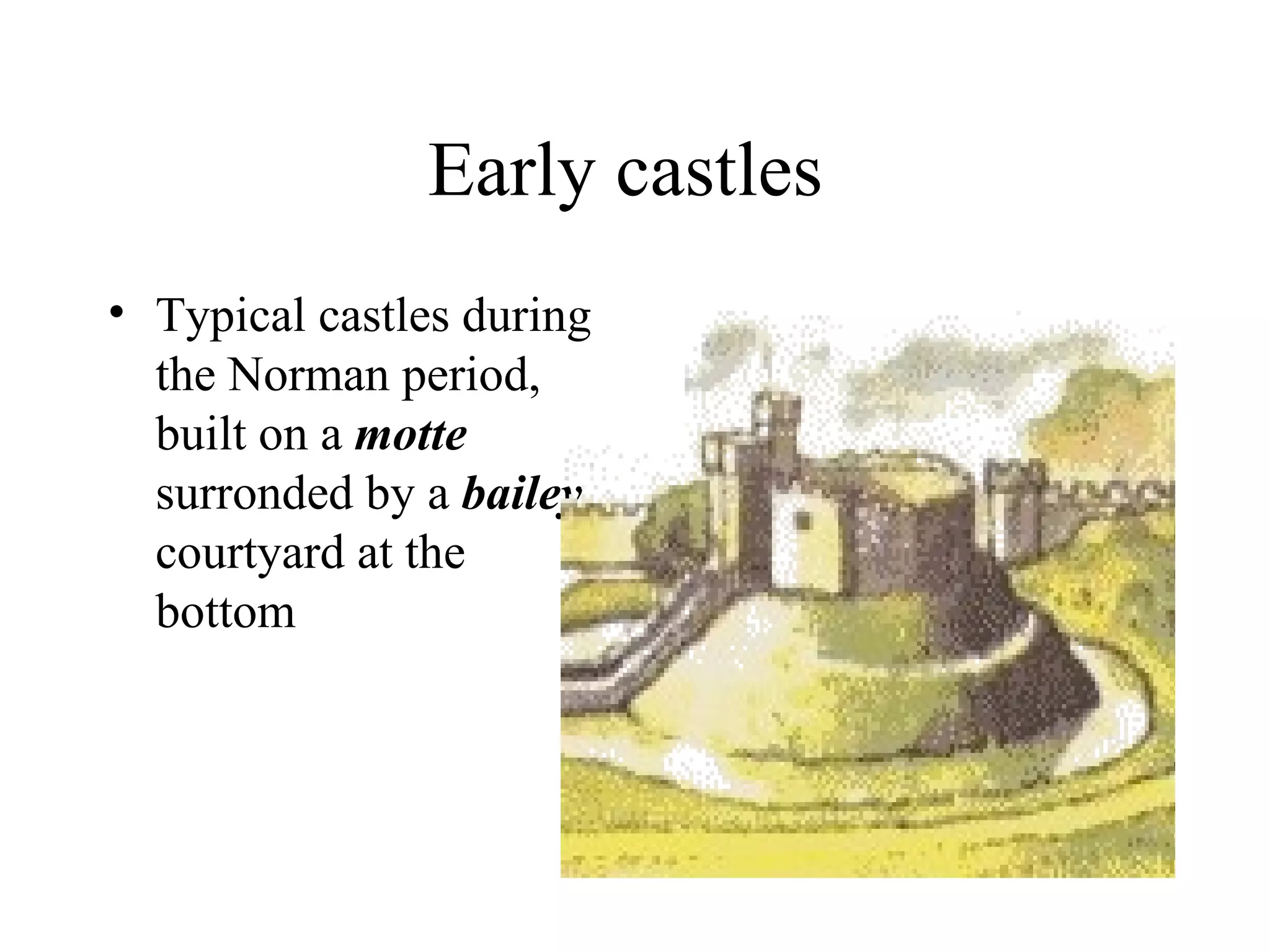
• Typical castles during
  the Norman period,
  built on a motte
  surronded by a bailey
  courtyard at the
  bottom
Later castles
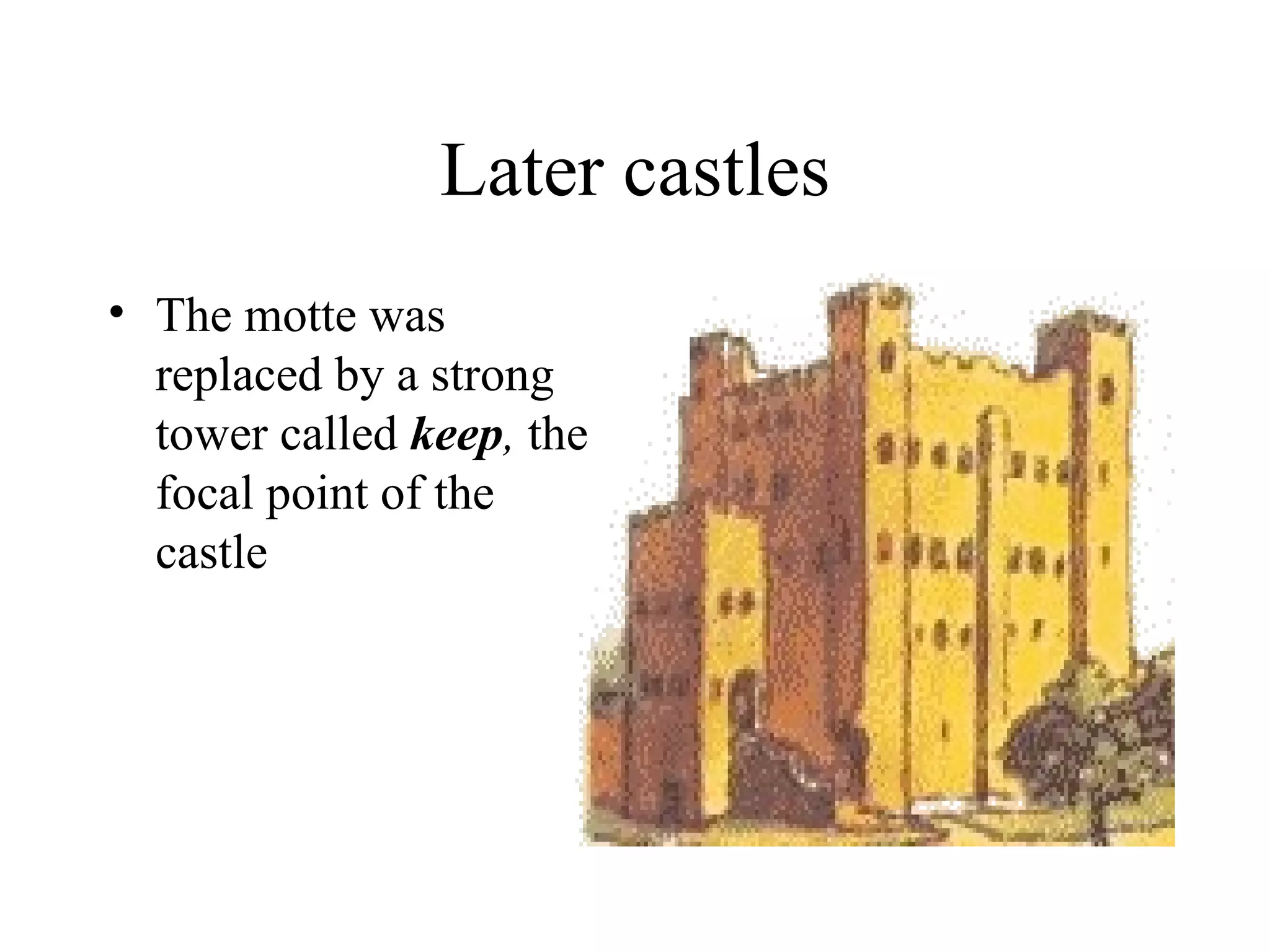
• The motte was
  replaced by a strong
  tower called keep, the
  focal point of the
  castle
Easier to defend

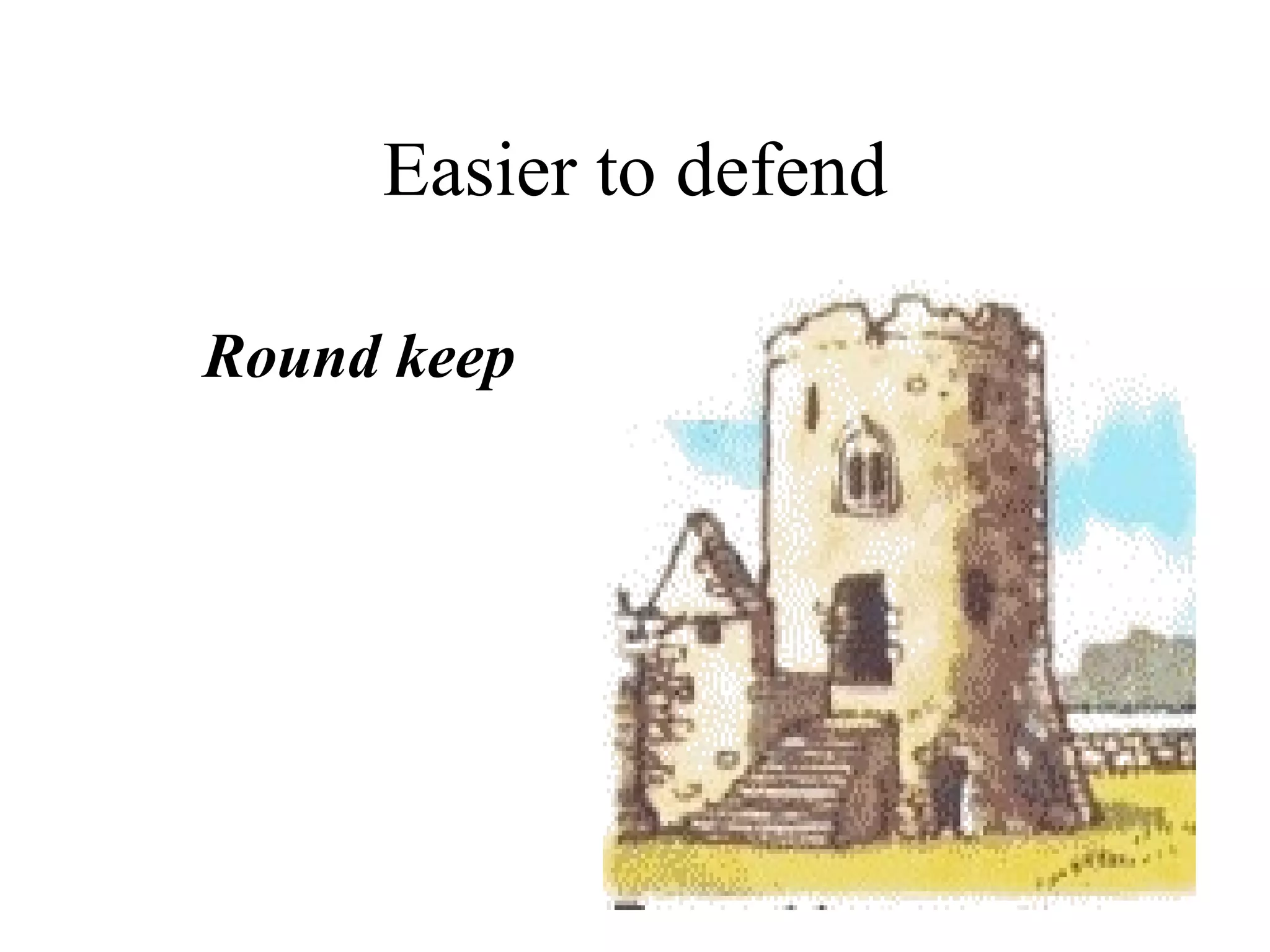
Round keep
The most common in Wales
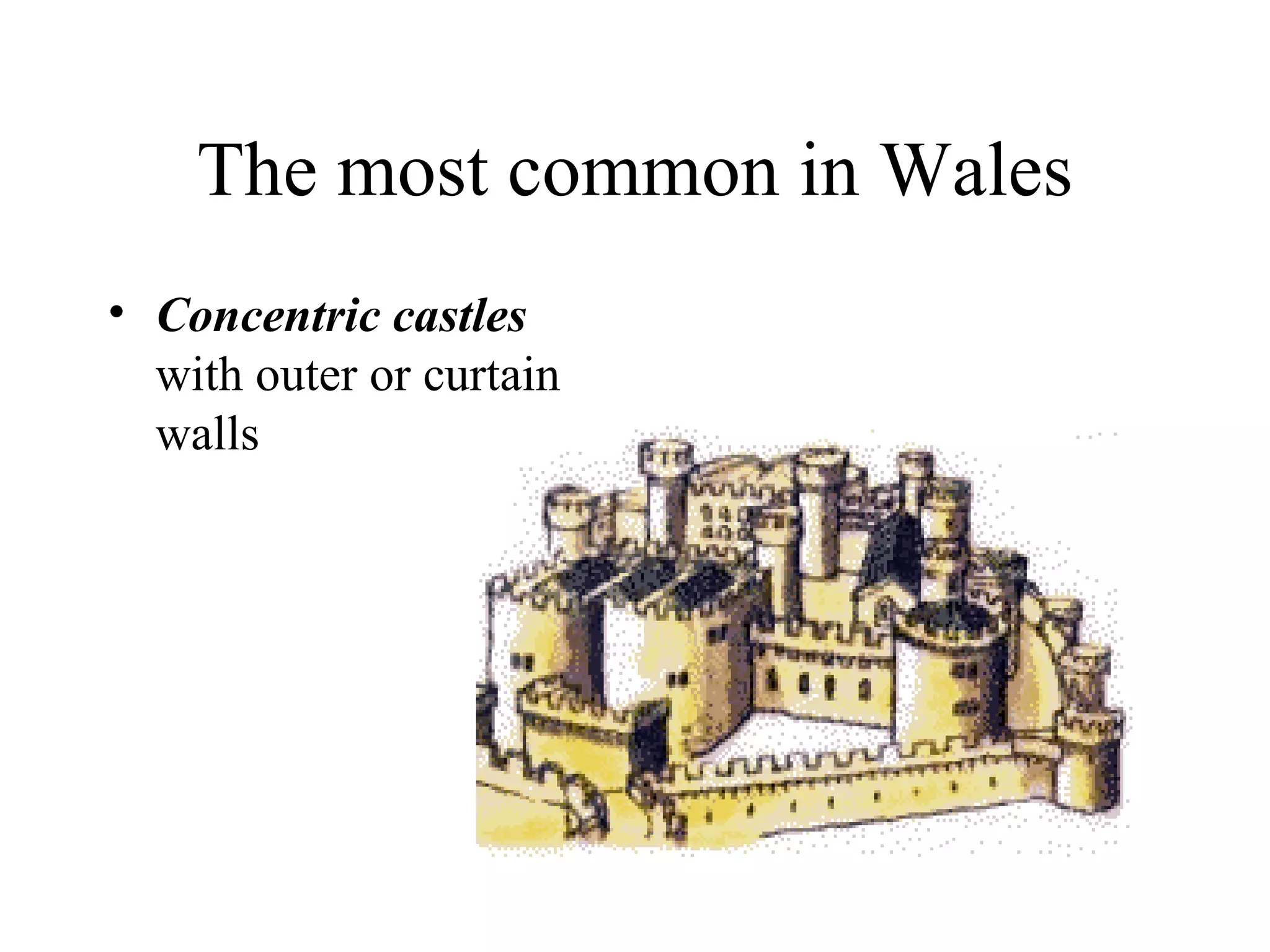
• Concentric castles
  with outer or curtain
  walls
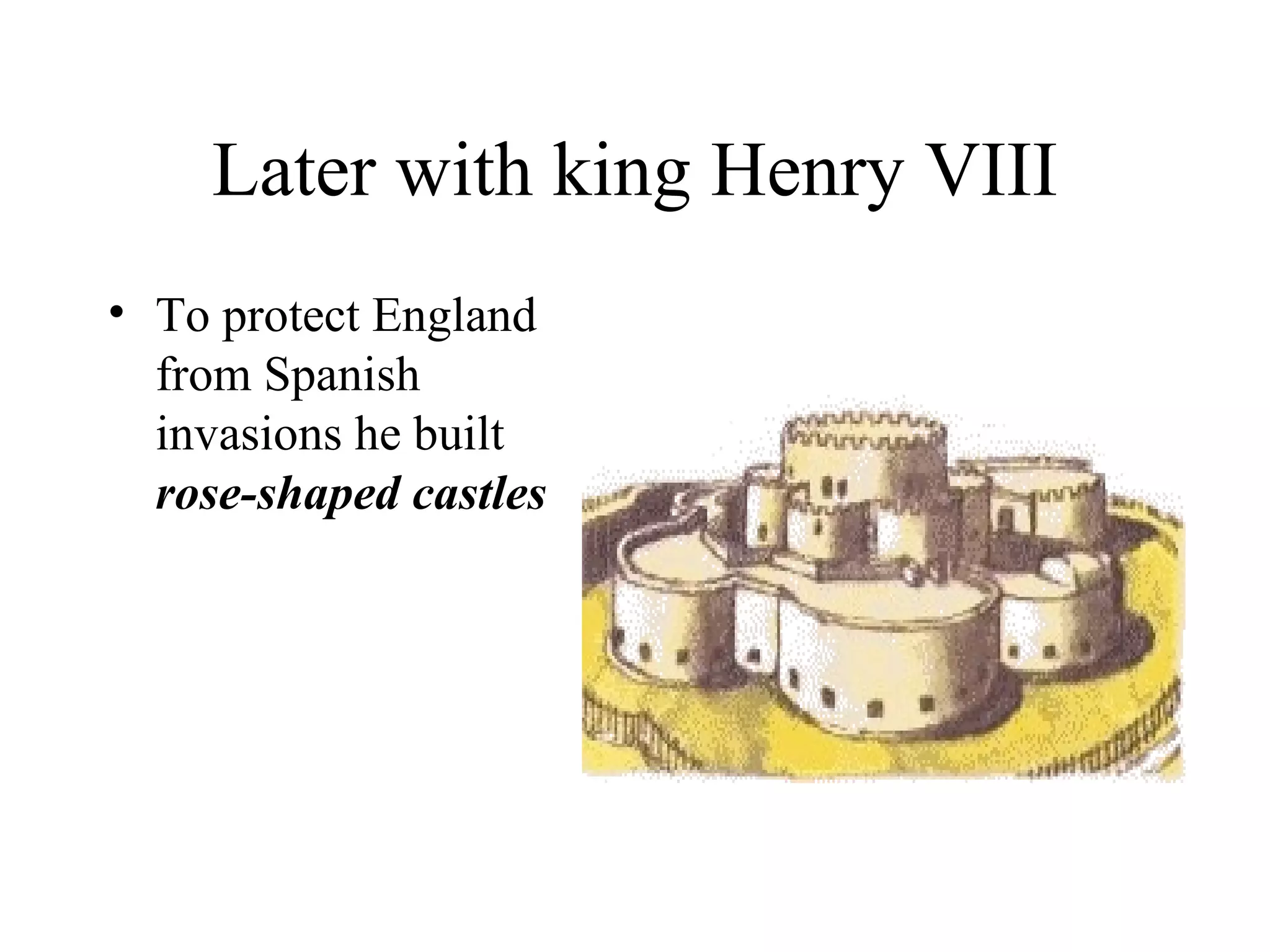
Later with king Henry VIII
• To protect England
  from Spanish
  invasions he built
  rose-shaped castles
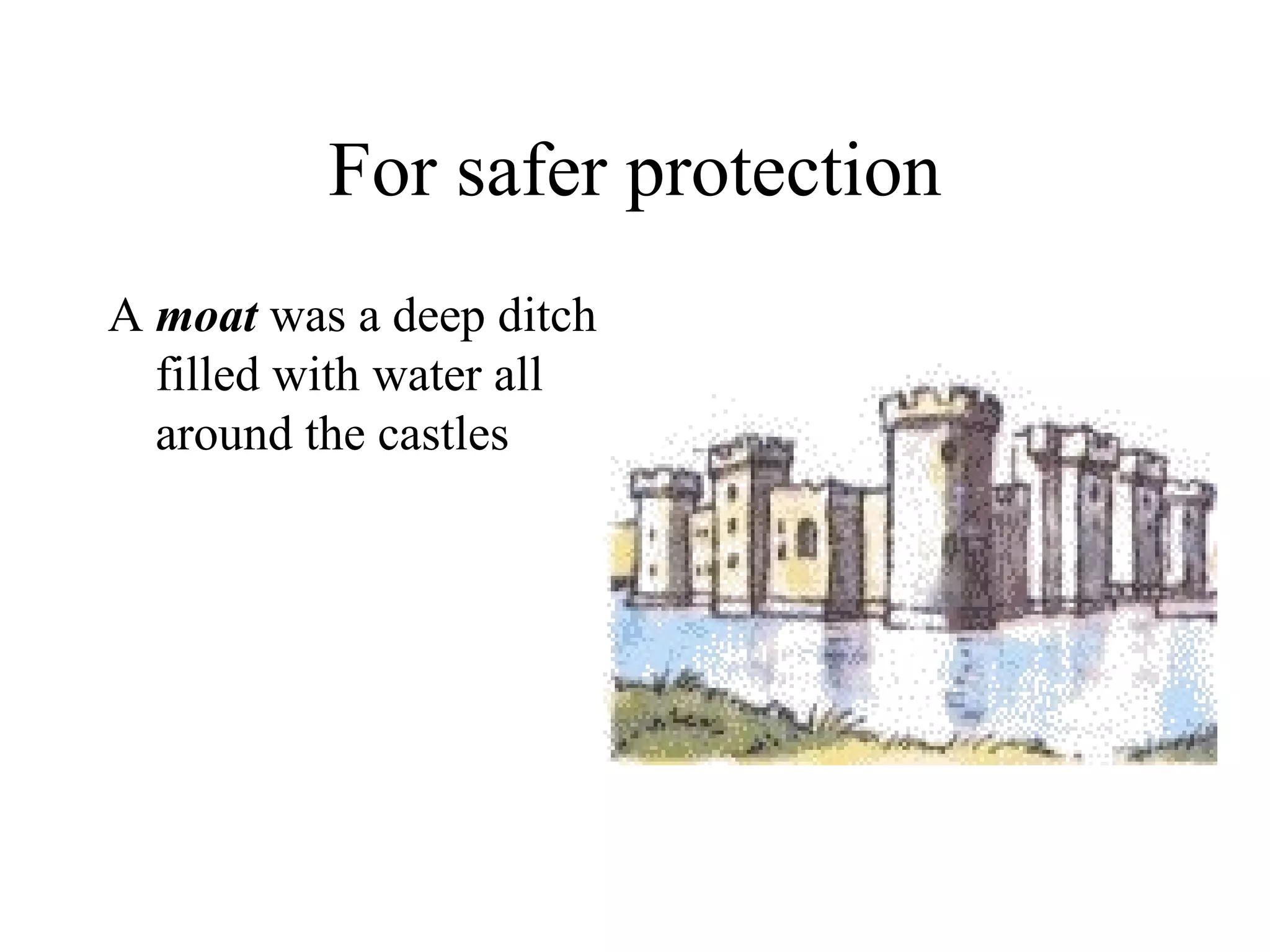
For safer protection
A moat was a deep ditch
  filled with water all
  around the castles
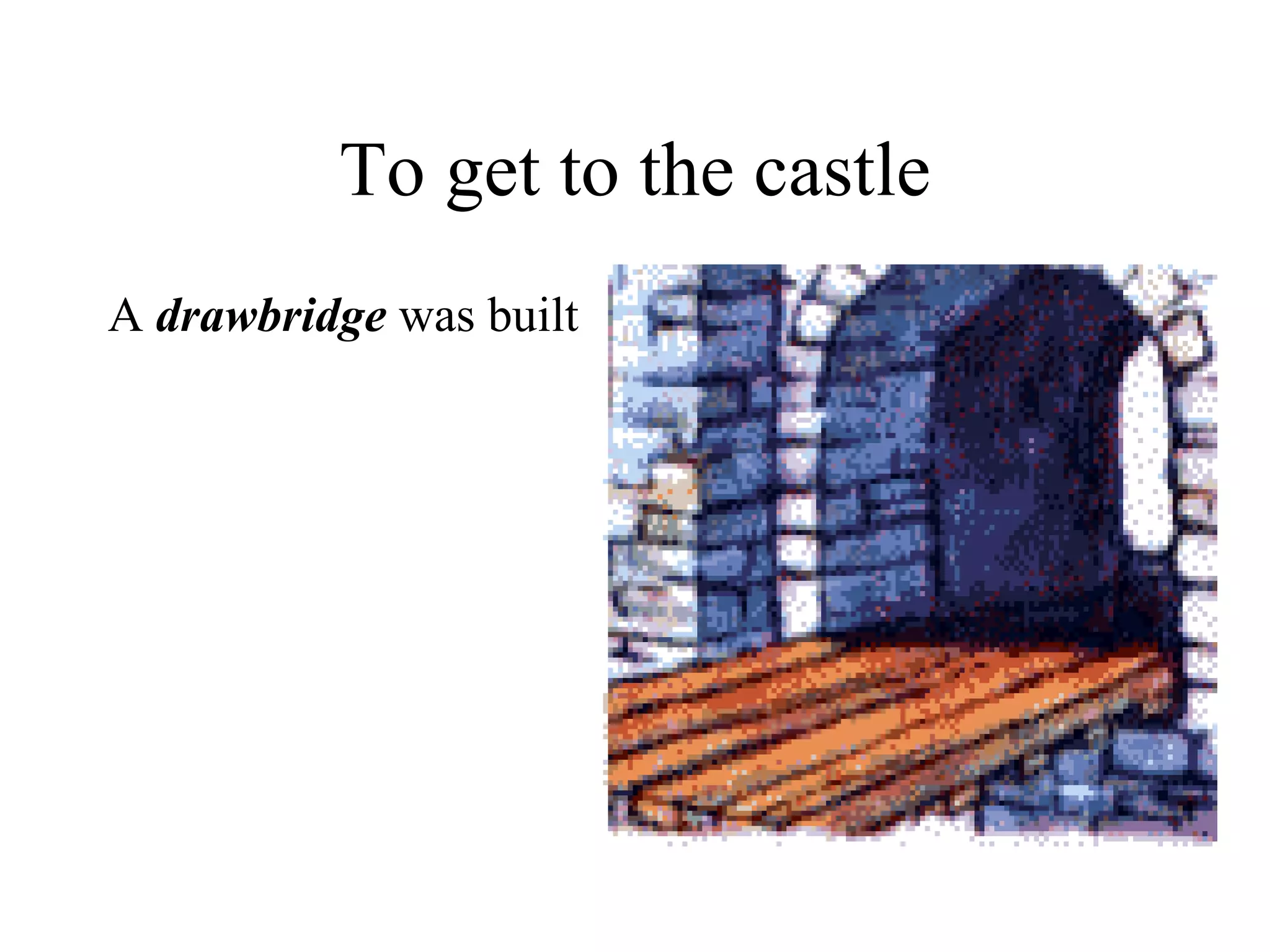
To get to the castle
A drawbridge was built
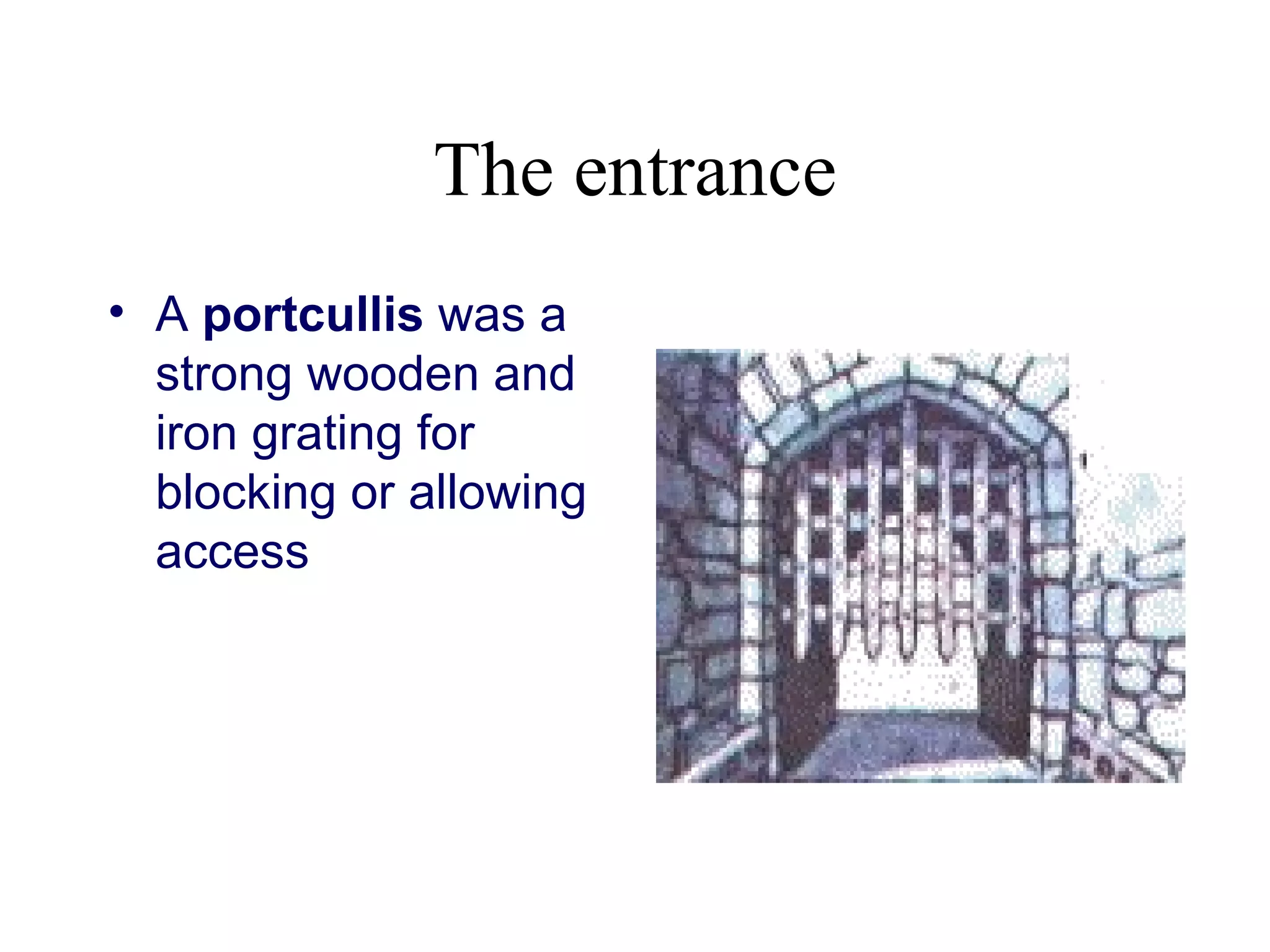
The entrance
• A portcullis was a
  strong wooden and
  iron grating for
  blocking or allowing
  access
Against the enemy
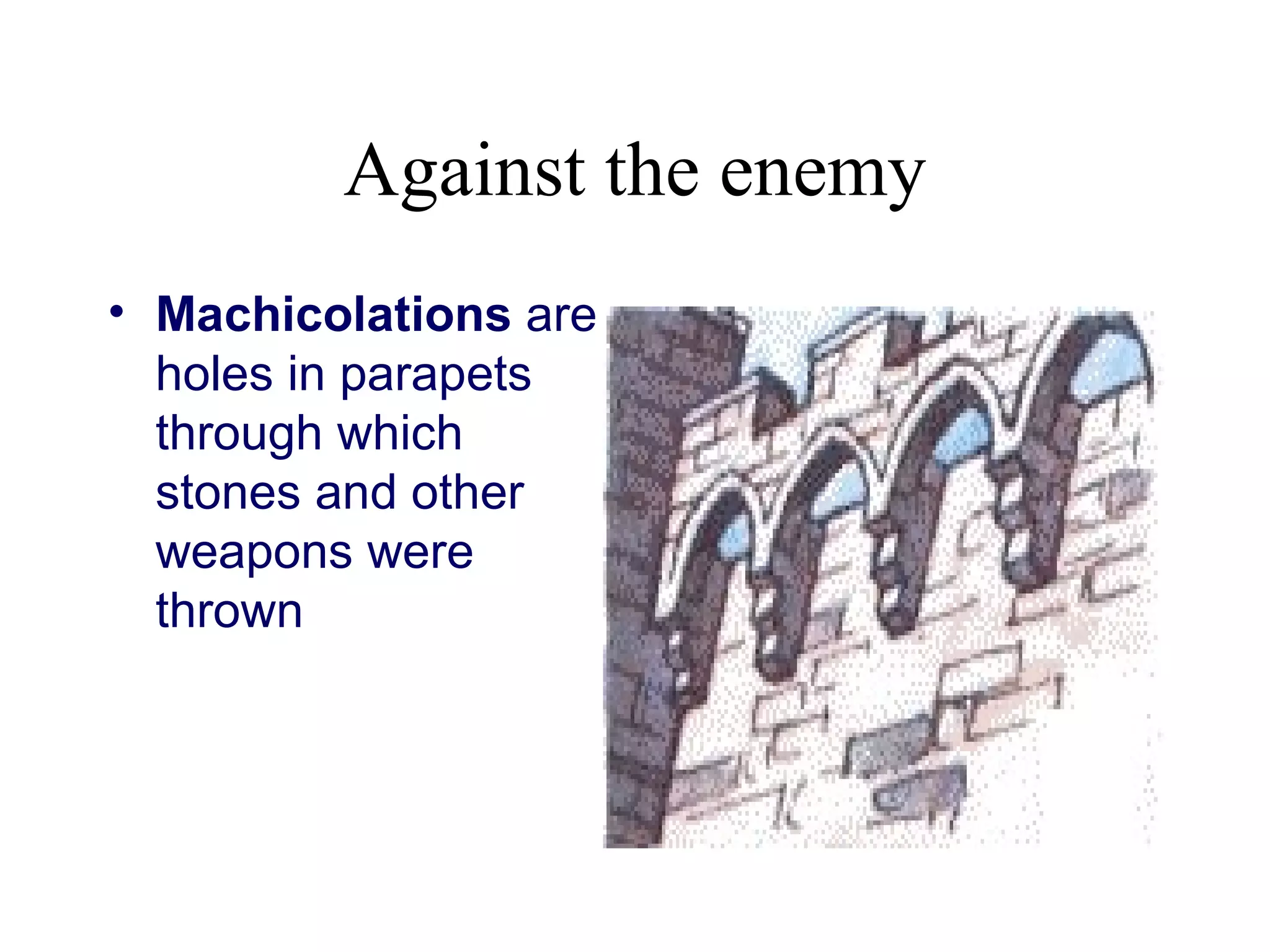
• Machicolations are
  holes in parapets
  through which
  stones and other
  weapons were
  thrown
Against the enemy
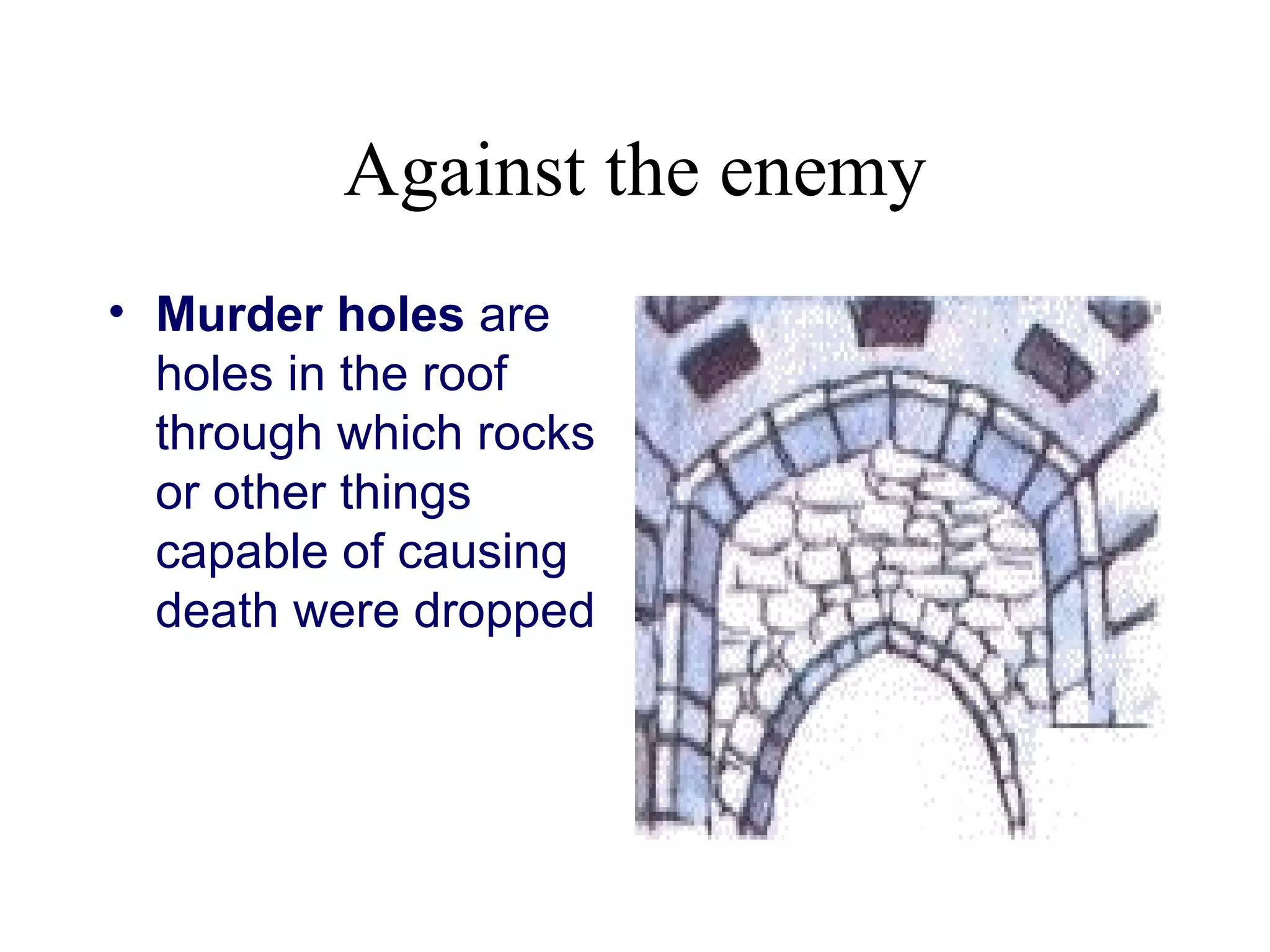
• Murder holes are
  holes in the roof
  through which rocks
  or other things
  capable of causing
  death were dropped
Against the enemy
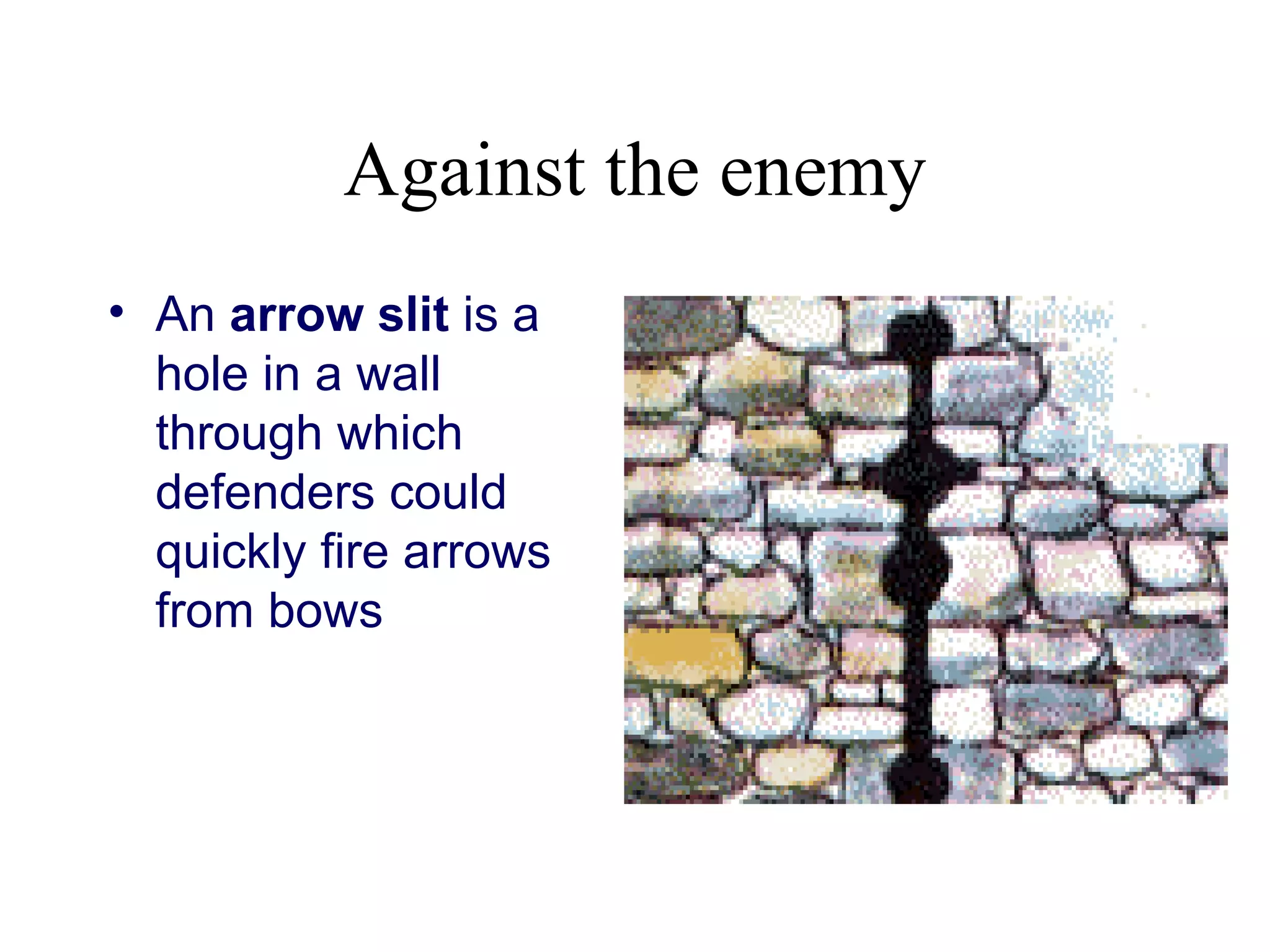
• An arrow slit is a
  hole in a wall
  through which
  defenders could
  quickly fire arrows
  from bows
Against the enemy
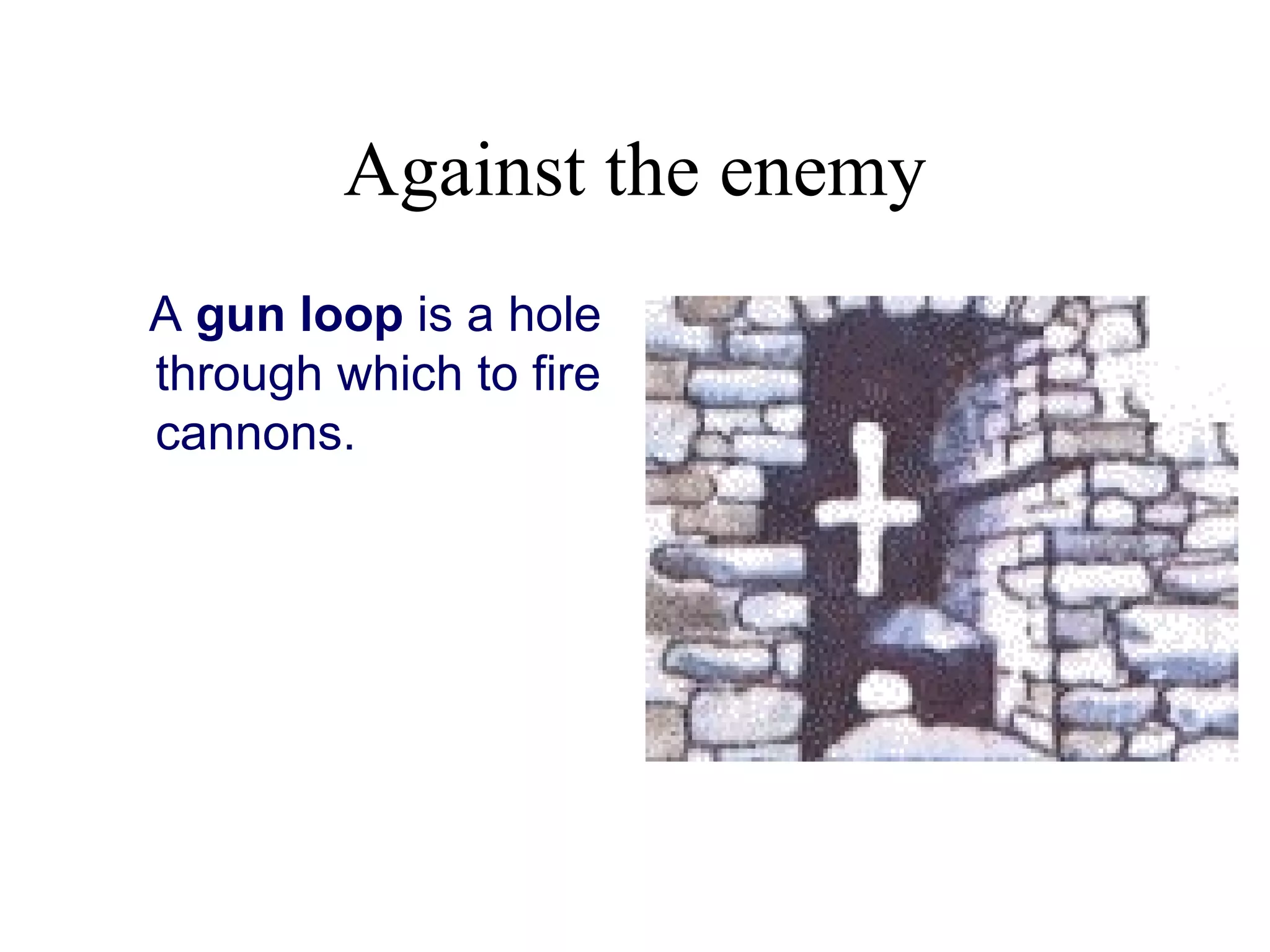
A gun loop is a hole
through which to fire
cannons.
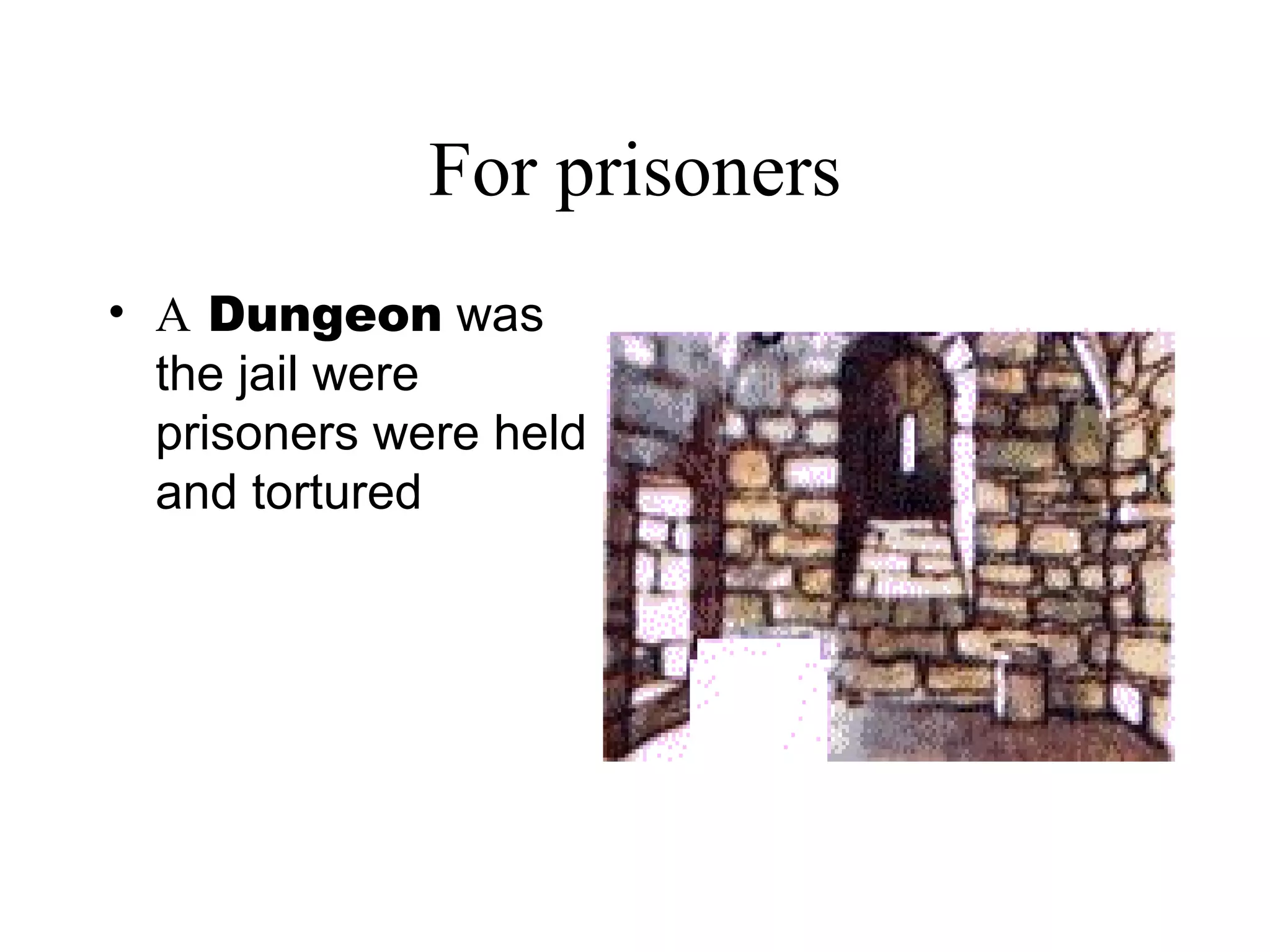
For prisoners
• A Dungeon was
  the jail were
  prisoners were held
  and tortured
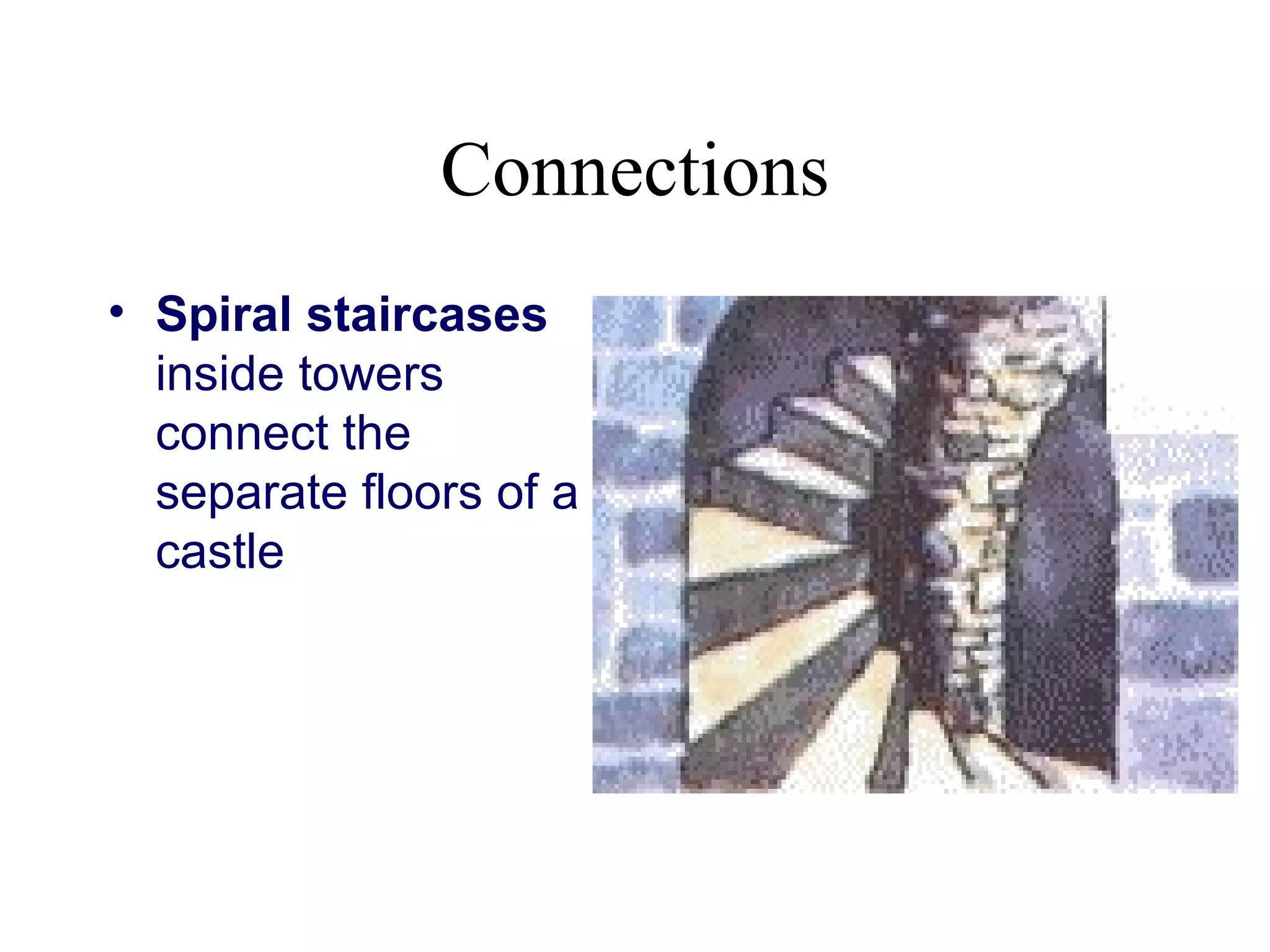
Connections
• Spiral staircases
  inside towers
  connect the
  separate floors of a
  castle
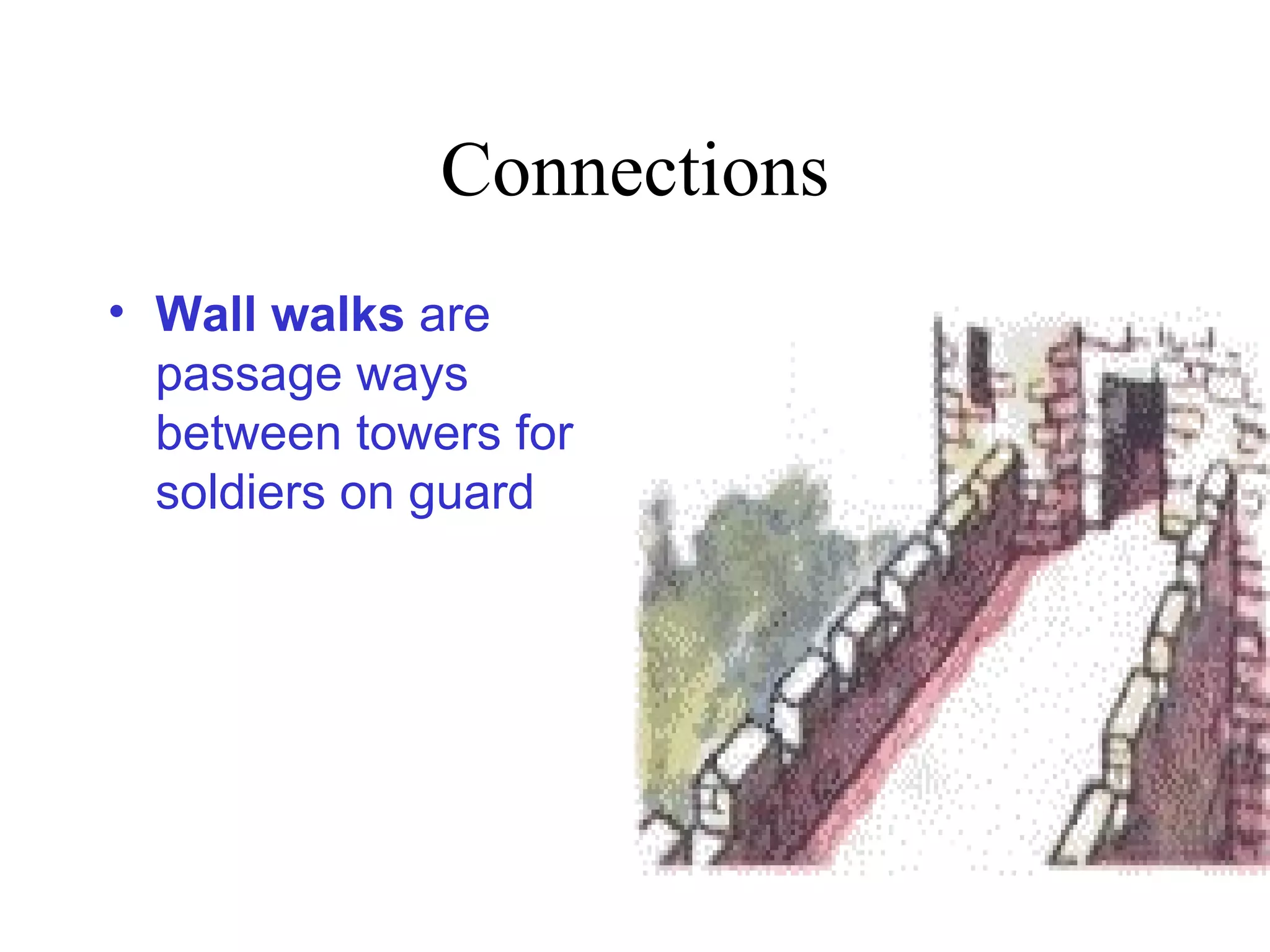
Connections
• Wall walks are
  passage ways
  between towers for
  soldiers on guard
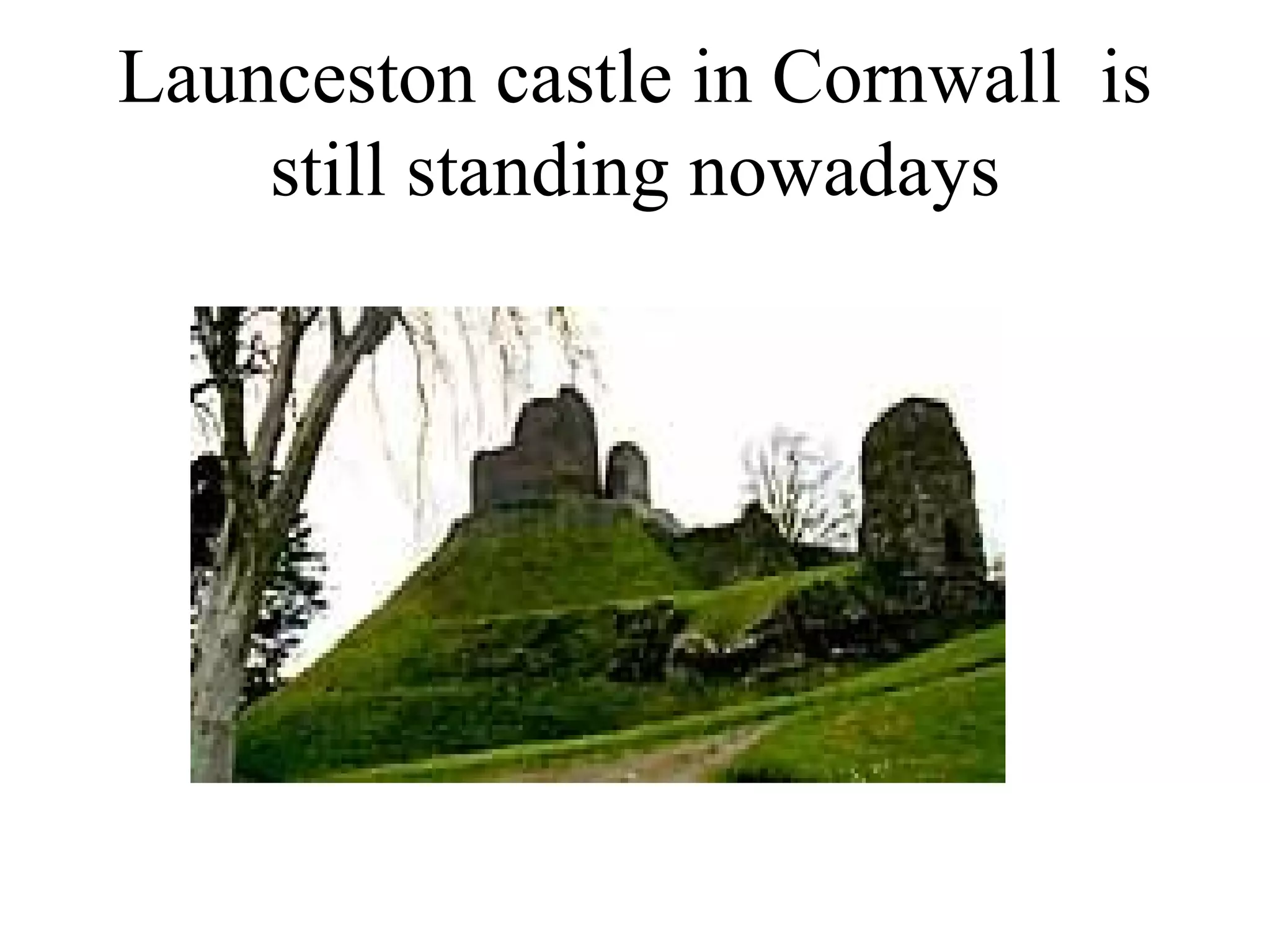
Launceston castle in Cornwall is
    still standing nowadays

Medieval castles