PANDIARAJAN. K
M.Sc, (Ph.D)
• A medication is a substance administered
for the diagnosis, cure, treatment, or relief
of a symptom or for prevention of disease.
• Pharmacology is the study of the effect of
drugs on living organisms.
Uses of Drugs
 Prevention- used as prophylaxis to prevent
diseases e.g. vaccines; fluoride-prevents
tooth decay
.
 Diagnosis- establishing the patient’s
disease or problem e.g. radio contrast dye;
tuberculosis (Mantoux) testing.
 Suppression- suppresses the signs and
symptoms and prevents the disease
process from progressing e.g. anticancer
,
antiviral drugs.
 Treatment- alleviate
the
symptoms
for
patients with
chronic
disease e.g.
Anti-
asthmatic drugs.
 Cure- complete eradication of diseases e.g.
anti-biotics, anti-helmintics.
 Enhancement aspects of health- achieve
the best state of health e.g. vitamins,
minerals
Storage of Medications
• In less advanced countries, 3 cupboards are
usually used for drug storage.
• Cupboard I-used for drugs for external use
only; e.g. calamine lotion, detol, methylated
spirit etc. These drugs are contained in
distinctive bottles, usually ridged with deep
colours (dark green, blue, brown) with red
label marked POISON and FOR EXTERNAL
USE ONL
Y.
• Cupboard II-contains drugs for internal
use only e.g. tablets, suspension, mixtures
etc. All drugs must be labelled.
• Cupboard III-contains the dangerous drug;
drugs of addiction. E.g. Morphine,
pethedine etc.
All drugs should be kept away from
direct sunlight and at a temperature
suggested by the manufacturer
.
• Another cupboard called the Emergency
Cupboard may be stationed at or near the
nurses bay for easy access. This cupboard
contains drugs for emergency situations
e.g. aminophylline (for asthma),
hydralazine (for severe hypertension),
oxytocin (for maternal bleeding),
intravenous infusions (for
rehydration) etc.
Principles of medication
administration
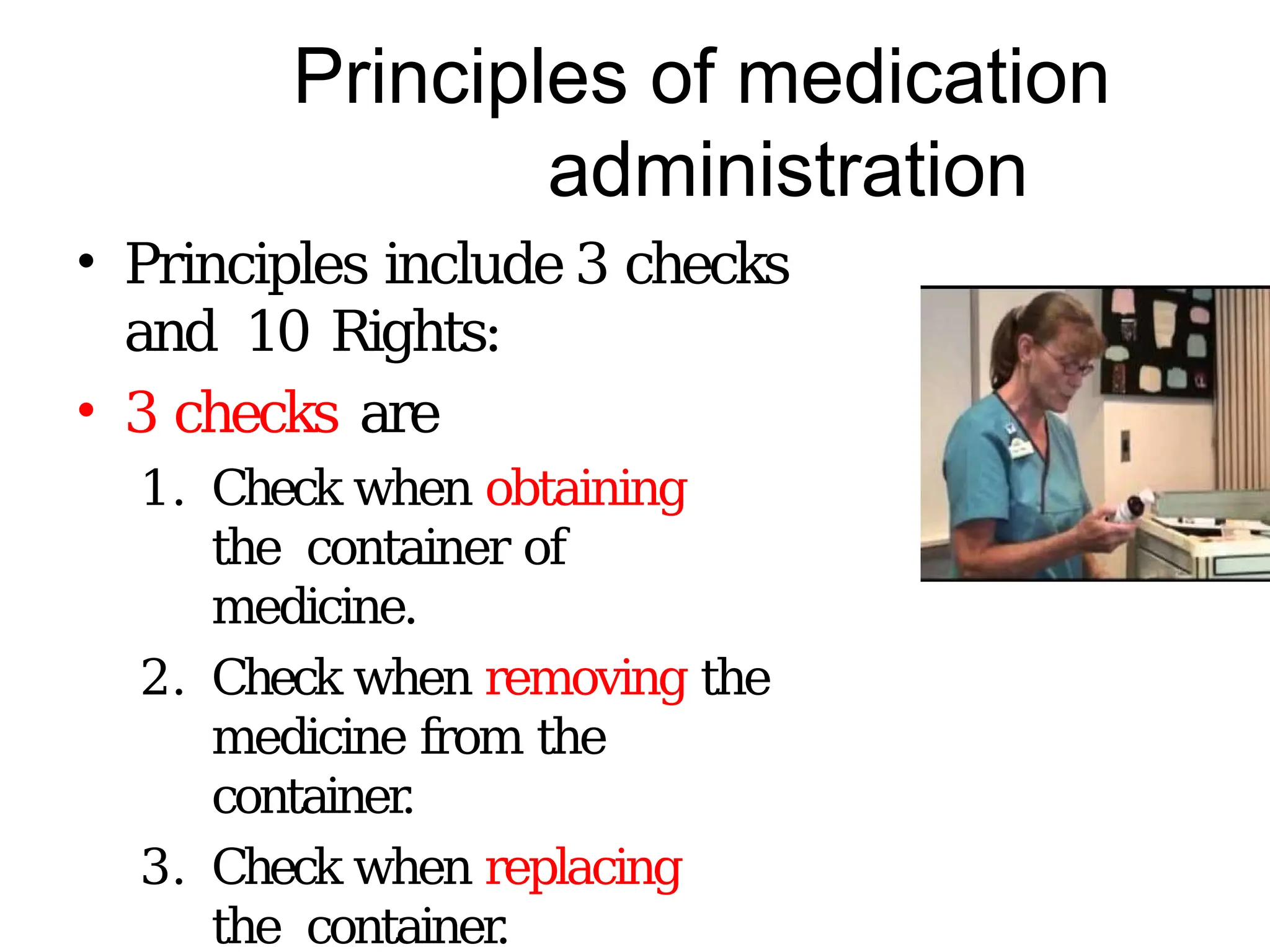
• Principles include 3 checks
and 10 Rights:
• 3 checks are
1. Check when obtaining
the container of
medicine.
2. Check when removing the
medicine from the
container
.
3. Check when replacing
the container
.
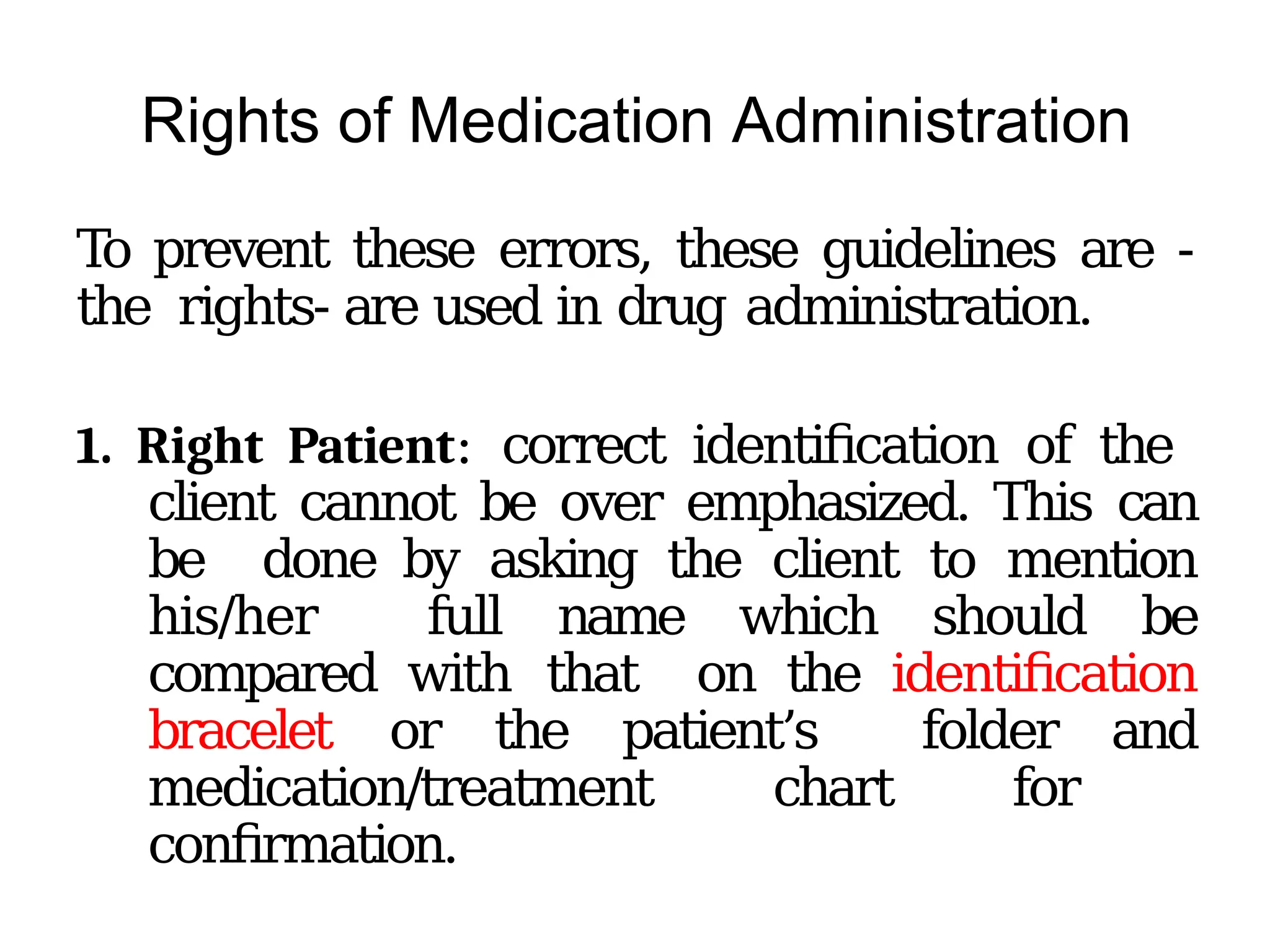
Rights of Medication Administration
To prevent these errors, these guidelines are -
the rights- are used in drug administration.
1. Right Patient: correct identification of the
client cannot be over emphasized. This can
be done by asking the client to mention
his/her full name which should be
compared with that on the identification
bracelet or the patient’s folder and
medication/treatment chart for
confirmation.
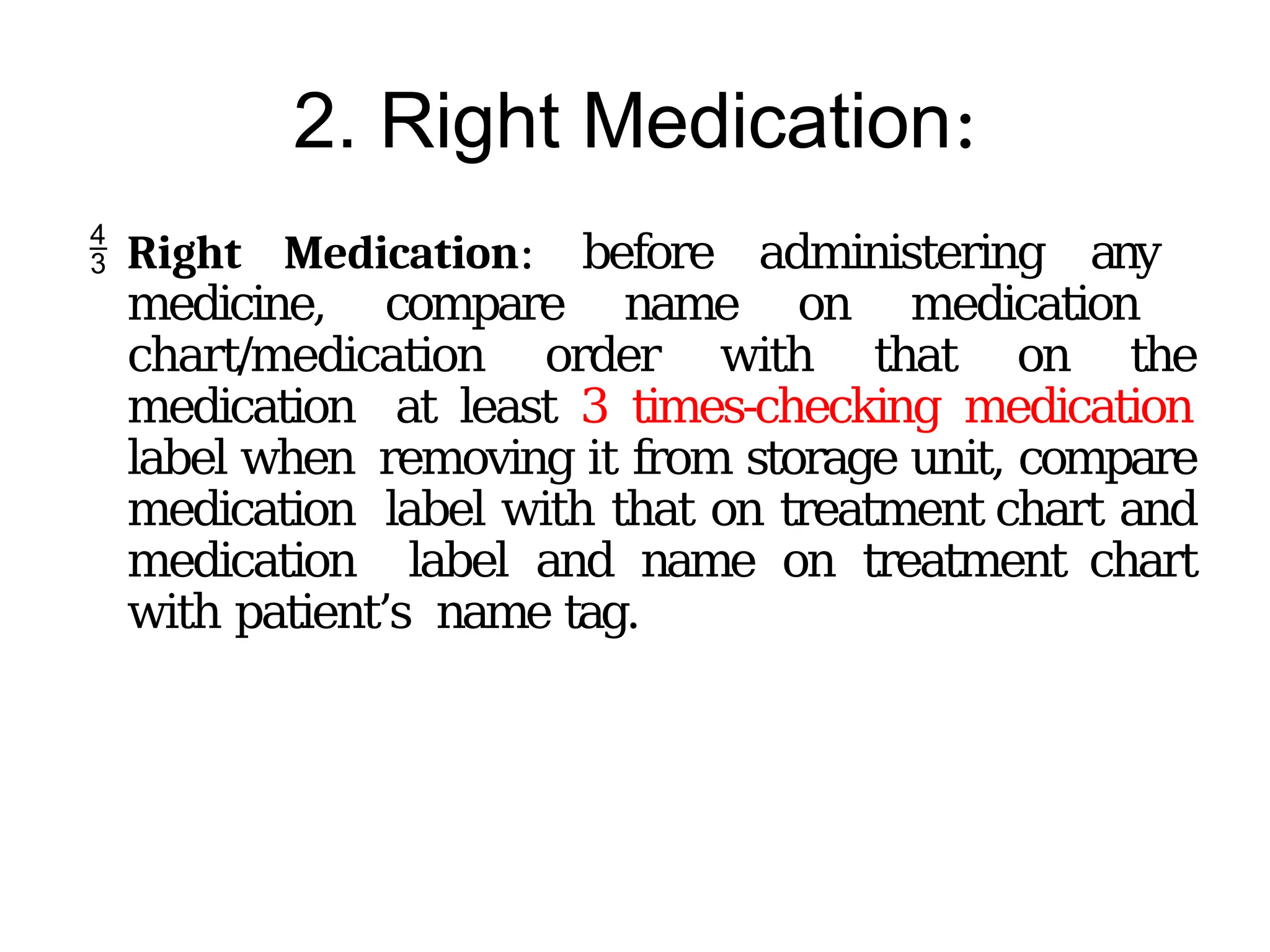
2. Right Medication:
 Right Medication: before administering any
medicine, compare name on medication
chart/medication order with that on the
medication at least 3 times-checking medication
label when removing it from storage unit, compare
medication label with that on treatment chart and
medication label and name on treatment chart
with patient’s name tag.
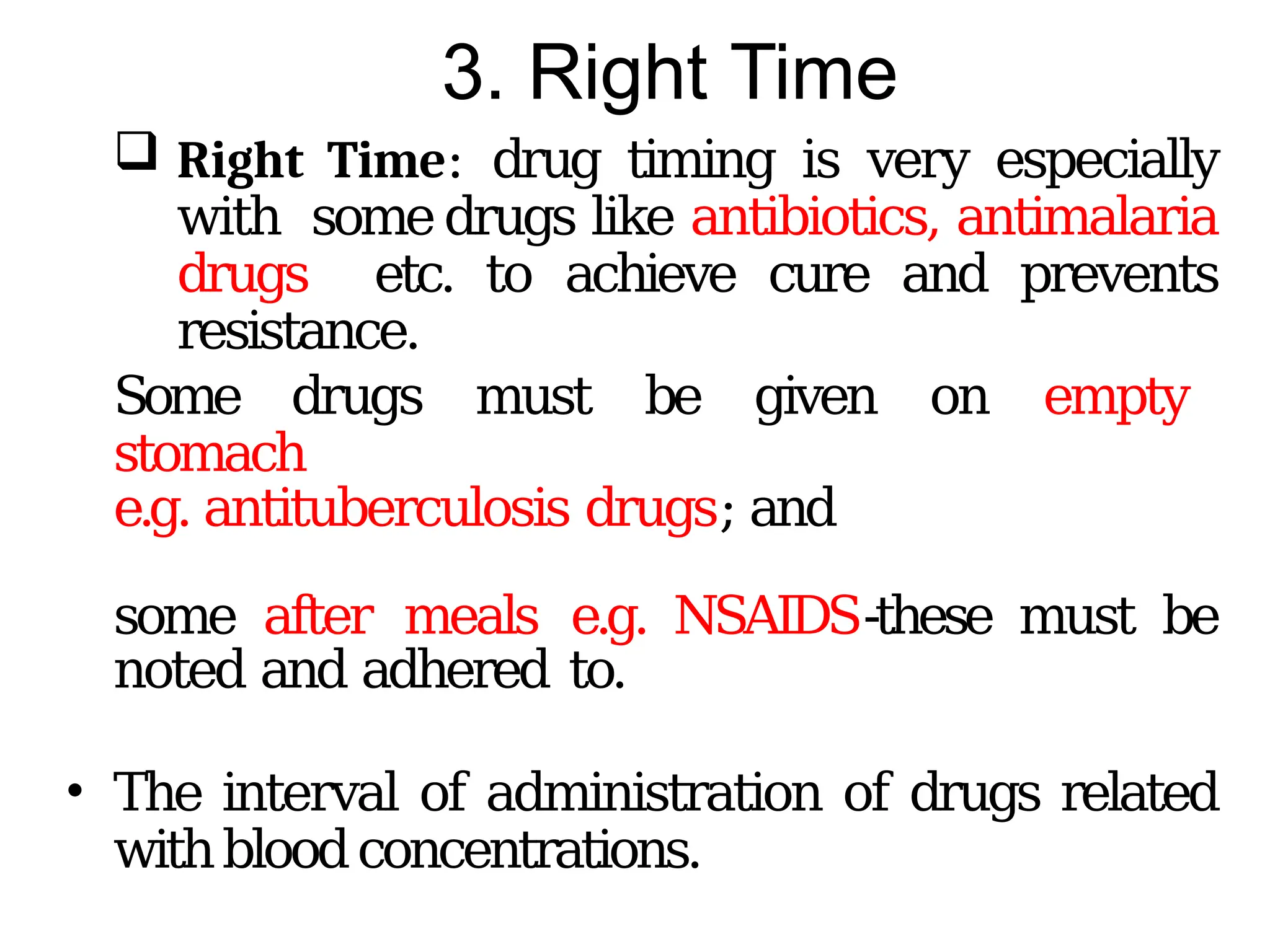
3. Right Time
 Right Time: drug timing is very especially
with somedrugs like antibiotics, antimalaria
drugs etc. to achieve cure and prevents
resistance.
Some drugs must be given on empty
stomach
e.g. antituberculosis drugs; and
some after meals e.g. NSAIDS-these must be
noted and adhered to.
• The interval of administration of drugs related
withbloodconcentrations.
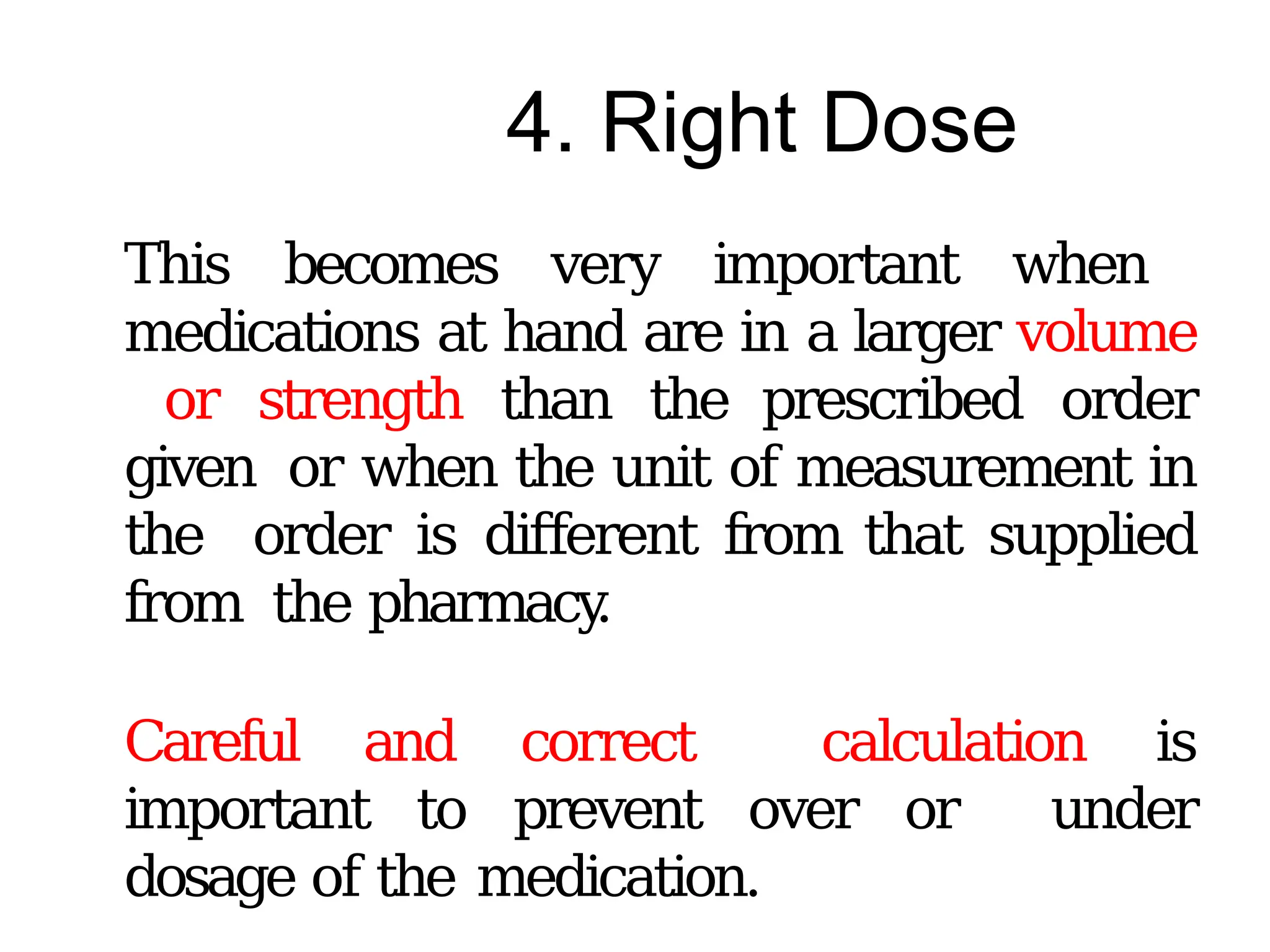
4. Right Dose
This becomes very important when
medications at hand are in a larger volume
or strength than the prescribed order
given or when the unit of measurement in
the order is different from that supplied
from the pharmacy
.
Careful and correct calculation is
important to prevent over or under
dosage of the medication.
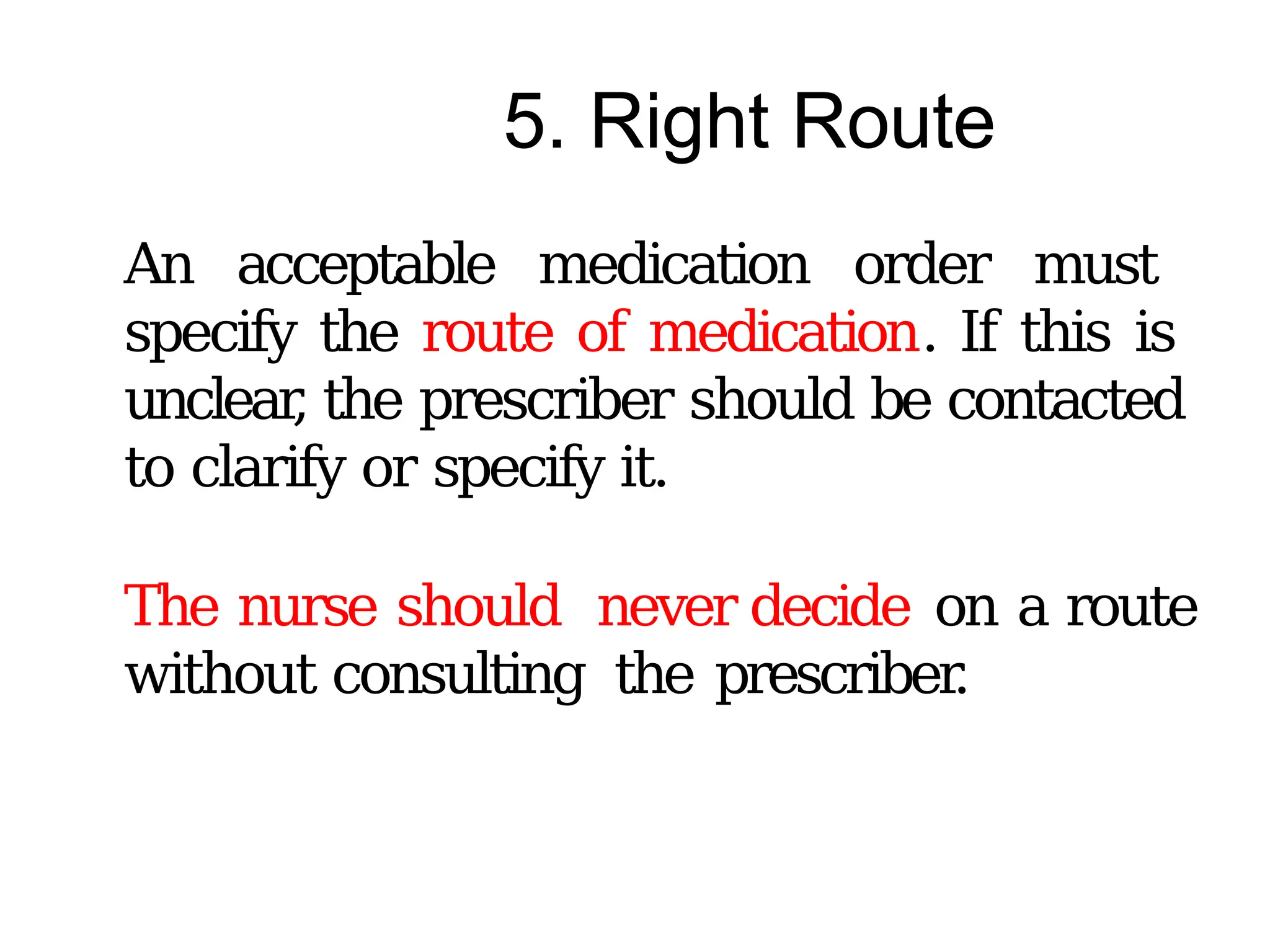
5. Right Route
An acceptable medication order must
specify the route of medication. If this is
unclear
, the prescriber should be contacted
to clarify or specify it.
The nurse should never decide on a route
without consulting the prescriber
.
Types of Medication Orders
• Four types of medication orders are commonly
used:
1. Stat order: A stat order indicates that the
medication is to be given immediately and only
once. e.g: morphine sulfate 10 milligrams IV
stat.
2. Single order: The single order or one-time order
indicates that the medication is to be given
once at a specified time. e.g: Seconal 100
milligrams at bedtime. (sedativedrug)
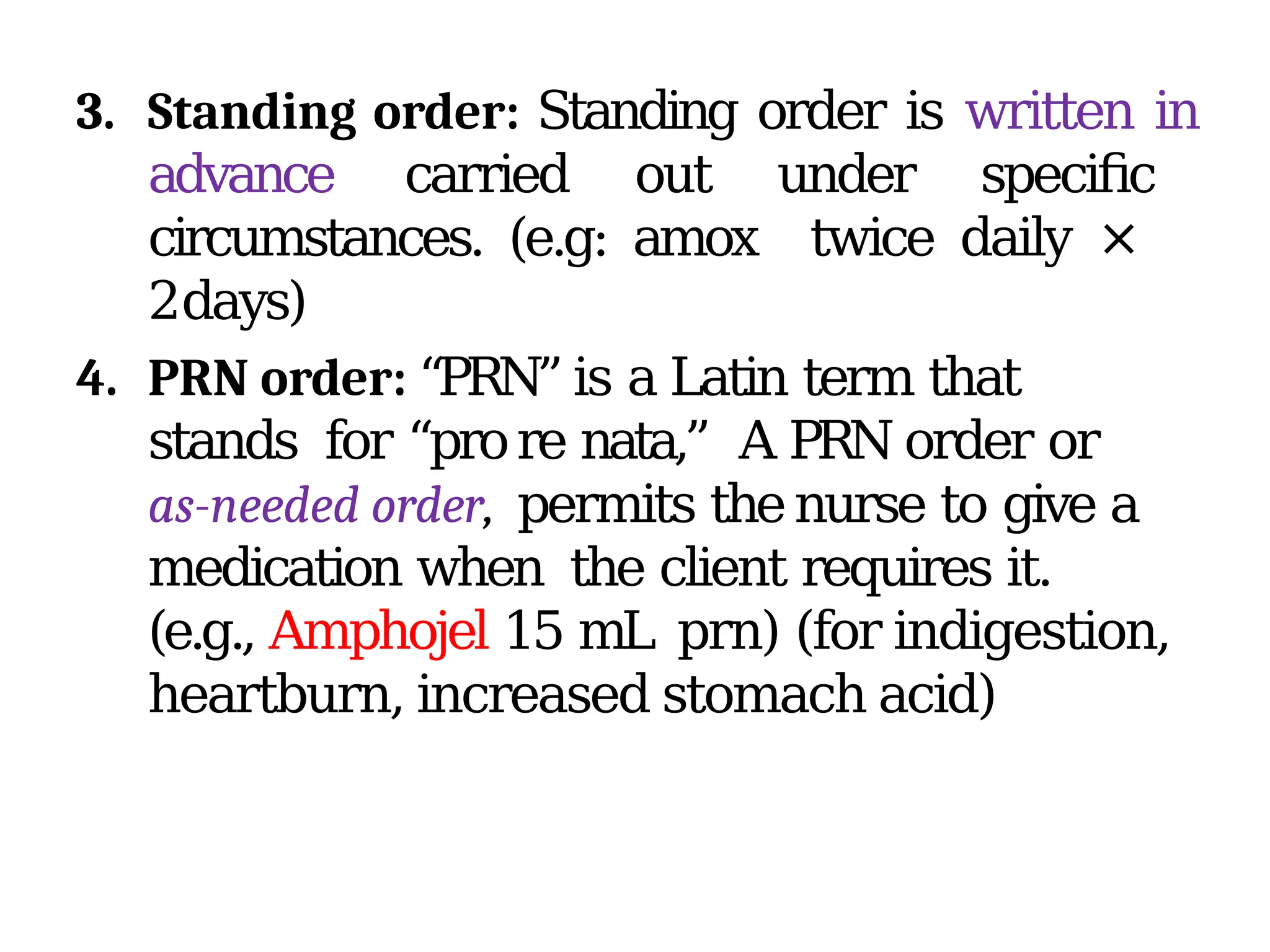
3. Standing order: Standing order is written in
advance carried out under specific
circumstances. (e.g: amox twice daily ×
2days)
4. PRN order: “PRN” is a Latin term that
stands for “prore nata,” A PRN order or
as-needed order, permits thenurse to give a
medication when the client requires it.
(e.g., Amphojel 15 mL prn) (for indigestion,
heartburn, increased stomach acid)
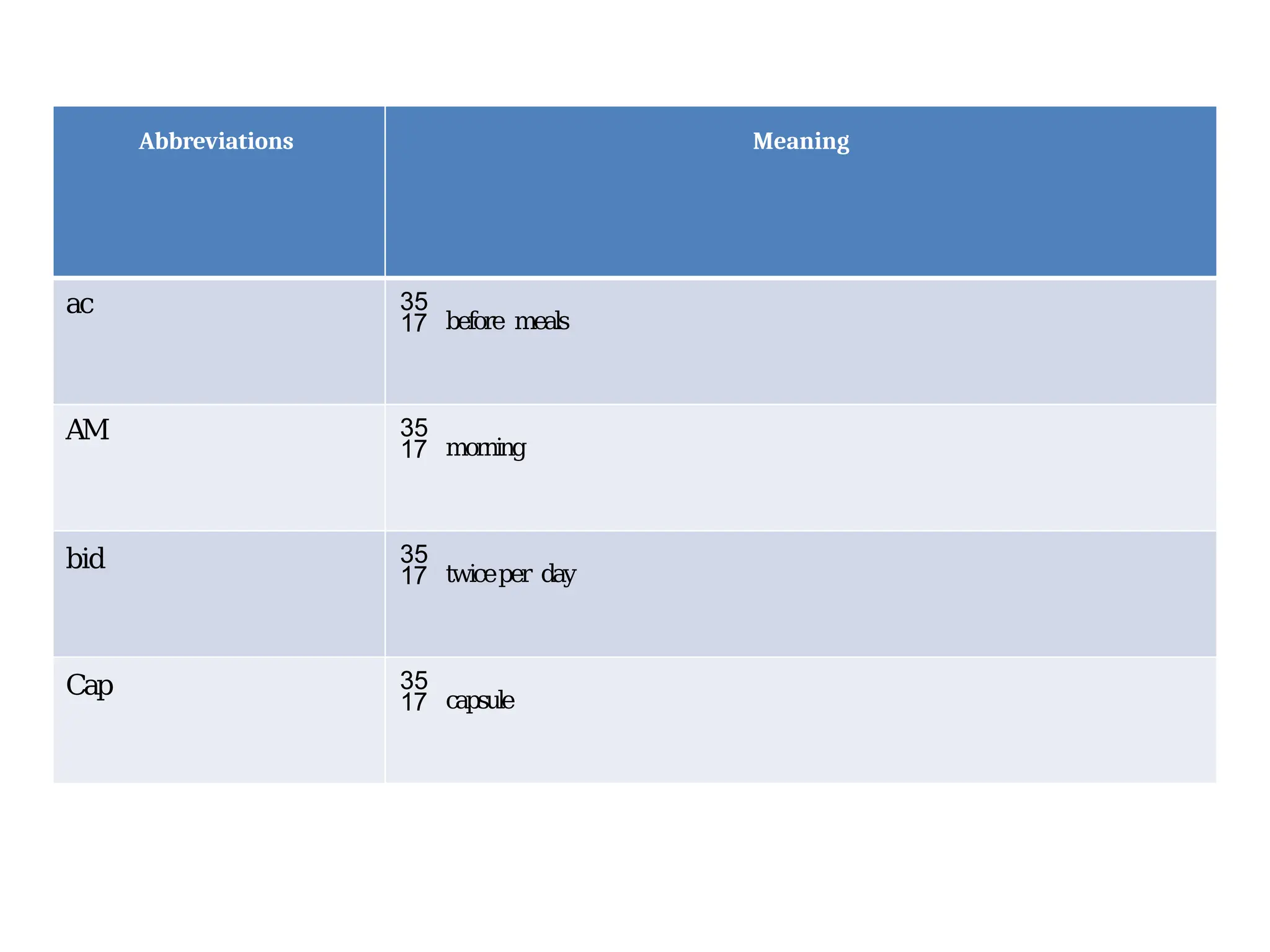
Abbreviations Meaning
ac
 before meals
AM
 morning
bid  twiceper day
Cap  capsule
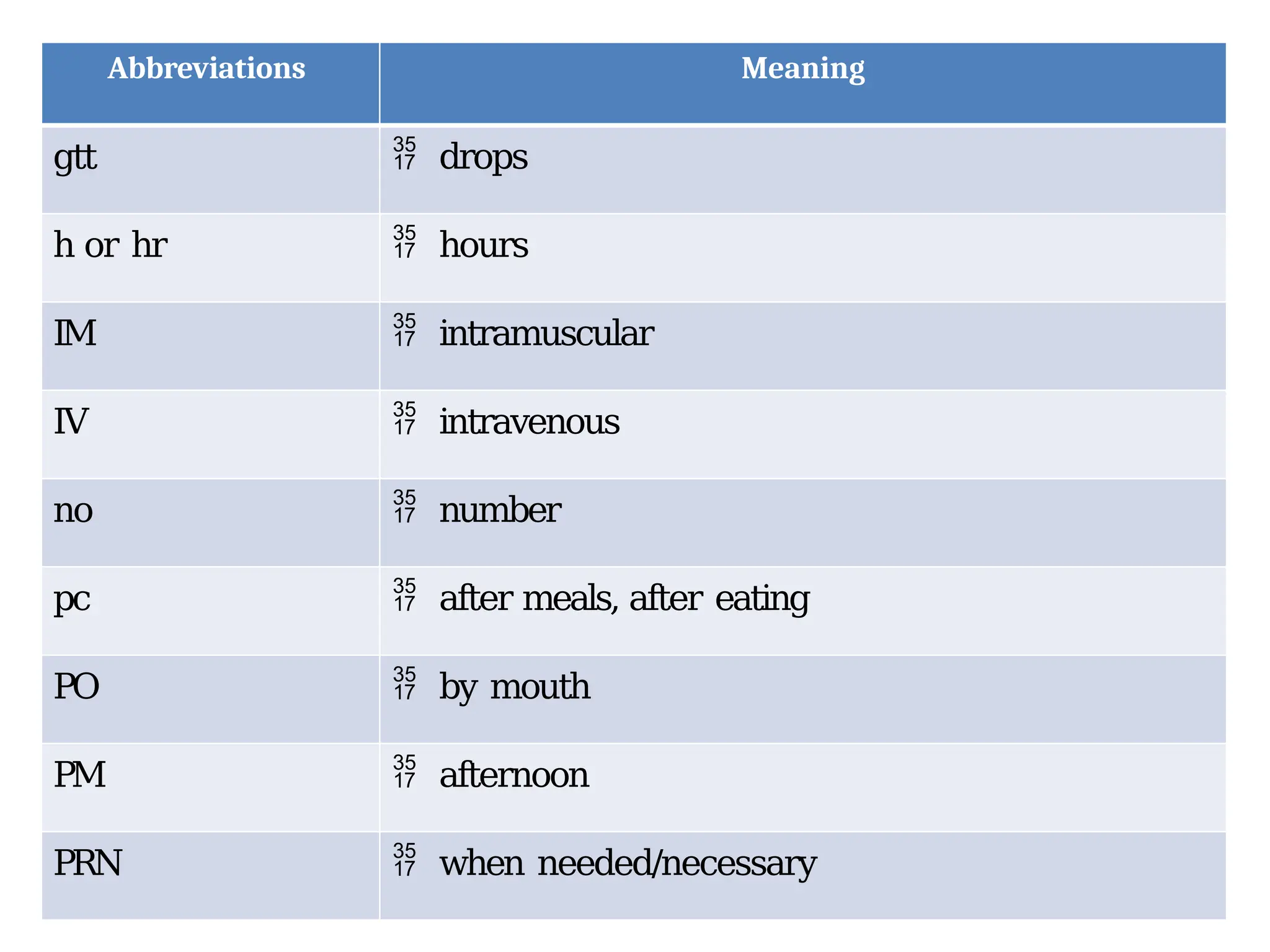
Abbreviations Meaning
gtt  drops
h or hr  hours
IM  intramuscular
IV  intravenous
no  number
pc  after meals, after eating
PO  by mouth
PM  afternoon
PRN  when needed/necessary
Abbreviations Meaning
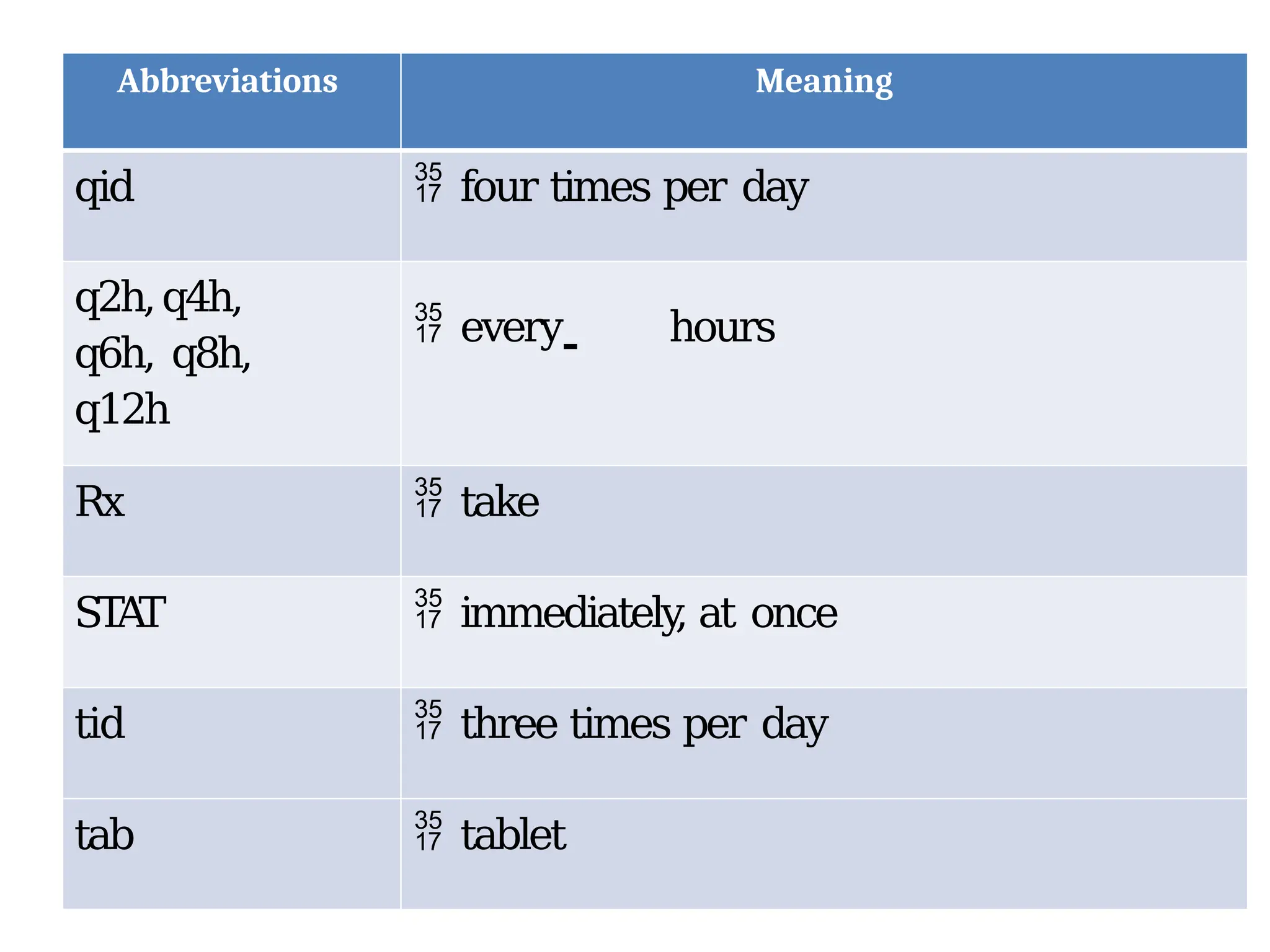
qid  four times per day
q2h,q4h,
q6h, q8h,
q12h
 every hours
Rx  take
ST
A
T  immediately
, at once
tid  three times per day
tab  tablet
Drug forms
• Medication
s
are available in variety
of
forms. The form of the
medication determines its route of
administration.
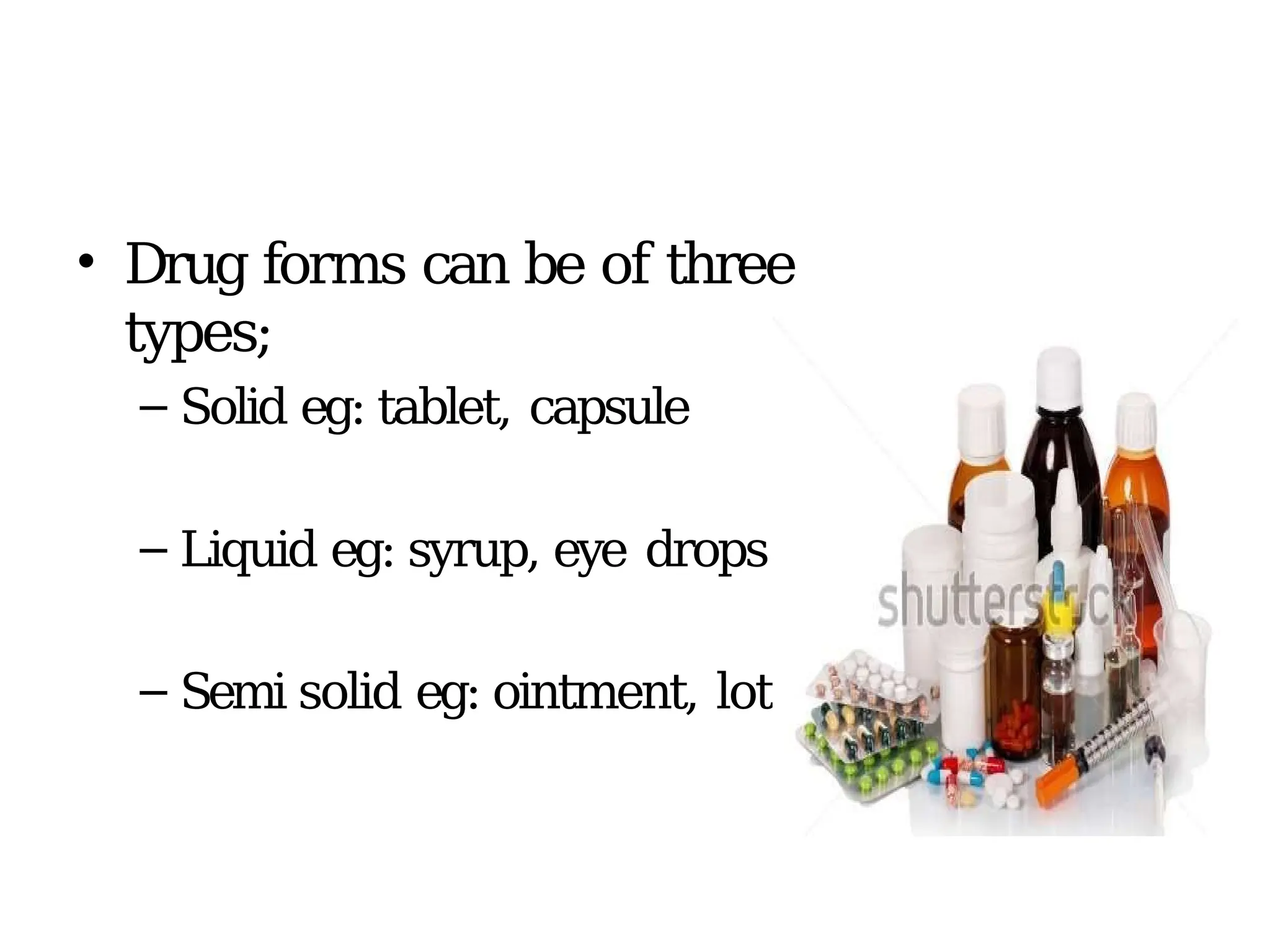
• Drug forms can be of three
types;
– Solid eg: tablet, capsule
– Liquid eg: syrup, eye drops
– Semi solid eg: ointment, lotion
• Tablet: It is the powdered
medication compressed
into hard disk or cylinder
.
• Capsule: Medication covered
in gelatin shell.
• Gel or jelly: A clear or
translucent semisolid that
liquefies when applied to
the skin.
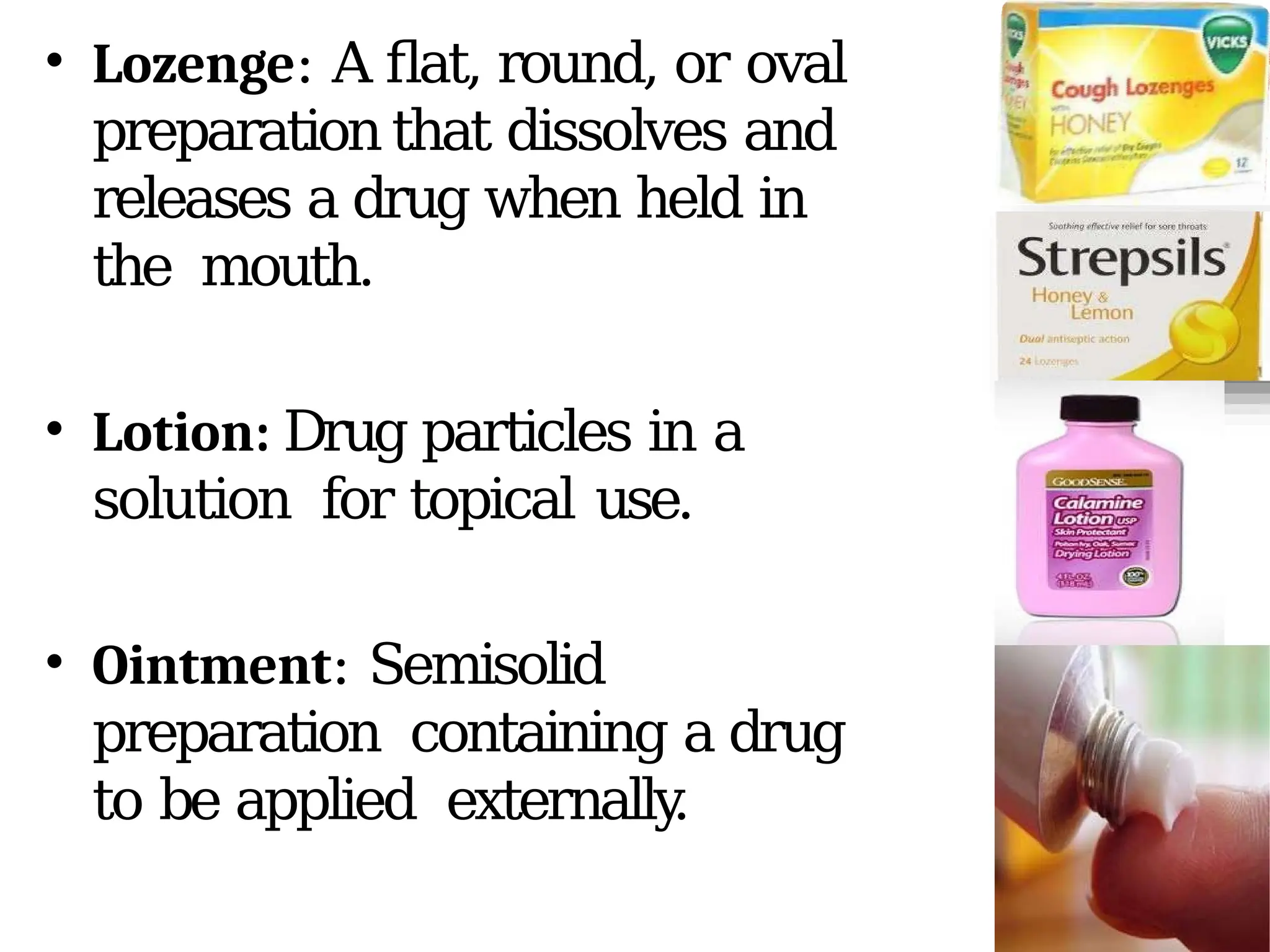
• Lozenge: A flat, round, or oval
preparation that dissolves and
releases a drug when held in
the mouth.
• Lotion: Drug particles in a
solution for topical use.
• Ointment: Semisolid
preparation containing a drug
to be applied externally
.
• Powder: Single or mixture
of finely ground drugs.
• Solution: Adrug dissolved
in another substance.
• Suspension: Finely divided,
undissolved particles in a
liquid medium; should be
shaken before use. (Paediatric
dosewithattractivecolourand
flavour)
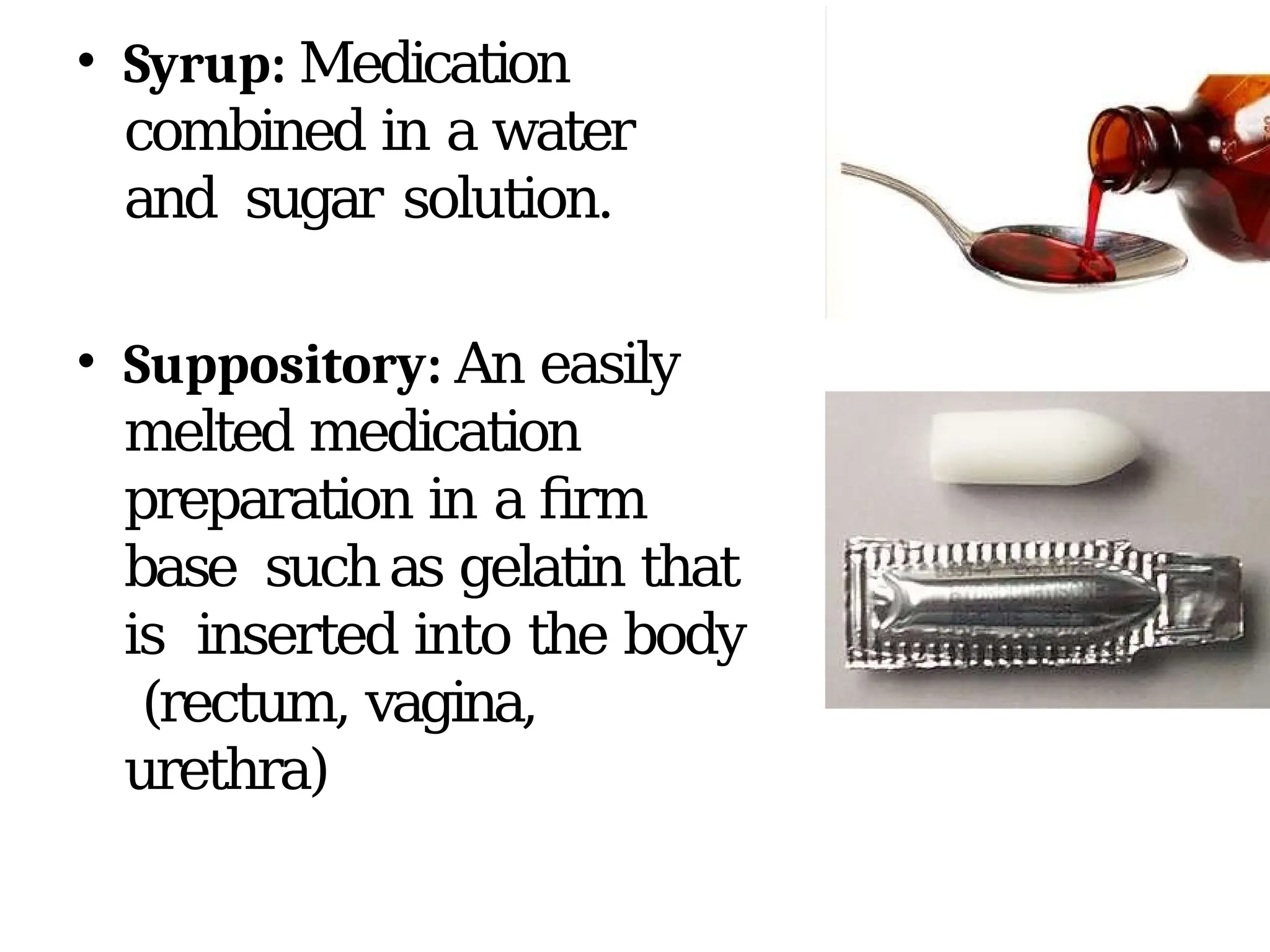
• Syrup: Medication
combined in a water
and sugar solution.
• Suppository: An easily
melted medication
preparation in a firm
base suchas gelatin that
is inserted into the body
(rectum, vagina,
urethra)
• Transdermal patch: Unit dose of
medication applied directly to skin
for diffusion through skin and
absorption into the bloodstream.
Route of administration
• Different route of drug administration
are;
• Oral
• Parenteral
• Topical
• Inhalation
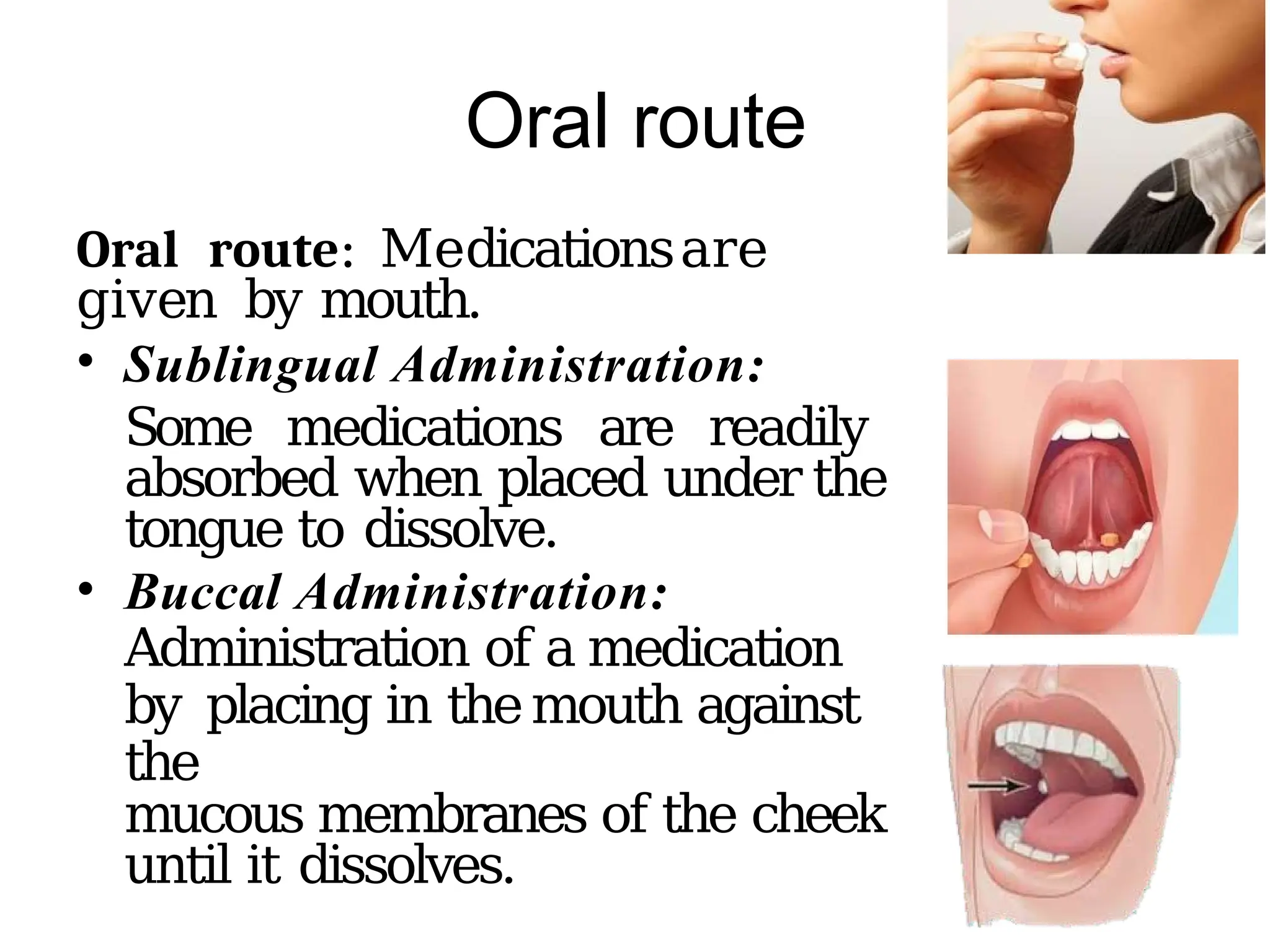
Oral route
Oral route: Medicationsare
given by mouth.
• Sublingual Administration:
Some medications are readily
absorbed when placed under the
tongue to dissolve.
• Buccal Administration:
Administration of a medication
by placing in themouth against
the
mucous membranes of the cheek
until it dissolves.
Parenteral Routes
Parenteral Routes:
Parenteral administration involves
injecting a medication into body tissues.
The following are the four major sites
of injection:
1. Intradermal (ID): Injection into the
dermis just underthe epidermis.
2. Subcutaneous (SC): Injection into tissues
just below the dermis of the skin.
3. Intramuscular (IM): Injection into a
muscle.
4. Intravenous (IV): Injection into a
vein.
Equipment
• To administer parenteral medications,
nurses use syringes and needles to
withdraw medication from (A) ampules and
(B)vials.
Ampul
e
via
l
Syringes
Syringes have three parts:
1. The tip, which
connects with
the needle
2. The barrel, or
outside part, on
whichthe scales are
printed
3. The plunger, which
fits inside the barrel
Several kinds of syringes are available
in differing sizes, shapes, and materials.
Syringes range in sizes from 1 to 60 mL.
A nurse typically uses a syringe
ranging from 1 to 3 mL in size for
injections (e.g. subcutaneous or
intramuscular).
• Insulin syringes are
available in sizes that hold
0.3 to 1 mL and are
calibrated in units.
• The tuberculin syringe has
a capacity of 1 mL.
• 3 ml syringe
• 5 ml syringe
Needles
• Most needles are made
of stainless steel, and
all are disposable.
• A needle has three
parts:
1. The hub, which fits
onto the tip of a
syringe
2. The shaft, which
connects to the
hub
3. The bevel, the tip
of the needle
• The gauge varies from 18 to 30.
• Use longer needles for IM injections
and a shorter needle for subcutaneous
injections.
Needle
size
• 19
gauge
• 20
gauge
• 21
gauge
• 23
gauge
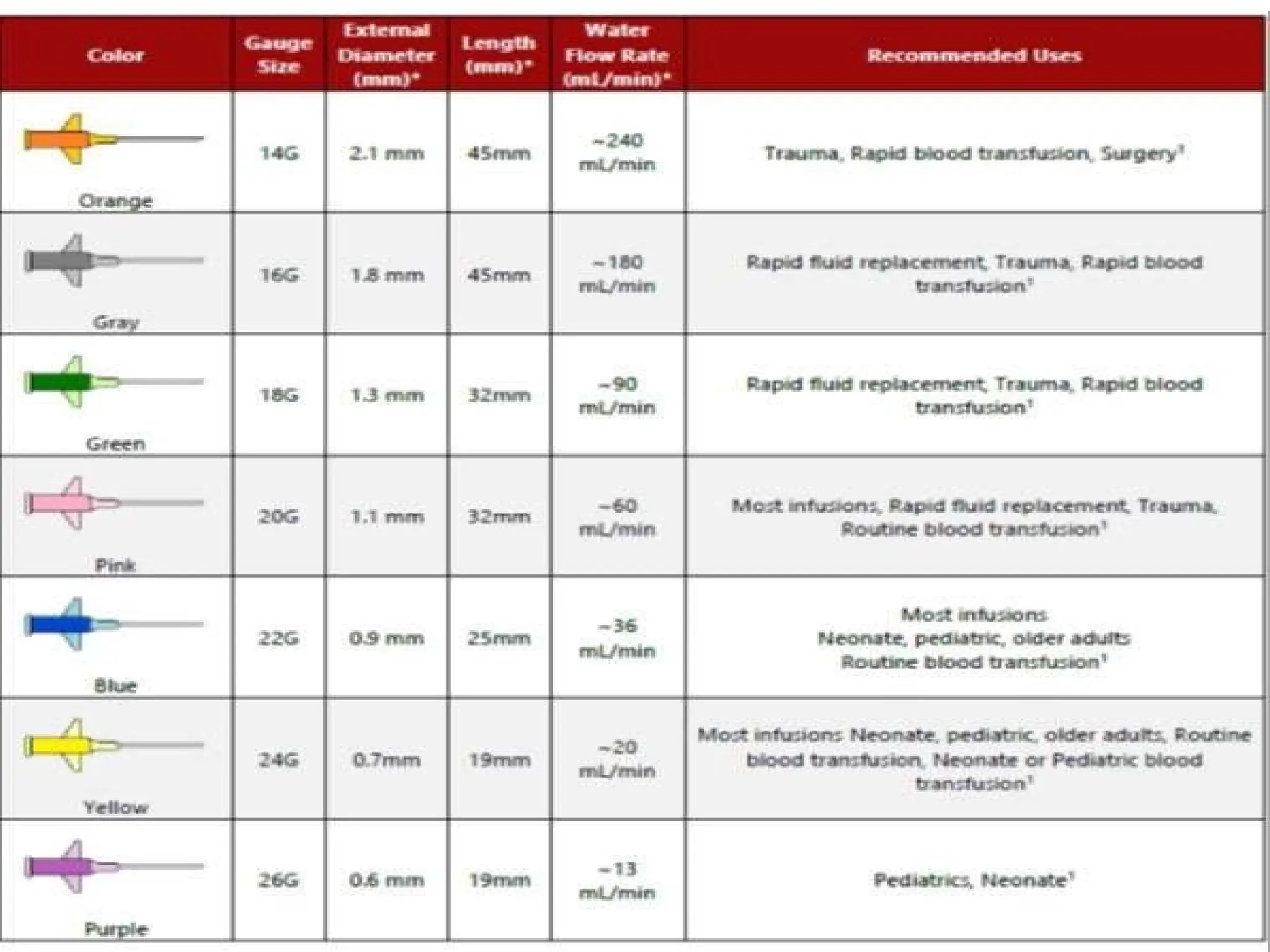
Cannula
A cannula is a flexible tube that can be
inserted into the body. A venous cannula is
inserted into a vein, for the administration of
intravenous fluids, for obtaining blood
samples and for administering medicines.
Types of cannula are
• IV cannula pen-like model.
• IV cannula with wings model.
• IV cannula with injection part
model.
• IV cannula y-type model.
Preventing needle stick
injuries
• One of the most potentially hazardous
procedures that health care personnel
face is using and disposing of needles
and sharps.
• Needlestick injuries present a major
risk for infection with hepatitis B
virus, human immunodeficiency
virus (HIV), and many other
pathogens.
SCOOP METHOD
a) placing the needle cap and syringe
with needle horizontally on a flat
surface.
b) inserting theneedle into the cap, using
one hand.
c) then using your other hand to pick up
the cap and tighten it to the needle
hub.
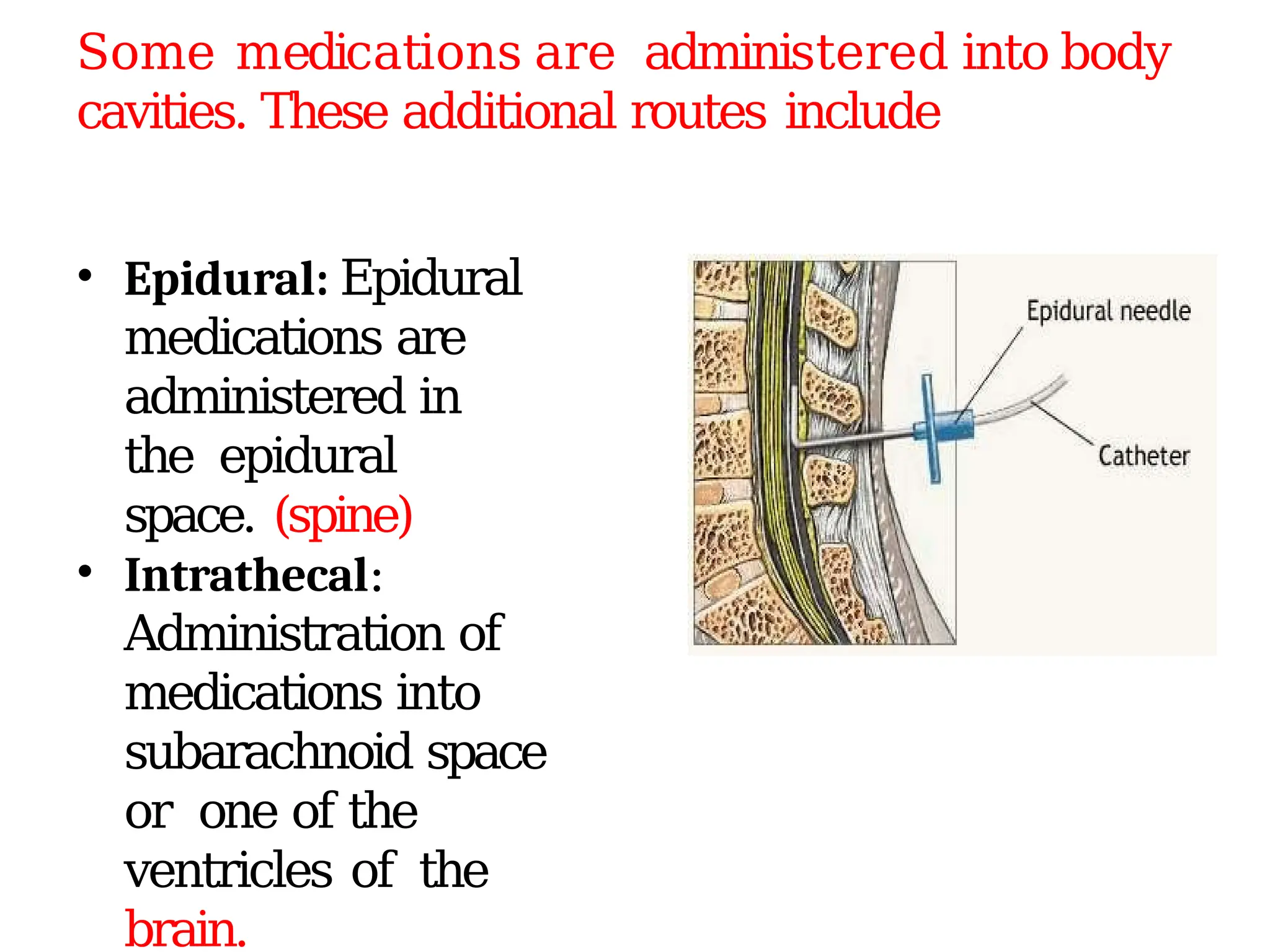
• Epidural: Epidural
medications are
administered in
the epidural
space. (spine)
• Intrathecal:
Administration of
medications into
subarachnoid space
or one of the
ventricles of the
brain.
Some medications are administered into body
cavities. These additional routes include
• Intraosseous: Administration
of medication directly into the bone
marrow.
• Intraperitoneal: Medications
administered into the peritoneal cavity
• Intrapleural: Administration
of medications directly into the pleural
space.(lungcavities)
• Intraarterial: Intraarterial medications
are administered directly into the arteries.
Broad Classification of drugs
• Adrug may be classified by the chemical
type of the active ingredient or by the way
it is used to treat a particular condition.
Eg:
• Analgesics: to reduce pain
• Antipyretics: to reduce fever
• Antibiotics: to treatbacterial infection
• Anti viral: to treat viral infection
• Antihypertensive : to treat hypertension
• Antidiabetic: to treat diabetes
Dose Calculations
Methods used to calculate medication
doses include
• The ratio and proportion method
• The formula method
• Dimensional analysis
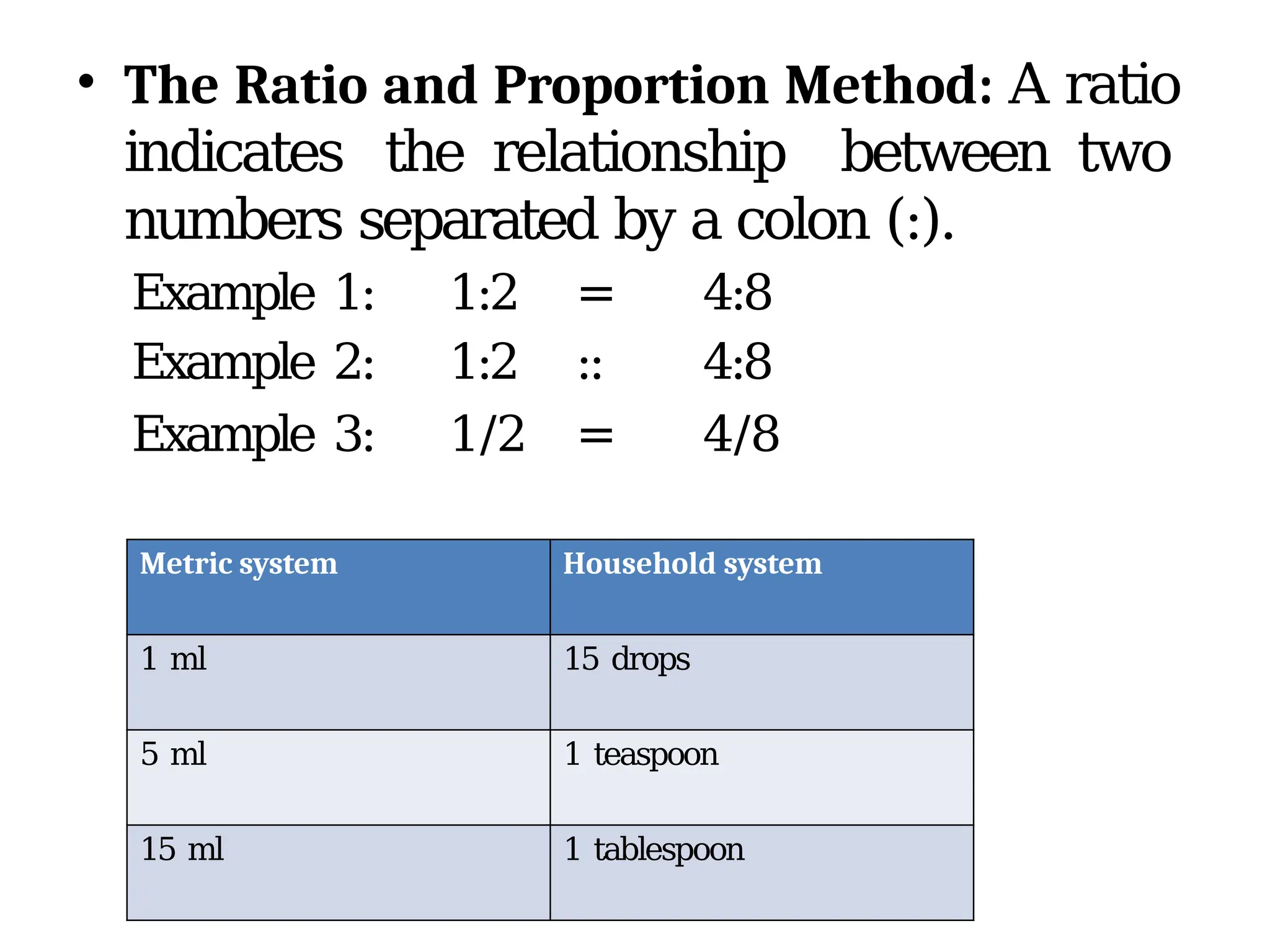
• The Ratio and Proportion Method: A ratio
indicates the relationship between two
numbers separated by a colon (:).
Example 1: 1:2 = 4:8
Example 2: 1:2 :: 4:8
Example 3: 1/2 = 4/8
Metric system Household system
1 ml 15 drops
5 ml 1 teaspoon
15 ml 1 tablespoon
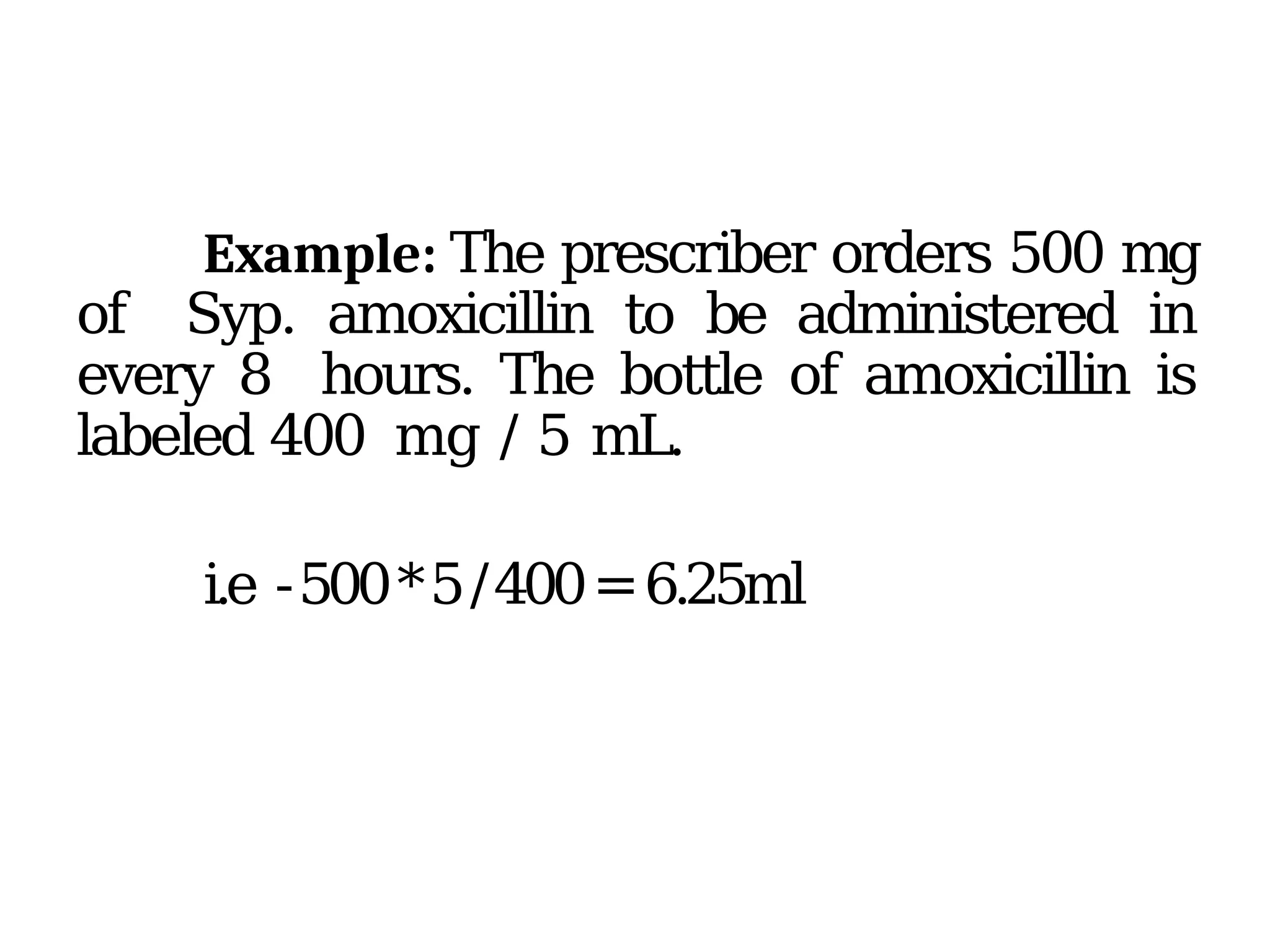
Example: The prescriber orders 500 mg
of Syp. amoxicillin to be administered in
every 8 hours. The bottle of amoxicillin is
labeled 400 mg / 5 mL.
i.e -500*5/400=6.25ml
Formula method
1. Calculating dose of solid medications
First convertthe drug amount to the same
units and then use the formula.
𝒔𝒕𝒐𝒄𝒌
𝒔𝒕𝒓𝒆𝒏𝒈𝒕𝒉
Dose required= 𝒔𝒕𝒓𝒆𝒏𝒈𝒕𝒉 𝒓𝒆𝒒𝒖𝒊𝒓𝒆𝒅
= no of tab.
Stock strength is the strengthofdrug
written on the cover
.
E.g-Administertab.para250mg?
Eg:paracetamol250mg/500mg=½tablet
2. Calculating dose of liquid medications
First convertthe drug amount to the same
units and then use the formula
Volume required=
ℎ
𝑠𝑡𝑟𝑒𝑛𝑔𝑡 𝑟𝑒𝑞𝑢𝑖𝑟𝑒𝑑×𝑣𝑜𝑙𝑢𝑚𝑒 𝑜𝑓 𝑠𝑡𝑜𝑐𝑘
𝑠𝑜𝑙𝑢𝑡𝑖𝑜𝑛
𝑠𝑡𝑜𝑐𝑘 ℎ
𝑠𝑡𝑟𝑒𝑛𝑔𝑡
Example:
The ordered dose is Ceftriaxone 750 mg IV. the container contain 1g in a 10 ml
vial.
How to calculate?
You should convert first g to mg , then :
(D) 750 mg X (V) 10 ml = 7.5 ml
(H) 1000 mg
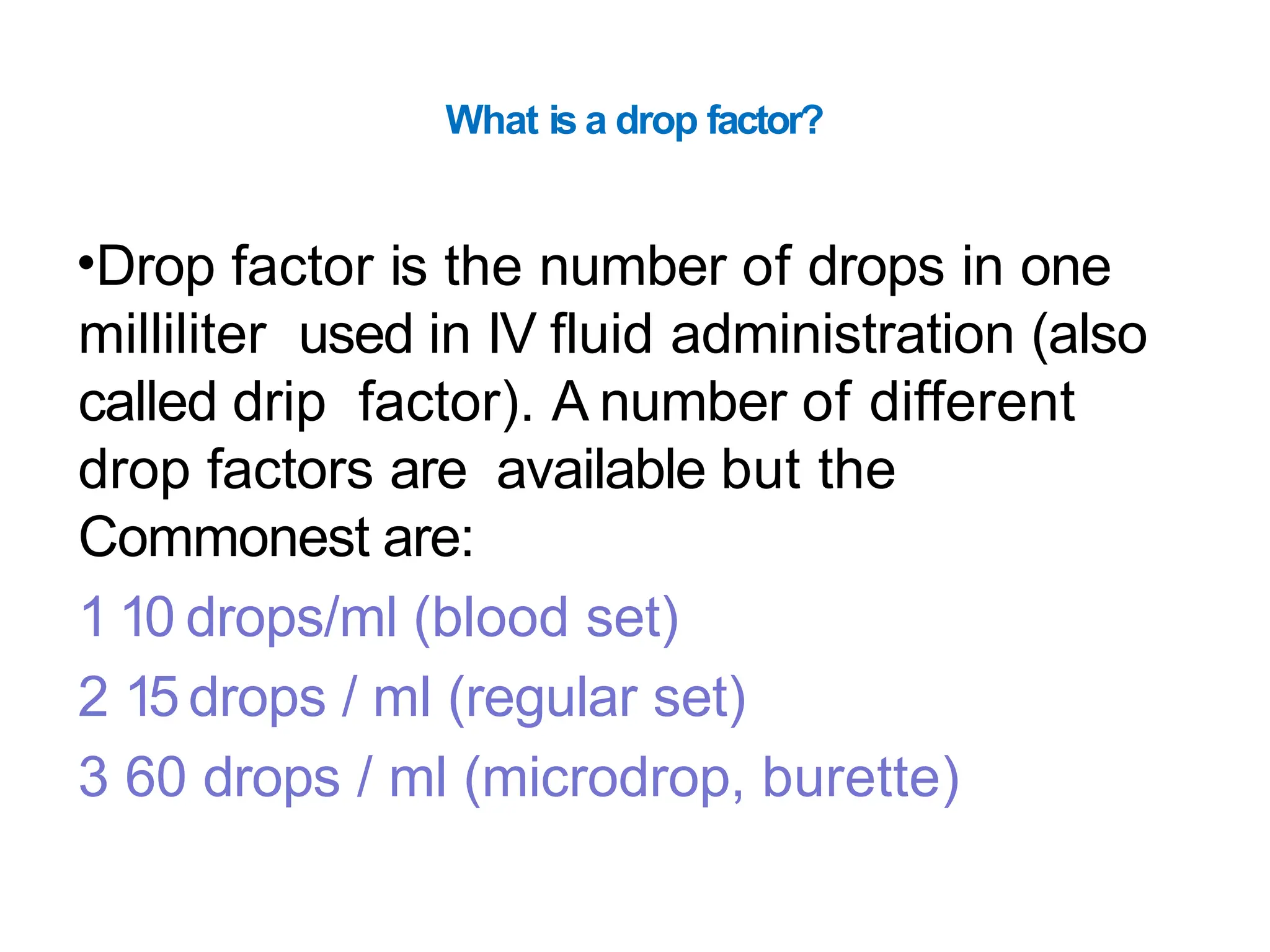
What is a drop factor?
•Drop factor is the number of drops in one
milliliter used in IV fluid administration (also
called drip factor). A number of different
drop factors are available but the
Commonest are:
1 10 drops/ml (blood set)
2 15 drops / ml (regular set)
3 60 drops / ml (microdrop, burette)
How to calculate IV flow rates ?
•Example:
1500 ml IV Saline (3 bottles) (1 bottle=5ooml) is ordered over 12 hours.
Using a drop factor of 15 drops / ml, how many drops per minute need
to be delivered? (1 pint = 500ml)
1500 (ml) X 15 (drop / ml)
--------------------------------------
12 x 60 (gives us total minutes)
= 31 drop/ minute
The formula for working out flow rates is:
volume (ml) X drop factor (gtts / ml)
= gtts /
min
---------------------------------------------
time (min)
Importance !
• Can be life-saving in certain conditions
•Loss of body water, whether acute or chronic, can cause a
range of problems from mild headache to convulsions,
coma, and in some cases, death.
•Though fluid therapy can be a lifesaver, it's never
always safe, and can be very harmful.
FLUIDTHERP
Y
The fluids used in clinical practice are usefully
classified into colloids, crystalloids and blood
products
1.Colloid
Solutions that contain large molecules that don't
pass the cell membranes.
When infused, they remain in the intravascular
compartment and expand the intravascular volume
and they draw fluid from extravascular spaces via
their higher oncotic pressure
Types of Fluid
2.Crystalloid
Solutions that contain small molecules that flow easily
across the cell membranes, allowing for transfer from the
bloodstream into the cells and body tissues.
This will increase fluid volume in both the interstitial
and intravascular spaces (Extracellular)
It is subdivided into:
 Isotonic- same like plasma concentration
 Hypotonic-less than plasma concentration
 Hypertonic-more than plasma concentration
Types of
Fluid
When to consider a solution isotonic?
When the concentration of the particles (solutes) is
similar to that of plasma, So it doesn't move into
cells and remains within the extracellular
compartment thus increasing intravascular volume.
Isotonic
Fluids
Types of isotonic solutions
include:
0.9% sodium chloride (0.9%
NaCl)
lactated Ringer's solution
5 % dextrose in water (D5W)
Ringer's solution
Isotonic
Fluids
A- 0.9% sodium chloride (Normal
Saline)
•Simply salt water that contains only water, sodium (154 mEq/L),
and chloride (154 mEq/L).
•It's called "normal saline solution" because the percentage of
sodium chloride in the solution is similar to the concentration of
sodium and chloride in the intravascular space.
Isotonic
Fluids
K+ Ca2+ Mg2+ HCO3
-
Dextrose
Solutions Na+
0.9% NaCl 154
Cl-
154
mOsm/
L
308
1. Severe vomiting or diarrhoea
2 Shock
3 Mild hyponatremia
4Metabolic acidosis (such as diabetic ketoacidosis)
5- It’s the fluid of choice for resuscitation efforts.
6- it's the only fluid used with administration of
blood products.
A- 0.9% sodium chloride (Normal Saline)
When to give?
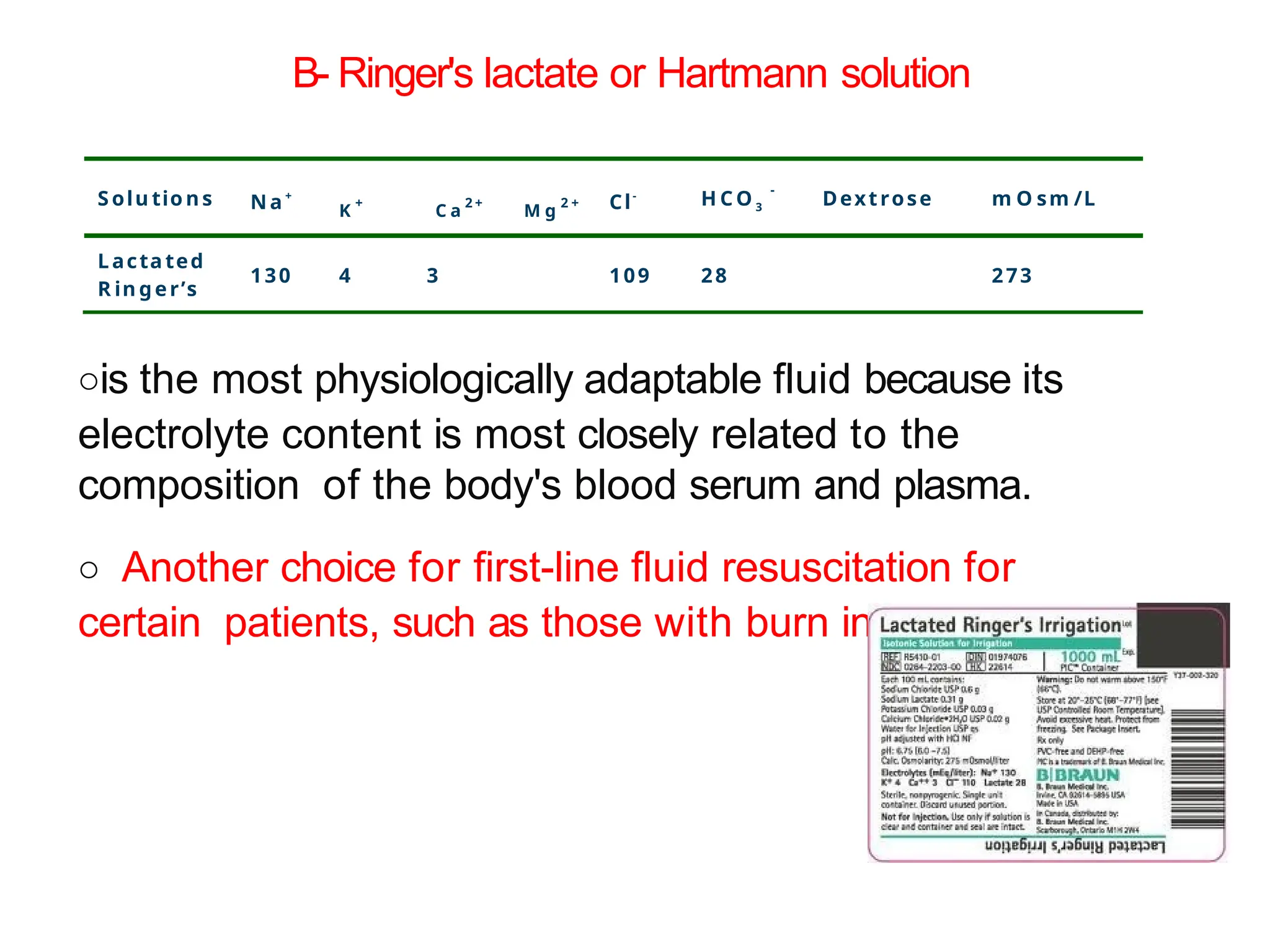
ois the most physiologically adaptable fluid because its
electrolyte content is most closely related to the
composition of the body's blood serum and plasma.
o Another choice for first-line fluid resuscitation for
certain patients, such as those with burn injuries.
B- Ringer's lactate or Hartmann solution
S olu tio n s N a +
K
+
C a
2 +
M g
2 + Cl-
H C O 3
-
Dextrose m O sm /L
Lacta ted
R in ger’s
130 4 3 109 28 273
B- Ringer's lactate or Hartmann solution
When to be used?
T
o replace GI tract fluid losses ( Diarrhea or vomiting )
Fluid losses due to burns and trauma
Patients experiencing acute blood loss or hypovolemia
Don’t Use
-Don't give LR to patients with liver disease as they can't metabolize
lactate
-used cautiously in patients with sever renal impairment because it
contains some potassium
- LR shouldn't be given to a patient whose pH is greater than 7.5
C-Ringer's solution
Like LR, contains sodium, potassium, calcium and
chloride in similar. But it doesn't contain lactate.
Ringer's solution is used in a similar fashion as LR,
but doesn't have the contraindications related to
lactate.(Can given in metabolic acidosis, alkalosis)
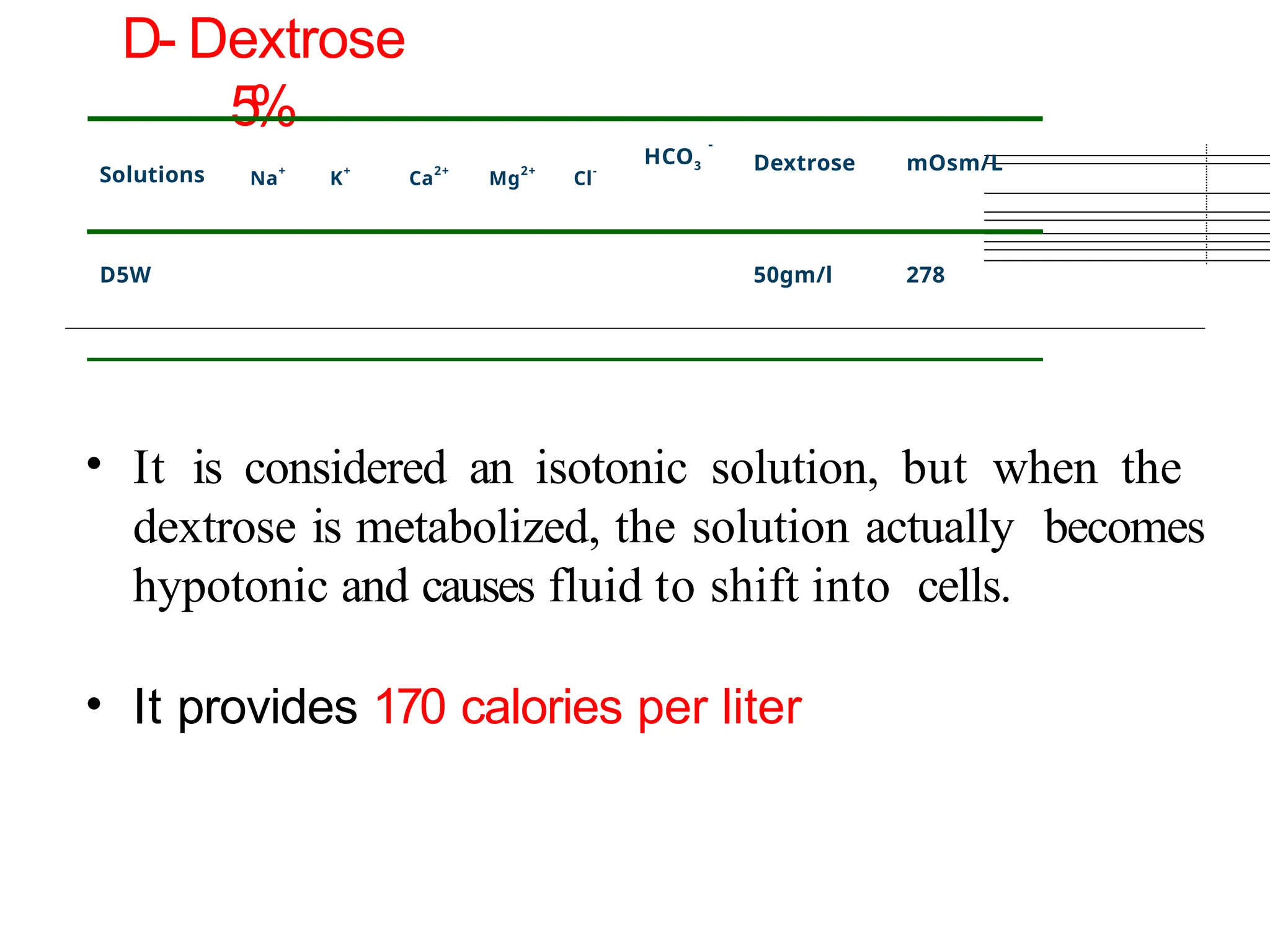
• It is considered an isotonic solution, but when the
dextrose is metabolized, the solution actually becomes
hypotonic and causes fluid to shift into cells.
• It provides 170 calories per liter
D- Dextrose
5
%
Solutions Na
+
K
+
Ca
2+
Mg
2+
Cl
-
-
HCO3 Dextrose mOsm/L
D5W 50gm/l 278
Take Care !
-D5W is not good for patients with renal failure or cardiac problems since
it could cause fluid overload.
-patients at risk for intracranial pressure should not receive D5W since
it could increase cerebral edema
-Never mix dextrose with blood as it causes blood to hemolyze.
-Not used for resuscitation, because the solution won't remain in
the intravascular space.
-Not used in the early postoperative period, because the body's reaction
to the surgical stress may cause an increase in antidiuretic hormone
secretion
D- Dextrose 5 %
Indications for GI Intubation
■ To decompress the stomach and remove gas and liquids
■ To lavage (removal) the stomach and remove ingested
toxins
■ To administer medications and feeds e.g. Post operative
or unconscious patient (gag or swallowing reflex
absent)
■ As part of the management of an obstruction i.e Tumor
oesophagus,
■ As part of the management of haematemesis i.e
oesophgeal variceas.
■ To aspirate gastric contents for analysis
Technique continued…
■ Explain procedure to patient and relatives
■ Position the client in a sitting or high Fowler’s
position. If comatosed, semi Fowler’s.
■ Examine feeding tube for flaws.
■ Determine the length of tube to be inserted.
■ Measure distance from the tip of the nose to the
earlobe and to the xyphoid process of the sternum.
■ Prepare NG tube for insertion.
Implementation
1) Wash Hands
2) Put on clean gloves
3) Lubricate the tube
4) Hand the patient a glass of water
5) Gently insert tube through nostril to back of
throat (posterior naso pharynx).
Have the patient flex the head towards the chest
after tube has passed through nasopharynx.
Implementation Cont.
6)Emphasize the need to mouth breathe and swallow during
the procedure.
7)Swallowing facilitates the passage of the tube through the
oropharynx.
8)When the tip of the tube reaches the carina stop and listen
for air exchange from the distal end of the tube. If air is heard
remove the tube.
9)Advance tube each time client swallows until desired
length has been reached.
10)Do not force tube. If resistance is met or client starts to
cough, choke or become cyanotic stop advancing the tube and
pull back.
Implementation Cont.
11) Check placement of the tube.
Pushing air
Testing pH of
aspirate
X-ray confirmation
12) Secure the tube
with tape or
commercial device.
Enteral Nutrition(GAVAGE) OR
Naso Gatric Tube feeding
■ What is it:
■ The administration of nutrients directly into
the GI tract. The most desirable and
appropriate method of providing nutrition
is the oral route, but this is not always
possible.
■ Nasogastric feeding is the most common
route
■ Nurses are the main healthcare
professional responsible for intubation
Administering Enteral Feeds
■ Indications:
■ Clients who are unable to maintain
adequate oral intake to meet metabolic
demands
■ Surgical cases
■ Ventilator patients
■ Neuromuscular impairment
■ Generally these clients have been referred
Enteral and Parenteral feeding
• What is enteral and parenteral feeding?
• The main difference between enteral and
parenteral feeding is that enteral feeding is
the delivery of food via the human
gastrointestinal tract.
• In contrast, parenteral feeding is the delivery
of food into the bloodstream, bypassing the
gut.
Total Parenteral Nutrition
Intravenous administration of
varying combinations of
hypertonic or isotonic glucose,
lipids, amino acid, electrolytes,
vitamins and trace elements
through a venous access device
(VAD) directly into the vein.
.
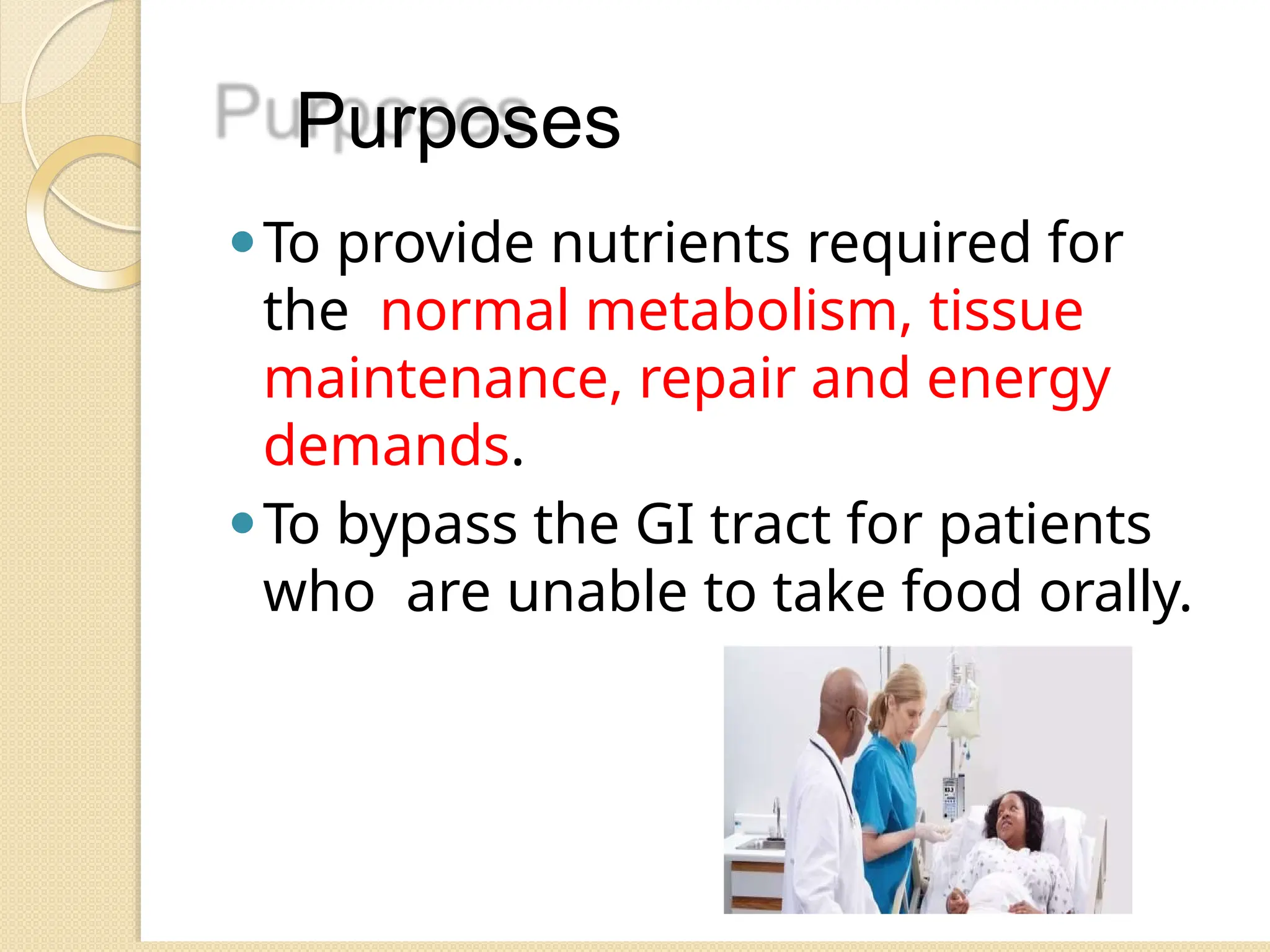
Purposes
⚫To provide nutrients required for
the normal metabolism, tissue
maintenance, repair and energy
demands.
⚫To bypass the GI tract for patients
who are unable to take food orally.
Methods of parenteral nutrition
⚫Total Parenteral Nutrition (TPN)
◦ It is indicated for patients requiring
parenteral feeding for seven or more
days.
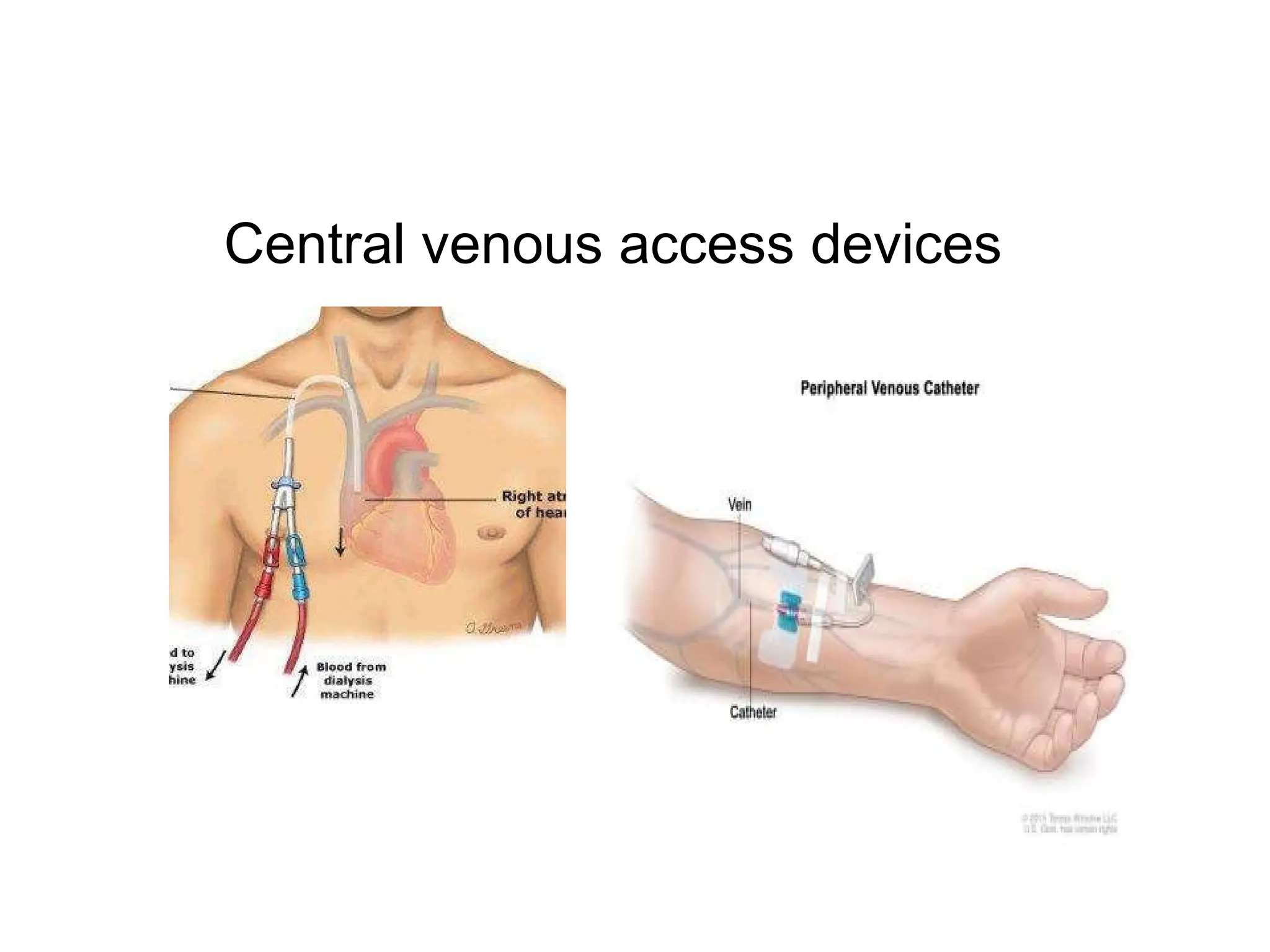
◦ Given through a central vein often into
the superior venacava.
Methods of parenteral nutrition
⚫Peripheral parenteral nutrition
◦ This parenteral formula combines
carbohydrates a lesser concentrated
glucose solution with amino acids,
vitamins, minerals
◦ Given through peripheral vein
◦ Indicated for patients requiring nutrition for
fewer less than 7 days
Central venous access devices

medication administration nursing students

  • 1.
  • 2.
    • A medicationis a substance administered for the diagnosis, cure, treatment, or relief of a symptom or for prevention of disease. • Pharmacology is the study of the effect of drugs on living organisms.
  • 3.
    Uses of Drugs Prevention- used as prophylaxis to prevent diseases e.g. vaccines; fluoride-prevents tooth decay .  Diagnosis- establishing the patient’s disease or problem e.g. radio contrast dye; tuberculosis (Mantoux) testing.  Suppression- suppresses the signs and symptoms and prevents the disease process from progressing e.g. anticancer , antiviral drugs.
  • 4.
     Treatment- alleviate the symptoms for patientswith chronic disease e.g. Anti- asthmatic drugs.  Cure- complete eradication of diseases e.g. anti-biotics, anti-helmintics.  Enhancement aspects of health- achieve the best state of health e.g. vitamins, minerals
  • 5.
    Storage of Medications •In less advanced countries, 3 cupboards are usually used for drug storage. • Cupboard I-used for drugs for external use only; e.g. calamine lotion, detol, methylated spirit etc. These drugs are contained in distinctive bottles, usually ridged with deep colours (dark green, blue, brown) with red label marked POISON and FOR EXTERNAL USE ONL Y.
  • 6.
    • Cupboard II-containsdrugs for internal use only e.g. tablets, suspension, mixtures etc. All drugs must be labelled. • Cupboard III-contains the dangerous drug; drugs of addiction. E.g. Morphine, pethedine etc. All drugs should be kept away from direct sunlight and at a temperature suggested by the manufacturer .
  • 7.
    • Another cupboardcalled the Emergency Cupboard may be stationed at or near the nurses bay for easy access. This cupboard contains drugs for emergency situations e.g. aminophylline (for asthma), hydralazine (for severe hypertension), oxytocin (for maternal bleeding), intravenous infusions (for rehydration) etc.
  • 8.
    Principles of medication administration •Principles include 3 checks and 10 Rights: • 3 checks are 1. Check when obtaining the container of medicine. 2. Check when removing the medicine from the container . 3. Check when replacing the container .
  • 9.
    Rights of MedicationAdministration To prevent these errors, these guidelines are - the rights- are used in drug administration. 1. Right Patient: correct identification of the client cannot be over emphasized. This can be done by asking the client to mention his/her full name which should be compared with that on the identification bracelet or the patient’s folder and medication/treatment chart for confirmation.
  • 10.
    2. Right Medication: Right Medication: before administering any medicine, compare name on medication chart/medication order with that on the medication at least 3 times-checking medication label when removing it from storage unit, compare medication label with that on treatment chart and medication label and name on treatment chart with patient’s name tag.
  • 11.
    3. Right Time Right Time: drug timing is very especially with somedrugs like antibiotics, antimalaria drugs etc. to achieve cure and prevents resistance. Some drugs must be given on empty stomach e.g. antituberculosis drugs; and some after meals e.g. NSAIDS-these must be noted and adhered to. • The interval of administration of drugs related withbloodconcentrations.
  • 12.
    4. Right Dose Thisbecomes very important when medications at hand are in a larger volume or strength than the prescribed order given or when the unit of measurement in the order is different from that supplied from the pharmacy . Careful and correct calculation is important to prevent over or under dosage of the medication.
  • 13.
    5. Right Route Anacceptable medication order must specify the route of medication. If this is unclear , the prescriber should be contacted to clarify or specify it. The nurse should never decide on a route without consulting the prescriber .
  • 14.
    Types of MedicationOrders • Four types of medication orders are commonly used: 1. Stat order: A stat order indicates that the medication is to be given immediately and only once. e.g: morphine sulfate 10 milligrams IV stat. 2. Single order: The single order or one-time order indicates that the medication is to be given once at a specified time. e.g: Seconal 100 milligrams at bedtime. (sedativedrug)
  • 15.
    3. Standing order:Standing order is written in advance carried out under specific circumstances. (e.g: amox twice daily × 2days) 4. PRN order: “PRN” is a Latin term that stands for “prore nata,” A PRN order or as-needed order, permits thenurse to give a medication when the client requires it. (e.g., Amphojel 15 mL prn) (for indigestion, heartburn, increased stomach acid)
  • 16.
    Abbreviations Meaning ac  beforemeals AM  morning bid  twiceper day Cap  capsule
  • 17.
    Abbreviations Meaning gtt drops h or hr  hours IM  intramuscular IV  intravenous no  number pc  after meals, after eating PO  by mouth PM  afternoon PRN  when needed/necessary
  • 18.
    Abbreviations Meaning qid four times per day q2h,q4h, q6h, q8h, q12h  every hours Rx  take ST A T  immediately , at once tid  three times per day tab  tablet
  • 19.
    Drug forms • Medication s areavailable in variety of forms. The form of the medication determines its route of administration.
  • 20.
    • Drug formscan be of three types; – Solid eg: tablet, capsule – Liquid eg: syrup, eye drops – Semi solid eg: ointment, lotion
  • 21.
    • Tablet: Itis the powdered medication compressed into hard disk or cylinder . • Capsule: Medication covered in gelatin shell. • Gel or jelly: A clear or translucent semisolid that liquefies when applied to the skin.
  • 22.
    • Lozenge: Aflat, round, or oval preparation that dissolves and releases a drug when held in the mouth. • Lotion: Drug particles in a solution for topical use. • Ointment: Semisolid preparation containing a drug to be applied externally .
  • 23.
    • Powder: Singleor mixture of finely ground drugs. • Solution: Adrug dissolved in another substance. • Suspension: Finely divided, undissolved particles in a liquid medium; should be shaken before use. (Paediatric dosewithattractivecolourand flavour)
  • 24.
    • Syrup: Medication combinedin a water and sugar solution. • Suppository: An easily melted medication preparation in a firm base suchas gelatin that is inserted into the body (rectum, vagina, urethra)
  • 25.
    • Transdermal patch:Unit dose of medication applied directly to skin for diffusion through skin and absorption into the bloodstream.
  • 26.
    Route of administration •Different route of drug administration are; • Oral • Parenteral • Topical • Inhalation
  • 27.
    Oral route Oral route:Medicationsare given by mouth. • Sublingual Administration: Some medications are readily absorbed when placed under the tongue to dissolve. • Buccal Administration: Administration of a medication by placing in themouth against the mucous membranes of the cheek until it dissolves.
  • 28.
    Parenteral Routes Parenteral Routes: Parenteraladministration involves injecting a medication into body tissues. The following are the four major sites of injection: 1. Intradermal (ID): Injection into the dermis just underthe epidermis. 2. Subcutaneous (SC): Injection into tissues just below the dermis of the skin. 3. Intramuscular (IM): Injection into a muscle. 4. Intravenous (IV): Injection into a vein.
  • 30.
    Equipment • To administerparenteral medications, nurses use syringes and needles to withdraw medication from (A) ampules and (B)vials. Ampul e via l
  • 31.
    Syringes Syringes have threeparts: 1. The tip, which connects with the needle 2. The barrel, or outside part, on whichthe scales are printed 3. The plunger, which fits inside the barrel
  • 32.
    Several kinds ofsyringes are available in differing sizes, shapes, and materials. Syringes range in sizes from 1 to 60 mL. A nurse typically uses a syringe ranging from 1 to 3 mL in size for injections (e.g. subcutaneous or intramuscular).
  • 33.
    • Insulin syringesare available in sizes that hold 0.3 to 1 mL and are calibrated in units. • The tuberculin syringe has a capacity of 1 mL. • 3 ml syringe • 5 ml syringe
  • 34.
    Needles • Most needlesare made of stainless steel, and all are disposable. • A needle has three parts: 1. The hub, which fits onto the tip of a syringe 2. The shaft, which connects to the hub 3. The bevel, the tip of the needle • The gauge varies from 18 to 30. • Use longer needles for IM injections and a shorter needle for subcutaneous injections.
  • 35.
  • 36.
    Cannula A cannula isa flexible tube that can be inserted into the body. A venous cannula is inserted into a vein, for the administration of intravenous fluids, for obtaining blood samples and for administering medicines. Types of cannula are • IV cannula pen-like model. • IV cannula with wings model. • IV cannula with injection part model. • IV cannula y-type model.
  • 38.
    Preventing needle stick injuries •One of the most potentially hazardous procedures that health care personnel face is using and disposing of needles and sharps. • Needlestick injuries present a major risk for infection with hepatitis B virus, human immunodeficiency virus (HIV), and many other pathogens.
  • 39.
    SCOOP METHOD a) placingthe needle cap and syringe with needle horizontally on a flat surface. b) inserting theneedle into the cap, using one hand. c) then using your other hand to pick up the cap and tighten it to the needle hub.
  • 40.
    • Epidural: Epidural medicationsare administered in the epidural space. (spine) • Intrathecal: Administration of medications into subarachnoid space or one of the ventricles of the brain. Some medications are administered into body cavities. These additional routes include
  • 41.
    • Intraosseous: Administration ofmedication directly into the bone marrow. • Intraperitoneal: Medications administered into the peritoneal cavity • Intrapleural: Administration of medications directly into the pleural space.(lungcavities) • Intraarterial: Intraarterial medications are administered directly into the arteries.
  • 42.
    Broad Classification ofdrugs • Adrug may be classified by the chemical type of the active ingredient or by the way it is used to treat a particular condition. Eg: • Analgesics: to reduce pain • Antipyretics: to reduce fever • Antibiotics: to treatbacterial infection • Anti viral: to treat viral infection • Antihypertensive : to treat hypertension • Antidiabetic: to treat diabetes
  • 43.
    Dose Calculations Methods usedto calculate medication doses include • The ratio and proportion method • The formula method • Dimensional analysis
  • 44.
    • The Ratioand Proportion Method: A ratio indicates the relationship between two numbers separated by a colon (:). Example 1: 1:2 = 4:8 Example 2: 1:2 :: 4:8 Example 3: 1/2 = 4/8 Metric system Household system 1 ml 15 drops 5 ml 1 teaspoon 15 ml 1 tablespoon
  • 45.
    Example: The prescriberorders 500 mg of Syp. amoxicillin to be administered in every 8 hours. The bottle of amoxicillin is labeled 400 mg / 5 mL. i.e -500*5/400=6.25ml
  • 46.
    Formula method 1. Calculatingdose of solid medications First convertthe drug amount to the same units and then use the formula. 𝒔𝒕𝒐𝒄𝒌 𝒔𝒕𝒓𝒆𝒏𝒈𝒕𝒉 Dose required= 𝒔𝒕𝒓𝒆𝒏𝒈𝒕𝒉 𝒓𝒆𝒒𝒖𝒊𝒓𝒆𝒅 = no of tab. Stock strength is the strengthofdrug written on the cover . E.g-Administertab.para250mg? Eg:paracetamol250mg/500mg=½tablet
  • 47.
    2. Calculating doseof liquid medications First convertthe drug amount to the same units and then use the formula Volume required= ℎ 𝑠𝑡𝑟𝑒𝑛𝑔𝑡 𝑟𝑒𝑞𝑢𝑖𝑟𝑒𝑑×𝑣𝑜𝑙𝑢𝑚𝑒 𝑜𝑓 𝑠𝑡𝑜𝑐𝑘 𝑠𝑜𝑙𝑢𝑡𝑖𝑜𝑛 𝑠𝑡𝑜𝑐𝑘 ℎ 𝑠𝑡𝑟𝑒𝑛𝑔𝑡 Example: The ordered dose is Ceftriaxone 750 mg IV. the container contain 1g in a 10 ml vial. How to calculate? You should convert first g to mg , then : (D) 750 mg X (V) 10 ml = 7.5 ml (H) 1000 mg
  • 48.
    What is adrop factor? •Drop factor is the number of drops in one milliliter used in IV fluid administration (also called drip factor). A number of different drop factors are available but the Commonest are: 1 10 drops/ml (blood set) 2 15 drops / ml (regular set) 3 60 drops / ml (microdrop, burette)
  • 49.
    How to calculateIV flow rates ? •Example: 1500 ml IV Saline (3 bottles) (1 bottle=5ooml) is ordered over 12 hours. Using a drop factor of 15 drops / ml, how many drops per minute need to be delivered? (1 pint = 500ml) 1500 (ml) X 15 (drop / ml) -------------------------------------- 12 x 60 (gives us total minutes) = 31 drop/ minute The formula for working out flow rates is: volume (ml) X drop factor (gtts / ml) = gtts / min --------------------------------------------- time (min)
  • 50.
    Importance ! • Canbe life-saving in certain conditions •Loss of body water, whether acute or chronic, can cause a range of problems from mild headache to convulsions, coma, and in some cases, death. •Though fluid therapy can be a lifesaver, it's never always safe, and can be very harmful. FLUIDTHERP Y
  • 51.
    The fluids usedin clinical practice are usefully classified into colloids, crystalloids and blood products 1.Colloid Solutions that contain large molecules that don't pass the cell membranes. When infused, they remain in the intravascular compartment and expand the intravascular volume and they draw fluid from extravascular spaces via their higher oncotic pressure Types of Fluid
  • 52.
    2.Crystalloid Solutions that containsmall molecules that flow easily across the cell membranes, allowing for transfer from the bloodstream into the cells and body tissues. This will increase fluid volume in both the interstitial and intravascular spaces (Extracellular) It is subdivided into:  Isotonic- same like plasma concentration  Hypotonic-less than plasma concentration  Hypertonic-more than plasma concentration Types of Fluid
  • 53.
    When to considera solution isotonic? When the concentration of the particles (solutes) is similar to that of plasma, So it doesn't move into cells and remains within the extracellular compartment thus increasing intravascular volume. Isotonic Fluids
  • 54.
    Types of isotonicsolutions include: 0.9% sodium chloride (0.9% NaCl) lactated Ringer's solution 5 % dextrose in water (D5W) Ringer's solution Isotonic Fluids
  • 55.
    A- 0.9% sodiumchloride (Normal Saline) •Simply salt water that contains only water, sodium (154 mEq/L), and chloride (154 mEq/L). •It's called "normal saline solution" because the percentage of sodium chloride in the solution is similar to the concentration of sodium and chloride in the intravascular space. Isotonic Fluids K+ Ca2+ Mg2+ HCO3 - Dextrose Solutions Na+ 0.9% NaCl 154 Cl- 154 mOsm/ L 308
  • 56.
    1. Severe vomitingor diarrhoea 2 Shock 3 Mild hyponatremia 4Metabolic acidosis (such as diabetic ketoacidosis) 5- It’s the fluid of choice for resuscitation efforts. 6- it's the only fluid used with administration of blood products. A- 0.9% sodium chloride (Normal Saline) When to give?
  • 57.
    ois the mostphysiologically adaptable fluid because its electrolyte content is most closely related to the composition of the body's blood serum and plasma. o Another choice for first-line fluid resuscitation for certain patients, such as those with burn injuries. B- Ringer's lactate or Hartmann solution S olu tio n s N a + K + C a 2 + M g 2 + Cl- H C O 3 - Dextrose m O sm /L Lacta ted R in ger’s 130 4 3 109 28 273
  • 58.
    B- Ringer's lactateor Hartmann solution When to be used? T o replace GI tract fluid losses ( Diarrhea or vomiting ) Fluid losses due to burns and trauma Patients experiencing acute blood loss or hypovolemia Don’t Use -Don't give LR to patients with liver disease as they can't metabolize lactate -used cautiously in patients with sever renal impairment because it contains some potassium - LR shouldn't be given to a patient whose pH is greater than 7.5
  • 59.
    C-Ringer's solution Like LR,contains sodium, potassium, calcium and chloride in similar. But it doesn't contain lactate. Ringer's solution is used in a similar fashion as LR, but doesn't have the contraindications related to lactate.(Can given in metabolic acidosis, alkalosis)
  • 60.
    • It isconsidered an isotonic solution, but when the dextrose is metabolized, the solution actually becomes hypotonic and causes fluid to shift into cells. • It provides 170 calories per liter D- Dextrose 5 % Solutions Na + K + Ca 2+ Mg 2+ Cl - - HCO3 Dextrose mOsm/L D5W 50gm/l 278
  • 61.
    Take Care ! -D5Wis not good for patients with renal failure or cardiac problems since it could cause fluid overload. -patients at risk for intracranial pressure should not receive D5W since it could increase cerebral edema -Never mix dextrose with blood as it causes blood to hemolyze. -Not used for resuscitation, because the solution won't remain in the intravascular space. -Not used in the early postoperative period, because the body's reaction to the surgical stress may cause an increase in antidiuretic hormone secretion D- Dextrose 5 %
  • 62.
    Indications for GIIntubation ■ To decompress the stomach and remove gas and liquids ■ To lavage (removal) the stomach and remove ingested toxins ■ To administer medications and feeds e.g. Post operative or unconscious patient (gag or swallowing reflex absent) ■ As part of the management of an obstruction i.e Tumor oesophagus, ■ As part of the management of haematemesis i.e oesophgeal variceas. ■ To aspirate gastric contents for analysis
  • 63.
    Technique continued… ■ Explainprocedure to patient and relatives ■ Position the client in a sitting or high Fowler’s position. If comatosed, semi Fowler’s. ■ Examine feeding tube for flaws. ■ Determine the length of tube to be inserted. ■ Measure distance from the tip of the nose to the earlobe and to the xyphoid process of the sternum. ■ Prepare NG tube for insertion.
  • 64.
    Implementation 1) Wash Hands 2)Put on clean gloves 3) Lubricate the tube 4) Hand the patient a glass of water 5) Gently insert tube through nostril to back of throat (posterior naso pharynx). Have the patient flex the head towards the chest after tube has passed through nasopharynx.
  • 65.
    Implementation Cont. 6)Emphasize theneed to mouth breathe and swallow during the procedure. 7)Swallowing facilitates the passage of the tube through the oropharynx. 8)When the tip of the tube reaches the carina stop and listen for air exchange from the distal end of the tube. If air is heard remove the tube. 9)Advance tube each time client swallows until desired length has been reached. 10)Do not force tube. If resistance is met or client starts to cough, choke or become cyanotic stop advancing the tube and pull back.
  • 66.
    Implementation Cont. 11) Checkplacement of the tube. Pushing air Testing pH of aspirate X-ray confirmation 12) Secure the tube with tape or commercial device.
  • 67.
    Enteral Nutrition(GAVAGE) OR NasoGatric Tube feeding ■ What is it: ■ The administration of nutrients directly into the GI tract. The most desirable and appropriate method of providing nutrition is the oral route, but this is not always possible. ■ Nasogastric feeding is the most common route ■ Nurses are the main healthcare professional responsible for intubation
  • 68.
    Administering Enteral Feeds ■Indications: ■ Clients who are unable to maintain adequate oral intake to meet metabolic demands ■ Surgical cases ■ Ventilator patients ■ Neuromuscular impairment ■ Generally these clients have been referred
  • 69.
    Enteral and Parenteralfeeding • What is enteral and parenteral feeding? • The main difference between enteral and parenteral feeding is that enteral feeding is the delivery of food via the human gastrointestinal tract. • In contrast, parenteral feeding is the delivery of food into the bloodstream, bypassing the gut.
  • 70.
    Total Parenteral Nutrition Intravenousadministration of varying combinations of hypertonic or isotonic glucose, lipids, amino acid, electrolytes, vitamins and trace elements through a venous access device (VAD) directly into the vein. .
  • 71.
    Purposes ⚫To provide nutrientsrequired for the normal metabolism, tissue maintenance, repair and energy demands. ⚫To bypass the GI tract for patients who are unable to take food orally.
  • 72.
    Methods of parenteralnutrition ⚫Total Parenteral Nutrition (TPN) ◦ It is indicated for patients requiring parenteral feeding for seven or more days. ◦ Given through a central vein often into the superior venacava.
  • 73.
    Methods of parenteralnutrition ⚫Peripheral parenteral nutrition ◦ This parenteral formula combines carbohydrates a lesser concentrated glucose solution with amino acids, vitamins, minerals ◦ Given through peripheral vein ◦ Indicated for patients requiring nutrition for fewer less than 7 days
  • 74.