Device Consumer Information Workshop
Pam Carter
Director, Device Vigilance and Monitoring Section
TGA
1 March 2018
Presentation Overview
• What is an adverse event
• Who reports adverse events
• Obligations to report adverse events
• How to report an adverse event with a medical device
• What happens to a report
• Medicine and Medical Device Review outcomes
1
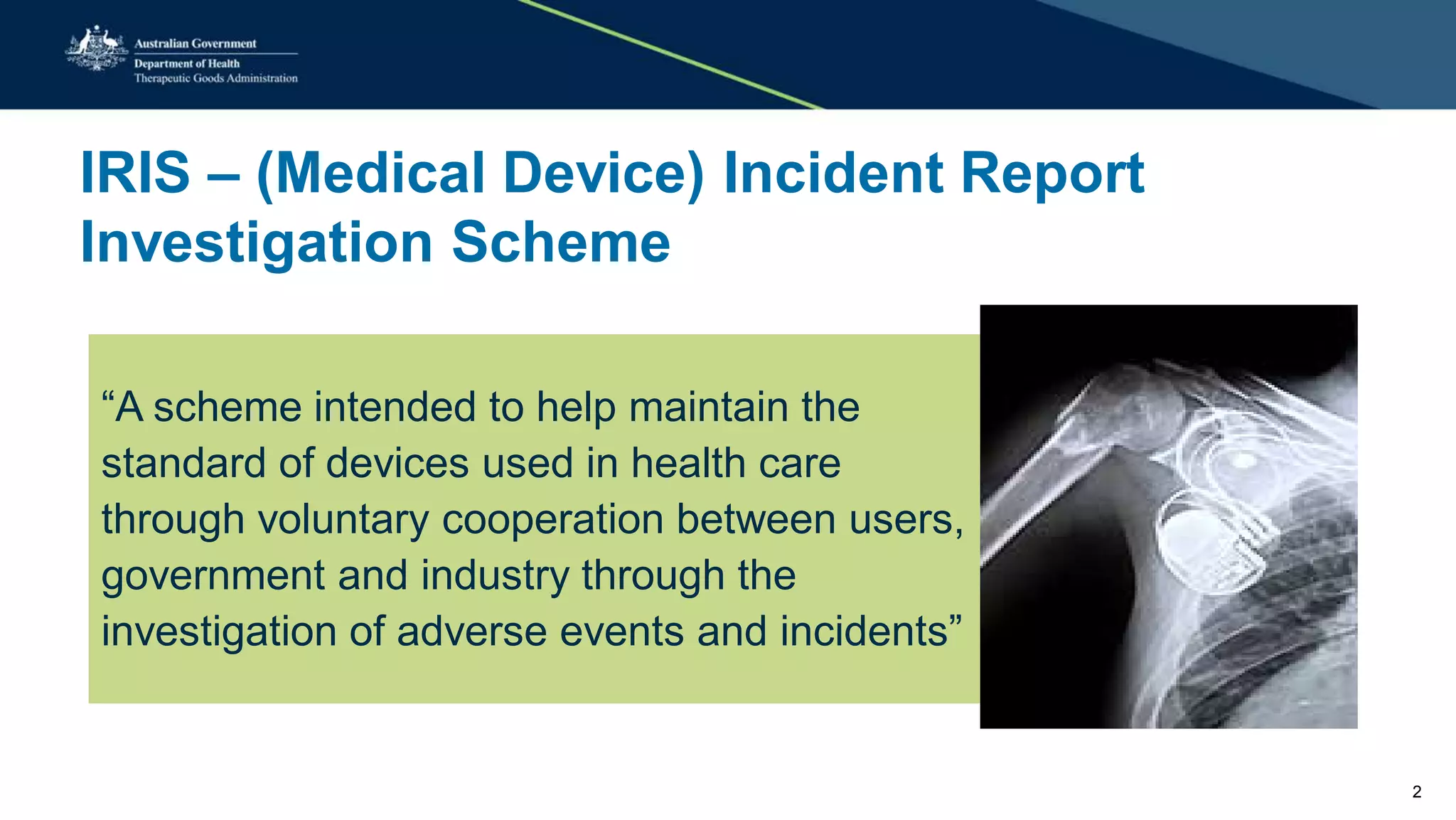
IRIS – (Medical Device) Incident Report
Investigation Scheme
“A scheme intended to help maintain the
standard of devices used in health care
through voluntary cooperation between users,
government and industry through the
investigation of adverse events and incidents”
2
What is an adverse event/incident?
An event that resulted in, or could have resulted in (had effective
intervention not taken place) serious injury, illness or death to patient,
healthcare worker or other person.
A medical device adverse event is an event associated (caused or partially
attributable) with the use (or misuse) of a medical device.
Faults that may affect the quality, timeliness and cost-effectiveness such
as, problems with getting the device to operate, repeated repairs, device
design and difficulty of use.
3
Typical causes of incidents
Causes are often multifactorial and include:
• Mechanical or material failure
• Design issues
• Labelling, packaging or manufacturing errors
• Software deficiencies
• Device interactions
• User/systemic errors
4
What is a serious injury?
Serious injury (also known as serious deterioration in state of health) is:
• A life threatening illness or injury
• A permanent impairment of a body function (The term “permanent” means irreversible
impairment or damage to a body structure of function. The term excludes minor impairment
or damage).
• Permanent damage to a body structure
• A condition necessitating medical or surgical intervention to prevent permanent impairment of
a body function or permanent damage to a body structure
(In this context, medical intervention is not in itself a serious injury. It is the reason that
motivated the medical intervention that should be used to assess whether an event should be
reported)
5
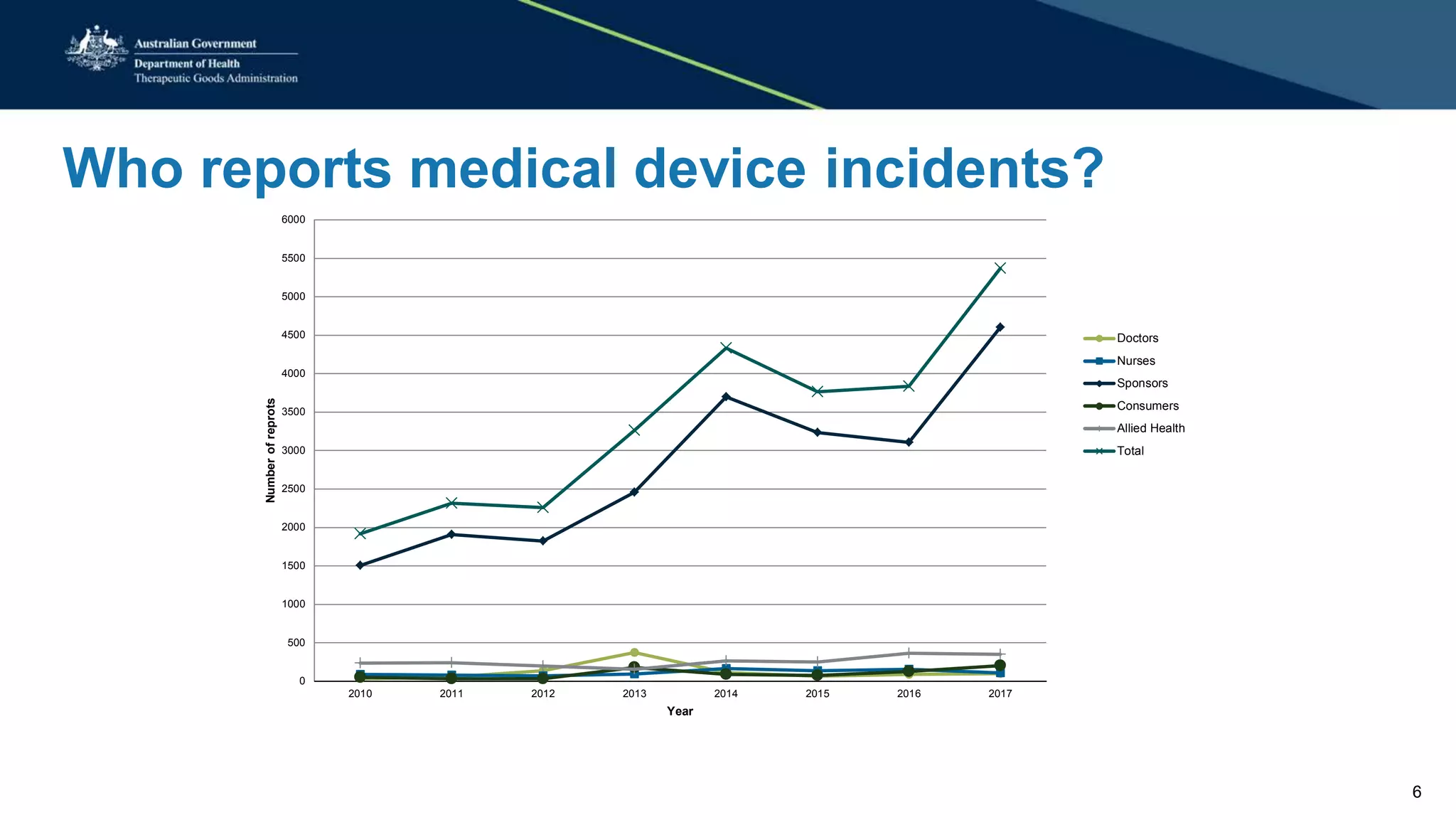
Who reports medical device incidents?
0
500
1000
1500
2000
2500
3000
3500
4000
4500
5000
5500
6000
2010 2011 2012 2013 2014 2015 2016 2017
Numberofreprots
Year
Doctors
Nurses
Sponsors
Consumers
Allied Health
Total
6
Sponsor – mandatory obligations
• Sponsors must report the details of events associated with their device(s) that have
resulted, or could have resulted, in serious injury or death
- These are conditions of inclusion set out in the Therapeutic Goods (Medical Devices) Regulations
(2002)
• Within two days of becoming aware of an issue of serious public health threat or concern
that will require prompt action to reduce the hazard
• Within ten days of becoming aware of a death or serious injury
• Within thirty days of becoming aware of an event that might have led to serious injury or
death
7
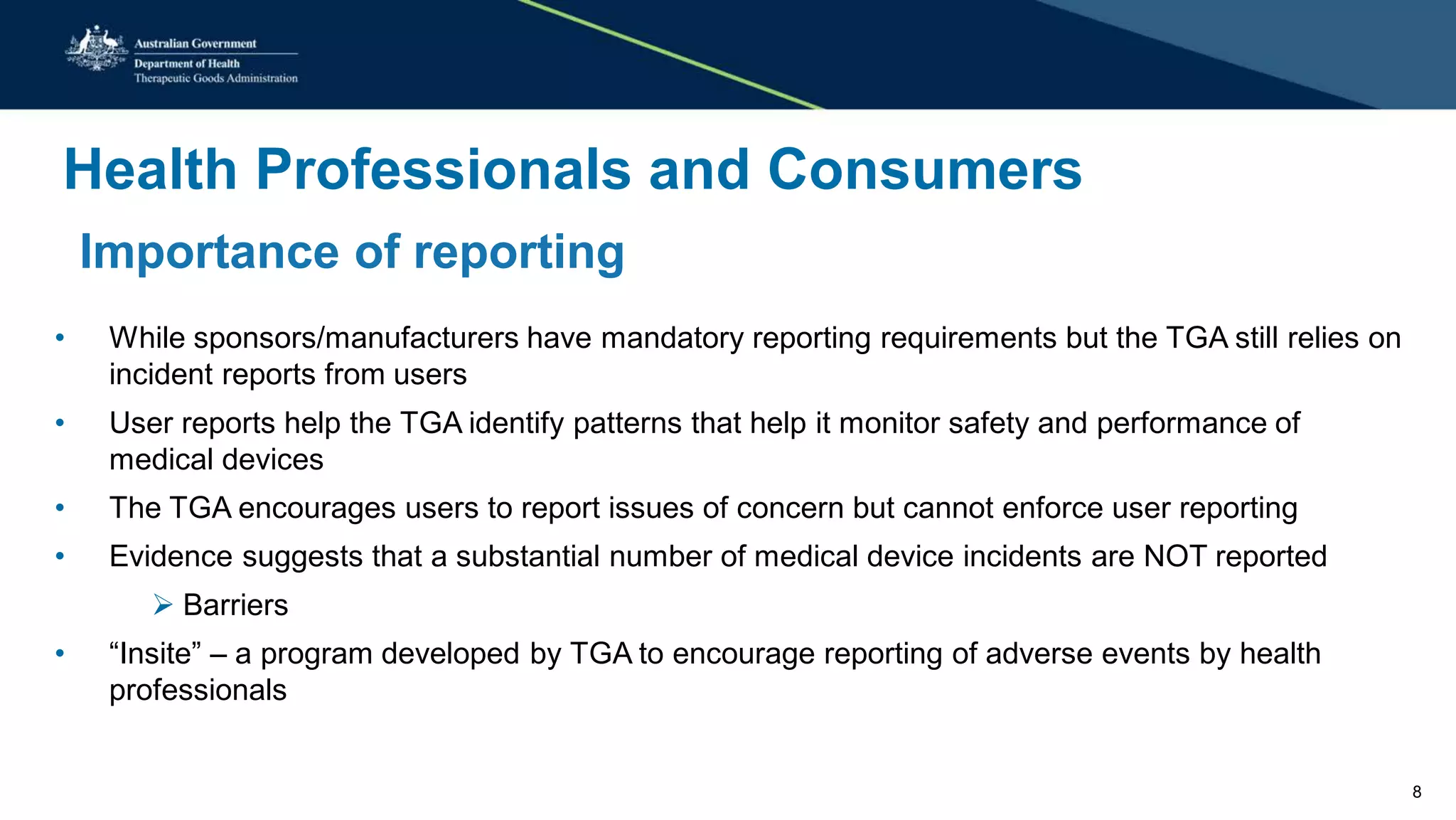
Health Professionals and Consumers
Importance of reporting
• While sponsors/manufacturers have mandatory reporting requirements but the TGA still relies on
incident reports from users
• User reports help the TGA identify patterns that help it monitor safety and performance of
medical devices
• The TGA encourages users to report issues of concern but cannot enforce user reporting
• Evidence suggests that a substantial number of medical device incidents are NOT reported
 Barriers
• “Insite” – a program developed by TGA to encourage reporting of adverse events by health
professionals
8
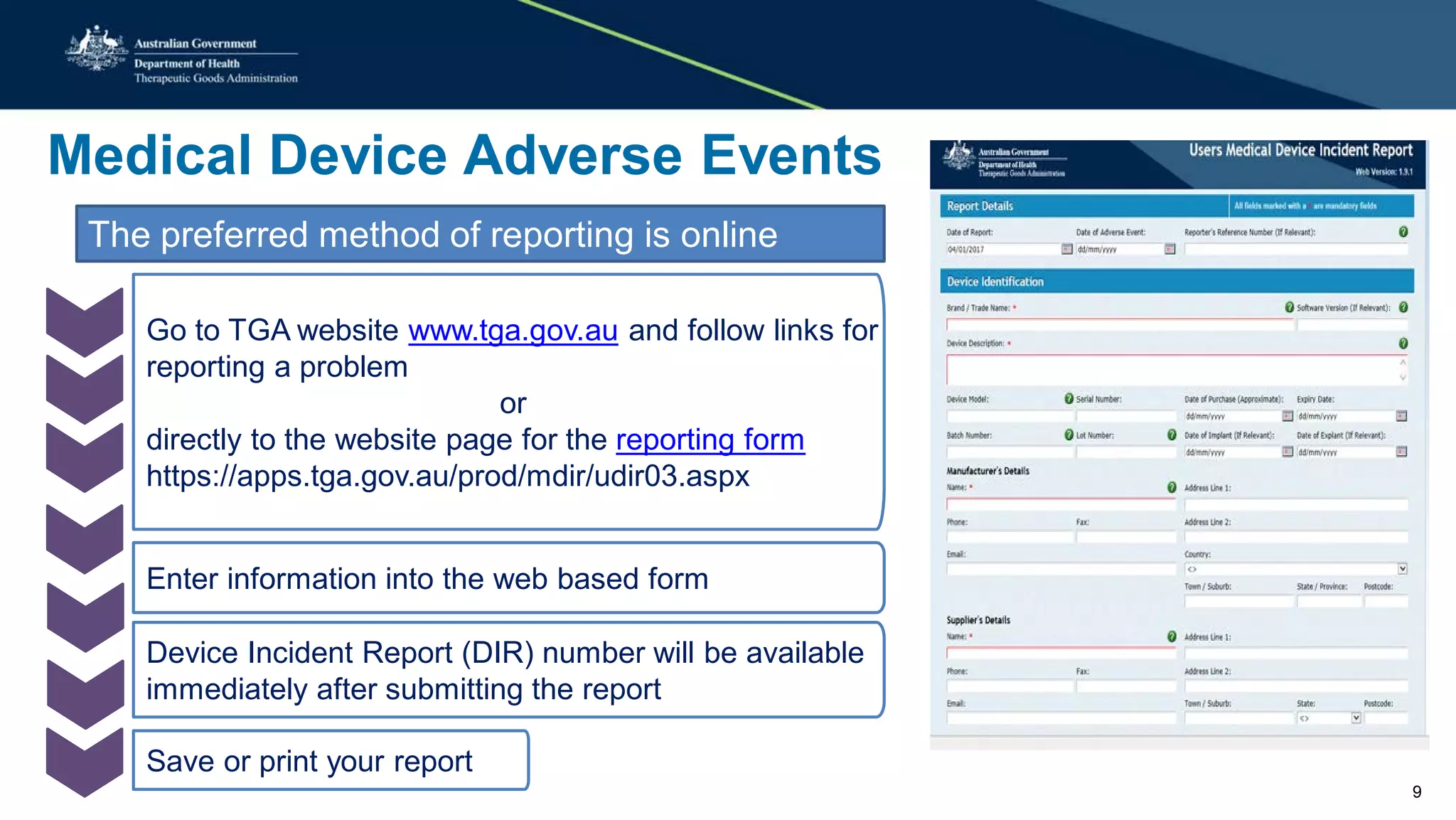
Medical Device Adverse Events
The preferred method of reporting is online
Go to TGA website www.tga.gov.au and follow links for
reporting a problem
or
directly to the website page for the reporting form
https://apps.tga.gov.au/prod/mdir/udir03.aspx
Enter information into the web based form
Device Incident Report (DIR) number will be available
immediately after submitting the report
Save or print your report
9
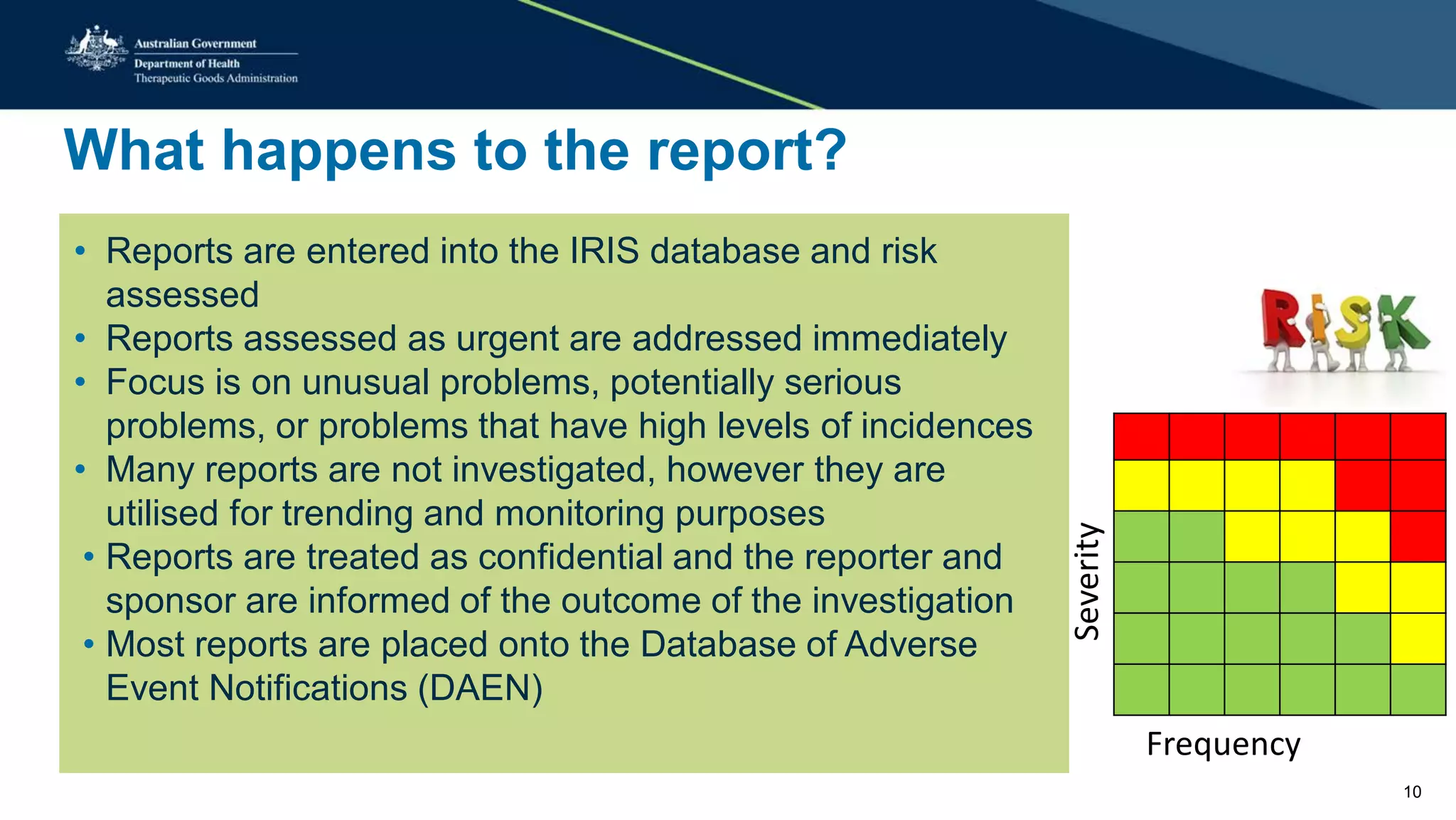
What happens to the report?
• Reports are entered into the IRIS database and risk
assessed
• Reports assessed as urgent are addressed immediately
• Focus is on unusual problems, potentially serious
problems, or problems that have high levels of incidences
• Many reports are not investigated, however they are
utilised for trending and monitoring purposes
• Reports are treated as confidential and the reporter and
sponsor are informed of the outcome of the investigation
• Most reports are placed onto the Database of Adverse
Event Notifications (DAEN)
Frequency
Severity
10
What happens to the report?
If the report is investigated:
• The TGA investigator contacts the sponsor (company) and the reporter, and works
with them to resolve any issues. Samples may be requested and tested by the TGA.
• The sponsor is usually asked a standard set of questions:
– Is the device on the Register and what is its number?
– How many of these devices have been supplied in Australia and around the world?
Batch related numbers also requested.
– Has this event occurred before and how many times?
– What is the manufacturer’s analysis of this event and their investigation into the
returned device (if this occurred)?
– Does the manufacturer intend to take any action and what will this be?
11
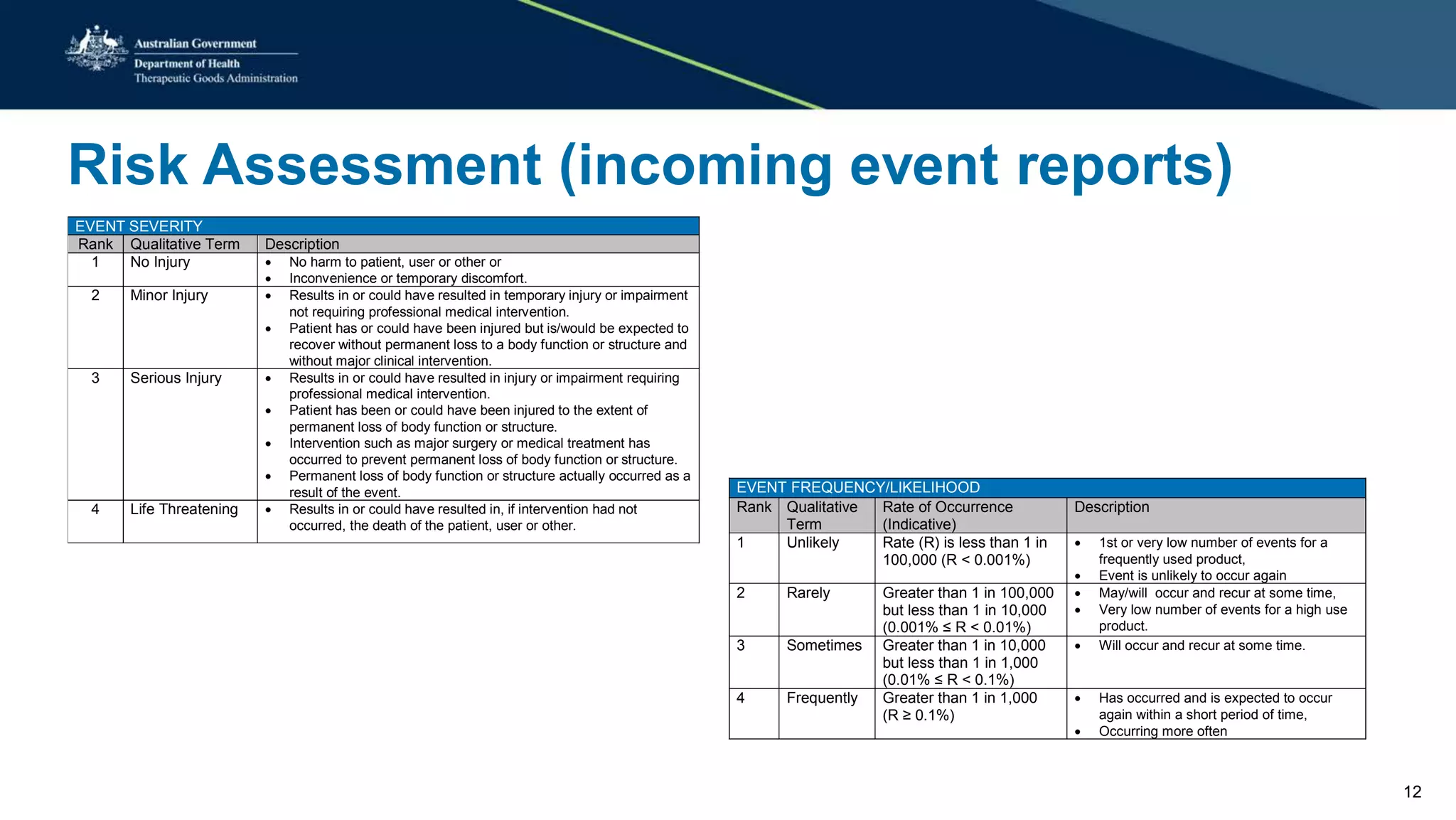
Risk Assessment (incoming event reports)
EVENT SEVERITY
Rank Qualitative Term Description
1 No Injury • No harm to patient, user or other or
• Inconvenience or temporary discomfort.
2 Minor Injury • Results in or could have resulted in temporary injury or impairment
not requiring professional medical intervention.
• Patient has or could have been injured but is/would be expected to
recover without permanent loss to a body function or structure and
without major clinical intervention.
3 Serious Injury • Results in or could have resulted in injury or impairment requiring
professional medical intervention.
• Patient has been or could have been injured to the extent of
permanent loss of body function or structure.
• Intervention such as major surgery or medical treatment has
occurred to prevent permanent loss of body function or structure.
• Permanent loss of body function or structure actually occurred as a
result of the event.
4 Life Threatening • Results in or could have resulted in, if intervention had not
occurred, the death of the patient, user or other.
EVENT FREQUENCY/LIKELIHOOD
Rank Qualitative
Term
Rate of Occurrence
(Indicative)
Description
1 Unlikely Rate (R) is less than 1 in
100,000 (R < 0.001%)
• 1st or very low number of events for a
frequently used product,
• Event is unlikely to occur again
2 Rarely Greater than 1 in 100,000
but less than 1 in 10,000
(0.001% ≤ R < 0.01%)
• May/will occur and recur at some time,
• Very low number of events for a high use
product.
3 Sometimes Greater than 1 in 10,000
but less than 1 in 1,000
(0.01% ≤ R < 0.1%)
• Will occur and recur at some time.
4 Frequently Greater than 1 in 1,000
(R ≥ 0.1%)
• Has occurred and is expected to occur
again within a short period of time,
• Occurring more often
12
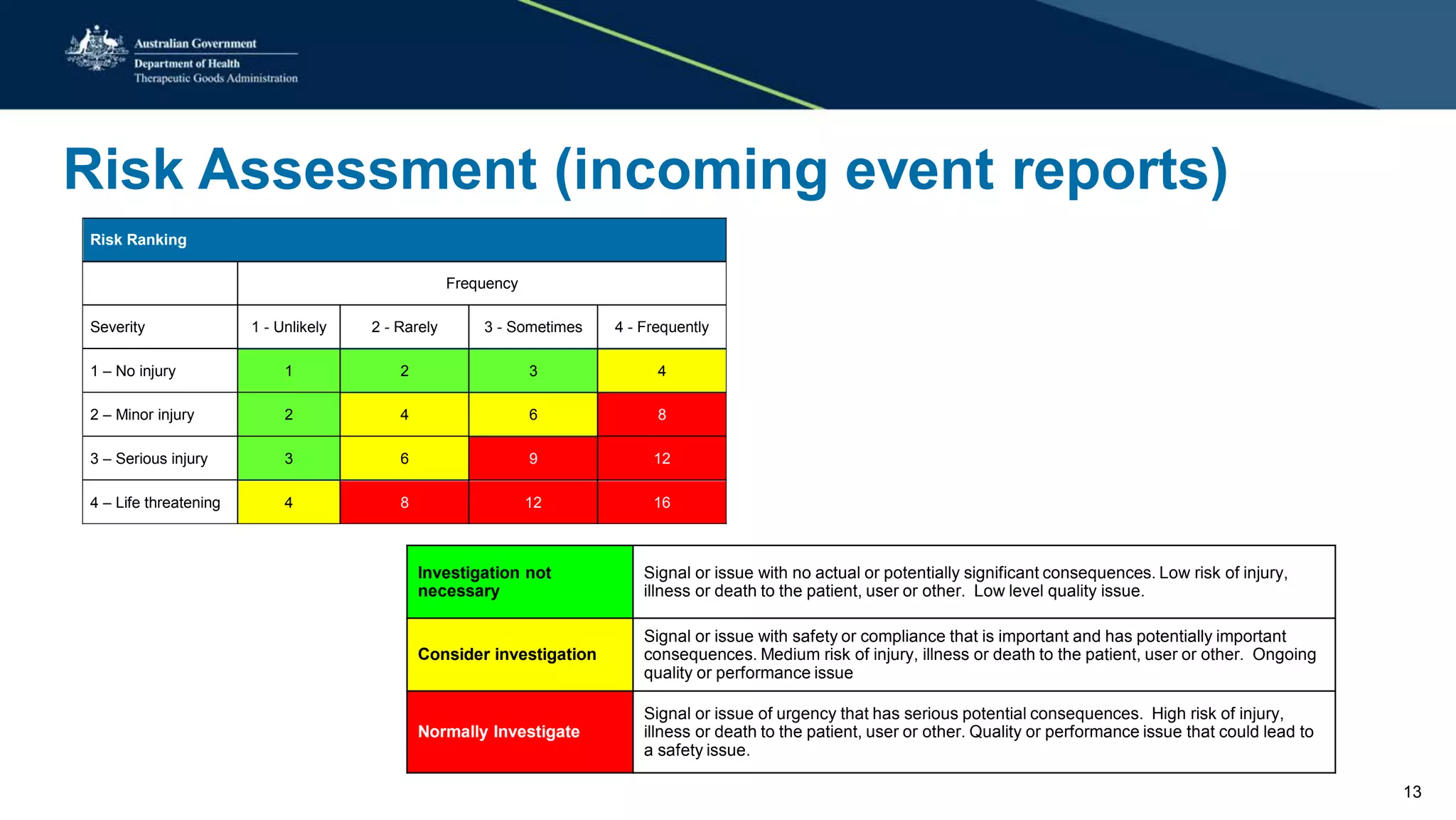
Risk Assessment (incoming event reports)
Risk Ranking
Frequency
Severity 1 - Unlikely 2 - Rarely 3 - Sometimes 4 - Frequently
1 – No injury 1 2 3 4
2 – Minor injury 2 4 6 8
3 – Serious injury 3 6 9 12
4 – Life threatening 4 8 12 16
Investigation not
necessary
Signal or issue with no actual or potentially significant consequences. Low risk of injury,
illness or death to the patient, user or other. Low level quality issue.
Consider investigation
Signal or issue with safety or compliance that is important and has potentially important
consequences. Medium risk of injury, illness or death to the patient, user or other. Ongoing
quality or performance issue
Normally Investigate
Signal or issue of urgency that has serious potential consequences. High risk of injury,
illness or death to the patient, user or other. Quality or performance issue that could lead to
a safety issue.
13
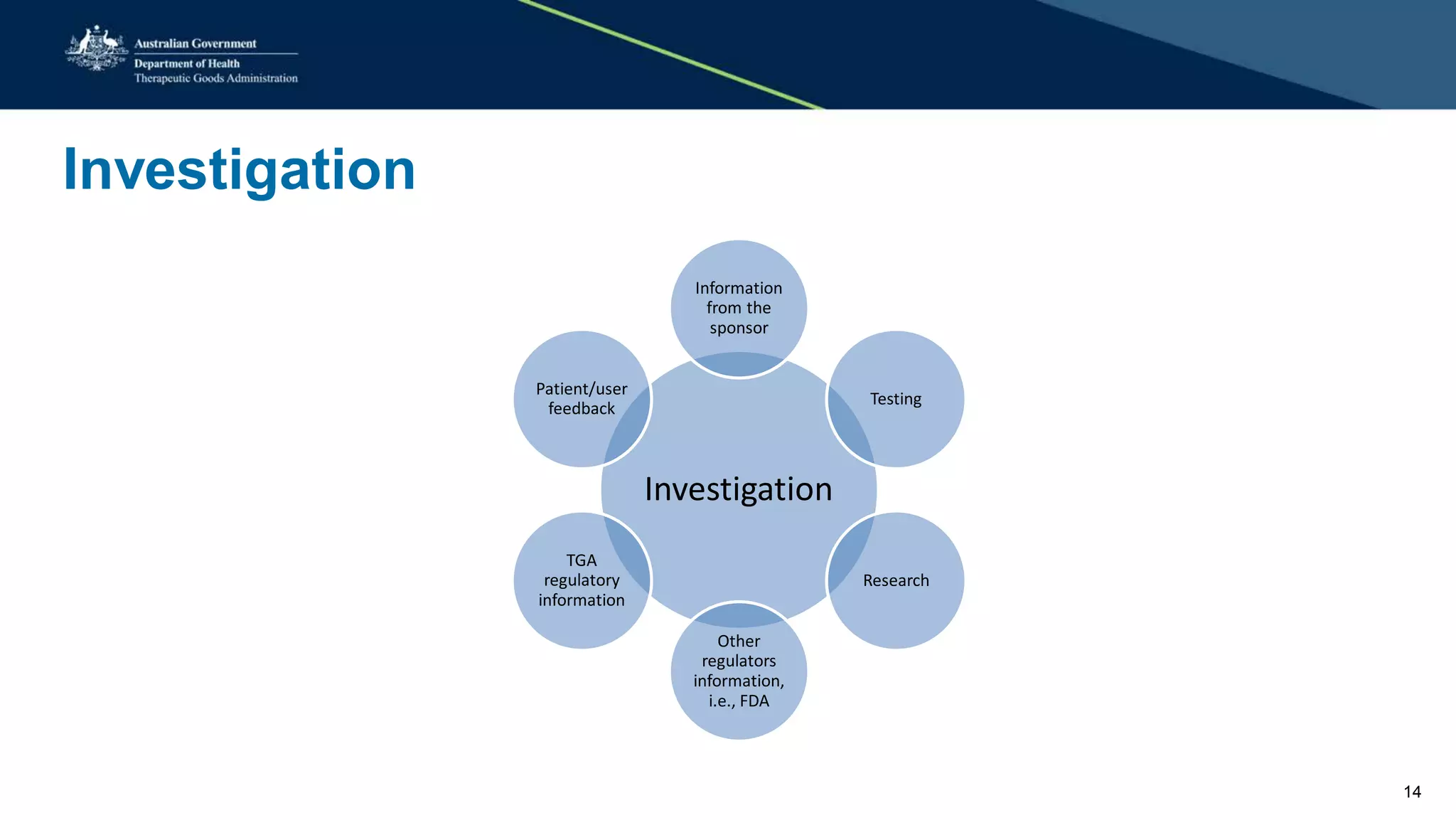
Investigation
Investigation
Information
from the
sponsor
Testing
Research
Other
regulators
information,
i.e., FDA
TGA
regulatory
information
Patient/user
feedback
14
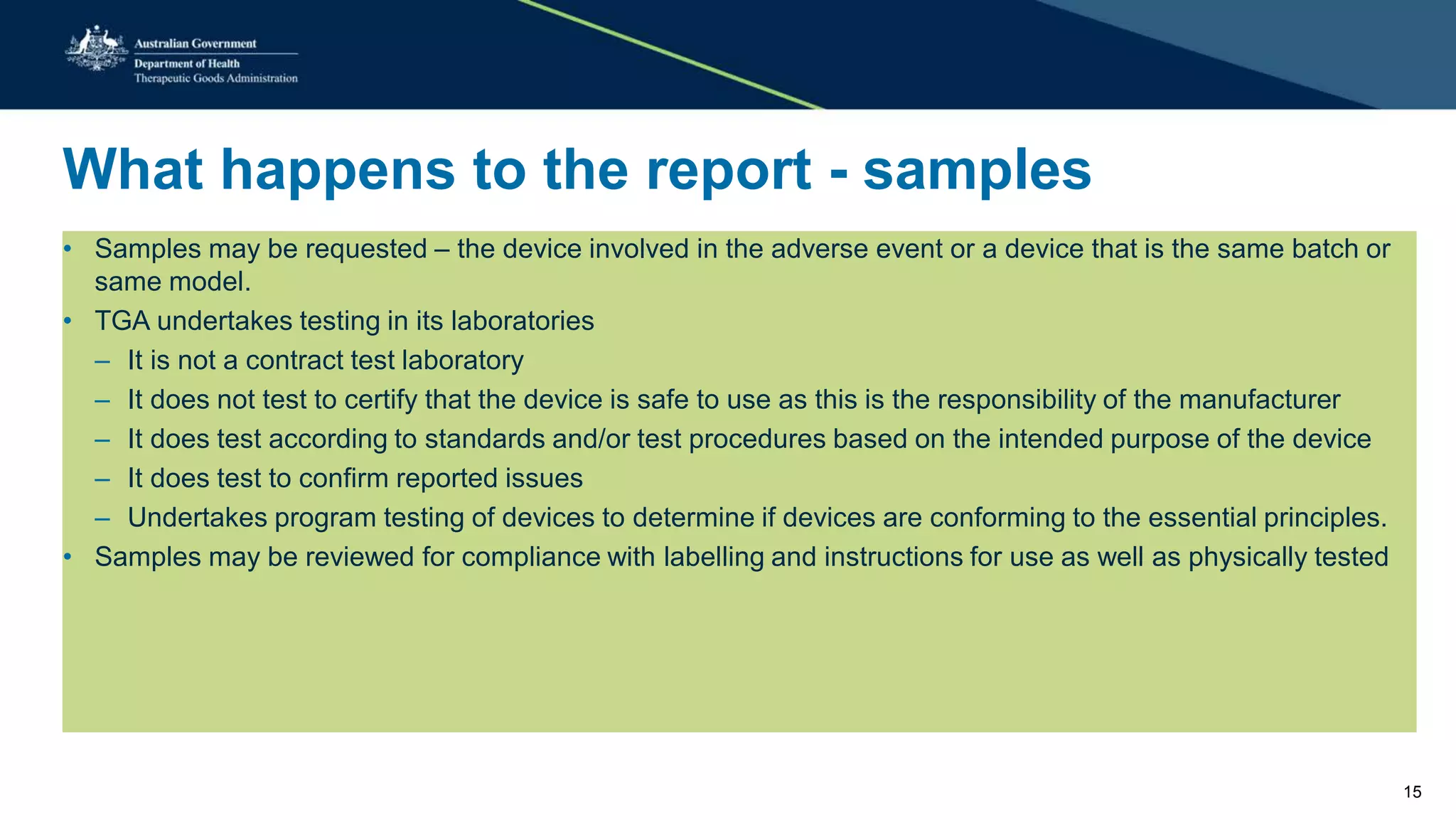
What happens to the report - samples
• Samples may be requested – the device involved in the adverse event or a device that is the same batch or
same model.
• TGA undertakes testing in its laboratories
– It is not a contract test laboratory
– It does not test to certify that the device is safe to use as this is the responsibility of the manufacturer
– It does test according to standards and/or test procedures based on the intended purpose of the device
– It does test to confirm reported issues
– Undertakes program testing of devices to determine if devices are conforming to the essential principles.
• Samples may be reviewed for compliance with labelling and instructions for use as well as physically tested
15
Potential outcomes of investigation
• Safety alert • Imposing limitations on the device’s use
• Hazard alert • Investigating manufacturing sites
• Recall • Suspending or cancelling the product’s
• Articles in TGA publications (Medical entry on the Australian Register of
Devices Safety Update) Therapeutic Goods
• Referral to other TGA sections for other• Product and labelling improvements
(e.g. updating Instructions for Use) regulatory actions
• Increasing post-market surveillance
16
Legislative Authority
Section41GA - Suspension of kinds of medical devices from the Register
• Immediately if there is a potential risk of death, serious illness or serious injury
• There are grounds for cancelling the entry.
Section41GN Cancellation of entries of medical devices from the Register after notice of
proposed cancellation
• Refusal or failure to comply with a condition (S41FN, S41FO or S41FP) of inclusion.
• Non compliance with a S41JA request for information
• The sponsor contravenes subsection S41MP(1) or S41MPA(1) by not informing the TGA
within the legislated time frame of reportable adverse events
• The safety or performance of the device is unacceptable
17
Legislative Time Frames and Procedural Fairness
• Requesting information and samples: The legislation sets out time frames for requesting information
• Suspension/Cancellation: The TG Act states that the TGA must – in most circumstances - give the sponsor
a reasonable opportunity to make submissions, and to consider those submission before the cancellation
takes effect.
• Conditions on inclusion in the ARTG (supply): The TGA must notify the sponsor in writing
• Decisions to cancel/suspend/recall or even ask questions are complex technical-legal written arguments
connecting facts with a safety concern, product underperformance or a lack of regulatory compliance.
• All decisions are appealable. Anyone effected by the decision can appeal.
Workshop with the Commission 18
Strengthening of post market monitoring: recommendations
accepted
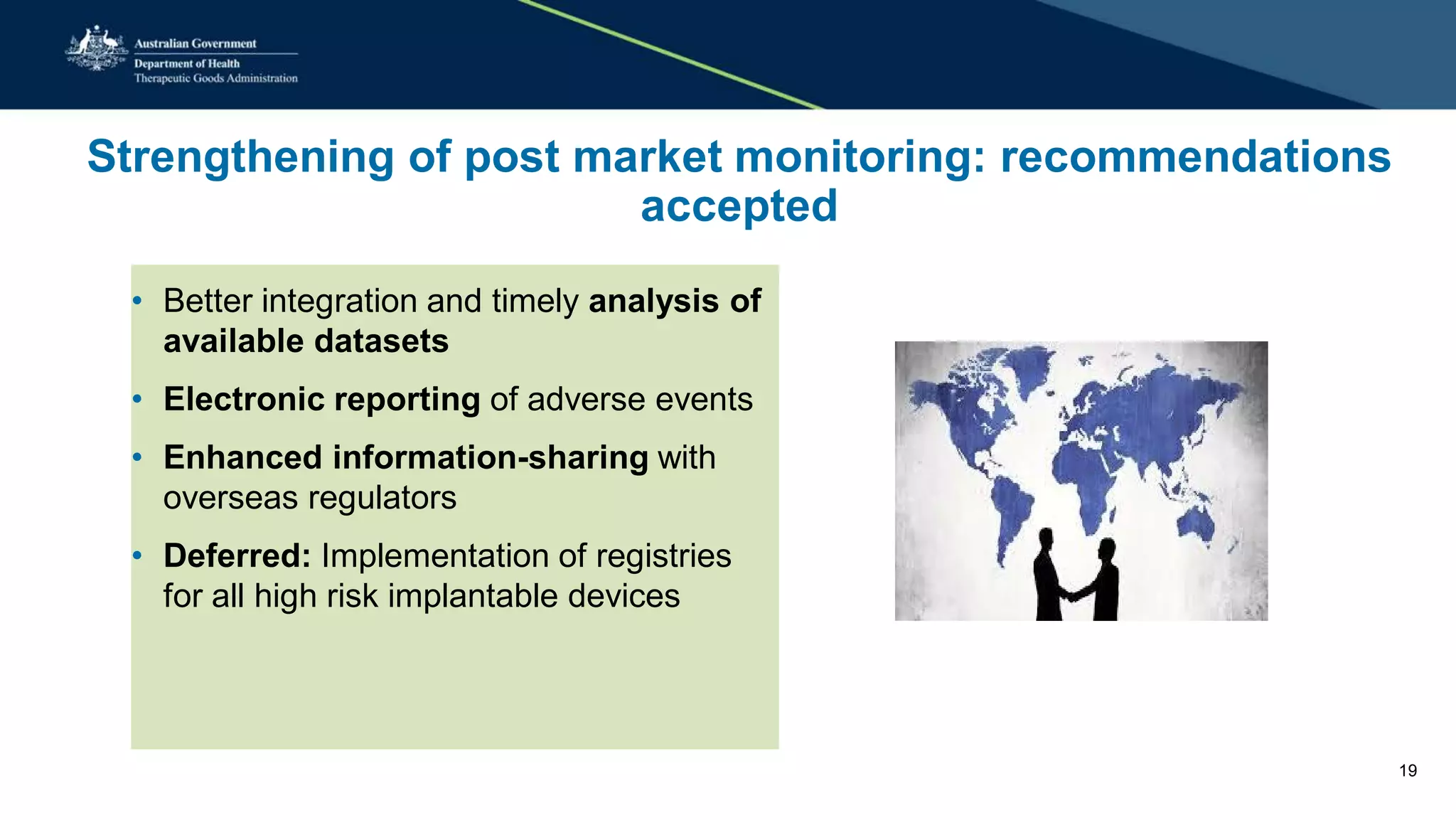
• Better integration and timely analysis of
available datasets
• Electronic reporting of adverse events
• Enhanced information-sharing with
overseas regulators
• Deferred: Implementation of registries
for all high risk implantable devices
19
Further Information
• Therapeutic Goods Act 1989
• Therapeutic Goods (Medical Devices) Regulations 2002
• Therapeutic Goods Regulations 1990
www.tga.gov.au/legislation-legislative-instruments
• Australian regulatory guidelines for medical devices (ARGMD) – Under Review
www.tga.gov.au/publication/australian-regulatory-guidelines-medical-devices-argmd
• Database of Adverse Event Notifications (DAEN)
http://apps.tga.gov.au/prod/DEVICES/daen-entry.aspx
• Medical device reporting form https://apps.tga.gov.au/prod/mdir/udir03.aspx
• Medical device adverse event reporting information www.tga.gov.au/medical-device-
incident-reporting-investigation-scheme-iris
20
Medical device-consumer-workshop

Medical device-consumer-workshop

  • 1.
    Device Consumer InformationWorkshop Pam Carter Director, Device Vigilance and Monitoring Section TGA 1 March 2018
  • 2.
    Presentation Overview • Whatis an adverse event • Who reports adverse events • Obligations to report adverse events • How to report an adverse event with a medical device • What happens to a report • Medicine and Medical Device Review outcomes 1
  • 3.
    IRIS – (MedicalDevice) Incident Report Investigation Scheme “A scheme intended to help maintain the standard of devices used in health care through voluntary cooperation between users, government and industry through the investigation of adverse events and incidents” 2
  • 4.
    What is anadverse event/incident? An event that resulted in, or could have resulted in (had effective intervention not taken place) serious injury, illness or death to patient, healthcare worker or other person. A medical device adverse event is an event associated (caused or partially attributable) with the use (or misuse) of a medical device. Faults that may affect the quality, timeliness and cost-effectiveness such as, problems with getting the device to operate, repeated repairs, device design and difficulty of use. 3
  • 5.
    Typical causes ofincidents Causes are often multifactorial and include: • Mechanical or material failure • Design issues • Labelling, packaging or manufacturing errors • Software deficiencies • Device interactions • User/systemic errors 4
  • 6.
    What is aserious injury? Serious injury (also known as serious deterioration in state of health) is: • A life threatening illness or injury • A permanent impairment of a body function (The term “permanent” means irreversible impairment or damage to a body structure of function. The term excludes minor impairment or damage). • Permanent damage to a body structure • A condition necessitating medical or surgical intervention to prevent permanent impairment of a body function or permanent damage to a body structure (In this context, medical intervention is not in itself a serious injury. It is the reason that motivated the medical intervention that should be used to assess whether an event should be reported) 5
  • 7.
    Who reports medicaldevice incidents? 0 500 1000 1500 2000 2500 3000 3500 4000 4500 5000 5500 6000 2010 2011 2012 2013 2014 2015 2016 2017 Numberofreprots Year Doctors Nurses Sponsors Consumers Allied Health Total 6
  • 8.
    Sponsor – mandatoryobligations • Sponsors must report the details of events associated with their device(s) that have resulted, or could have resulted, in serious injury or death - These are conditions of inclusion set out in the Therapeutic Goods (Medical Devices) Regulations (2002) • Within two days of becoming aware of an issue of serious public health threat or concern that will require prompt action to reduce the hazard • Within ten days of becoming aware of a death or serious injury • Within thirty days of becoming aware of an event that might have led to serious injury or death 7
  • 9.
    Health Professionals andConsumers Importance of reporting • While sponsors/manufacturers have mandatory reporting requirements but the TGA still relies on incident reports from users • User reports help the TGA identify patterns that help it monitor safety and performance of medical devices • The TGA encourages users to report issues of concern but cannot enforce user reporting • Evidence suggests that a substantial number of medical device incidents are NOT reported  Barriers • “Insite” – a program developed by TGA to encourage reporting of adverse events by health professionals 8
  • 10.
    Medical Device AdverseEvents The preferred method of reporting is online Go to TGA website www.tga.gov.au and follow links for reporting a problem or directly to the website page for the reporting form https://apps.tga.gov.au/prod/mdir/udir03.aspx Enter information into the web based form Device Incident Report (DIR) number will be available immediately after submitting the report Save or print your report 9
  • 11.
    What happens tothe report? • Reports are entered into the IRIS database and risk assessed • Reports assessed as urgent are addressed immediately • Focus is on unusual problems, potentially serious problems, or problems that have high levels of incidences • Many reports are not investigated, however they are utilised for trending and monitoring purposes • Reports are treated as confidential and the reporter and sponsor are informed of the outcome of the investigation • Most reports are placed onto the Database of Adverse Event Notifications (DAEN) Frequency Severity 10
  • 12.
    What happens tothe report? If the report is investigated: • The TGA investigator contacts the sponsor (company) and the reporter, and works with them to resolve any issues. Samples may be requested and tested by the TGA. • The sponsor is usually asked a standard set of questions: – Is the device on the Register and what is its number? – How many of these devices have been supplied in Australia and around the world? Batch related numbers also requested. – Has this event occurred before and how many times? – What is the manufacturer’s analysis of this event and their investigation into the returned device (if this occurred)? – Does the manufacturer intend to take any action and what will this be? 11
  • 13.
    Risk Assessment (incomingevent reports) EVENT SEVERITY Rank Qualitative Term Description 1 No Injury • No harm to patient, user or other or • Inconvenience or temporary discomfort. 2 Minor Injury • Results in or could have resulted in temporary injury or impairment not requiring professional medical intervention. • Patient has or could have been injured but is/would be expected to recover without permanent loss to a body function or structure and without major clinical intervention. 3 Serious Injury • Results in or could have resulted in injury or impairment requiring professional medical intervention. • Patient has been or could have been injured to the extent of permanent loss of body function or structure. • Intervention such as major surgery or medical treatment has occurred to prevent permanent loss of body function or structure. • Permanent loss of body function or structure actually occurred as a result of the event. 4 Life Threatening • Results in or could have resulted in, if intervention had not occurred, the death of the patient, user or other. EVENT FREQUENCY/LIKELIHOOD Rank Qualitative Term Rate of Occurrence (Indicative) Description 1 Unlikely Rate (R) is less than 1 in 100,000 (R < 0.001%) • 1st or very low number of events for a frequently used product, • Event is unlikely to occur again 2 Rarely Greater than 1 in 100,000 but less than 1 in 10,000 (0.001% ≤ R < 0.01%) • May/will occur and recur at some time, • Very low number of events for a high use product. 3 Sometimes Greater than 1 in 10,000 but less than 1 in 1,000 (0.01% ≤ R < 0.1%) • Will occur and recur at some time. 4 Frequently Greater than 1 in 1,000 (R ≥ 0.1%) • Has occurred and is expected to occur again within a short period of time, • Occurring more often 12
  • 14.
    Risk Assessment (incomingevent reports) Risk Ranking Frequency Severity 1 - Unlikely 2 - Rarely 3 - Sometimes 4 - Frequently 1 – No injury 1 2 3 4 2 – Minor injury 2 4 6 8 3 – Serious injury 3 6 9 12 4 – Life threatening 4 8 12 16 Investigation not necessary Signal or issue with no actual or potentially significant consequences. Low risk of injury, illness or death to the patient, user or other. Low level quality issue. Consider investigation Signal or issue with safety or compliance that is important and has potentially important consequences. Medium risk of injury, illness or death to the patient, user or other. Ongoing quality or performance issue Normally Investigate Signal or issue of urgency that has serious potential consequences. High risk of injury, illness or death to the patient, user or other. Quality or performance issue that could lead to a safety issue. 13
  • 15.
  • 16.
    What happens tothe report - samples • Samples may be requested – the device involved in the adverse event or a device that is the same batch or same model. • TGA undertakes testing in its laboratories – It is not a contract test laboratory – It does not test to certify that the device is safe to use as this is the responsibility of the manufacturer – It does test according to standards and/or test procedures based on the intended purpose of the device – It does test to confirm reported issues – Undertakes program testing of devices to determine if devices are conforming to the essential principles. • Samples may be reviewed for compliance with labelling and instructions for use as well as physically tested 15
  • 17.
    Potential outcomes ofinvestigation • Safety alert • Imposing limitations on the device’s use • Hazard alert • Investigating manufacturing sites • Recall • Suspending or cancelling the product’s • Articles in TGA publications (Medical entry on the Australian Register of Devices Safety Update) Therapeutic Goods • Referral to other TGA sections for other• Product and labelling improvements (e.g. updating Instructions for Use) regulatory actions • Increasing post-market surveillance 16
  • 18.
    Legislative Authority Section41GA -Suspension of kinds of medical devices from the Register • Immediately if there is a potential risk of death, serious illness or serious injury • There are grounds for cancelling the entry. Section41GN Cancellation of entries of medical devices from the Register after notice of proposed cancellation • Refusal or failure to comply with a condition (S41FN, S41FO or S41FP) of inclusion. • Non compliance with a S41JA request for information • The sponsor contravenes subsection S41MP(1) or S41MPA(1) by not informing the TGA within the legislated time frame of reportable adverse events • The safety or performance of the device is unacceptable 17
  • 19.
    Legislative Time Framesand Procedural Fairness • Requesting information and samples: The legislation sets out time frames for requesting information • Suspension/Cancellation: The TG Act states that the TGA must – in most circumstances - give the sponsor a reasonable opportunity to make submissions, and to consider those submission before the cancellation takes effect. • Conditions on inclusion in the ARTG (supply): The TGA must notify the sponsor in writing • Decisions to cancel/suspend/recall or even ask questions are complex technical-legal written arguments connecting facts with a safety concern, product underperformance or a lack of regulatory compliance. • All decisions are appealable. Anyone effected by the decision can appeal. Workshop with the Commission 18
  • 20.
    Strengthening of postmarket monitoring: recommendations accepted • Better integration and timely analysis of available datasets • Electronic reporting of adverse events • Enhanced information-sharing with overseas regulators • Deferred: Implementation of registries for all high risk implantable devices 19
  • 21.
    Further Information • TherapeuticGoods Act 1989 • Therapeutic Goods (Medical Devices) Regulations 2002 • Therapeutic Goods Regulations 1990 www.tga.gov.au/legislation-legislative-instruments • Australian regulatory guidelines for medical devices (ARGMD) – Under Review www.tga.gov.au/publication/australian-regulatory-guidelines-medical-devices-argmd • Database of Adverse Event Notifications (DAEN) http://apps.tga.gov.au/prod/DEVICES/daen-entry.aspx • Medical device reporting form https://apps.tga.gov.au/prod/mdir/udir03.aspx • Medical device adverse event reporting information www.tga.gov.au/medical-device- incident-reporting-investigation-scheme-iris 20