5 STEPS TO MEDIATION 
Thomas G. Giglione 
Partner | Business Development Leader 
ATS LAW FIRM 
thomas@atslegal.vn 
Tel: 84-(0)1265539748
CONTENTS 
Step 1: Mediator’s Opening Statement 
Step 2: Parties' Opening Statements 
Step 3: Narrowing Issues and Setting Agenda 
Step 4: Exploring Options 
Step 5: Final Written Agreement
STEP 1: MEDIATOR’ OPENING STATEMENT 
GOALS 
 Set the stage for productive, 
constructive dialogue 
 Educate the parties about the 
negotiation/ mediation ' process
STEP 1: MEDIATOR’ OPENING STATEMENT 
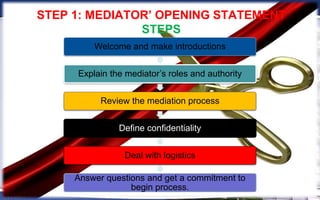
STEPS 
Welcome and make introductions 
Explain the mediator’s roles and authority 
Review the mediation process 
Define confidentiality 
Deal with logistics 
Answer questions and get a commitment to 
begin process.
STEP 1: MEDIATOR’ OPENING STATEMENT 
TASKS 
Establish neutrality and 
impartiality 
Establish ground rules 
or agreement on 
standards of behavior 
Explain possibility of 
caucus
STEP 2: PARTIES’ OPENING STATEMENT 
GOALS 
 Identify the issues to be addressed 
 Understand situation and context 
 Help the parties feel “heard” 
 Help parties begin to understand and 
respect each other’ s perceptions and 
needs and to reduce misunderstanding
STEP 2: PARTIES’ OPENING STATEMENT 
STEPS 
 Select a party to begin 
 Ask the party open-ended questions 
 Listen, summarize key points 
 Summarize issues 
 Ask if party wants to add anything else 
 Repeat the process with the other party
STEP 2: PARTIES’ OPENING STATEMENT 
TASKS 
Directs communication from the party to the mediator. 
Listens attentively, modeling respectful behavior 
Names and acknowledges feelings expressed by the 
parties 
Paraphrases issues 
Summarize long, complicated description of the situation 
Verbally “underlined” conciliatory comments made by 
parties 
Enforce ground rules agreed to by parties.
STEP 3: NARROWING ISSUES AND SETTING AGENDA 
GOALS 
 Identify parties’ interests. 
 Help the parties express their feelings productively and have these feelings 
acknowledge 
 Reduce parties’ adversarial mind-set and begin to shift the parties to seeing 
themselves as joint problem solvers 
 Shift parties from focusing on the past to being present- and future- oriented 
 Clarify the parameters or boundaries of topics for discussion 
 Create an agenda for problem solving 
 Get buy-in of the parties to the tasks ahead. 
 Surface other issues that have not yet been identified
STEP 3: NARROWING ISSUES AND SETTING AGENDA 
STEPS 
Ask 
probing 
and 
clarifying 
questions 
Reframe 
and 
confirm 
interests 
other 
parties. 
SUCCESS
STEP 3: NARROWING ISSUES AND SETTING AGENDA 
TASKS 
1 
• Frame the issues as a joint list, in neutral, positive terms 
2 • Ask parties if there is anything else that they want to address at the meeting. 
3 
• Give a final summary of the collective issues and interests expressed
STEP 4: EXPLORING OPTIONS 
Develop a full understanding of the issues 
and concerns 
Be a foundation for problem solving 
Focus the parties on their needs and interests
STEP 4: EXPLORING OPTIONS 
STEPS 
Put the responsibility on the parties for developing solutions 
Keep the parties focused on trying to meet interests rather 
than pressing for positions 
Keep the parties think creatively 
Focus the parties on building a desired future 
Keep the parties from getting “stuck” 
Keep the parties grounded in reality and practicality
STEP 4: EXPLORING OPTIONS 
TASKS 
• Select and frame a single issue or a group of issues to work on 
• Identify any objective standards or constraints that must be applied 
• Review the interests that must be addressed and how each option meets 
those interests and standards 
• Develop a safe creative environment 
• Brainstorm multiple options 
• Fine-tune promising options or initial draft of a proposal 
• Assess their BATNA’s and gains by finding workable options 
• Select and modify options in such way as to optimize benefits
STEP 5: FINAL WRITEN AGREEMENT 
GOALS 
 Work through the practical realities of the agreements and what it 
take to implement them. 
 Provide an opportunity for review and reflection of the agreements 
before final signing. 
 Obtain as much closure as is needed and desired.
STEP 5: FINAL WRITEN AGREEMENT 
TASKS 
 Review agreements on individual issues 
 Combine agreements into a package. 
 Develop implementation plan for agreement(s). 
 Guide parties in refining agreements. 
 Draft final agreement 
 Provide opportunity for outside review of agreement, if needed 
 Finalize written agreement and obtain signatures
Thank you 
Thomas G. Giglione 
Mediation Services 
Partner | Business Development Leader 
ATS LAW FIRM 
Mobile: 84-(0)1265539748 
Email: thomas@atslegal.vn 
Skype: dripmethod

Mediation

  • 1.
    5 STEPS TOMEDIATION Thomas G. Giglione Partner | Business Development Leader ATS LAW FIRM thomas@atslegal.vn Tel: 84-(0)1265539748
  • 2.
    CONTENTS Step 1:Mediator’s Opening Statement Step 2: Parties' Opening Statements Step 3: Narrowing Issues and Setting Agenda Step 4: Exploring Options Step 5: Final Written Agreement
  • 3.
    STEP 1: MEDIATOR’OPENING STATEMENT GOALS  Set the stage for productive, constructive dialogue  Educate the parties about the negotiation/ mediation ' process
  • 4.
    STEP 1: MEDIATOR’OPENING STATEMENT STEPS Welcome and make introductions Explain the mediator’s roles and authority Review the mediation process Define confidentiality Deal with logistics Answer questions and get a commitment to begin process.
  • 5.
    STEP 1: MEDIATOR’OPENING STATEMENT TASKS Establish neutrality and impartiality Establish ground rules or agreement on standards of behavior Explain possibility of caucus
  • 6.
    STEP 2: PARTIES’OPENING STATEMENT GOALS  Identify the issues to be addressed  Understand situation and context  Help the parties feel “heard”  Help parties begin to understand and respect each other’ s perceptions and needs and to reduce misunderstanding
  • 7.
    STEP 2: PARTIES’OPENING STATEMENT STEPS  Select a party to begin  Ask the party open-ended questions  Listen, summarize key points  Summarize issues  Ask if party wants to add anything else  Repeat the process with the other party
  • 8.
    STEP 2: PARTIES’OPENING STATEMENT TASKS Directs communication from the party to the mediator. Listens attentively, modeling respectful behavior Names and acknowledges feelings expressed by the parties Paraphrases issues Summarize long, complicated description of the situation Verbally “underlined” conciliatory comments made by parties Enforce ground rules agreed to by parties.
  • 9.
    STEP 3: NARROWINGISSUES AND SETTING AGENDA GOALS  Identify parties’ interests.  Help the parties express their feelings productively and have these feelings acknowledge  Reduce parties’ adversarial mind-set and begin to shift the parties to seeing themselves as joint problem solvers  Shift parties from focusing on the past to being present- and future- oriented  Clarify the parameters or boundaries of topics for discussion  Create an agenda for problem solving  Get buy-in of the parties to the tasks ahead.  Surface other issues that have not yet been identified
  • 10.
    STEP 3: NARROWINGISSUES AND SETTING AGENDA STEPS Ask probing and clarifying questions Reframe and confirm interests other parties. SUCCESS
  • 11.
    STEP 3: NARROWINGISSUES AND SETTING AGENDA TASKS 1 • Frame the issues as a joint list, in neutral, positive terms 2 • Ask parties if there is anything else that they want to address at the meeting. 3 • Give a final summary of the collective issues and interests expressed
  • 12.
    STEP 4: EXPLORINGOPTIONS Develop a full understanding of the issues and concerns Be a foundation for problem solving Focus the parties on their needs and interests
  • 13.
    STEP 4: EXPLORINGOPTIONS STEPS Put the responsibility on the parties for developing solutions Keep the parties focused on trying to meet interests rather than pressing for positions Keep the parties think creatively Focus the parties on building a desired future Keep the parties from getting “stuck” Keep the parties grounded in reality and practicality
  • 14.
    STEP 4: EXPLORINGOPTIONS TASKS • Select and frame a single issue or a group of issues to work on • Identify any objective standards or constraints that must be applied • Review the interests that must be addressed and how each option meets those interests and standards • Develop a safe creative environment • Brainstorm multiple options • Fine-tune promising options or initial draft of a proposal • Assess their BATNA’s and gains by finding workable options • Select and modify options in such way as to optimize benefits
  • 15.
    STEP 5: FINALWRITEN AGREEMENT GOALS  Work through the practical realities of the agreements and what it take to implement them.  Provide an opportunity for review and reflection of the agreements before final signing.  Obtain as much closure as is needed and desired.
  • 16.
    STEP 5: FINALWRITEN AGREEMENT TASKS  Review agreements on individual issues  Combine agreements into a package.  Develop implementation plan for agreement(s).  Guide parties in refining agreements.  Draft final agreement  Provide opportunity for outside review of agreement, if needed  Finalize written agreement and obtain signatures
  • 25.
    Thank you ThomasG. Giglione Mediation Services Partner | Business Development Leader ATS LAW FIRM Mobile: 84-(0)1265539748 Email: thomas@atslegal.vn Skype: dripmethod