B2
Group 06
April 5, 2016Welcome
Presented
By:-
1. Hasitha
2. G.S.C.Sandeepa
3. Arunaka
4. Hashen
5. Buddhima
6. K. Madhubashini
7. Hansina Heshani
8. H.A.D.S. Kumari
9. Kalpani Darmarathna
10. W.M.A.Wayomi
11. Naduni Gunawardane
B2 – GrouP 6
InclusIon of the PresentatIon
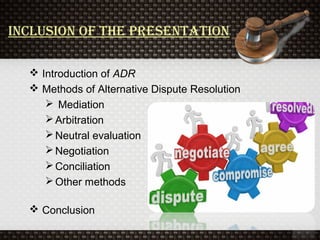
 Introduction of ADR
 Methods of Alternative Dispute Resolution
 Mediation
Arbitration
Neutral evaluation
Negotiation
Conciliation
Other methods
 Conclusion
What Is the alternatIve dIsPute
resolutIon
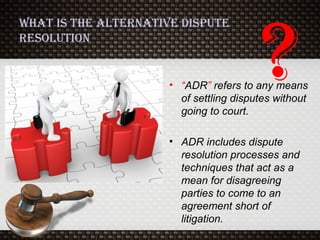
• “ADR” refers to any means
of settling disputes without
going to court.
• ADR includes dispute
resolution processes and
techniques that act as a
mean for disagreeing
parties to come to an
agreement short of
litigation.
?
What are the Methods of alternative
dispute resolution ?
1)Mediation
2)Arbitration
3)Neutral evaluation
4)Negotiation
5)Conciliation
6)Other methods
i. Expert deamination
ii. Appointment of an independent solicitor
iii. Collaborative law
Mediation
 DEFINITION
• Mediation uses a neutral third party (mediator) to help sort
things out who helps both sides come to an agreement.
 BENEFITS
 Rapid settlements
 Mutually satisfactory outcomes
 High rate of compliance
 Comprehensive and customized agreement
 Greater degree of control and predictability of outcome
–
arbitration
 DEFINITON
• Arbitration is a procedure in which a dispute is submitted, by
agreement of the parties, to one or more arbitrators who
make the binding decision on the dispute.
 BENEFITS
 Confidentiality
 Limited discovery
 Expert neutrals
 Cost saving
 Preservation of business relationships
neutral evaluation
 DEFINITON
• Neutral evaluation is a
process wherein parties and
their lawyers are brought
together early in a pre-trial
phase to present summaries
of their cases and receive a
nonbinding assessment by an
experienced, neutral person,
with expertise in the subject
in the substance of the
dispute.
• .
NegotiatioN
 DEFINITON
• Negotiation is a method
by which people settle
differences. It is a
process by which
comprise or agreement is
reached while avoiding
argument and dispute.
CoNCiliatioN
 DEFINITON
• Conciliation is a process through which two or
more parties may explore and reach a negotiated
solution to their conflict with the help of a third
neutral and disinterested party.
 BENEFITS
 Ensure party autonomy
 Conciliation is time and cost efficient
 Ensure the expertise of the decision maker
other methods
I. Expert deamination
II. Appointment of an
independent solicitor
III. Collaborative law
CoNClusioN
“ALTERNATIVE DISPUTE RESOLUTION METHODS- SEVERAL WAYS OF
RESOLVING DISPUTES WITHOUT THE NEED TO GO TO COURT.”
 Mediation
 Arbitration
 Neutral Evaluation
 Negotiation
 Conciliation
 Other Methods
ADR
REFFERENCES
ALTERNATIVE DISPUTE PRACTITIONERS GUIDE
(SCOTT BROWN, CHRISTINE CERVENAK, DAVID FAIRMAN)
NY.COURTS.GOV WEB SITE
ALTERNATIVE DISPUTE RESOLUTION
( CHERYLE MICINSKI, DAVID BATSON )
For Your Attention
THE END

Alternative Dispute of Resolution Methods

  • 1.
  • 2.
    Presented By:- 1. Hasitha 2. G.S.C.Sandeepa 3.Arunaka 4. Hashen 5. Buddhima 6. K. Madhubashini 7. Hansina Heshani 8. H.A.D.S. Kumari 9. Kalpani Darmarathna 10. W.M.A.Wayomi 11. Naduni Gunawardane B2 – GrouP 6
  • 3.
    InclusIon of thePresentatIon  Introduction of ADR  Methods of Alternative Dispute Resolution  Mediation Arbitration Neutral evaluation Negotiation Conciliation Other methods  Conclusion
  • 4.
    What Is thealternatIve dIsPute resolutIon • “ADR” refers to any means of settling disputes without going to court. • ADR includes dispute resolution processes and techniques that act as a mean for disagreeing parties to come to an agreement short of litigation. ?
  • 5.
    What are theMethods of alternative dispute resolution ? 1)Mediation 2)Arbitration 3)Neutral evaluation 4)Negotiation 5)Conciliation 6)Other methods i. Expert deamination ii. Appointment of an independent solicitor iii. Collaborative law
  • 6.
    Mediation  DEFINITION • Mediationuses a neutral third party (mediator) to help sort things out who helps both sides come to an agreement.  BENEFITS  Rapid settlements  Mutually satisfactory outcomes  High rate of compliance  Comprehensive and customized agreement  Greater degree of control and predictability of outcome –
  • 7.
    arbitration  DEFINITON • Arbitrationis a procedure in which a dispute is submitted, by agreement of the parties, to one or more arbitrators who make the binding decision on the dispute.  BENEFITS  Confidentiality  Limited discovery  Expert neutrals  Cost saving  Preservation of business relationships
  • 8.
    neutral evaluation  DEFINITON •Neutral evaluation is a process wherein parties and their lawyers are brought together early in a pre-trial phase to present summaries of their cases and receive a nonbinding assessment by an experienced, neutral person, with expertise in the subject in the substance of the dispute. • .
  • 9.
    NegotiatioN  DEFINITON • Negotiationis a method by which people settle differences. It is a process by which comprise or agreement is reached while avoiding argument and dispute.
  • 10.
    CoNCiliatioN  DEFINITON • Conciliationis a process through which two or more parties may explore and reach a negotiated solution to their conflict with the help of a third neutral and disinterested party.  BENEFITS  Ensure party autonomy  Conciliation is time and cost efficient  Ensure the expertise of the decision maker
  • 11.
    other methods I. Expertdeamination II. Appointment of an independent solicitor III. Collaborative law
  • 12.
    CoNClusioN “ALTERNATIVE DISPUTE RESOLUTIONMETHODS- SEVERAL WAYS OF RESOLVING DISPUTES WITHOUT THE NEED TO GO TO COURT.”  Mediation  Arbitration  Neutral Evaluation  Negotiation  Conciliation  Other Methods ADR
  • 13.
    REFFERENCES ALTERNATIVE DISPUTE PRACTITIONERSGUIDE (SCOTT BROWN, CHRISTINE CERVENAK, DAVID FAIRMAN) NY.COURTS.GOV WEB SITE ALTERNATIVE DISPUTE RESOLUTION ( CHERYLE MICINSKI, DAVID BATSON )
  • 14.