BY
II BBA B
DEFINITION
 Various media provide information about the size and
makeup of their audiences.
 Designated marketing area.
 The term ‘ Research ’ is used to describe the collection
of information about a particular subject.
 Relatively, Media Research is used to gather some
information about the media , its usage , its budget ,
effective media reach etc., in a descriptive manner.
FUNCTIONS OF MEDIA RESEARCH
 EFFICIENT MEDIA
To find out the most efficient media by
measuring and comparing different media and different
vehicles in terms of ‘Vehicle distribution’ , ‘Vehicle
Exposure’ , ‘Advertising Exposure’
 ADVERTISING EXPOSURE
Refers to the number of people exposed to
the advertising message and also to the number of
times a person exposes himself to the advertising
message
MEDIA SELECTION
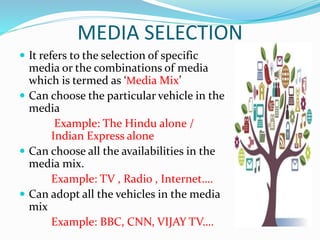
 It refers to the selection of specific
media or the combinations of media
which is termed as ‘Media Mix’
 Can choose the particular vehicle in the
media
Example: The Hindu alone /
Indian Express alone
 Can choose all the availabilities in the
media mix.
Example: TV , Radio , Internet….
 Can adopt all the vehicles in the media
mix
Example: BBC, CNN, VIJAY TV….
MEDIA PLANNING
 SEGMENTATION
Demographic, Psychographic,
Economic, cultural etc.,
 TARGET MARKET STUDY
Study about the target market ,
location and conditions for the
advertisement etc.,
 DECIDING THE AD MESSAGE
Based on the media,
information can be supplied
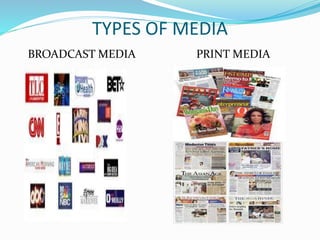
TYPES OF MEDIA
BROADCAST MEDIA PRINT MEDIA
MEDIA COSTS
 NEWSPAPER RATES
 Paid by word or line
 Display Ads
 More cost for more creative
 Paid by “column inch
 Run-of-paper rate
 Color vs. black and white
MEDIA COSTS
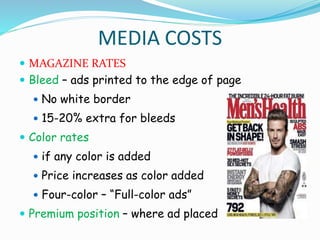
 MAGAZINE RATES
 Bleed – ads printed to the edge of page
 No white border
 15-20% extra for bleeds
 Color rates
 if any color is added
 Price increases as color added
 Four-color – “Full-color ads”
 Premium position – where ad placed
MEDIA COSTS
 TELEVISION RATES
 Creative opportunities
 Coverage, reach, and repetition
 Cost per contact
 Audience selectivity
 Sponsorship
 Spot advertising
 Choosing a day-part:
 Morning
 Daytime
 Early fringe
 Prime-time access
TYPES OF MEDIA
 TELEVISION
Advantages
1. High Reach
2. High Frequency Potential
3. Quality
4. High value
5. Segmentation possibilities
through cable outlets
Disadvantages
1. Greater cost for actors
2. Channel distribution
3. Short amount of copy
4. High cost per ad
5. Low recall
 RADIO
Advantages
 Lower cost per spot than television
 Low production cost
 Music can match station’s programming
 Flexibility in making new ads
 Creative opportunities with music and
other sounds
 Mobile: people carry radios everywhere
Disadvantages
 Short exposure time
 Low attention
 Few chances to reach national audience
 Target duplication when several stations use
same format
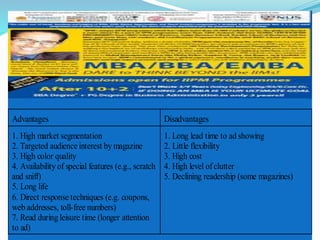
Advantages Disadvantages
1. High market segmentation
2. Targeted audience interest by magazine
3. High color quality
4. Availability of special features (e.g., scratch
and sniff)
5. Long life
6. Direct response techniques (e.g. coupons,
web addresses, toll-free numbers)
7. Read during leisure time (longer attention
to ad)
1. Long lead time to ad showing
2. Little flexibility
3. High cost
4. High level ofclutter
5. Declining readership (some magazines)
INTERNET
 ADVANTAGES
High reach among literates
Time saver
Easy for the corporate
 DISADVANTAGES
Difficult procedures
Only for computer literates
No recall
Media research by Mr. Subramanian

Media research by Mr. Subramanian

  • 1.
  • 2.
    DEFINITION  Various mediaprovide information about the size and makeup of their audiences.  Designated marketing area.  The term ‘ Research ’ is used to describe the collection of information about a particular subject.  Relatively, Media Research is used to gather some information about the media , its usage , its budget , effective media reach etc., in a descriptive manner.
  • 3.
    FUNCTIONS OF MEDIARESEARCH  EFFICIENT MEDIA To find out the most efficient media by measuring and comparing different media and different vehicles in terms of ‘Vehicle distribution’ , ‘Vehicle Exposure’ , ‘Advertising Exposure’  ADVERTISING EXPOSURE Refers to the number of people exposed to the advertising message and also to the number of times a person exposes himself to the advertising message
  • 4.
    MEDIA SELECTION  Itrefers to the selection of specific media or the combinations of media which is termed as ‘Media Mix’  Can choose the particular vehicle in the media Example: The Hindu alone / Indian Express alone  Can choose all the availabilities in the media mix. Example: TV , Radio , Internet….  Can adopt all the vehicles in the media mix Example: BBC, CNN, VIJAY TV….
  • 5.
    MEDIA PLANNING  SEGMENTATION Demographic,Psychographic, Economic, cultural etc.,  TARGET MARKET STUDY Study about the target market , location and conditions for the advertisement etc.,  DECIDING THE AD MESSAGE Based on the media, information can be supplied
  • 6.
    TYPES OF MEDIA BROADCASTMEDIA PRINT MEDIA
  • 7.
    MEDIA COSTS  NEWSPAPERRATES  Paid by word or line  Display Ads  More cost for more creative  Paid by “column inch  Run-of-paper rate  Color vs. black and white
  • 8.
    MEDIA COSTS  MAGAZINERATES  Bleed – ads printed to the edge of page  No white border  15-20% extra for bleeds  Color rates  if any color is added  Price increases as color added  Four-color – “Full-color ads”  Premium position – where ad placed
  • 9.
    MEDIA COSTS  TELEVISIONRATES  Creative opportunities  Coverage, reach, and repetition  Cost per contact  Audience selectivity  Sponsorship  Spot advertising  Choosing a day-part:  Morning  Daytime  Early fringe  Prime-time access
  • 10.
    TYPES OF MEDIA TELEVISION Advantages 1. High Reach 2. High Frequency Potential 3. Quality 4. High value 5. Segmentation possibilities through cable outlets Disadvantages 1. Greater cost for actors 2. Channel distribution 3. Short amount of copy 4. High cost per ad 5. Low recall
  • 11.
     RADIO Advantages  Lowercost per spot than television  Low production cost  Music can match station’s programming  Flexibility in making new ads  Creative opportunities with music and other sounds  Mobile: people carry radios everywhere Disadvantages  Short exposure time  Low attention  Few chances to reach national audience  Target duplication when several stations use same format
  • 12.
    Advantages Disadvantages 1. Highmarket segmentation 2. Targeted audience interest by magazine 3. High color quality 4. Availability of special features (e.g., scratch and sniff) 5. Long life 6. Direct response techniques (e.g. coupons, web addresses, toll-free numbers) 7. Read during leisure time (longer attention to ad) 1. Long lead time to ad showing 2. Little flexibility 3. High cost 4. High level ofclutter 5. Declining readership (some magazines)
  • 13.
    INTERNET  ADVANTAGES High reachamong literates Time saver Easy for the corporate  DISADVANTAGES Difficult procedures Only for computer literates No recall