Media	
  Literacy	
  
for	
  Teaching	
  English	


Antonio	
  López	
  
John	
  Cabot	
  University	
  
July	
  8,	
  2014	


Agenda:	


Brief	
  introducGon	
  
Defining	
  Media	
  Literacy	
  
Media	
  Literacy	
  Techniques	
  
Media	
  Literacy	
  and	
  Teaching	
  English	
  
What	
  is	
  the	
  difference	
  
between	
  “literature”	
  and	
  
“media”?	


What	
  is	
  literacy?	
  
Media	
  Literacy:	
  Defined	
  variously	
  as	
  
learning	
  to	
  access,	
  evaluate	
  and	
  produce	
  
media	
  in	
  a	
  variety	
  of	
  formats.	


Literacy:	
  “the	
  sharing	
  of	
  meaning	
  through	
  
symbols	
  in	
  order	
  to	
  fully	
  parGcipate	
  in	
  
society”	


(hTp://www.knightcomm.org/digital-­‐and-­‐media-­‐literacy/the-­‐heritage-­‐of-­‐
digital-­‐and-­‐media-­‐literacy/)	


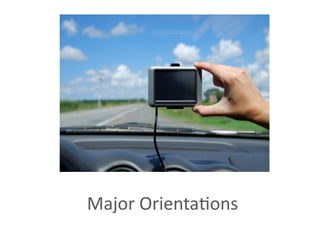
Major	
  OrientaGons	
  
 
Types	
  of	
  media	
  literacy:	


Using:	
  Computer	
  use/ICT	
  skills,	
  workforce	
  development	


Teaching	
  with:	
  Technology	
  integraGon,	
  digital	
  learning,	
  
online	
  reading	


Authorship:	
  MulGmedia	
  composiGon	


Teaching	
  about:	
  InformaGon	
  literacy,	
  media	
  literacy,	
  
internet	
  safety,	
  social	
  responsibility	


Source:	
  
h*p://www.slideshare.net/reneehobbs/the-­‐globaliza:on-­‐
of-­‐digital-­‐literacy	


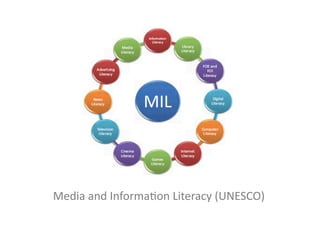
Media	
  and	
  InformaGon	
  Literacy	
  (UNESCO)	
  
Doing	
  Media	
  Lit:	
  
• Access	
  
• Map	
  
• Ask	
  
• Evaluate	
  	
  
• Synthesize	
  
• Communicate	
  
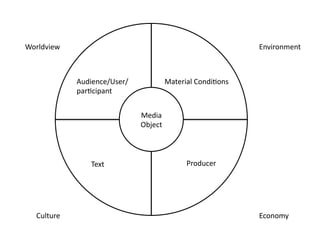
Media	
  
Object	
  
Text	
  
Audience/User/	
  
parGcipant	
  
Material	
  CondiGons	
  
Producer	
  
Worldview	
   Environment	
  
Culture	
   Economy	
  
Text	
  
Audience/User/	
  
parGcipant	
  
Material	
  	
  
CondiGons	
  
Producer	
  
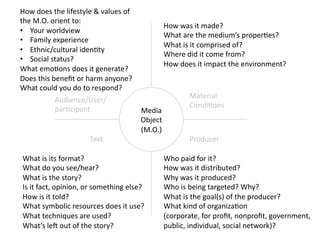
What	
  is	
  its	
  format?	
  
What	
  do	
  you	
  see/hear?	
  
What	
  is	
  the	
  story?	
  
Is	
  it	
  fact,	
  opinion,	
  or	
  something	
  else?	
  
How	
  is	
  it	
  told?	
  
What	
  symbolic	
  resources	
  does	
  it	
  use?	
  
What	
  techniques	
  are	
  used?	
  
What’s	
  leb	
  out	
  of	
  the	
  story?	
  
How	
  does	
  the	
  lifestyle	
  &	
  values	
  of	
  	
  
the	
  M.O.	
  orient	
  to:	
  
•  Your	
  worldview	
  
•  Family	
  experience	
  
•  Ethnic/cultural	
  idenGty	
  
•  Social	
  status?	
  
What	
  emoGons	
  does	
  it	
  generate?	
  
Does	
  this	
  benefit	
  or	
  harm	
  anyone?	
  
What	
  could	
  you	
  do	
  to	
  respond?	
  
How	
  was	
  it	
  made?	
  
What	
  are	
  the	
  medium’s	
  properGes?	
  
What	
  is	
  it	
  comprised	
  of?	
  
Where	
  did	
  it	
  come	
  from?	
  
How	
  does	
  it	
  impact	
  the	
  environment?	
  
Who	
  paid	
  for	
  it?	
  
How	
  was	
  it	
  distributed?	
  
Why	
  was	
  it	
  produced?	
  
Who	
  is	
  being	
  targeted?	
  Why?	
  
What	
  is	
  the	
  goal(s)	
  of	
  the	
  producer?	
  
What	
  kind	
  of	
  organizaGon	
  	
  
(corporate,	
  for	
  profit,	
  nonprofit,	
  government,	
  	
  
public,	
  individual,	
  social	
  network)?	
  
Media	
  
Object	
  
(M.O.)	
  
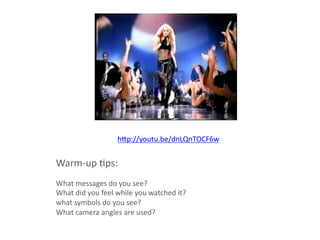
hTp://youtu.be/dnLQnTOCF6w	
  
Warm-­‐up	
  Gps:	


What	
  messages	
  do	
  you	
  see?	
  
What	
  did	
  you	
  feel	
  while	
  you	
  watched	
  it?	
  	
  
what	
  symbols	
  do	
  you	
  see?	
  	
  
What	
  camera	
  angles	
  are	
  used?	
  	
  
ProducGon,	
  literary,	
  and	
  format	
  issues:	


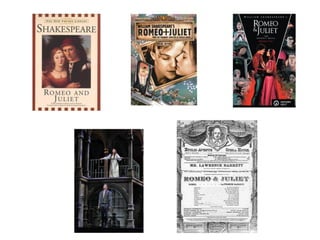
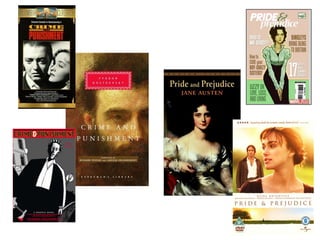
Novels	
  and	
  graphic	
  novels	
  	
  
Poems	
  and	
  music	
  videos	
  
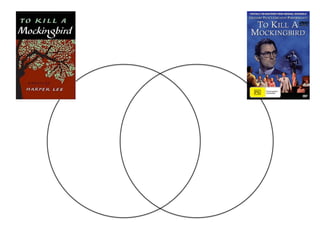
Short	
  stories	
  and	
  TV	
  shows/film	
  
Music	
  vs.	
  music	
  video	
  
Poem	
  read	
  vs.	
  poem	
  heard	


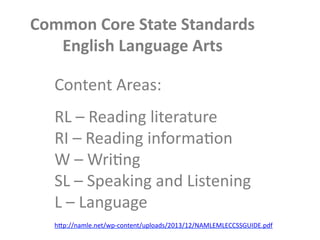
Content	
  Areas:	


RL	
  –	
  Reading	
  literature	
  	
  
RI	
  –	
  Reading	
  informaGon	
  	
  
W	
  –	
  WriGng	
  
SL	
  –	
  Speaking	
  and	
  Listening	
  	
  
L	
  –	
  Language	


hTp://namle.net/wp-­‐content/uploads/2013/12/NAMLEMLECCSSGUIDE.pdf	
  
Common	
  Core	
  State	
  Standards	
  
English	
  Language	
  Arts	
  
Connec9on	
  #1:	
  Imagine	
  students	
  as	
  
authors	
  of	
  different	
  types	
  of	
  media	
  
messages	
  —	
  how	
  might	
  their	
  wriGng	
  
style,	
  purpose,	
  point	
  of	
  view,	
  or	
  use	
  of	
  
evidence	
  shib	
  if	
  they	
  were	
  wriGng	
  a	
  blog	
  
post	
  versus	
  an	
  academic	
  essay?	
  A	
  leTer	
  
to	
  the	
  editor	
  versus	
  a	
  “tweet”?	
  
hTp://namle.net/wp-­‐content/uploads/2013/12/NAMLEMLECCSSGUIDE.pdf	


Connec9on	
  #2:	
  When	
  we	
  expand	
  our	
  
definiGon	
  of	
  texts	
  to	
  the	
  variety	
  of	
  
media	
  that	
  we	
  use	
  in	
  our	
  everyday	
  
lives,	
  we	
  broaden	
  the	
  materials	
  and	
  
concepts	
  we	
  have	
  at	
  our	
  disposal	
  in	
  
the	
  classroom,	
  increase	
  student	
  
engagement,	
  and	
  enrich	
  learning	
  
experiences.	
  
h"p://namle.net/wp.content/uploads/2013/12/NAMLEMLECCSSGUIDE.pdfD
D
Connec9on	
  #3:	
  Strategies	
  include	
  
asking	
  quesGons	
  to	
  assess	
  credibility	
  
—where	
  do	
  sources	
  come	
  from?	
  Who	
  
made	
  them	
  and	
  why?	
  Are	
  they	
  
intended	
  to	
  entertain,	
  inform,	
  or	
  
persuade?	
  And	
  if	
  so,	
  whom	
  are	
  they	
  
trying	
  to	
  reach?	
  
h"p://namle.net/wp.content/uploads/2013/12/NAMLEMLECCSSGUIDE.pdfD
D
Connec9on	
  #4:	
  When	
  students	
  make	
  
media	
  of	
  their	
  own,	
  whether	
  it’s	
  
through	
  filmmaking,	
  graphic	
  design,	
  
web	
  design,	
  or	
  some	
  other	
  form	
  of	
  
media	
  producGon,	
  they	
  connect	
  
professional	
  media	
  pracGces	
  to	
  their	
  
own	
  opinions,	
  ideas,	
  quesGons,	
  and	
  
values.	
  
h"p://namle.net/wp.content/uploads/2013/12/NAMLEMLECCSSGUIDE.pdfD
Connec9on	
  #5:	
  By	
  reflecGng	
  on	
  
their	
  own	
  values	
  and	
  understanding	
  
the	
  values	
  of	
  different	
  disciplines,	
  
cultures,	
  and	
  points	
  of	
  view,	
  
students	
  are	
  beTer	
  able	
  to	
  
communicate	
  thoughoully	
  with	
  
others	
  who	
  may	
  be	
  different	
  from	
  
them.	
  
h"p://namle.net/wp.content/uploads/2013/12/NAMLEMLECCSSGUIDE.pdfD
Ciao!	


Antonio	
  López	


Email:	
  	
  
alopez@johncabot.edu	


Workshop	
  website:	
  	
  
hTp://www.openmediaeducaGon.net/
medialit-­‐english/	
  

Media Literacy for Teaching English

  • 1.
    Media  Literacy   for  Teaching  English     Antonio  López   John  Cabot  University   July  8,  2014    
  • 2.
    Agenda:     Brief  introducGon   Defining  Media  Literacy   Media  Literacy  Techniques   Media  Literacy  and  Teaching  English  
  • 3.
    What  is  the  difference   between  “literature”  and   “media”?    
  • 4.
  • 5.
    Media  Literacy:  Defined  variously  as   learning  to  access,  evaluate  and  produce   media  in  a  variety  of  formats.       Literacy:  “the  sharing  of  meaning  through   symbols  in  order  to  fully  parGcipate  in   society”       (hTp://www.knightcomm.org/digital-­‐and-­‐media-­‐literacy/the-­‐heritage-­‐of-­‐ digital-­‐and-­‐media-­‐literacy/)        
  • 6.
  • 7.
      Types  of  media  literacy:     Using:  Computer  use/ICT  skills,  workforce  development     Teaching  with:  Technology  integraGon,  digital  learning,   online  reading     Authorship:  MulGmedia  composiGon     Teaching  about:  InformaGon  literacy,  media  literacy,   internet  safety,  social  responsibility     Source:   h*p://www.slideshare.net/reneehobbs/the-­‐globaliza:on-­‐ of-­‐digital-­‐literacy        
  • 8.
    Media  and  InformaGon  Literacy  (UNESCO)  
  • 9.
    Doing  Media  Lit:   • Access   • Map   • Ask   • Evaluate     • Synthesize   • Communicate  
  • 11.
    Media   Object   Text   Audience/User/   parGcipant   Material  CondiGons   Producer   Worldview   Environment   Culture   Economy  
  • 12.
    Text   Audience/User/   parGcipant   Material     CondiGons   Producer   What  is  its  format?   What  do  you  see/hear?   What  is  the  story?   Is  it  fact,  opinion,  or  something  else?   How  is  it  told?   What  symbolic  resources  does  it  use?   What  techniques  are  used?   What’s  leb  out  of  the  story?   How  does  the  lifestyle  &  values  of     the  M.O.  orient  to:   •  Your  worldview   •  Family  experience   •  Ethnic/cultural  idenGty   •  Social  status?   What  emoGons  does  it  generate?   Does  this  benefit  or  harm  anyone?   What  could  you  do  to  respond?   How  was  it  made?   What  are  the  medium’s  properGes?   What  is  it  comprised  of?   Where  did  it  come  from?   How  does  it  impact  the  environment?   Who  paid  for  it?   How  was  it  distributed?   Why  was  it  produced?   Who  is  being  targeted?  Why?   What  is  the  goal(s)  of  the  producer?   What  kind  of  organizaGon     (corporate,  for  profit,  nonprofit,  government,     public,  individual,  social  network)?   Media   Object   (M.O.)  
  • 13.
    hTp://youtu.be/dnLQnTOCF6w   Warm-­‐up  Gps:       What  messages  do  you  see?   What  did  you  feel  while  you  watched  it?     what  symbols  do  you  see?     What  camera  angles  are  used?    
  • 14.
    ProducGon,  literary,  and  format  issues:     Novels  and  graphic  novels     Poems  and  music  videos   Short  stories  and  TV  shows/film   Music  vs.  music  video   Poem  read  vs.  poem  heard      
  • 19.
    Content  Areas:     RL  –  Reading  literature     RI  –  Reading  informaGon     W  –  WriGng   SL  –  Speaking  and  Listening     L  –  Language     hTp://namle.net/wp-­‐content/uploads/2013/12/NAMLEMLECCSSGUIDE.pdf   Common  Core  State  Standards   English  Language  Arts  
  • 20.
    Connec9on  #1:  Imagine  students  as   authors  of  different  types  of  media   messages  —  how  might  their  wriGng   style,  purpose,  point  of  view,  or  use  of   evidence  shib  if  they  were  wriGng  a  blog   post  versus  an  academic  essay?  A  leTer   to  the  editor  versus  a  “tweet”?   hTp://namle.net/wp-­‐content/uploads/2013/12/NAMLEMLECCSSGUIDE.pdf    
  • 21.
    Connec9on  #2:  When  we  expand  our   definiGon  of  texts  to  the  variety  of   media  that  we  use  in  our  everyday   lives,  we  broaden  the  materials  and   concepts  we  have  at  our  disposal  in   the  classroom,  increase  student   engagement,  and  enrich  learning   experiences.   h"p://namle.net/wp.content/uploads/2013/12/NAMLEMLECCSSGUIDE.pdfD D
  • 22.
    Connec9on  #3:  Strategies  include   asking  quesGons  to  assess  credibility   —where  do  sources  come  from?  Who   made  them  and  why?  Are  they   intended  to  entertain,  inform,  or   persuade?  And  if  so,  whom  are  they   trying  to  reach?   h"p://namle.net/wp.content/uploads/2013/12/NAMLEMLECCSSGUIDE.pdfD D
  • 23.
    Connec9on  #4:  When  students  make   media  of  their  own,  whether  it’s   through  filmmaking,  graphic  design,   web  design,  or  some  other  form  of   media  producGon,  they  connect   professional  media  pracGces  to  their   own  opinions,  ideas,  quesGons,  and   values.   h"p://namle.net/wp.content/uploads/2013/12/NAMLEMLECCSSGUIDE.pdfD
  • 24.
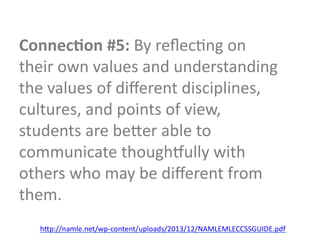
    Connec9on  #5:  By  reflecGng  on   their  own  values  and  understanding   the  values  of  different  disciplines,   cultures,  and  points  of  view,   students  are  beTer  able  to   communicate  thoughoully  with   others  who  may  be  different  from   them.   h"p://namle.net/wp.content/uploads/2013/12/NAMLEMLECCSSGUIDE.pdfD
  • 25.
    Ciao!     Antonio  López     Email:     alopez@johncabot.edu     Workshop  website:     hTp://www.openmediaeducaGon.net/ medialit-­‐english/