Evaluation
By Tim Ogden
Conventions
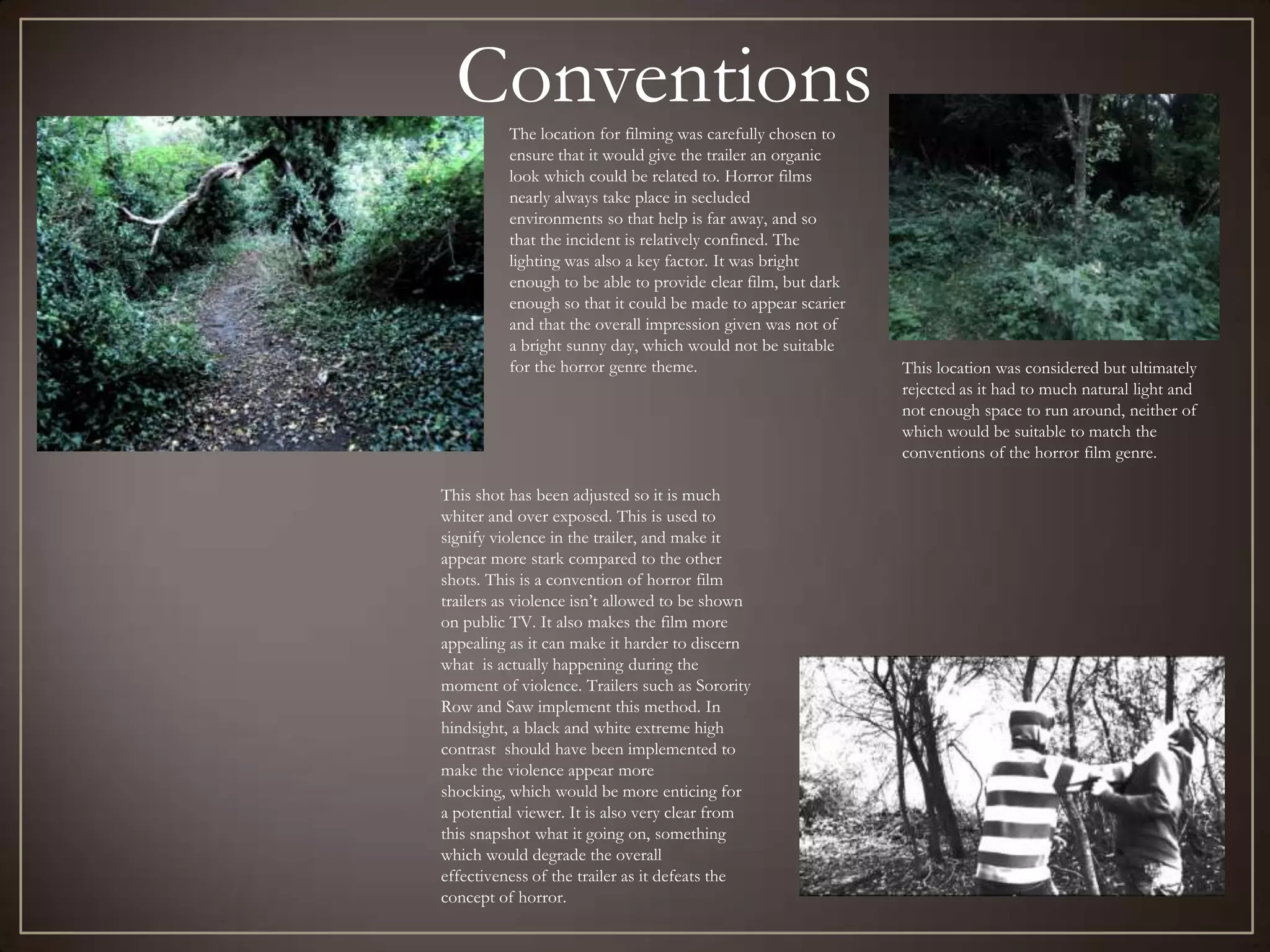
          The location for filming was carefully chosen to
          ensure that it would give the trailer an organic
          look which could be related to. Horror films
          nearly always take place in secluded
          environments so that help is far away, and so
          that the incident is relatively confined. The
          lighting was also a key factor. It was bright
          enough to be able to provide clear film, but dark
          enough so that it could be made to appear scarier
          and that the overall impression given was not of
          a bright sunny day, which would not be suitable
          for the horror genre theme.                         This location was considered but ultimately
                                                              rejected as it had to much natural light and
                                                              not enough space to run around, neither of
                                                              which would be suitable to match the
                                                              conventions of the horror film genre.

This shot has been adjusted so it is much
whiter and over exposed. This is used to
signify violence in the trailer, and make it
appear more stark compared to the other
shots. This is a convention of horror film
trailers as violence isn’t allowed to be shown
on public TV. It also makes the film more
appealing as it can make it harder to discern
what is actually happening during the
moment of violence. Trailers such as Sorority
Row and Saw implement this method. In
hindsight, a black and white extreme high
contrast should have been implemented to
make the violence appear more
shocking, which would be more enticing for
a potential viewer. It is also very clear from
this snapshot what it going on, something
which would degrade the overall
effectiveness of the trailer as it defeats the
concept of horror.
There are several edited in
  screens with text to give a better
  idea of what is happening and/or
  what the film is about. This is a
  conventional theme in film
  trailers of all kinds in place or
  with an audio narrative. This
  gives a better understanding of
  what the film will be about. This
  is more appropriate for a teaser
  trailer and horror film than an
  audio narrative, which would
  remove the scary aspect of it.


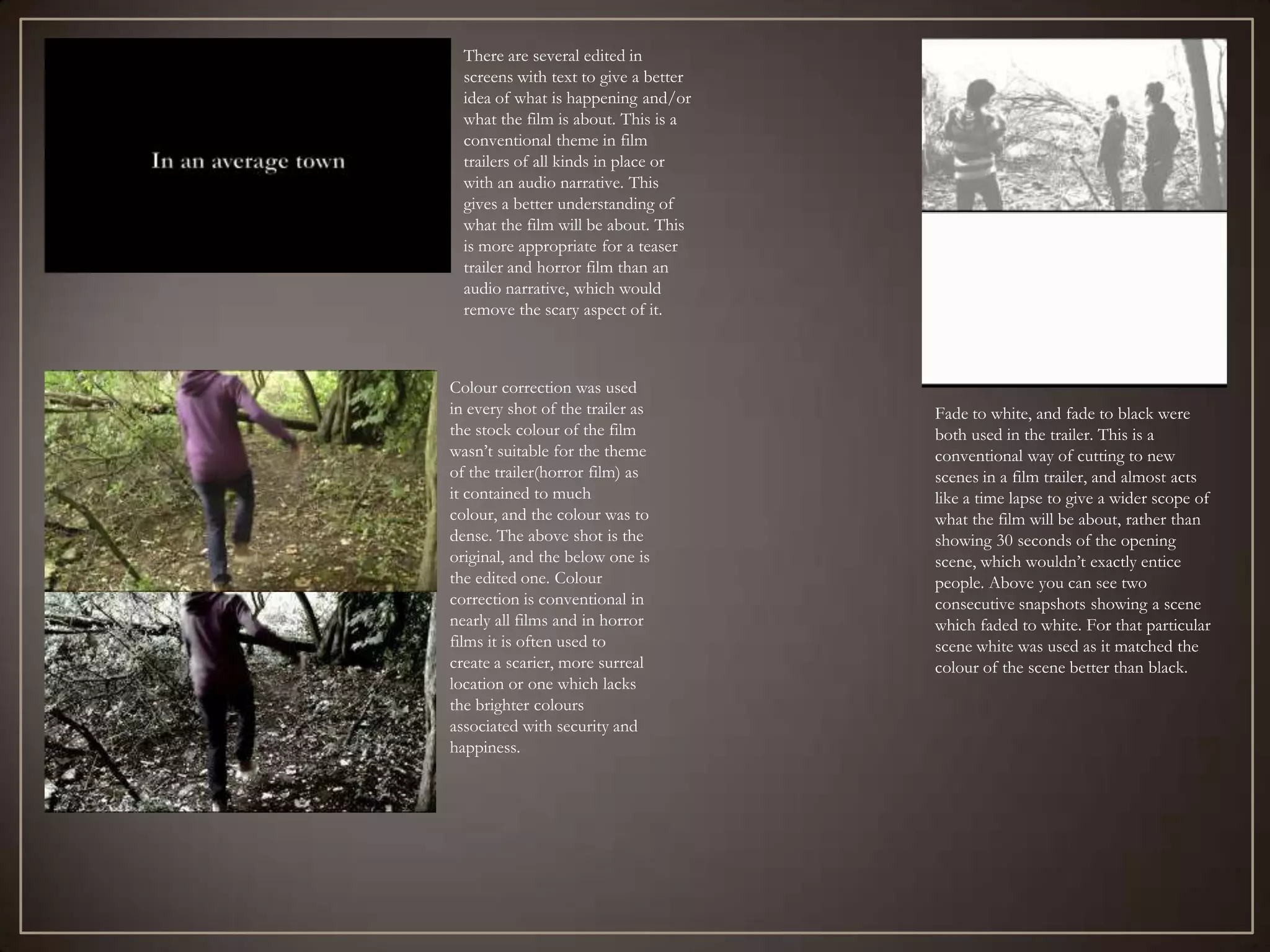
Colour correction was used
in every shot of the trailer as        Fade to white, and fade to black were
the stock colour of the film           both used in the trailer. This is a
wasn’t suitable for the theme          conventional way of cutting to new
of the trailer(horror film) as         scenes in a film trailer, and almost acts
it contained to much                   like a time lapse to give a wider scope of
colour, and the colour was to          what the film will be about, rather than
dense. The above shot is the           showing 30 seconds of the opening
original, and the below one is         scene, which wouldn’t exactly entice
the edited one. Colour                 people. Above you can see two
correction is conventional in          consecutive snapshots showing a scene
nearly all films and in horror         which faded to white. For that particular
films it is often used to              scene white was used as it matched the
create a scarier, more surreal         colour of the scene better than black.
location or one which lacks
the brighter colours
associated with security and
happiness.
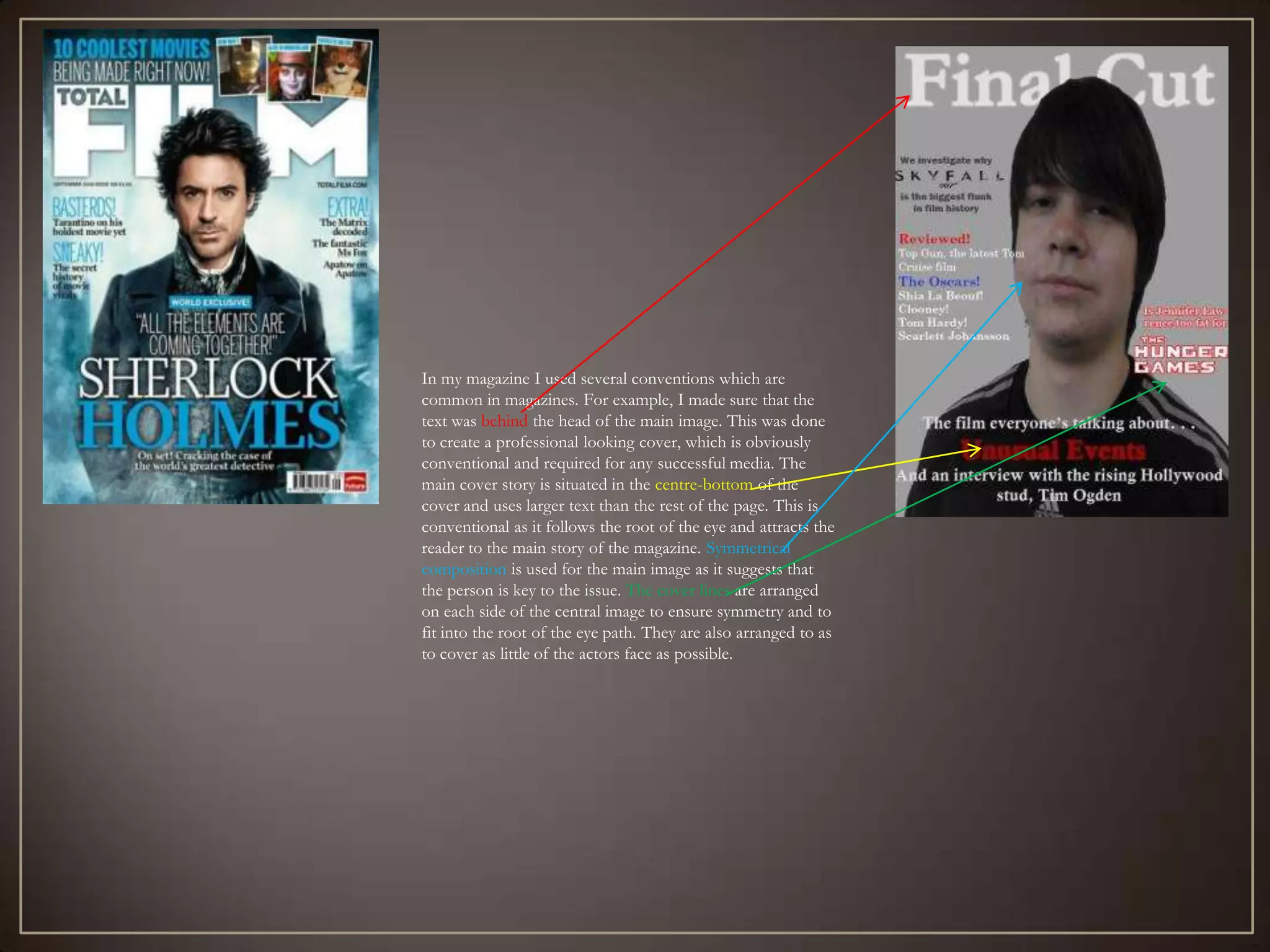
In my magazine I used several conventions which are
common in magazines. For example, I made sure that the
text was behind the head of the main image. This was done
to create a professional looking cover, which is obviously
conventional and required for any successful media. The
main cover story is situated in the centre-bottom of the
cover and uses larger text than the rest of the page. This is
conventional as it follows the root of the eye and attracts the
reader to the main story of the magazine. Symmetrical
composition is used for the main image as it suggests that
the person is key to the issue. The cover lines are arranged
on each side of the central image to ensure symmetry and to
fit into the root of the eye path. They are also arranged to as
to cover as little of the actors face as possible.
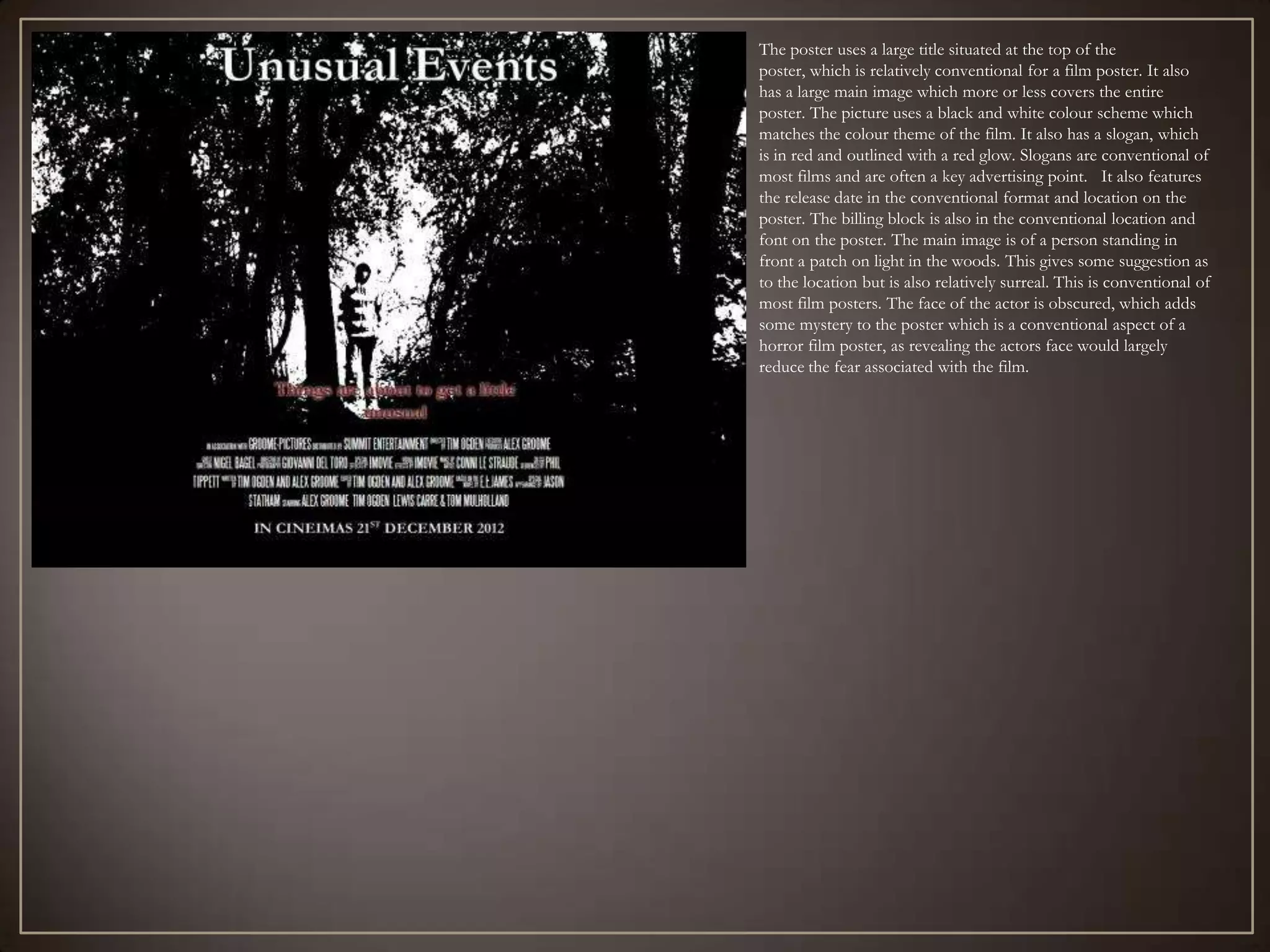
The poster uses a large title situated at the top of the
poster, which is relatively conventional for a film poster. It also
has a large main image which more or less covers the entire
poster. The picture uses a black and white colour scheme which
matches the colour theme of the film. It also has a slogan, which
is in red and outlined with a red glow. Slogans are conventional of
most films and are often a key advertising point. It also features
the release date in the conventional format and location on the
poster. The billing block is also in the conventional location and
font on the poster. The main image is of a person standing in
front a patch on light in the woods. This gives some suggestion as
to the location but is also relatively surreal. This is conventional of
most film posters. The face of the actor is obscured, which adds
some mystery to the poster which is a conventional aspect of a
horror film poster, as revealing the actors face would largely
reduce the fear associated with the film.
How effective is the combination of
your main product and ancillary texts.
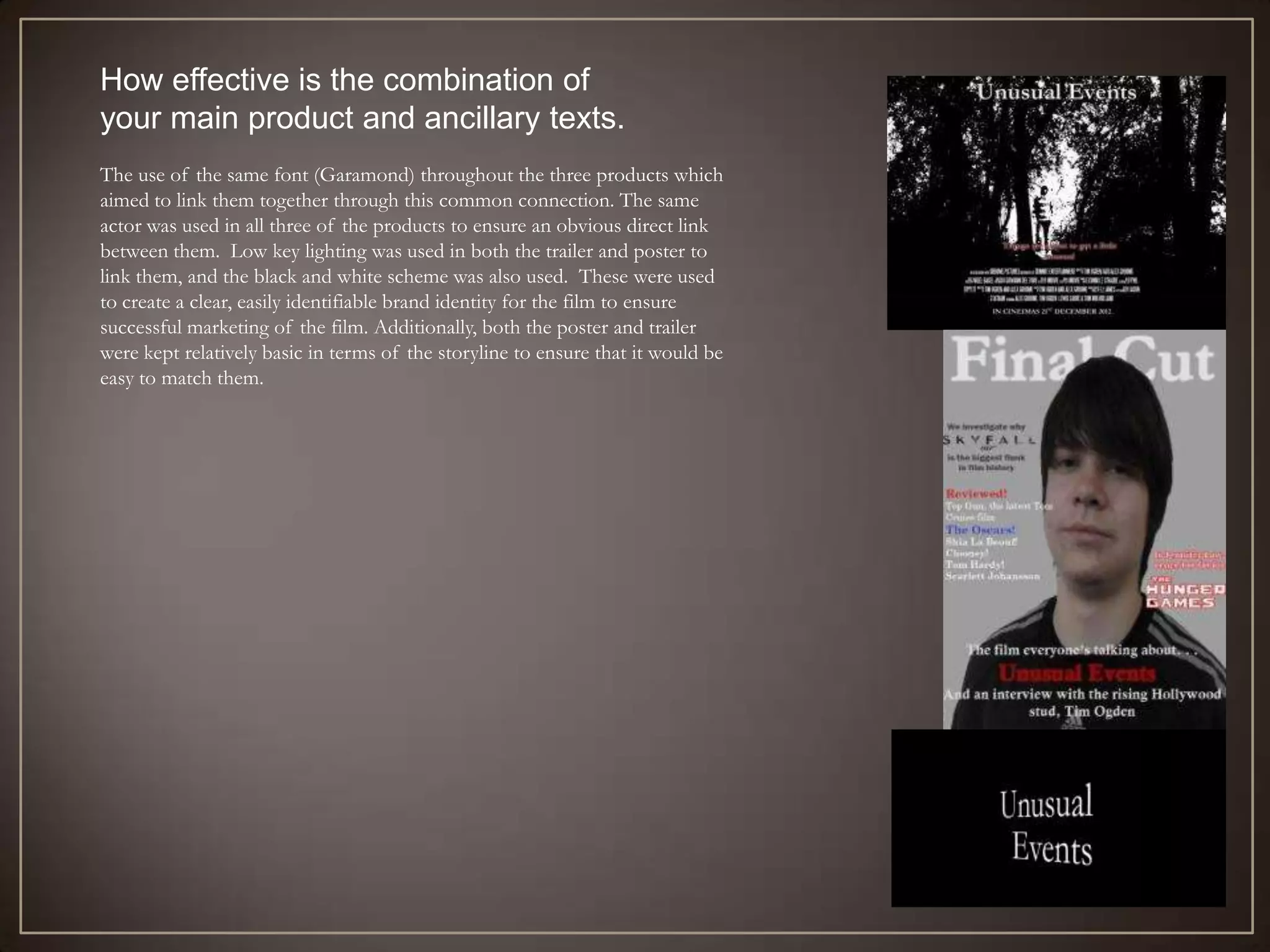
The use of the same font (Garamond) throughout the three products which
aimed to link them together through this common connection. The same
actor was used in all three of the products to ensure an obvious direct link
between them. Low key lighting was used in both the trailer and poster to
link them, and the black and white scheme was also used. These were used
to create a clear, easily identifiable brand identity for the film to ensure
successful marketing of the film. Additionally, both the poster and trailer
were kept relatively basic in terms of the storyline to ensure that it would be
easy to match them.
How did you use media technologies in the construction and research, planning and evaluation stages?


                 Research:
                 During my research I used Wall Wisher to do Audience Research on the
                 trailer I was reviewing, which made it much easier and faster to get
                 accurate opinions and views on the trailer compared to doing it by hand.
                 It also made it possible to share the page to get more results and embed
                 the YouTube clip.
                 I also used YouTube to find appropriate film trailers to review for my
                 genre.

                 Planning: During my planning I constructed an animatic, which was
                 scanned in and edited into a sequence with music in iMovie. This
                 allowed me to produce a relatively accurate representation of what the
                 scenes would be like, compared to a large poster of the animatic
                 drawings, which would not provide and sense of flow. I also used a still
                 camera to obtain shots of potential locations for the filming during the
                 planning process. This allowed me to show them and discuss the
                 locations with other members of the team.

                 Production:
                 During the production of my trailer I used a digital film camera to
                 capture the scenes. I then edited the scenes in iMovie. iMovie was useful
                 as it allowed to me to perfectly cut the scenes together and add effective
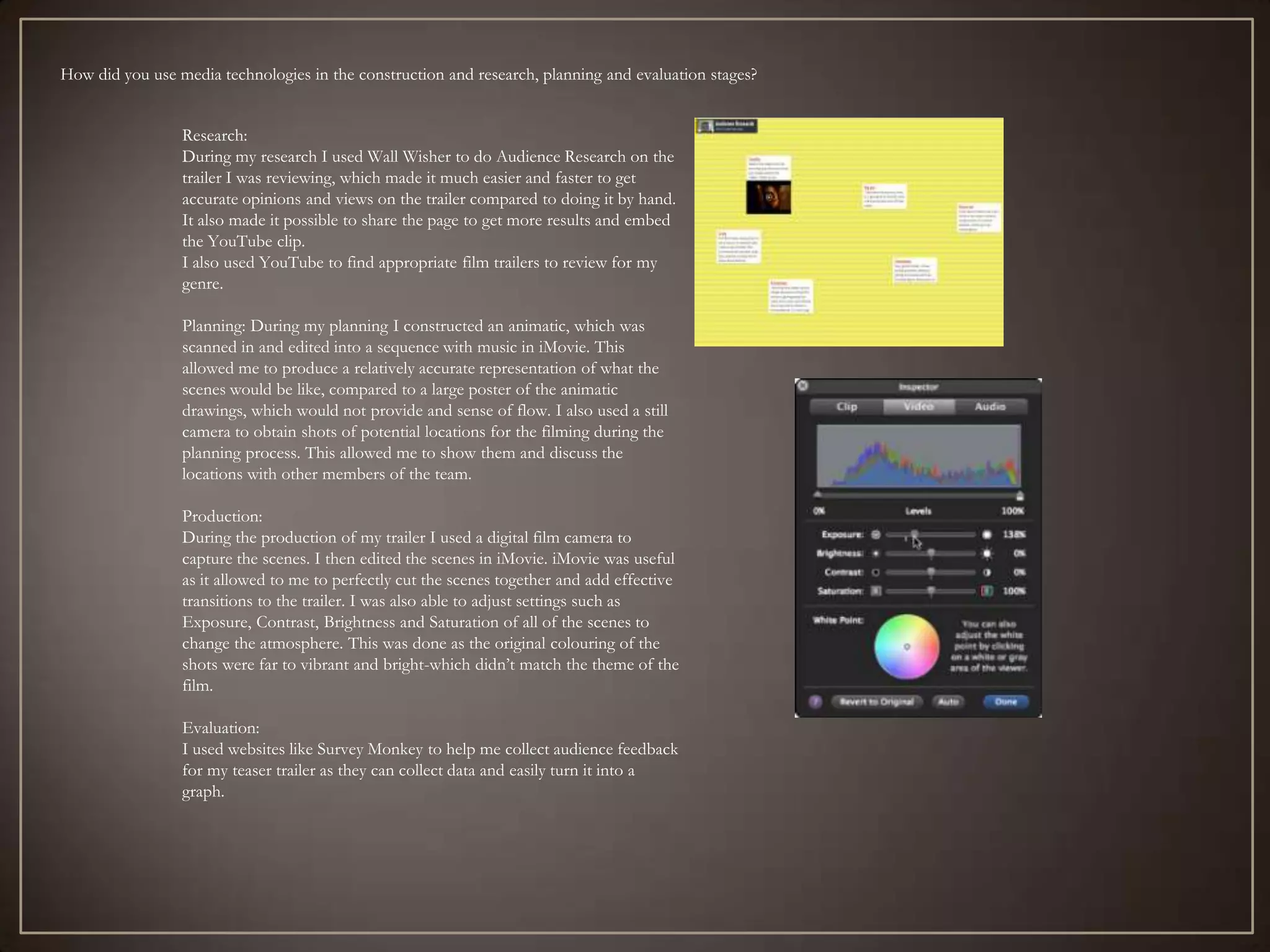
                 transitions to the trailer. I was also able to adjust settings such as
                 Exposure, Contrast, Brightness and Saturation of all of the scenes to
                 change the atmosphere. This was done as the original colouring of the
                 shots were far to vibrant and bright-which didn’t match the theme of the
                 film.

                 Evaluation:
                 I used websites like Survey Monkey to help me collect audience feedback
                 for my teaser trailer as they can collect data and easily turn it into a
                 graph.

Media Evaluation Questions 1 & 4

  • 1.
  • 2.
    Conventions The location for filming was carefully chosen to ensure that it would give the trailer an organic look which could be related to. Horror films nearly always take place in secluded environments so that help is far away, and so that the incident is relatively confined. The lighting was also a key factor. It was bright enough to be able to provide clear film, but dark enough so that it could be made to appear scarier and that the overall impression given was not of a bright sunny day, which would not be suitable for the horror genre theme. This location was considered but ultimately rejected as it had to much natural light and not enough space to run around, neither of which would be suitable to match the conventions of the horror film genre. This shot has been adjusted so it is much whiter and over exposed. This is used to signify violence in the trailer, and make it appear more stark compared to the other shots. This is a convention of horror film trailers as violence isn’t allowed to be shown on public TV. It also makes the film more appealing as it can make it harder to discern what is actually happening during the moment of violence. Trailers such as Sorority Row and Saw implement this method. In hindsight, a black and white extreme high contrast should have been implemented to make the violence appear more shocking, which would be more enticing for a potential viewer. It is also very clear from this snapshot what it going on, something which would degrade the overall effectiveness of the trailer as it defeats the concept of horror.
  • 3.
    There are severaledited in screens with text to give a better idea of what is happening and/or what the film is about. This is a conventional theme in film trailers of all kinds in place or with an audio narrative. This gives a better understanding of what the film will be about. This is more appropriate for a teaser trailer and horror film than an audio narrative, which would remove the scary aspect of it. Colour correction was used in every shot of the trailer as Fade to white, and fade to black were the stock colour of the film both used in the trailer. This is a wasn’t suitable for the theme conventional way of cutting to new of the trailer(horror film) as scenes in a film trailer, and almost acts it contained to much like a time lapse to give a wider scope of colour, and the colour was to what the film will be about, rather than dense. The above shot is the showing 30 seconds of the opening original, and the below one is scene, which wouldn’t exactly entice the edited one. Colour people. Above you can see two correction is conventional in consecutive snapshots showing a scene nearly all films and in horror which faded to white. For that particular films it is often used to scene white was used as it matched the create a scarier, more surreal colour of the scene better than black. location or one which lacks the brighter colours associated with security and happiness.
  • 4.
    In my magazineI used several conventions which are common in magazines. For example, I made sure that the text was behind the head of the main image. This was done to create a professional looking cover, which is obviously conventional and required for any successful media. The main cover story is situated in the centre-bottom of the cover and uses larger text than the rest of the page. This is conventional as it follows the root of the eye and attracts the reader to the main story of the magazine. Symmetrical composition is used for the main image as it suggests that the person is key to the issue. The cover lines are arranged on each side of the central image to ensure symmetry and to fit into the root of the eye path. They are also arranged to as to cover as little of the actors face as possible.
  • 5.
    The poster usesa large title situated at the top of the poster, which is relatively conventional for a film poster. It also has a large main image which more or less covers the entire poster. The picture uses a black and white colour scheme which matches the colour theme of the film. It also has a slogan, which is in red and outlined with a red glow. Slogans are conventional of most films and are often a key advertising point. It also features the release date in the conventional format and location on the poster. The billing block is also in the conventional location and font on the poster. The main image is of a person standing in front a patch on light in the woods. This gives some suggestion as to the location but is also relatively surreal. This is conventional of most film posters. The face of the actor is obscured, which adds some mystery to the poster which is a conventional aspect of a horror film poster, as revealing the actors face would largely reduce the fear associated with the film.
  • 6.
    How effective isthe combination of your main product and ancillary texts. The use of the same font (Garamond) throughout the three products which aimed to link them together through this common connection. The same actor was used in all three of the products to ensure an obvious direct link between them. Low key lighting was used in both the trailer and poster to link them, and the black and white scheme was also used. These were used to create a clear, easily identifiable brand identity for the film to ensure successful marketing of the film. Additionally, both the poster and trailer were kept relatively basic in terms of the storyline to ensure that it would be easy to match them.
  • 7.
    How did youuse media technologies in the construction and research, planning and evaluation stages? Research: During my research I used Wall Wisher to do Audience Research on the trailer I was reviewing, which made it much easier and faster to get accurate opinions and views on the trailer compared to doing it by hand. It also made it possible to share the page to get more results and embed the YouTube clip. I also used YouTube to find appropriate film trailers to review for my genre. Planning: During my planning I constructed an animatic, which was scanned in and edited into a sequence with music in iMovie. This allowed me to produce a relatively accurate representation of what the scenes would be like, compared to a large poster of the animatic drawings, which would not provide and sense of flow. I also used a still camera to obtain shots of potential locations for the filming during the planning process. This allowed me to show them and discuss the locations with other members of the team. Production: During the production of my trailer I used a digital film camera to capture the scenes. I then edited the scenes in iMovie. iMovie was useful as it allowed to me to perfectly cut the scenes together and add effective transitions to the trailer. I was also able to adjust settings such as Exposure, Contrast, Brightness and Saturation of all of the scenes to change the atmosphere. This was done as the original colouring of the shots were far to vibrant and bright-which didn’t match the theme of the film. Evaluation: I used websites like Survey Monkey to help me collect audience feedback for my teaser trailer as they can collect data and easily turn it into a graph.