WEL COME
B.E - 6th SEMESTER
MECHANICAL
ENGINEERING
MECHATRONICS &
MICROPROCESSOR
MECHATRONICS
&
MICROPROCESSOR
(06ME64)
CHAPTERS
• PART -A
• UNIT 1 : Introduction to Mechatronic
Systems.
• UNIT 2: Review of Transducers &
Sensors
• UNIT 3: Electrical Actuation Systems
• UNIT 4: Signal Conditioning
PART - B
• UNIT 5: Introduction to
Microprocessors
• UNIT 6: Logic Function
• UNIT 7: Organization &Programming
of Microprocessors
• UNIT 8: Central Processing Unit of
Microprocessors
TEXT BOOKS
1.Mechatronics: -W. Bolton,
Longman
2nd Edition, Pearson Publications.
2. Microprocessor and
Architecture, Programming and
Applications with 8085/8085A-
R.S.Ganokar, Wiley Eastern
PART - A
• UNIT 1:
• Introduction to Mechatronic Systems.
• Measurement & Control
systems
• Their elements and Functions
• Microprocessor based
controllers
Introduction to Mechatronic
Systems.
What is MECHATRONICS?
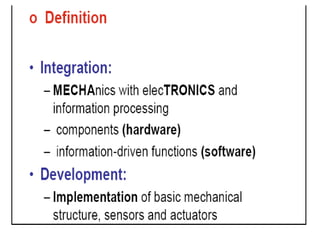
It is an integration of Mechanical
and Electronic engineering.
It specifically refers to
multidisciplinary approach to
product and Manufacturing system
design.
Introduction
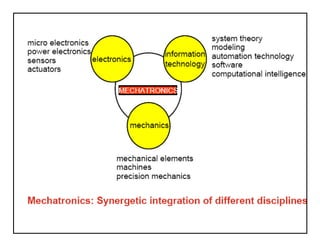
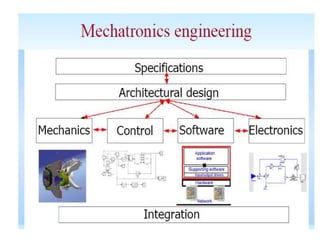
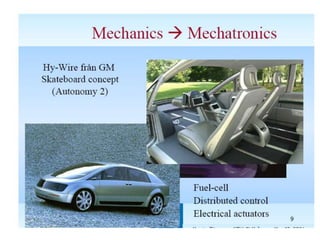
Mechatronics is synergistic
integration of mechanical
engineering, electronics and
intelligent computer control in
design and manufacture of
products and processes
19
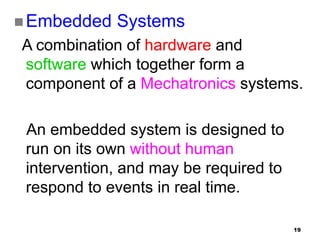
 Embedded Systems
A combination of hardware and
software which together form a
component of a Mechatronics systems.
An embedded system is designed to
run on its own without human
intervention, and may be required to
respond to events in real time.
20
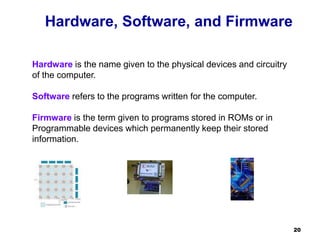
Hardware, Software, and Firmware
Hardware is the name given to the physical devices and circuitry
of the computer.
Software refers to the programs written for the computer.
Firmware is the term given to programs stored in ROMs or in
Programmable devices which permanently keep their stored
information.
22
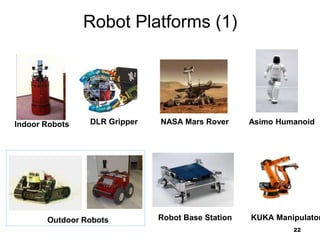
Robot Platforms (1)
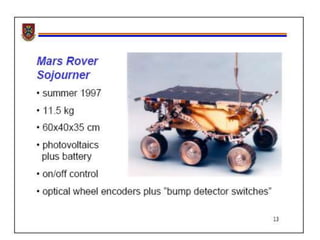
Indoor Robots DLR Gripper NASA Mars Rover Asimo Humanoid
Outdoor Robots Robot Base Station KUKA Manipulator
25
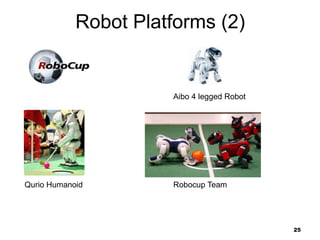
Robot Platforms (2)
Aibo 4 legged Robot
Robocup Team
Qurio Humanoid
26
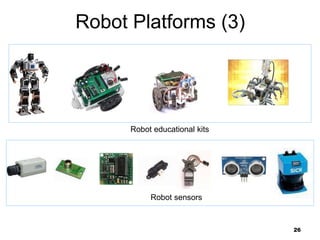
Robot Platforms (3)
Robot educational kits
Robot sensors
27
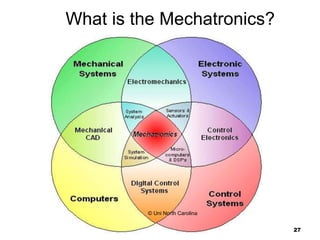
What is the Mechatronics?
© Uni North Carolina
28
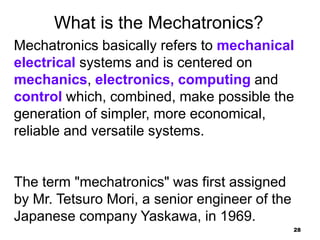
What is the Mechatronics?
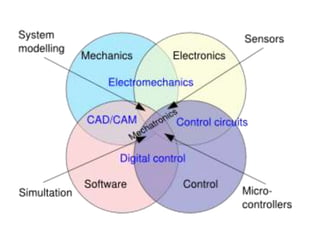
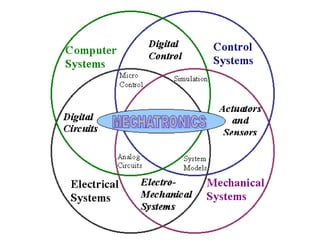
Mechatronics basically refers to mechanical
electrical systems and is centered on
mechanics, electronics, computing and
control which, combined, make possible the
generation of simpler, more economical,
reliable and versatile systems.
The term "mechatronics" was first assigned
by Mr. Tetsuro Mori, a senior engineer of the
Japanese company Yaskawa, in 1969.
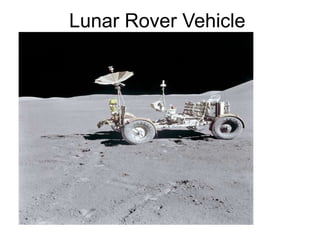
Lunar Rover Vehicle
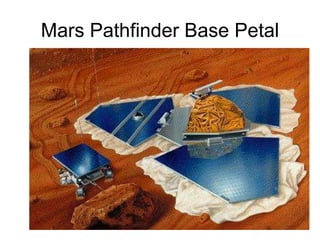
Mars Pathfinder Base Petal
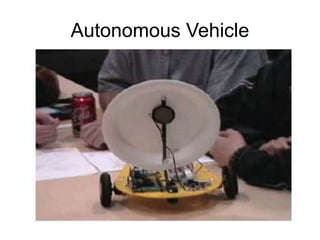
Autonomous Vehicle
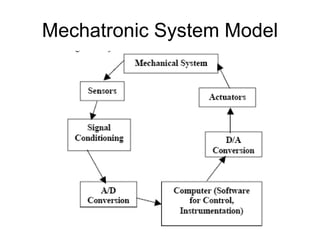
Mechatronic System Model
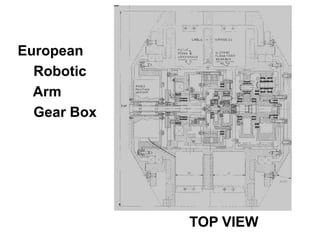
European
Robotic
Arm
Gear Box
TOP VIEW
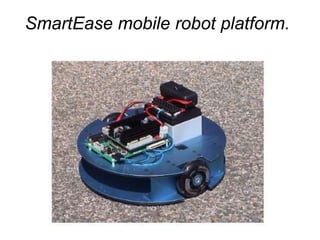
SmartEase mobile robot platform.
39
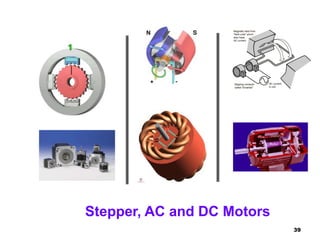
Stepper, AC and DC Motors
40
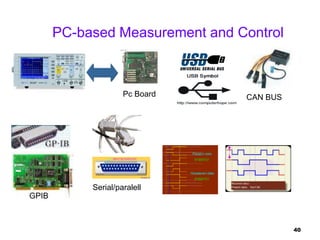
Pc Board
GPIB
Serial/paralell
CAN BUS
PC-based Measurement and Control
41
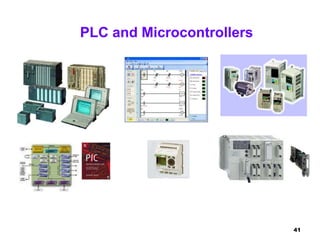
PLC and Microcontrollers
All definitions amalgamate to:
It is a combination of
mechanical engineering,
electronics, control and
computing
applied to the design and
manufacture
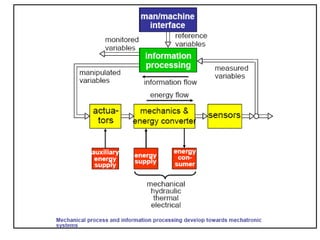
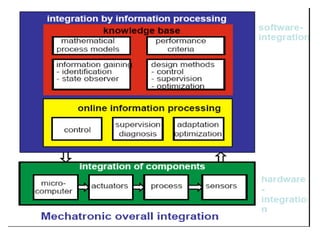
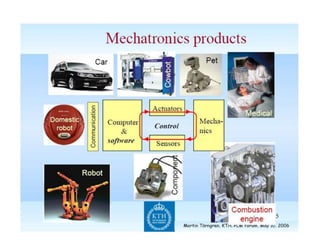
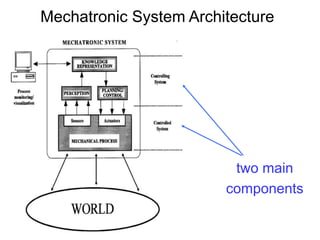
Mechatronic System Architecture
two main
components
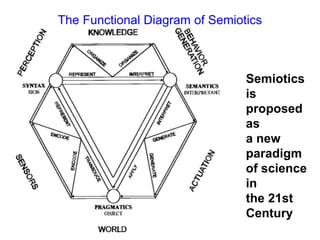
The Functional Diagram of Semiotics
Semiotics
is
proposed
as
a new
paradigm
of science
in
the 21st
Century
Fundamental mechatronic
Problems
• Structural integration of mechanical,
electronic and information departments into
a uniform creative staff;
• Education and training of engineers
specialized in mechatronics.
• Integration of information technologies from
various scientific and technical fields into a
uniform toolkit to provide computer support
of mechatronic problems;
• The course was designed to address
the following learning outcomes,
• work collaboratively across disciplines on
mechatronics
• make appropriate use of sensors, actuators
and mechanisms in mechatronics
applications
The Core of Mechatronic Approach
• It consists in integrating of
components probably of
different physical nature into a
uniform functional module
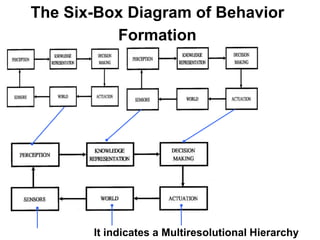
The Six-Box Diagram of Behavior
Formation
It indicates a Multiresolutional Hierarchy
INTRODUCTION
With the fast progress in
microelectronics and computer
science, products and systems
undertook a drastic change.
Most of today's products can no
longer be assigned to a single
discipline, but are highly
multidisciplinary.
For example, in a modern car the
electronics and control play a
dominant role (up to 50%),
whereas a car from the
seventies and even early
eighties was nearly purely
mechanical (90%).
This trend
to multidisciplinary (mechatronics)
products, even if it has not yet reached
its peak, has and will have an important
impact on the design process and on
engineering in general.
Engineering design has clearly become a
multidisciplinary undertaking, happening in
multicultural and very diversified teams.
In order to prepare our students and
the practicing engineers from
industry for these new, quickly
changing challenges in design, new
learning technologies and models
have to be developed.
Appearing in the late eighties,
mechatronics plays meanwhile an
important role at most technical
universities.
• that experimentation and hands-on
education is very crucial for
successful and sustainable
mechatronics programs.
• Most existing mechatronics
programs cover all the aspects from
mechatronics design to sensors,
actuators and control theory.
The Following Special Formulation is Offered
Mechatronics studies synergistic fusion of
precise
• mechatronical units,
• electronic,
• electro technical and computer components
for the purpose of designing and
manufacturing qualitatively new
• modules,
• systems,
• machines and complexes of machines
with intellectual control of their functional
movements.
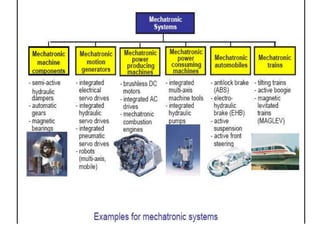
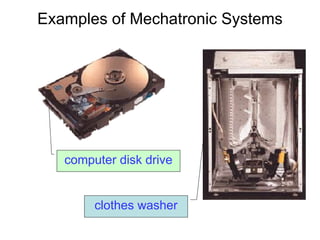
Examples of Mechatronic Systems
clothes washer
computer disk drive
Computer Control Device Basic Functions:
Control of mechanical movement process
on-line with current sensor data analysis.
• Arrangements to control MS functional
movements.
• Interaction with operator via human-machine
interface off-line and on-line interaction at
the moment of MS movement.
• Data exchange between peripheral devices,
sensors and other devices of the system.
Basic Advantages in Comparison with
Traditional Means of Automation
• rather low cost;
• ability to perform complicated and precise
movements (of high quality);
• high reliability, durability and noise
immunity;
• constructive compactness of modules;
• improved overall dimension and dynamic
characteristics of machines;
• opportunity to rebuild functional modules
to sophisticated systems and complexes.
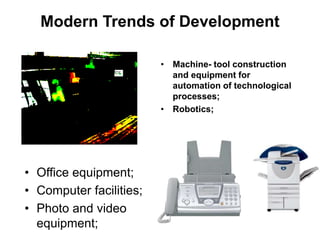
Modern Trends of Development
• Office equipment;
• Computer facilities;
• Photo and video
equipment;
• Machine- tool construction
and equipment for
automation of technological
processes;
• Robotics;
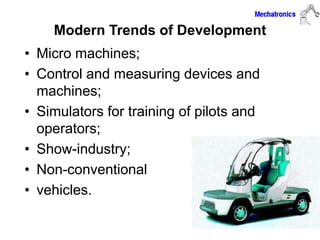
Modern Trends of Development
• Micro machines;
• Control and measuring devices and
machines;
• Simulators for training of pilots and
operators;
• Show-industry;
• Non-conventional
• vehicles.
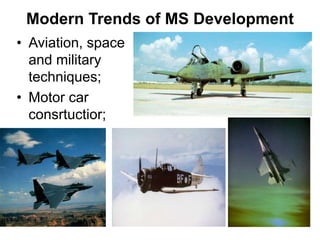
Modern Trends of MS Development
• Aviation, space
and military
techniques;
• Motor car
consrtuctior;
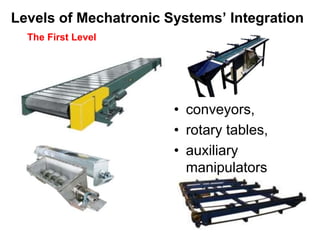
Levels of Mechatronic Systems’ Integration
The First Level
• conveyors,
• rotary tables,
• auxiliary
manipulators
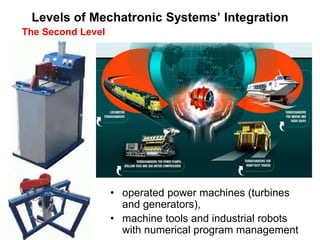
Levels of Mechatronic Systems’ Integration
• operated power machines (turbines
and generators),
• machine tools and industrial robots
with numerical program management
The Second Level
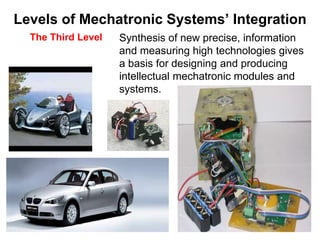
Levels of Mechatronic Systems’ Integration
Synthesis of new precise, information
and measuring high technologies gives
a basis for designing and producing
intellectual mechatronic modules and
systems.
The Third Level
Career Paths in Mechatronics
• Mechatronics is seen as a prime career
path for mechanical engineers of the
future;
• mechanical engineers with a mechatronics
background will have a better chance of
becoming managers;
• classically trained mechanical engineers
will run the risk of being left out of the
interesting work.
Thank You For Your Attention!
Questions?

mechatronics-1.ppt

  • 1.
    WEL COME B.E -6th SEMESTER MECHANICAL ENGINEERING
  • 2.
  • 3.
  • 4.
    CHAPTERS • PART -A •UNIT 1 : Introduction to Mechatronic Systems. • UNIT 2: Review of Transducers & Sensors • UNIT 3: Electrical Actuation Systems • UNIT 4: Signal Conditioning
  • 5.
    PART - B •UNIT 5: Introduction to Microprocessors • UNIT 6: Logic Function • UNIT 7: Organization &Programming of Microprocessors • UNIT 8: Central Processing Unit of Microprocessors
  • 6.
    TEXT BOOKS 1.Mechatronics: -W.Bolton, Longman 2nd Edition, Pearson Publications. 2. Microprocessor and Architecture, Programming and Applications with 8085/8085A- R.S.Ganokar, Wiley Eastern
  • 7.
    PART - A •UNIT 1: • Introduction to Mechatronic Systems. • Measurement & Control systems • Their elements and Functions • Microprocessor based controllers
  • 8.
    Introduction to Mechatronic Systems. Whatis MECHATRONICS? It is an integration of Mechanical and Electronic engineering. It specifically refers to multidisciplinary approach to product and Manufacturing system design.
  • 9.
    Introduction Mechatronics is synergistic integrationof mechanical engineering, electronics and intelligent computer control in design and manufacture of products and processes
  • 19.
    19  Embedded Systems Acombination of hardware and software which together form a component of a Mechatronics systems. An embedded system is designed to run on its own without human intervention, and may be required to respond to events in real time.
  • 20.
    20 Hardware, Software, andFirmware Hardware is the name given to the physical devices and circuitry of the computer. Software refers to the programs written for the computer. Firmware is the term given to programs stored in ROMs or in Programmable devices which permanently keep their stored information.
  • 22.
    22 Robot Platforms (1) IndoorRobots DLR Gripper NASA Mars Rover Asimo Humanoid Outdoor Robots Robot Base Station KUKA Manipulator
  • 25.
    25 Robot Platforms (2) Aibo4 legged Robot Robocup Team Qurio Humanoid
  • 26.
    26 Robot Platforms (3) Roboteducational kits Robot sensors
  • 27.
    27 What is theMechatronics? © Uni North Carolina
  • 28.
    28 What is theMechatronics? Mechatronics basically refers to mechanical electrical systems and is centered on mechanics, electronics, computing and control which, combined, make possible the generation of simpler, more economical, reliable and versatile systems. The term "mechatronics" was first assigned by Mr. Tetsuro Mori, a senior engineer of the Japanese company Yaskawa, in 1969.
  • 29.
  • 33.
  • 34.
  • 36.
  • 37.
  • 38.
  • 39.
  • 40.
  • 41.
  • 44.
    All definitions amalgamateto: It is a combination of mechanical engineering, electronics, control and computing applied to the design and manufacture
  • 45.
  • 46.
    The Functional Diagramof Semiotics Semiotics is proposed as a new paradigm of science in the 21st Century
  • 47.
    Fundamental mechatronic Problems • Structuralintegration of mechanical, electronic and information departments into a uniform creative staff; • Education and training of engineers specialized in mechatronics. • Integration of information technologies from various scientific and technical fields into a uniform toolkit to provide computer support of mechatronic problems;
  • 48.
    • The coursewas designed to address the following learning outcomes, • work collaboratively across disciplines on mechatronics • make appropriate use of sensors, actuators and mechanisms in mechatronics applications
  • 49.
    The Core ofMechatronic Approach • It consists in integrating of components probably of different physical nature into a uniform functional module
  • 50.
    The Six-Box Diagramof Behavior Formation It indicates a Multiresolutional Hierarchy
  • 51.
    INTRODUCTION With the fastprogress in microelectronics and computer science, products and systems undertook a drastic change. Most of today's products can no longer be assigned to a single discipline, but are highly multidisciplinary.
  • 52.
    For example, ina modern car the electronics and control play a dominant role (up to 50%), whereas a car from the seventies and even early eighties was nearly purely mechanical (90%).
  • 53.
    This trend to multidisciplinary(mechatronics) products, even if it has not yet reached its peak, has and will have an important impact on the design process and on engineering in general. Engineering design has clearly become a multidisciplinary undertaking, happening in multicultural and very diversified teams.
  • 54.
    In order toprepare our students and the practicing engineers from industry for these new, quickly changing challenges in design, new learning technologies and models have to be developed. Appearing in the late eighties, mechatronics plays meanwhile an important role at most technical universities.
  • 55.
    • that experimentationand hands-on education is very crucial for successful and sustainable mechatronics programs. • Most existing mechatronics programs cover all the aspects from mechatronics design to sensors, actuators and control theory.
  • 56.
    The Following SpecialFormulation is Offered Mechatronics studies synergistic fusion of precise • mechatronical units, • electronic, • electro technical and computer components for the purpose of designing and manufacturing qualitatively new • modules, • systems, • machines and complexes of machines with intellectual control of their functional movements.
  • 57.
    Examples of MechatronicSystems clothes washer computer disk drive
  • 58.
    Computer Control DeviceBasic Functions: Control of mechanical movement process on-line with current sensor data analysis. • Arrangements to control MS functional movements. • Interaction with operator via human-machine interface off-line and on-line interaction at the moment of MS movement. • Data exchange between peripheral devices, sensors and other devices of the system.
  • 59.
    Basic Advantages inComparison with Traditional Means of Automation • rather low cost; • ability to perform complicated and precise movements (of high quality); • high reliability, durability and noise immunity; • constructive compactness of modules; • improved overall dimension and dynamic characteristics of machines; • opportunity to rebuild functional modules to sophisticated systems and complexes.
  • 60.
    Modern Trends ofDevelopment • Office equipment; • Computer facilities; • Photo and video equipment; • Machine- tool construction and equipment for automation of technological processes; • Robotics;
  • 61.
    Modern Trends ofDevelopment • Micro machines; • Control and measuring devices and machines; • Simulators for training of pilots and operators; • Show-industry; • Non-conventional • vehicles.
  • 62.
    Modern Trends ofMS Development • Aviation, space and military techniques; • Motor car consrtuctior;
  • 63.
    Levels of MechatronicSystems’ Integration The First Level • conveyors, • rotary tables, • auxiliary manipulators
  • 64.
    Levels of MechatronicSystems’ Integration • operated power machines (turbines and generators), • machine tools and industrial robots with numerical program management The Second Level
  • 65.
    Levels of MechatronicSystems’ Integration Synthesis of new precise, information and measuring high technologies gives a basis for designing and producing intellectual mechatronic modules and systems. The Third Level
  • 66.
    Career Paths inMechatronics • Mechatronics is seen as a prime career path for mechanical engineers of the future; • mechanical engineers with a mechatronics background will have a better chance of becoming managers; • classically trained mechanical engineers will run the risk of being left out of the interesting work.
  • 67.
    Thank You ForYour Attention! Questions?