Measuring Org
Engagement
Bridging the organizational Intranet needs and ‘social’

By: Ronald Sunarno
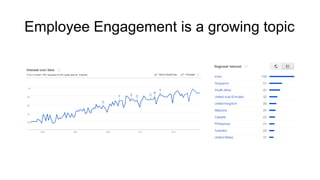
Employee Engagement is a growing topic
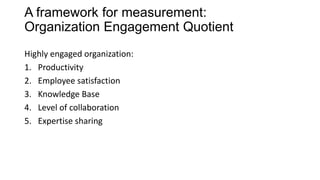
A framework for measurement:
Organization Engagement Quotient
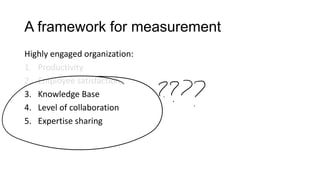
Highly engaged organization:
1. Productivity
2. Employee satisfaction
3. Knowledge Base
4. Level of collaboration
5. Expertise sharing
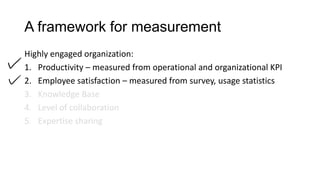
A framework for measurement
Highly engaged organization:
1. Productivity – measured from operational and organizational KPI
2. Employee satisfaction – measured from survey, usage statistics
3. Knowledge Base
4. Level of collaboration
5. Expertise sharing
A framework for measurement
Highly engaged organization:
1. Productivity
2. Employee satisfaction
3. Knowledge Base
4. Level of collaboration
5. Expertise sharing
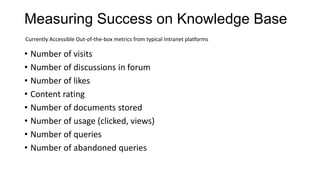
Measuring Success on Knowledge Base
Currently Accessible Out-of-the-box metrics from typical Intranet platforms

• Number of visits
• Number of discussions in forum
• Number of likes
• Content rating
• Number of documents stored
• Number of usage (clicked, views)
• Number of queries
• Number of abandoned queries
Measuring Success on Knowledge Base
Out-of-the-box metrics

• Number of visits
• Number of discussions in forum
• Number of likes
• Content rating
• Number of documents stored
• Number of usage (clicked, views)
• Number of queries
• Number of abandoned queries

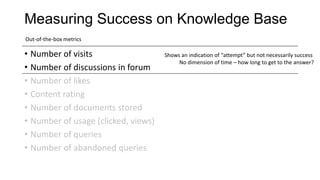
Shows an indication of “attempt” but not necessarily success
No dimension of time – how long to get to the answer?
Measuring Success on Knowledge Base
Out-of-the-box metrics

• Number of visits
• Number of discussions in forum
• Number of likes
• Content rating
• Number of documents stored
• Number of usage (clicked, views)
• Number of queries
• Number of abandoned queries

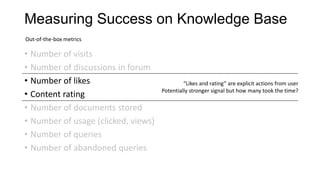
“Likes and rating” are explicit actions from user
Potentially stronger signal but how many took the time?
Measuring Success on Knowledge Base
Out-of-the-box metrics

• Number of visits
• Number of discussions in forum
• Number of likes
• Content rating
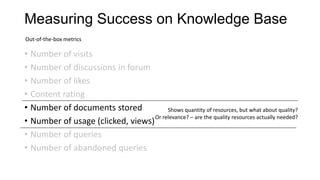
• Number of documents stored
Shows quantity of resources, but what about quality?
Or relevance? – are the quality resources actually needed?
• Number of usage (clicked, views)
• Number of queries
• Number of abandoned queries
Measuring Success on Knowledge Base
Out-of-the-box metrics

• Number of visits
• Number of discussions in forum
• Number of likes
• Content rating
• Number of documents stored
• Number of usage (clicked, views)
• Number of queries
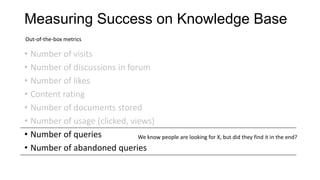
We know people are looking for X, but did they find it in the end?
• Number of abandoned queries
Measuring Success on Knowledge Base
Out-of-the-box metrics

• Number of visits
• Number of discussions in forum
• Number of likes
• Content rating
• Number of documents stored
• Number of usage (clicked, views)
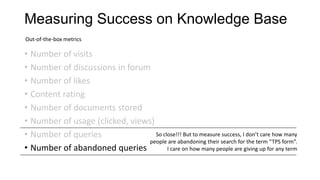
So close!!! But to measure success, I don’t care how many
• Number of queries
people are abandoning their search for the term “TPS form”.
• Number of abandoned queries
I care on how many people are giving up for any term
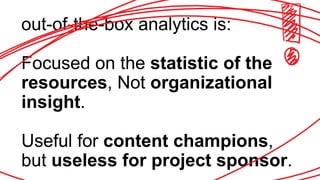
out-of-the-box analytics is:
Focused on the statistic of the
resources, Not organizational
insight.
Useful for content champions,
but useless for project sponsor.
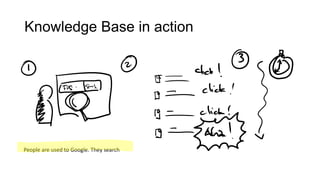
Knowledge Base in action

People are used to Google. They search
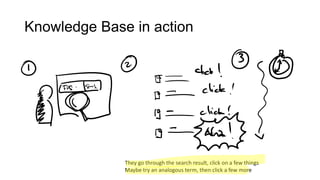
Knowledge Base in action

They go through the search result, click on a few things
Maybe try an analogous term, then click a few more
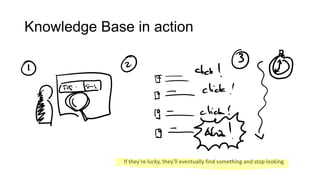
Knowledge Base in action

If they’re lucky, they’ll eventually find something and stop looking
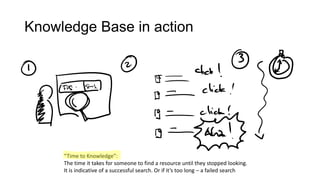
Knowledge Base in action

“Time to Knowledge”:
The time it takes for someone to find a resource until they stopped looking.
It is indicative of a successful search. Or if it’s too long – a failed search
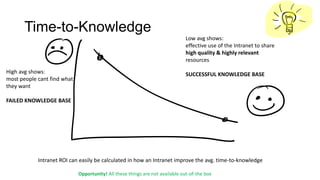
Time-to-Knowledge
Low avg shows:
effective use of the Intranet to share
high quality & highly relevant
resources
High avg shows:
most people cant find what
they want

SUCCESSFUL KNOWLEDGE BASE

FAILED KNOWLEDGE BASE

Intranet ROI can easily be calculated in how an Intranet improve the avg. time-to-knowledge
Opportunity! All these things are not available out-of-the box
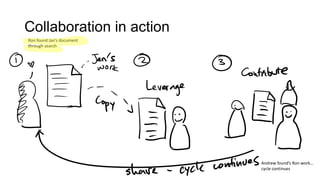
Collaboration in action
Ron found Jan’s document
through search

Andrew found’s Ron work…
cycle continues
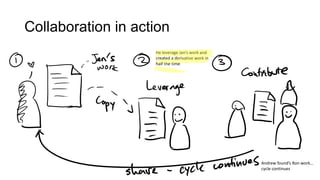
Collaboration in action
He leverage Jan’s work and
created a derivative work in
half the time

Andrew found’s Ron work…
cycle continues
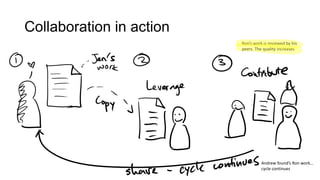
Collaboration in action
Ron’s work is reviewed by his
peers. The quality increases

Andrew found’s Ron work…
cycle continues
Measuring Collaboration
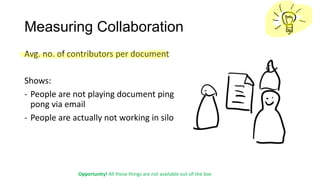
Avg. no. of contributors per document

Shows:
- People are not playing document ping
pong via email
- People are actually not working in silo

Opportunity! All these things are not available out-of-the box
Measuring Collaboration
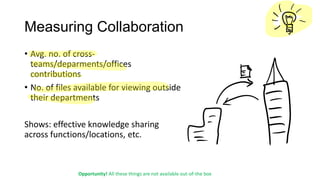
• Avg. no. of crossteams/deparments/offices
contributions
• No. of files available for viewing outside
their departments

Shows: effective knowledge sharing
across functions/locations, etc.

Opportunity! All these things are not available out-of-the box
Who’s the influencer?
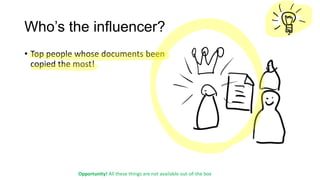
• Top people whose documents been
copied the most!

Opportunity! All these things are not available out-of-the box
Empower the users
• Is MY ORGANIZATION working together?
• Is MY DEPARTMENT working together
• Is MY TEAM working together?
• Who have viewed and read MY DOCUMENTS?
• How many of MY DOCUMENTS have been leveraged?
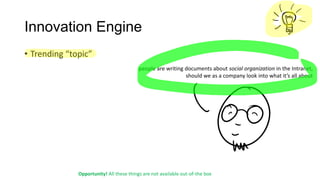
Innovation Engine
• Trending “topic”
people are writing documents about social organization in the Intranet,
should we as a company look into what it’s all about

Opportunity! All these things are not available out-of-the box
Summary #1
• Organization Engagement Quotient is a key set of metrics useful to
CIOs and COOs in having a birds eye view of:
• The organizational culture (are people working together?), and
• efficiency (the pace in which people are finding organizational information)

• Multiple companies are looking at the problem (Microsoft,
WebTrends, etc.), however there’s still a huge gap in the market.
Summary #2
• Looking at Intranet as a collaboration platform from the angle of “EQ”
gives a glimpse of
a working ideal model for Intranet as an
enabler for creating Social Organization
New revelations when
looking at Intranet as a
Social Platform
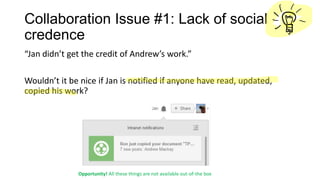
Collaboration Issue #1: Lack of social
credence
“Jan didn’t get the credit of Andrew’s work.”

Wouldn’t it be nice if Jan is notified if anyone have read, updated,
copied his work?

Opportunity! All these things are not available out-of-the box
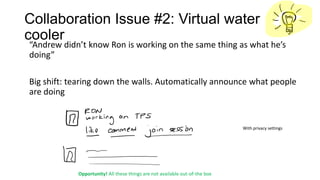
Collaboration Issue #2: Virtual water
cooler

“Andrew didn’t know Ron is working on the same thing as what he’s
doing”
Big shift: tearing down the walls. Automatically announce what people
are doing

With privacy settings

Opportunity! All these things are not available out-of-the box

Measuring Organization Engagement

  • 1.
    Measuring Org Engagement Bridging theorganizational Intranet needs and ‘social’ By: Ronald Sunarno
  • 2.
    Employee Engagement isa growing topic
  • 3.
    A framework formeasurement: Organization Engagement Quotient Highly engaged organization: 1. Productivity 2. Employee satisfaction 3. Knowledge Base 4. Level of collaboration 5. Expertise sharing
  • 4.
    A framework formeasurement Highly engaged organization: 1. Productivity – measured from operational and organizational KPI 2. Employee satisfaction – measured from survey, usage statistics 3. Knowledge Base 4. Level of collaboration 5. Expertise sharing
  • 5.
    A framework formeasurement Highly engaged organization: 1. Productivity 2. Employee satisfaction 3. Knowledge Base 4. Level of collaboration 5. Expertise sharing
  • 6.
    Measuring Success onKnowledge Base Currently Accessible Out-of-the-box metrics from typical Intranet platforms • Number of visits • Number of discussions in forum • Number of likes • Content rating • Number of documents stored • Number of usage (clicked, views) • Number of queries • Number of abandoned queries
  • 7.
    Measuring Success onKnowledge Base Out-of-the-box metrics • Number of visits • Number of discussions in forum • Number of likes • Content rating • Number of documents stored • Number of usage (clicked, views) • Number of queries • Number of abandoned queries Shows an indication of “attempt” but not necessarily success No dimension of time – how long to get to the answer?
  • 8.
    Measuring Success onKnowledge Base Out-of-the-box metrics • Number of visits • Number of discussions in forum • Number of likes • Content rating • Number of documents stored • Number of usage (clicked, views) • Number of queries • Number of abandoned queries “Likes and rating” are explicit actions from user Potentially stronger signal but how many took the time?
  • 9.
    Measuring Success onKnowledge Base Out-of-the-box metrics • Number of visits • Number of discussions in forum • Number of likes • Content rating • Number of documents stored Shows quantity of resources, but what about quality? Or relevance? – are the quality resources actually needed? • Number of usage (clicked, views) • Number of queries • Number of abandoned queries
  • 10.
    Measuring Success onKnowledge Base Out-of-the-box metrics • Number of visits • Number of discussions in forum • Number of likes • Content rating • Number of documents stored • Number of usage (clicked, views) • Number of queries We know people are looking for X, but did they find it in the end? • Number of abandoned queries
  • 11.
    Measuring Success onKnowledge Base Out-of-the-box metrics • Number of visits • Number of discussions in forum • Number of likes • Content rating • Number of documents stored • Number of usage (clicked, views) So close!!! But to measure success, I don’t care how many • Number of queries people are abandoning their search for the term “TPS form”. • Number of abandoned queries I care on how many people are giving up for any term
  • 12.
    out-of-the-box analytics is: Focusedon the statistic of the resources, Not organizational insight. Useful for content champions, but useless for project sponsor.
  • 13.
    Knowledge Base inaction People are used to Google. They search
  • 14.
    Knowledge Base inaction They go through the search result, click on a few things Maybe try an analogous term, then click a few more
  • 15.
    Knowledge Base inaction If they’re lucky, they’ll eventually find something and stop looking
  • 16.
    Knowledge Base inaction “Time to Knowledge”: The time it takes for someone to find a resource until they stopped looking. It is indicative of a successful search. Or if it’s too long – a failed search
  • 17.
    Time-to-Knowledge Low avg shows: effectiveuse of the Intranet to share high quality & highly relevant resources High avg shows: most people cant find what they want SUCCESSFUL KNOWLEDGE BASE FAILED KNOWLEDGE BASE Intranet ROI can easily be calculated in how an Intranet improve the avg. time-to-knowledge Opportunity! All these things are not available out-of-the box
  • 18.
    Collaboration in action Ronfound Jan’s document through search Andrew found’s Ron work… cycle continues
  • 19.
    Collaboration in action Heleverage Jan’s work and created a derivative work in half the time Andrew found’s Ron work… cycle continues
  • 20.
    Collaboration in action Ron’swork is reviewed by his peers. The quality increases Andrew found’s Ron work… cycle continues
  • 21.
    Measuring Collaboration Avg. no.of contributors per document Shows: - People are not playing document ping pong via email - People are actually not working in silo Opportunity! All these things are not available out-of-the box
  • 22.
    Measuring Collaboration • Avg.no. of crossteams/deparments/offices contributions • No. of files available for viewing outside their departments Shows: effective knowledge sharing across functions/locations, etc. Opportunity! All these things are not available out-of-the box
  • 23.
    Who’s the influencer? •Top people whose documents been copied the most! Opportunity! All these things are not available out-of-the box
  • 24.
    Empower the users •Is MY ORGANIZATION working together? • Is MY DEPARTMENT working together • Is MY TEAM working together? • Who have viewed and read MY DOCUMENTS? • How many of MY DOCUMENTS have been leveraged?
  • 25.
    Innovation Engine • Trending“topic” people are writing documents about social organization in the Intranet, should we as a company look into what it’s all about Opportunity! All these things are not available out-of-the box
  • 26.
    Summary #1 • OrganizationEngagement Quotient is a key set of metrics useful to CIOs and COOs in having a birds eye view of: • The organizational culture (are people working together?), and • efficiency (the pace in which people are finding organizational information) • Multiple companies are looking at the problem (Microsoft, WebTrends, etc.), however there’s still a huge gap in the market.
  • 27.
    Summary #2 • Lookingat Intranet as a collaboration platform from the angle of “EQ” gives a glimpse of a working ideal model for Intranet as an enabler for creating Social Organization
  • 28.
    New revelations when lookingat Intranet as a Social Platform
  • 29.
    Collaboration Issue #1:Lack of social credence “Jan didn’t get the credit of Andrew’s work.” Wouldn’t it be nice if Jan is notified if anyone have read, updated, copied his work? Opportunity! All these things are not available out-of-the box
  • 30.
    Collaboration Issue #2:Virtual water cooler “Andrew didn’t know Ron is working on the same thing as what he’s doing” Big shift: tearing down the walls. Automatically announce what people are doing With privacy settings Opportunity! All these things are not available out-of-the box